How To Tell When Your Orchid Needs Water This Winter
Some tropical houseplants hang onto tree bark in the wild and drink straight from passing rain and mist. Their roots wear a spongy silver coat called velamen that soaks up water in mere seconds.
Winter heating can push indoor humidity well below thirty percent, which feels closer to a desert than a rainforest. Those clever epiphytes still give off quiet signals when that dry air starts winning the struggle.
I used to water on a strict calendar and wondered why my plants looked tired by February. After I tested a few simple checks, the patterns finally clicked, and my routine felt far less stressful.
You might notice small changes long before a plant looks truly unhappy on the windowsill. Would you recognize the subtle hints your favorite bloomer drops when its roots are quietly running low on water?
Wrinkled Cattleya Pseudobulbs Are Shrinking Like Prunes
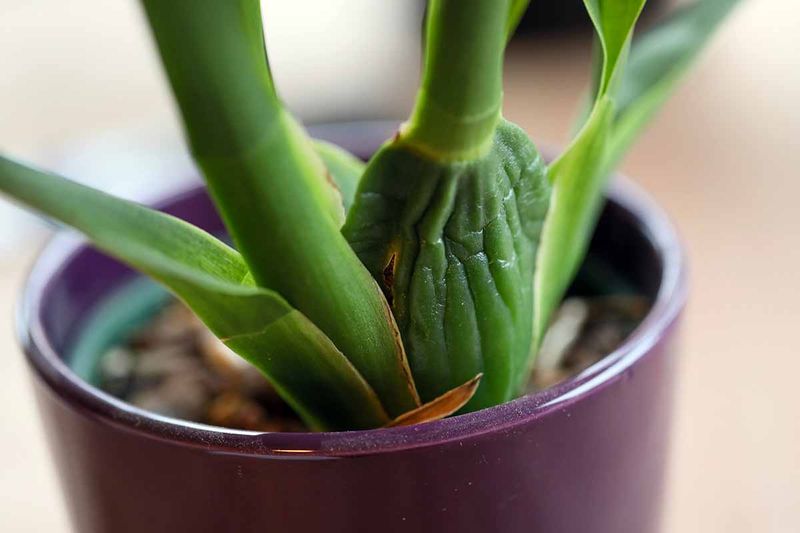
Many popular orchids store water in swollen stems called pseudobulbs, which work a lot like tiny canteens. Cattleyas and Oncidiums lean on these reserves heavily when their roots cannot find enough moisture.
A healthy pseudobulb feels firm and smooth, almost like a green grape that has plenty of juice inside. When the plant runs short, those stems start wrinkling and shrinking, a bit like grapes slowly turning into raisins.
I panicked the first time I saw grooves on my Oncidium, until I learned some types grow ridges naturally. Older back bulbs also wrinkle with age as they pass their stored water forward to the newest growth.
Focus on the newest pseudobulbs, because sudden shriveling there usually points to thirst or very dry air. Compare the youngest bulb with last season’s growth, and look for a fast change rather than gradual aging.
Once you water deeply and raise the humidity, a lightly wrinkled bulb can plump up again within a few weeks. Badly shriveled bulbs may stay creased, but healthy new growth will tell you the plant is recovering nicely.
Limp Moth Orchid Leaves Feel Soft And Bendy
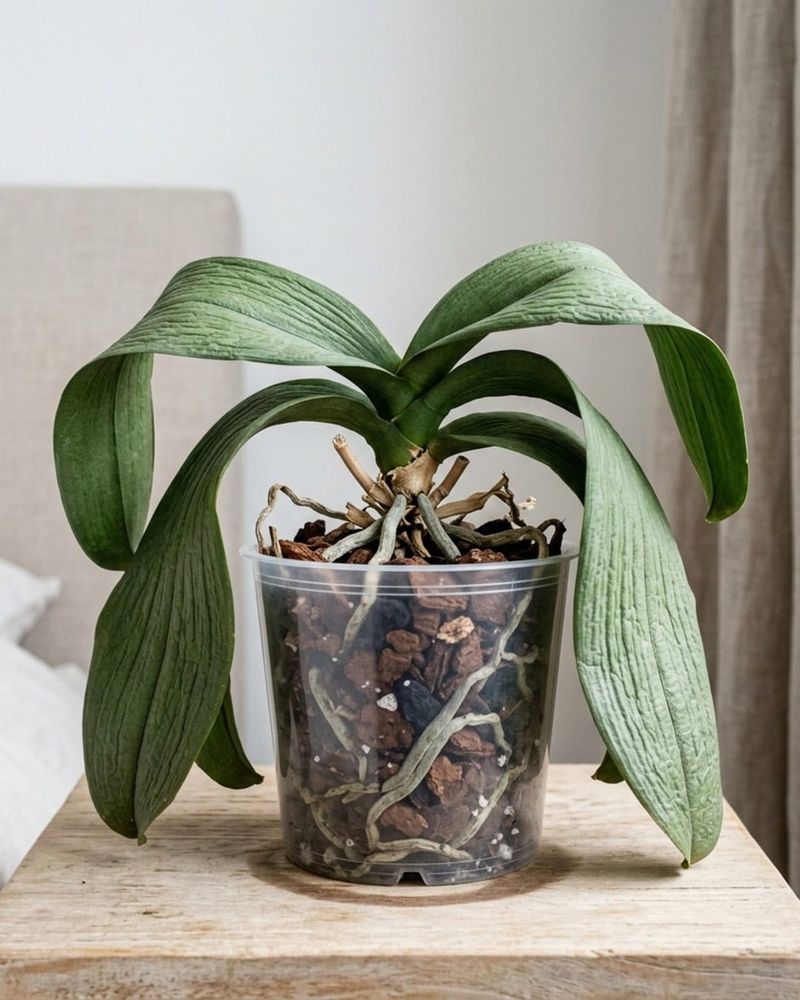
Squeeze a happy moth orchid leaf gently, and it feels thick and rubbery, a little like a new eraser. A thirsty leaf loses that bounce and bends with almost no effort, which honestly surprised me the first time.
Phalaenopsis orchids lack pseudobulbs, so their fleshy leaves act as the main water storage tank. When roots fall behind, those leaves droop, soften, and sometimes develop fine lengthwise wrinkles across the surface.
Look at the newest leaf as it unfolds during the cooler months, because it tells a helpful story. Accordion-like pleats across a young leaf often mean the plant went thirsty while that leaf was still forming.
Limp leaves can also show up when roots rot from too much water, which feels confusing at first. Damaged roots cannot carry moisture upward, so the leaves look thirsty even though the pot stays wet for days.
Check the roots before grabbing the watering can, and you will avoid making a soggy problem even worse. Firm, plump roots plus soft leaves usually mean thirst, while mushy brown roots point toward rot and repotting.
Shriveled Orchid Air Roots Reach Out Looking Thin
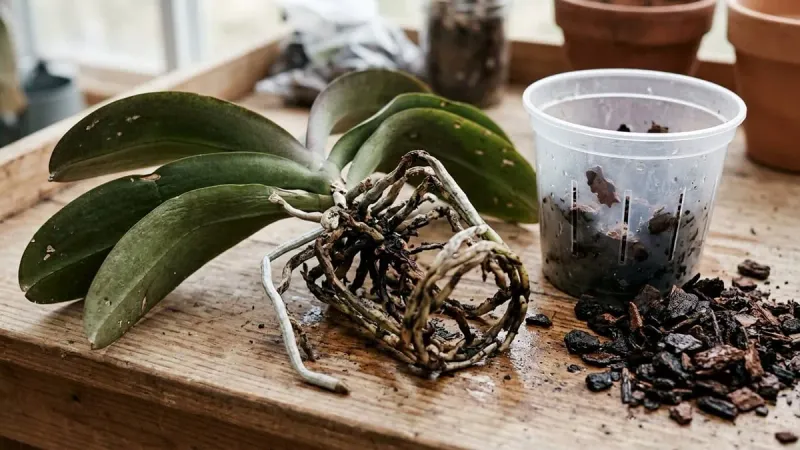
Those wild, wandering roots poking out of the pot are not a mistake, and I find them oddly charming. In nature they cling to bark and grab moisture from humid jungle air, rain, and morning dew.
Healthy aerial roots look round and full, with silvery coats and bright green or reddish growing tips. Thin, flattened, or papery roots suggest the air around your plant has turned too dry for comfort.
Furnaces and space heaters pull moisture from indoor air throughout the colder season, and orchids notice quickly. A humidity tray filled with pebbles and water can raise the moisture around your plant a modest amount.
Grouping several houseplants together also helps, since leaves release water vapor that the neighbors can share. Misting gives a brief boost, but the effect fades quickly, so it rarely replaces proper watering at the roots.
Please resist the urge to trim healthy aerial roots, because they still gather water and help the plant breathe. Snip only the crispy, hollow ones with clean scissors, leaving the firm roots alone to keep doing their job.
Silvery Gray Roots Fill The Clear Orchid Pot
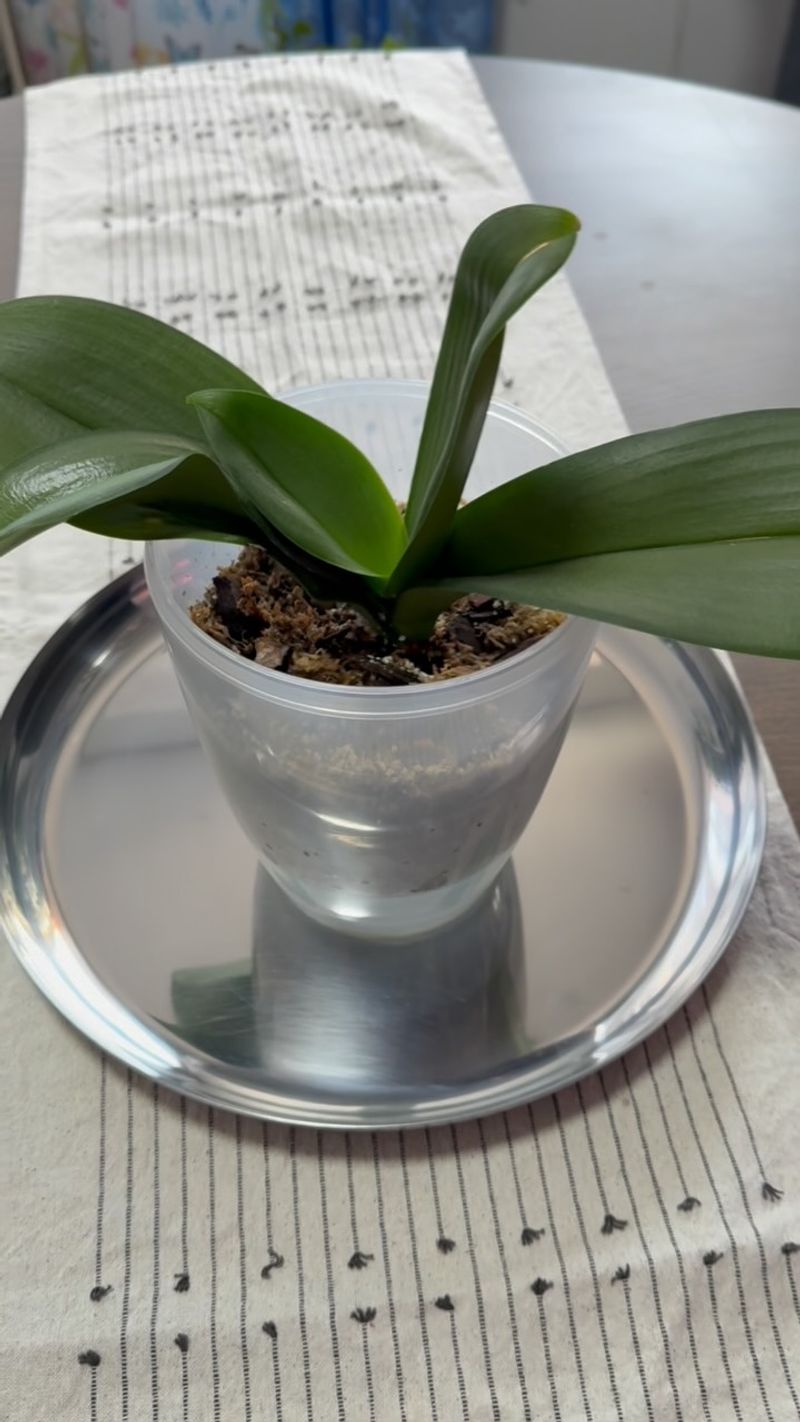
Clear plastic pots are basically a window into your orchid’s mood, and I check mine like a weather report. Root color shifts with moisture, giving you one of the easiest watering signals in the whole houseplant world.
Freshly watered roots turn bright green because the spongy velamen layer becomes see-through when it fills with water. As that layer dries, it turns silvery white or gray, which means the plant is getting ready for another drink.
Watering when most roots look silvery works well for moth orchids grown in bark mixes at home. Roots that stay gray and start looking flat or wrinkled have probably waited too long for their next soak.
Brown, mushy, or hollow roots tell a different story, usually pointing toward rot from staying wet too long. Healthy roots feel firm when you press them, while rotting ones collapse easily and sometimes give off a sour smell.
Soak the pot in a sink for about ten to fifteen minutes when roots turn silver. Let every drop drain away afterward, since standing water in a decorative cover pot can quietly harm healthy roots.
A Lightweight Orchid Pot Lifts Off The Windowsill Easily
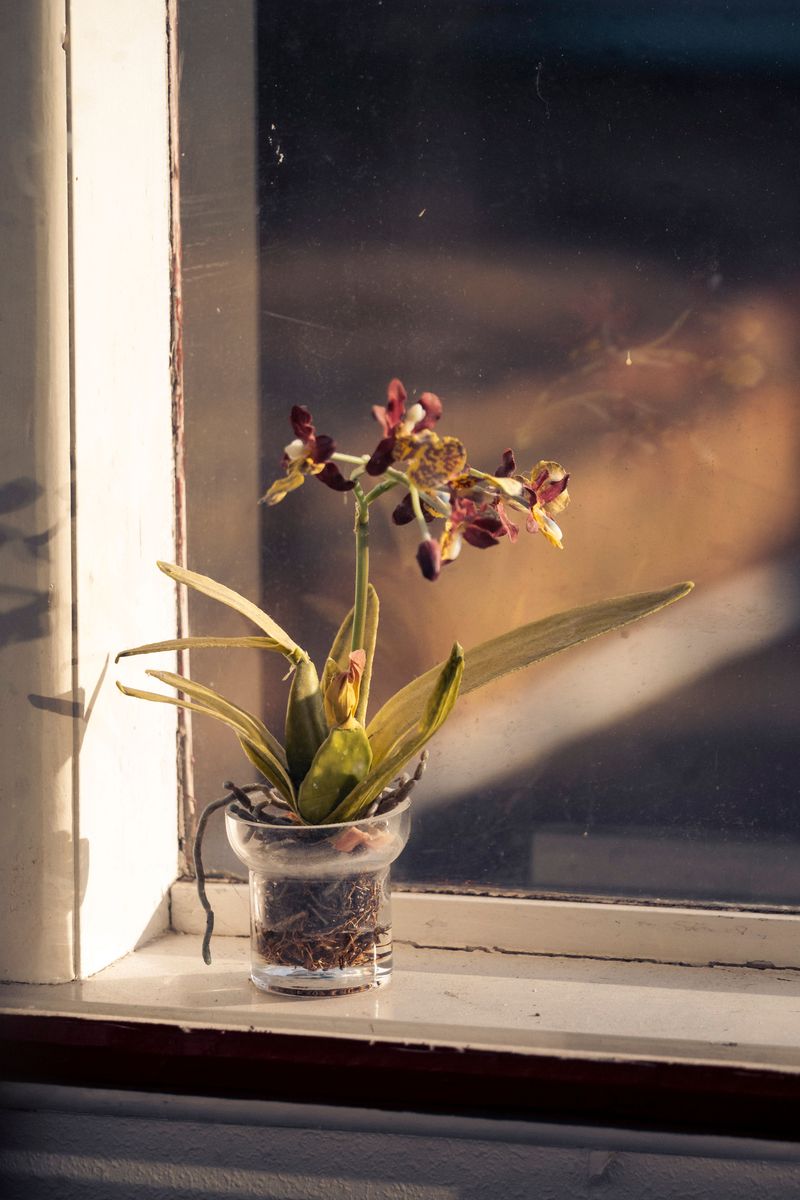
My favorite watering test needs no gadgets at all, just a quick lift of the pot. It sounds almost too simple, yet experienced growers rely on this trick constantly when caring for their collections.
Wet bark and moss hold a surprising amount of water, so a freshly soaked pot feels noticeably heavier. As moisture slowly escapes, the pot grows lighter, and your hand starts to learn that difference over time.
Try lifting your orchid right after watering, then again every couple of days until it feels airy. That light feeling usually means the mix has dried and the roots would welcome another soaking very soon.
Pay attention to a pot that still feels heavy for many days while the leaves look floppy. That combination often hints at root trouble, because rotted roots cannot drink even when the potting mix stays soggy.
Winter growth slows for many orchids, so pots may dry more slowly in cool rooms with weak sunlight. A pot sitting beside a heating vent can dry surprisingly fast, though, so let the weight guide you rather than habit.
Dry Orchid Bark Mix Crumbles Under Your Fingertip
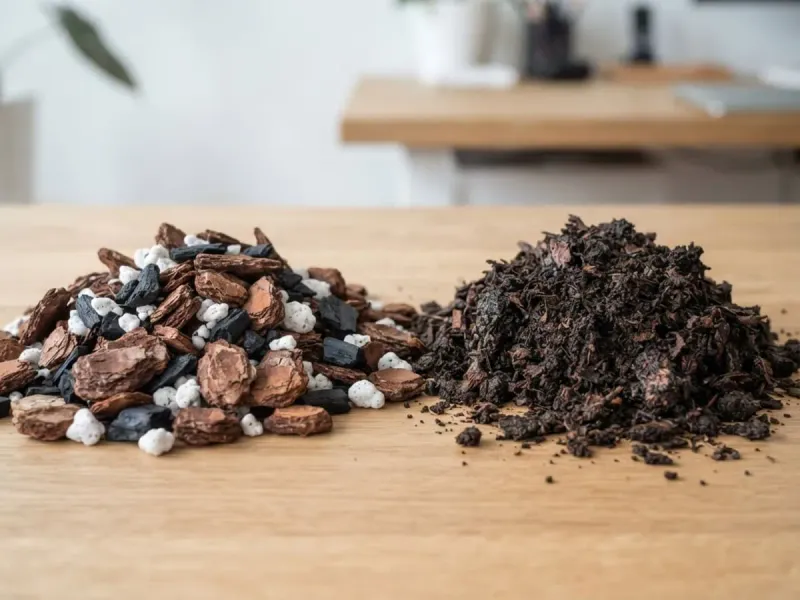
Bark chips tell the truth if you are willing to get your finger a little dirty. Push one finger about an inch into the mix, and you will learn more than any watering calendar could share.
Moist bark feels cool and slightly damp, with a darker color and a faint earthy smell. Dry bark feels warm, light, and dusty, often sliding apart loosely instead of holding together around the roots.
Different mixes behave in very different ways, so it pays to know what your plant actually lives in. Chunky bark drains fast and dries quickly, while sphagnum moss stays moist much longer and needs less frequent watering.
Store-bought moth orchids often arrive packed tightly in moss, which surprised me when I first tipped one out. Those plants can stay wet for over a week, so checking by touch prevents accidental overwatering during cooler months.
Wooden skewers make handy helpers, since you can push one into the mix and pull it out later. Darkened, damp wood means wait a bit longer, while a dry, pale skewer suggests your orchid is ready for water.
Orchid Flower Buds Turn Yellow And Drop Early
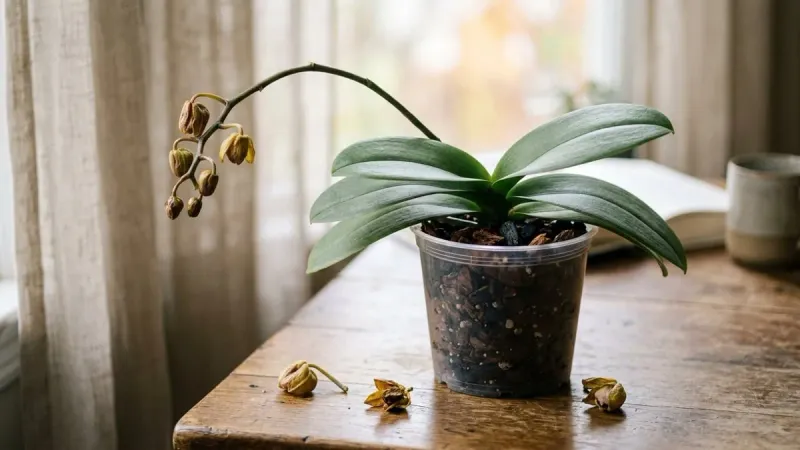
Few things sting quite like watching a spike full of plump buds turn yellow and drop overnight. Growers call this frustrating problem bud blast, and I have shed a quiet sigh over it more than once.
Stress makes the plant abandon buds so it can protect its roots and leaves instead. Dry roots and very low humidity are common triggers, especially when the plant is working hard to open fresh flowers.
Thirst is rarely the only suspect, so look around the room before blaming your watering habits alone. Cold drafts, heater blasts, sudden temperature swings, and ripening fruit nearby can also cause buds to fall too soon.
Ripening apples and bananas release ethylene gas, which can encourage buds to shrivel faster than you might expect. Keeping the fruit bowl in another room is an easy fix that costs absolutely nothing at all.
Steady watering matters most while buds are swelling, because the plant needs extra moisture to push them open. Try to avoid moving a budding orchid around, since changes in light and temperature can unsettle it quickly.
Open Orchid Blooms Wilt And Wrinkle Too Soon
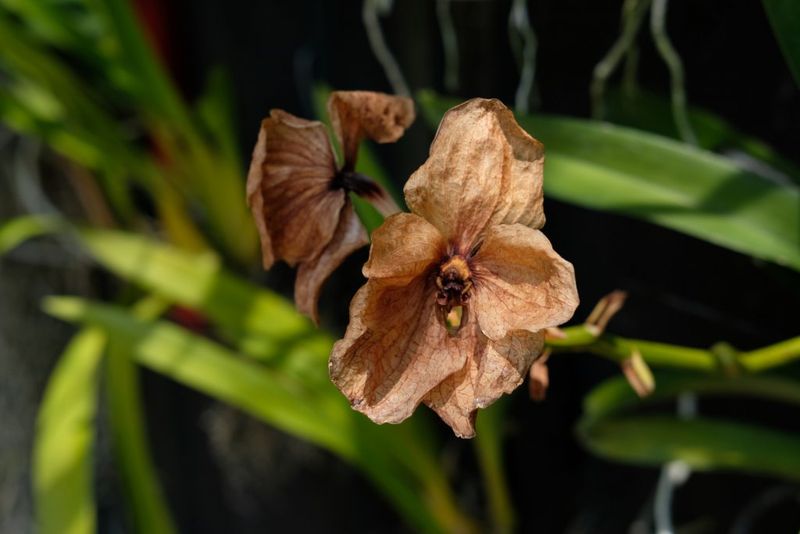
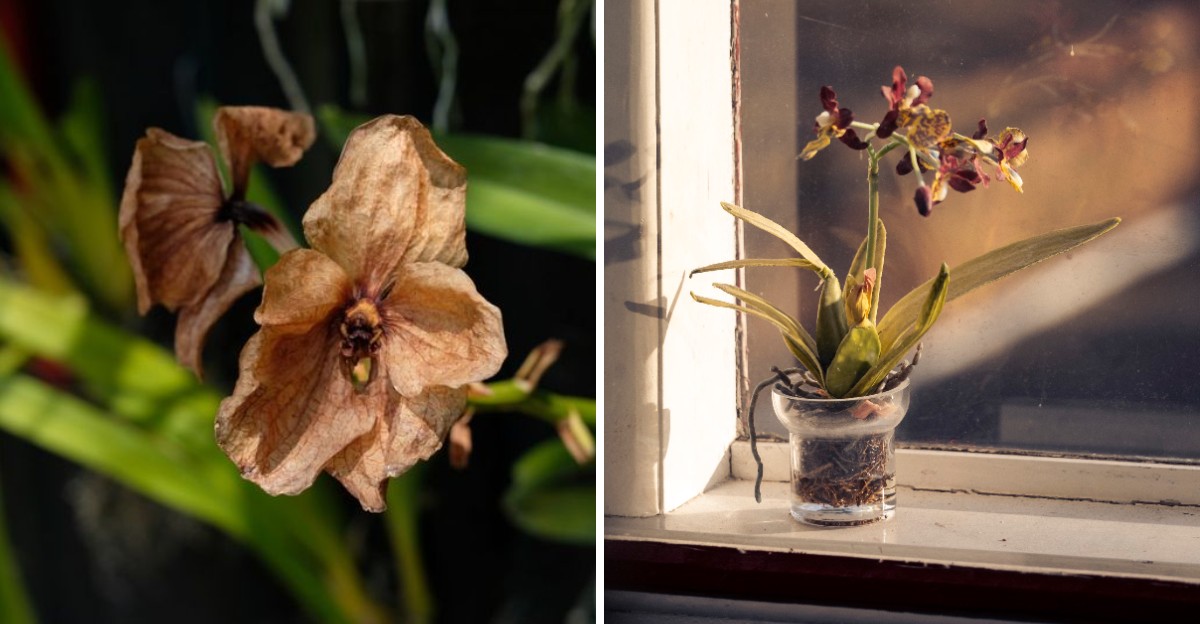
Moth orchid flowers can last for two or three months, which is why many of us adore them. When blooms start sagging after just a few weeks, something in their care routine usually needs a closer look.
Petals stay crisp because their cells are filled with water, pressing outward like air inside a balloon. Without enough moisture coming up from the roots, those petals soften, wrinkle, and lose their glossy shine.
I noticed this once after a cold snap kept my furnace running nonstop for nearly a week. The flowers looked tired and papery, and the roots inside the pot had turned completely silver and thin.
Every bloom does fade eventually, so do not worry when the oldest flowers near the bottom wilt first. Concern makes more sense when several fresh flowers collapse together, especially alongside soft leaves or shriveled roots.
Keep blooming orchids away from heating vents, drafty doors, and cold window glass at night. Bright, indirect light and a regular check on root color will help those flowers stay perky much longer this season.
Stalled Orchid Growth Shows Tiny New Leaves
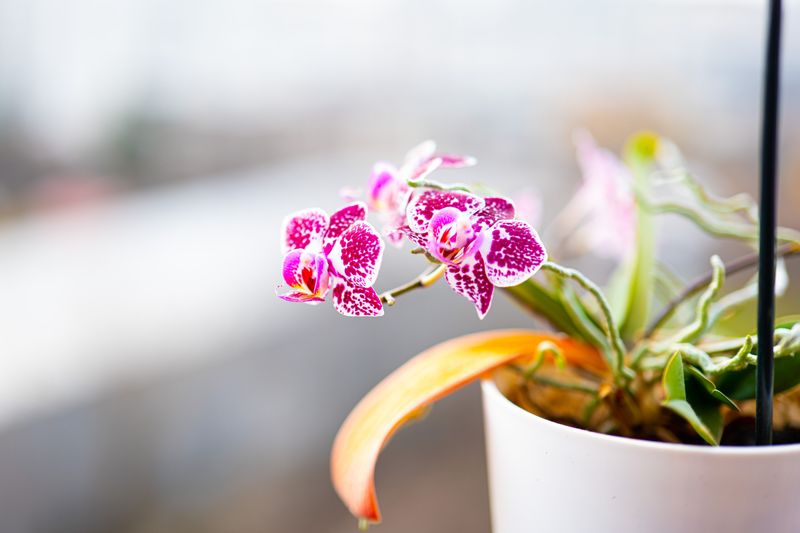
Some orchids whisper their troubles slowly instead of shouting through one dramatic symptom you can spot quickly. A plant that looks stuck for months might be asking for steadier moisture rather than a fancy new fertilizer.
Many orchids naturally slow down in cooler months, so a calm stretch is not automatically a warning sign. Still, they should keep producing a few roots or leaves, even if the pace feels painfully slow to you.
Watch for new leaves that come in noticeably smaller than the ones before them each season. That shrinking pattern often means the plant lacked enough water while the leaf was forming over several weeks.
Fewer roots and missing flower spikes can join the picture when chronic thirst drags on for a while. I keep a simple notebook with photos, because comparing pictures reveals slow changes my memory easily misses.
Water thoroughly whenever the roots turn silver, rather than giving tiny sips that only dampen the top layer. Patience pays off here, since recovering orchids usually reward steady care with fresh roots by the time spring arrives.