How to Water a Christmas Cactus When Winter Heating Dries Out Michigan Homes
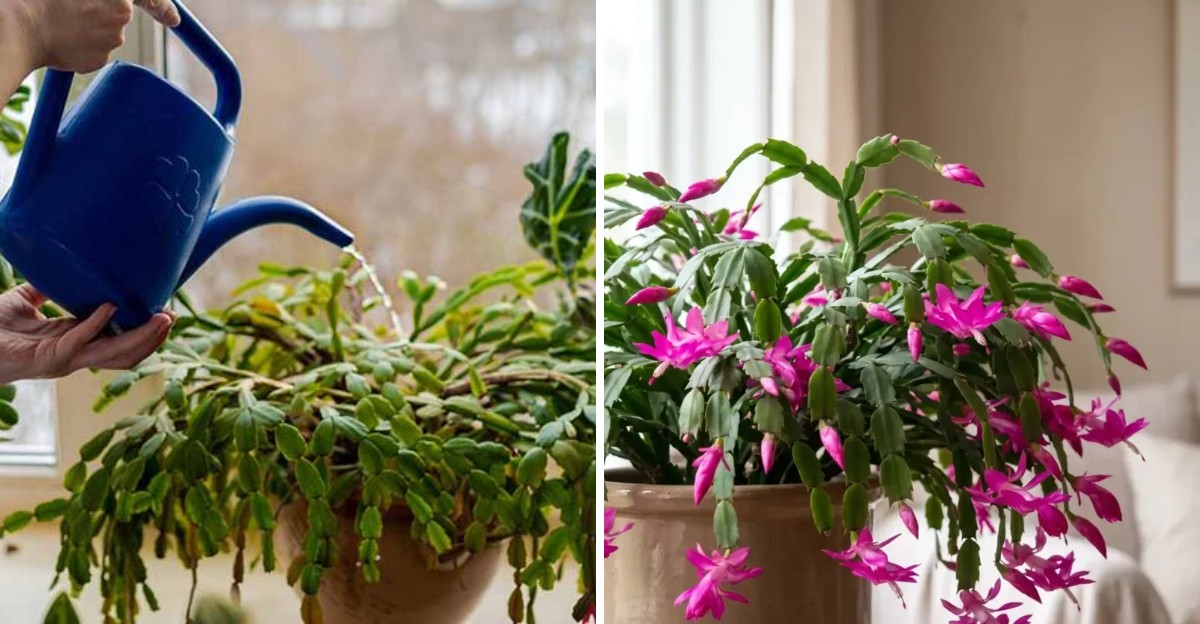
The holiday plant on your windowsill started life clinging to tree branches in the misty mountain forests of southeastern Brazil.
It has no deep roots in rich soil out there. It soaks up rain, fog, and humid air instead, and it does just fine.
Now drop that same plant into a Michigan living room in January. The furnace hums all day, and indoor humidity can sink to 30 percent or lower.
I know how frustrating it can be when a plant that bloomed beautifully in December suddenly looks limp and wrinkled by February.
The real question is whether it needs more water or just a better kind of care. I tend to think most of us guess wrong, and the fix is easier than you might expect.
1. That Wrinkled Christmas Cactus Is Sending You a Rainforest Message
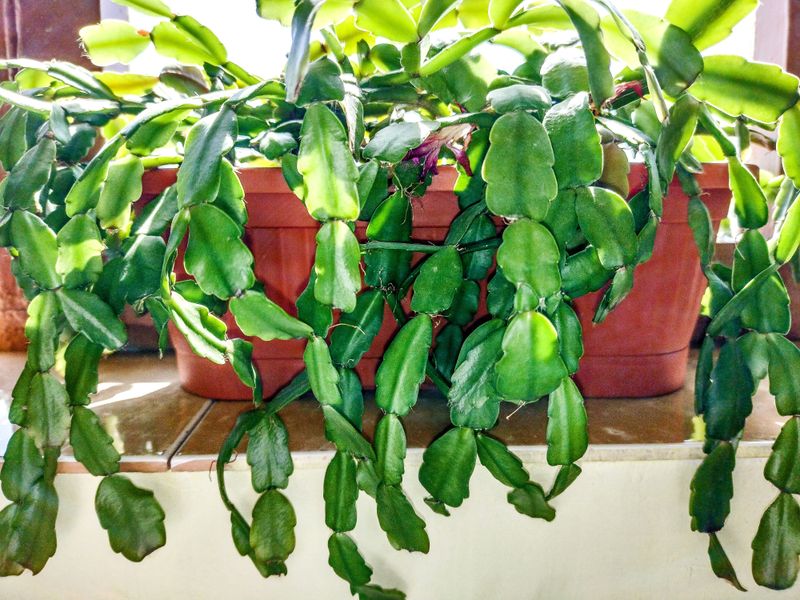
Brazil’s coastal mountain forests are where this plant feels at home. Schlumbergera grows as an epiphyte there, perched on tree limbs in shady, humid spots where clouds drift through the canopy.
That background explains a lot. Your plant is not a desert cactus built for months of drought, even though it carries the cactus name. It stores some water in its flat stem segments, but it expects regular moisture and air that feels soft and damp.
Most heated homes in winter sit far below the 50 to 60 percent humidity this plant prefers. When the air is that dry, moisture leaves the leaves and soil faster than you might guess. The plant responds by pulling water from its own segments.
So what does that look like? Thin, puckered, or wrinkled segments are the classic clue. Some leaves may take on a reddish tint, and the stems might droop like they lost their energy.
Flower buds can also drop early when the soil gets too dry. That one hurts, especially in December.
Once you understand where this plant comes from, the rest of winter care starts to make sense. It is basically asking for a little bit of its old forest back.
2. Feel the Top Inch of Soil Before You Grab the Watering Can
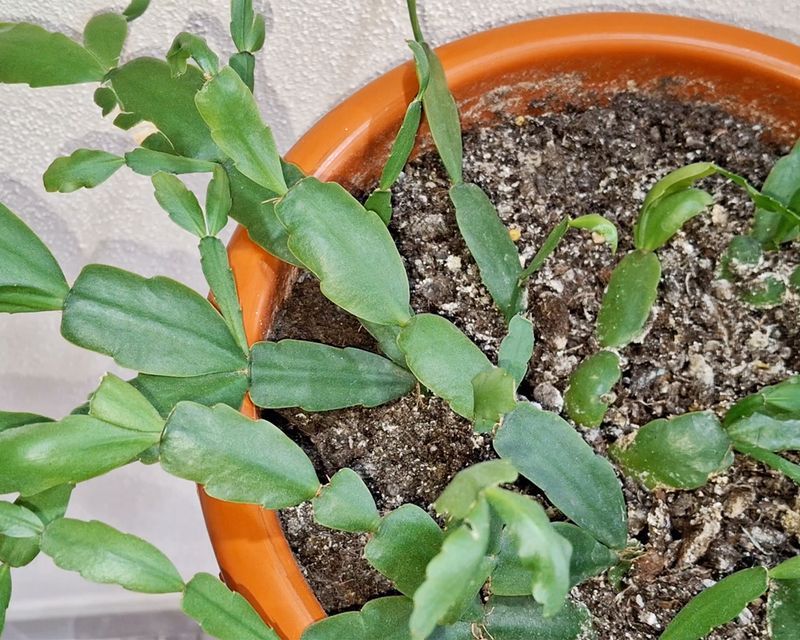
My favorite watering tool costs nothing at all. It is your index finger. Push it into the potting mix about one to two inches deep. If the soil feels dry at that depth, it is time to water. If it still feels cool and slightly damp, wait a day or two and check again.
A fixed schedule rarely works in a Michigan winter. Furnace cycles, sunny days, pot size, and the type of potting mix all change how fast the soil dries. One week your plant might need water every five days, and the next week it could go ten.
Checking by touch keeps you honest. It also protects you from the most common mistake, which is watering simply because it is Sunday.
Some gardeners also lift the pot to judge its weight. A freshly watered pot feels noticeably heavier, while a dry one feels light and easy to pick up. After a few weeks, you will know the difference in a second.
A cheap moisture meter can help if you like numbers. Still, your finger is surprisingly accurate once you build the habit of checking before every single watering.
3. Soggy Stems and Yellow Segments Mean the Watering Can Needs a Break
Here’s something you might not expect. Dry winter air tempts many of us to water more, yet overwatering causes more Christmas cactus trouble than thirst does.
Winter days are short, and growth slows down after the bloom season. A plant using less water still sitting in wet soil is an easy setup for root rot. Fungal problems love that cool, damp combination.
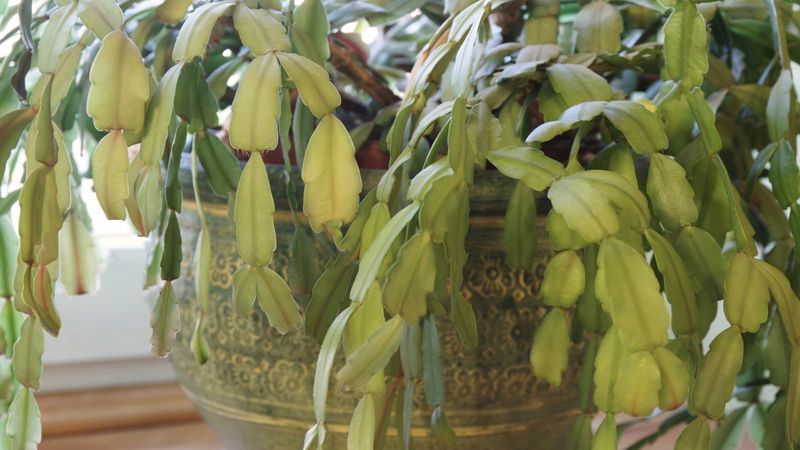
Watch for yellowing segments, stems that feel soft or mushy, and segments dropping off near the base. A sour smell from the soil is another warning sign. Wrinkled leaves can show up with overwatering too, because rotting roots stop moving water to the plant.
That last point confuses plenty of gardeners. So check the soil before deciding. Wrinkles plus dry soil means thirst, while wrinkles plus wet soil points to root trouble.
If you suspect rot, gently slide the plant out of its pot. Healthy roots look firm and light colored, while brown, mushy roots should be trimmed away.
Repot into fresh, fast-draining mix and hold off on water for several days. Healthy segments can also be rooted as cuttings, which is a handy backup plan when the main plant struggles.
4. Give Your Holiday Cactus a Slow, Deep Drink Then Let It Drain
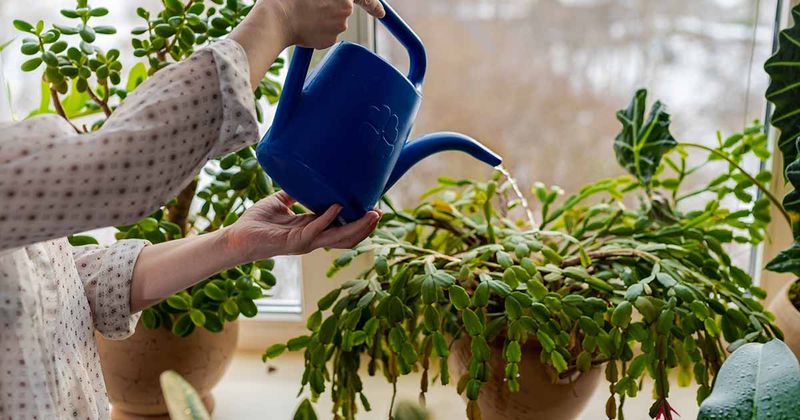
A small splash of water every few days feels kind, but it often leaves the lower roots thirsty. A thorough soak works much better.
Carry your plant to the sink if you can. Pour room-temperature water slowly over the soil until it runs freely out of the drainage holes. Slow pouring lets the mix absorb water evenly instead of channeling straight down the sides.
Then let the pot drain for 10 to 15 minutes. This step matters more than people realize. Water that sits in a saucer can keep roots soggy, and soggy roots in a cool room are a recipe for rot.
Cold tap water can shock tropical roots, so let it sit out for a bit first. Lukewarm or room temperature is just right.
Drainage holes are not optional for this plant. If your Christmas cactus came in a decorative pot or a foil wrapper, poke holes in the foil or slip the plastic nursery pot out before watering.
Once the dripping stops, put it back in its spot and wait for the soil to dry down again. That simple soak and dry rhythm keeps roots healthy all winter.
5. A Pebble Tray Under Your Christmas Cactus Adds a Pocket of Humidity
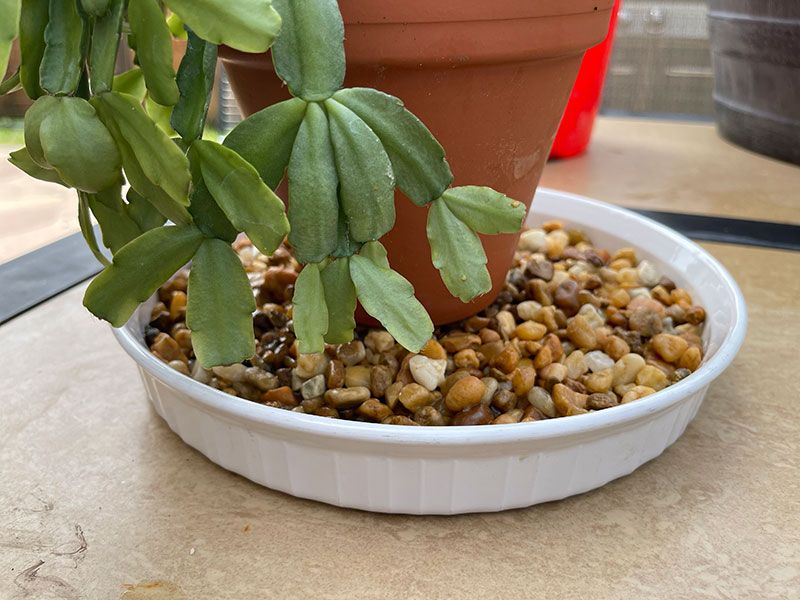
Grandmothers across the Midwest swore by this trick long before anyone sold fancy humidity gadgets. It still works for a small boost.
Grab a shallow tray or saucer wider than your pot. Fill it with a layer of pebbles, gravel, or decorative stones, then add water until it sits just below the top of the stones. Set the pot on the pebbles so the bottom stays above the waterline.
As the water evaporates, it raises the moisture level right around the plant. The effect is modest and local, so do not expect it to change the whole room. Still, it helps soften that crackly furnace air near the leaves.
Keeping the pot out of standing water is the key detail. If the roots wick up water from below, you end up with the soggy soil problem all over again.
Refill the tray every few days as it dries out. Rinse the stones now and then so algae and mineral crust do not build up.
A pebble tray also looks tidy and catches drips after watering. It is a cheap, low-effort upgrade that pairs nicely with the other humidity ideas in this list.
6. A Small Humidifier Can Turn Your Living Room Into Cactus Country
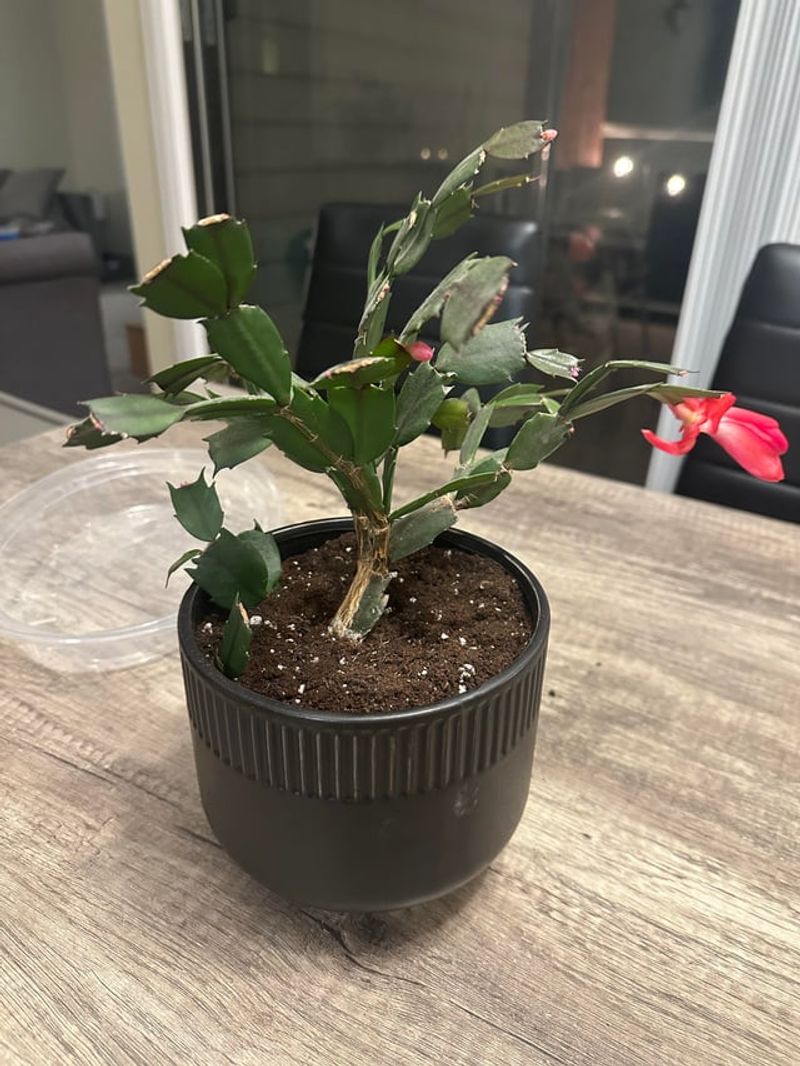
Want the biggest humidity boost with the least fuss? A room humidifier wins that contest easily.
Michigan winters often push indoor humidity into the 20 to 40 percent range. A humidifier running in the same room can lift it toward 50 percent, which suits your Christmas cactus much better. Your skin, lips, and wood floors may thank you too.
Cool mist models are a popular choice around plants. Place the unit a few feet away so the mist drifts through the air instead of soaking the leaves directly. Constantly wet foliage can invite fungal spots.
An inexpensive hygrometer helps you see what is really happening. These little gauges show the room’s humidity, so you can aim for roughly 40 to 50 percent. Going much higher in a cold Michigan house can cause condensation on windows.
Clean the humidifier regularly, following the maker’s directions. Dirty tanks can grow mold and bacteria, which nobody wants floating around the house.
Misting the plant with a spray bottle is a common suggestion, but the effect fades within minutes. A humidifier offers steady moisture all day, and that consistency is what a rainforest plant really appreciates.
7. Keep That Blooming Cactus Away From Heat Vents and Drafty Doors
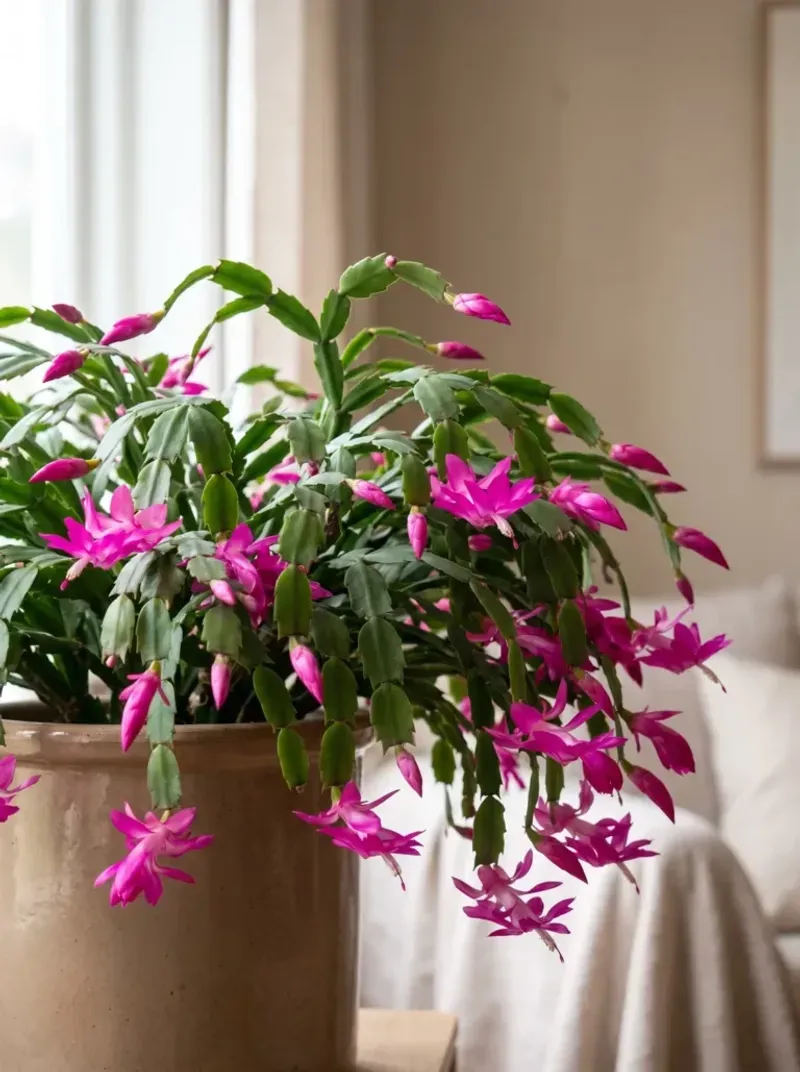
Location can quietly undo all your careful watering. A floor register blowing warm air on your plant dries the soil and leaves in record time.
Move your Christmas cactus away from heating vents, radiators, space heaters, and fireplaces. Those spots create hot, bone-dry pockets of air. Cold drafts from exterior doors or leaky windows cause stress too, and they can trigger bud drop.
Bright, indirect light suits this plant best. An east-facing window is often ideal, and a spot a few feet back from a south window works well. Harsh direct sun can bleach or redden the segments.
Grouping houseplants together helps a little. Plants release moisture through their leaves, so a cluster creates a slightly more humid neighborhood than one lonely pot.
Bathrooms and kitchens with good light make cozy winter homes as well. Cooking and showers add moisture to the air naturally.
Steady temperatures around 60 to 70 degrees during the day keep this plant comfortable. Cooler nights are fine and can even help set buds in fall. Once you find a good spot, try not to move it around while buds are forming.
8. Fast-Draining Soil Keeps Christmas Cactus Roots Happy for Decades
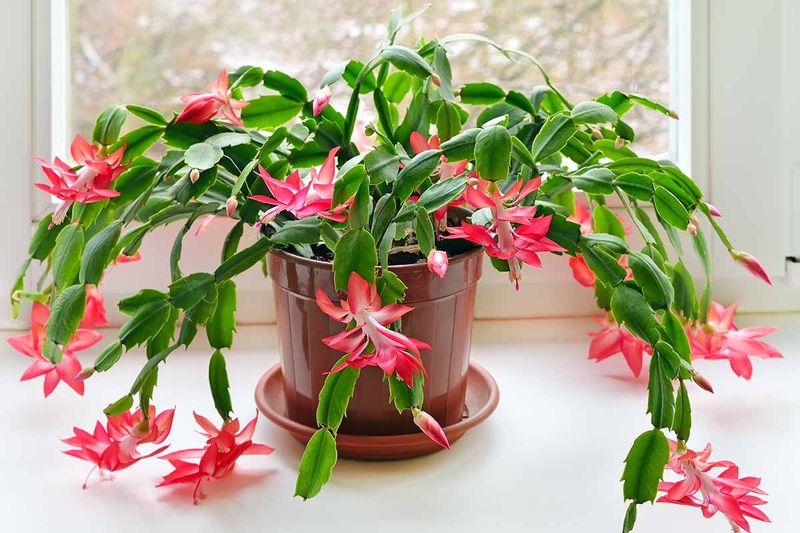
What makes this plant so special is its staying power. Christmas cacti often live for decades, and many Michigan families pass them down from one generation to the next.
Healthy roots are the secret behind those heirloom plants. Because Schlumbergera grows on trees in the wild, its roots like air as much as water. Dense, heavy potting soil holds too much moisture and smothers them.
A chunky, fast-draining mix works far better. Try blending regular potting mix with perlite and orchid bark, or use a cactus mix with extra bark added. Water should pass through quickly while the bark holds a little moisture.
This plant actually prefers being slightly snug in its pot. Repot every few years, ideally in spring after blooming ends, and move up only one pot size.
Feeding matters less in winter. Skip fertilizer during the slow season, then use a balanced houseplant fertilizer at half strength from spring through summer.
Put all these pieces together and winter care gets simpler. Check the soil, water deeply, add humidity, and choose a cozy spot. Your plant can reward that effort with flowers for many holidays to come.