How To Water California Peach Trees For A Bigger, Healthier Harvest
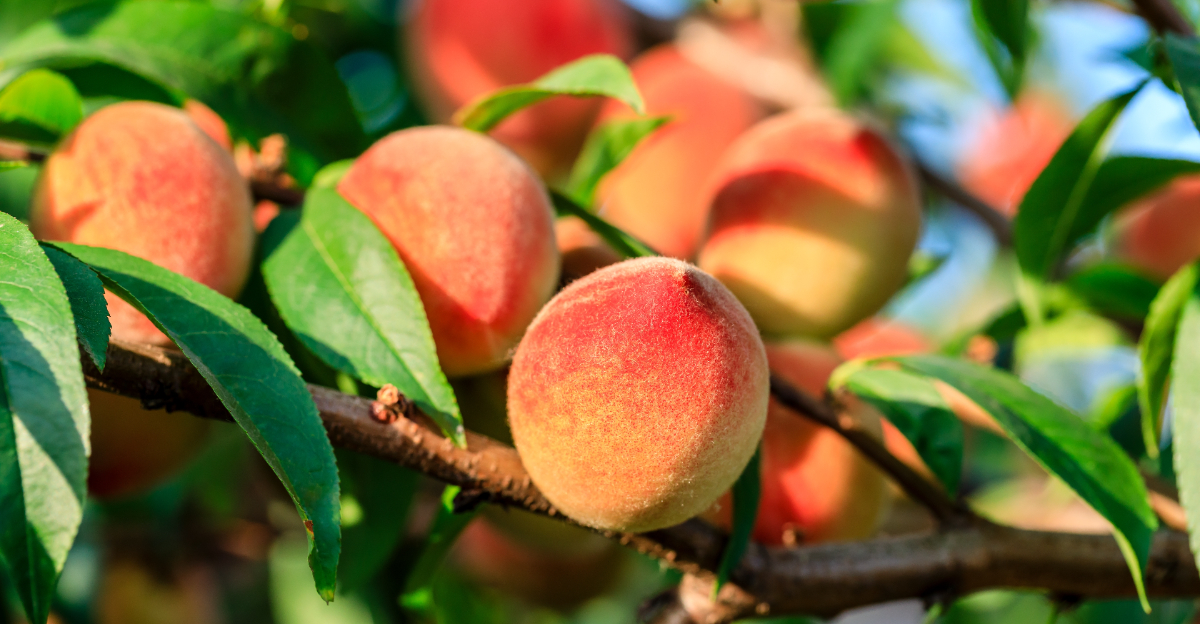
California peach trees are not exactly subtle when they want water. One week they are promising juicy, sun-warmed fruit, and the next they are dropping leaves, shrinking fruit, or acting like summer personally wronged them.
The tricky part is that bigger harvests do not come from random extra watering. Peach trees need steady moisture at the right times, especially when fruit is sizing up and heat starts pushing the tree hard.
Too little water can leave you with small, stressed fruit, while too much can invite weak growth and root trouble. Annoying? Very. Fixable? Absolutely.
Once you understand how deep to water, when to adjust, and why the soil matters more than the calendar, your peach tree has a much better shot at producing a harvest that feels worth bragging about.
Big, sweet peaches start below ground, long before they hit the bowl.
1. Deep Watering Builds Better Peach Roots
Most people in California water their peach trees the same way they water everything else in the yard, a quick spray and done. That approach works fine for flowers, but peach trees are built differently.
Their roots reach down far into the soil, sometimes two to three feet deep, searching for moisture and nutrients.
When you water too shallow, only the top few inches of soil get wet. The roots start growing upward toward that moisture instead of downward where they belong.
Shallow roots make a tree unstable and more likely to suffer during hot, dry stretches.
Deep watering changes all of that. By soaking the soil slowly and thoroughly, you push moisture down to where the deep roots actually live.
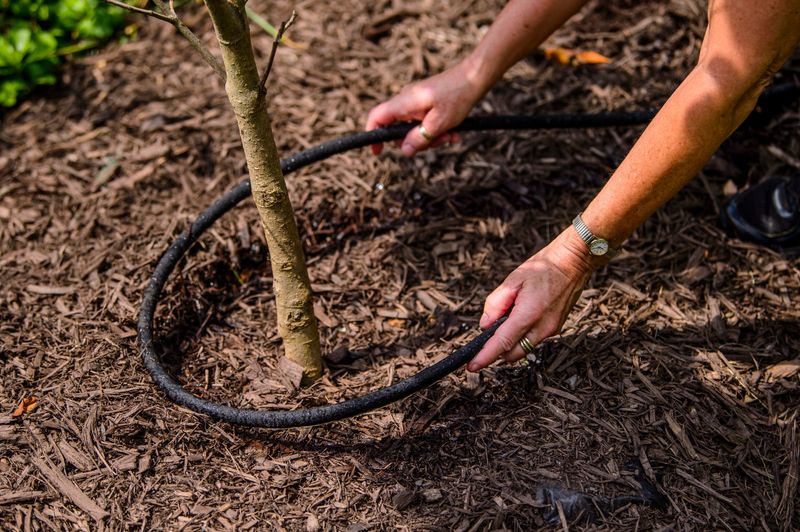
A soaker hose or drip system left on for 45 to 90 minutes does the job well. You want the water to reach at least 18 inches below the surface.
Check the depth by pushing a long screwdriver or soil probe into the ground after watering. If it slides in easily to 18 inches, you have watered enough.
If it stops at 6 inches, you need more time.
Deep watering also trains the tree to be more self-sufficient. Strong, deep roots can access moisture stored lower in the soil during dry spells.
This makes the whole tree tougher and more productive over time.
2. Shallow Sprinkling Leaves Trees Struggling
Overhead sprinklers feel like the easy answer when it is hot outside. You flip a switch, the yard gets wet, and everything looks green.
But for peach trees, that quick surface spray often does more harm than good.
Wet leaves and branches create the perfect environment for fungal diseases like peach leaf curl and brown rot. These problems spread fast during warm, humid conditions.
Once a fungal issue takes hold, it can reduce your fruit yield significantly for the rest of the season.
Shallow watering also tricks the tree. The top inch of soil gets soaked, but the deeper root zone stays dry.
The tree senses that surface moisture and responds by growing roots upward. Those roots are vulnerable to heat, drought, and competition from weeds.
Your California Garden Changes Every Week. Your Plan Should Too.
Gardening in California changes quickly throughout the season. Every Friday you’ll receive a simple weekly plan showing exactly what to plant, prune, fertilize, harvest, and protect so you never miss the right timing.
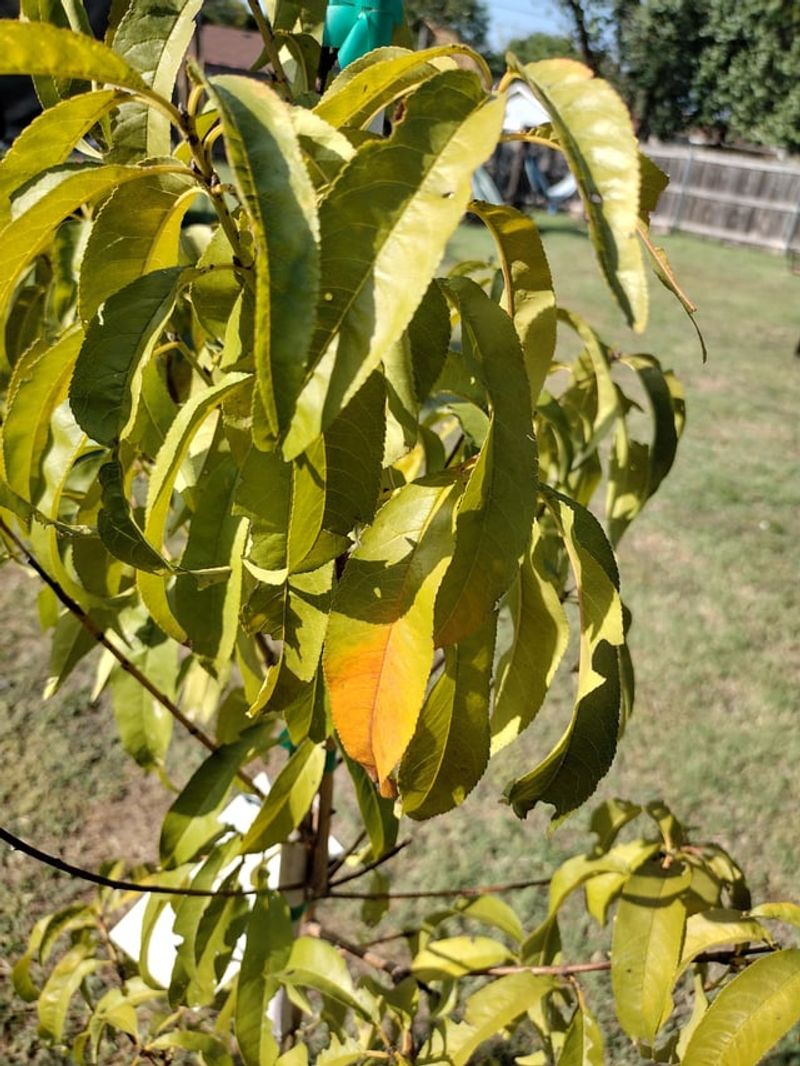
A tree with shallow roots shows stress quickly. Leaves may curl or drop early.
Fruit may crack or fall off before it ripens. The whole tree looks tired even when it gets watered regularly.
Switching to ground-level watering solves most of these issues. Drip emitters, soaker hoses, or even a slow-running garden hose laid at the base of the tree all deliver water directly to the soil without wetting the foliage.
Your tree stays drier on top and wetter where it counts most, down in the root zone.
3. Fruit Sizing Needs Steady Moisture
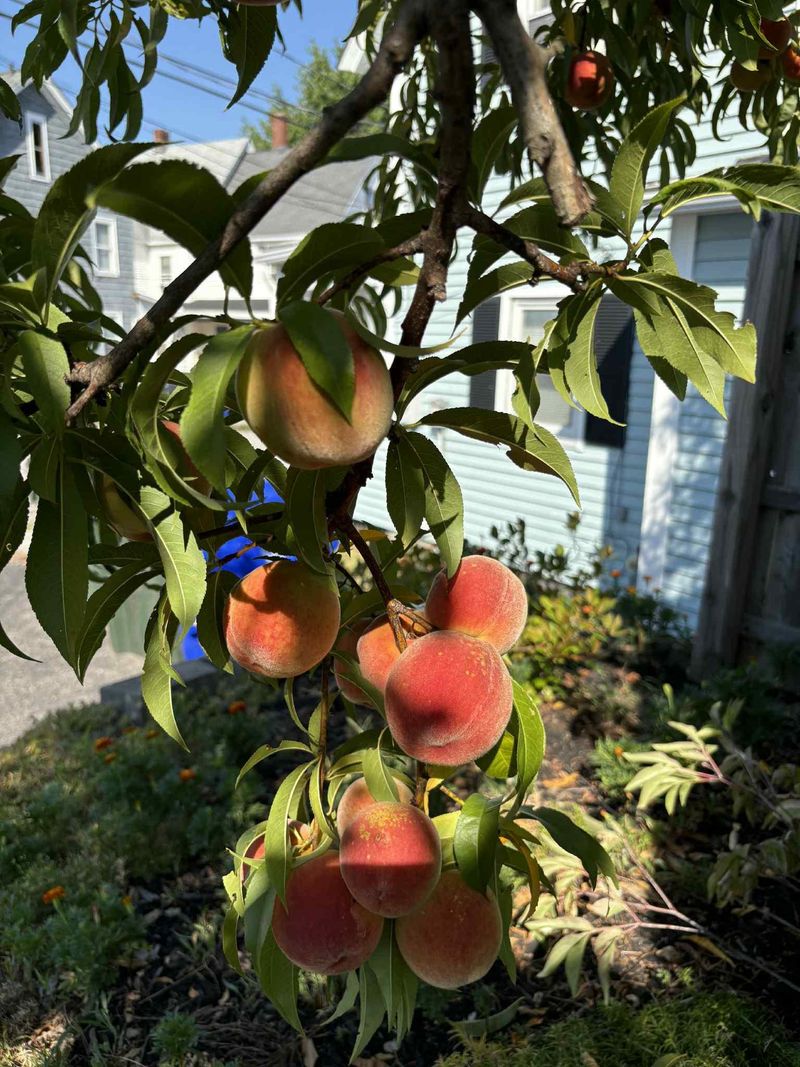
Peaches do not grow to full size all at once. They go through several stages of development, and each stage depends on consistent moisture to keep things moving.
When water becomes irregular, the fruit pays the price.
The most critical window runs from late spring through midsummer. This is when the fruit is actively sizing up.
During this stretch, the tree is pulling huge amounts of water from the soil to fill out each peach. If the soil dries out even for a week or two during this period, the fruit stops growing.
Once the fruit stops growing due to drought stress, it rarely catches back up to full size. You end up with smaller peaches that feel dense and dry instead of big, juicy ones.
Consistent watering during this window is one of the easiest ways to increase fruit size without changing anything else.
Aim to keep the soil evenly moist, not soggy, from the time the fruit sets in spring until about two weeks before your expected harvest.
A good rule of thumb is to water deeply once or twice a week during warm weather, adjusting based on rainfall and temperature.
Using a moisture meter takes the guesswork out of the process. Stick it into the soil near the drip line and check the reading before every watering session.
Your peaches will thank you with bigger, fuller fruit.
4. Dry Swings Can Shrink The Harvest
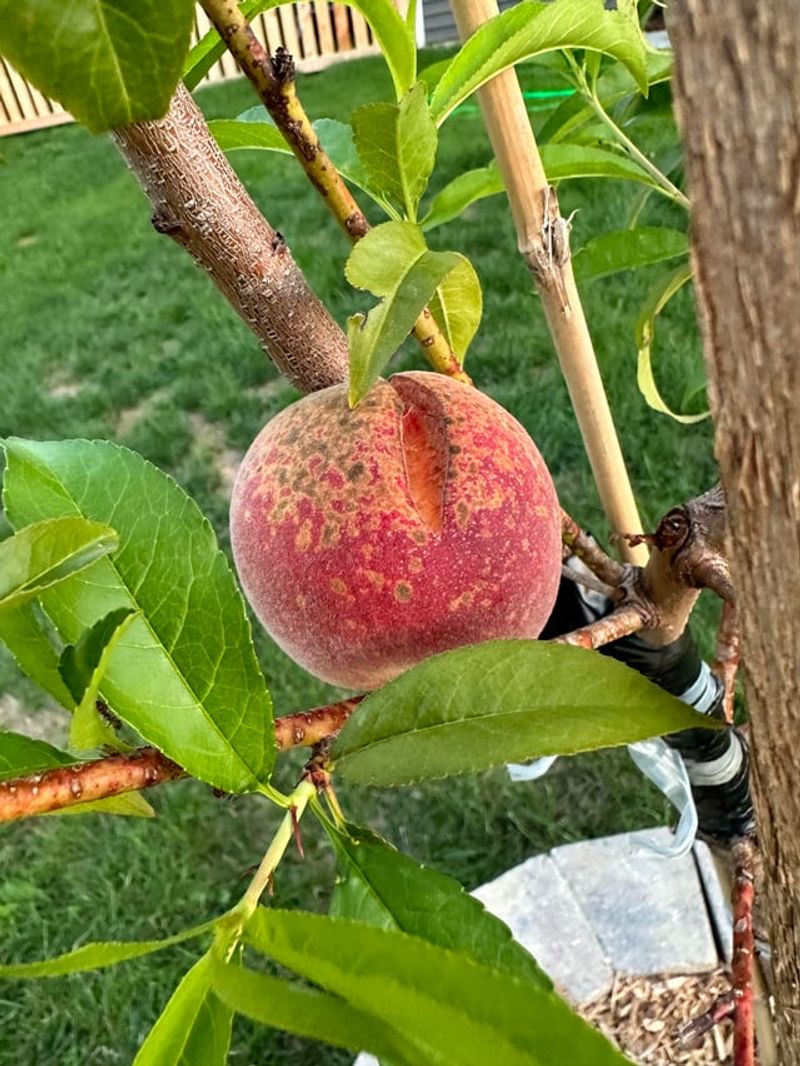
Going back and forth between dry soil and soaking wet soil is one of the most common watering mistakes peach growers make. It feels harmless, but the tree experiences that shift as stress.
And stress during the growing season always shows up in the fruit.
When a peach tree dries out and then gets flooded with water, the fruit absorbs that sudden rush of moisture too fast. The skin cannot stretch quickly enough to keep up with the rapid expansion of the flesh inside.
The result is split or cracked fruit, which looks bad and makes the peaches more vulnerable to insects and rot.
Dry swings also affect the sugar content of the fruit. Peaches that go through repeated wet-dry cycles tend to taste less sweet and have a mealier texture than those grown with steady moisture.
The internal quality suffers even when the outside looks fine.
Setting a watering schedule and sticking to it is the simplest fix. In the Central Valley and other warm growing California regions, that usually means watering every five to seven days during the summer.
In hotter inland areas, every three to four days may be needed.
Rainfall counts too. After a good rain, skip the next scheduled watering and check the soil first.
Keeping things consistent takes a little attention, but it makes a real difference in the size and quality of your harvest.
5. Young Peach Trees Need More Frequent Checks
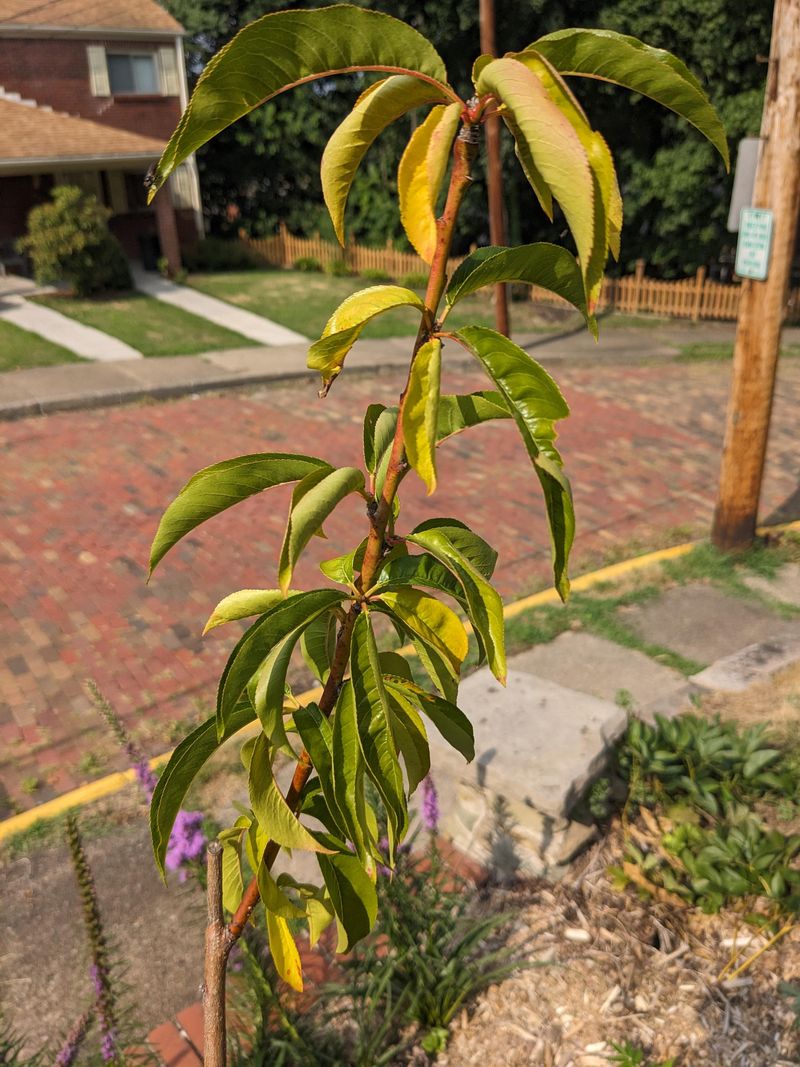
A newly planted peach tree has not yet built the deep root system it will eventually rely on. Its roots are still close to the surface, concentrated in the small root ball it came with from the nursery.
That makes it far more sensitive to dry spells than a mature tree.
During the first two years, young trees need water more often. In warm weather, that might mean checking soil moisture every two to three days.
You are not always watering, but you are always watching. The goal is to keep the root zone consistently moist without letting it dry out completely between waterings.
A common mistake with young trees in California is assuming that because it rained recently, everything is fine. Light rain often does not penetrate deep enough to reach the roots.
Always check the soil a few inches down before deciding to skip a watering.
Watering slowly and directly at the base of the trunk is key for young trees. A five-gallon bucket with a small hole drilled in the bottom works great.
Fill it up and let it drain slowly into the soil right at the root zone. This method delivers water exactly where the young roots need it most.
As the tree grows and its roots spread wider, you can gradually space out your waterings. But for the first couple of seasons, stay attentive and keep that root zone moist.
6. Mature Trees Need A Wider Soak Zone
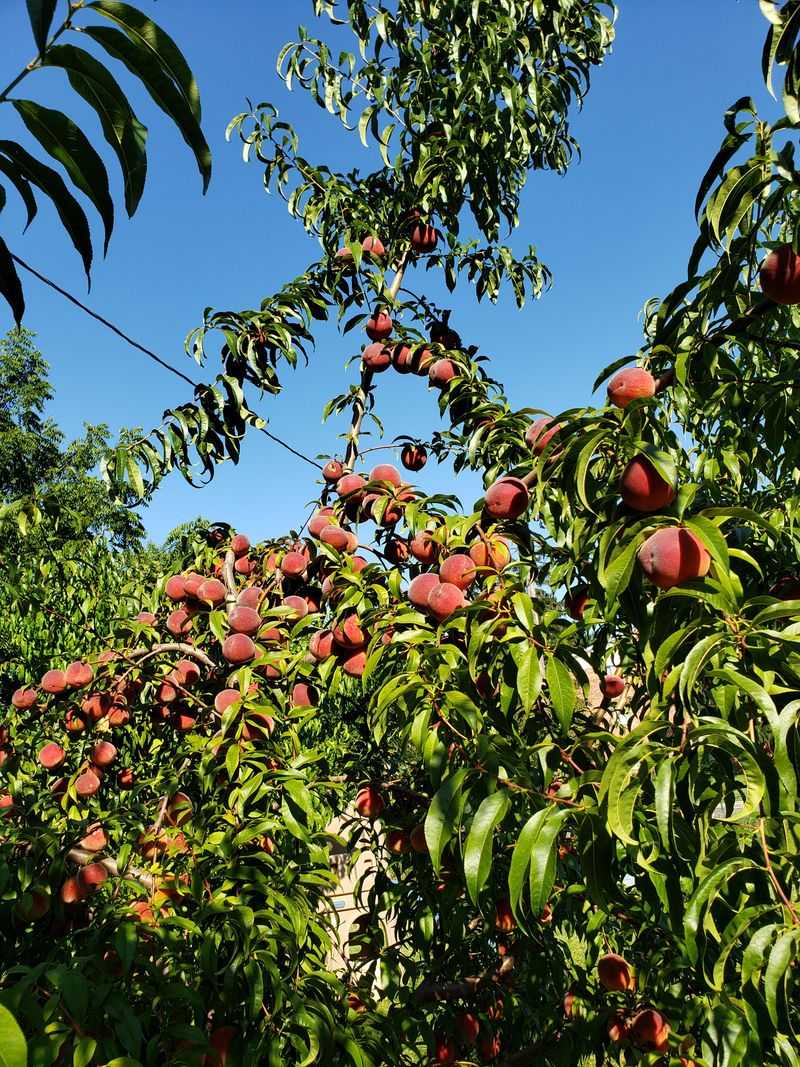
Once a peach tree reaches full size, everything about how you water it needs to scale up. A mature tree can spread its canopy eight to fifteen feet wide, and the roots extend even farther than that.
Watering close to the trunk the way you did when it was young simply does not reach the active root zone anymore.
The feeder roots, which are the thin roots that actually absorb water and nutrients, live out near the edge of the canopy and beyond. That outer edge is called the drip line.
It marks the boundary where rain falls off the leaves and hits the ground. That is exactly where your water needs to go.
Moving your irrigation system outward as the tree grows is one of the most important adjustments you can make.
Drip emitters or soaker hoses placed in a wide circle around the tree, following the drip line, deliver water right to the roots that need it most.
For a large mature tree, that circle might be ten feet or more in diameter. Watering that entire zone thoroughly ensures every feeder root gets a drink.
This leads to stronger growth, better fruit development, and a more resilient tree overall.
Reassess your irrigation setup every spring before the growing season starts. Trees grow every year, and your watering zone should grow with them to keep up with the expanding root system.
7. Water Beyond The Trunk, Not Against It
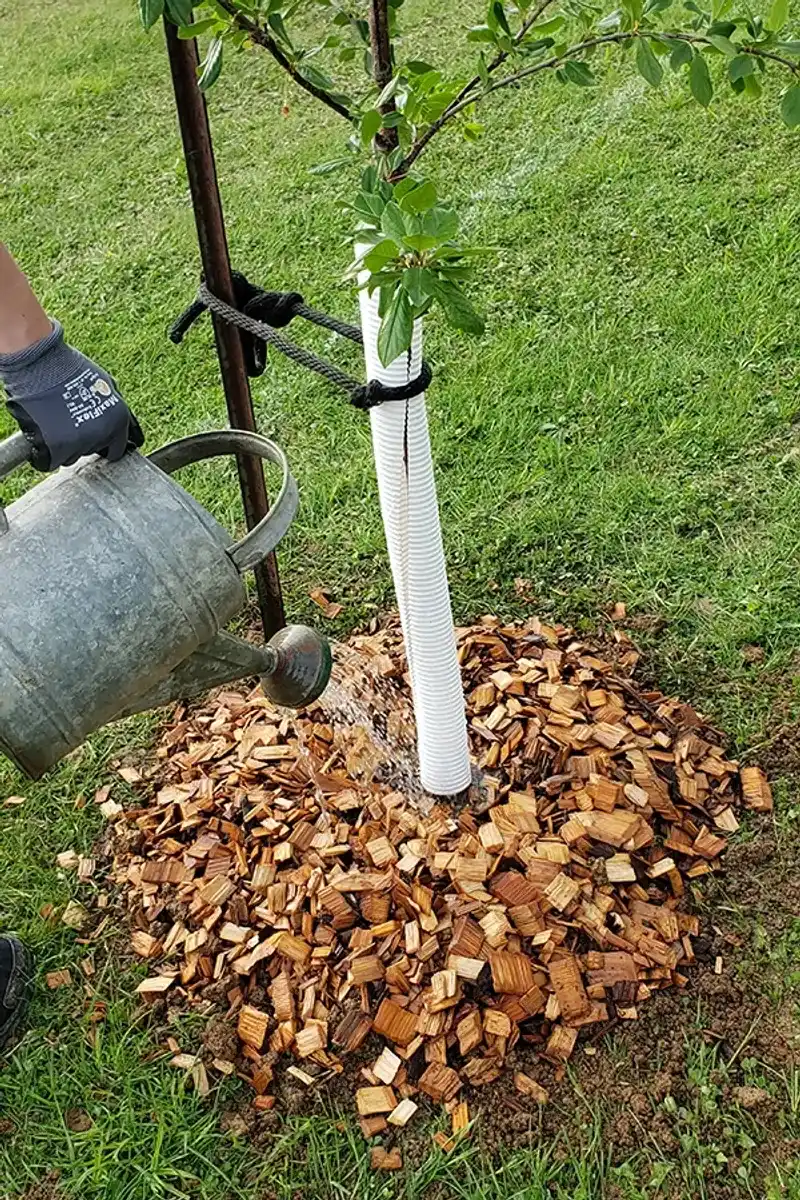
Watering right up against the trunk of a peach tree is one of those habits that seems harmless but causes real problems over time. The bark at the base of the trunk is not designed to sit in wet soil.
When it stays damp for too long, it softens and becomes vulnerable to rot and fungal infections.
Crown rot is a serious condition that starts right at the soil line. It spreads slowly but steadily through the lower trunk and can weaken the tree from the inside out.
Keeping that area dry is one of the easiest ways to prevent it.
Pull your drip emitters or soaker hose at least six to twelve inches away from the trunk. For mature trees, push that distance even farther out toward the drip line.
The roots you are trying to feed do not live right next to the trunk anyway. They spread outward, so your water should too.
When hand-watering, aim the hose at the soil around the outer root zone, not at the base of the tree. Let the water soak in slowly rather than pooling against the bark.
Also avoid piling soil or mulch directly against the trunk. Keep a small gap of a few inches between any mulch layer and the bark itself.
This simple habit keeps the trunk dry, reduces disease risk, and helps your tree stay strong season after season.
8. Mulch Keeps Peach Roots Cooler
Summer temperatures in the Central Valley and other inland growing regions of California can push well past 100 degrees for days at a time. That kind of heat bakes the soil surface and pulls moisture out of the ground faster than most people realize.
Mulch is one of the simplest tools you have to fight that moisture loss.
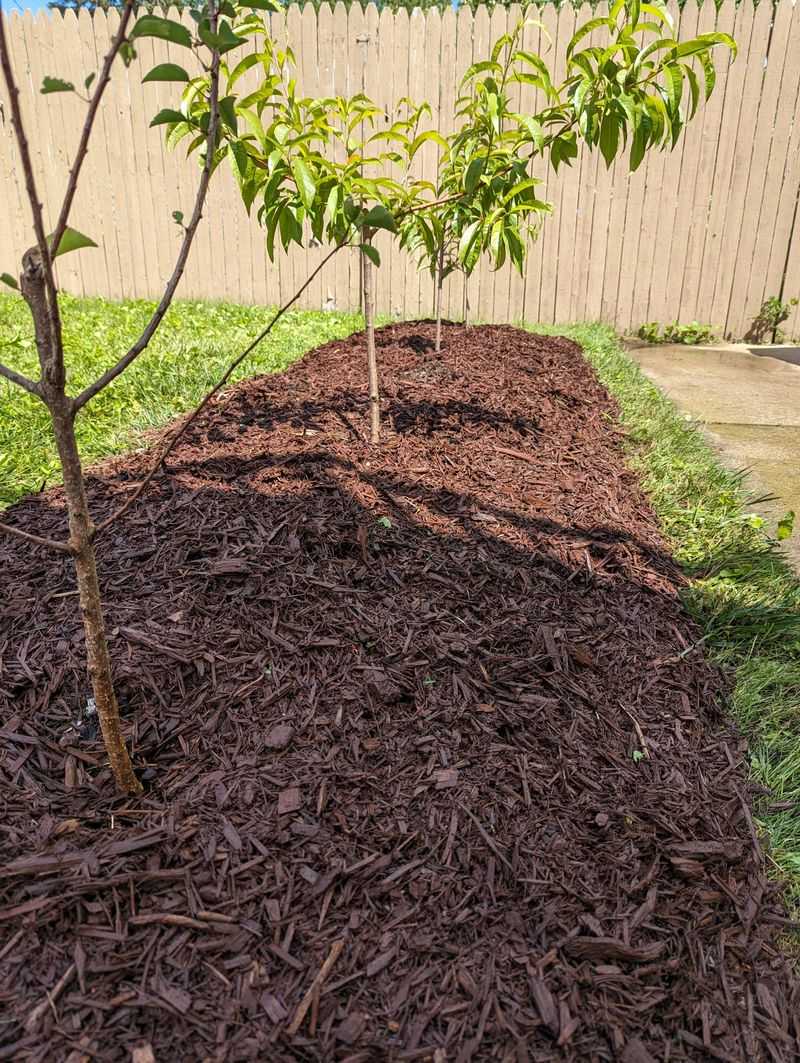
A three to four inch layer of organic mulch spread around the base of your peach tree works like insulation for the soil. It blocks direct sunlight from hitting the ground, which keeps soil temperatures significantly cooler.
Cooler soil loses moisture much more slowly, which means you water less often and your tree stays hydrated longer between sessions.
Wood chips, straw, and shredded bark all work well as mulch materials. Spread the mulch out to the drip line of the tree, covering the entire root zone.
The wider you go, the more benefit the tree gets. Just remember to leave that small gap around the trunk to keep the bark dry.
As organic mulch breaks down over time, it also adds nutrients back into the soil and improves soil structure. This creates a better environment for the roots to grow and absorb water more efficiently.
Refresh your mulch layer each spring before the hot weather arrives. A fresh layer at the start of the season gives you the best moisture retention all summer long and reduces your overall watering workload considerably.
9. Clay Soil Needs Slower Watering
Many parts of California have heavy clay soil, especially in the Central Valley and some northern growing regions.
Clay holds water longer than sandy or loamy soil, which sounds like a good thing, but it creates its own set of challenges for peach trees.
Clay absorbs water slowly. When you run water too fast over clay soil, it pools on the surface and runs off instead of soaking in.
The top layer looks wet while the deeper root zone stays completely dry. Your tree ends up thirsty even though you just watered it.
The fix is to water slowly and in cycles. Run your drip system or soaker hose for 20 to 30 minutes, then pause for an hour to let the water soak in before running it again.
This cycle soak method gives the clay time to absorb moisture between pulses, allowing water to penetrate deeper without runoff.
Clay soil also stays wet longer after watering, so be careful not to overwater. Check the soil a day or two after watering before adding more.
Overwatered clay becomes compacted and oxygen-poor, which stresses the roots over time.
Adding compost to clay soil each year improves its structure gradually. Better soil structure means faster absorption and better drainage.
Even a few years of compost additions can transform heavy clay into a more root-friendly growing environment for your peach trees.