Hummingbird Predators And Pests You Don’t Want Near Your Pennsylvania Feeders
Pennsylvania backyards may look peaceful, but hummingbird feeders attract more than just the birds you hoped to see. Some visitors are after the sugar water.
Ants march up the pole, while bees and wasps crowd the ports and chase hummingbirds away. Other visitors have their eyes on the hummingbirds themselves.
A few are sneaky, and some are hiding in plain sight. As these tiny birds fuel up for their long trip south, every safe sip matters.
Knowing who’s lurking around your feeder is the first step toward keeping it a safe, welcoming stop for the hummingbirds you love watching.
1. Outdoor Cats Stalking The Flower Beds
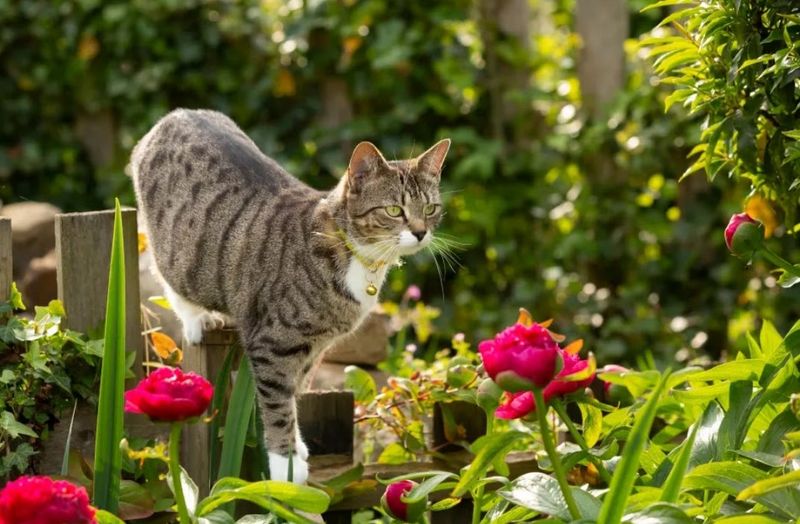
Your neighbor’s sweet, purring cat may be the biggest danger in your yard. Studies suggest outdoor cats catch billions of birds each year across the United States. Hummingbirds are small, but they are not too fast for a patient cat.
Cats love to hide in thick flower beds and low bushes. They wait quietly until a hummingbird dips down to feed.
Then they spring upward in a flash. Feeders hung close to the ground make this job much easier for them.
So how do you stop a furry hunter? Start by placing your feeder at least five feet off the ground.
Keep it away from shrubs, fences, and railings where a cat could crouch or climb. An open space around the feeder gives birds a clear view of danger coming their way.
You can also plant flowers in ways that help. Tall, dense plantings right under the feeder give cats a great hiding spot.
Try spreading your flowers out and leaving some open ground nearby. Prickly plants or garden mulch with rough texture can also make cats less eager to sneak around.
If the cat belongs to you, the best choice is keeping it indoors. Indoor cats often live longer and stay healthier too.
Some owners use a catio, which is a screened outdoor pen. It lets your pet enjoy fresh air without hunting.
For stray or neighbor cats, a motion-activated sprinkler works well. A quick burst of water scares cats without hurting them.
Most cats learn fast and start avoiding your yard. A friendly chat with neighbors can help too, since many people simply do not know their pet is causing trouble.
2. Praying Mantises Lurking On The Perch
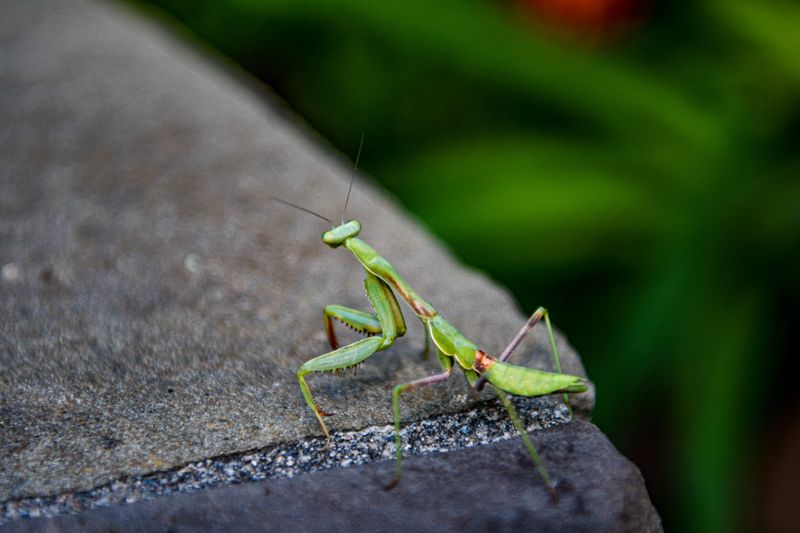
It sounds like something from a horror movie, but it is true. Large praying mantises sometimes grab hummingbirds right out of the air. Scientists have recorded these attacks in many states, including Pennsylvania.
The biggest trouble comes from non-native mantises. The Chinese mantis and the European mantis are both common across the state.
The Chinese mantis can grow up to five inches long. That is bigger than a ruby-throated hummingbird!
Mantises are ambush hunters. They sit very still on a feeder or nearby flower and wait. When a hummingbird hovers close, the mantis strikes with its spiky front legs.
Late summer is the riskiest time, since mantises are fully grown by August and September.
Your Pennsylvania Garden Changes Every Week. Your Plan Should Too.
Gardening in Pennsylvania changes quickly throughout the season. Every Friday you’ll receive a simple weekly plan showing exactly what to plant, prune, fertilize, harvest, and protect so you never miss the right timing.
Here is the tricky part. Many gardeners buy mantis egg cases to control garden pests. They think they are helping.
Sadly, these large mantises eat helpful insects and small birds too. Skip buying egg cases, especially the Chinese kind.
Checking your feeder every day is the easiest fix. Look closely at the perches, ports, and hanging hook.
Mantises are green or brown, so they blend in well. If you spot one, gently scoop it into a container and move it far away, at least a few hundred feet.
You can also choose feeders with fewer places to hide. Simple saucer-style feeders give mantises less room to perch.
Keep flowers and vines trimmed back from the feeder pole too. Fun fact: a mantis can turn its head almost all the way around, so it can watch birds coming from many directions.
3. Sharp-Shinned Hawks And Other Fast Flyers
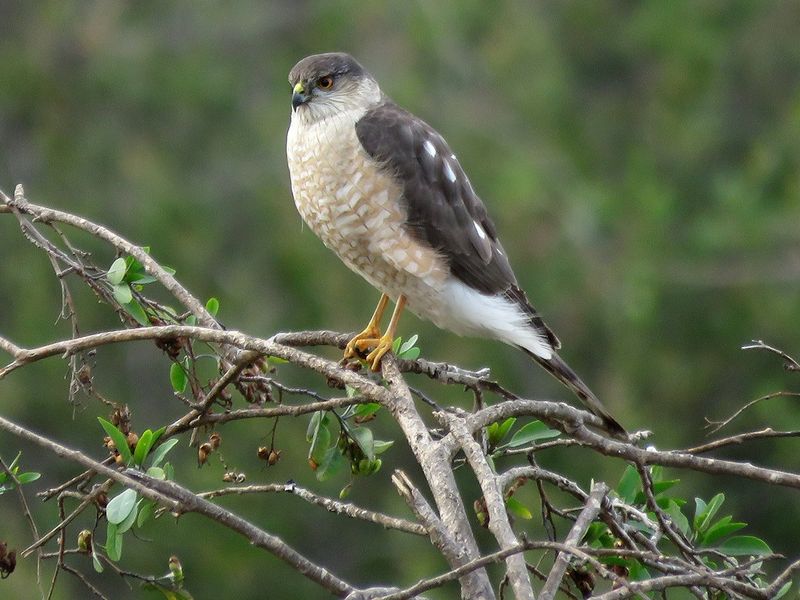
Out of nowhere, a gray blur shoots through the yard. Every bird scatters. That quick hunter might be a sharp-shinned hawk, one of Pennsylvania’s sneakiest raptors.
Sharp-shinned hawks are small, about the size of a blue jay. They mostly chase songbirds like sparrows and finches.
Still, they will go after a hummingbird if the chance pops up. American kestrels and merlins sometimes try too, though catches are rare because hummingbirds are so quick.
Here is something worth knowing. Hawks are protected by federal law. You cannot trap or harm them in any way. They are a natural part of Pennsylvania’s wildlife, and they help keep bird populations healthy.
So what can you do? Give your hummingbirds good escape routes. Place feeders about ten to fifteen feet from trees or tall shrubs. Close enough cover lets birds dart to safety, but not so close that hawks can hide and pounce.
Leafy plants make great hideouts for tiny birds. Native shrubs like spicebush and viburnum offer thick branches to duck into. Hummingbirds can squeeze into small spaces a hawk simply cannot reach.
If a hawk starts visiting daily, take your feeders down for a week or two. The hawk will usually move on to hunt somewhere else.
Then you can put the feeders back up. Hawk Mountain Sanctuary in eastern Pennsylvania is famous for watching thousands of migrating raptors each fall. A visit there is a fun way to learn how these amazing hunters really work.
4. Ants Marching Toward The Sugar
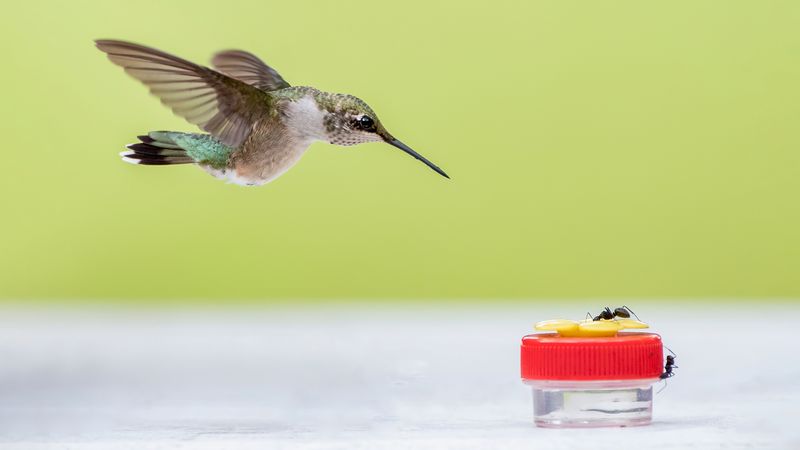
Ants have an amazing nose for sugar. Once one scout finds your feeder, it leaves a scent trail. Before long, hundreds of its friends are marching up the pole.
A few ants might not seem like a big deal. But they crowd the feeding ports and fall into the nectar. Hummingbirds often refuse to drink from a feeder packed with bugs.
Luckily, the fix is cheap and easy. An ant moat is a small cup that hangs above your feeder. You fill it with plain water.
Ants cannot swim across, so they cannot reach the nectar. Many feeders now come with a moat built right in.
Please avoid a common mistake. Some people smear oil, grease, or petroleum jelly on hooks and poles.
This can get on a hummingbird’s feathers. Sticky feathers make flying and staying warm very hard for these tiny birds.
Leaky feeders are another reason ants show up. Check that your feeder seals tightly and does not drip. Hang it in a shady spot, since sunlight warms the nectar and can push it out of the ports. Wipe up any sticky spills on nearby railings.
You can also move the feeder a few feet every so often. Ants lose their scent trail and have to start the search all over. Fishing line works too.
Hang the feeder from a thin line, and ants have a hard time climbing down it. Small steps like these keep the sweet stuff for the birds.
5. Bees, Wasps, And Yellow Jackets Crashing The Party
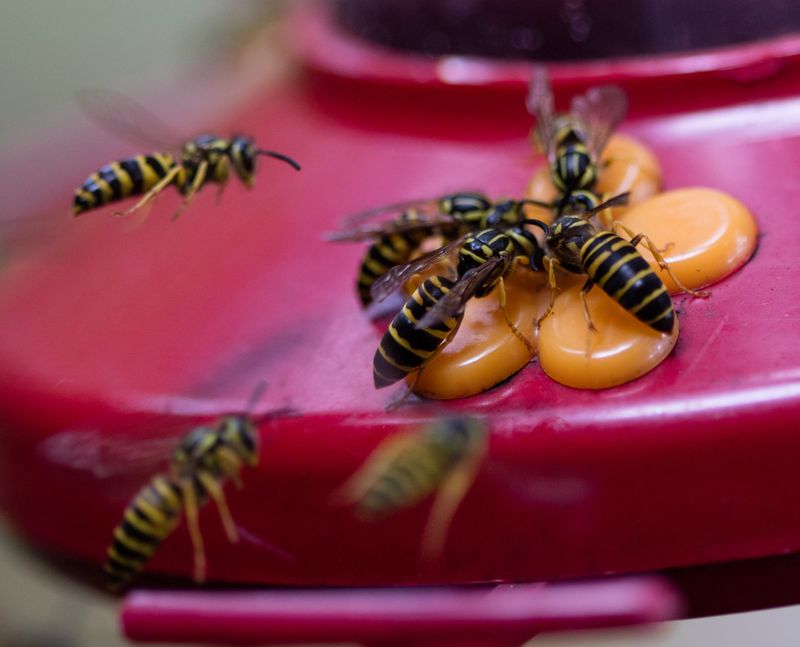
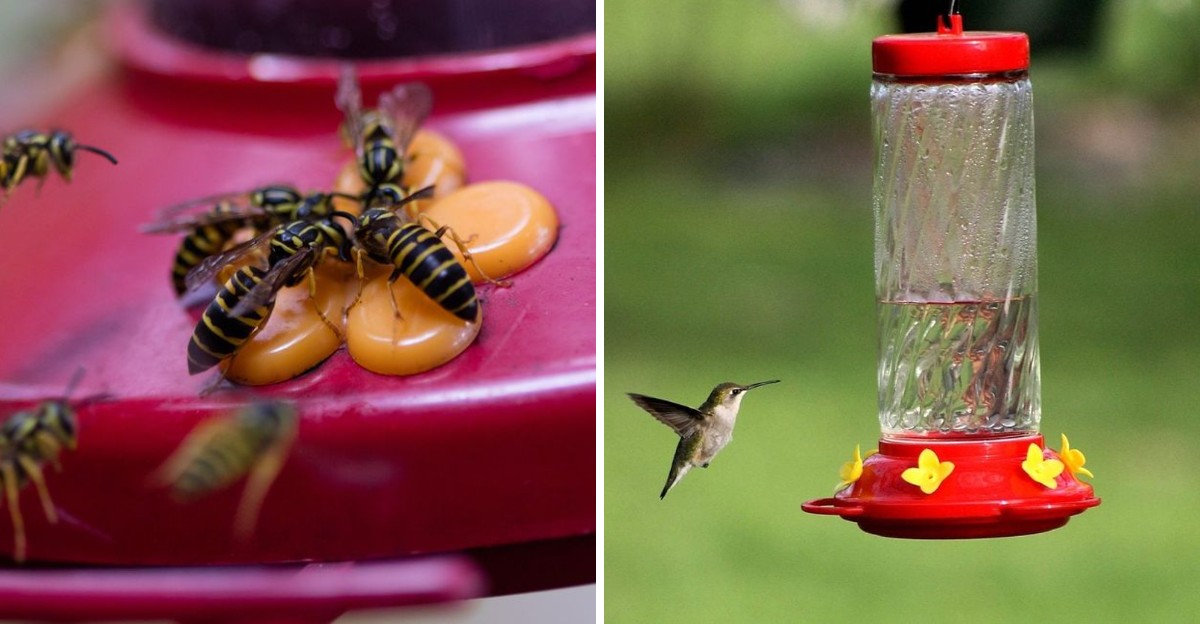
By late August, yellow jackets in Pennsylvania get bold. Their colonies are huge, and they crave sugar. Your feeder can suddenly look like a buzzing airport.
Bees, wasps, and yellow jackets all love nectar. They crowd around the ports and sometimes chase hummingbirds away.
Yellow jackets can even sting birds that get too close. They also become a problem for people who walk near the feeder.
Color matters more than you might think. Many feeders have yellow flower-shaped ports. Bees and wasps are strongly attracted to yellow.
Choose a feeder that uses only red, since hummingbirds love red and insects care about it much less.
Saucer feeders are a smart pick. The nectar sits low, below the ports. A hummingbird’s long tongue can reach it easily.
Bees and wasps have short tongues, so they cannot get a drink. Many backyard birders say saucer feeders cut insect visits almost completely.
Also, check your nectar recipe. Use one part white sugar to four parts water. A stronger mix is sweeter and pulls in more insects. Never add honey, red dye, or brown sugar, since these can hurt hummingbirds.
Wasp traps can help if you hang them far from the feeder, maybe twenty feet away. That draws insects away instead of toward it.
Some folks hang a fake paper wasp nest nearby. Paper wasps often avoid building close to what looks like another colony.
Keep calm, move slowly, and do most feeder work in the cool morning when insects are less active.
6. Raccoons And Black Bears On A Midnight Raid
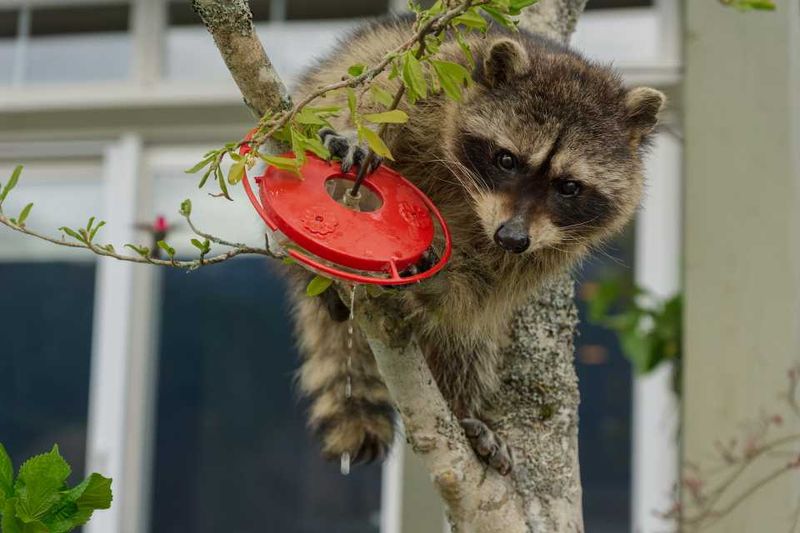
You go to bed with a full feeder. You wake up to an empty, broken one lying in the grass. Chances are, a nighttime bandit paid you a visit.
Raccoons are clever and have nimble paws. They climb poles, tip feeders, and slurp up every drop of nectar. In many parts of Pennsylvania, black bears also love sugary treats.
The state has more than 15,000 bears, and they can smell food from far away. These big raiders rarely hunt hummingbirds. The real problem is damage.
They wreck feeders, bend hooks, and learn that your yard means easy snacks. Bears that get used to human food can become a safety risk for your family and neighbors.
The simplest trick is to bring feeders inside at night. Hummingbirds do not feed after dark, so they will not miss a thing. Just hang the feeder back out at sunrise.
A baffle helps against raccoons. It is a cone or tube placed on the pole below the feeder. Raccoons cannot climb past it. Mount the feeder at least six feet high, and keep it away from decks and trees they could jump from.
Bear country needs extra care. The Pennsylvania Game Commission suggests removing all bird feeders if bears are active nearby.
Bring in trash cans, grills, and pet food too. Feeding bears, even by accident, can lead to fines in some cases.
Once a bear moves along, you can slowly bring the feeders back. A little effort keeps both wildlife and people safer.
7. Mold, Fungus, And Spoiled Nectar
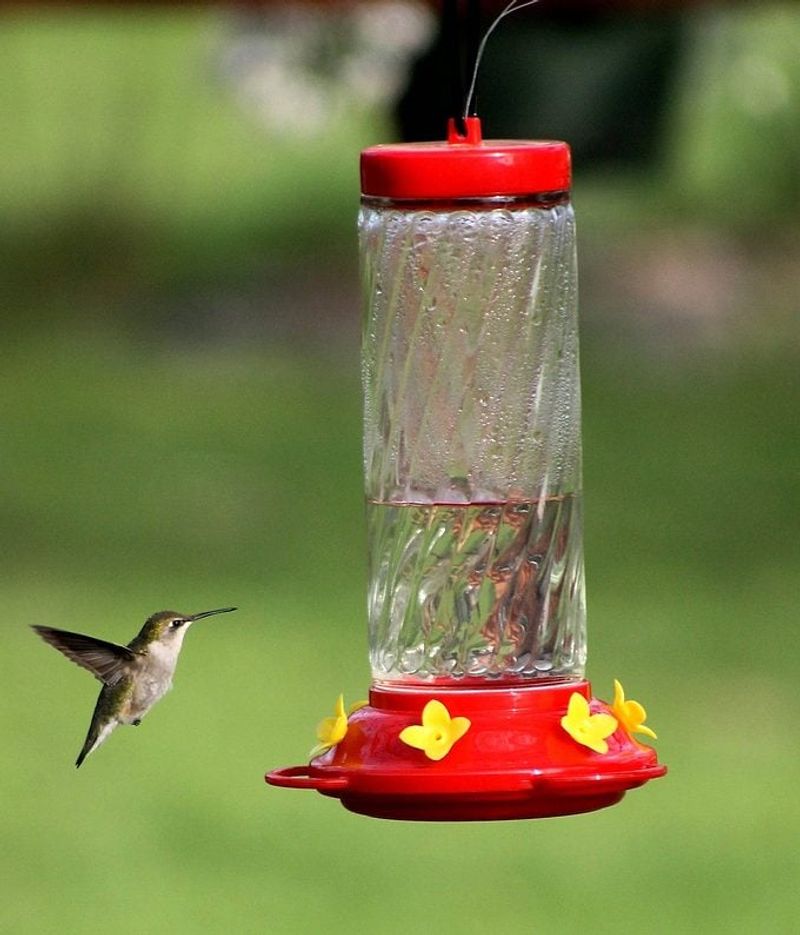
Not every threat has teeth or wings. Some are too small to see at first. Mold and bacteria in old nectar may be the most overlooked danger of all.
Sugar water spoils fast, especially during hot Pennsylvania summers. Warm days above 80 degrees can turn nectar cloudy in just two days.
Black specks, stringy bits, or a sour smell are all warning signs. Spoiled nectar can give hummingbirds a fungal infection that swells their tongues.
Changing nectar often is the golden rule. In cool weather, swap it every four or five days. In the heat of July and August, change it every two days. If it looks cloudy at all, dump it right away.
Cleaning matters just as much. Rinse the feeder with hot water each time you refill. Once a week, scrub it with a mix of one part vinegar to four parts water.
Small bottle brushes help reach inside the ports where gunk loves to hide. Skip harsh soaps, since leftovers can make birds sick.
Choosing the right feeder saves a lot of hassle. Look for one that comes apart easily. Wide openings and fewer tiny corners make scrubbing quick. Glass feeders are also easy to clean and last for years.
Only fill the feeder partway if you do not get many visitors yet. Less nectar means less waste. Early in the season, a quarter full is often plenty.
Fresh, clean nectar is one of the kindest gifts you can give these tiny travelers, and they will reward you by coming back year after year.