Invasive Garden Plants Michigan Homeowners Should Remove Before They Spread
A plant can look harmless for a long time in a Michigan yard. It fills in a bare spot, grows quickly, and seems like it is doing you a favor.
Then a season or two passes, and suddenly it is popping up where it was never invited, pushing out better plants, and turning yard work into a repeat performance nobody asked for.
That is how a lot of invasive garden plants get comfortable. They do not announce themselves with a warning sign.
They spread quietly through seeds, roots, runners, or berries, and by the time the problem is obvious, cleanup is harder than most homeowners expected.
Michigan landscapes, woodlots, fencerows, and neighborhood edges are full of examples, which is why it pays to spot trouble early. Some plants on this list are still sold, still shared, and still planted with good intentions.
The ones worth watching first tend to spread faster than people realize.
1. Japanese Barberry Creates Trouble Fast
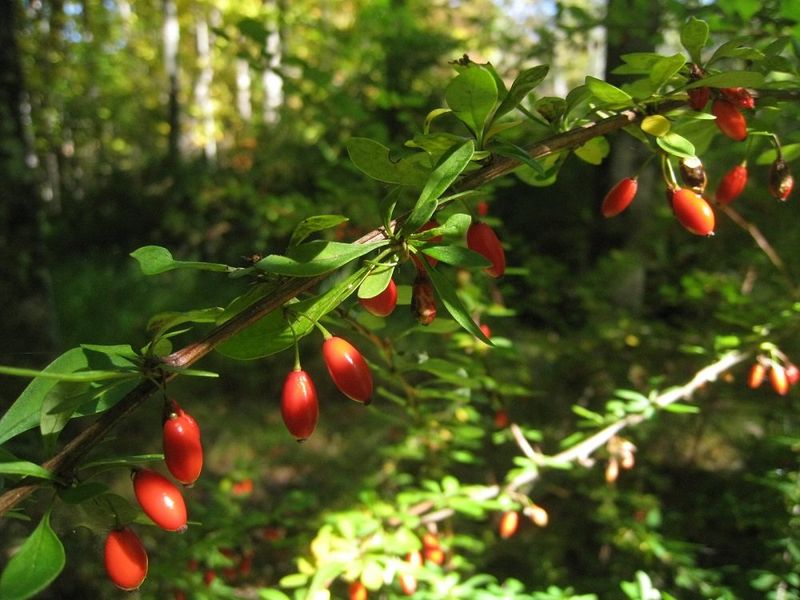
At first glance, it can look like just another scruffy shrub along a fence line or woodland edge, but those thorny branches and bright red berries often point to a plant Michigan homeowners should not ignore. That is Japanese Barberry, and while it looks pretty, it is one of the most problematic invasive plants spreading across the state.
Originally brought from Asia as a decorative hedge plant, it has escaped gardens and taken over natural areas at an alarming rate.
Japanese Barberry creates dense thickets that crowd out native wildflowers and young trees. Deer tend to avoid it because of its sharp spines, which gives it an unfair advantage over native plants that deer do browse.
Research has also linked barberry thickets to higher populations of black-legged ticks, which can carry Lyme disease, making removal even more pressing for Michigan homeowners.
Getting rid of it takes some effort. Small plants can be pulled by hand, but wear thick gloves because the spines are sharp.
Larger shrubs need to be dug out completely, roots and all, since any roots left behind can resprout. Check your yard regularly through the growing season to catch new seedlings early.
Replacing barberry with native shrubs like Michigan holly or native viburnums gives wildlife a food source and keeps your garden looking great without the invasive risks.
2. Oriental Bittersweet Quickly Takes Over
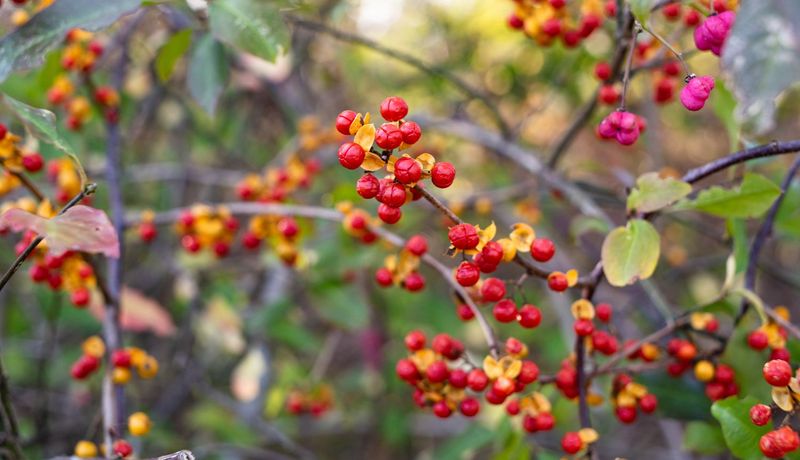
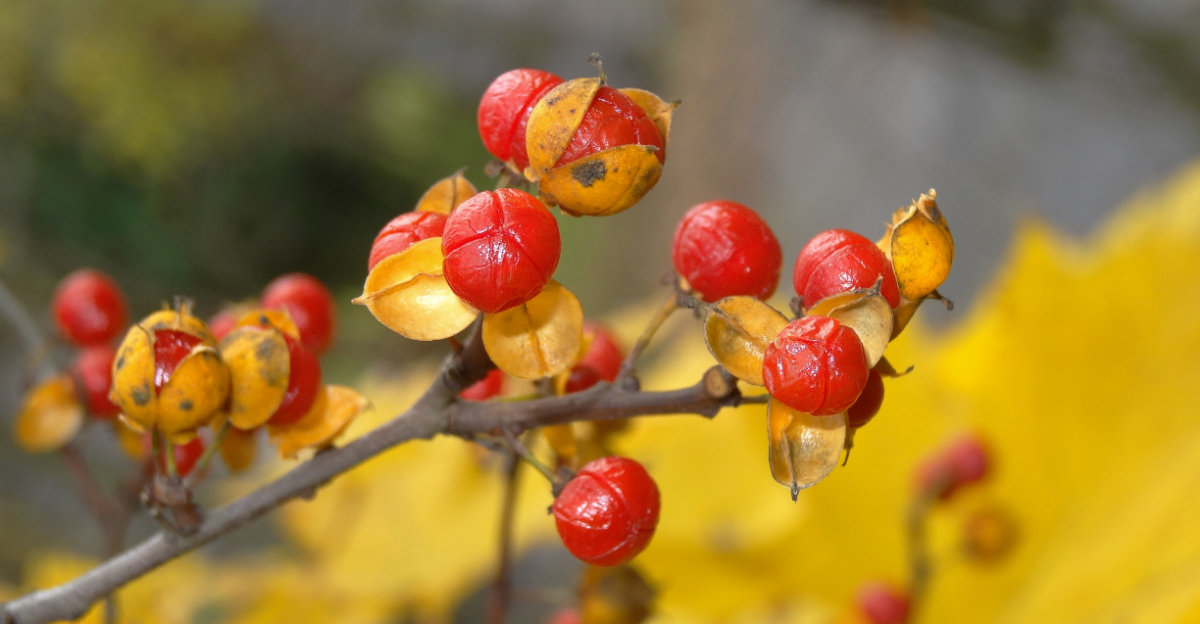
Few invasive plants are as deceptively beautiful as Oriental Bittersweet. In autumn, its vines are covered with bright orange and yellow berries that look stunning, which is exactly why people used to gather its branches for fall decorations.
Unfortunately, spreading those berry-covered branches around only helped this aggressive vine take over more of Michigan’s landscapes.
Oriental Bittersweet climbs trees and shrubs by wrapping tightly around trunks and branches. As it grows, it cuts off the flow of water and nutrients through the bark, eventually causing branches to weaken and break under the vine’s weight.
Mature trees that have been wrapped by this vine for years can suffer serious structural damage. In Michigan’s forests and natural areas, it has smothered native vegetation across large stretches of land.
Your Michigan Garden Changes Every Week. Your Plan Should Too.
Gardening in Michigan changes quickly throughout the season. Every Friday you’ll receive a simple weekly plan showing exactly what to plant, prune, fertilize, harvest, and protect so you never miss the right timing.
Removing this vine requires persistence. Cut the vines at the base and pull them off whatever they are climbing, being careful not to spread the berries.
Dig out as much of the root system as possible, since the roots are thick and can send up new shoots if left in the ground. Monitor the area for regrowth every few weeks during the growing season.
Native alternatives like American bittersweet, which is a different and much better-behaved species, can fill a similar decorative role in your Michigan yard without causing harm to nearby trees.
3. Autumn Olive Spreads Far Too Easily
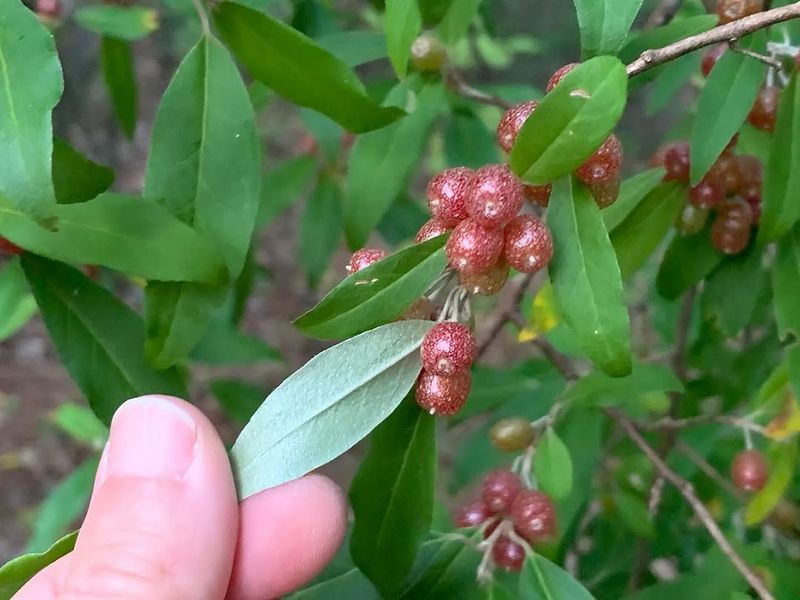
Decades ago, Autumn Olive was actually recommended by conservation programs as a plant that could stabilize soil and provide food for wildlife. It seemed like a great idea at the time.
Now, Michigan land managers spend enormous resources trying to control this fast-growing shrub that has spread into fields, roadsides, forest edges, and natural areas throughout the state.
Autumn Olive is a nitrogen-fixing plant, meaning it pulls nitrogen from the air and deposits it into the soil. That might sound helpful, but it actually changes soil chemistry in ways that favor other invasive plants and make it harder for native wildflowers and grasses to survive.
A single mature shrub can produce thousands of berries each year, and birds love to eat them, spreading seeds far and wide across Michigan’s countryside.
Young plants can be pulled by hand when the soil is moist, making sure to get the full root. Older shrubs have deep root systems and will resprout vigorously if cut at the base without follow-up treatment.
Repeated cutting over several seasons can gradually exhaust the plant’s energy reserves. Replacing Autumn Olive with native berry-producing shrubs like serviceberry or elderberry is a smart move.
These natives offer the same wildlife benefits, including food for birds and pollinators, without the aggressive spreading behavior that makes Autumn Olive such a serious problem for Michigan ecosystems.
4. Common Buckthorn Crowds Out Better Plants
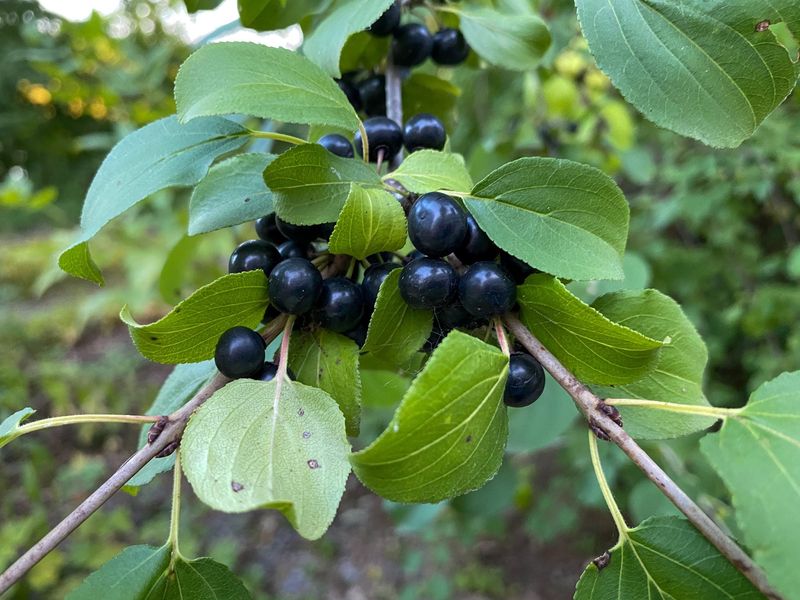
Common Buckthorn is one of those plants that seems harmless at first glance, blending into the background of a wooded Michigan yard or fence line. But look closer and you will find a shrub that is quietly taking over.
Its dark green leaves stay on the plant longer than most native shrubs in the fall, giving it extra time to photosynthesize and grow while native plants are winding down for the season.
This shrub releases a chemical from its roots and leaves that actually suppresses the growth of nearby plants. Combined with its ability to tolerate shade, drought, and poor soils, Common Buckthorn has a serious competitive edge over native Michigan vegetation.
Dense stands of it can completely take over the understory of a woodland, leaving very little room for wildflowers, tree seedlings, or native shrubs to get established.
Identifying it correctly is important since it has a look-alike in Glossy Buckthorn. Common Buckthorn has slightly toothed leaves and small thorns at the tips of its branches.
For removal, small plants can be pulled when the soil is wet. Larger specimens need to be cut and the stumps treated promptly to prevent vigorous resprouting.
Staying on top of seedlings each spring is key to keeping it under control in your Michigan yard. Native shrubs like nannyberry or pagoda dogwood make excellent replacements that support local birds and pollinators.
5. Glossy Buckthorn Is A Fast-Moving Invader
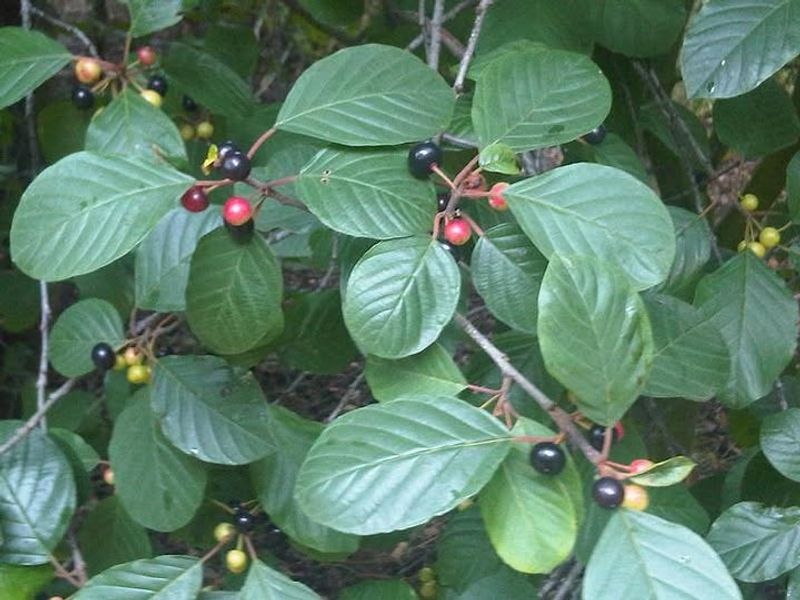
If Common Buckthorn is a problem in Michigan’s upland forests, Glossy Buckthorn is its equally troublesome cousin in wetter habitats. You will often find it along stream banks, in wet meadows, and at the edges of Michigan’s beloved wetlands, where it forms dense stands that shade out native sedges, ferns, and wildflowers.
Its shiny, smooth-edged leaves and clusters of black berries make it identifiable once you know what to look for.
Glossy Buckthorn spreads rapidly because birds eat its berries enthusiastically and deposit seeds across wide areas. It can grow in a remarkable range of conditions, from wet ditches to drier roadsides, which makes it one of the most adaptable invasive shrubs found in Michigan.
Like its relative, it also leafs out early in spring and holds its leaves late into fall, giving it a longer growing season than most native competition.
Tackling Glossy Buckthorn early is much easier than dealing with an established population. Seedlings and young plants can be hand-pulled, especially after rain when the ground is soft.
Larger shrubs need to be cut close to the ground and monitored carefully for regrowth, which can be quite vigorous. Removing it from wetland edges is especially valuable because those areas support so much of Michigan’s native biodiversity.
Replacing it with native wetland shrubs like buttonbush or swamp rose can help restore the natural balance and provide valuable habitat for wildlife.
6. Multiflora Rose Turns Into A Thorny Mess
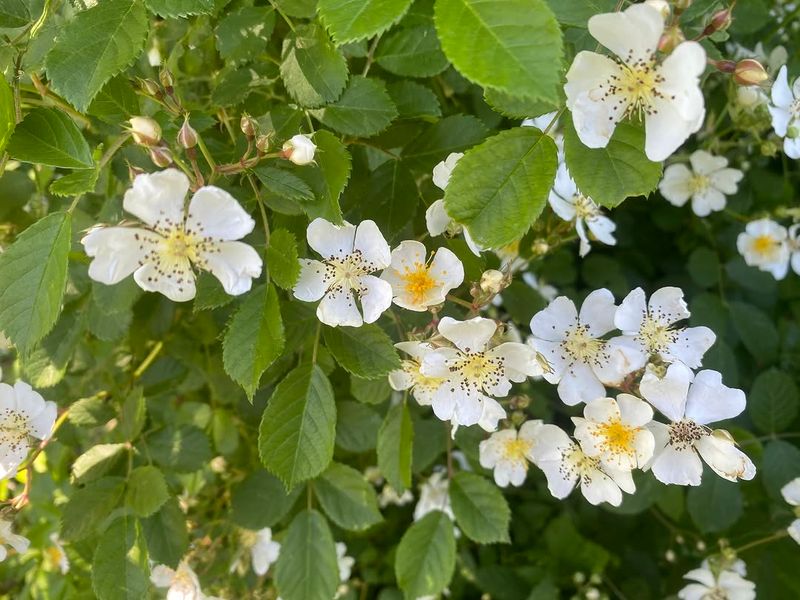
Back in the mid-1900s, Multiflora Rose was widely planted in Michigan as a living fence, a wildlife habitat plant, and even a highway median barrier. It checked a lot of boxes on paper.
Fast-forward to today, and it is considered one of the most widespread invasive shrubs in the eastern United States, including throughout Michigan, where it has colonized roadsides, old fields, forest edges, and stream corridors.
A single Multiflora Rose plant can produce up to about 500,000 seeds per year, and those seeds can stay viable in the soil for 10 to 20 years. That means even after you remove a plant, new seedlings can keep popping up from the seed bank in your soil for a long time.
Birds spread the seeds widely after eating the small red hips that the plant produces in late summer, helping it jump from one Michigan property to the next.
Removing Multiflora Rose is satisfying but requires protective clothing since the arching canes are covered in curved thorns. Young plants can be pulled, but larger established clumps need the root crown dug out completely to prevent regrowth.
Mowing repeatedly over a growing season can weaken plants over time. Staying consistent with follow-up checks is essential.
Native shrubs like pasture rose, which is a true Michigan native, can provide similar wildlife value with small pink flowers and rose hips, without turning into an unstoppable thicket that takes over your entire yard.
7. Japanese Knotweed Is Notoriously Hard To Beat
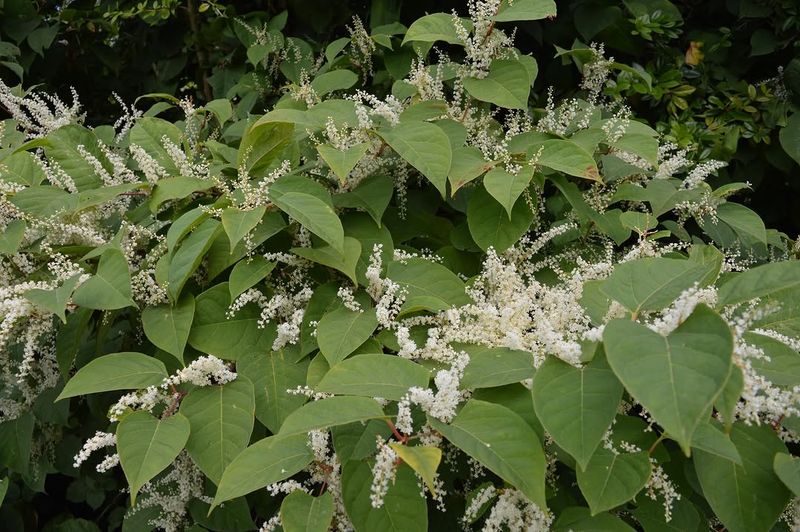
Looking almost like something out of a science fiction movie, Japanese knotweed is one of those plants that grabs attention before you even know what it is. Its thick, hollow stems resemble bamboo, it can grow very quickly during peak season, and its rhizomes and shoots can penetrate asphalt and cracks in concrete.
For Michigan homeowners, finding it on your property is a call to action, because the longer you wait, the harder it gets to manage.
Once established, Japanese Knotweed forms massive colonies that block out all other vegetation. The root system, called a rhizome network, can extend many feet in every direction underground.
Even a tiny fragment of root left in the soil can sprout into a new plant. This is why simply cutting it down rarely works on its own and why dumping excavated soil containing knotweed roots can accidentally spread it to new locations across Michigan.
Consistency is everything when it comes to managing Japanese Knotweed. Cutting the stems repeatedly throughout the growing season, every two to three weeks, slowly weakens the plant over time by depleting its energy reserves.
This process can take several years of dedicated effort, but it does work with patience. Covering the area with heavy-duty landscape fabric after cutting can also help by blocking sunlight.
Because it often grows near water in Michigan, always check local guidelines before using any chemical treatments near streams or wetlands. Replacing it with native grasses or native wildflower plantings helps stabilize the soil and restore natural beauty.
8. Invasive Honeysuckles Can Take Over In A Hurry
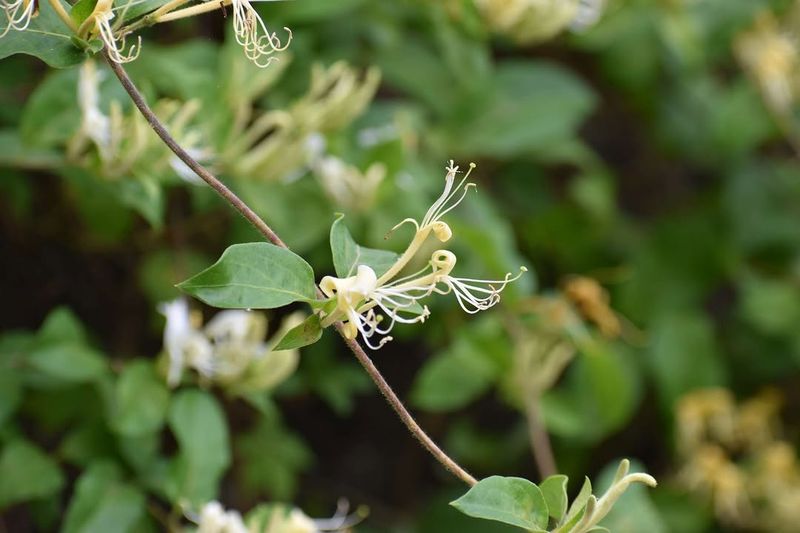
Sweetly fragrant and pleasant-sounding, honeysuckle often seems harmless at first glance, which is part of what makes it so easy to underestimate. However, several honeysuckle species growing in Michigan, including Morrow’s honeysuckle, Tatarian honeysuckle, and Amur honeysuckle, are invasive shrubs that have escaped gardens and taken over natural areas across the state.
They are among the earliest shrubs to leaf out each spring and among the last to drop their leaves in fall, giving them a serious head start over native plants.
Invasive honeysuckles shade out native woodland wildflowers before those plants even get a chance to bloom in spring. Research from Michigan and neighboring states has shown that forests heavily invaded by these shrubs have significantly fewer native plant species in the understory.
Birds do eat the berries, but studies suggest the berries are less nutritious than native berry sources, and the rapid spread through bird droppings is a major reason these shrubs have colonized so much of Michigan’s landscape.
Younger honeysuckle shrubs can be pulled by hand, roots and all, especially after rain. Older shrubs develop thick trunks and need to be cut at the base, with the stump monitored carefully for regrowth.
Pulling seedlings each spring before they get established is one of the most effective long-term strategies. For Michigan homeowners who love the look of flowering shrubs, native alternatives like native bush honeysuckle, native viburnums, or native spicebush offer beautiful blooms and real ecological value without the invasive drawbacks.