How Michigan Plant Lovers Are Growing Polka Dot Begonias Indoors With Confidence
Winter in Michigan can stretch on with gray skies, low light, and dry indoor air that leaves many houseplants struggling. Keeping something vibrant on a windowsill during those months can feel like a small victory.
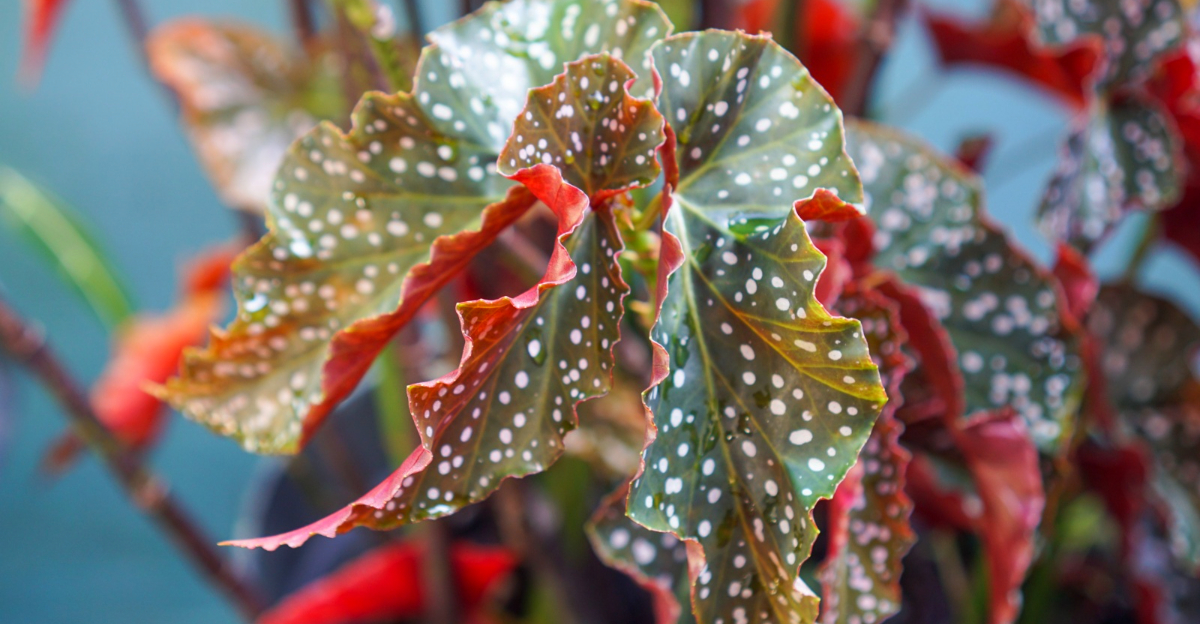
That’s part of the appeal behind polka dot begonias. Their deep green leaves dotted with silver and rich red undersides add bold contrast that stands out, even in the middle of winter.
With a few thoughtful adjustments to light, humidity, and watering, these tropical plants can settle into Michigan homes and continue to look striking well beyond the growing season.
1. Choosing The Right Light Conditions In Michigan Homes
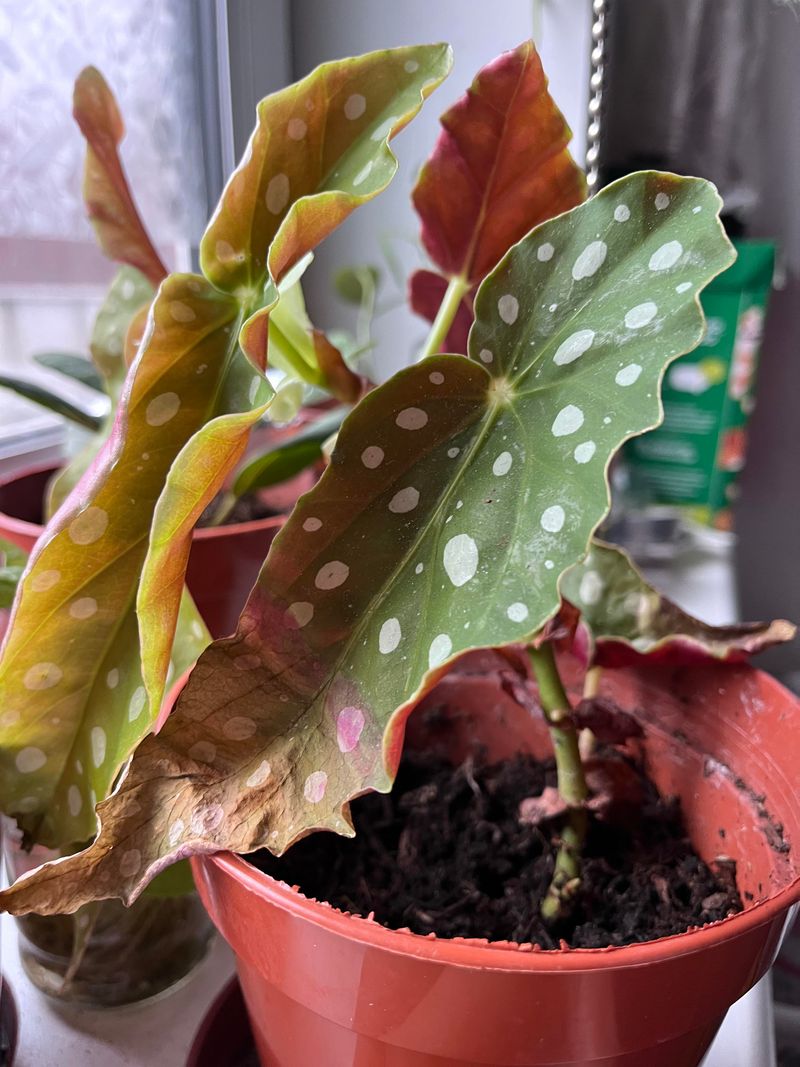
Michigan’s gray winters make light one of the trickiest parts of growing any tropical houseplant indoors. From November through February, natural light coming through windows drops significantly, and the angle of the sun stays low throughout the day.
For polka dot begonias, finding a bright spot without direct sun exposure is the key challenge during these months.
East-facing windows tend to work well because they offer gentle morning light without the harsh afternoon intensity that can scorch the plant’s delicate leaves.
North-facing windows can also work if the room stays reasonably bright, though growth may slow during the deepest part of winter.
South or west-facing windows are worth considering, but placing a sheer curtain between the plant and the glass helps filter out the more intense rays.
Rotating the pot every week or two encourages even growth so one side does not stretch toward the light while the other stays compact.
If your home simply does not get enough natural light, a small grow light placed about twelve inches above the plant for roughly twelve hours a day can fill the gap without much fuss.
Michigan plant owners who make light adjustments in fall often notice their begonias stay more vibrant and upright throughout the season rather than growing leggy and pale.
2. Understanding Watering Needs In Indoor Environments
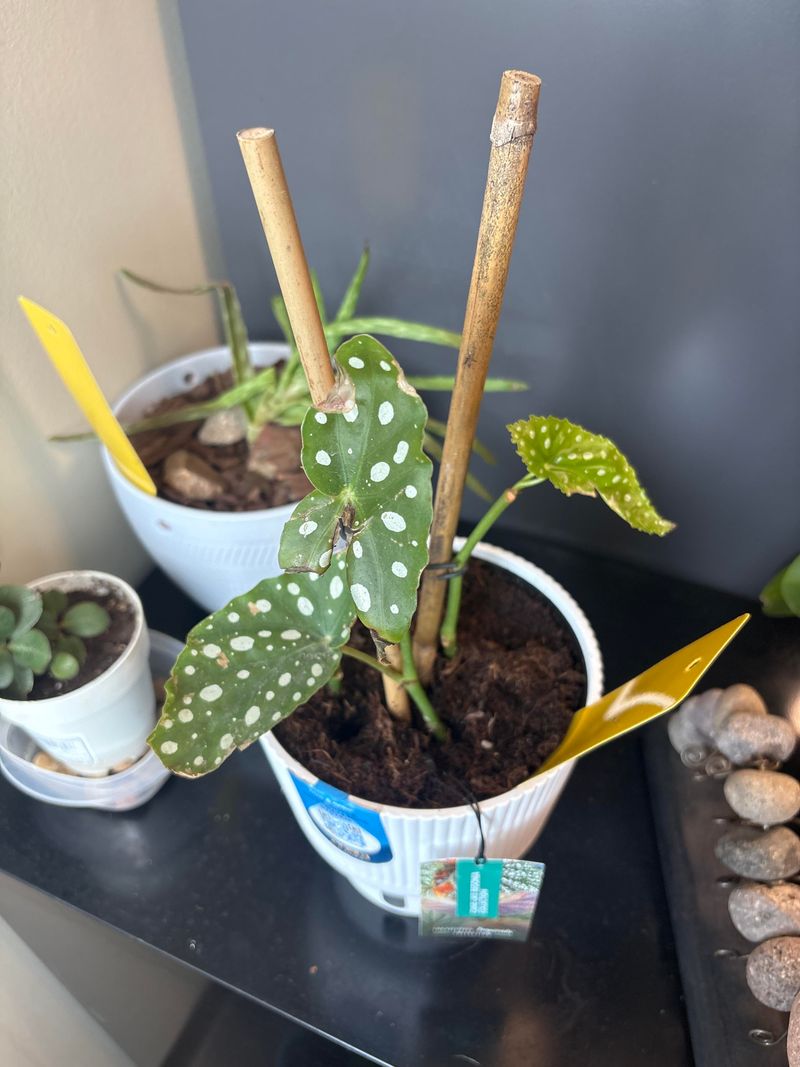
Watering a polka dot begonia is one of those things that feels straightforward until you overdo it.
Root rot is one of the most common reasons these plants decline indoors, and it usually comes from watering on a schedule rather than paying attention to what the soil is actually telling you.
Getting into the habit of checking the top inch of soil before reaching for the watering can makes a noticeable difference.
When that top inch feels dry to the touch, the plant is ready for water. When it still feels slightly damp, giving it another day or two is usually the smarter move.
During Michigan winters, indoor heating systems dry out the air but not necessarily the soil as fast as you might expect, since the plant’s growth slows and it takes up water more slowly.
Using room-temperature water rather than cold tap water is a small but worthwhile habit. Cold water can stress the roots, and in Michigan, tap water sitting in pipes can get quite chilly during winter months.
Letting water sit out for a few hours before using it also allows any chlorine to dissipate, which some plant owners find reduces the occasional leaf tip browning they see.
Your Michigan Garden Changes Every Week. Your Plan Should Too.
Gardening in Michigan changes quickly throughout the season. Every Friday you’ll receive a simple weekly plan showing exactly what to plant, prune, fertilize, harvest, and protect so you never miss the right timing.
Making sure the pot drains fully after each watering keeps the roots healthy and the plant growing steadily.
3. Selecting Well-Draining Soil Mixes For Healthy Roots
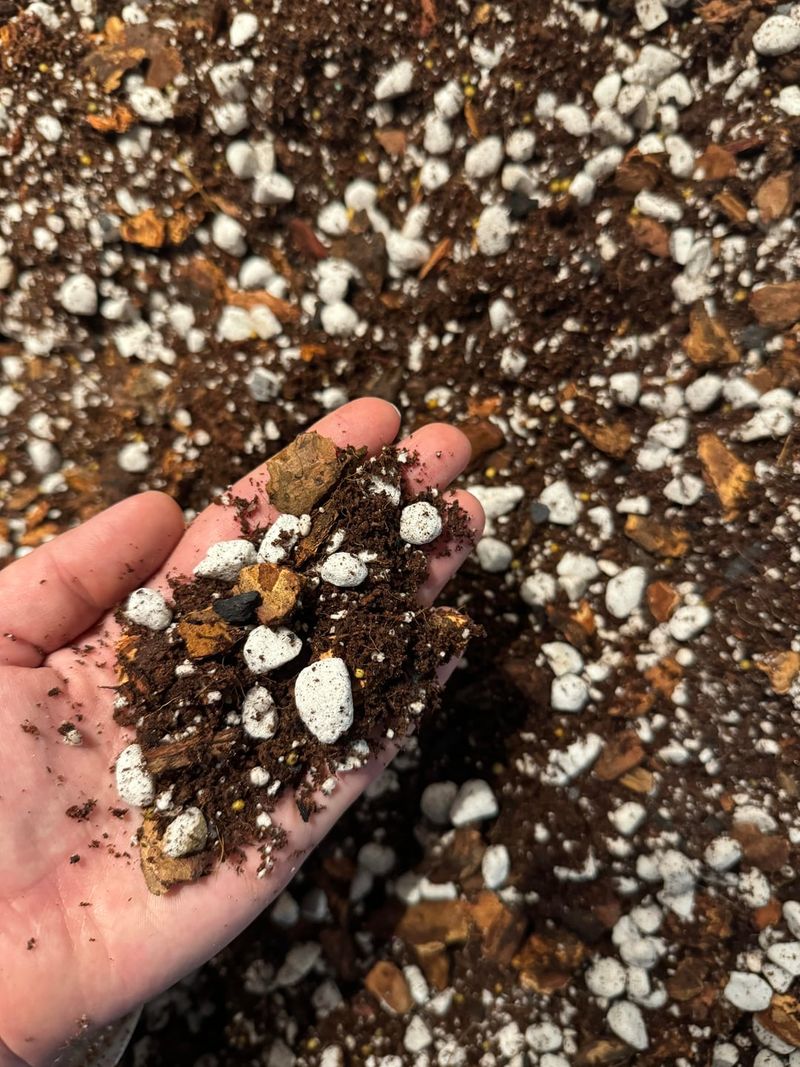
Soil choice might not be the most exciting topic in plant care, but it has a direct impact on whether roots stay healthy or slowly suffocate in compacted, waterlogged growing medium.
Standard all-purpose potting mixes tend to hold too much moisture for polka dot begonias, especially in the lower-light, slower-evaporation conditions common in Michigan homes during winter.
A mix that combines a peat-based or coco coir base with perlite and a small amount of orchid bark creates the kind of loose, airy structure these roots prefer. Perlite improves drainage and keeps the mix from compacting over time.
Orchid bark adds chunkier air pockets that mimic the loose, organic forest floor material the plant grows in naturally.
Aiming for roughly sixty percent base mix, thirty percent perlite, and ten percent bark gives most growers solid results.
Repotting every one to two years refreshes the soil structure before it breaks down and starts holding water poorly.
Choosing a pot that is only slightly larger than the root ball also helps, since oversized containers hold excess moisture that roots cannot absorb quickly enough.
Terra cotta pots are a practical choice in Michigan’s heated indoor environments because they allow the soil to breathe and dry more evenly between waterings, reducing the risk of root issues developing unnoticed beneath the surface.
4. Managing Indoor Humidity During Michigan Winters
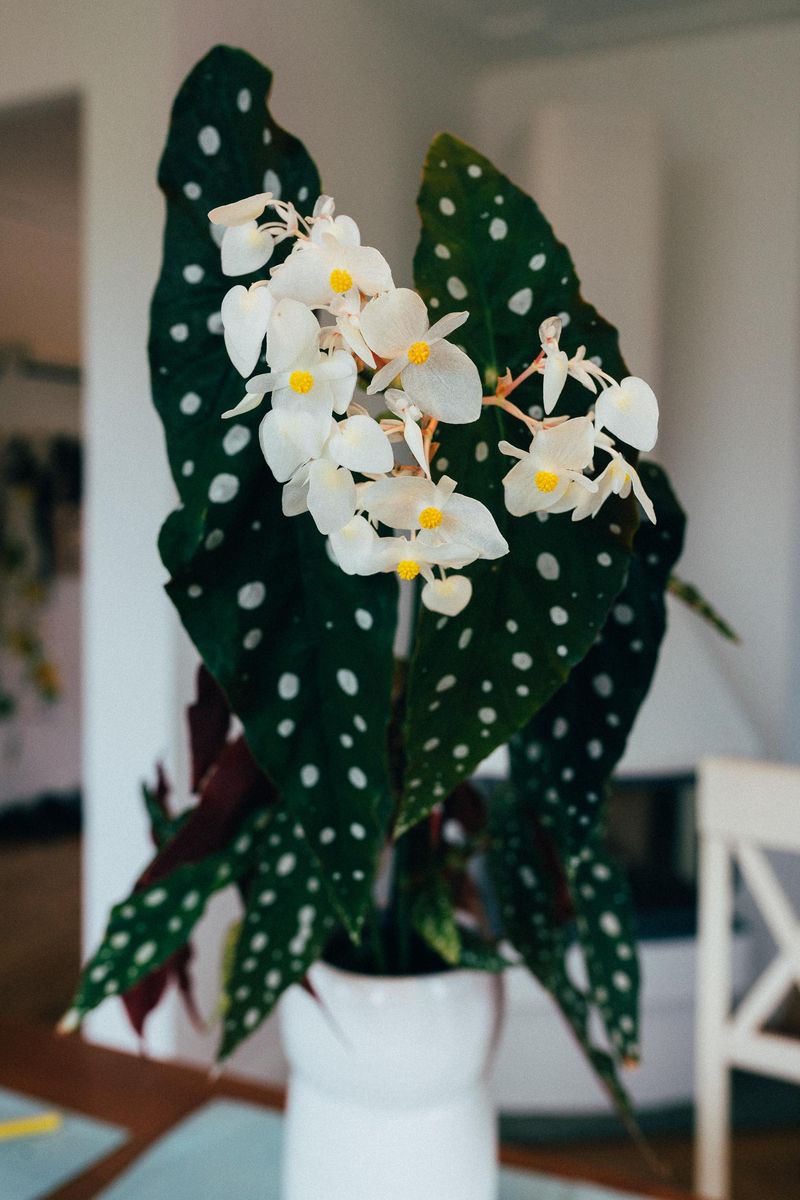
Anyone who has spent a winter in Michigan knows what forced-air heating does to a house. The air gets dry fast, and that dryness is tough on tropical plants that evolved in humid rainforest environments.
Polka dot begonias prefer humidity levels somewhere between fifty and sixty percent, and most Michigan homes during winter drop well below that range once the furnace starts running consistently.
A small humidifier placed near the plant is one of the most reliable solutions. It does not need to run constantly, but keeping it on for several hours each day in the same room makes a measurable difference in how the plant looks and grows.
Grouped plantings also help, since a cluster of plants naturally raises the humidity in a small area as they release moisture through their leaves.
Pebble trays filled with water and placed under the pot offer some humidity boost as the water evaporates, though they work best as a supplement rather than a primary solution.
Misting directly onto the leaves is something many growers try, but it can encourage powdery mildew if the leaves stay wet for long periods, especially in low-airflow rooms.
Checking humidity with an inexpensive hygrometer takes the guesswork out of it and helps Michigan plant owners make smarter adjustments as the season changes and indoor air conditions shift.
5. Keeping Temperatures Stable Year Round
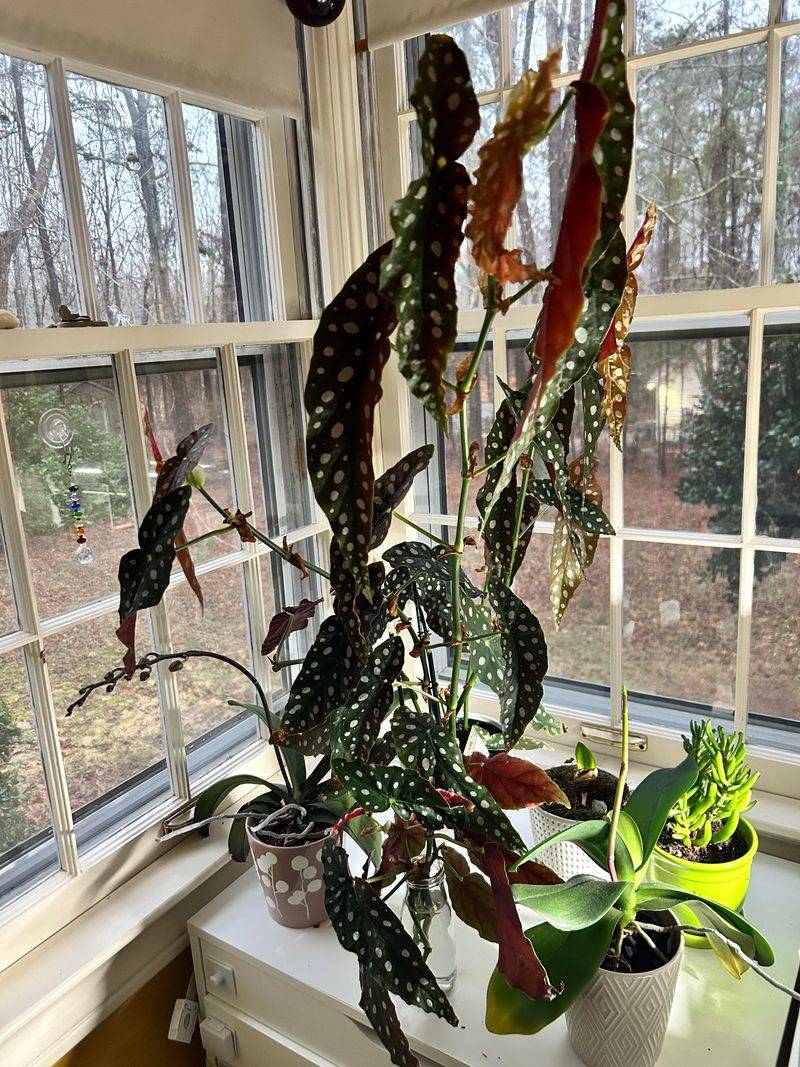
Temperature swings are something Michigan homes deal with constantly, from cold drafts near older windows in January to sudden warmth when the furnace kicks on.
For polka dot begonias, those fluctuations can be stressful, and repeated exposure to cold air near windows or exterior walls may cause leaves to drop or growth to stall unexpectedly.
Keeping the plant in a spot where temperatures stay fairly consistent between sixty-five and seventy-five degrees Fahrenheit gives it the stable environment it prefers.
Rooms that hold heat well throughout the day and night work better than spaces near entryways or rooms with single-pane windows that lose warmth quickly after sunset.
In Michigan, checking whether a window feels cold to the touch during winter is a quick way to judge whether a nearby location is suitable for a temperature-sensitive plant.
Moving the plant away from exterior walls a foot or two can make a real difference, particularly in older Michigan homes where insulation near window frames is not as effective as it could be.
Heating vents and radiators present the opposite problem, pushing dry, hot air directly onto the foliage, which causes edges to dry out and curl.
Finding a middle-ground spot that avoids both cold drafts and direct heat sources keeps the plant comfortable and reduces the kind of environmental stress that leads to gradual decline over the course of a long Michigan winter.
6. Feeding Polka Dot Begonias During Active Growth Periods
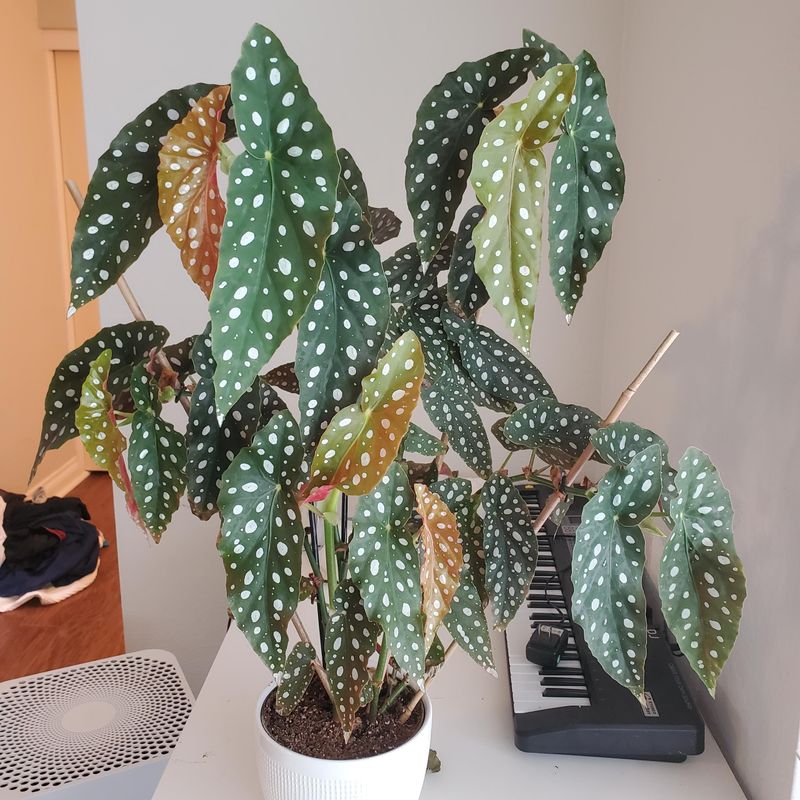
Spring arriving in Michigan feels like a genuine event after months of cold, and houseplants seem to notice it too.
As daylight hours increase and indoor temperatures stabilize, polka dot begonias shift out of their slower winter pace and start producing new leaves more actively.
That shift is the right time to introduce a regular feeding routine.
A balanced liquid fertilizer, something with roughly equal nitrogen, phosphorus, and potassium ratios, applied every two to four weeks during spring and summer supports steady, healthy growth without pushing the plant too hard.
Diluting the fertilizer to half the recommended strength is a common approach that reduces the risk of fertilizer burn, which can show up as brown leaf tips or crispy edges on new growth.
Once Michigan moves into fall and daylight shortens again, slowing down or stopping fertilization makes sense.
The plant’s growth naturally reduces during lower-light months, and feeding it heavily when it is not actively growing can lead to salt buildup in the soil over time.
Flushing the soil with plain water every couple of months helps clear out any accumulated mineral deposits.
Watching how quickly the plant produces new leaves is one of the most reliable ways to gauge whether the feeding schedule is working well or needs a small adjustment as the seasons shift throughout the year.
7. Pruning And Pinching For Fuller, Balanced Plants
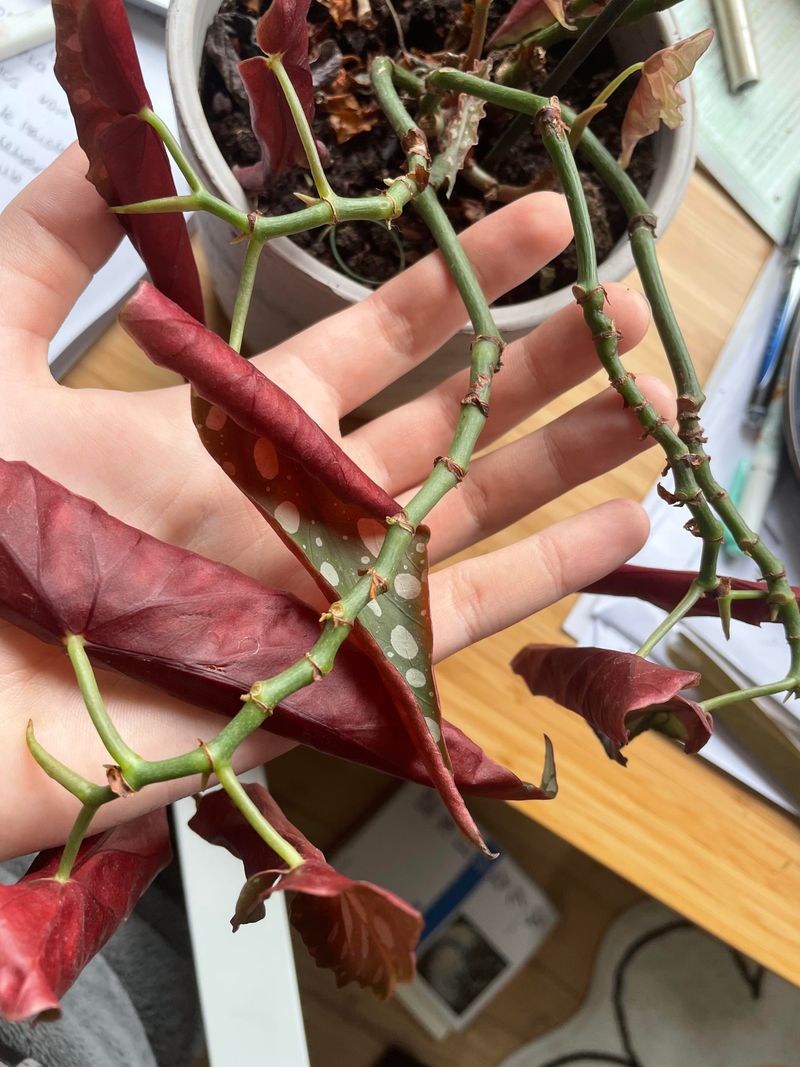
Left to grow on its own without any guidance, a polka dot begonia can become quite leggy, sending up tall canes with leaves spaced far apart and a shape that looks more like a sparse tower than a full, lush plant.
That tendency is especially noticeable in Michigan homes during winter, when lower light levels encourage the plant to stretch upward in search of brightness.
Pinching back the growing tips is a simple technique that signals the plant to branch out rather than continue growing straight up.
Using clean fingertips or small scissors to remove the topmost growth just above a leaf node redirects energy into lateral growth, and within a few weeks, two new stems typically emerge from that spot.
Doing this regularly throughout the growing season builds a noticeably fuller shape over time.
Removing dead or yellowing leaves as they appear keeps the plant looking tidy and reduces the chance of fungal issues developing on decaying foliage.
When stems become very long and bare at the base, cutting them back by about one-third encourages fresh growth from lower on the plant.
Some Michigan growers use the cuttings they remove during pruning to propagate new plants in water or moist soil, which is a rewarding way to expand a collection or share plants with friends without spending anything extra.
8. Recognizing Common Issues Like Leaf Browning And Dropping
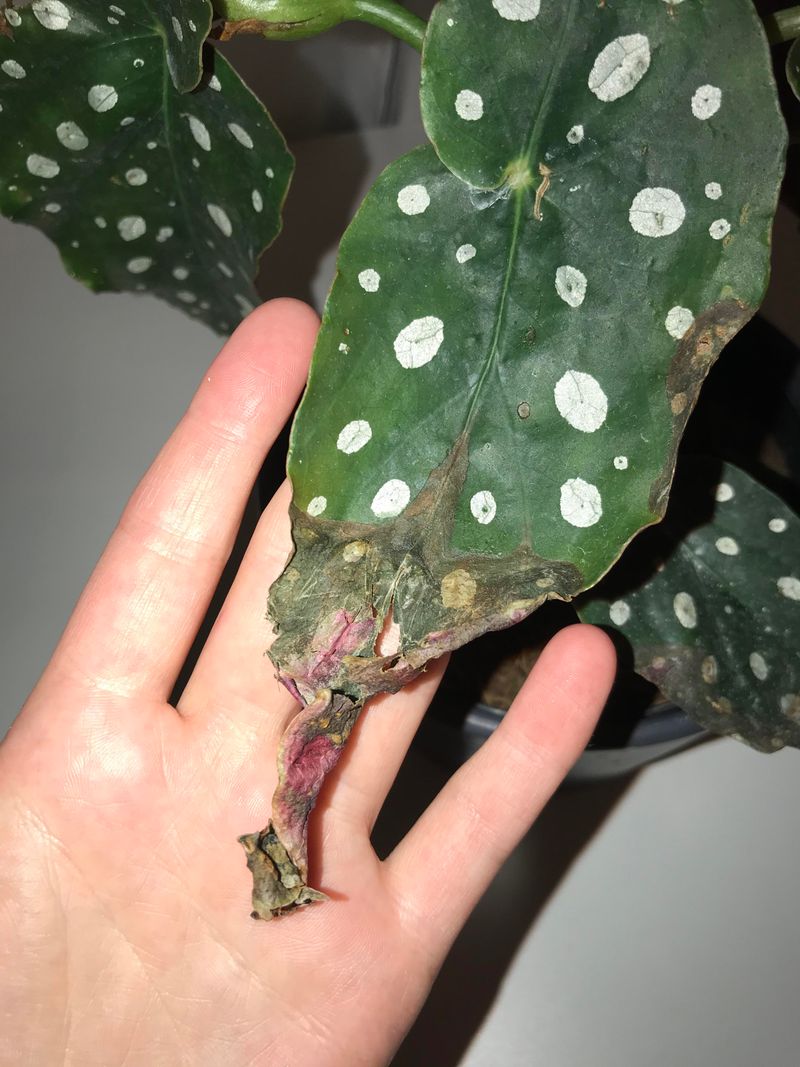
Brown leaf edges are one of those things that make plant owners immediately worry, but the cause is usually something environmental rather than a serious disease.
In Michigan homes, the two most frequent culprits behind browning tips and edges are low humidity from winter heating and inconsistent watering habits.
Figuring out which one is responsible usually comes down to looking at the pattern of the browning and reviewing recent care habits.
Crispy brown tips that appear on otherwise healthy-looking leaves often point to dry air or occasional underwatering. Soft, yellowing leaves that drop off more frequently than usual tend to suggest overwatering or roots sitting in poor-draining soil.
Sudden leaf drop, where several leaves fall off quickly, is often a response to a cold draft, a dramatic temperature change, or being moved to a significantly different light environment.
Spider mites are another issue worth watching for, particularly during dry Michigan winters when low humidity creates favorable conditions for them.
Tiny webbing between leaves or a dusty, stippled appearance on leaf surfaces are signs worth addressing early with a gentle insecticidal soap spray.
Catching problems early usually means a straightforward fix rather than a prolonged recovery.
Most issues polka dot begonias face indoors in Michigan trace back to environmental conditions, and small, consistent adjustments to humidity, water, and light tend to resolve them without dramatic intervention.