Iowa’s Toughest Native Oak Is Browning Early From A Fungus Named After The State Itself
You spot toasted leaves on a towering tree weeks before autumn should arrive. Drought seems like your obvious suspect. Heat looks responsible to you. Neither explains this pattern.
Researchers at Iowa State University traced the damage to a microscopic fungus. They named it after Iowa, an honor you did not request.
Scientists call the problem a leaf blight, and it spreads quietly. Spores ride spring rain onto fresh leaves before you suspect trouble. Symptoms hide for months, then veins turn brown in late summer.
Wedges of browned tissue fan outward from each vein. Meanwhile, affected leaf stems cling to your branches through winter. Those stems shower fresh spores each spring, restarting the cycle.
Repeated rounds drain your tree year after year. Severe cases can invite opportunistic insects and root problems later. Your tree’s future depends on what you do next.
A Fungus Called Tubakia Iowensis Behind The Brown Leaves
Scientists at Iowa State University cracked the case in 2012, and they gave the culprit a local name. The fungus is called Tubakia iowensis, and it causes a disease known as bur oak blight.
Bur oak, or Quercus macrocarpa, is famous for thick corky bark and acorns wearing fuzzy caps. It can live for centuries and handles drought, fire, and wind better than most trees.
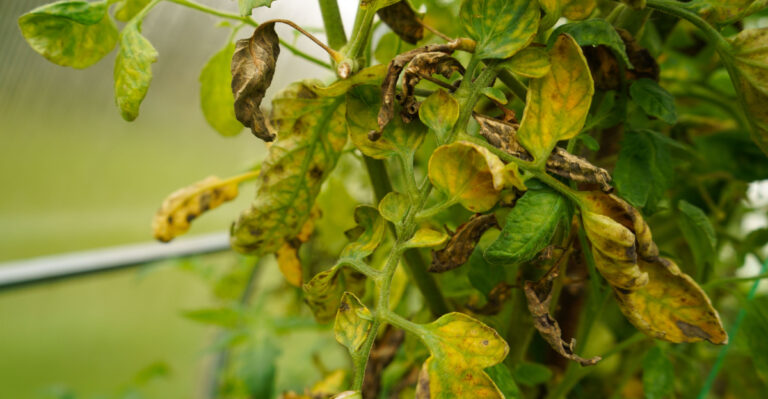
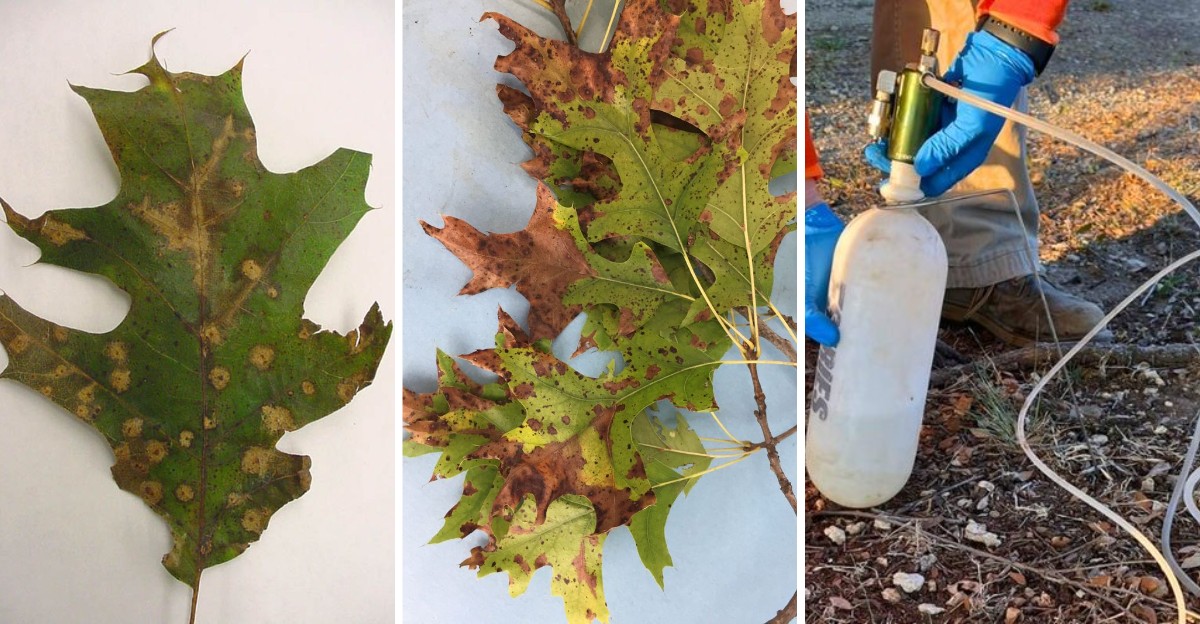
Unlike many tree troubles, this fungus infects the leaves rather than the wood or roots. It creates purplish-brown streaks along the main veins on the underside of each leaf.
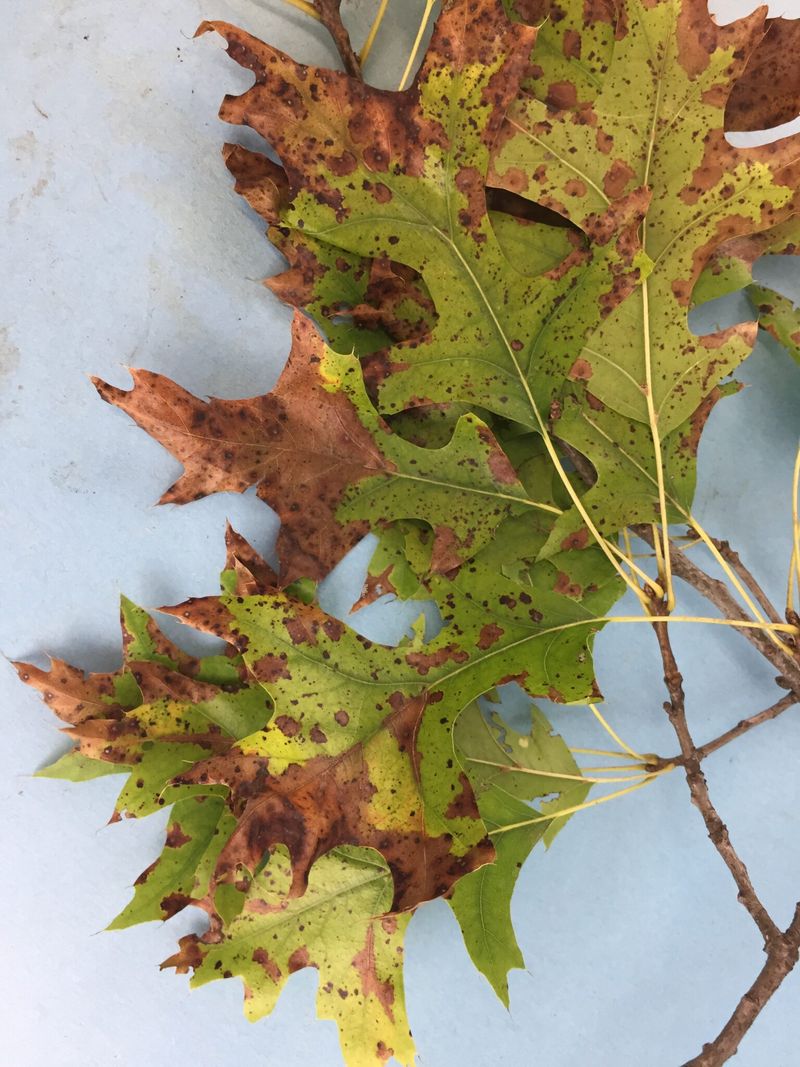
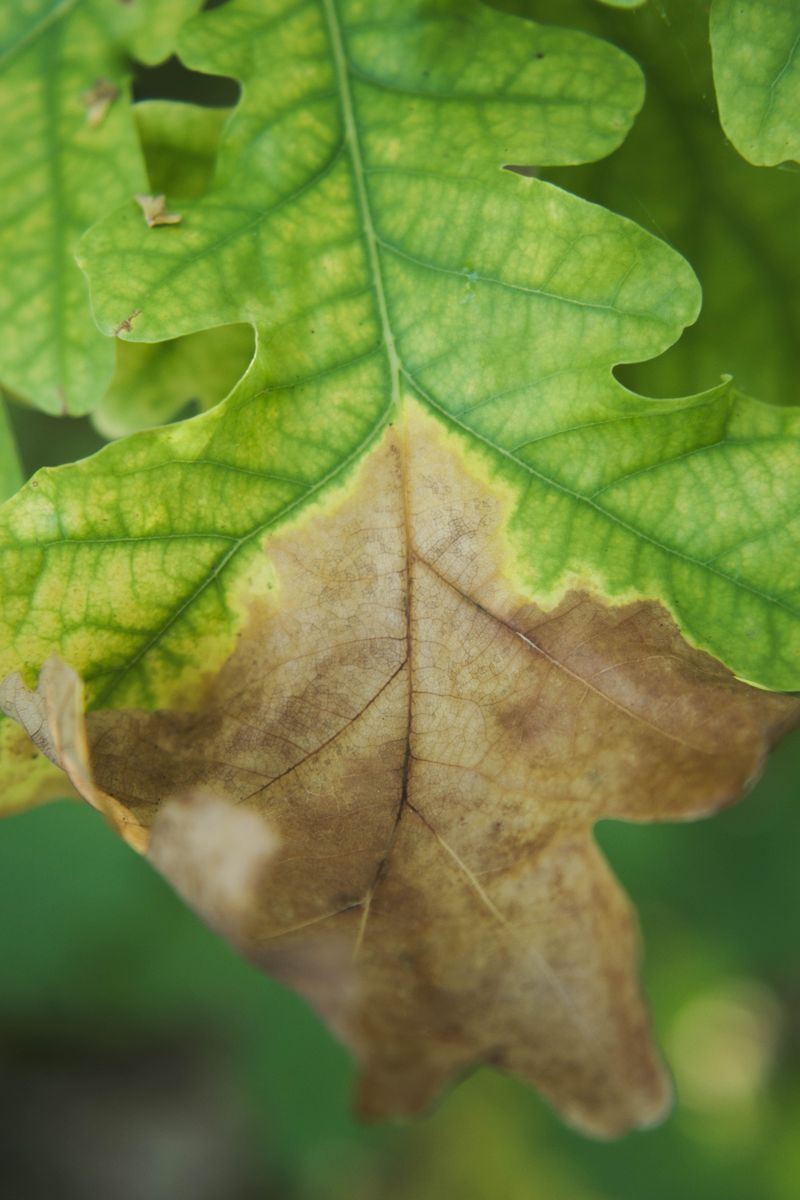
Over time, those streaks grow into wedge-shaped brown patches that spread toward the leaf edges. Eventually the whole leaf turns crispy and brown, even though summer is not over yet.
Here is a twist, though, since not every bur oak in Iowa is affected equally. The disease hits hardest on a small-acorn form growing on dry upland ridges and savannas.
Botanists call that form variety oliviformis, and it is common across Iowa, Minnesota, and Wisconsin. Trees with bigger, rounder acorns seem to resist the fungus much better.
Trivia fans will enjoy this one, since people noticed the browning years before scientists named it. Many folks figured it was just odd weather or a lousy growing season for oaks.
So if your sturdy oak looks toasted in August, a tiny fungus may be the reason. The good news is that knowing the cause is the first step toward helping your tree.
A Spring Infection That Shows Up In Late Summer
Plot twist, the damage you see in August actually started way back in rainy spring. Picture a secret planted in May that waits all summer before finally showing its face.
Infected leaf stems from last year cling to the branches through winter instead of falling off. When spring rains arrive, those old stems release spores onto the fresh, tender new leaves.
Wet, cool weather in May and June gives the fungus its best chance to spread. A rainy, drizzly spring can mean a much rougher August for your favorite oak.
Your Iowa Garden Changes Every Week. Your Plan Should Too.
Gardening in Iowa changes quickly throughout the season. Every Friday you’ll receive a simple weekly plan showing exactly what to plant, prune, fertilize, harvest, and protect so you never miss the right timing.
Through June and early July, the tree usually looks perfectly healthy, leafy, and cheerful. Then in late July or August the brown veins and wedge-shaped patches suddenly pop up.
Symptoms usually start on the lower, inner branches and climb upward over the years. A tree with mild blight might only show browning near the bottom of its crown.
In late summer and early fall, you may be staring at a patchy brown tree in your yard. Flip a few leaves over and look closely for those telltale purple-brown veins underneath.
Winter gives you another clue that is easy to spot right from the kitchen window. Healthy mature bur oaks drop most of their leaves in fall, while blighted ones hang onto many brown leaves.
Young oaks can naturally keep some dry leaves too, so check the leaf veins as well.
Those clinging leaves are basically the fungus packing its suitcase for a return trip next spring. Mark your calendar, because understanding this yearly cycle helps you choose the right time to act.
The Costly Mix-Up With Oak Wilt And Drought
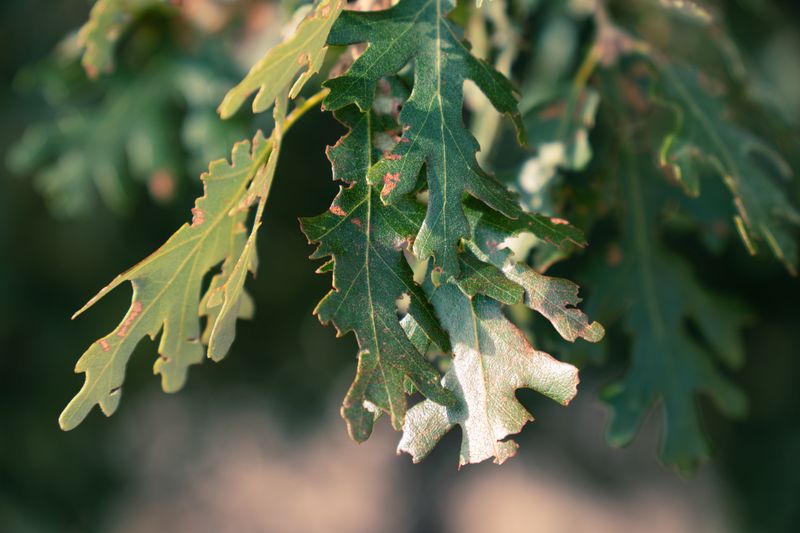
Ask any tree expert in Iowa, and they will tell you mistaken identity causes plenty of heartbreak. Brown oak leaves can come from several problems, and each one needs a different response.
Oak wilt is the scary cousin, and people often panic when they see browning. It spreads through roots and beetles, and it moves much faster in red oaks than in bur oaks.
In red oaks, oak wilt leaves usually brown from the tip inward and drop quickly, often while still partly green. In bur oaks, oak wilt tends to progress more slowly, branch by branch.
Bur oak blight leaves show dark veins first and tend to stay stuck on the tree.
Drought stress looks different again, with scorched edges and leaves that curl evenly across the tree. After a dry summer, it is easy to blame the weather and stop looking.
Many arborists warn against chopping down a valuable, century-old oak too soon. Many blighted trees can hang on for years, and some recover with good care.
Another common slip is grabbing the pruning saw in spring or early summer. Fresh cuts attract sap beetles that carry oak wilt, so save trimming for the chilly winter months.
Spraying random fungicides from the garden store is also a waste of money. Surface sprays on a tall oak rarely reach the canopy and do little against this fungus.
Your best move is snapping a few photos and collecting some brown leaves in a sealed bag. Send them to the Iowa State University Plant and Insect Diagnostic Clinic for a clear answer, and check the clinic’s website for current submission instructions and fees.
Fungicide Injections From A Certified Arborist
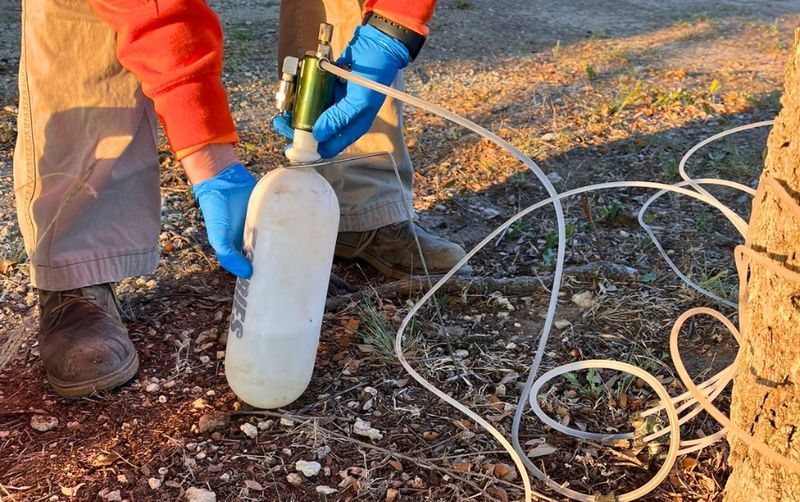
Think of it as a flu shot for a tree that is older than your great-grandparents. The main treatment for bur oak blight is a fungicide injected right into the trunk.
Arborists usually use a product containing propiconazole, which travels up through the tree’s sap. It reaches the leaves from the inside, where sprays from the ground simply cannot go.
Timing matters a lot with this treatment, and the calendar might surprise you. Injections work best in late May or early June, soon after the fresh new leaves open.
A single treatment can protect a tree for up to two or three growing seasons, though your arborist should confirm this for your tree. For many homeowners, treatment may cost less than removing a large, mature oak.
Please skip the do-it-yourself version of this job, even if you love weekend projects. Drilling into a trunk the wrong way can hurt the tree and waste pricey chemicals too.
Look for a friendly pro certified by the International Society of Arboriculture, known as ISA. Ask whether they have treated bur oak blight before, and request a simple written plan.
Injections make the most sense for high-value trees near homes, parks, or other special spots. A lightly affected oak tucked in the back woods may not need treatment at all.
September is a smart time to book an arborist visit for next spring’s treatment window. Good arborists fill their calendars early, so calling ahead keeps your oak near the front of the line.
The Long Road For A Tree Hit Year After Year
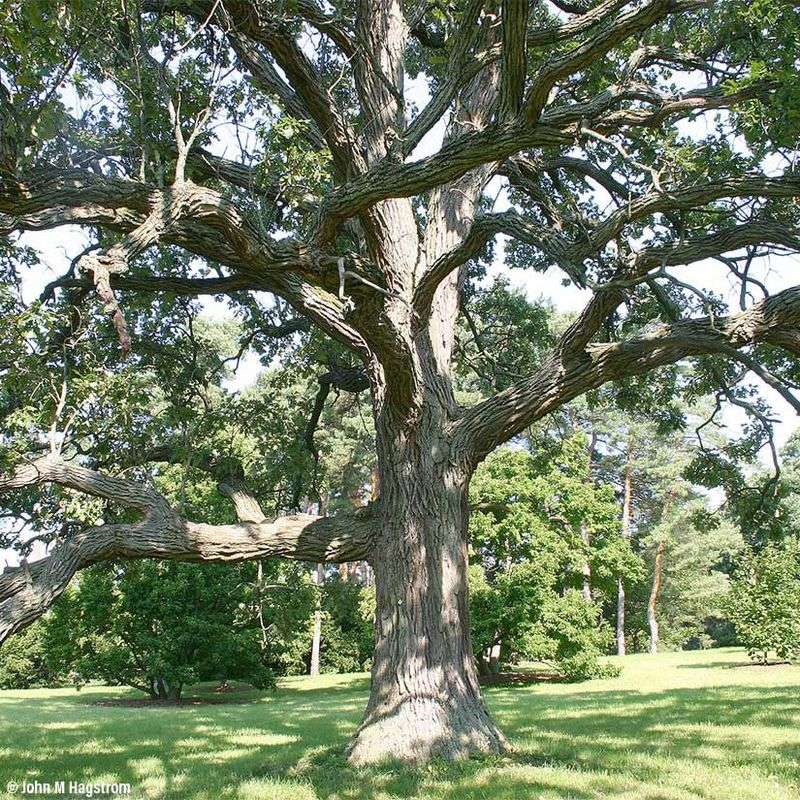
Grandpa’s favorite shade tree, the one with the tire swing, does not quit after one bad summer. Bur oak blight is more like a slow drain on the tree’s savings account.
Leaves act like tiny solar panels that turn sunlight into food for the whole tree. When they brown out early, the oak loses weeks of energy it needed to store for winter.
One rough year is usually no big deal for a healthy oak. Trouble builds when the blight returns summer after summer and the tree runs low on reserves.
Weakened oaks become easy targets for opportunistic pests that rarely affect strong, healthy trees. The two-lined chestnut borer, a small beetle, tunnels under the bark and blocks the flow of water.
Armillaria root rot, a fungus that infects stressed roots, can pile on as well. Together, these problems can push a once-mighty oak past the point of recovery.
Warning clues of serious decline include thinning crowns, bare branch tips, and small, pale spring leaves. Woodpeckers pecking heavily at the bark can also hint at borers hiding inside.
Still, there is real hope, since many blighted oaks carry on for years with only mild symptoms. Trees on good soil with steady moisture often handle the worst effects surprisingly well.
Keeping notes each fall can help you track whether your tree is holding steady or slipping. A quick photo from the same spot every September makes comparing years easy and even kind of fun.
September Chores That Support A Healthier Bur Oak
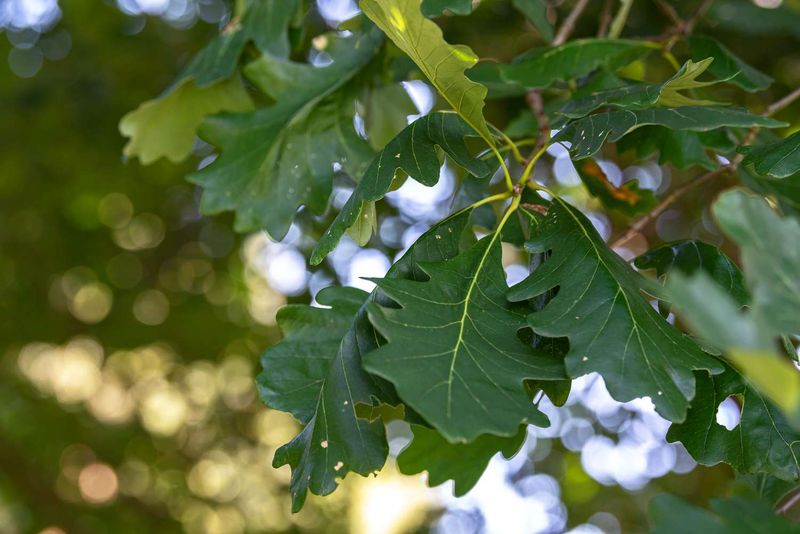
Who knew a to-do list could double as a love letter to a tree? A few simple autumn chores can support your bur oak’s overall health, though they will not prevent next year’s infection.
Start with water, because thirsty oaks fight off disease about as well as sleepy kids fight homework. If fall turns dry, give the root zone a slow, deep soak every two weeks.
Next, spread a ring of wood chip mulch a few inches deep around the trunk. Keep it pulled back from the bark so it looks like a donut, not a volcano.
Protect the soil under the canopy from heavy trucks, parked cars, and big construction piles. Packed-down dirt squeezes out the air and water that hungry oak roots badly need.
Hold off on heavy fertilizer, which can push soft new growth that stresses the tree. A soil test from your county extension office tells you if anything is truly missing.
Planning to add new oaks to your yard or farm this fall? Pick large-acorn bur oaks, and mix in other hardy natives so one disease cannot sweep through.
Snap your yearly September photo and jot down how much browning you see. Share it with your arborist this winter so they can decide if spring injections make sense.
Finally, give yourself a well-earned pat on the back for paying such close attention. Iowa’s toughest oak has guarded prairies for thousands of years, and a little help keeps it going.