Japanese Beetles Are Showing Up In Nebraska, And Here Is How To Stop Them Early
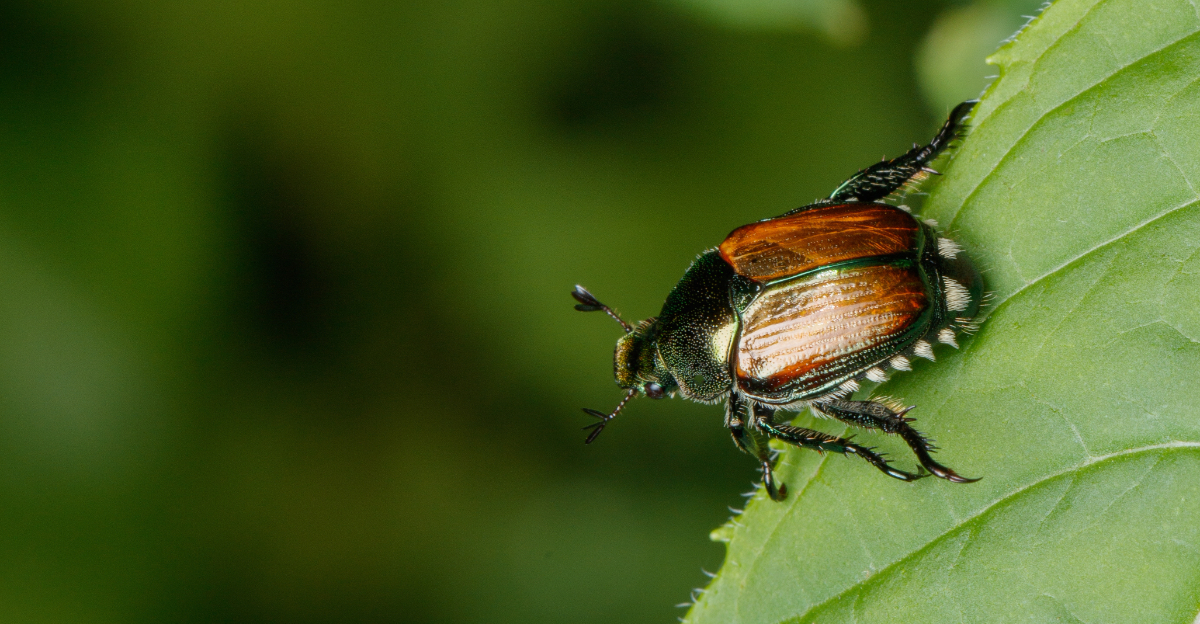
Something is moving through Nebraska gardens right now, and it is leaving a trail of lace where healthy leaves used to be.
Japanese beetles do not sneak in quietly. They arrive in groups, land on whatever looks good, and start feeding before most gardeners even realize what hit them.
The damage can look like deer browse or wind damage at first glance, which is exactly why so many plants are already struggling by the time anyone takes a closer look.
These beetles are small enough to overlook but efficient enough to strip a rose bush in under a week. Nebraska summers give them everything they need to thrive, and they have learned to take full advantage of it.
Getting ahead of them takes a little knowledge and quicker action than most people expect.
Japanese Beetles Do Not Wander Into Nebraska By Accident
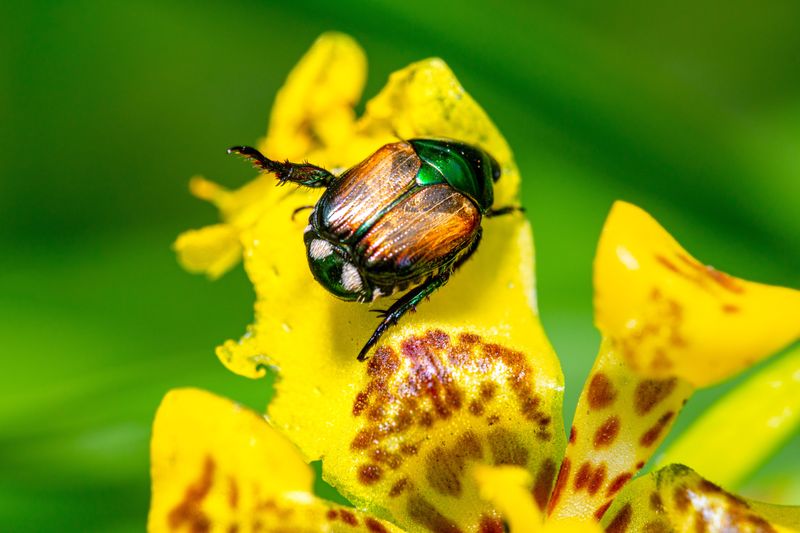
Blame the shipping lanes, not bad luck. Japanese beetles arrived in the United States around 1916, hitching a ride in iris bulbs from Japan.
Since then, they have marched steadily westward, and Nebraska sits right in their expansion path. The warm, humid summers here create perfect breeding conditions for this pest.
Adult beetles lay eggs in turf grass during midsummer. Those eggs hatch into white grubs that spend months underground, feeding on grass roots before emerging as adults the following year.
Each female can lay anywhere from 40 to 60 eggs in a single season. That number adds up fast across a neighborhood or a farm.
Nebraska also offers something Japanese beetles rarely find further north: enough warm weeks to complete their full life cycle and then some. That is why populations here do not just survive from year to year but actually grow.
The spread is not random either. Beetles follow plants, warmth, and each other. They release pheromones that attract more beetles, turning one visitor into a swarm within hours.
Nebraska gardeners are not imagining it getting worse each year. Populations are genuinely growing, and early action is the only way to stay ahead of them.
The Nebraska Plants Japanese Beetles Will Go After First
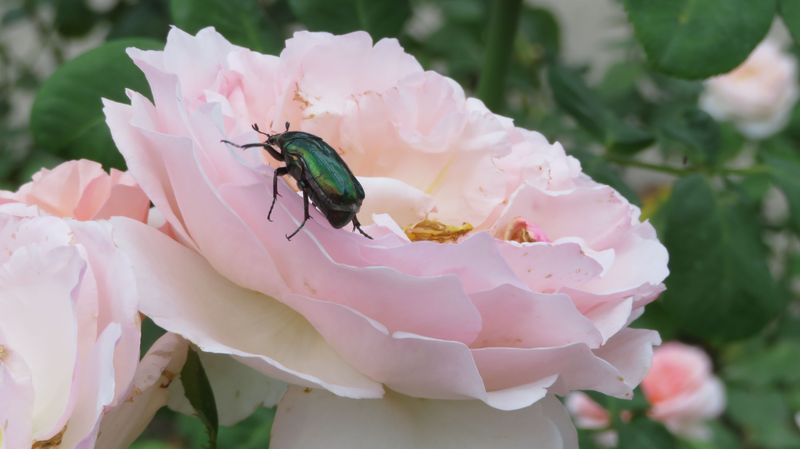
Your roses are basically a welcome mat. Japanese beetles are drawn to roses more than almost any other plant, and they will find yours fast.
Beyond roses, they target linden trees, grapes, raspberries, and crabapples with alarming speed. A linden tree in full bloom can draw a surprisingly large number of beetles in a short period of time.
Ornamental plants like zinnias, hollyhocks, and evening primrose are also high on their list. If your yard is full of these beauties, expect company.
Mature trees are not immune either. Japanese beetles have been known to cluster on the upper canopy of elms and birches, where the damage can go unnoticed until entire branches look scorched from the street.
Vegetable gardens are not safe either. Beans, corn silk, and asparagus all show up on their feeding menu. Gardeners growing edibles in Nebraska need to stay alert starting in late June.
Your Nebraska Garden Changes Every Week. Your Plan Should Too.
Gardening in Nebraska changes quickly throughout the season. Every Friday you’ll receive a simple weekly plan showing exactly what to plant, prune, fertilize, harvest, and protect so you never miss the right timing.
Interestingly, some plants repel or simply bore beetles. Lilacs, forsythia, and dogwoods tend to get left alone. Planting these near more vulnerable species can create a small buffer zone.
Knowing which plants attract beetles most helps you prioritize where to focus your early control efforts. Protect your highest-risk plants first, and you will slow the spread across your entire yard.
What Japanese Beetle Damage Actually Looks Like
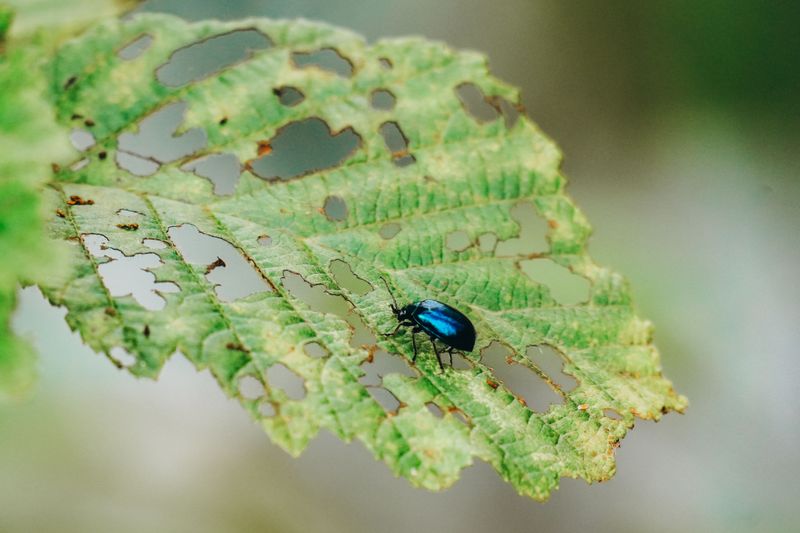
Skeletonized leaves are the calling card. When beetles feed, they eat the soft tissue between leaf veins, leaving behind a lacy, see-through shell of a leaf.
That distinctive pattern sets Japanese beetle damage apart from most other garden problems. Caterpillar damage and hail damage look different, so the lacy look is a reliable clue.
On roses and soft-petaled flowers, the damage looks more like ragged chewing around the edges and center. Blossoms can be reduced to brown, tattered scraps within a day or two.
Fruit damage is harder to spot at first. Beetles often feed on the skin of grapes or berries, leaving small sunken areas that invite rot and disease to follow.
Below ground, grub damage shows up as dead patches in your lawn. Turf pulls back like a loose rug when grubs have chewed through the root system underneath.
Catching these signs early matters more than most gardeners realize. The sooner you confirm beetles are present, the sooner you can act before the population explodes across your yard.
How To Catch A Japanese Beetle Problem Before It Spreads
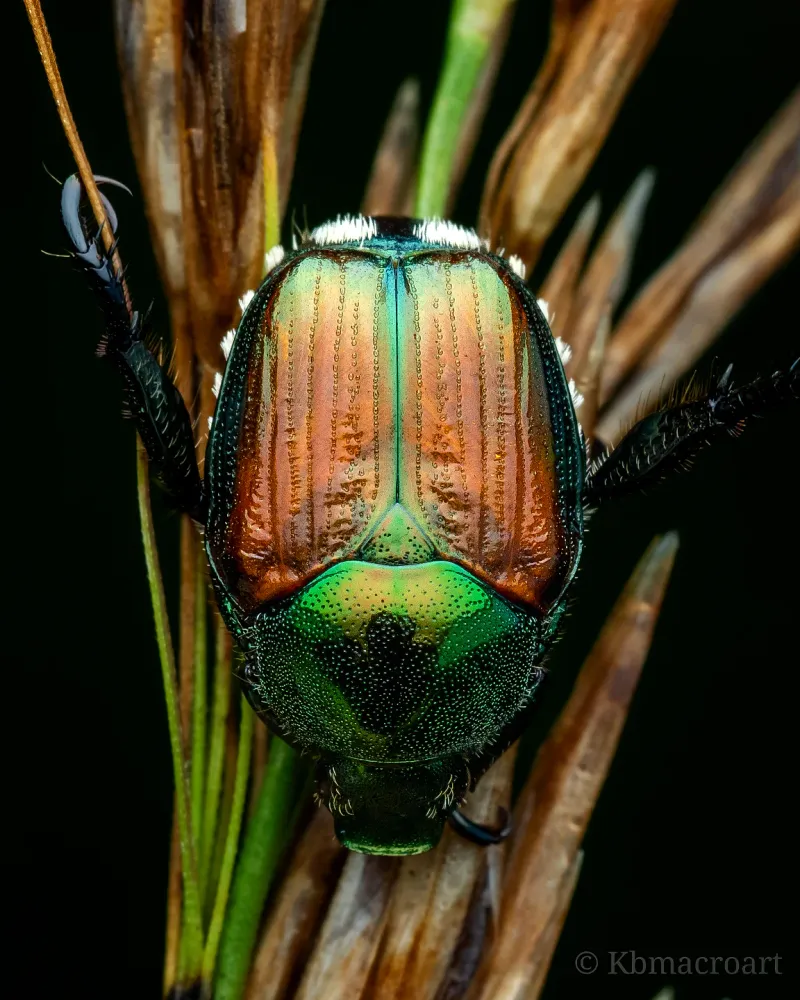
Catching them early starts with simply looking. Walk your yard every few days starting in late June, focusing on roses, grapes, and linden trees first.
Morning is the best time to check because beetles are slower and easier to spot when temperatures are cooler. They tend to cluster on the sunniest parts of plants, so look at the tops of leaves first.
Yellow sticky traps can help you detect early activity, though they are not meant to control large populations. Think of them as an early warning system, not a solution.
A hand lens or even a close look at the underside of leaves can reveal eggs or early feeding damage before it becomes visible from a distance. Catching that first sign a few days earlier can make a real difference in how quickly you respond.
Keeping a simple log of where and when you first spot beetles each season also pays off over time. Patterns tend to repeat, and knowing which plants got hit first last year tells you exactly where to look first this year.
Checking your neighbor’s yard can also give you a heads-up. If beetles are swarming next door, your garden is likely next on their list, and you need to prepare immediately.
What Makes Nebraska Gardens A Recurring Target
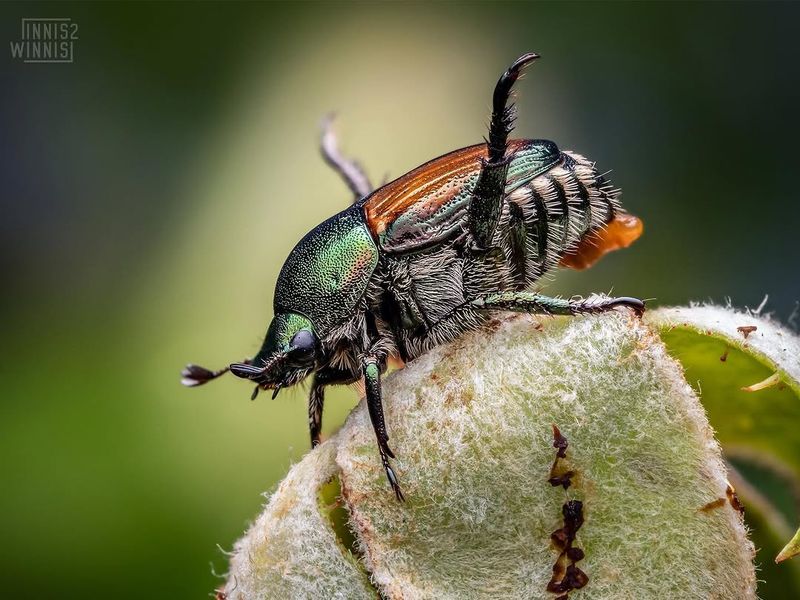
Nebraska summers are practically an invitation. Hot days, moderate humidity, and well-watered lawns create the exact conditions Japanese beetles need to thrive and reproduce.
Irrigated turf grass is a major factor. Beetles prefer to lay eggs in moist soil, and suburban lawns that get regular watering are prime real estate for egg-laying females.
The abundance of ornamental plants in Nebraska neighborhoods also plays a role. Roses, fruit trees, and flowering shrubs are planted everywhere, creating a non-stop buffet from one yard to the next.
Warm soil temperatures in June and July trigger adult beetles to emerge right on schedule. Nebraska’s climate lines up almost perfectly with their natural emergence window.
Urban heat from pavement and structures may extend the active season slightly in some areas. Beetles near driveways and south-facing fences may stay active a bit longer than those in shadier spots.
Understanding why your yard is a target helps you make smarter choices about what to plant and how to manage your lawn. Reducing beetle-friendly conditions is one of the most underrated long-term strategies available to Nebraska gardeners.
Natural And Chemical Options Nebraska Gardeners Actually Rely On
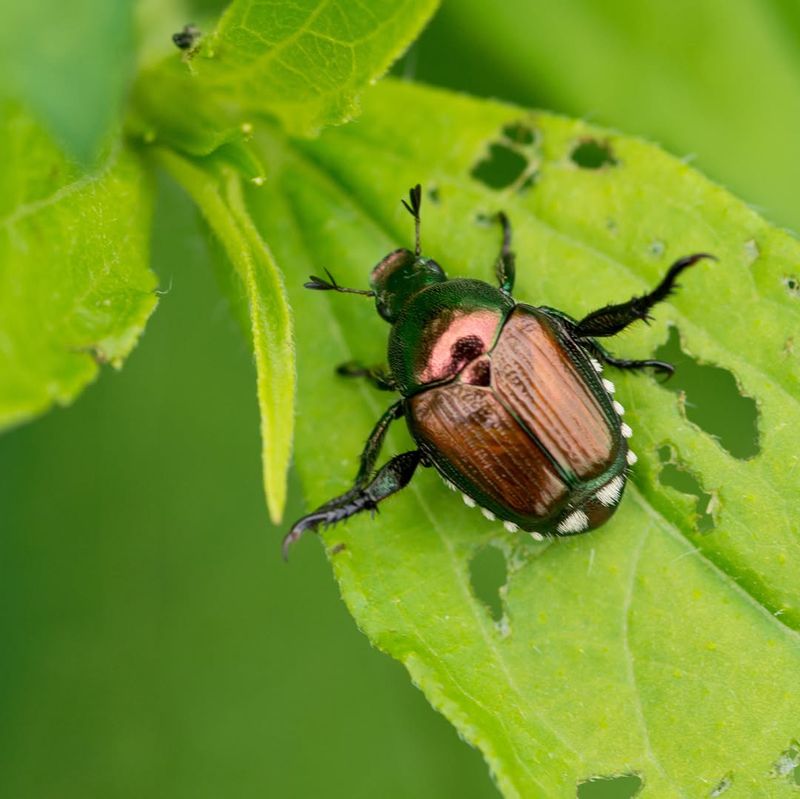
Neem oil is the go-to for many organic gardeners. Sprayed directly on plants, it disrupts beetle feeding and egg-laying and tends to be less harmful to beneficial insects than synthetic options when applied correctly.
Milky spore is a natural soil bacteria that targets grubs underground. It takes a season or two to establish, but once active, it can protect your lawn for years.
Hand-picking is surprisingly effective for small infestations. Drop beetles into a bucket of soapy water in the morning when they are sluggish, and you can remove dozens quickly.
Pyrethrin-based sprays offer a faster knockdown for heavy infestations. Derived from chrysanthemum flowers, they break down quickly in the environment and are less harsh than synthetic options.
For severe cases, synthetic insecticides containing carbaryl or permethrin are widely available at Nebraska garden centers. Follow label directions carefully, especially around pollinators and edible plants.
Pheromone traps are widely sold at garden centers, but place them well away from your garden rather than inside it. They attract more beetles than they catch, and poor placement can make an existing problem worse.
Combining methods almost always works better than relying on just one. A layered approach using natural deterrents, targeted sprays, and consistent monitoring gives your garden the strongest possible defense against Japanese beetles.
How To Stop Japanese Beetles Before They Take Over Your Yard
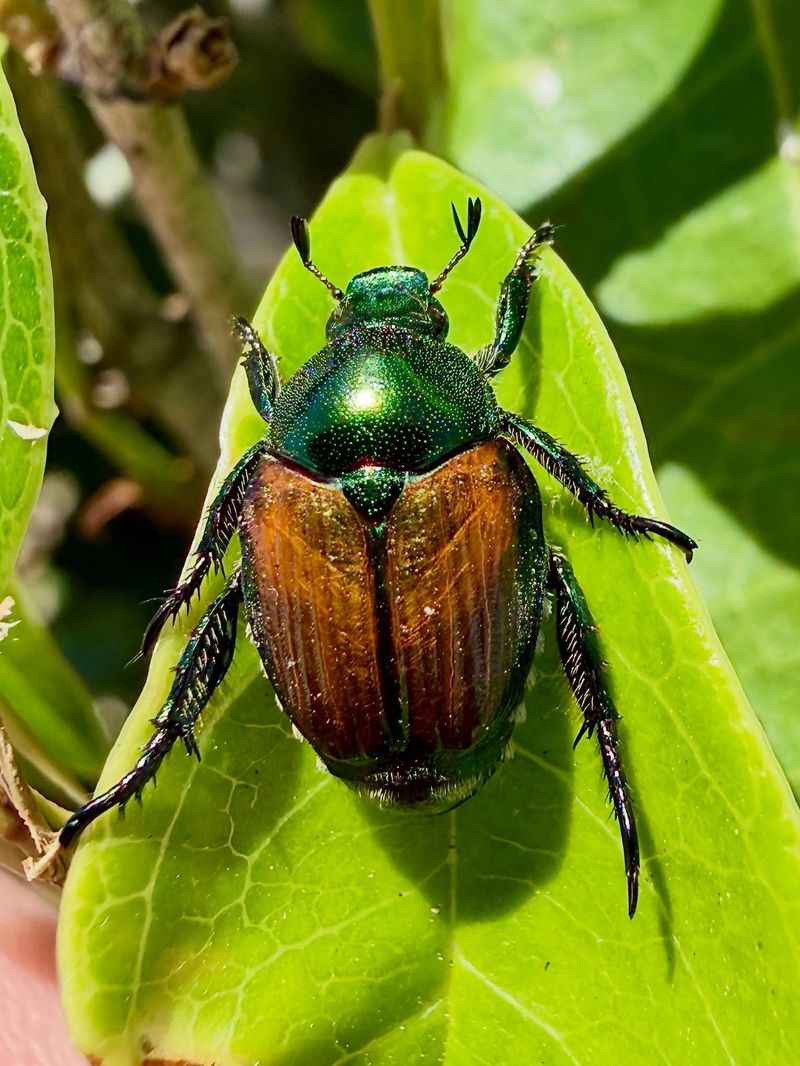
Acting before the peak is the whole game. Japanese beetles are most manageable in late June when populations are just starting to build, not in August when damage is already done.
Soil treatments applied in late summer target newly hatched grubs before they grow large. Products containing imidacloprid or chlorantraniliprole work well when watered into the lawn after application.
Reducing irrigation in late July may help lower egg-laying activity in your lawn. Dry soil is less attractive to egg-laying females, so cutting back on watering during peak egg-laying season can lower next year’s population.
Covering vulnerable plants with fine mesh netting during peak beetle season is a simple, chemical-free option. It is not glamorous, but it works remarkably well for roses and small shrubs.
Encouraging natural predators helps too. Starlings, robins, and ground beetles all feed on Japanese beetle grubs and adults, so creating a bird-friendly yard pays off over time.
Stopping Japanese beetles in Nebraska is not about one perfect product or trick. It is about staying consistent, starting early, and layering your defenses so beetles never get a chance to settle in.