Large Fast Spiders Are Running Across Missouri Floors This Month
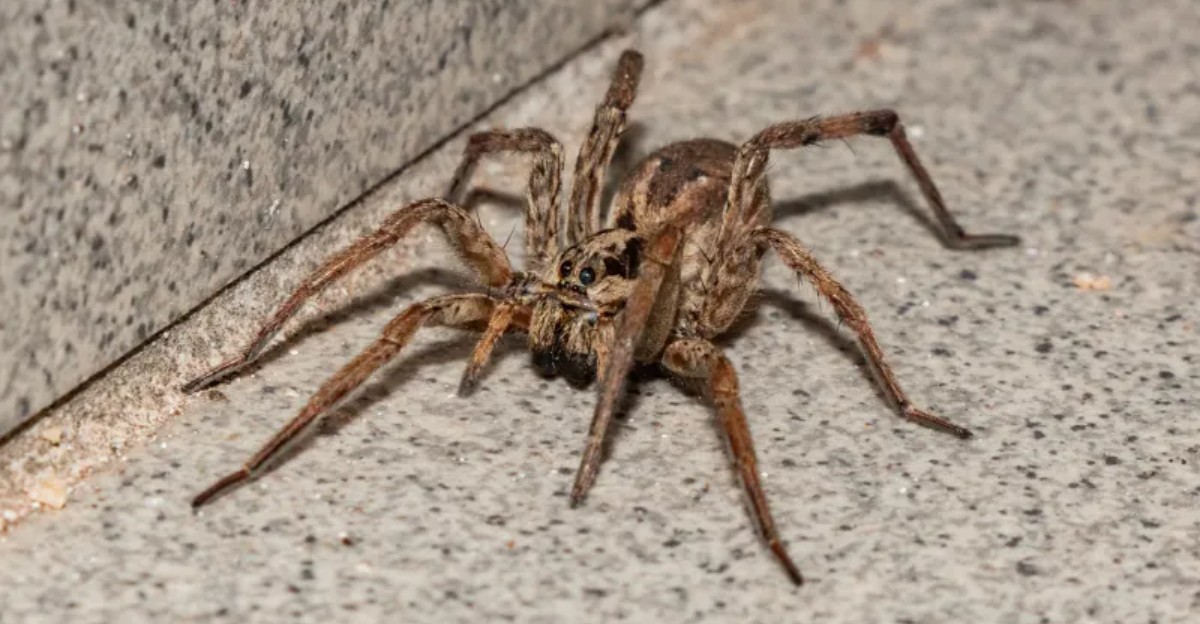
Picture a crisp October evening in Missouri, with cool air drifting through an open kitchen window. Suddenly something dark and leggy zips across the tiles faster than you can grab a shoe.
Plenty of families across the state are seeing these surprise sprinters near doors and basement walls. The creature looks big, hairy, and oddly confident, like it secretly pays rent in your house.
Your heart races, your feet leave the floor, and a squeal might escape before you know it. Most visitors like this mean no harm, but one look-alike deserves a little bit more caution.
Missouri sits in a region where both of these eight-legged guests can wander indoors each fall. A quick look at the right clues turns a scary moment into a calm response that keeps everyone at home safe.
Shorter days and chilly nights send restless wanderers on a search for warmth, mates, or a quick snack. So the next time something scurries past your slippers, take a slow breath and set the broom down.
The Hairy Hunters Behind The Fall Floor Sprints
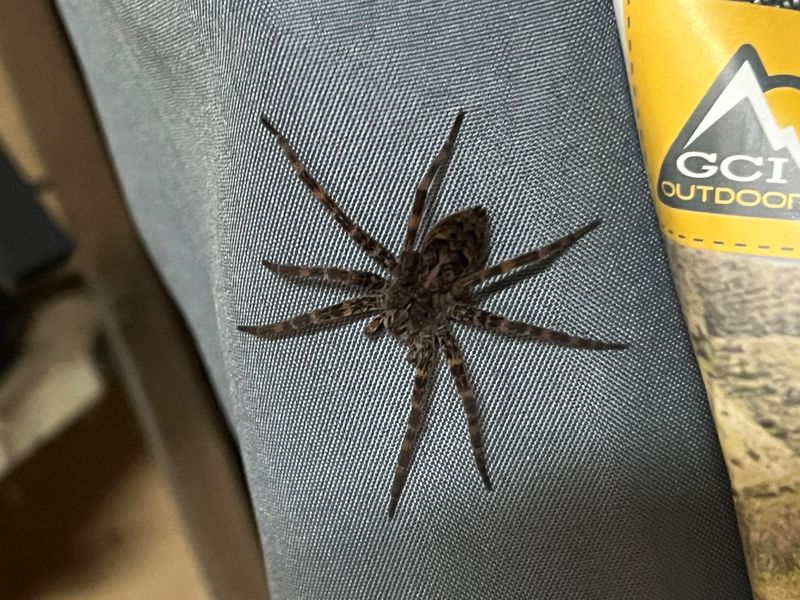
That hairy blur racing across your living room floor is most likely a wolf spider, not a monster. Missouri is home to dozens of wolf spider species, and several of them wander into houses during autumn.
These hunters do not spin webs to catch food, so they chase down insects on foot instead. Long, strong legs let them sprint short distances at surprising speeds, which explains that startling dash across the tile.
Some of the larger ones, like the Carolina wolf spider, can reach roughly three to four inches across with legs included. Their bodies are usually brown, gray, or tan with stripes, which helps them blend into leaves and soil.
Fun fact: if you shine a flashlight across your yard at night, their eyes reflect the light with a faint greenish glint. That shine comes from a reflective layer behind their eyes, much like the eyeshine you see in cats.
Wolf spiders rarely bite people, and they mostly do so only when pressed against skin or trapped in clothing. A bite can feel like a mild sting, and symptoms usually ease within a few days, though redness or itching can linger longer.
Their presence in your home also hints that other bugs are around, since these spiders follow the food. Crickets, roaches, and beetles are favorite meals, so a spider sighting can point to a bigger insect issue.
In short, the speedy visitor is usually more wary of you than you are of it. Give it space, stay calm, and remember that this hunter is quietly helping control pests around your house.
The Cool Night Mating Season Trigger
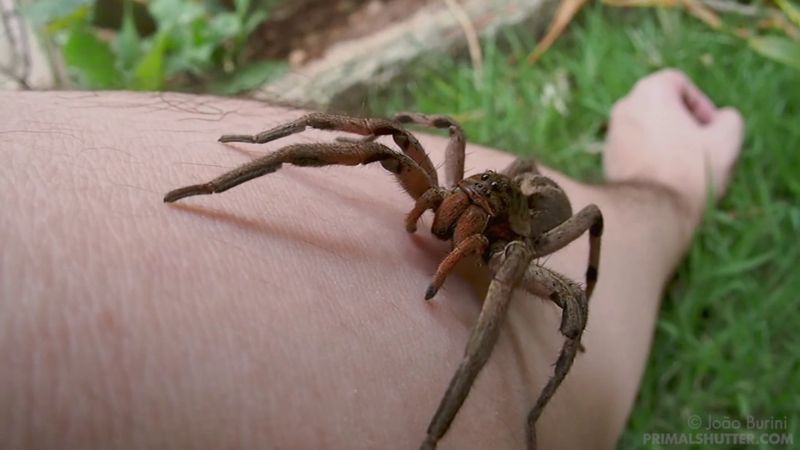
Think of early October as dating season for wolf spiders, with lots of wandering, searching, and nervous energy. Adult males leave their burrows and roam far and wide, hoping to find a female before winter arrives.
All that travel means they sometimes take a wrong turn and slip under your front door by accident. Most are not moving in on purpose, and many simply wander in by chance.
Your Missouri Garden Changes Every Week. Your Plan Should Too.
Gardening in Missouri changes quickly throughout the season. Every Friday you’ll receive a simple weekly plan showing exactly what to plant, prune, fertilize, harvest, and protect so you never miss the right timing.
Cooler nights in Missouri also play a big role, since dropping temperatures push many critters toward warm shelter. Your heated home, with its cozy corners and steady supply of insects, can look like an inviting shelter.
Fall yard work stirs things up too, because raking leaves and moving firewood can flush spiders from hiding. Once disturbed, they scramble for the nearest dark gap, which is sometimes a crack beside your patio door.
Heavy autumn rains can flood ground burrows as well, sending wolf spiders searching for higher, drier spots nearby. Basements, garages, and laundry rooms often become the first stop because they sit close to the ground.
Most sightings peak from late September through October, then slowly decline as the first hard frosts settle in. By November, many males have finished their search, and the indoor parade usually quiets down a lot.
Knowing this timing helps you relax, because a few autumn visitors are normal and not a sign of infestation. Think of them as lost travelers passing through, eager to find love and get back to the woods.
The Brown Recluse Mix-Up
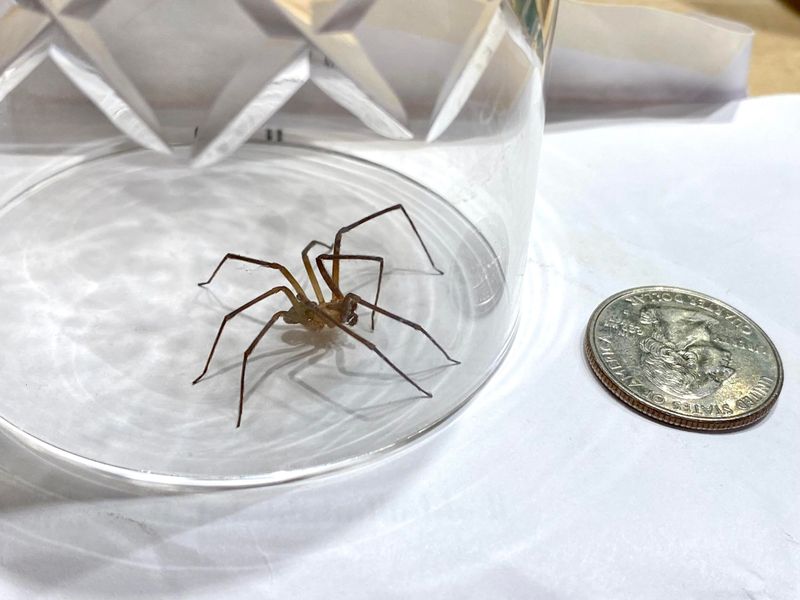
Many people assume a brown spider in the bathtub is a brown recluse, when it is often a wolf spider. Mix-ups like that happen often in Missouri, where both spiders share the same houses and seasons.
Brown recluses are common across much of the state, especially in attics, closets, and storage boxes. They tend to hide in quiet, cluttered spaces and come out at night to hunt small insects.
The biggest mistake people make is assuming every brown spider is a recluse, which leads to needless panic. The opposite mistake matters too, since brushing off a real recluse can mean handling it with bare hands.
Recluse venom can cause a painful sore in some people, so these spiders deserve more respect than wolf spiders. Thankfully, serious reactions are uncommon, and many bites heal on their own with basic first aid and rest.
Size is one clue, because a brown recluse is much smaller, usually about the size of a quarter when its legs are included. A big, hairy spider sprinting across an open floor is far more likely to be a wolf spider.
Behavior helps too, since recluses rarely race across rooms and prefer to stay tucked away out of sight. If you find a spider inside a shoe, glove, or folded towel, slow down and take a careful look.
When in doubt, snap a clear photo and compare it with identification resources from the Missouri Department of Conservation. University extension offices can also help identify spiders, often for free, if you send a sharp picture.
Clear Clues To Separate The Two Spiders
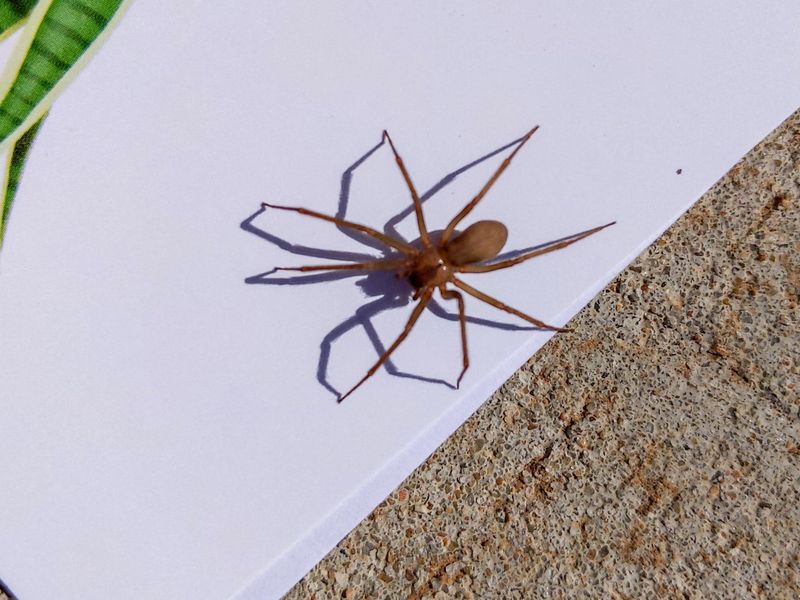
Telling these two spiders apart comes down to a few easy visual clues. You do not need a microscope, just good lighting, a safe distance, and maybe your phone camera zoomed in.
Start with the eyes, which are easiest to check in a zoomed-in photo. Wolf spiders have eight eyes in three rows, with two large ones facing forward, while brown recluses have only six eyes set in three pairs.
Next, look at the back, because recluses often carry a dark violin shape pointing toward their rear end. Wolf spiders usually show stripes or blotchy patterns instead, which look more like camouflage than a musical instrument.
Hair is another helpful hint, since wolf spiders look fuzzy and thick while recluses appear smooth and slender. Recluse legs are long, thin, and evenly colored, with no bands.
Body size matters as well, because larger wolf spiders can look chunky enough to cover a silver dollar when their legs are counted. Recluses stay much smaller, with a body roughly the size of a pencil eraser.
Watch how it moves, too, since wolf spiders dash boldly in the open and freeze when spotted. Recluses usually creep along walls or baseboards and hurry back into hiding as soon as light hits them.
Bonus clue: mother wolf spiders carry their babies on their backs, sometimes with over a hundred tiny riders aboard. Spotting that fuzzy piggyback parade is a strong clue you are looking at a wolf spider, not a recluse.
Gentle Removal Without Panic
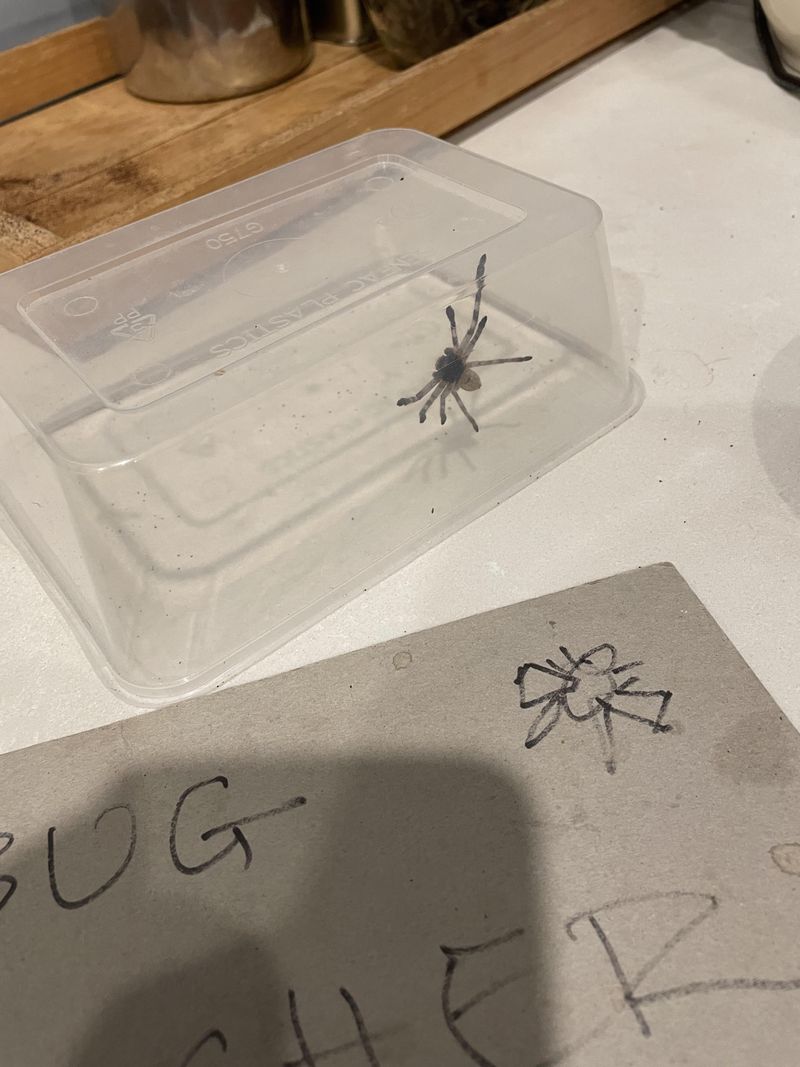
Take a breath first, because swinging wildly at a fast spider usually ends with a missed swat. A calm plan works better, keeps your floors clean, and protects you from an unexpected bite in the process.
The classic cup and paper trick works well for wolf spiders, since they often freeze when they feel cornered. Place a clear cup over the spider, slide stiff paper underneath, and carry it gently outside to the yard.
Release it near shrubs or a woodpile at least twenty feet from the house so it finds new shelter. Out there, it can keep eating crickets and other pests that might otherwise sneak into your home this fall.
Suspected brown recluses call for more care, so skip the bare-hand approach and use a jar with a lid. Wearing gloves adds protection, and a sealed container lets you show the spider to an expert for identification.
Sticky traps placed along baseboards and behind furniture can catch wandering spiders and reveal where they are entering. Check the traps weekly, since a cluster of recluses in one spot might mean a hidden population nearby.
Spraying random chemicals across the floor rarely solves the problem and can bother pets, kids, and helpful insects. If recluses keep showing up in large numbers, a licensed pest control professional can design a safer plan.
For any bite that swells, darkens, or spreads over several days, a quick visit to a doctor makes sense. Most bites heal fine, but early care brings peace of mind and helps prevent infection from setting in.
A Sealed Home For The Rest Of Fall

Picture your house as a giant cookie jar with tiny gaps, and every gap welcomes hungry wanderers inside. Sealing those openings this October is one of the smartest ways to keep spiders off your floors.
Start with door sweeps and weatherstripping, since a gap as thin as a pencil lets a spider squeeze through. Run your hand along the bottom of each exterior door, and if you feel a draft, fix it.
Caulk cracks around windows, pipes, and cable lines, because these small openings are favorite entry points in autumn. Torn window screens deserve attention too, especially if you still crack windows open on mild Missouri afternoons.
Outside, move firewood stacks, leaf piles, and stones away from the foundation, where spiders love to hide. Trimming shrubs so they do not touch the siding also removes easy bridges that lead straight to your walls.
Porch lights attract moths and beetles, which then attract hungry spiders looking for an easy evening meal. Switching to yellow bug lights or motion sensor bulbs can reduce that buffet and the crowd it draws.
Inside, clear clutter from basements, closets, and garages, since cardboard boxes give brown recluses plenty of hiding spots. Plastic bins with tight lids work better, and shaking out shoes or stored clothes adds another layer of safety.
Regular vacuuming along baseboards and under beds picks up spiders, egg sacs, and the insects they feed on. Stick with these habits through November, and those startling floor sprints should become a rare sight indoors.