7 Lawn Maintenance Tips Florida Homeowners Need During Drought
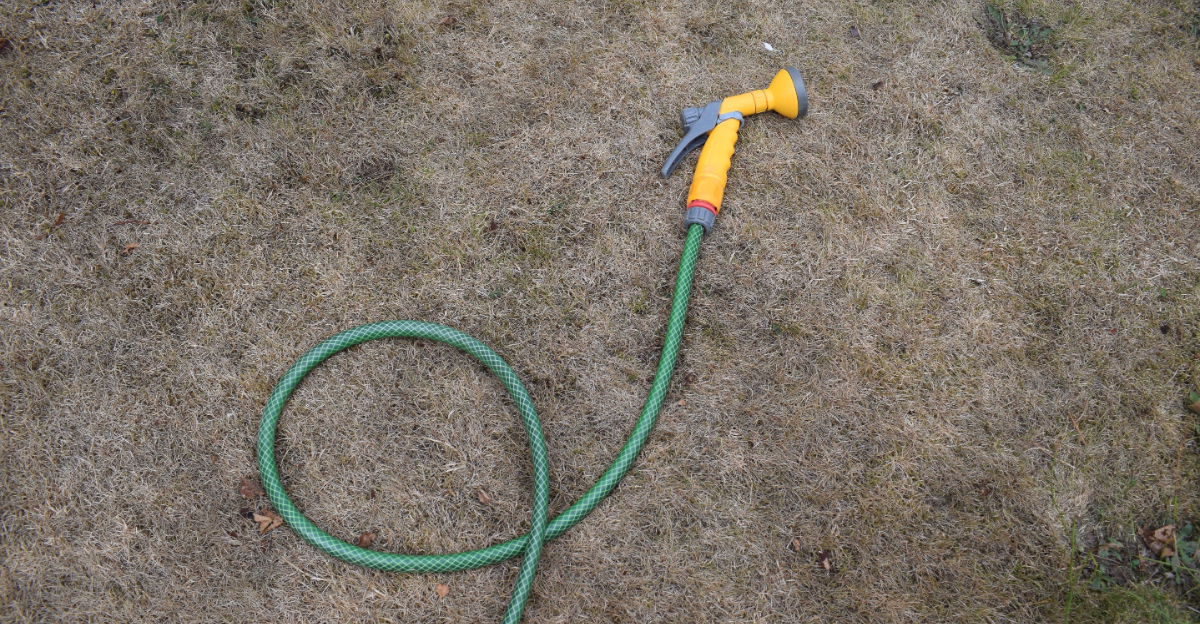
When rain disappears in Florida, your lawn feels it fast. What looked thick and green can start to fade, thin out, and lose its bounce in a matter of days.
It is easy to think more water will fix everything, but drought conditions call for a smarter approach, not just a heavier hand.
The way you mow, water, and care for your grass during dry stretches can make the difference between a lawn that struggles and one that holds on strong.
Small changes add up quickly, especially when heat and dry soil start working against you.
With the right moves at the right time, your lawn can stay resilient and recover faster once the rain returns.
1. Water Smarter Before Dry Stress Takes Over
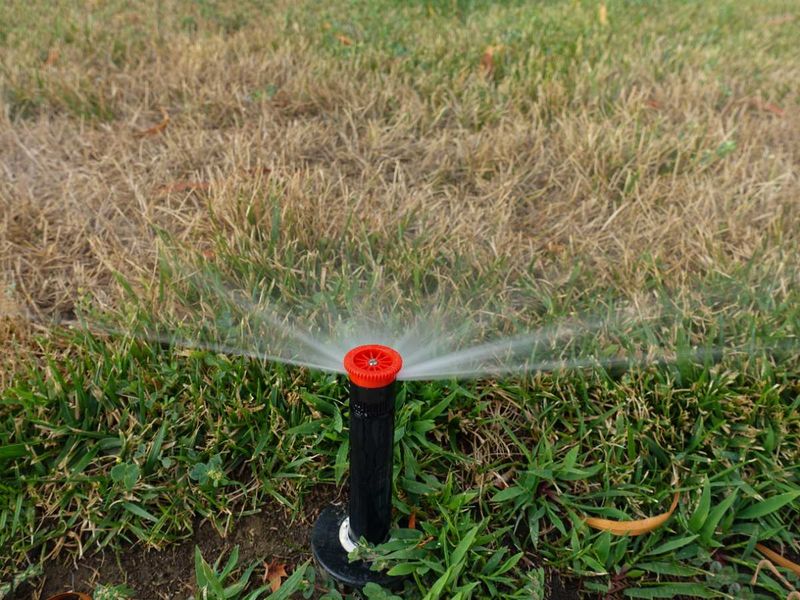
Your lawn will actually tell you when it needs water, and learning to read those signals is one of the most useful skills a Florida homeowner can have during a drought. Drought stress in grass shows up in a few pretty specific ways.
Grass blades start to fold or curl lengthwise, the lawn takes on a dull bluish-gray color instead of its normal green, and footprints or mower tracks stay visible long after you have walked across the yard. That last one is a reliable sign.
When turf loses enough moisture to stop bouncing back from pressure, it is telling you it is thirsty.
Instead of running your irrigation on a fixed timer regardless of rainfall, switch to watering only when you see those stress signs.
According to UF IFAS Gardening Solutions, watering based on actual lawn need rather than a set schedule is one of the most effective ways to manage turf during drought.
When you do water, go deep. Applying about half to three-quarters of an inch of water encourages roots to reach deeper into the soil, which builds better drought tolerance over time.
Timing matters too. Early morning watering between 4 a.m. and 8 a.m. reduces evaporation and lets grass blades dry before evening, which lowers the risk of fungal problems.
Always check your local Water Management District rules before irrigating. Florida homeowners are often subject to specific watering day restrictions, especially during declared drought conditions, and those rules vary by county and district.
Ignoring them can lead to fines, so check with your local utility or water management authority before adjusting your schedule.
2. Raise Your Mower Blade To Protect Thirsty Grass
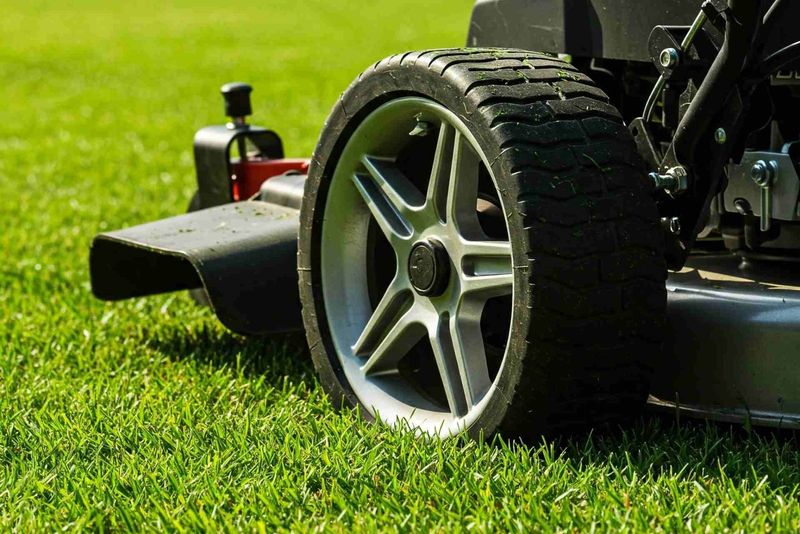
Most Florida homeowners mow out of habit, cutting grass to the same height every week without thinking much about how conditions have changed. During a drought, that habit can quietly make things worse.
Cutting grass too short removes the leaf tissue that helps shade the soil, and when the soil dries out faster, roots suffer even more. Raising your mower blade is a simple adjustment that makes a real difference when your lawn is already working hard just to stay alive.
UF IFAS recommends mowing each grass type at the upper end of its recommended height range during drought stress. St. Augustine grass, for example, does best between 3.5 and 4 inches during dry periods.
Your Florida Garden Changes Every Week. Your Plan Should Too.
Gardening in Florida changes quickly throughout the season. Every Friday you’ll receive a simple weekly plan showing exactly what to plant, prune, fertilize, harvest, and protect so you never miss the right timing.
Bahiagrass holds up well at 3 to 4 inches. Taller grass blades create natural shade over the soil surface, slowing down moisture loss and keeping soil temperatures lower.
That extra inch or two of height can genuinely extend how long your lawn holds up between watering sessions.
Just as important is following the one-third rule. Never remove more than one-third of the grass blade height in a single mow, regardless of the season.
Cutting off too much at once puts the grass under sudden stress, which is the last thing a drought-weakened lawn needs. Also make sure your mower blades are sharp.
Dull blades tear grass instead of cutting it cleanly, leaving ragged edges that lose moisture faster and invite disease. A clean cut heals quickly, which matters more than ever when your turf is already running low on resources and fighting to stay healthy.
3. Stop Fertilizing When Your Lawn Is Already Struggling
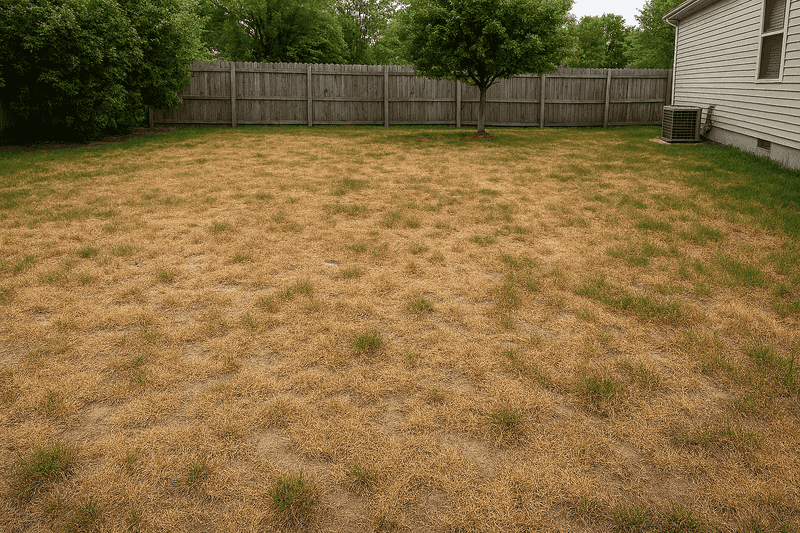
Grabbing a bag of fertilizer when the lawn starts looking rough feels like the logical move, but during a drought it can backfire badly. Fertilizer pushes grass to grow, and growth requires water.
When a lawn is already moisture-stressed, forcing it to produce new leaf tissue means it has to pull even harder from a water supply that simply is not there.
The result is more stress, not less, and a lawn that was struggling may end up in much worse shape than before the fertilizer hit the ground.
According to UF IFAS guidance, fertilizer applications should be postponed when a lawn is under drought stress. Nitrogen in particular drives shoot growth, and extra shoot growth during dry conditions can draw resources away from root survival.
Roots are what will carry your lawn through the drought and support recovery once rain returns, so protecting root health during dry periods is a smarter priority than chasing green color.
If the brown or faded look of a drought-stressed lawn is hard to accept, there is one option worth considering. Soluble iron can be applied to temporarily improve the green color of grass without triggering the aggressive growth response that nitrogen fertilizers cause.
It will not fix drought stress, but it can improve appearance without making things worse. That said, even iron applications should be approached carefully on severely stressed turf.
The safest approach is to hold off on all fertilizer until your lawn has recovered, rainfall has returned to normal levels, and the grass is actively growing again. Patience here protects your investment in the long run.
4. Cut Back On Foot Traffic Before Damage Spreads
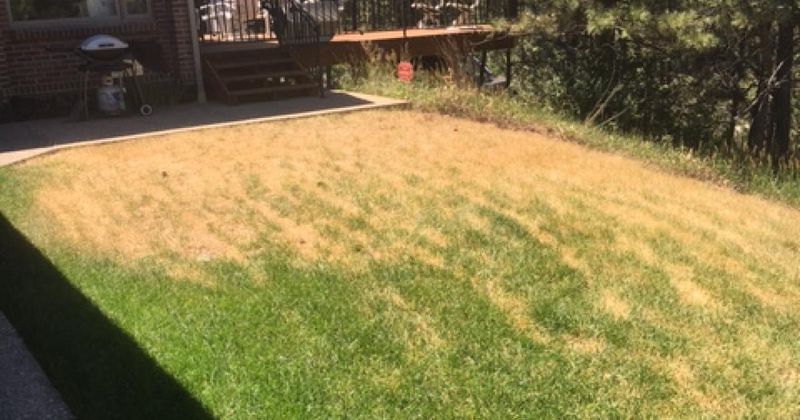
Drought-stressed grass is fragile in ways that are easy to underestimate. Under normal conditions, healthy turf can handle regular foot traffic from kids, pets, and backyard activities without much trouble.
But when grass is already weakened from lack of moisture, the same amount of traffic that would normally be fine can cause real lasting damage.
The crowns and stolons of the grass plant become more vulnerable when they are dehydrated, and repeated pressure on dry turf can thin it out faster than the drought itself.
You do not need to rope off your entire yard, but being thoughtful about where activity happens makes a practical difference.
If there are areas of the lawn that already show stress, such as spots where the grass folds easily or footprints linger, try to redirect foot traffic away from those zones until conditions improve.
Dogs that pace the same path repeatedly, kids who cut across the same corner every afternoon, and even parking vehicles on grass can all accelerate thinning in already vulnerable spots.
Compacted soil from repeated traffic also reduces water infiltration, meaning whatever water does reach the lawn has a harder time soaking in where roots need it most.
Giving stressed areas a break from pressure lets the grass plant focus its limited energy on root survival rather than recovering from surface damage.
Once the drought breaks and rain returns, traffic-damaged areas may be slower to recover than sections that were protected.
Giving your lawn a little space during a dry spell is a low-effort habit that can save you from dealing with bare patches that need reseeding or resodding later.
5. Watch For Drought Stress Before Brown Patches Take Over
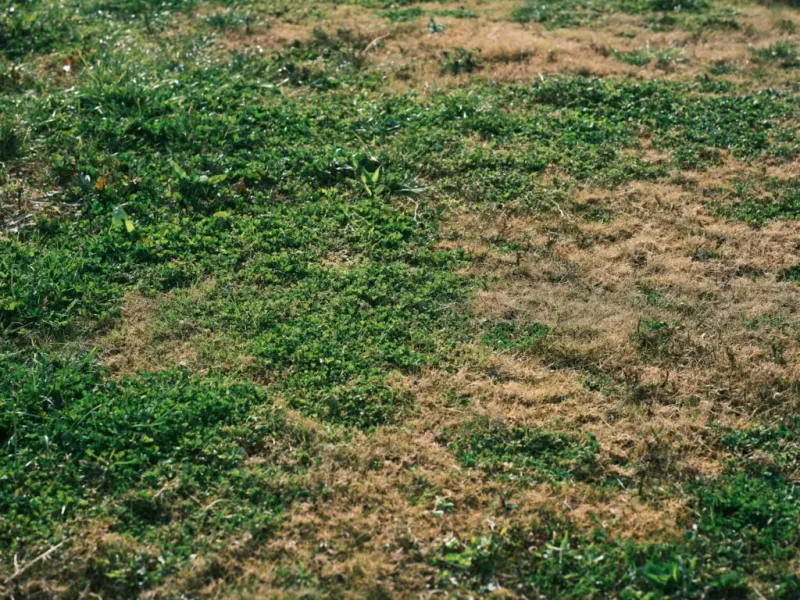
Catching drought stress early is one of the most powerful things a Florida homeowner can do to protect their lawn. By the time a lawn turns fully brown and patchy, the grass has already been under serious stress for a while, and recovery takes much longer.
Spotting the early warning signs gives you a chance to act before the damage deepens, and those signs are not hard to read once you know what to look for.
The first thing to watch for is color change. Healthy Florida grass has a bright, saturated green.
Drought stress shifts that color toward a dull, bluish-gray tone that looks almost muted compared to normal.
This color shift often appears unevenly across the lawn, showing up first in areas that get more sun, have sandier soil, or sit on slopes where water drains away quickly.
These spots tend to stress out before the rest of the yard does.
Blade folding is another early indicator. Many Florida grasses, especially St. Augustine and Bermuda, will fold their blades lengthwise as a protective response to water loss.
If you walk across your lawn in the morning and your footprints are still clearly visible an hour later, that is a reliable sign the grass lacks enough moisture to recover from compression.
Wilting that appears during the hottest part of the afternoon but seems to recover by morning is also worth watching.
Do not wait for full browning before adjusting your care routine. Early intervention, whether that means a targeted watering session or reducing mowing frequency, can keep a stressed lawn from sliding into deeper trouble that takes weeks or months to reverse.
6. Leave Grass Clippings To Help Hold Moisture
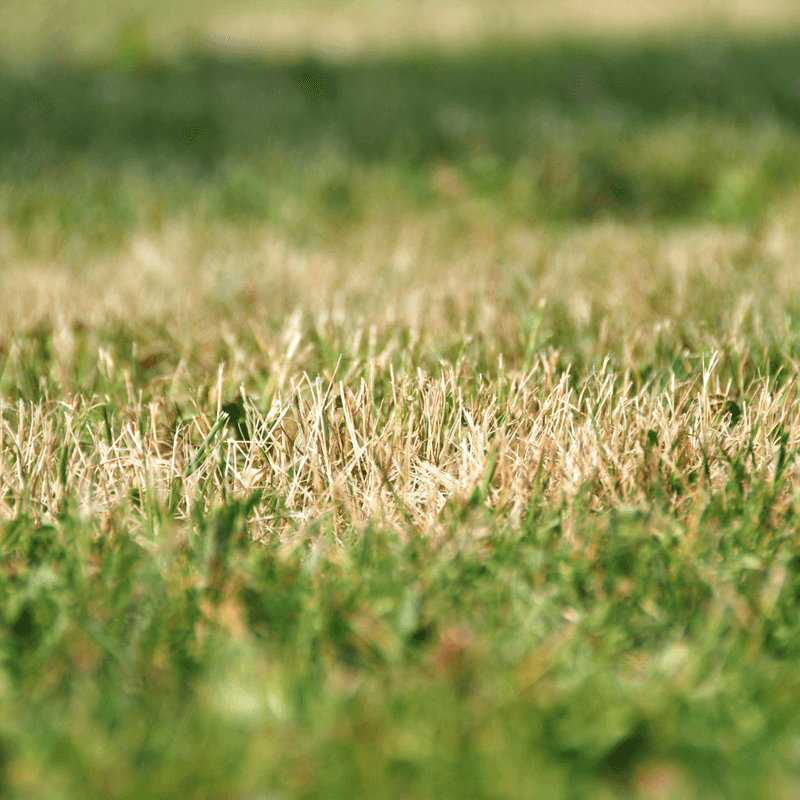
Bagging your grass clippings feels tidy, but during a drought it removes something your lawn could genuinely use. Grass clippings left on the lawn after mowing break down quickly and return organic matter back into the soil.
That decomposing layer acts like a light mulch, helping the soil surface retain moisture a little longer between watering sessions. In Florida’s intense summer heat, even a modest reduction in surface evaporation adds up over time.
UF IFAS has long supported the practice of returning clippings to the lawn, sometimes called grasscycling. Clippings are mostly water and break down fast, especially in Florida’s warm, humid conditions.
They do not significantly contribute to thatch buildup when the lawn is mowed at the right frequency, which is a common concern homeowners raise.
The key is making sure you are following the one-third rule and not removing huge amounts of leaf material in a single session.
When clippings are excessive because mowing was delayed, it is better to bag that cutting and return to grasscycling on the next mow.
Beyond moisture retention, clippings also return small amounts of nitrogen back into the soil as they decompose.
During drought when fertilizer applications should be paused, this natural recycling provides a gentle, slow nutrient return without the risks that come with applying concentrated fertilizer to stressed turf.
You are essentially letting the lawn feed itself in a modest way. It is a passive, zero-cost habit that supports both moisture conservation and soil health at the same time.
For Florida homeowners looking to do more with less during a dry stretch, grasscycling is a genuinely smart and easy routine to adopt.
7. Focus On Saving The Lawn Not Forcing New Growth
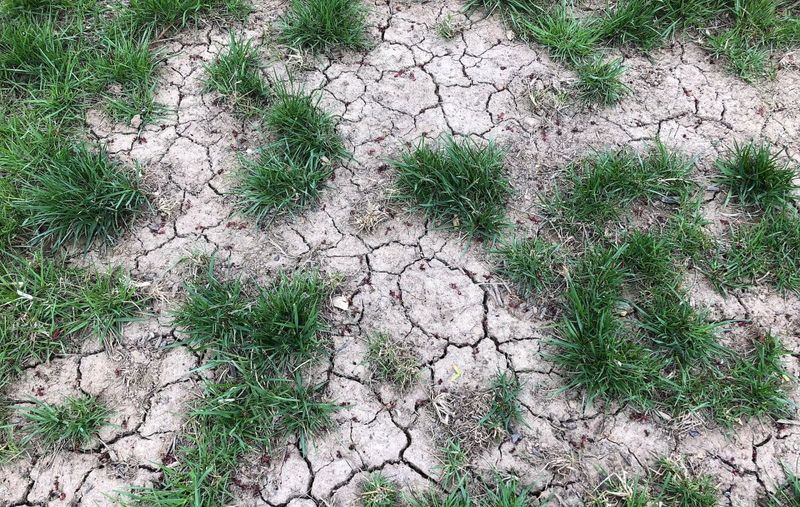
There is a real mental shift that happens when you stop trying to make your Florida lawn look perfect during a drought and start focusing on helping it survive. Most lawn care habits are built around growth, color, and appearance.
Drought care is built around something different: reducing stress, conserving resources, and keeping the grass plant alive until conditions improve. That change in mindset is not giving up on your lawn.
It is actually the smarter, more experienced approach.
Florida grasses like Bahiagrass and St. Augustine have evolved to handle periods of drought by going semi-dormant. During dormancy, grass slows its growth, may lose some color, and pulls resources back toward root survival rather than visible leaf growth.
A lawn that looks rough during a dry stretch is not necessarily a lost lawn. It is often a lawn that is doing exactly what it is designed to do under stress.
Trying to force green growth with extra water or fertilizer during this period works against the grass, not with it.
Practical drought survival means watering only when stress signs appear, mowing less frequently since slow-growing grass does not need as many cuts, skipping fertilizer until the drought breaks, and protecting the lawn from extra traffic and pressure.
It also means being realistic about expectations.
Some browning and thinning during extended drought is normal and does not mean permanent damage has occurred. Once rainfall returns and temperatures ease, well-cared-for Florida lawns typically recover with surprising speed.
Trust the process, follow the science from sources like UF IFAS, and resist the urge to overcorrect. Your lawn is tougher than it looks right now.