Leaning Leyland Cypress Trees After Isaias May Not Be Worth Saving In Georgia
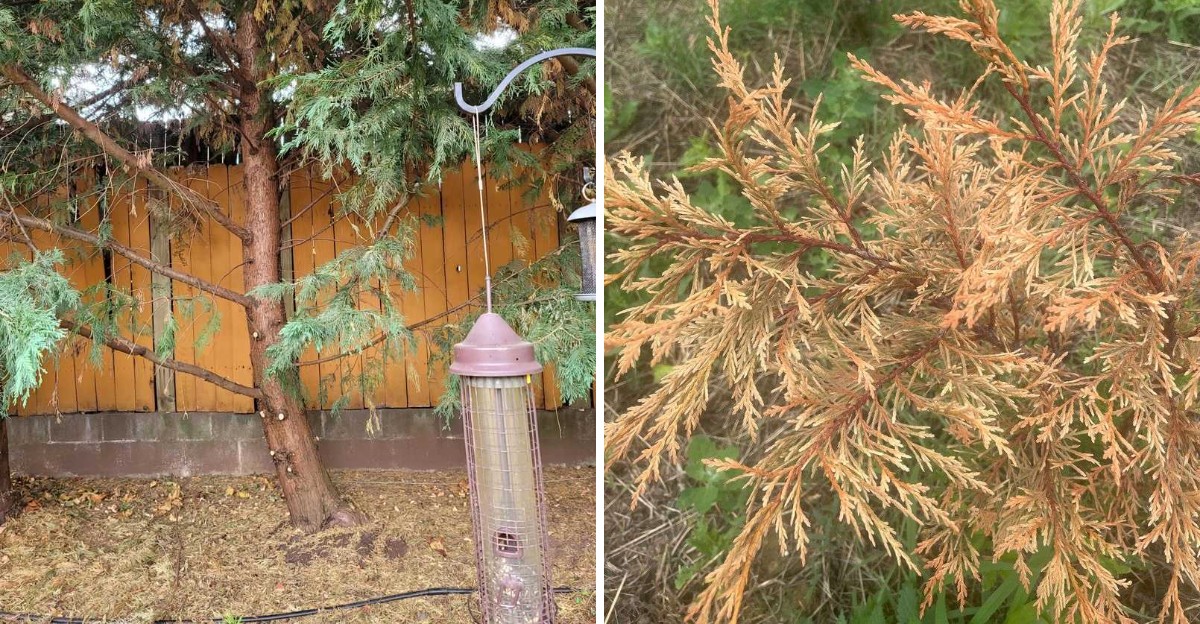
When a Leyland cypress leans after wind, straightening the trunk may seem like the obvious solution.
The trouble is that a visible lean can sometimes signal movement below ground. Roots that have shifted or torn may not anchor the tree securely.
That is concerning when the tree stands near a house, driveway, or path.
Hurricane Isaias brought damaging weather to parts of the region, but an old storm cannot be assumed to explain every leaning tree in Georgia. The condition of the roots and trunk matters far more than guessing when the movement began.
Avoid pulling a tree upright or attempting to brace it yourself.
Have a qualified arborist evaluate its stability before deciding whether it can be retained. Some trees need removal when their support has been seriously compromised.
1. A New Lean Can Point To Root Damage
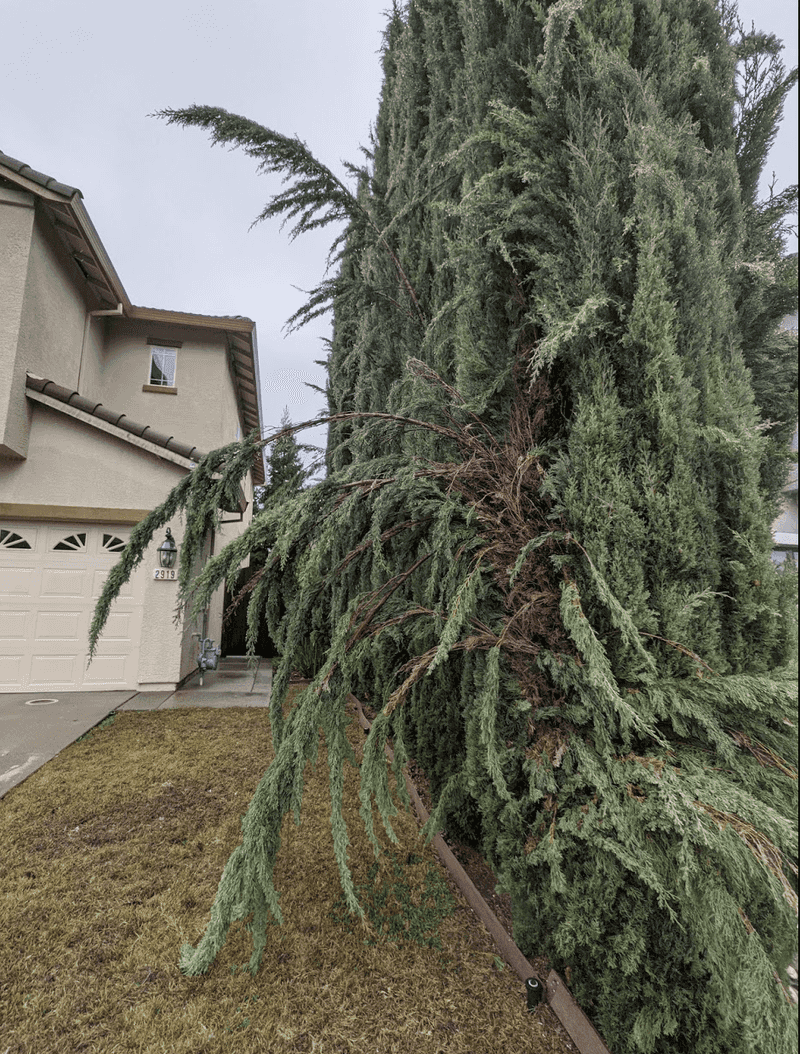
Trees that grew straight for years do not usually start tilting overnight without a reason. When a Leyland cypress leans right after a storm, roots on one side may have snapped or pulled loose.
A slow, gradual lean that developed over many seasons is a different situation from a sudden one.
Older leans often happen as a tree grows toward sunlight, and the roots may have adjusted over time. A fresh tilt after Isaias deserves closer attention because the anchoring system may have shifted during the storm.
Walk around the base and study the soil carefully.
Look for cracked or raised ground on the side opposite the lean, since that can mean roots are lifting. A gap between the trunk and the soil on one side can also point to movement below the surface.
Comparing old photos of your yard can help you tell how long the lean has been there.
Homeowners in Georgia often have family pictures or phone shots showing the tree line, and those images may reveal whether the angle is new. If you have none, ask neighbors what they remember.
Avoid tugging on the trunk to test it, because that could worsen the damage.
Take a few dated photos from the same spot over the next week or two. If the angle keeps increasing, that is a signal to get professional help quickly.
2. Wet Soil Makes Windthrow More Likely
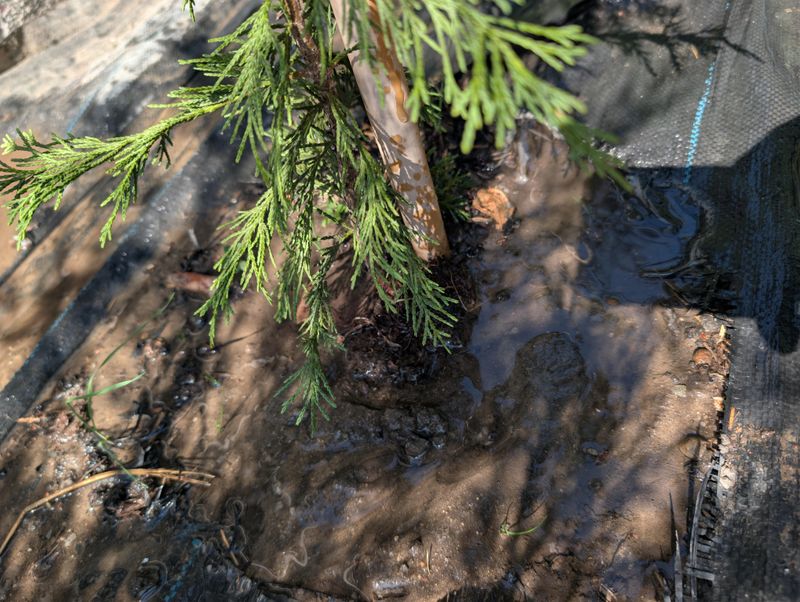
Soggy ground loses much of its grip. When soil fills with water, it softens and holds roots less firmly than it does when it is dry.
Arborists use the word windthrow for trees that tip or fall over from the roots during wind.
Rain soaks the ground first, and then gusts push against the tree canopy like wind on a sail. Leyland cypress has dense, evergreen foliage all year, so it can catch a lot of wind.
Isaias dropped heavy rain across parts of the Southeast, and soaked soil likely played a role in many leaning trees.
Clay soils, which are common in much of Georgia, can drain slowly after a big storm. Low spots in a yard may stay wet even longer, giving roots less support for days.
Your Georgia Garden Changes Every Week. Your Plan Should Too.
Gardening in Georgia changes quickly throughout the season. Every Friday you’ll receive a simple weekly plan showing exactly what to plant, prune, fertilize, harvest, and protect so you never miss the right timing.
Drainage matters for the future too.
If water regularly pools where your cypress grows, the roots may stay weaker and shallower over time. Poorly drained sites can also encourage root rot problems, though that depends on many conditions.
Hold off on heavy equipment or foot traffic near a leaning tree while the ground is soft.
Driving over wet soil can compact it and add stress to damaged roots. Letting the area dry a bit also makes it easier for an arborist to judge the true condition of the tree.
3. Exposed Roots Are A Serious Warning Sign
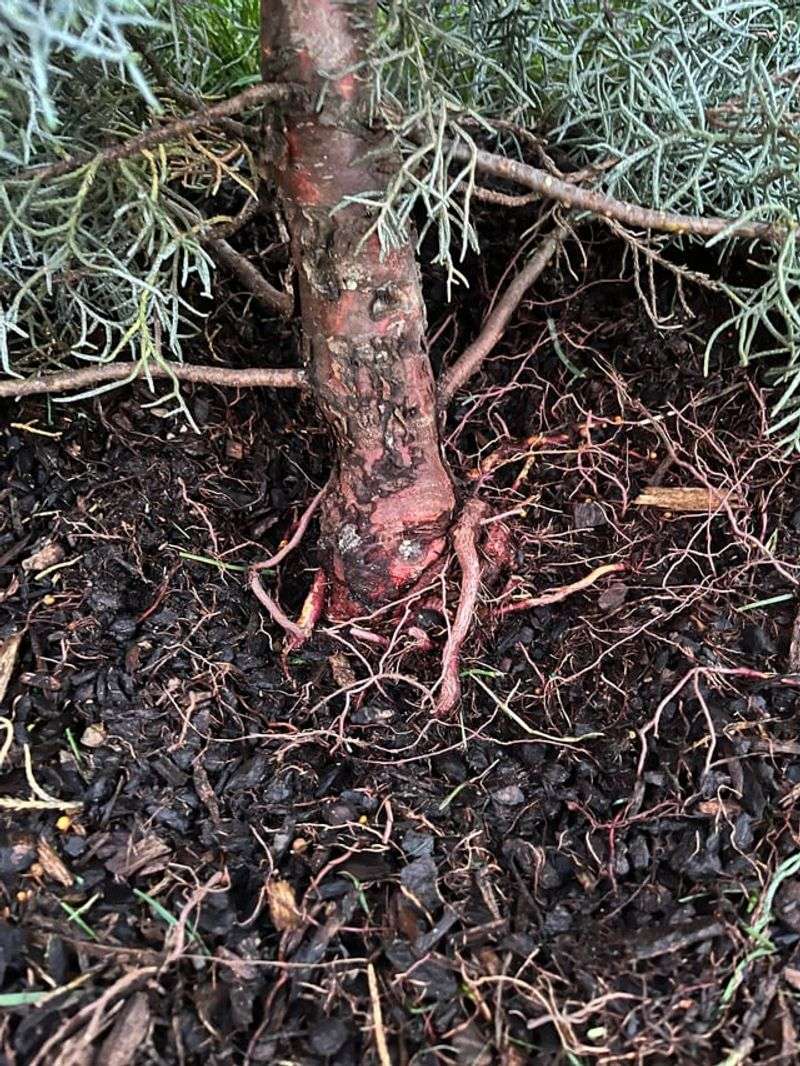
Roots belong underground, and seeing them lifted into the air is rarely good news. If you spot torn or raised roots near a leaning cypress, the tree has likely lost some of its anchor.
A small mound of soil pushed up on one side is a common clue.
Sometimes a whole plate of roots and dirt tilts up like a lid. When that happens, the tree may be holding on by only part of its root system, and stability could be poor.
Broken roots also lose their ability to take up water.
Even if the tree stays upright, browning foliage could show up later as the damage catches up. In Georgia’s warm fall weather, a tree with fewer working roots may struggle more, although results vary with weather and care.
Resist the urge to cover exposed roots with a thick pile of soil and hope for the best.
Burying them deeply can cause other problems, and it does nothing to reattach broken anchor roots. A professional can tell you whether light soil coverage is useful or pointless.
Keep people and pets away from a tree with lifted roots.
Gusty thunderstorms could finish what the tropical storm started. Marking the area with stakes or tape is a simple way to keep everyone at a safe distance until the tree is checked.
4. Large Mature Trees Are Harder To Save
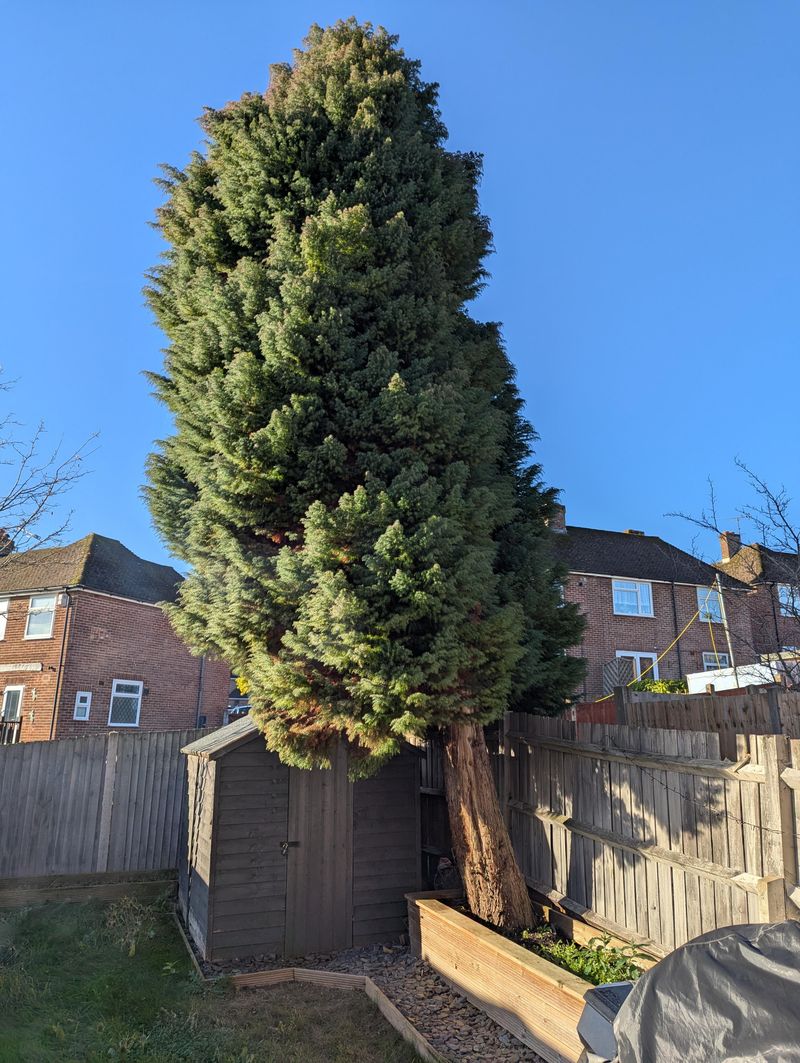
Size changes everything. A young cypress a few feet tall can sometimes be gently straightened and staked, while a towering mature one usually cannot.
Big trees carry enormous weight in their trunks and branches.
Pulling a heavy tree upright puts strain on roots that are already hurt, and the effort may tear more of them. Cables or stakes rarely give enough support to hold a large tree safely over the long term.
Smaller trees have a better shot because their roots are easier to reset in the soil.
Extension specialists generally suggest that only young, recently planted trees are good candidates for straightening. Even then, success depends on how badly the roots were damaged and how quickly you act.
Leyland cypress can grow very large in Georgia landscapes.
Plenty of hedges planted for quick privacy have grown much taller than owners expected. When one of these mature trees leans, the risk of it falling grows along with its height.
Think honestly about the tree’s age and value to you.
Leyland cypress is fast-growing, so a replacement planting may fill in sooner than you think. Choosing a smaller, sturdier screening plant could also reduce trouble down the road.
5. Severe Root Damage Can Make Recovery Unlikely
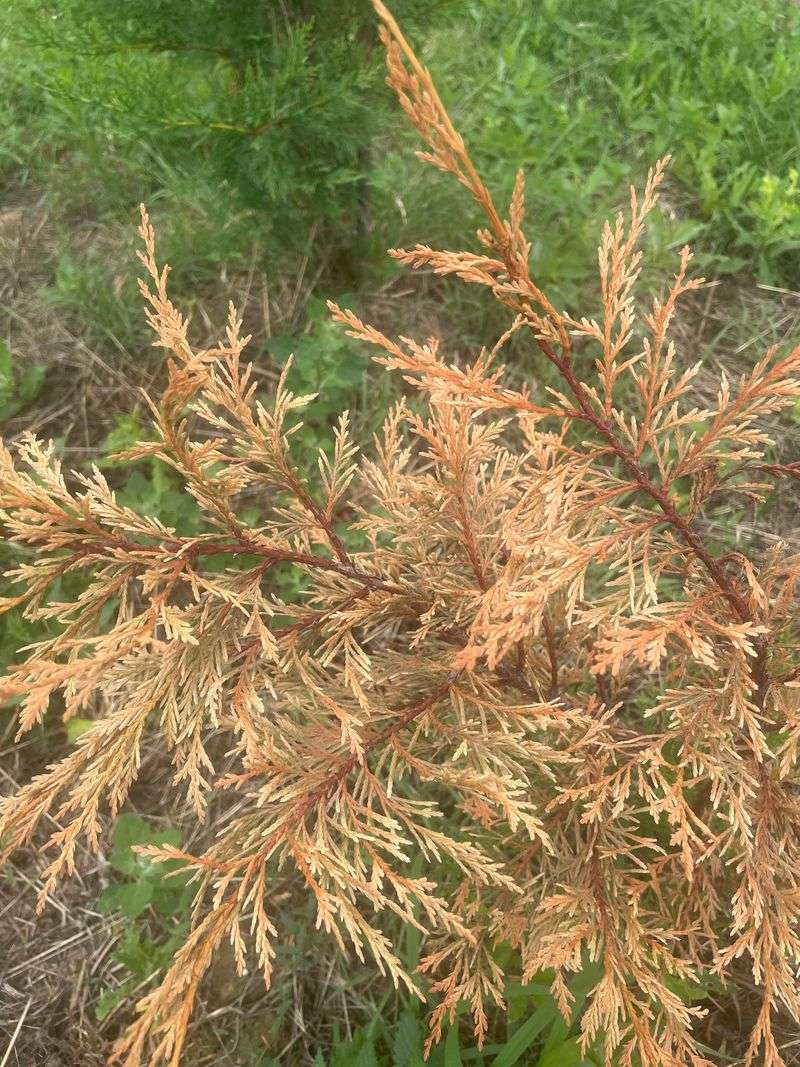
Not every wounded tree bounces back. When a large share of the root system snaps or tears, a Leyland cypress may lack the support and water uptake it needs.
Healthy roots do two jobs at once.
They anchor the trunk and pull moisture from the soil to feed the needles. Lose too many, and the tree can become both unstable and stressed at the same time.
Leyland cypress already faces some health challenges in the Southeast.
Canker diseases such as Seiridium and Botryosphaeria are known problems for this tree, especially when it is stressed. Storm damage, drought, and crowded plantings can make stress worse, though not every injured tree develops disease.
Watch the foliage over the coming weeks.
Browning branches, thinning needles, or oozing sap on the bark could signal trouble. Those signs can have several causes, so they are worth having checked instead of guessing.
Fertilizing a badly damaged tree is not a quick fix.
Extra fertilizer may push new growth the roots cannot support, so it is usually better to skip it. In Georgia, steady watering during dry spells is often the more helpful step for a tree that still looks sound.
6. A Leaning Tree Can Become A Safety Risk
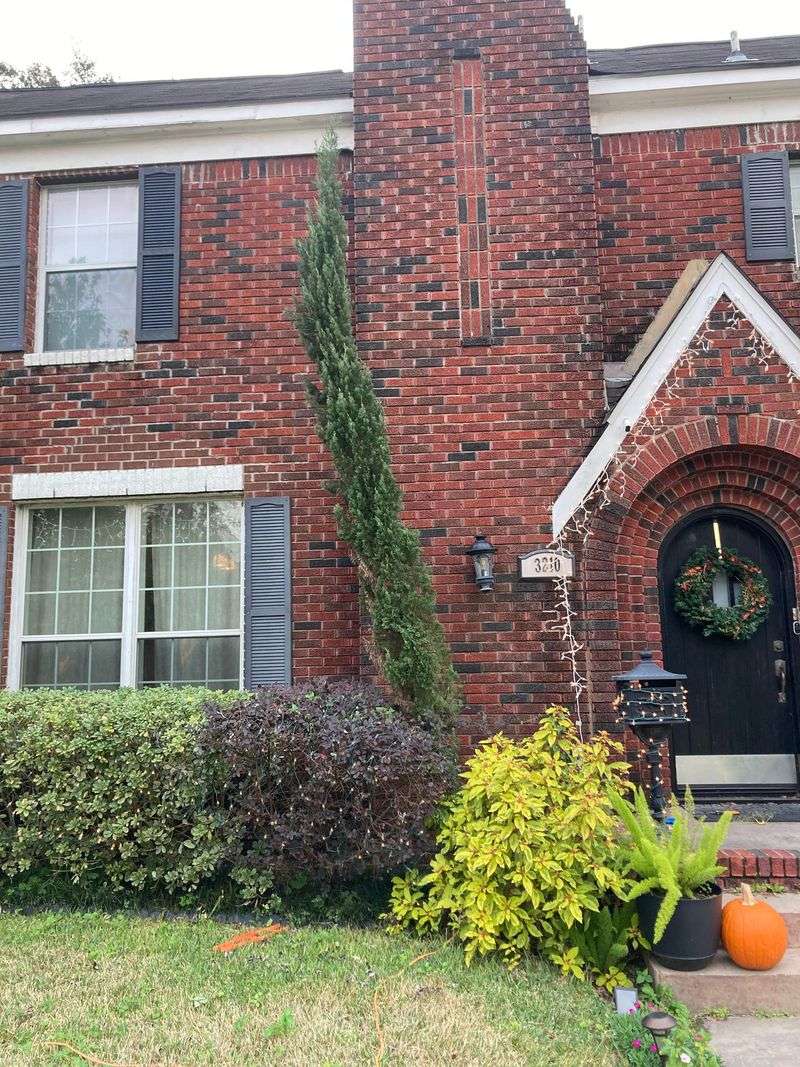
Picture what lies in the path if your tree falls. A house, car, fence, or power line nearby turns a leaning cypress from a yard problem into a safety problem.
Measure the risk by looking at the direction of the lean.
A tree tilting away from everything over open lawn is less urgent than one pointed at a bedroom roof. Height matters too, since a tall tree can reach farther than most people guess.
Power lines deserve special caution.
Never try to cut or move a tree touching or near utility wires. Contact your electric provider in Georgia, since utilities handle line clearance and can advise on safe next steps.
Hurricane season keeps going after early August.
More tropical storms or strong fall thunderstorms could bring another round of rain and wind. A tree already weakened by Isaias may be less able to handle the next event.
Talk with neighbors if the tree could fall onto their property.
Sharing information early can prevent disputes and help everyone plan. It also makes sense to check with your homeowners insurance about what coverage applies before trouble strikes.
Keep children from climbing or playing under a leaning tree.
Even a calm afternoon is not a promise of safety when roots are compromised, so a little caution goes a long way.
7. An Arborist Can Decide Whether Removal Is Best
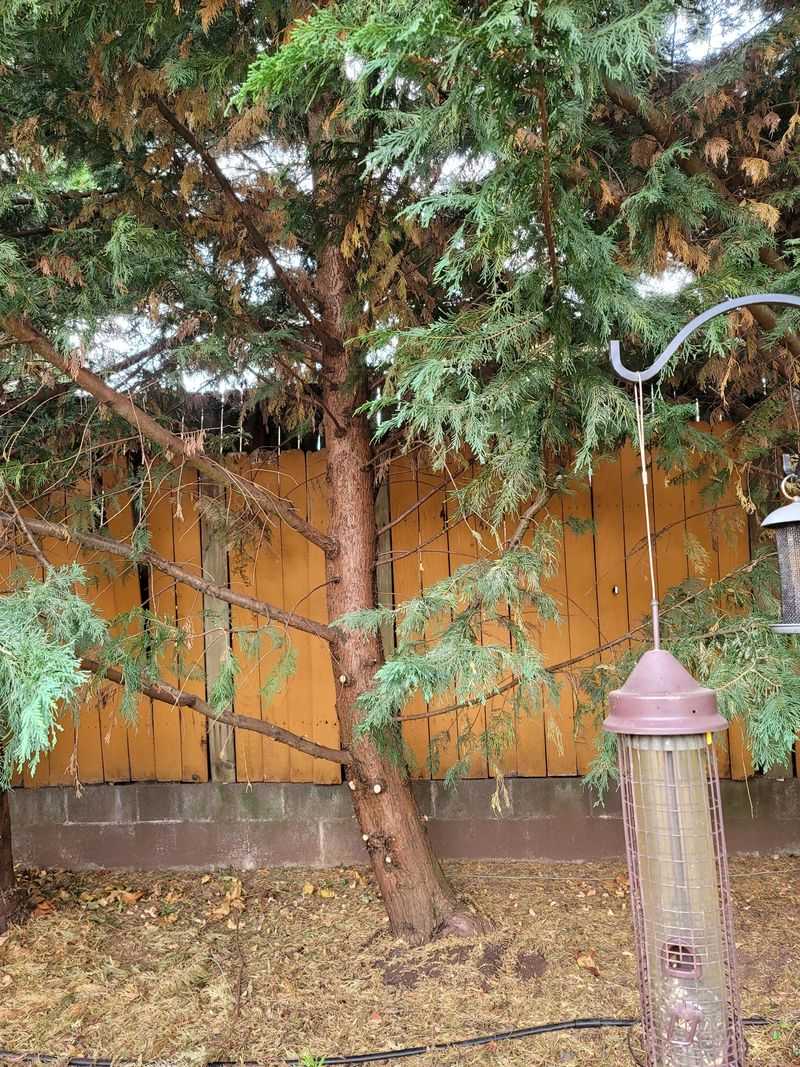
Guessing about a big tree can get expensive. A certified arborist brings training and experience to judge whether your leaning cypress can stay or should go.
Look for someone certified by the International Society of Arboriculture.
You can search for certified arborists in your area through the ISA website. Ask for proof of insurance too, because tree work can be dangerous and damage can happen.
During a visit, an arborist will usually check the roots, soil, trunk, and canopy.
They may look for decay, cracks, cankers, and signs of root movement. Their opinion can help you weigh safety, cost, and the value the tree adds to your yard.
Be wary of door-to-door crews that show up after storms.
Some are honest, but others may push quick removals or charge high prices. Getting more than one written estimate is a smart habit in Georgia after any big weather event.
Removal is not a failure.
Leyland cypress was widely planted for fast screening, yet it may not be the longest-lasting choice. Your county Extension office can suggest sturdier evergreen alternatives suited to your part of the state.
Write down the arborist’s advice and take photos.
Having a record helps if you file an insurance claim or plan replacements later.