How To Build A Bee Hotel Before Georgia’s Pollinators Slow Down For Winter
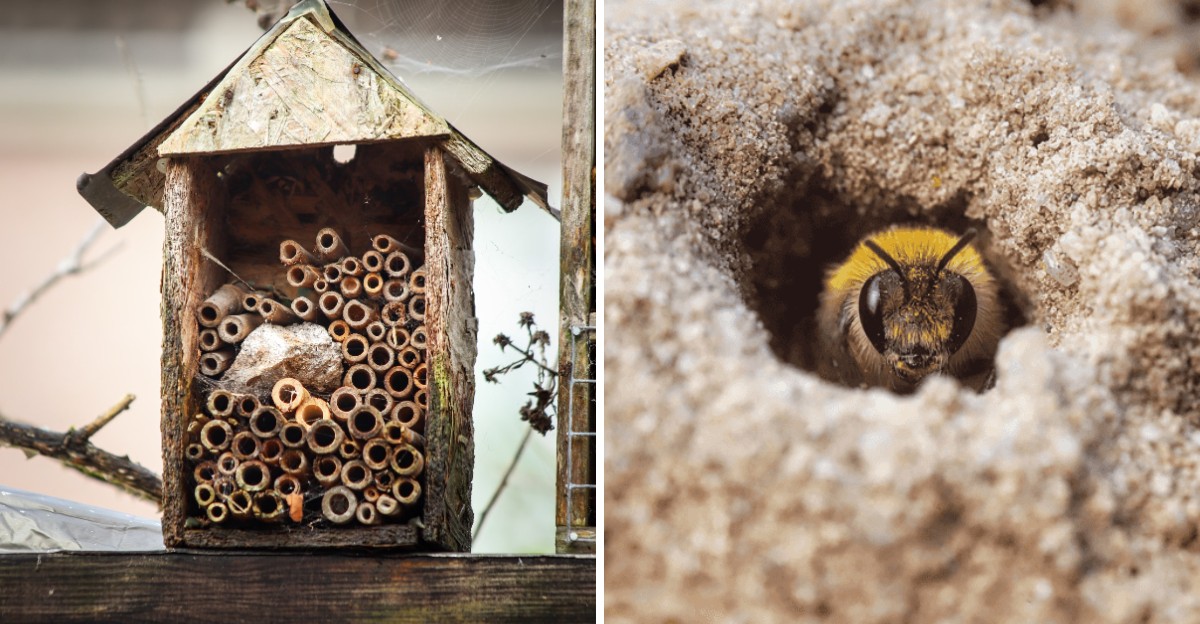
Some of the busiest bees in your yard spend the winter sealed inside a tunnel no wider than a pencil. They curl up as tiny larvae or resting adults behind a little wall of mud or chewed leaves.
Then they wait for spring.
Georgia has hundreds of native bee species, and most of them are loners. They skip the hive, the honey, and the queen.
Each mother builds her own nursery and raises her young solo.
I love that these quiet workers pollinate blueberries, squash, and wildflowers with almost no fuss.
There’s something satisfying about giving these little pollinators a proper nesting spot instead of leaving them to settle for a cracked fence post.
You can give them one with a few scraps of wood, a drill, and an afternoon of fall sunshine. The trick is knowing which details matter to a bee.
Would you believe the depth of a single hole can change who moves in?
1. Those Hollow Nesting Tunnels Matter More Than Fall Leaves Suggest
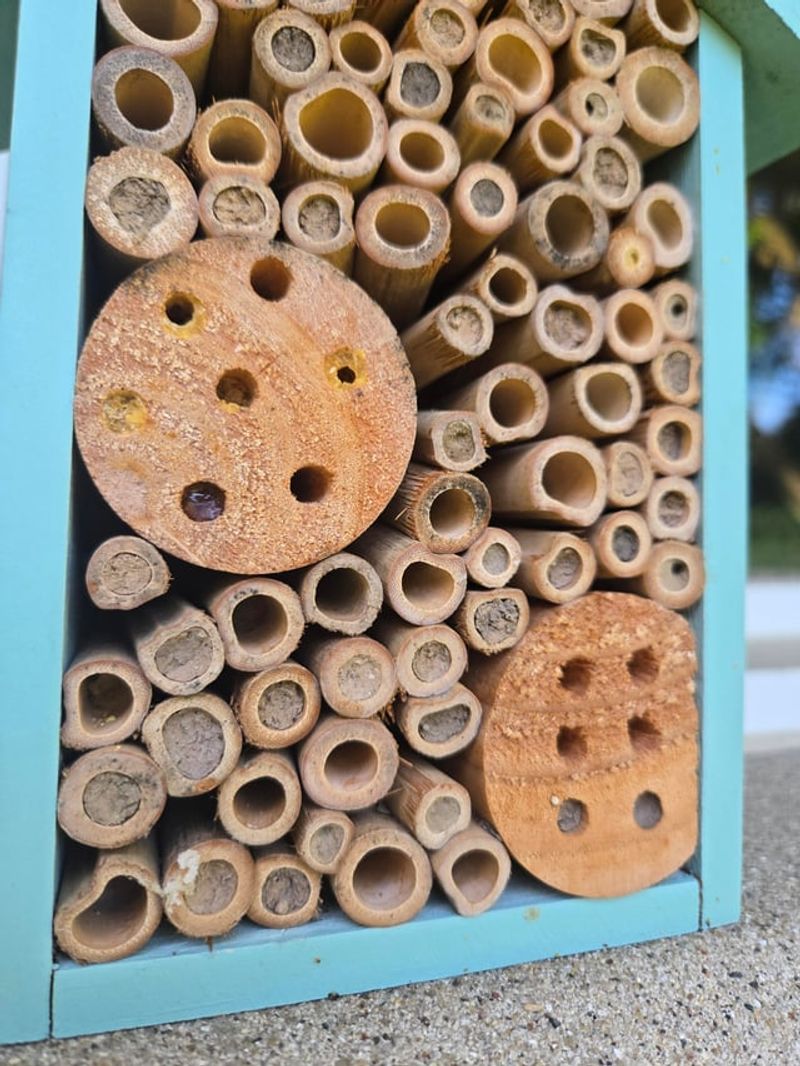
Fall looks like quitting time in the garden, but tunnel-nesting bees have already planned ahead. Inside hollow stems and old beetle holes, many of them are tucked away as larvae, pupae, or resting adults right now.
Mason bees and leafcutter bees are the main guests a bee hotel attracts. Mother bees lay an egg, pack in pollen, and wall off each little room with mud or leaf pieces.
One tunnel can hold a row of these cells, like train cars lined up in a station.
In Georgia, warm spells mean flowers can open surprisingly early. Red maple, wild plum, and early blueberries may bloom by February in many areas.
Some bees wake up for those first blooms and start hunting for nest sites quickly.
A hotel built in fall has time to weather and lose its fresh-cut smell. Wood that has sat outdoors for a few months looks more natural to a picky bee.
You also get a calm season to find the right spot without rushing.
I like thinking of it as setting the table before the guests arrive. Bees that find a home quickly spend more energy gathering pollen instead of searching.
That usually means more pollination for your garden.
2. Drill Untreated Wood Blocks With Holes Bees Actually Want
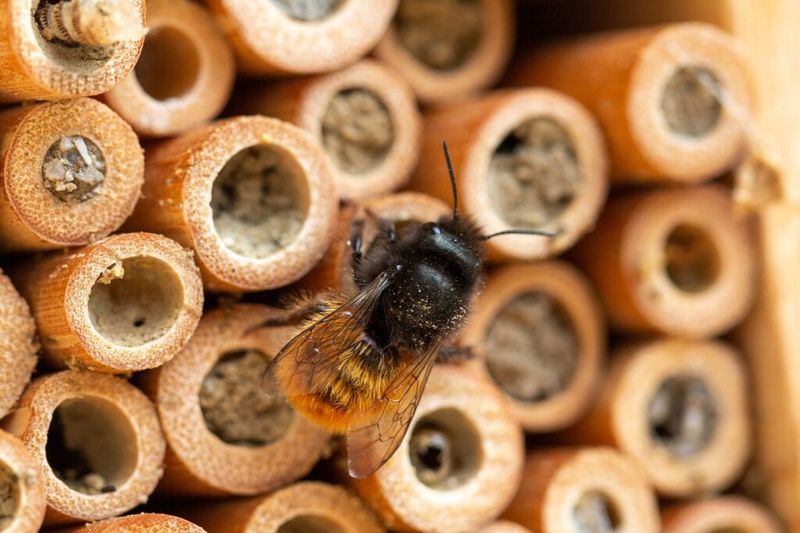
Grab a chunk of untreated lumber and you already have the heart of a great bee hotel. Pine, fir, or spruce works well, and so do leftover 4×4 posts.
Skip pressure-treated or painted wood, since chemicals can harm developing bees.
Hole size is where the magic happens. Drill holes from about 3/32 to 3/8 inch wide, because different bees prefer different sizes.
Smaller bees like the narrow holes, while mason bees often choose openings near 5/16 inch.
Depth matters too. Aim for about 3 to 6 inches deep, with deeper holes for wider openings.
Deeper tunnels let mother bees lay more eggs, and they often place female eggs toward the back where it is safer.
Never drill all the way through the block. Bees need a closed back wall, just like a real hollow stem.
Leave about 3/4 inch between holes so the wood does not split.
Smooth entrances protect delicate wings. A sharp drill bit helps, and a quick pass with fine sandpaper removes splinters.
Some builders roll paper liners into the holes, which makes cleaning much easier later.
Keep things modest in size. Research suggests smaller hotels with fewer tunnels may reduce problems with parasites and disease.
A block with 20 to 50 holes is plenty for most backyards, and honestly, it looks charming on a fence post.
3. Bundled Reeds And Bamboo Canes Welcome Even More Bee Species
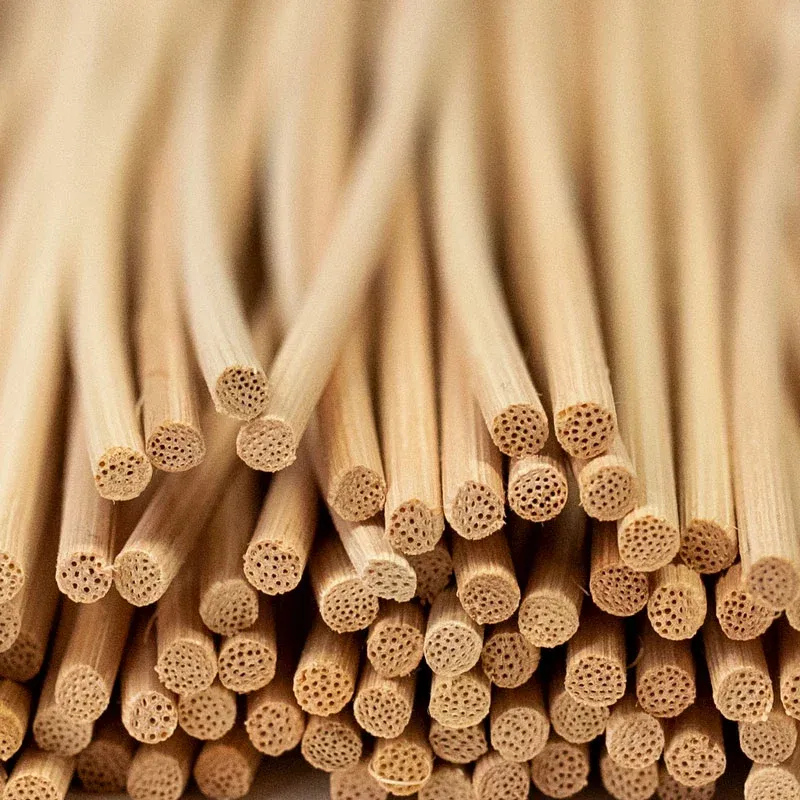
Bundles of hollow stems give your hotel a cozy, natural look that bees seem to recognize right away. In the wild, many species nest in old plant stems, so you are copying their favorite real estate.
Cut bamboo or reeds into lengths of about 6 to 8 inches. Make each cut just past a node, the solid joint in the stem, so one end stays closed.
Open tubes on both ends usually get ignored or invite unwanted visitors.
Native stems work great and cost nothing. Elderberry, sumac, and Joe Pye weed have hollow or soft centers that bees can use.
Cardboard nesting tubes from garden suppliers are another easy choice.
Pack the stems tightly inside a small wooden box or a short section of PVC pipe. A snug fit keeps them from sliding out on windy days.
Point the open ends outward, of course.
Mix in a variety of diameters. Wider tubes may draw leafcutter bees, which carry neat circles cut from leaves.
Narrow ones can attract tiny resin bees and small carpenter bee relatives.
One quick tip: avoid splintery or jagged openings. I usually trim rough edges with a small knife or sandpaper.
A little care here keeps wings intact and makes your hotel feel like a five-star stay instead of a cramped bunkhouse.
4. Morning Sun Should Hit Your Bee House First
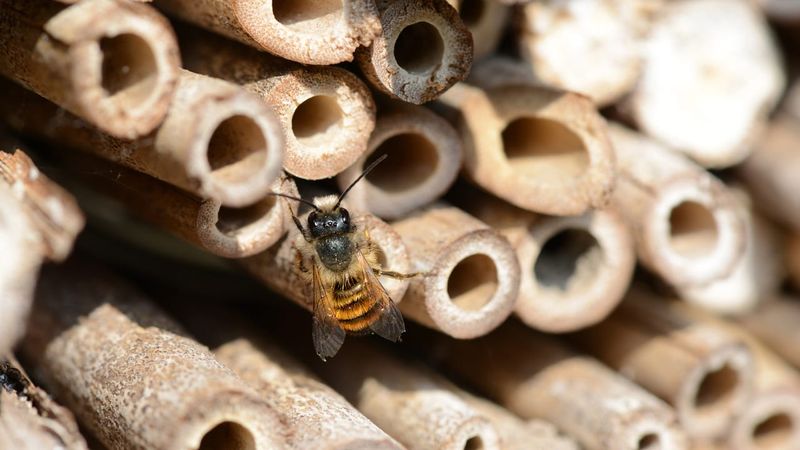
Bees are solar powered in a very real way. They need warm muscles before they can fly, so a chilly bee hotel in deep shade often sits empty.
Face your hotel south or southeast. That direction catches early morning light and helps residents warm up and get moving.
In hot parts of Georgia, a little afternoon shade can keep tunnels from overheating in summer.
Mount it firmly about 3 to 5 feet above the ground. A fence, a post, or the side of a shed all work.
Bees dislike a hotel that swings or wobbles in the wind, so screw it down tightly instead of hanging it from a string.
Add a roof that sticks out a couple of inches. That overhang keeps rain from soaking the tunnels, which helps prevent mold.
Our heavy downpours can drench an unprotected hotel fast.
Location also means groceries. Plant native flowers within a short flight, since many solitary bees forage only a few hundred feet from home.
Mason bees also need moist clay or mud nearby to seal their nests.
I keep a small patch of bare soil damp near my hotel during spring. It took about two minutes to set up.
Watching a mason bee scoop up a ball of mud is one of my favorite little garden shows.
5. Native Georgia Wildflowers Keep Your Bee Guests Well Fed
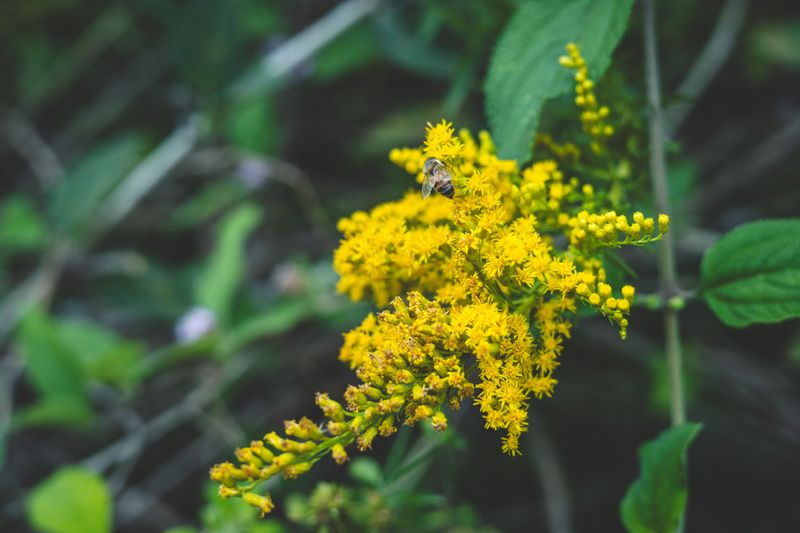
A fancy hotel with no restaurant nearby will not keep guests for long. Flowers are the real reason bees decide to settle in your yard.
Native plants are your best bet. Our local bees evolved alongside them, and many prefer their pollen.
Fall is actually a fine time to plant perennials in Georgia, because cooler air and warm soil help roots settle before spring.
Aim for blooms across many seasons. For early spring, try red buckeye, eastern redbud, and native blueberries.
Summer can shine with coneflowers, black-eyed Susans, and mountain mint.
Late-season blooms matter too. Goldenrod and native asters feed bees well into autumn.
Goldenrod gets blamed for allergies, but ragweed is usually the real culprit, since goldenrod pollen is heavy and carried by insects.
Plant in clumps rather than single plants scattered around. Bees forage more efficiently when they can visit many flowers of one kind in a row.
A patch about three feet wide makes a nice target.
Go easy on pesticides near your hotel. Even products labeled for other insects can harm bees.
If you must treat a problem, pick targeted options, apply them in the evening, and keep sprays off open blooms.
Your local UGA Extension office can suggest plants that suit your region, from mountain gardens to coastal yards.
6. Leave That Bee Hotel Outside Through The Chilly Months
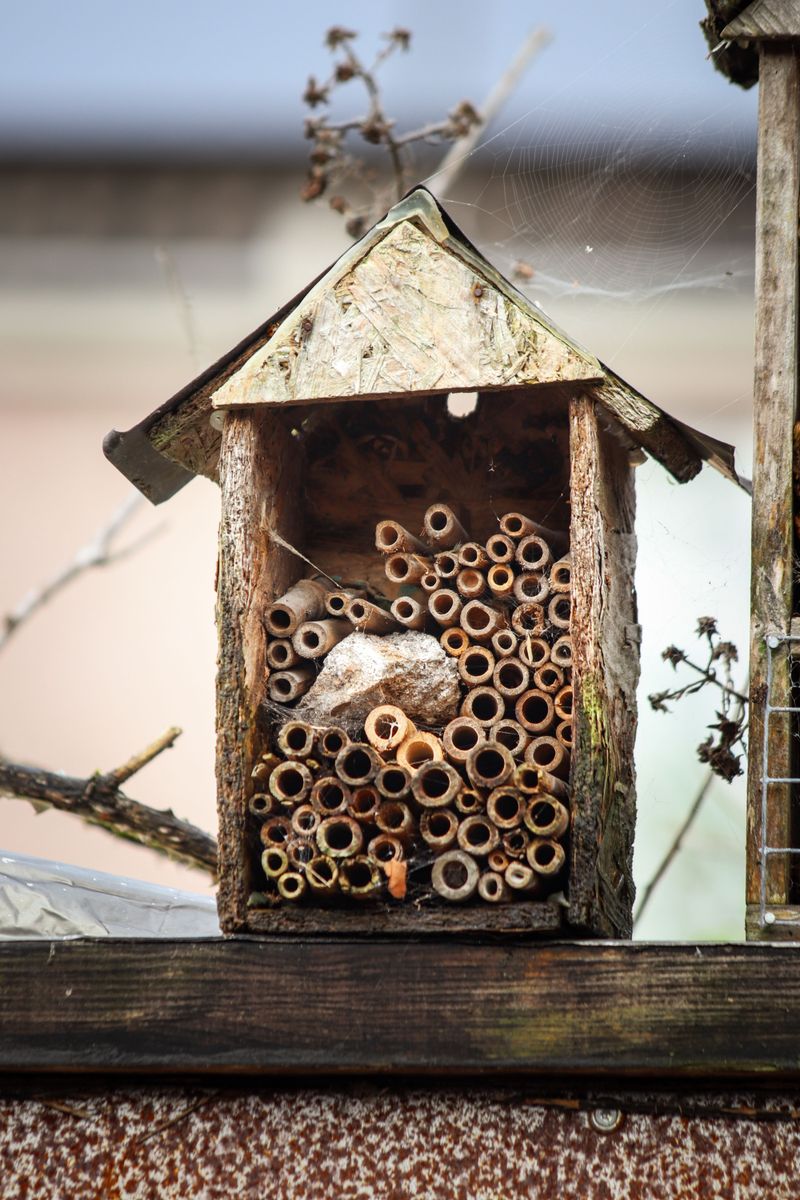
Bringing your bee hotel into a warm garage might feel kind, but it can backfire badly. Bees sealed in those tunnels depend on outdoor cold to keep their internal clocks on track.
Warmth sends the wrong signal. Bees might wake up and chew their way out in January, long before flowers open.
With no food waiting, they often struggle and may not survive.
Our winters are mild in much of the state, and that works in the bees’ favor. They are built for natural temperature swings.
Frost on the roof is no problem for a bee snug inside its cell.
Look for plugged tunnels in fall. Mud caps usually mean mason bees, while chewed leaf pieces point to leafcutters.
A plugged hole tells you someone is home, so leave it alone.
If heavy, sideways rain worries you, an unheated shed or open porch can offer shelter through winter. Make sure the space stays as cold as outdoors.
Move the hotel back to its spot in late winter, before early blooms start.
Watch out for hungry birds too. Woodpeckers sometimes pick at nesting tubes.
A piece of hardware cloth placed a couple of inches in front of the openings keeps beaks out while letting bees pass through easily.
7. Fresh Nesting Tubes Every Couple Years Prevent Mites And Mold
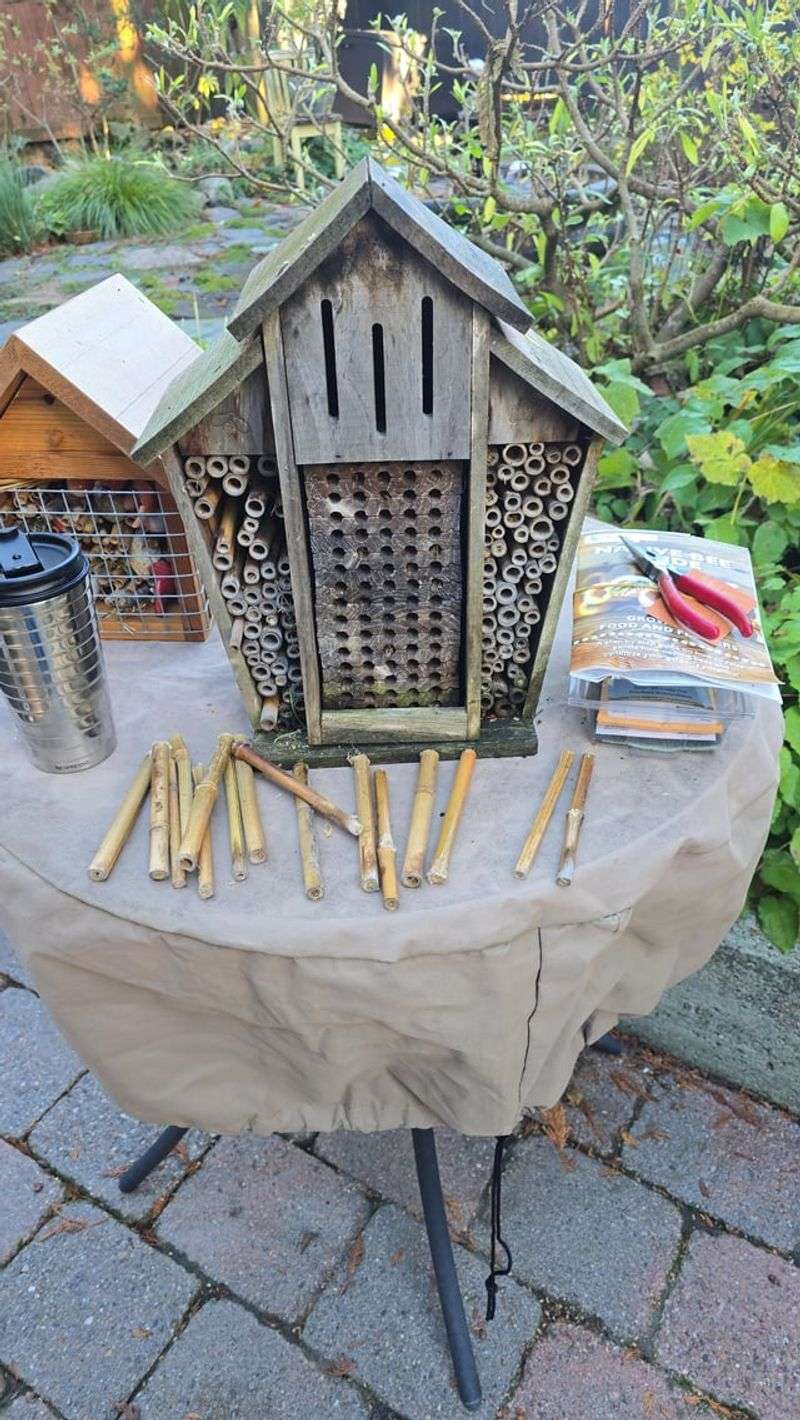
Nobody wants to move into a messy apartment, and bees agree. Old tunnels can collect mites, fungi, and parasitic wasps that harm the next generation.
Replace used nesting tubes after the bees have emerged rather than reusing them for another nesting season. Paper liners and cardboard tubes make this easier because you can discard empty used tubes and provide clean replacements.
Wood blocks can be swapped out or cleaned.
Timing matters. Clean or replace materials only after the bees have emerged, which usually happens in spring and early summer.
Pulling out sealed tubes too early disturbs the young bees inside.
One clever trick uses an emergence box. Place old, occupied tubes inside a dark box with a small exit hole facing the light.
Bees leave through the opening, but they rarely return to nest in the dark box, so they move into the fresh tubes nearby.
For empty wood blocks, scrub tunnels with a pipe cleaner or bottle brush. A mild bleach solution of about one part bleach to ten parts water helps sanitize them.
Let everything dry fully in the sun before reuse.
Keep an eye out for trouble. Powdery yellow dust in a tube can signal pollen mites.
Spotting these signs early keeps your little bee community healthy year after year.
8. Bare Soil And Standing Stems Help Ground Nesting Bees Too
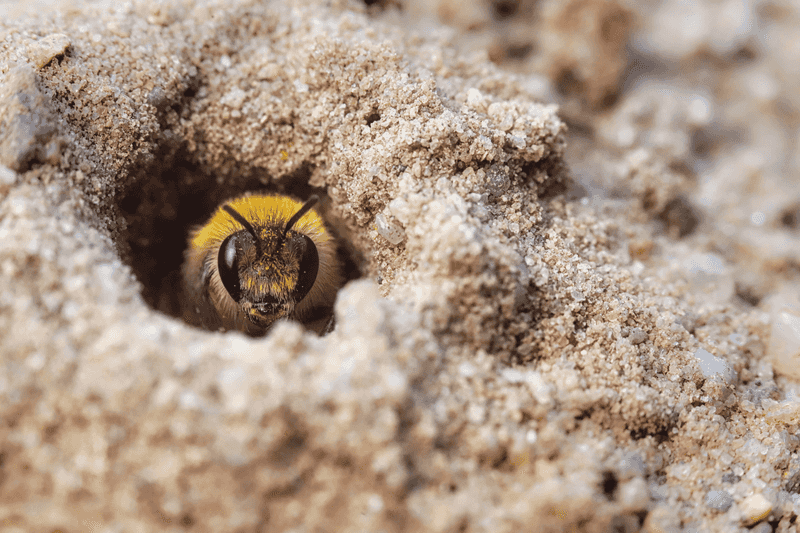
Here is a surprise many gardeners miss. Roughly 70 percent of native bees nest in the ground, not in tunnels or hotels.
Leave a sunny patch of bare, undisturbed soil somewhere in your yard. Sandy or loose soil works nicely.
Tiny volcano-shaped mounds in spring often mean miner bees or sweat bees are raising their young below.
Hold off on cutting back every stem this fall. Hollow and pithy stalks from plants like coneflowers, bee balm, and black-eyed Susans make winter shelters.
Small carpenter bees often nest in these stems the following year.
If tidy looks matter to you, try a middle path. Trim stalks to about 12 to 18 inches tall in spring.
New growth hides them quickly, and bees can still use the hollow ends.
Leaf litter is another quiet helper. Bumblebee queens often spend winter in shallow soil under leaves.
Raking a few leaves into flower beds instead of bagging them gives them cover.
I find that a slightly wild corner makes the whole garden feel more alive. Your bee hotel becomes one piece of a bigger welcome mat.
Start small this fall with one hotel, one bare patch, and one row of standing stems, then watch who shows up come spring.