Lethal Bronzing Is Destroying Florida Palms (The Early Signs To Watch For)
Your palm looks like it always has. That’s the problem, because by the time it looks different, the story is nearly over.
A disease has been working its way through Florida’s palms, and it moves faster than most homeowners expect. The tree doesn’t send up a flare.
It drops hints instead, tiny changes that blend into the background of a busy week. Plenty of owners spot them only in hindsight, with a trunk full of regret and a stump grinder on the way.
A few early clues give you a fighting chance, and none of them take special training to notice. Some show up on the fronds.
Others hide in places you rarely glance.
Catch it early and you can protect the palms around it. Wait, and the disease has time to move next door.
Take a long look at your palms this weekend. What you notice first matters most.
1. Lethal Bronzing Was First Found In Florida In 2006
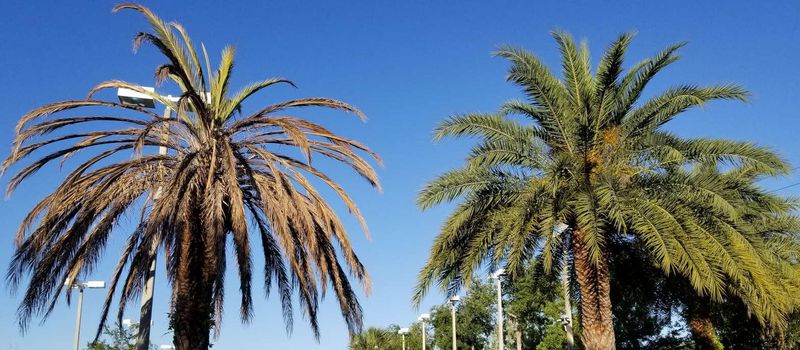
Back in 2006, palm experts in Hillsborough County spotted something odd. Date palms around Tampa were changing color and fading fast.
Scientists traced the problem to a phytoplasma. That is a tiny germ, a bit like bacteria, but without a hard outer wall.
At first, people called it Texas Phoenix Palm Decline. The name made sense, since the trouble had already shown up in Texas before reaching Florida.
Early cases hit edible date palms and wild date palms. Canary Island date palms and Queen palms around Tampa also showed the warning signs.
Over time, researchers learned it could affect many more kinds of palms. So the name changed to lethal bronzing, after the coppery color sick fronds turn.
Why does the history matter to you today? It shows how quickly a small local problem can grow into a statewide headache.
Tampa homeowners in 2006 had no guide to follow. You have nearly two decades of research to lean on instead.
That research comes largely from the University of Florida. Their extension offices share free fact sheets, photos, and testing tips for homeowners.
A quick call to your county extension office can answer a lot of questions. Think of them as your friendly neighborhood palm detectives.
Fun fact: the Tampa Bay area still sees many cases. It remains one of the best-studied regions for this disease.
2. It’s Now Confirmed In More Than 30 Counties
The state has 67 counties, and lethal bronzing has been confirmed in more than 30 of them. Some reports put the count as high as 36.
That is roughly half the state. If you live in Florida, there is a fair chance the disease is not far from your street.
So how did it travel so far? The insect that spreads it can fly from tree to tree, and new palms get trucked all over the state.
Moving infected plants can carry the problem into fresh areas. A single sick palm in a nursery lot might seed trouble for a whole subdivision.
Here is a smart move before buying any new palm. Ask the seller where the tree came from and look closely for bronze lower fronds.
Your Florida Garden Changes Every Week. Your Plan Should Too.
Gardening in Florida changes quickly throughout the season. Every Friday you’ll receive a simple weekly plan showing exactly what to plant, prune, fertilize, harvest, and protect so you never miss the right timing.
You can also check county reports online. The University of Florida keeps maps showing where cases have been found.
Spotting a local outbreak early helps everyone. Neighbors can watch their trees, and cities can plan treatments sooner.
Talk with your homeowners association or neighbors too. A shared plan works far better than one person guarding a single yard.
The numbers sound scary, but they also give you power. Knowing the disease is nearby is the first step toward protecting the palms you treasure.
3. The Disease Has Reached The Panhandle
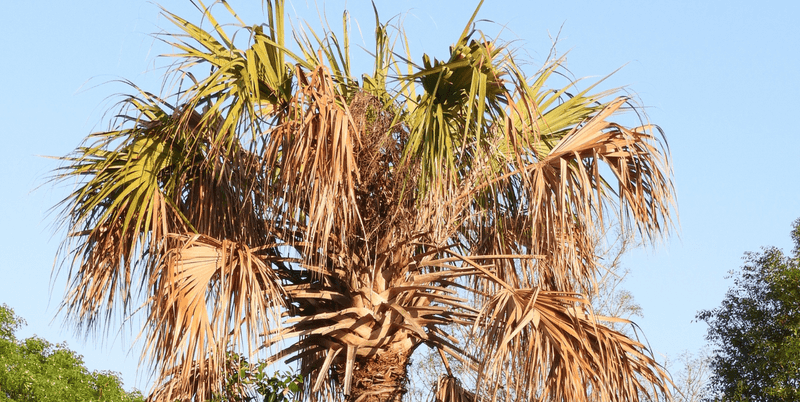
Think the cooler north is safe? Many folks in Pensacola and Tallahassee once believed palm diseases were a south Florida problem.
The spread of lethal bronzing tells a different story. Its reach now stretches across a wide part of the state, including northern regions.
Panhandle winters are chillier, and that may slow the insect a bit. Still, warm summers give the bug plenty of time to feed and move.
Cabbage palms grow wild along Panhandle roads, rivers, and beaches. That gives the disease a big, natural highway to travel along.
If you live up north, keep a casual eye on palms during summer walks. Look for odd color changes on the oldest, lowest fronds first.
Coastal towns depend on palms for shade and charm. Tourists love those swaying trees in vacation photos, and businesses notice when they disappear.
Report anything unusual to your county extension office. Panhandle cases help scientists understand how far north the disease can thrive.
Your sharp eyes can add real data to their research. Citizen reports often help experts spot new areas before the problem grows.
Bottom line, no corner of the state gets a free pass. Being watchful pays off whether you live in Key West or Destin.
4. Cabbage Palms, Florida’s State Tree, Are Vulnerable
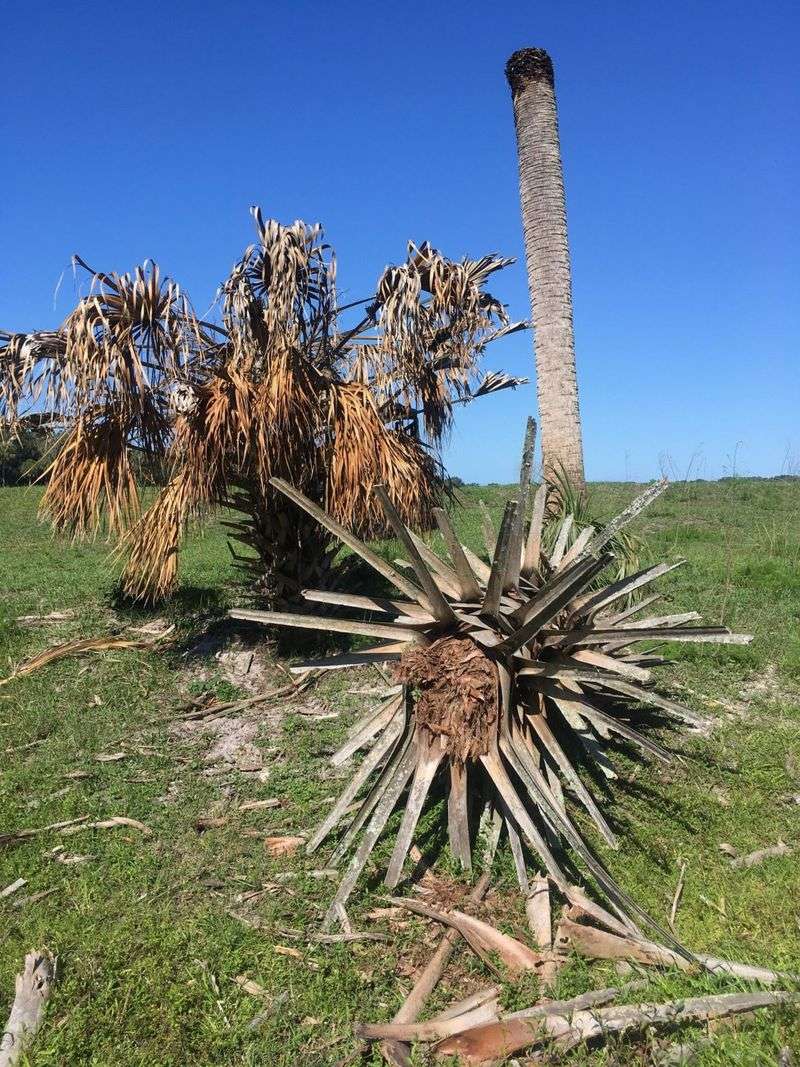
Ah, the sabal palm. It shows up on the state seal, lines countless highways, and handles hurricanes like a champ.
Sadly, this tough native is no match for lethal bronzing. Scientists isolated the disease from cabbage palms back in 2008.
That was a big deal. Cabbage palms are everywhere in the state, in yards, parks, wetlands, and along almost every coast.
The list of other at-risk palms is long too. Queen, pindo, coconut, Christmas, Chinese fan, and windmill palms can all catch it.
Date palms are on the list as well. That includes edible, Canary Island, and wild date types, plus pygmy date palms.
Fiji fan, buccaneer, Carpentaria, and Bismarck palms round out the group. In other words, a lot of the palms Floridians love are at risk.
Planning a new landscape? Mixing in different trees and shrubs can soften the blow if one type gets sick.
A yard full of only one palm species is a bit like putting all your eggs in one basket. Variety keeps your yard greener and more resilient.
Protecting cabbage palms also helps wildlife. Birds, bats, and bees rely on their fruit and flowers for food.
5. A Tiny Planthopper Spreads The Infection
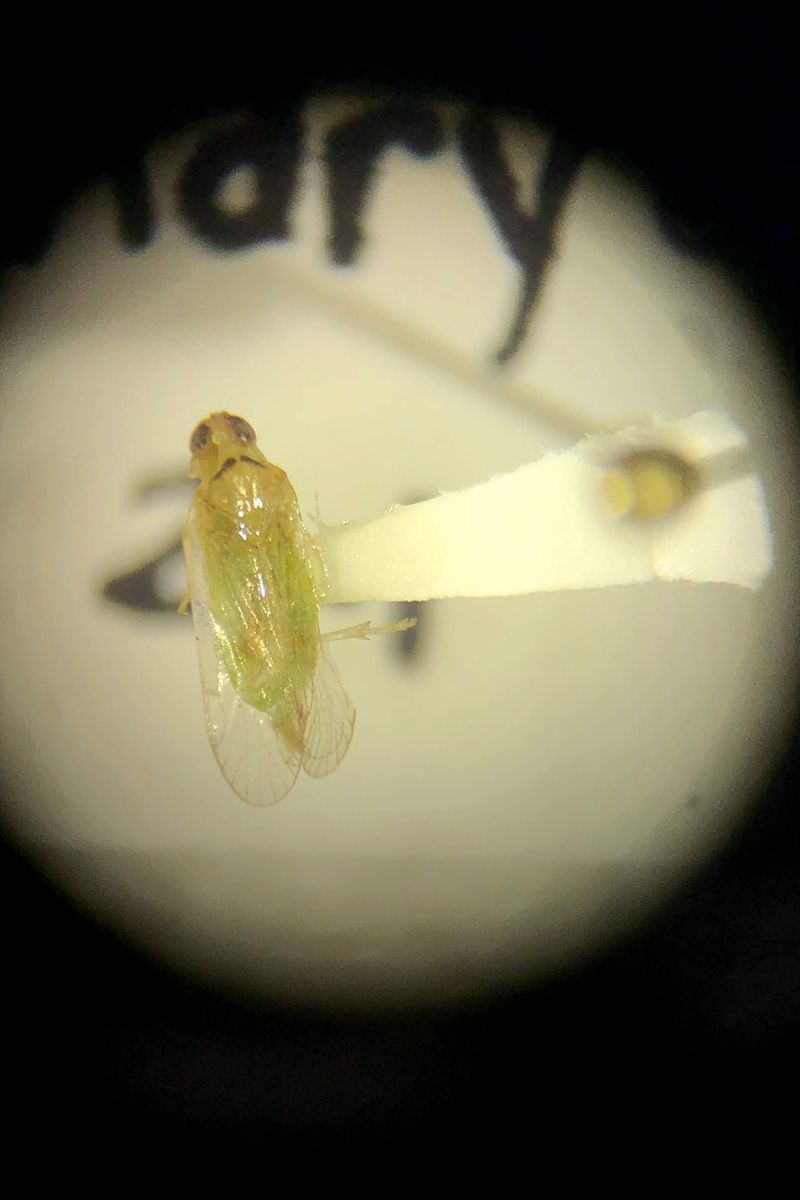
Meet the American palm cixiid. It is a planthopper so small you could easily mistake it for a speck of dirt.
Its scientific name is Haplaxius crudus. Picture a pale little bug with clear wings, about the size of a grain of rice.
Here is how the trouble starts. The insect sips sap from an infected palm and picks up the germ along with its meal.
Then it flies to a healthy palm for another drink. With each sip, it can pass the infection into the new tree.
Spotting these bugs is tricky. They hide high in the canopy and blend right in with the fronds.
Young cixiids grow up on the roots of grasses. That is why lawns and grassy areas near palms can play a role in the cycle.
Some homeowners talk with arborists about grass choices near valuable palms. Experts sometimes suggest certain turf types that are less friendly to the young bugs.
Spraying insecticide on your own is not a reliable fix. A certified arborist can explain which treatments make sense for your yard.
Fun fact: this same bug also spreads lethal yellowing. That is another serious palm disease Florida has battled for decades.
6. Premature Fruit Drop Is Usually The First Clue
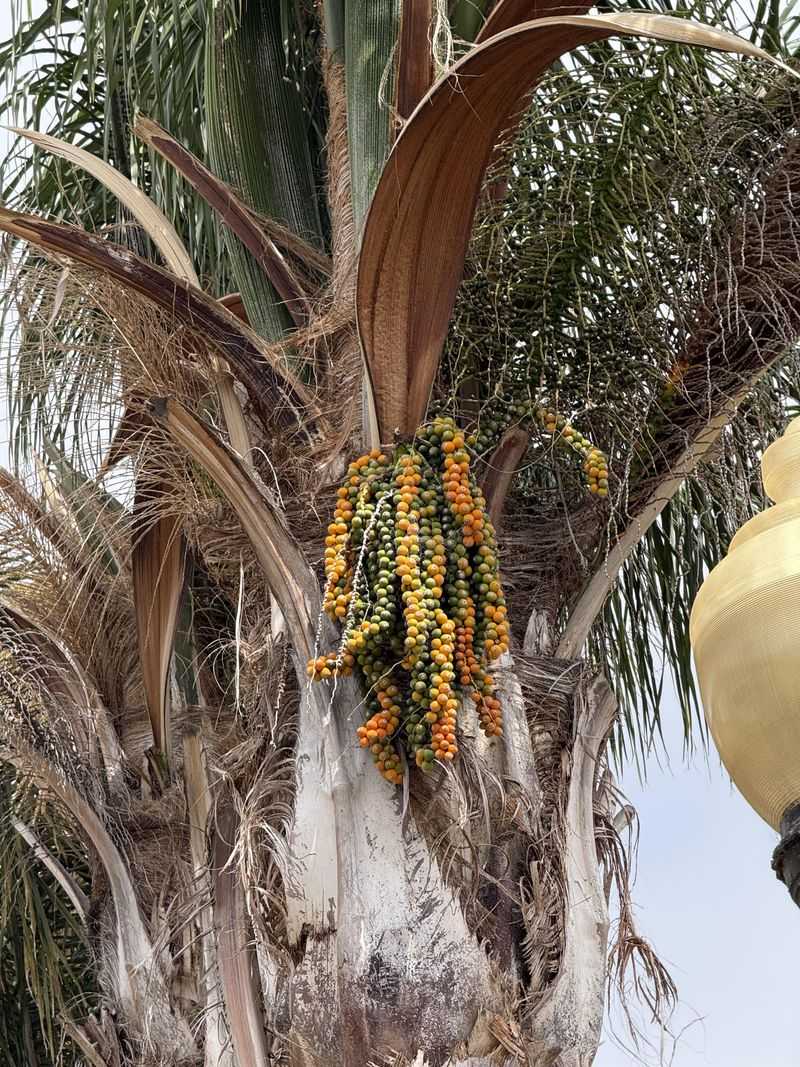
Ever stepped on a pile of tiny green fruit under your palm? It might seem like a mess to sweep, but it could be a warning.
Premature fruit drop is often the earliest sign of lethal bronzing. The palm sheds its young fruit long before it should be ripe.
Healthy palms hold onto their fruit until it matures. Ripe fruit usually turns orange, purple, or black depending on the species.
So pay attention to color. A carpet of hard, green, unripe fruit is far more suspicious than a few ripe ones falling naturally.
Not every palm will show this clue. If your tree is not fruiting right now, you simply will not see it.
Some people also trim off fruit stalks to keep yards tidy. That habit can hide this early hint without anyone realizing it.
A simple routine helps a lot. Walk around your palms once a week and glance at the ground underneath.
Snap a photo when you notice heavy green fruit drop. Pictures help an arborist or extension agent judge what is going on.
Catching this sign early gives you the most time to act. An infected palm can’t be cured, but quick removal and preventive treatment for healthy palms nearby can help stop the spread.
7. Blackened Flower Clusters Are Another Early Sign
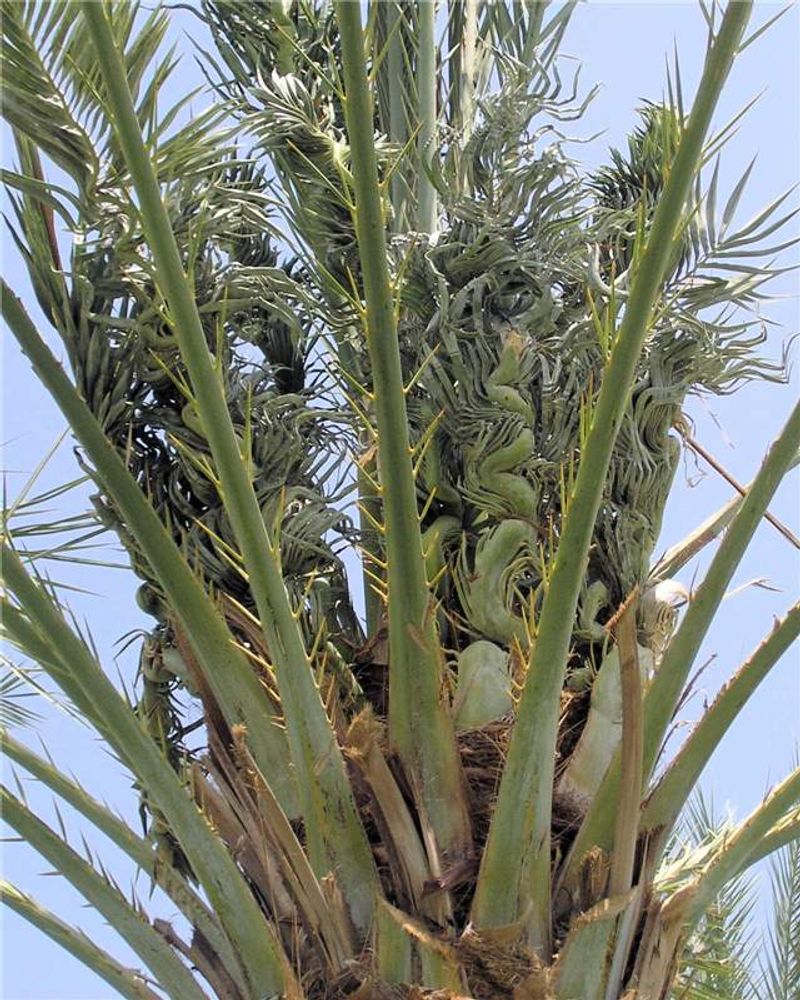
Palm flowers do not get much attention. They hang in big, branching clusters, often creamy white or yellow, buzzing with bees.
When lethal bronzing moves in, those clusters can turn black. Experts call this inflorescence necrosis, but you can just think of it as blackened flowers.
The flower stalks may also look twisted or oddly shaped. Sometimes they look scorched, as if someone held a lighter to them.
Like fruit drop, this sign depends on timing. If the palm is not flowering, or the stalks were trimmed, you will not see it.
Binoculars are a surprisingly handy tool here. Tall palms keep their flowers high up, far from easy viewing.
Stand back a bit and scan the crown on a sunny day. Healthy flower clusters look bright and full, while sick ones look dark and droopy.
Blackened flowers paired with green fruit on the ground is a strong red flag. Together, they suggest it is time to call a professional.
An arborist can collect a sample from the trunk. A lab test can then confirm whether the disease is present.
Quick action here can protect nearby palms. Even if one tree is infected, its neighbors may still be saved.
8. Lower Fronds Turn A Reddish Bronze
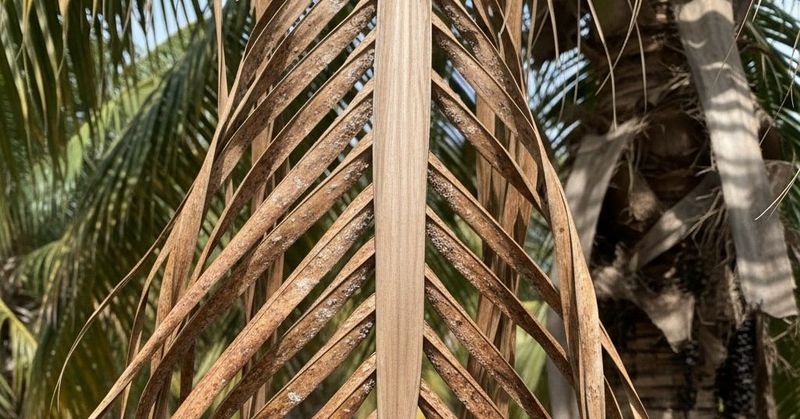
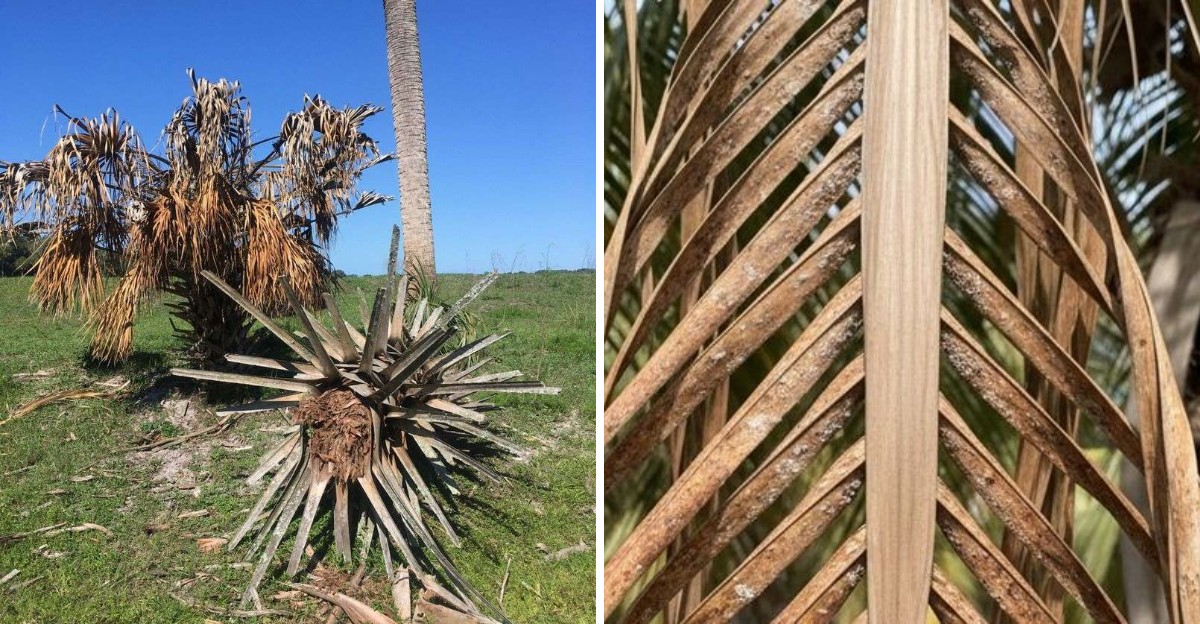
Here is the symptom that gave the disease its name. The oldest, lowest fronds start turning a reddish bronze, like a shiny copper pot.
This color change usually comes after fruit drop or blackened flowers. Many homeowners notice it first, since fronds are much easier to see.
The bronze tint creeps upward through the canopy. Over time, more and more fronds take on that rusty look.
Not every brown frond means trouble, though. Older fronds naturally fade as palms grow, and that normal fading tends to look gray or tan.
So compare colors carefully. Gray and papery is normal aging, while reddish bronze spreading upward deserves a closer look.
Nutrient problems can also discolor fronds. Potassium shortages, for example, often cause orange or yellow spotting on older leaves.
That is why a lab test matters. Guessing can lead to the wrong treatment and wasted money.
Keep a little photo diary of your palm. One picture each week makes slow color changes much easier to track.
If the bronzing climbs quickly, call an arborist right away. Speed matters, because the disease moves along within a few months.
9. A Collapsed Spear Leaf Means It’s Too Late
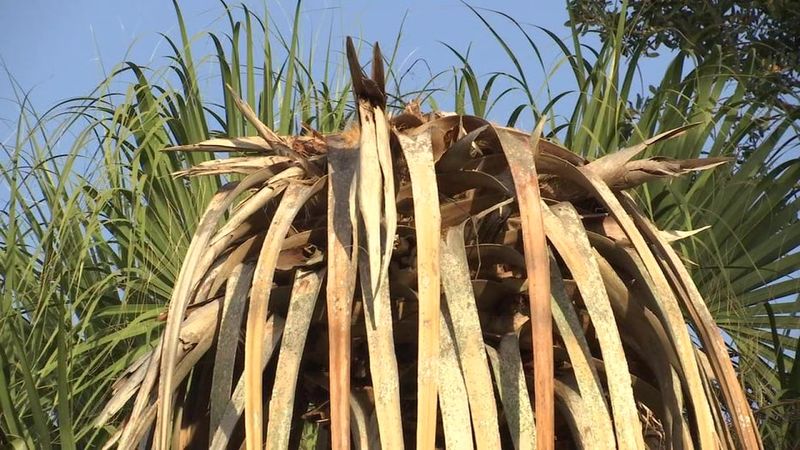
Every palm has a spear leaf. It is the newest frond, standing straight up in the center of the crown like a folded green flag.
That spear grows from the palm’s heart, its one and only growing point. Palms cannot sprout new tops the way oak trees grow new branches.
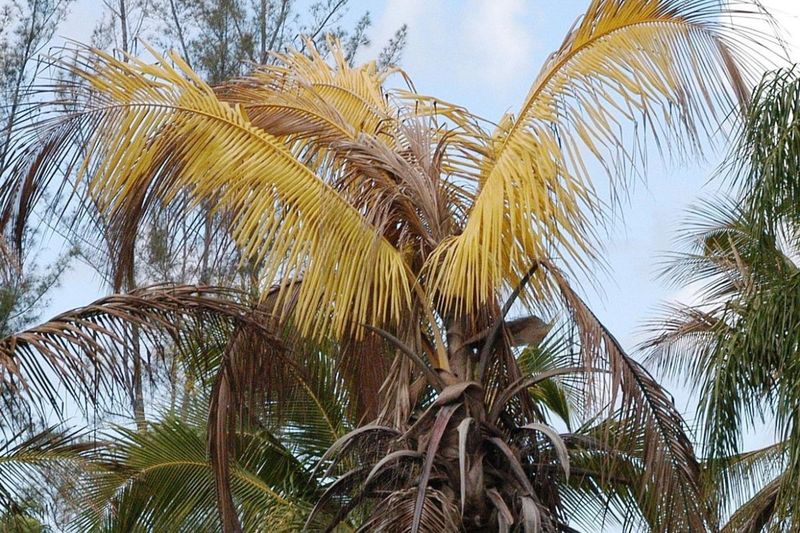
When the spear leaf browns and flops over, the heart has been badly harmed. At this stage, the palm generally cannot recover.
The timeline is fast. Spear collapse often comes two to three months after the first visible symptoms.
From infection to visible signs, about four to five months may pass. Timing can vary depending on the type of palm.
Once the spear collapses, removal is usually the best choice. Leaving the tree up can let the planthopper keep spreading the germ to nearby palms.
Hire a licensed tree service for the job. Tall palms can be dangerous to cut down without the right gear.
Ask about replanting with a less vulnerable species. Mixing in non-palm trees can also help your yard bounce back.
Healthy palms nearby may benefit from preventive antibiotic injections. An arborist can explain the schedule, cost, and which trees are good candidates.