Long-Lasting Perennials That Keep Kentucky Gardens Thriving Year After Year
Nobody warns you about the annual trap. You plant, you water, you fall a little in love, and then October arrives and takes everything with it.
Suddenly you’re standing in front of bare dirt, receipt in hand, wondering how a garden that looked so good in June became a philosophy lesson by September. Here’s the secret experienced gardeners don’t exactly advertise: perennials. Plant them once, and they come back every year, often better than the year before.
Kentucky throws brutal summers and indecisive winters at them, and they treat it all like fuel. They thrive on it, returning each spring a little fuller, a little bolder, and completely unbothered. Whether you’re new to gardening or simply done starting over every spring, these eight perennials are worth every inch of soil.
Baptisia Adds Strong Blue Color To Any Garden
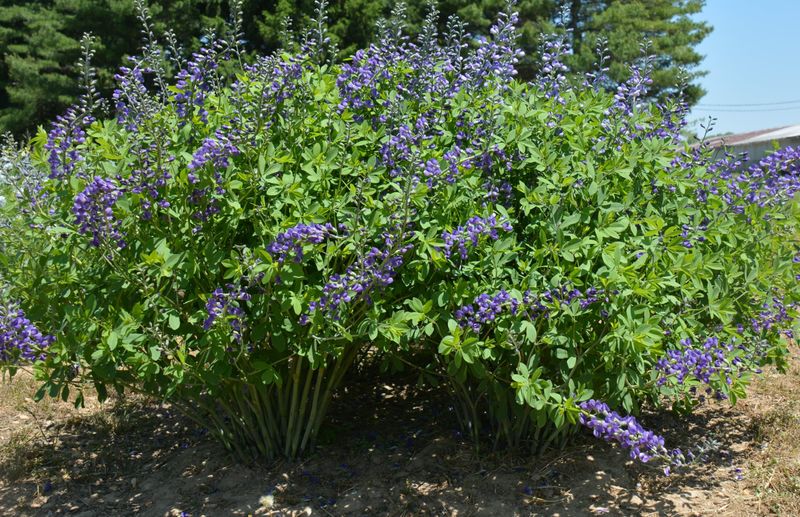
My neighbor once joked that Baptisia could survive a nuclear winter, and honestly, she might be right. This native Kentucky tough guy produces gorgeous blue-purple flower spikes in late spring that look like lupines decided to toughen up and join a motorcycle gang.
The blooms last for weeks, followed by interesting dark seed pods that rattle in the breeze and look fantastic in dried arrangements.
Baptisia takes a few years to establish itself, earning the nickname “three-year plant” because it sleeps the first year, creeps the second, and leaps the third. Once established, though, this perennial becomes practically immortal.
It handles drought like a champ, ignores pests completely, and deer turn up their noses at it.
The shrub-like foliage stays attractive all season long, turning a lovely charcoal color in fall. Plant it in full sun with well-drained soil and then forget about it.
Seriously, the less you fuss over Baptisia, the happier it becomes. It’s perfect for high-impact, zero-maintenance spots.
It’ll outlive most of your garden tools.
Even out of bloom, it holds its shape and fills space in a way that looks intentional rather than accidental.
It’s the kind of perennial that quietly anchors a garden bed year after year without ever demanding attention.
Hellebore The Quiet Bloom That Shows Up In Winter
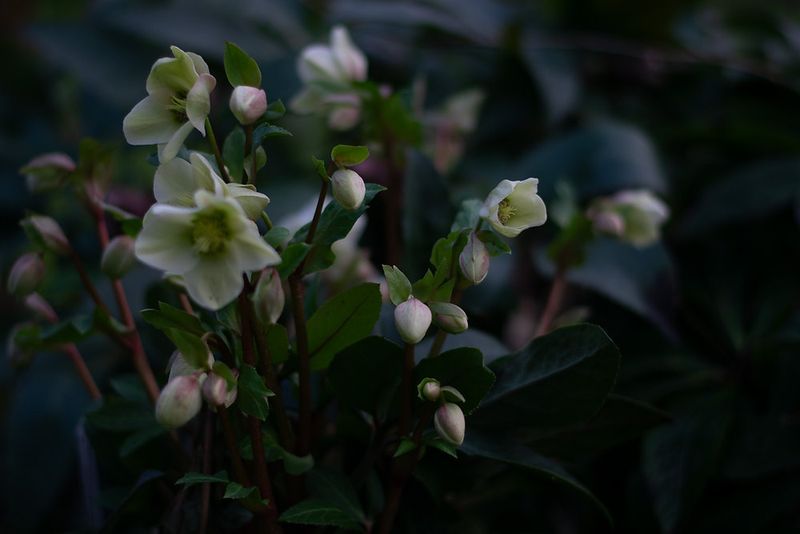
Picture flowers blooming when there’s still frost on the ground and you’ll understand why I’m obsessed with hellebores. These shade-loving rebels start showing off in late winter, sometimes poking through snow, to deliver much-needed color when everything else has given up.
Their nodding, cup-shaped flowers come in shades ranging from creamy whites to deep purples and speckled pinks.
What really sold me on hellebores was their evergreen foliage that looks good even in January. They create a lush groundcover under trees where most plants throw temper tantrums about the shade.
Plus, they’re toxic to deer and rabbits, which means they actually survive in neighborhoods where wildlife treats most gardens like an all-you-can-eat buffet.
Hellebores prefer rich, well-drained soil and dappled shade, making them perfect companions for spring bulbs. They’ll slowly spread into nice clumps without becoming invasive pests.
Your Kentucky Garden Changes Every Week. Your Plan Should Too.
Gardening in Kentucky changes quickly throughout the season. Every Friday you’ll receive a simple weekly plan showing exactly what to plant, prune, fertilize, harvest, and protect so you never miss the right timing.
Cut back any tattered old leaves in late winter before new flowers emerge.
Their real magic is in the timing, when the garden feels completely lifeless, hellebores step in like they didn’t get the memo about winter being boring. Mature clumps become almost architectural, structure and softness at once, especially in shady corners where nothing else survives.
Liatris Brings Tall Purple Blooms Through Summer
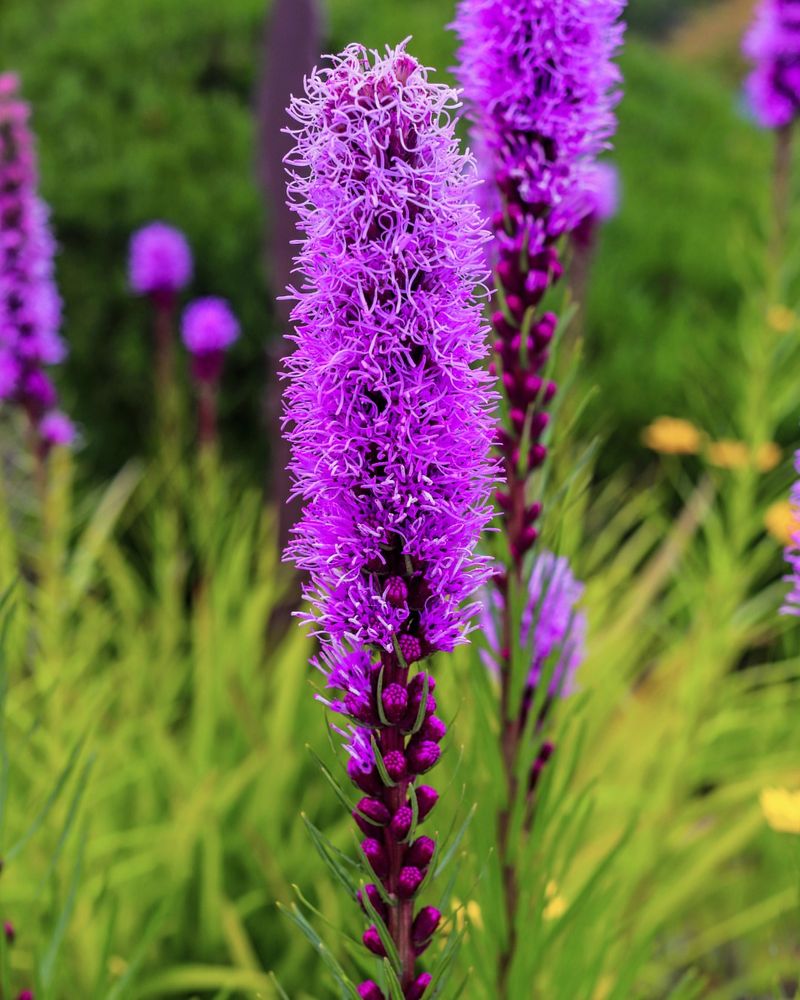
Nothing quite prepares you for the butterfly convention that shows up when Liatris starts blooming in midsummer. One day your garden is behaving itself, and the next it’s hosting what looks like nature’s most enthusiastic outdoor festival.
These tall purple spikes don’t just attract pollinators, they summon them. Butterflies, bees, and the occasional hummingbird arrive out of nowhere and turn the garden into a buzzing social event.
What makes Liatris even more charming is its refusal to follow the rules. Most flowers bloom from the bottom up, but not this one.
Liatris does things in reverse, opening from the top down like it missed the basic orientation class but decided to succeed anyway. And somehow, it works.
It grows from corms and handles Kentucky summers with impressive confidence, shrugging off heat and humidity without complaint. The narrow, grass-like foliage stays tidy at the base while the flower spikes shoot up two to four feet, adding vertical drama without any effort on your part.
I planted mine in full sun with average soil and basically forgot about them, which seems to be exactly what they prefer.
By fall, the seed heads become a buffet for goldfinches, and the plant quietly continues its show in a different way. It’s the kind of perennial that doesn’t just fill space, it turns it into a small ecosystem you didn’t know you were missing.
Amsonia Brings Delicate Blue Blooms And Brilliant Fall Color
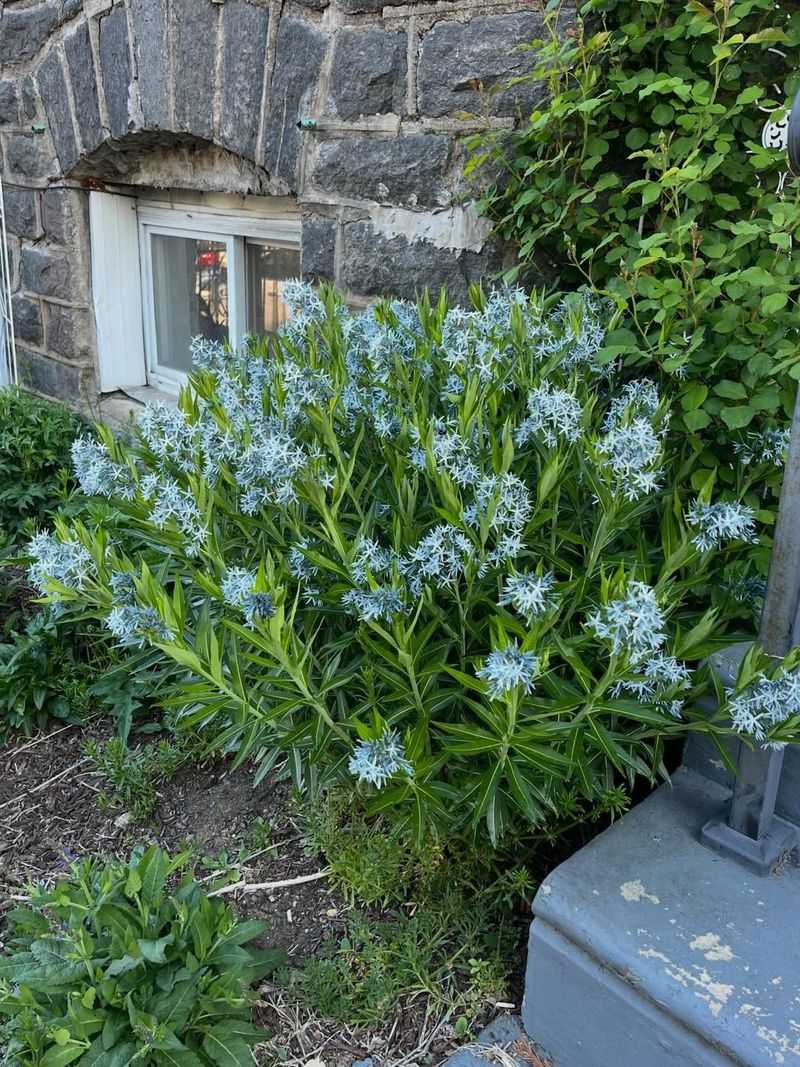
Amsonia might be the most underrated plant in Kentucky gardens, which honestly feels a bit unfair considering how much it delivers with almost no effort in return. It doesn’t try to steal the spotlight, but it ends up quietly outperforming half the garden anyway.
In spring, it sends up soft, sky-blue star-shaped flowers that catch the early morning light like the plant is gently glowing from within. As summer settles in, Amsonia shifts gears without making a fuss.
The blooms fade, but the plant keeps its composure, forming tidy mounds of fine, willow-like foliage that stays fresh and full even when everything else starts looking a bit tired.
Then fall arrives, and that’s when Amsonia really shows off. The entire plant turns a rich, golden yellow that can easily rival the flashiest autumn shrubs, except it does it in a much calmer, more effortless way.
I once planted mine in partial shade by mistake, and it still thrives like it never got the memo about being “less than ideal.”
It handles clay soil without complaint, shrugs off pests, and deer seem to collectively agree it’s not worth their attention. If gardens had a most valuable player, Amsonia would win it every year, not for a dramatic performance, but for simply never letting the team down.
Balloon Flower Brings Playful Puffy Buds And Bold Color All Season
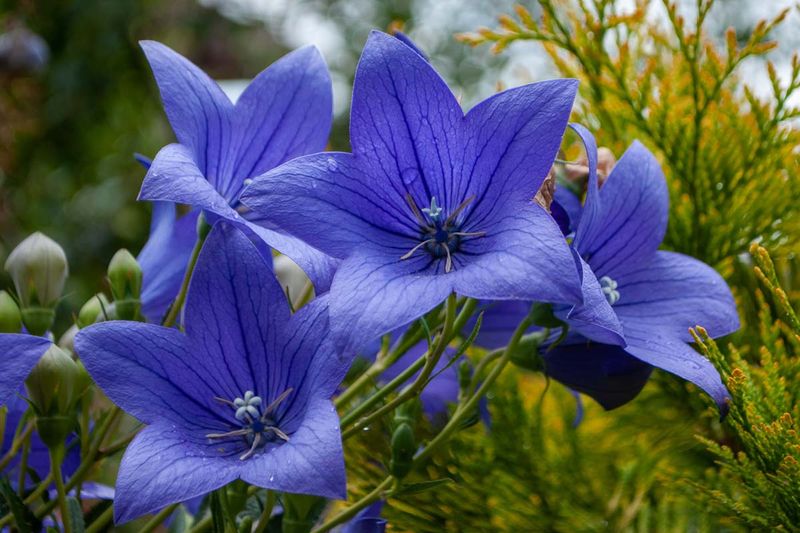
Kids absolutely lose their minds over balloon flowers, and honestly, I’m not much better. There’s something strangely irresistible about a plant that looks like it’s holding its breath.
The buds swell up into perfect little balloons, round and glossy, as if the garden briefly decided to experiment with party decorations. Then, almost without warning, they pop open into star-shaped blooms that feel like a small reward for paying attention.
If you gently squeeze an unopened bud, it gives a soft pop that feels a little like bubble wrap, which is the kind of harmless garden mischief adults pretend they’re above but absolutely are not.
These perennials bloom from midsummer straight through frost in shades of blue, purple, pink, or white, keeping the garden interesting long after many plants have checked out for the season. They are a bit shy in spring and slow to emerge, which is where people make the classic mistake of digging them up, thinking they didn’t survive winter.
Patience pays off, once they wake up, they settle in and perform reliably year after year.
Balloon flowers prefer full sun to partial shade with well-drained soil, and they handle Kentucky conditions without drama. Deadheading helps encourage more blooms, though skipping it occasionally won’t ruin the show With their deep taproots, they really do prefer to stay put, so choose their spot wisely.
In the end, they bring a mix of whimsy and resilience that makes the garden feel a little more playful and a lot less serious.
Epimedium Fills Dry Shade With Dainty Blooms and Year-Round Foliage
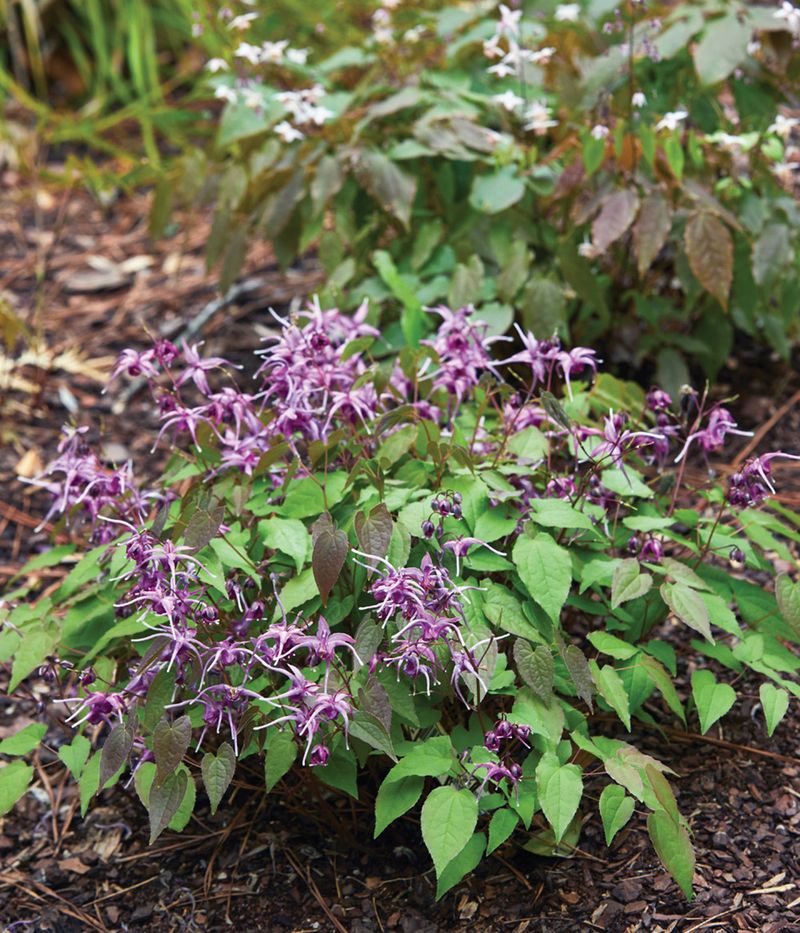
Epimedium sounds like something straight out of a fantasy novel, and honestly, it kind of behaves like it too. It’s the sort of plant you almost expect to see in a hidden woodland where tiny fairies might be running a very organized gardening club.
In spring, it sends up delicate little flowers that seem to hover above the foliage, almost floating on invisible threads. They might be small, but they are full of charm, showing off in soft shades of yellow, pink, white, or red, like subtle confetti in the shade garden.
But the real surprise is the foliage. Just when you think it’s all about the flowers, Epimedium shifts the spotlight again.
The new leaves emerge in rich bronze and red tones, adding warmth and texture before maturing into a lush green carpet. In some varieties, the leaves even hang around through winter, quietly holding the garden together when everything else has disappeared.
This is one of those rare plants that actually enjoys the problem spots. Dry shade under trees, root competition, and tricky soil conditions don’t scare it off.
Instead, it slowly spreads into elegant mats that suppress weeds without ever becoming pushy or invasive. Cut back the old foliage in late winter and new growth takes over almost immediately, fresh and ready to go.
It handles humidity, ignores deer completely, and never once causes a scene. Epimedium is the perennial equivalent of a great supporting actor, never the lead, always essential, and impossible to imagine the garden without.
Daylily Grows Almost Anywhere And Rewards You With Weeks Of Blooms
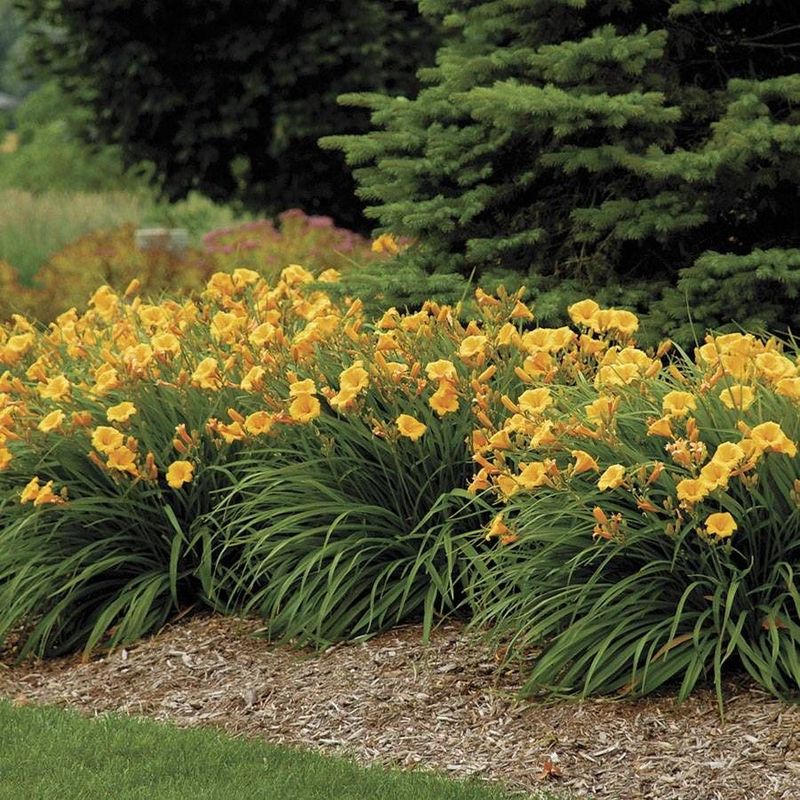
Someone once told me that if you can manage to struggle with a daylily, you might simply be overthinking gardening, and there’s a sharp truth buried in that joke. These are the perennials that quietly build confidence in a garden because they keep performing even when care isn’t perfect.
They don’t sulk, they don’t punish you for forgetting to water them, and they certainly don’t hold a grudge.
Each flower lasts only a single day, which might sound short, but the plant produces so many buds that the display continues for weeks, sometimes longer depending on the variety. It becomes a steady rhythm of new blooms opening day after day, like the garden is pacing itself on purpose.
Modern daylilies come in a wide range of colors, with the exception of true blue, and by combining early, mid, and late-season types, you can enjoy flowers from late spring well into summer. They adapt easily to full sun or partial shade, tolerate different soils including clay, and handle dry periods once established without complaint.
The foliage stays neat and grassy, forming clumps that slowly expand over time and can be divided to fill new spaces or shared with neighbors who’ll wonder what your secret is. Some varieties offer light fragrance or repeat blooming, adding subtle variation without any extra effort on your part.
Daylilies don’t try to be the showiest plant in the garden, they just quietly make sure the garden always looks good.
Coneflower Returns Year After Year and Keeps Pollinators Buzzing All Summer
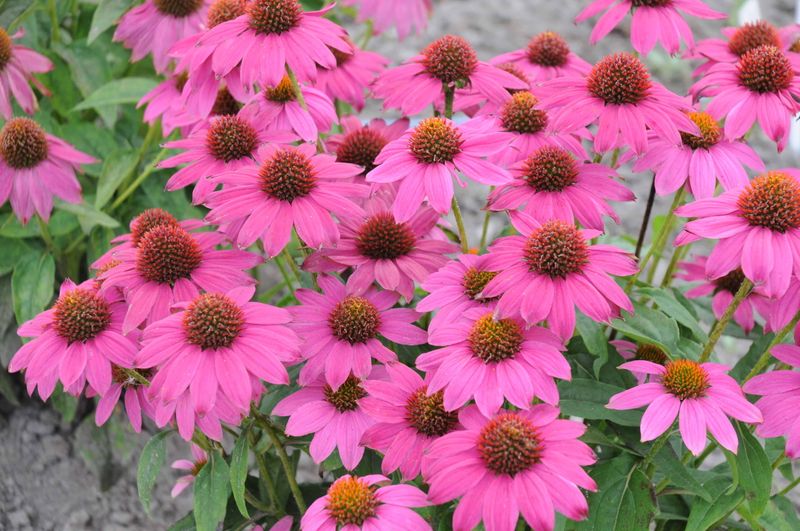
Coneflowers have a way of making even an ordinary garden patch feel alive. Plant a small group and the change shows up faster than expected.
Butterflies, bees, and hummingbirds find them quickly, treating the blooms like a favorite stop they return to all day long. Butterflies, bees, and hummingbirds found them quickly, treating the blooms like a favorite café they were happy to visit all day long.
The classic purple variety is what most people picture, but modern coneflowers come in soft whites, warm oranges, sunny yellows, gentle pinks, and even subtle greens. They all keep that signature raised cone in the center, which happens to be exactly what pollinators love most.
As prairie natives, coneflowers handle heat and dry spells with ease once established. Their bloom period starts in midsummer and stretches longer than you’d expect, adding steady color when many other plants start to fade.
Leave the seed heads standing through winter and goldfinches will turn them into a little seasonal performance all on their own.
They prefer full sun and well-drained soil, and once settled, they largely take care of themselves. A little self-seeding fills in gaps naturally over time.
Deadhead for more blooms, or leave them for wildlife, coneflowers adapt either way. They’re that rare combination of beautiful and resilient, without asking much in return.