Low Growing Michigan Plants That Stay Neat Along Walkways Without Mowing
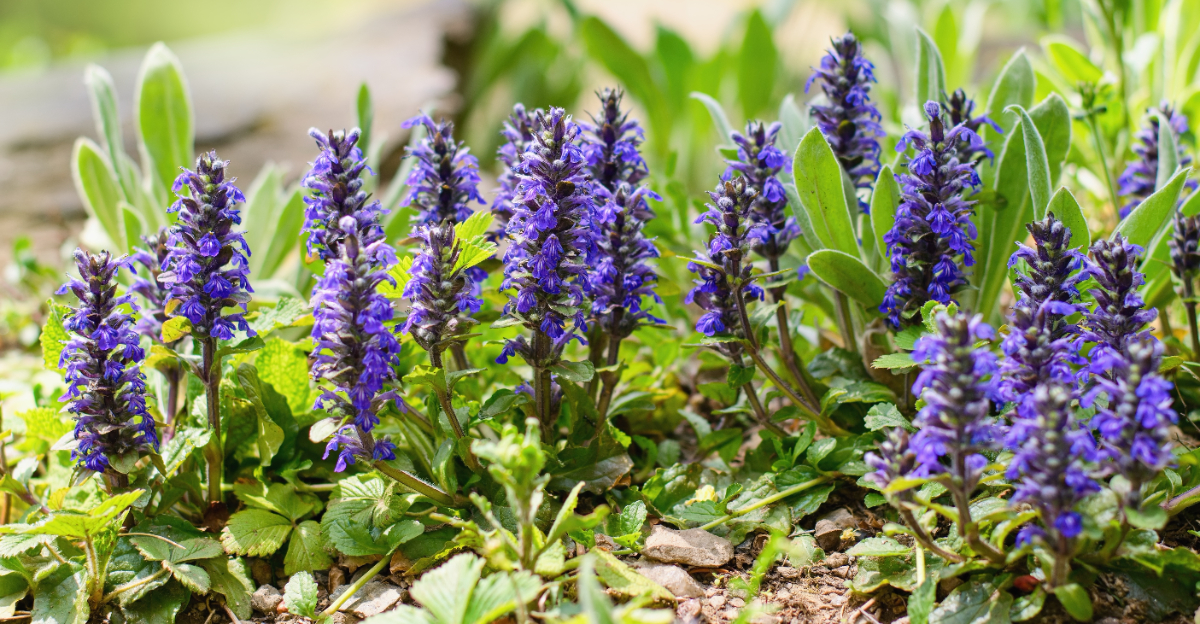
Walkway edges are one of those spots in a Michigan yard that demand attention all season long.
Grass creeps in, weeds push through, and whatever was planted there last year has either spread too aggressively or faded out entirely.
The constant edging and trimming adds up fast over a summer, and most plants marketed as low maintenance along paths turn out to require more intervention than advertised once Michigan weather gets involved.
A handful of genuinely low growing plants hold their shape through the season without needing to be cut back, stay within their lane without creeping into the path, and handle the foot traffic proximity and reflected heat that walkway edges produce.
Michigan winters don’t rattle them either. Once they’re in and established, the walkway edge largely takes care of itself in a way that most gardeners stop believing is possible until they actually see it.
1. Creeping Thyme
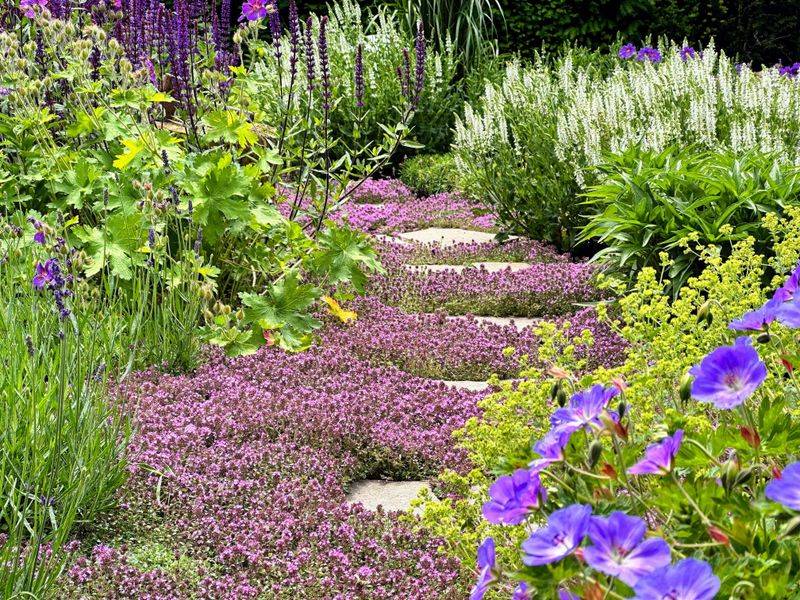
Walk past a patch of creeping thyme on a warm summer afternoon, and you will notice something special right away.
Brush your foot lightly against it and a fresh, herby fragrance rises up from the ground.
This plant is one of the best low-growing options for sunny walkways because it forms a tight, mat-like carpet that stays naturally short without any mowing at all.
Creeping thyme thrives in full sun and actually prefers lean, well-drained soil rather than rich, heavy clay.
In Michigan, soggy soil is one of the biggest challenges, so planting it along raised path edges or between stepping stones where water drains away quickly gives it the best chance.
Space plants about 8 to 12 inches apart, and water them regularly during the first growing season until roots settle in.
Once established, creeping thyme is surprisingly tough and drought-tolerant, needing very little water during dry spells.
Small pink or purple flowers appear in summer and attract bees and butterflies, adding a lively, colorful touch to your path.
It can handle light to moderate foot traffic once it is fully rooted, making it a great fit between pavers or along path edges.
Keep in mind that creeping thyme works best as a path-edge accent or stone-gap filler, not as a full replacement for high-traffic turf areas.
Used in the right spot, it is one of the most rewarding no-mow plants you can grow in Michigan.
2. Blue Star Creeper
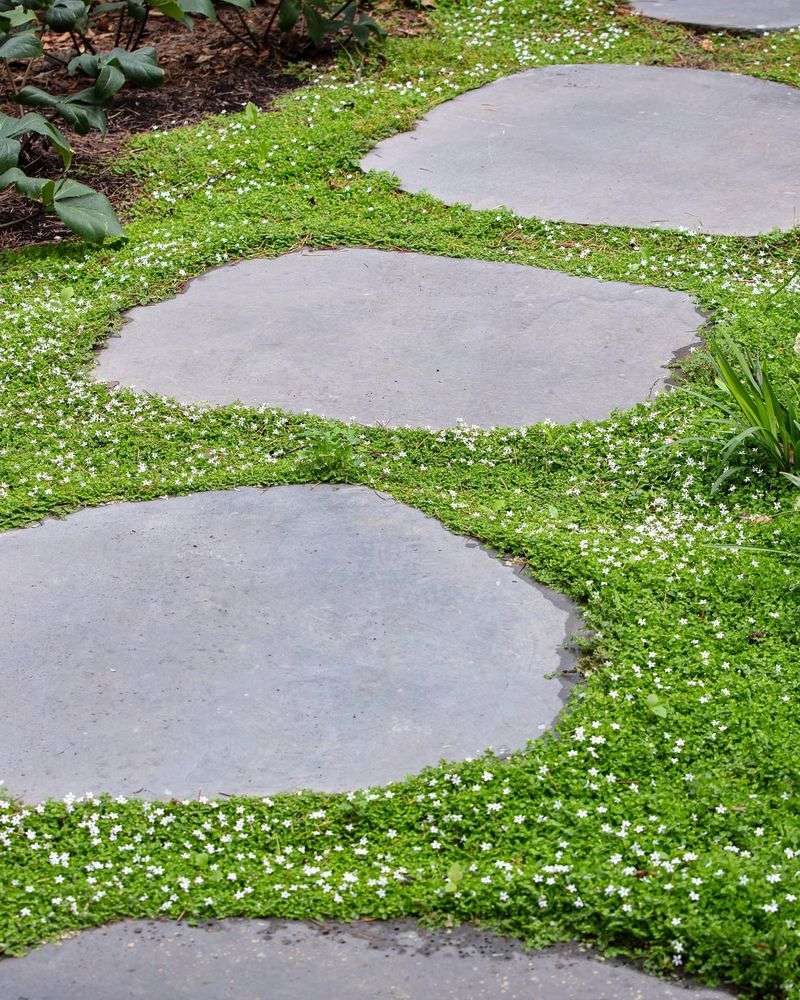
Tiny blue flowers scattered across a bright green mat might sound like something from a fairy garden, but blue star creeper makes it very real.
This low-growing groundcover spreads into a neat, even carpet and produces cheerful little star-shaped blooms from late spring right into summer.
No mowing needed, no trimming required, just steady, beautiful growth. Blue star creeper works well between stepping stones and along lightly used garden paths where foot traffic stays minimal.
It prefers moist but well-drained soil and does best in areas that do not bake in direct afternoon sun for hours on end.
Part sun or dappled light tends to bring out its best performance, especially during Michigan’s warmer summer months.
Your Michigan Garden Changes Every Week. Your Plan Should Too.
Gardening in Michigan changes quickly throughout the season. Every Friday you’ll receive a simple weekly plan showing exactly what to plant, prune, fertilize, harvest, and protect so you never miss the right timing.
Here is something gardeners should know before planting: blue star creeper is most reliable in Zone 6 areas, which covers southern parts of the state.
Gardeners in colder northern zones may want to treat it as a trial plant or a tender perennial that may need replanting after a harsh winter.
In protected spots near walls or structures, it has a better chance of coming back year after year.
Light foot traffic is fine for established plants, but heavy daily use will wear it down quickly. Think of it as a plant for paths that get occasional use rather than constant foot traffic.
When conditions are right, blue star creeper adds a soft, cottage-garden charm to any walkway that is hard to match.
3. Mazus
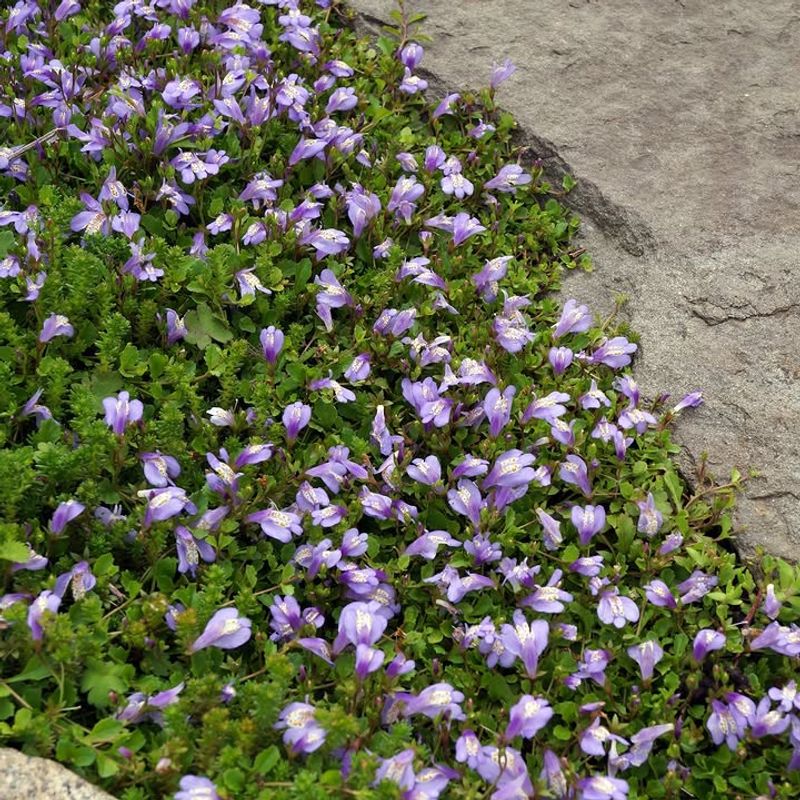
Few plants spread as eagerly or look as cheerful doing it as mazus. This fast-moving groundcover hugs the soil tightly, filling in gaps between stepping stones and along walkway edges with a dense, tidy carpet of green.
In late spring and early summer, it bursts into small purple, blue, or white flowers that give any path a fresh, lively look.
Mazus handles a surprising range of conditions, growing well in full sun to part shade and preferring average to moist, well-drained soil.
It does not like to sit in standing water, but it appreciates consistent moisture, especially during dry summer stretches in Michigan.
A layer of light mulch around new plantings can help hold moisture while the roots get settled.
One thing that makes mazus so appealing for walkways is its ability to tolerate light foot traffic without falling apart.
Stepping on it occasionally will not cause major damage, making it a practical choice for the spaces between pavers or along the edges of garden paths that get some use.
It stays naturally low, so there is truly no mowing involved. Because mazus spreads quickly in favorable conditions, placement matters.
Pairing it with edging, pavers, or a hardscape border helps keep it from wandering into lawn areas or flower beds.
Used thoughtfully, it is one of the most rewarding fast-filling groundcovers available for Michigan gardens, offering color, coverage, and nearly effortless maintenance season after season.
4. Corsican Mint
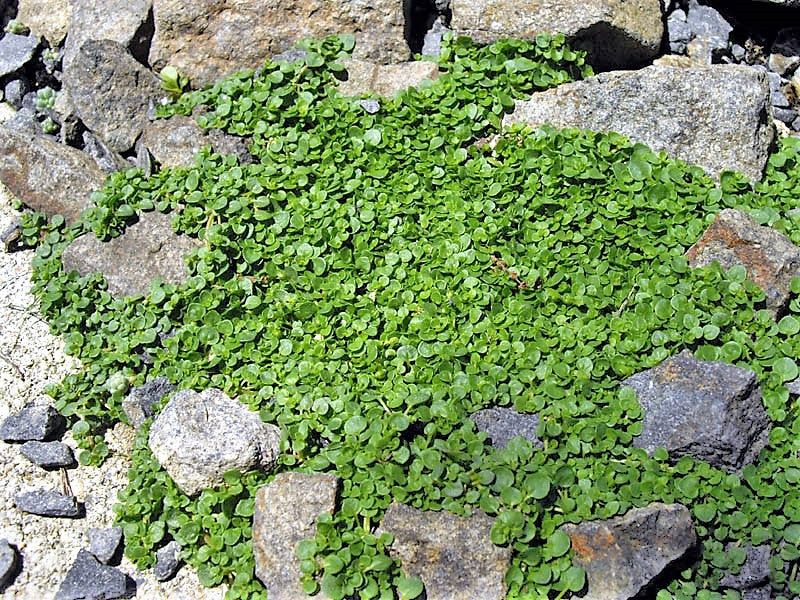
Imagine stepping onto your garden path and catching a sudden burst of cool, clean mint fragrance rising up from the ground beneath your feet. That is exactly what Corsican mint delivers.
It forms one of the smallest, softest ground-hugging mats of any mint variety, growing just a centimeter or two tall and releasing its signature scent whenever lightly touched or stepped on.
This tiny plant loves moist, well-drained soil and appreciates morning sun or part shade rather than harsh, baking afternoon light.
In this climate, consistent watering during dry spells is important because Corsican mint does not handle drought well.
It suits sheltered spots along path edges, walkway cracks, or container gardens where moisture and light can be easily managed.
Here is the honest reality for Michigan gardeners: Corsican mint is only reliably hardy in Zone 6 or warmer climates. Much of Michigan falls into colder zones where a tough winter can wipe it out entirely.
Many gardeners in the state treat it as a tender perennial or a self-seeding annual, replanting each spring or growing it in containers that can be moved indoors before the first hard frost.
Despite this limitation, it is absolutely worth trying in protected spots or as a container plant near a patio or entry path.
The fragrance alone makes it one of the most memorable plants you can grow near a walkway.
For gardeners willing to give it a little extra care, Corsican mint offers an experience that few other groundcovers can match.
5. Creeping Sedum
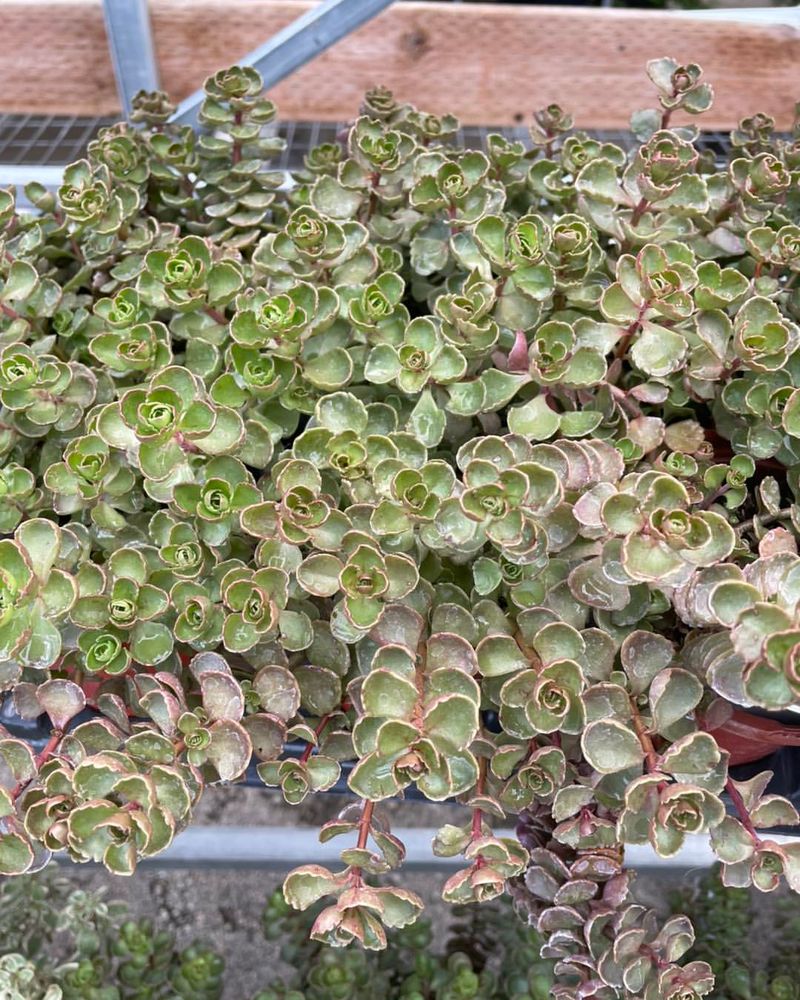
Tough, colorful, and almost impossible to neglect, creeping sedum is the low-maintenance champion of sunny Michigan walkways.
These compact succulents spread slowly into tidy mats of fleshy, jewel-toned foliage that look great from spring through fall without any trimming or mowing.
Some varieties even add a flush of small star-shaped flowers in late summer, giving pollinators a late-season treat.
Creeping sedums are built for dry, sunny spots where other groundcovers struggle to survive.
They handle heat and drought far better than most mat-forming plants, which makes them especially useful along path edges that bake in the sun all afternoon. The key requirement is sharply drained soil.
Heavy clay or wet winter sites are the biggest threat to their health, so raised beds, gravel paths, or rocky soil work best.
In Michigan, choosing hardy varieties like Sedum spurium, Sedum kamtschaticum, or Sedum acre gives you the best chance of strong, reliable performance year after year.
These varieties are cold-tolerant and come back dependably even after harsh winters.
Plant them where foot traffic is light rather than constant, as heavy daily stepping will damage their fleshy stems over time.
One of the best things about creeping sedum is how little water it needs once established.
While regular watering helps during the first growing season, mature plants are remarkably self-sufficient.
For dry path edges where moisture-loving groundcovers simply cannot thrive, creeping sedum fills the gap beautifully with color, texture, and almost zero effort from you.
6. Irish Moss
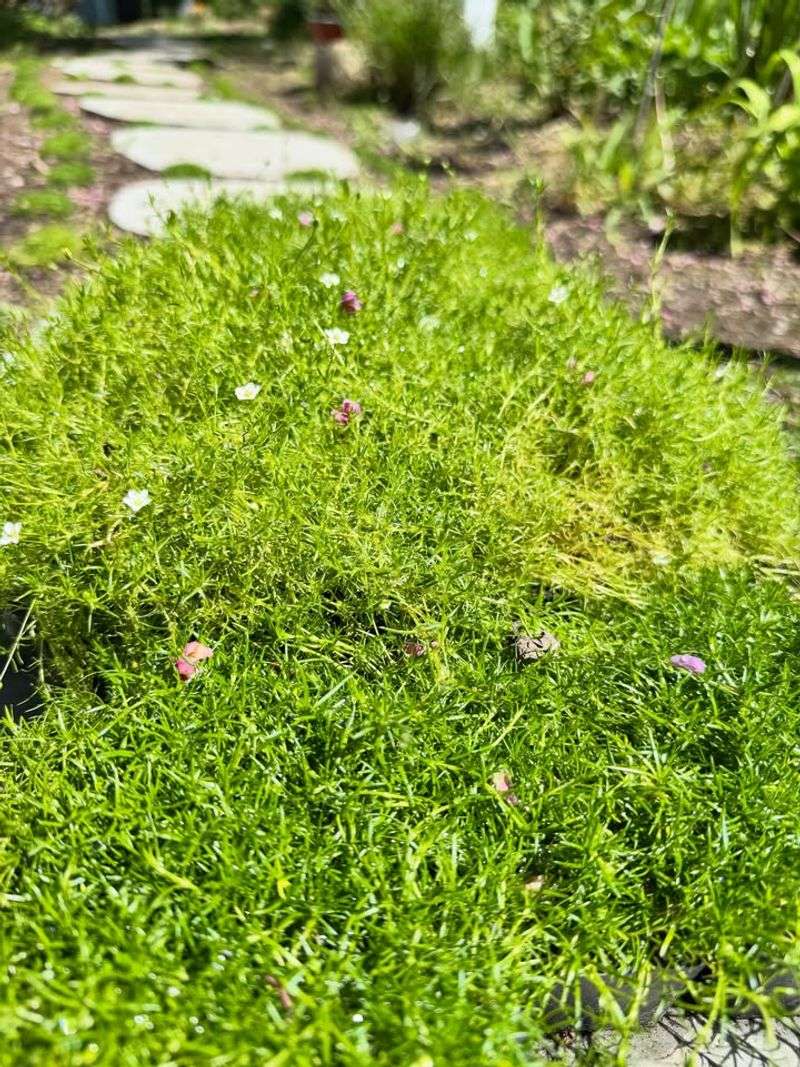
Bright green, impossibly soft, and dotted with tiny white flowers in summer, Irish moss brings a storybook quality to garden paths and stepping stone areas. Despite its name, it is not actually a true moss at all.
Sagina subulata is a flowering plant that simply mimics the look of moss, forming dense, cushiony mats that stay low and tidy without any mowing required.
Irish moss performs best in cool, moist conditions with well-drained soil and partial to full sun.
In Michigan, it appreciates spots that stay evenly moist without sitting in soggy water, especially during winter when poor drainage can cause the most damage.
Morning sun with afternoon shade tends to keep it looking its best through the warmer months, preventing the browning that can happen in intense heat.
Once established, it tolerates light foot traffic reasonably well, making it a popular choice for filling gaps between stepping stones or softening the edges of cool, shaded garden paths.
The key word is light. Heavy, repeated foot traffic will compress and damage the mat over time, so it works best in areas where people step occasionally rather than constantly.
Compacted soil, prolonged drought, and poorly drained winter-wet sites are the main challenges for Irish moss in gardens.
Preparing the planting area with gritty, well-draining soil before planting makes a significant difference.
When given the right conditions, Irish moss creates some of the most visually appealing, low-effort path edging you will find anywhere in a Michigan garden.
7. Pennsylvania Sedge
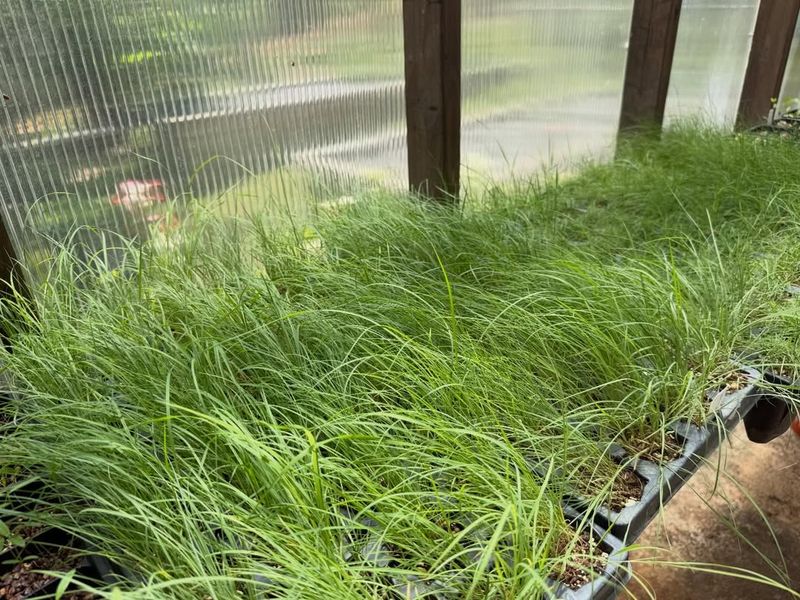
There is something quietly beautiful about Pennsylvania sedge. It does not shout for attention with bold flowers or bright colors.
Instead, it offers something subtler and more lasting: soft, fine-textured, grasslike foliage that forms gentle clumps along shaded walkways and woodland garden paths.
For Michigan homeowners looking for a native plant that fits naturally into the landscape, this one is hard to beat.
Pennsylvania sedge is native to Michigan’s woodlands, which means it is already adapted to the state’s climate, soil, and seasonal rhythms.
It grows best in part shade to full shade with dry to average woodland soil, making it an excellent choice for tree-lined paths or areas under a canopy where grass struggles to grow.
Unlike traditional lawn grass, it stays much shorter naturally, often reaching only 6 to 10 inches tall without any mowing.
Planting plugs spaced about 6 to 12 inches apart allows it to gradually fill in over one to two seasons, eventually forming a connected colony of soft, swaying foliage.
It spreads through underground rhizomes and self-seeding, slowly creating a meadow-edge look that feels relaxed and natural rather than overly manicured.
Pennsylvania sedge works best along path edges and low-traffic walkways rather than in heavily walked lanes.
It gives a soft, flowing appearance that thyme or moss cannot replicate, especially in shaded spots.
Supporting native plants like this one also benefits local insects and wildlife, making your garden more ecologically valuable with almost no extra effort on your part.
8. Bugleweed
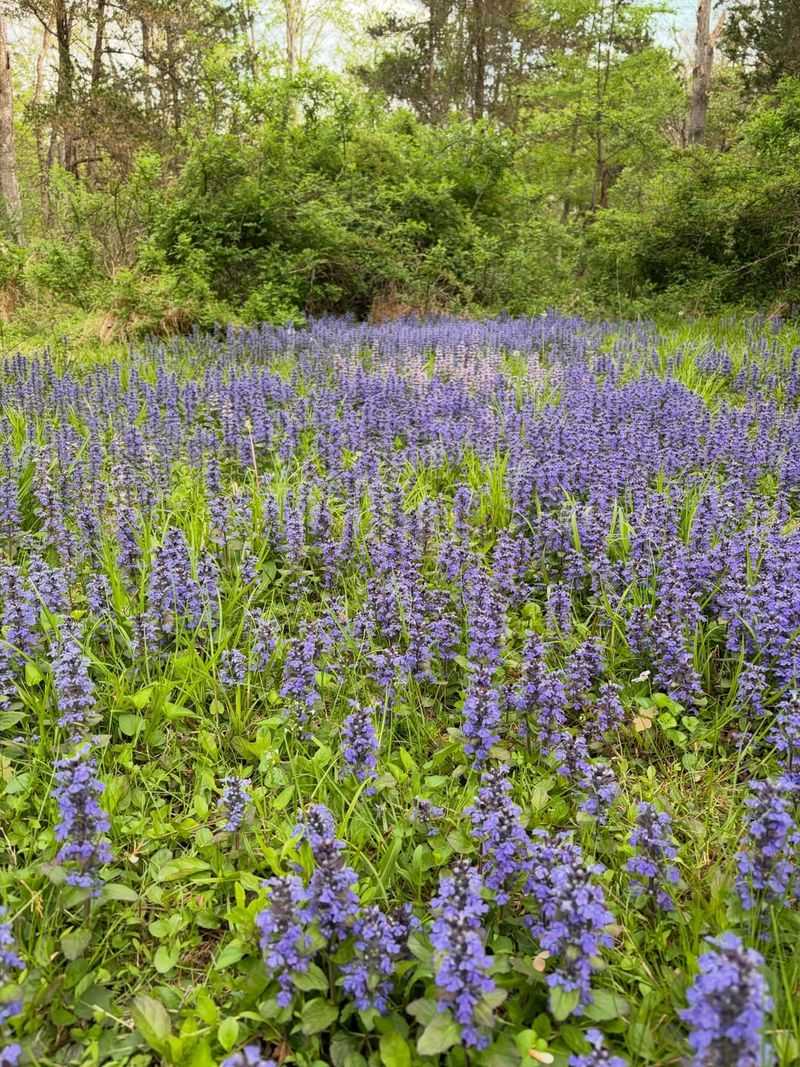
Bold foliage, spring flower spikes, and a talent for filling shady spots that other plants ignore make bugleweed one of the most eye-catching groundcovers for walkway edges.
Its low, rosette-forming leaves spread into a dense, weed-suppressing carpet that stays neat and attractive without any mowing.
In spring, upright spikes of blue-purple flowers rise just above the foliage, creating a striking seasonal display that stops people in their tracks.
Bugleweed grows best in part shade with average, well-drained soil, though it tolerates a fairly wide range of conditions once established.
Full shade works reasonably well, and it can handle brief dry spells, but consistently soggy soil weakens the plants over time.
Spacing new plants about 6 to 12 inches apart gives them room to spread and fill in within a season or two.
Here is the most important thing to know before planting bugleweed: it spreads by runners and can become aggressive.
In some parts of North America, it is considered invasive, and Michigan gardeners should take that seriously.
Placing it only where edging, pavement, or regular maintenance can contain it protects nearby lawns, natural areas, and neighboring garden beds from being taken over.
Used in the right contained spot, such as a shaded stepping-stone pocket, a walled bed along a walkway, or a difficult corner where little else grows, bugleweed is genuinely impressive.
It brings color, density, and real visual interest to areas that might otherwise stay bare and dull all season long.