Low-Maintenance Yard Plants That Thrive In Missouri
Living in Missouri means dealing with hot summers, cold winters, and everything in between. Your yard shouldn’t take up your whole weekend when you’d rather be relaxing on the patio with a cold drink.
The right plants can give you a beautiful landscape without constant fuss, watering, or worry about temperature changes. That’s why choosing the right plants makes all the difference.
With low-maintenance options, you can enjoy a yard that looks great through every season without constant upkeep.
Instead of spending weekends working in the garden, you’ll have more time to actually relax and enjoy your outdoor space. Here are some of the best low-maintenance plants for Missouri yards.
1. Black-Eyed Susan (Rudbeckia Hirta)
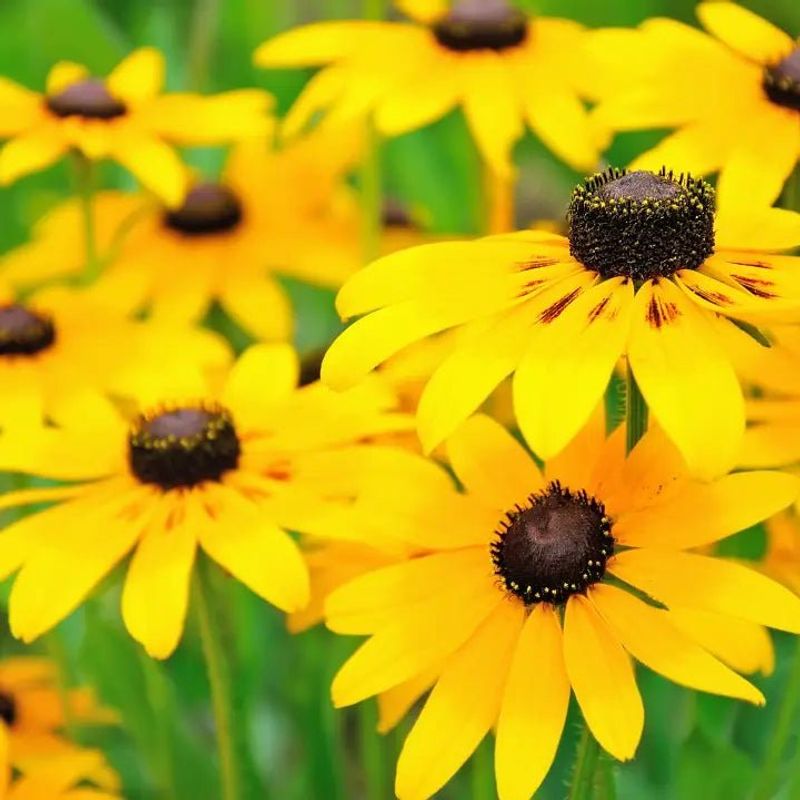
Nothing says Missouri summer quite like the cheerful face of a Black-Eyed Susan nodding in the breeze.
I planted my first batch five years ago and haven’t lifted a finger since, yet they come back stronger every season.
These golden beauties have “rich chocolate-brown centers” that really stand out in the garden. They bloom from June through October, giving you months of color without any fuss.
Rudbeckia hirta laughs at drought conditions once established.
During that brutal dry spell last August, my Black-Eyed Susans kept right on blooming while my neighbor frantically watered everything else. They’ll grow in full sun or partial shade, though you’ll get more flowers with at least six hours of direct sunlight.
The plant reaches about two to three feet tall and spreads gradually without becoming invasive. Deadheading isn’t necessary, though you can snip off spent blooms if you’re feeling ambitious.
Leave the seed heads standing through winter and you’ll attract goldfinches and other birds looking for snacks.
Black-Eyed Susans handle our clay soil just fine and don’t need fertilizer. They’re not easily affected by the common pests and diseases found in Missouri.
Plant them in spring or fall, water them for the first few weeks, then forget about them. They’ll self-seed modestly, giving you new plants without taking over your entire yard like some “aggressive spreaders”.
2. Purple Coneflower (Echinacea Purpurea)
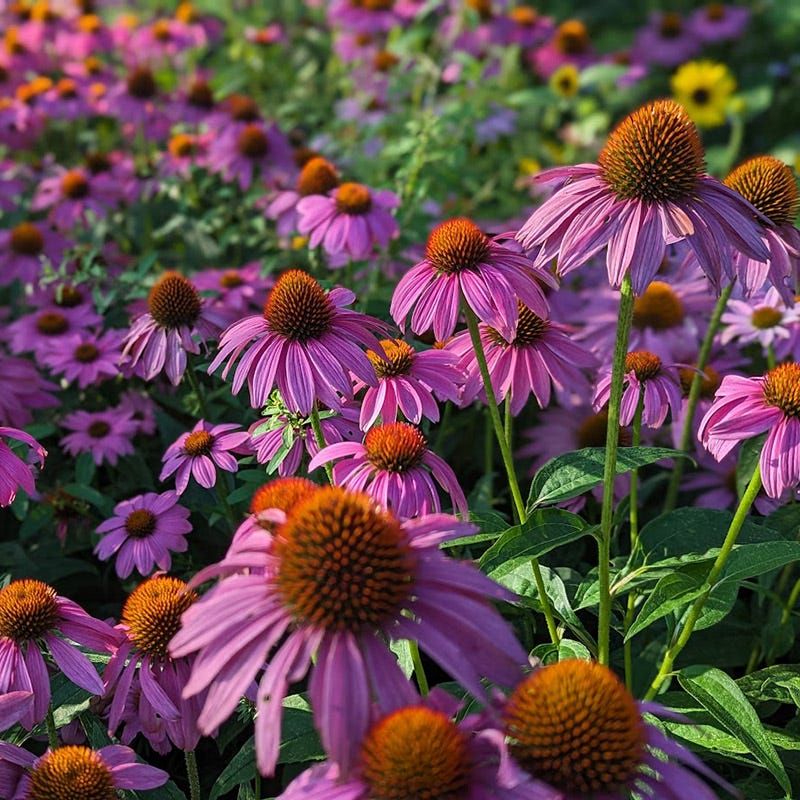
Purple Coneflowers are the workhorses of Missouri gardens, and honestly, they deserve more credit than they get. These prairie natives evolved right here in the Midwest, so they already know how to handle whatever weather Missouri throws at them.
The gorgeous purple-pink flowers with their distinctive spiky orange centers appear in early summer and keep going until frost.
Butterflies and bees go absolutely bonkers for Echinacea. My garden turns into a pollinator party every July when these flowers hit their peak.
Goldfinches show up later in the season to feast on the seed heads, creating a natural bird feeder that requires almost no effort from you.
Once established, Purple Coneflowers tolerate drought like champions. They prefer full sun but will bloom in partial shade, though you’ll get fewer flowers.
The plants grow two to four feet tall with sturdy stems that don’t need staking, even during summer thunderstorms.
Your Missouri Garden Changes Every Week. Your Plan Should Too.
Gardening in Missouri changes quickly throughout the season. Every Friday you’ll receive a simple weekly plan showing exactly what to plant, prune, fertilize, harvest, and protect so you never miss the right timing.
Here’s the best part: deer generally leave them alone, unlike almost everything else in your yard. They’re not picky about soil, handle humidity without developing fungal issues, and divide easily if you want more plants.
Cut them back to the ground in late fall or early spring. That’s literally all the maintenance they need.
Some gardeners deadhead them, but I’ve found they bloom prolifically either way, so why bother?
3. Daylily (Hemerocallis)
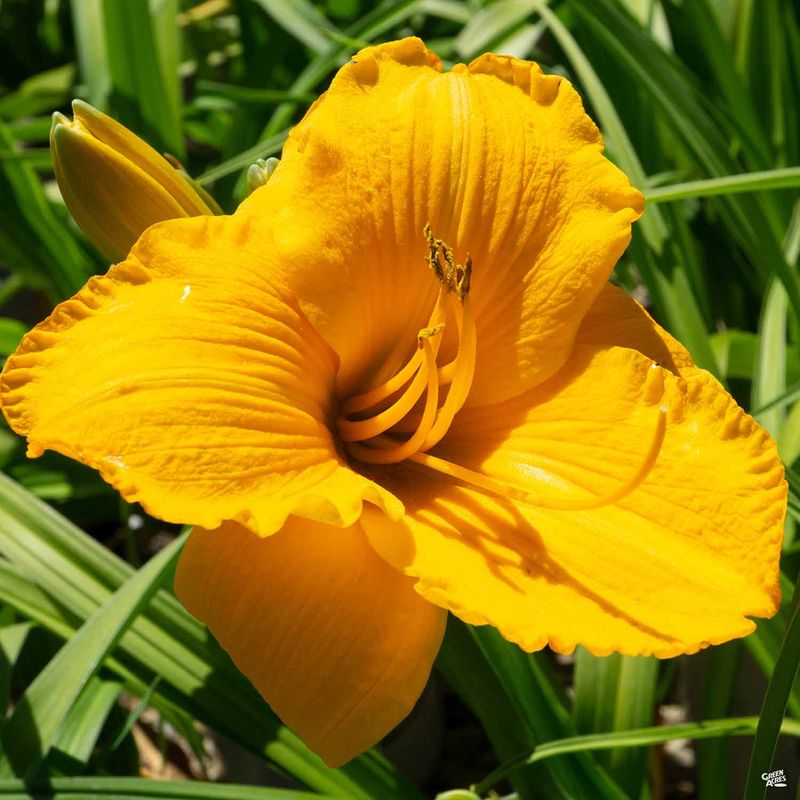
Daylilies are proof that gorgeous doesn’t have to mean high-maintenance. Each flower lasts just one day (hence the name), but each plant produces so many buds that you’ll have continuous blooms for weeks.
They come in practically every color except true blue, from soft yellows to deep burgundies to peachy oranges that make you think of sunset.
I’ve lost houseplants just by looking at them wrong, but daylilies? Those things are surprisingly resilient.
They’ll grow in full sun or part shade, wet soil or dry, clay or sand. Missouri summers don’t faze them one bit.
Once planted, they multiply steadily, forming dense clumps that choke out weeds naturally.
Most varieties bloom in early to midsummer, though you can find early, midseason, and late bloomers to extend the show.
The foliage stays green and attractive all season, forming graceful arching mounds that look intentional even when nothing’s flowering.
Height varies by variety, typically ranging from one to four feet tall.
Deer might nibble them occasionally, but the plants bounce back quickly. They rarely need dividing, though you can split overgrown clumps every few years if you want more plants.
No deadheading required since the spent blooms drop off cleanly by themselves. Water them during their first summer, then ignore them completely.
They’ll still perform beautifully year after year without complaint.
4. Hosta (Hosta Spp.)
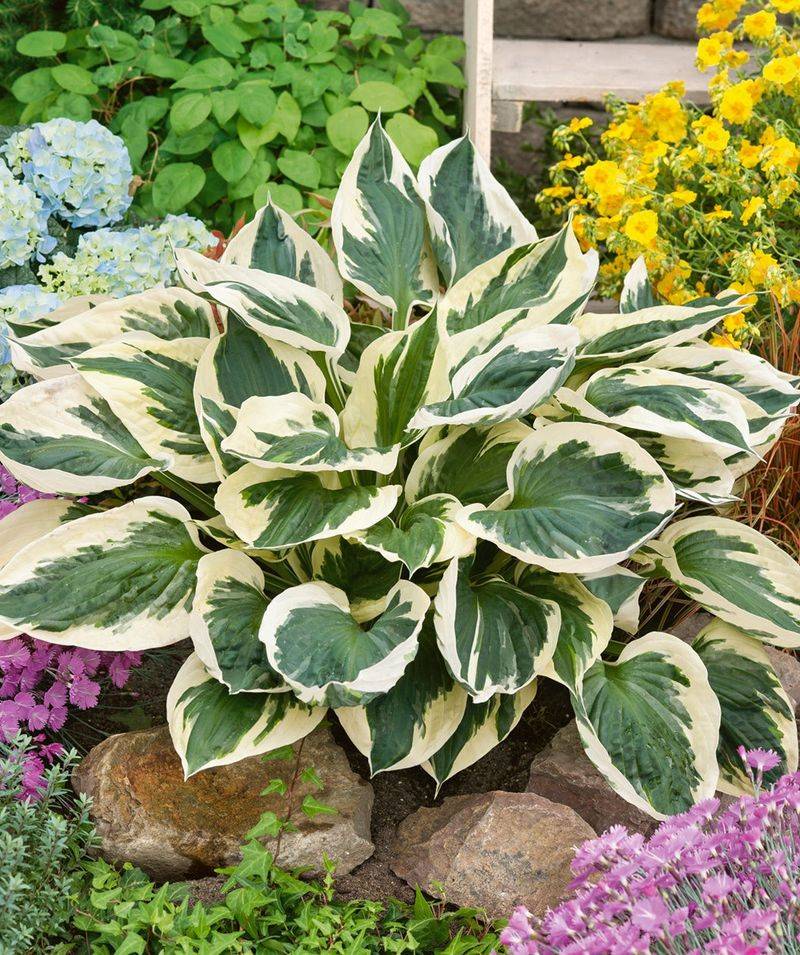
Shade gardening in Missouri used to frustrate me until I discovered hostas. These leafy beauties actually prefer shade, thriving in spots where sun-loving plants would sulk.
They come in an incredible range of sizes and leaf colors, from tiny six-inch varieties to massive four-foot specimens, with foliage in shades of green, blue, gold, and white.
The leaves are the main attraction, creating lush texture that makes shady areas look intentionally landscaped. Bonus flowers appear on tall stalks in summer, usually white or lavender, and they smell sweetly in some varieties.
Hummingbirds appreciate them even if you forget they’re there.
Hostas tolerate Missouri’s clay soil and humidity without developing the fungal problems that plague fussier shade plants. They’ll grow under trees, along north-facing walls, or anywhere that gets dappled light.
Morning sun with afternoon shade works perfectly. Once established, they handle dry shade reasonably well, though they’ll look better with occasional watering during droughts.
Slugs can be a minor annoyance, but honestly, I’ve found that thicker-leaved varieties shrug them off. Cut the foliage down after frost turns it brown.
They’ll emerge fresh and perfect every spring without any help from you. Hostas can stay in the same spot for decades, slowly growing larger and more impressive.
Divide them only if you want more plants or they’ve outgrown their space.
5. Sedum / Stonecrop (Sedum Spp.)
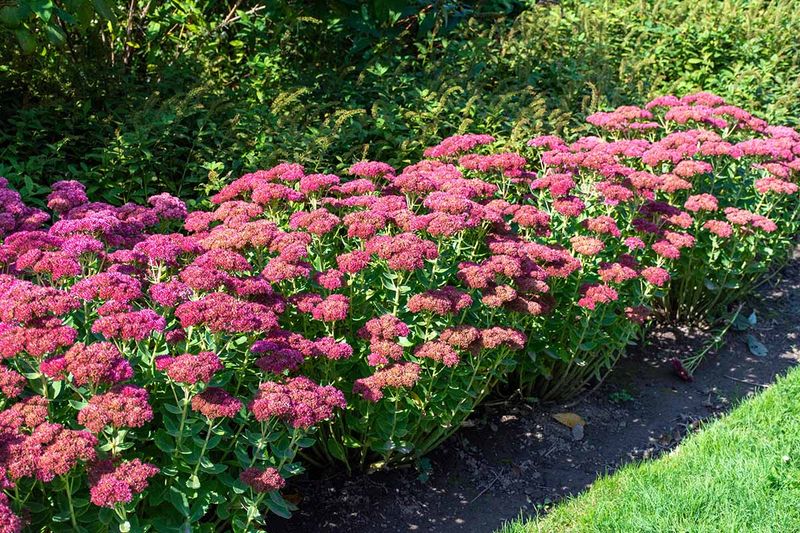
Sedums are the ultimate lazy gardener’s dream plant, and I mean that as the highest compliment. These succulent perennials store water in their thick, fleshy leaves, making them incredibly low-maintenance and tolerant of neglect.
Forget to water them? They’re fine.
Sandy soil? Perfect.
Blazing sun? Bring it on.
The groundcover varieties spread low and wide, forming dense mats that smother weeds and look intentional. Upright types like Autumn Joy grow about two feet tall and produce massive flower heads that start out greenish, turn pink, then deepen to rust-red as fall approaches.
Butterflies mob these flowers like they’re giving away free nectar, which, technically, they are.
Sedums handle Missouri winters without protection and laugh at summer heat waves. They’re one of the few plants that actually prefer poor soil and will get leggy if you fertilize them.
Plant them in full sun for best performance, though they’ll tolerate some afternoon shade. The foliage stays attractive from spring through fall.
Here’s what you don’t have to do: water after establishment, fertilize, stake, spray for pests, or divide frequently. The flowers dry beautifully on the stem, providing winter interest and food for birds.
Cut them back in early spring before new growth starts. That’s it.
That’s the entire maintenance schedule. Some gardeners don’t even bother cutting them back, and the plants still thrive regardless.
6. Russian Sage (Salvia Yangii)
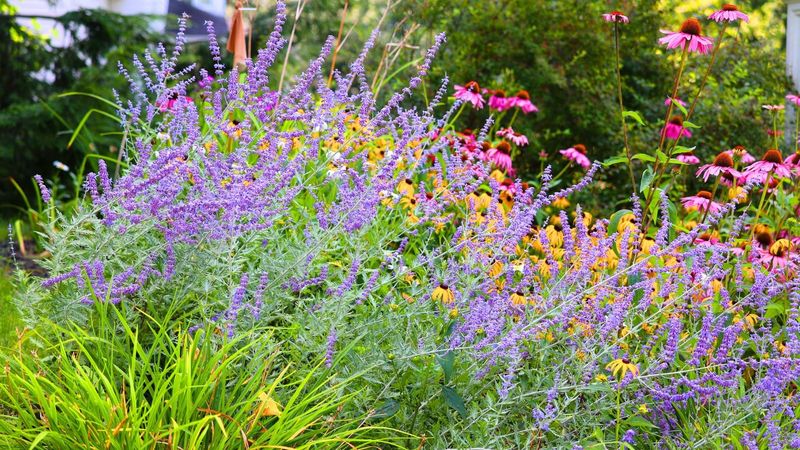
Russian Sage looks delicate and ethereal with its silvery foliage and clouds of lavender-blue flowers, but don’t let that fool you. This plant is tougher than a Missouri thunderstorm.
The aromatic leaves smell wonderful when you brush against them, releasing a pleasant sage-like scent that deer and rabbits find completely unappealing.
From July through September, Russian Sage puts on a show that just keeps going. The tiny tubular flowers cover tall stems that wave gracefully in the breeze, creating a soft, hazy effect in the landscape.
Bees and butterflies visit constantly, while the silvery foliage provides excellent contrast to green-leaved plants nearby.
Full sun and well-drained soil are all Russian Sage asks for, and honestly, it’s not that picky even about those. It tolerates drought, heat, humidity, poor soil, and urban pollution without complaining.
The plant grows three to four feet tall and wide, maintaining an attractive upright habit without staking. Those wispy stems are stronger than they look.
Cut Russian Sage back hard in early spring, leaving just four to six inches of stem above ground. New growth emerges quickly and flowers appear on the current season’s wood.
Some people trim it lightly in summer to encourage bushier growth, but I’ve never bothered and mine looks great. Fertilizer isn’t usually necessary, and pests or diseases are rarely a problem.
Just plant it and enjoy the show for years to come.
7. Little Bluestem (Schizachyrium Scoparium)
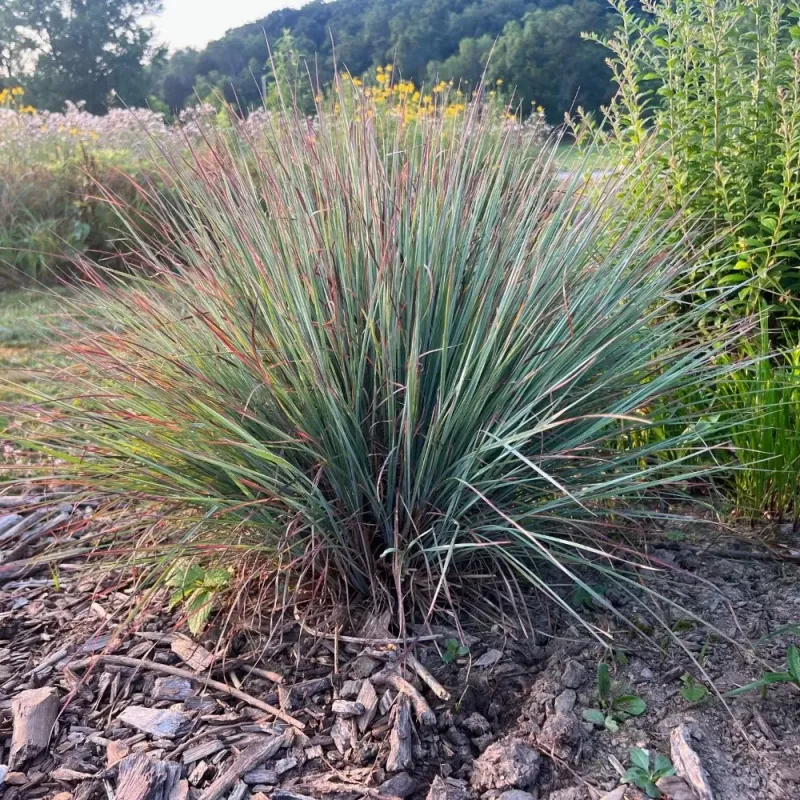
Little Bluestem is a Missouri native that was literally born for our climate. This ornamental grass spent thousands of years evolving on the prairie, so it knows exactly how to handle hot summers, cold winters, and every weird weather event in between.
The blue-green foliage forms neat upright clumps that stay attractive all season.
What really makes Little Bluestem special is its fall transformation. As temperatures drop, the foliage turns incredible shades of orange, copper, burgundy, and purple.
The seed heads catch morning light beautifully, creating a glowing effect that lasts through winter. Those dried stems provide cover for overwintering insects and look architectural when touched with frost or snow.
This grass typically grows two to three feet tall, though it can reach four feet in ideal conditions. It works perfectly in naturalistic plantings, mixed borders, or prairie-style gardens.
Little Bluestem tolerates a wide range of soils, including our heavy clay, and needs no supplemental water once established.
Deer ignore it completely, which is saying something since deer seem to eat everything else. Cut the foliage down to about four inches in late winter or early spring before new growth starts.
That’s the entire maintenance requirement.
Plant it in full sun and it’ll thrive for decades without demanding anything from you except one annual haircut.
8. Switchgrass (Panicum Virgatum)
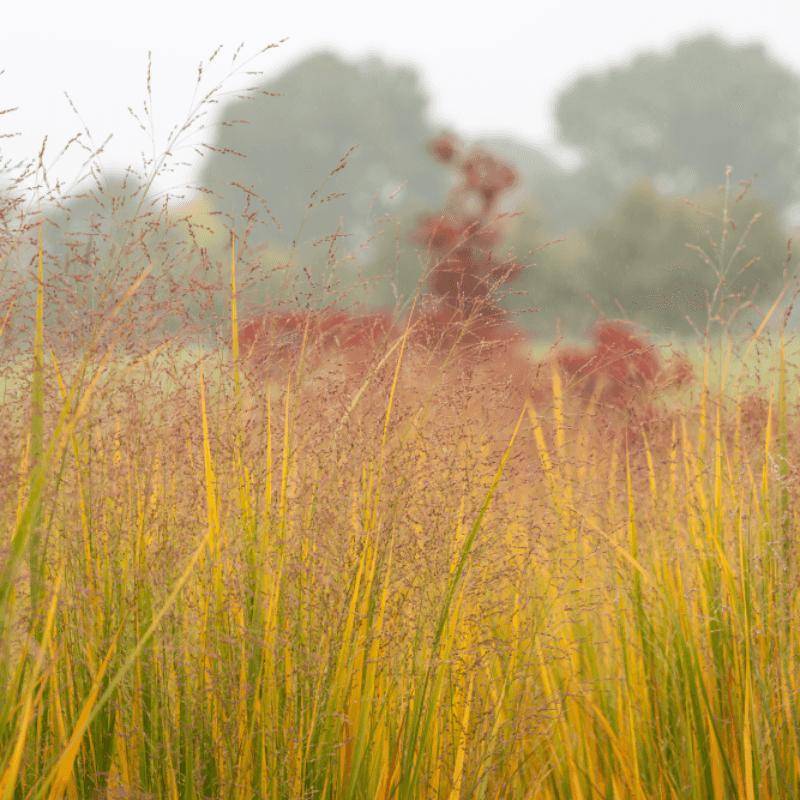
Switchgrass is having a moment in landscaping, and it’s about time people recognized this prairie powerhouse. The upright clumps grow anywhere from three to six feet tall depending on variety, creating vertical interest and movement in the garden.
The airy flower panicles appear in summer, starting reddish or purplish and maturing to golden-tan seed heads that persist through winter.
As another Missouri native, Panicum virgatum handles our schizophrenic weather patterns without batting an eye. It’s adapted to both drought and occasional flooding, making it perfect for those problem spots where nothing else seems happy.
The deep roots help prevent erosion on slopes while improving soil structure over time.
Cultivars offer different foliage colors, from blue-green to burgundy to gold. Some varieties turn brilliant orange, red, or burgundy in fall, providing months of changing color.
The seed heads feed birds throughout winter, and the dense foliage provides shelter for beneficial insects and small wildlife.
Full sun produces the best color and strongest stems, though Switchgrass tolerates light shade. It grows in wet or dry soil, sand or clay, and needs zero fertilizer or irrigation after establishment.
Cut it down in late winter before new growth starts, bundling the stems for the compost pile.
If you want more plants, divide mature clumps in spring. Otherwise, just let it do its thing year after year.
9. Spirea (Spiraea Japonica)
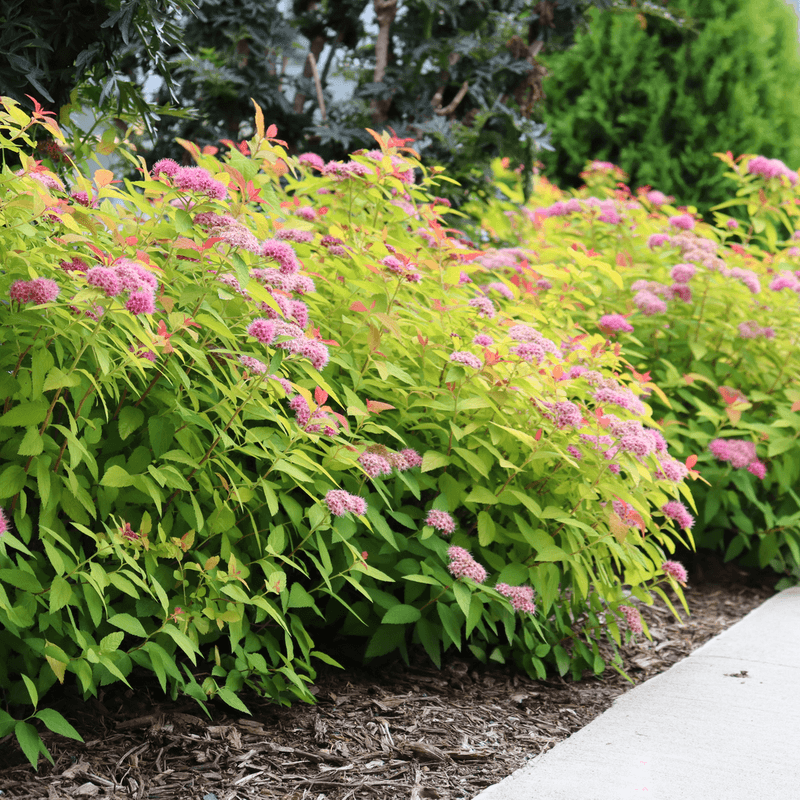
Few shrubs are as reliable as this one. Spring brings masses of tiny flowers in shades of white, pink, or red, depending on the variety, covering the branches in clouds of color.
Some types bloom in spring, others in summer, so you can choose based on when you need the show.
The compact mounding habit fits perfectly in mixed borders, foundation plantings, or as low hedges. Most varieties stay between two and four feet tall, making them manageable without constant pruning.
New foliage often emerges in shades of red, orange, or gold before maturing to green, giving you multiple seasons of interest from one plant.
Spirea tolerates Missouri’s clay soil, summer heat, and winter cold without special treatment. It’s adaptable to various moisture levels, though established plants handle drought well.
Full sun produces the most flowers and best foliage color, but Spirea performs acceptably in partial shade too. Pest and disease problems are practically nonexistent.
Prune spring-blooming types right after flowering finishes, or prune summer bloomers in late winter. Some newer varieties like the Spirea japonica cultivars can be cut back hard in early spring regardless of bloom time.
This encourages compact growth and fresh foliage. Beyond that, Spirea asks for nothing.
No deadheading, no fertilizing, no fussing required. Plant it, prune it once a year, and enjoy reliable color without the maintenance headaches of fussier flowering shrubs.
10. Ninebark (Physocarpus Opulifolius)
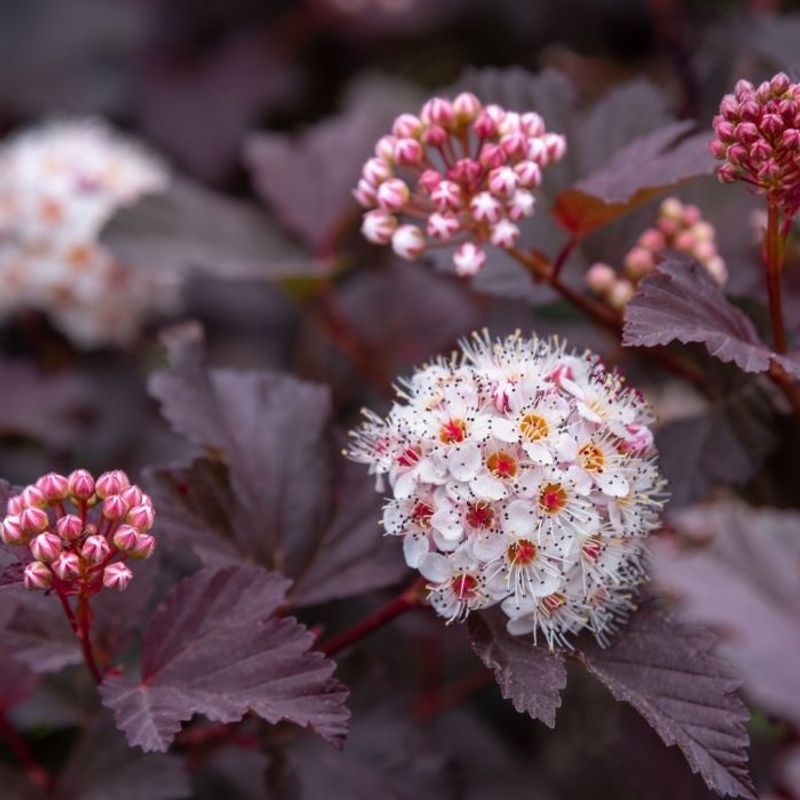
Ninebark gets its quirky name from the bark’s habit of peeling in multiple layers, revealing various shades underneath. The exfoliating bark creates winter interest that most shrubs can’t match.
White or pink flower clusters appear in spring, followed by interesting seed pods that turn reddish as they mature and persist into winter.
Modern cultivars offer spectacular foliage colors that last all season. Varieties with burgundy, purple, gold, or copper leaves add drama without flowers even needing to appear.
The color stays strong from spring through fall, providing consistent visual interest. Native to North America including Missouri, Ninebark is naturally adapted to our growing conditions and local wildlife.
This shrub typically grows five to eight feet tall and wide, though compact varieties stay smaller. It handles full sun to part shade, wet or dry soil, and Missouri’s temperature swings with equal ease.
Clay soil doesn’t bother it at all. Birds appreciate the cover and winter seed pods, while deer usually leave it alone.
Prune Ninebark after flowering if you want to control size or shape, but honestly, many gardeners skip pruning altogether and the plants still look great. Remove damaged wood in spring and you’re done.
Fertilizer isn’t usually needed, and regular watering after establishment is minimal, with few pest or disease concerns. Once planted, ninebark is a true install-and-forget shrub that still looks intentional and well-maintained with almost no effort.