Michigan Gardeners, Follow These 8 Steps To Propagate Geraniums For More Blooms Next Season
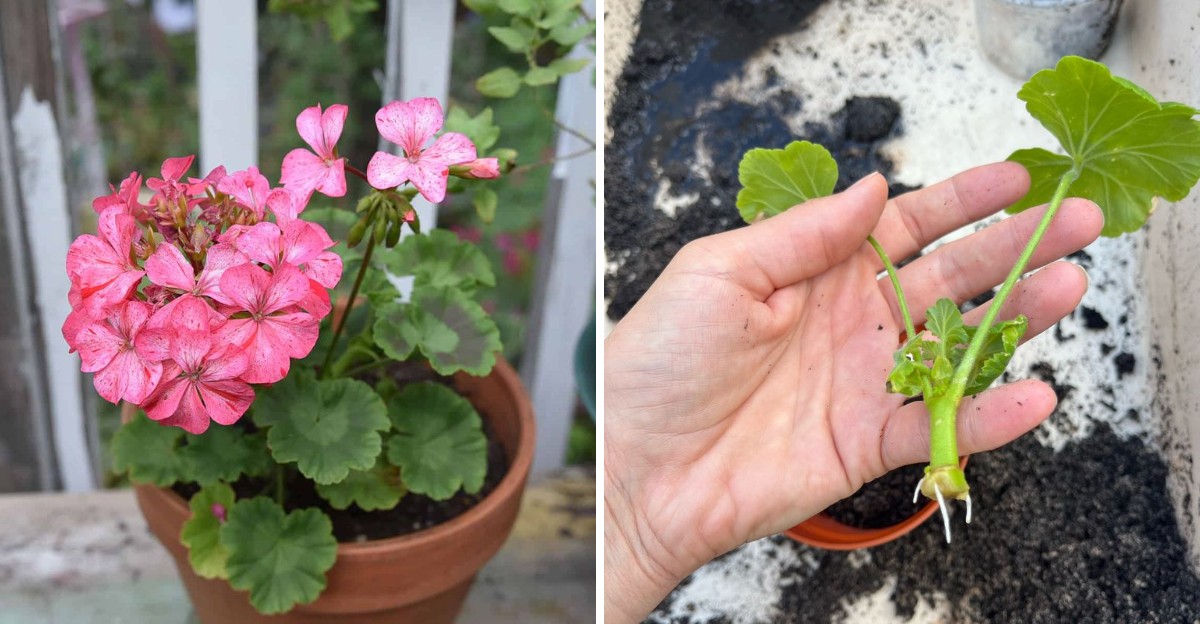
Those porch geraniums look like they could party all year, but Michigan frost has other plans. The good news is that one of the cheapest tricks in the garden happens right at your kitchen counter.
A few snips from healthy shoots, a pot of light soil, and a bright window can turn one summer favorite into several new plants for spring. No special gear, no green thumb required, just a sharp blade and some patience.
Consider it a very polite clone army. The catch is timing, because geraniums are frost-tender and cuttings work best when taken before the first frost.
If frost has already nipped your plants, look for firm green shoots, since those can still work. The eight steps below walk you through it, and your spring window boxes will thank you.
1. Pick The Right Time Before Frost Arrives
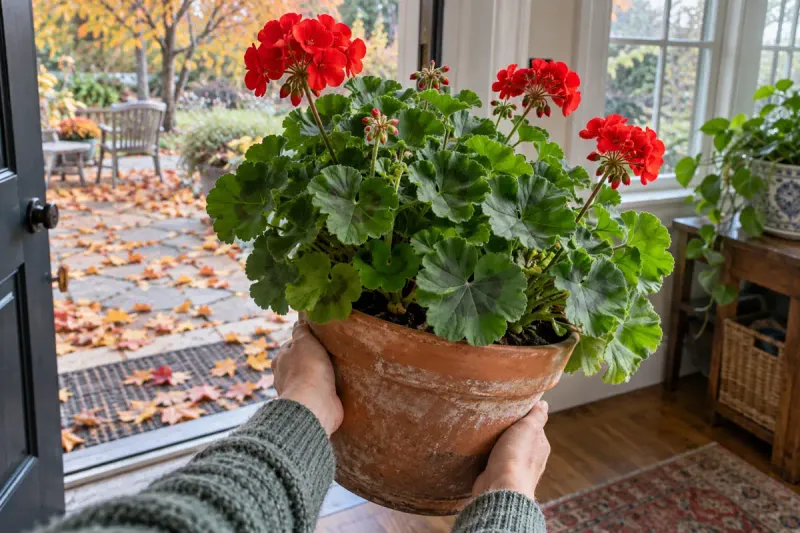
Timing can make or break your cuttings, so watch the calendar closely. In most of Michigan, late August through mid-September is the sweet spot.
Plants are still strong and leafy then, but cool nights are starting to arrive. Once frost touches the leaves, the stems turn soft and mushy, and they root poorly.
Check your local frost date online or ask at a nearby garden center. Northern towns like Marquette often see frost weeks earlier than Detroit or Kalamazoo.
Plan to take cuttings at least two weeks before that first chilly night. A little extra time gives you room for mistakes and second tries.
Morning is the best part of the day for snipping. Stems are full of water after the cool night, so they stay crisp and firm.
Skip cutting right after a heavy rain if you can. Very wet plants can carry extra moisture that invites mold later on.
Look at your geraniums with a careful eye before you start. Pick plants that bloomed well all summer and show no yellow spots or sticky bugs.
Healthy parents tend to produce healthy babies, so start with your best performers. Mark them with a ribbon or plant tag a few days ahead.
That small step saves guesswork later. Your future flower show depends on choosing wisely today.
2. Gather Simple Supplies Every Gardener Already Has
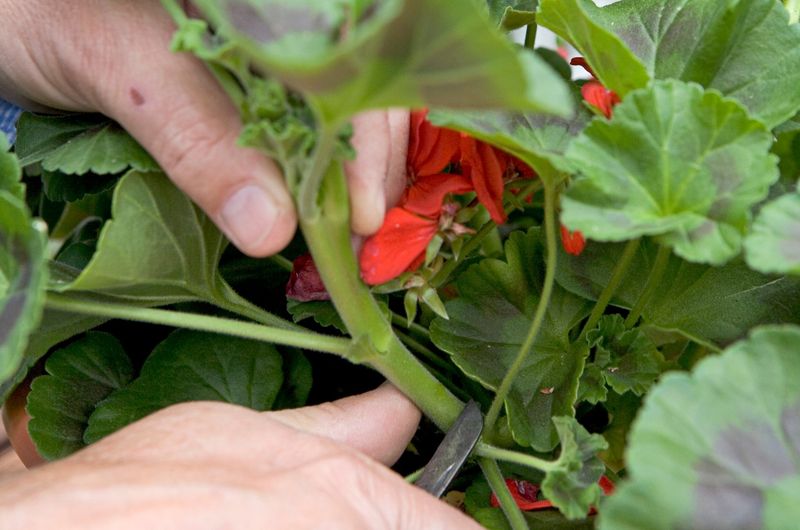
Good news for your wallet: you probably own most of what you need. A quick hunt through the garage or kitchen drawer usually does the job.
Start with a sharp knife or clean pruning shears. Dull blades crush stems, which makes rooting harder and slower.
Wipe the blade with rubbing alcohol before each plant. That simple wipe helps stop germs from spreading between pots.
Next, grab small containers about three or four inches wide. Old yogurt cups work great if you poke holes in the bottom for drainage.
Seed starting mix or a blend of perlite and peat makes a light, fluffy home for new roots. Regular garden soil from your Michigan yard is too heavy and may hold pests.
Rooting hormone powder is optional. Geraniums often root fine without it, and several sources say it is not necessary.
Some growers use a light dusting to improve their odds, especially when more than one node goes below the surface, so the choice is yours.
You will also want plant labels and a marker. Labels matter more than you think, especially if you grow several colors.
Skip the plastic bag or storage tote. Many cuttings like a mini greenhouse, but geraniums are semi-succulent and prefer drier conditions, and most sources say a sealed cover invites rot.
Set everything on a table near a bright window before you begin. Having supplies in one spot keeps the job quick, tidy, and fun.
3. Choose Strong Stems From Your Garden Plants
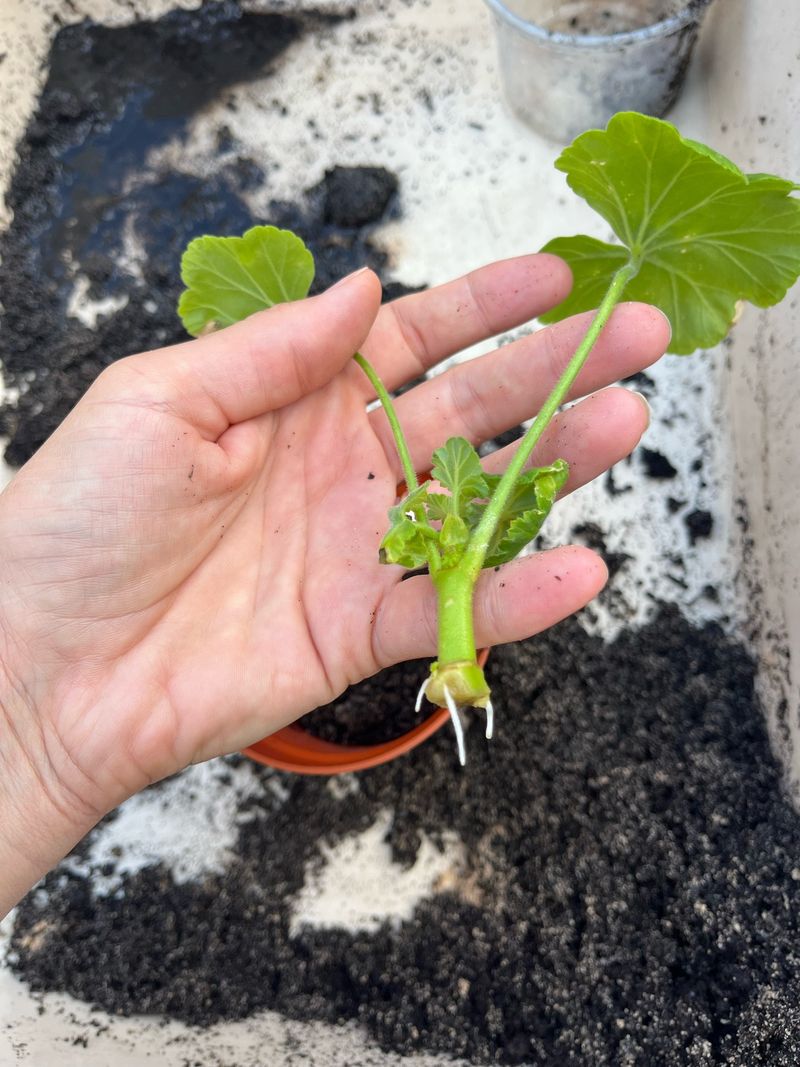
Not every stem is a winner, and picking well is half the battle. Think of it like choosing apples at the orchard, where you want firm and fresh.
Look for green, bendy stems rather than woody brown ones. Softer, newer growth is the best choice, since older woody stems tend to root more slowly.
Each cutting should be about four to six inches long. Roots form at the nodes, the little bumps where leaves grow, so plan to cut just below one.
Short stems with tiny gaps between leaves are usually the strongest.
Choose stems without flowers or buds whenever possible. A blooming stem spends its energy on petals instead of roots.
If every stem has blooms, just pinch the flower clusters off.
Steer clear of stems with brown spots, holes, or curled leaves. Those signs can point to disease or pests that would travel indoors with you.
Take a few more cuttings than you think you need. Even skilled growers lose a couple each year, and extras make wonderful gifts for neighbors.
Place fresh cuttings on a damp paper towel while you work. Keeping them moist prevents wilting before they reach their new pots.
4. Trim And Prep Cuttings
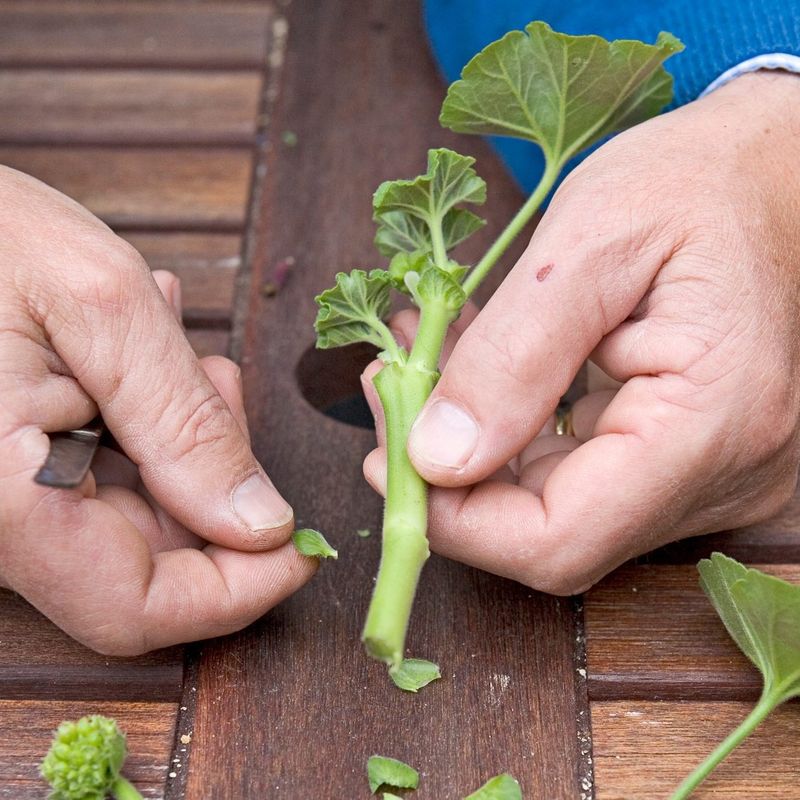
Once your stems are cut, a little grooming goes a long way. Think of it as a quick trim before the big move.
Make a clean, straight cut just below a node at the bottom. That spot is where roots form most readily.
Strip off the lower leaves, keeping only two or three at the top. Leaves buried in soil tend to rot and invite trouble.
If the top leaves are huge, snip them in half. Smaller leaves lose less water while the cutting has no roots to drink with.
Next comes a step that gardeners do not agree on. Many let cuttings sit out for a few hours or overnight so the cut ends dry before planting, and Missouri Botanical Garden suggests setting them out overnight.
Others plant right away, and one respected horticulture writer says drying can slow rooting and raise the risk of rot. Both approaches can produce roots.
If you try drying, keep it short, since a shriveled cutting struggles.
Geraniums have semi-succulent stems that hold water, so they dislike staying wet. That is why a clean cut and a well-draining mix matter so much.
If you use rooting hormone, dip the ends and tap off the extra powder. A light coating is plenty.
Geraniums, more accurately called Pelargoniums, came from South Africa and reached Europe in the early 1600s. Today they brighten window boxes in Grand Rapids and Traverse City.
With prep finished, your cuttings are ready for planting. The careful work now pays off with stronger roots soon.
5. Plant Cuttings In Light Soil For Indoor Growing
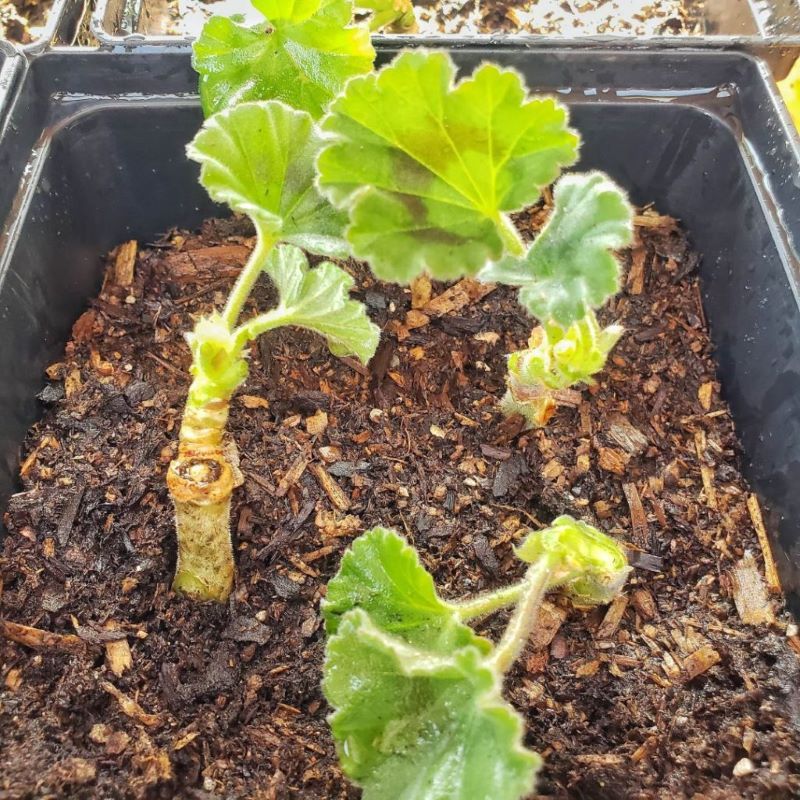
Ready, set, plant! Planting is the moment your cuttings start a whole new life.
Fill each pot with moist seed starting mix. Squeeze a handful, and it should feel like a wrung-out sponge, not dripping wet.
Use a pencil to poke a hole about two inches deep. Making a hole first also keeps any rooting powder from rubbing off.
Slide the cutting in so at least one or two nodes sit below the surface. Press the soil gently around the stem so it stands up straight.
One cutting per small pot works well, though a larger pot can hold three or four around the edge. Space them so the leaves do not touch.
Water lightly right after planting to settle the mix. Then let the top layer dry a bit before watering again.
Too much water causes more problems than too little. Geraniums like to stay on the dry side, which surprises many new growers.
Skip the plastic cover. Unlike many cuttings, geraniums dislike sticky, humid conditions that lead to mold and rot, so let the pots breathe in open air.
Label every pot with the color and date. Months later, during a gray Michigan February, you will be glad you know which pot holds that bright coral beauty.
6. Give Cuttings Bright Light During Short Days
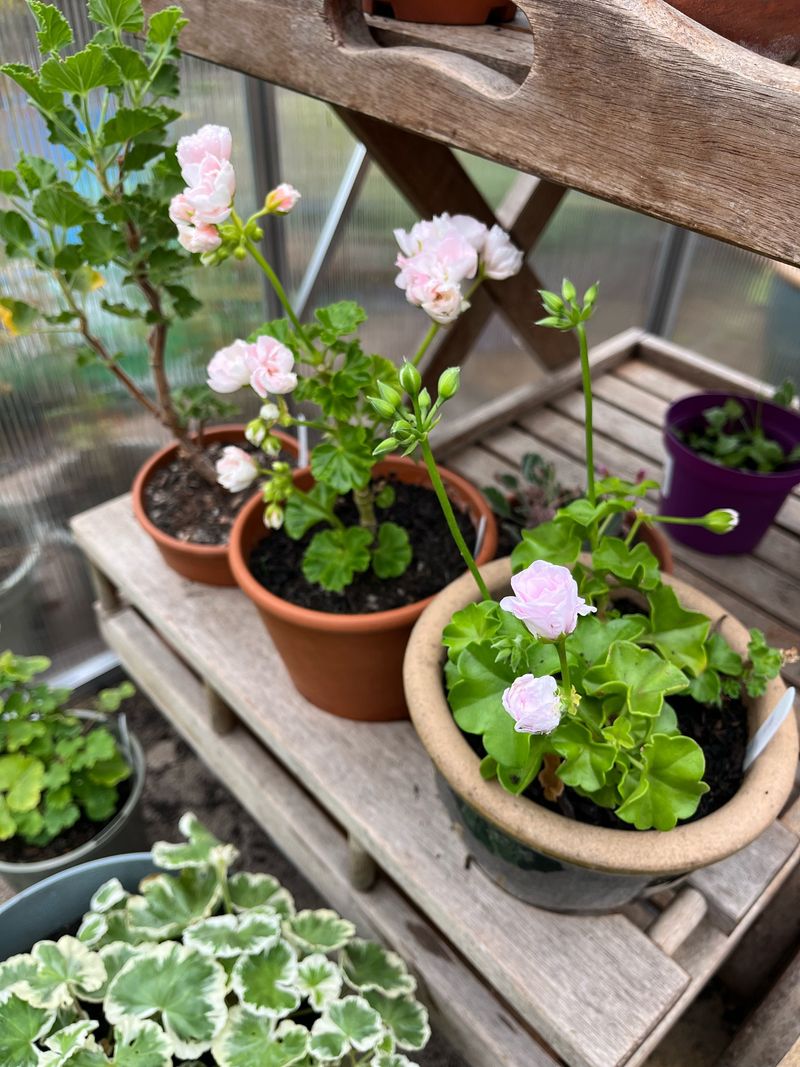
Sunlight gets scarce once winter rolls in. Some December days in Michigan offer barely nine hours of daylight, and clouds steal even more.
Young cuttings need plenty of bright light to grow strong. Without it, stems stretch tall and skinny as they reach for the sun.
A south-facing window is your best natural choice. East or west windows can work, but growth may be slower.
Turn the pots a quarter turn every few days. Rotating keeps plants growing straight instead of leaning toward the glass.
Many growers add an inexpensive LED grow light for extra help. Hang it about six to twelve inches above the leaves and use an outlet timer so you do not have to remember to switch it on and off.
Aim for room temperatures around 65 to 75 degrees while roots form. Cold drafts near frosty windows can chill tender leaves, so slide pots back on bitter nights.
Rooting takes patience. Roots usually form within about three to eight weeks, and cuttings in dim winter light often lean toward the longer end.
New leaves sprouting at the top are a good sign, and so is a white root peeking out of a drainage hole. If you check by tugging, go very gently, since young roots snap off easily.
That fresh green growth tells you the plan is working.
7. Pinch And Pot Up Geraniums Through Winter
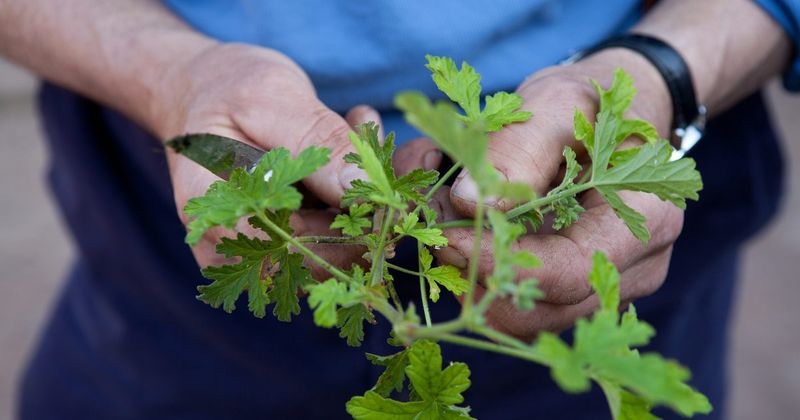
Patience starts to feel rewarding once roots have formed. Your little cuttings are now ready for some shaping.
Pinching is the secret behind bushy, flower-packed plants. Once a cutting is rooted and potted up, use your fingers to snap off the top half inch of the growing tip.
Some growers wait about a week after potting up, and others wait until stems reach about six inches tall.
It might feel strange to remove healthy growth. However, every pinch pushes the plant to send out new side branches.
More branches mean more spots for flower clusters later. Pinching a couple more times in early spring helps plants branch even more.
When roots start peeking out of the drainage holes, move plants into bigger pots. A four-inch pot is a good next step.
Use regular potting mix, and water well after repotting.
Go easy on water through winter. Let the top inch of soil dry before watering again, since plants slow down in short days.
Hold off on fertilizer during the darkest weeks. Once new growth picks up in late winter or early spring, start feeding lightly every two weeks with a balanced liquid fertilizer mixed at half strength, because young roots are sensitive.
Keep plants in their brightest spot so stems stay compact instead of leggy. Many Michigan growers keep a small notebook to track watering, pinching, and feeding dates.
By March, you should see thick, leafy little plants ready to toughen up for the garden.
8. Harden Off And Plant Out After The Last Frost
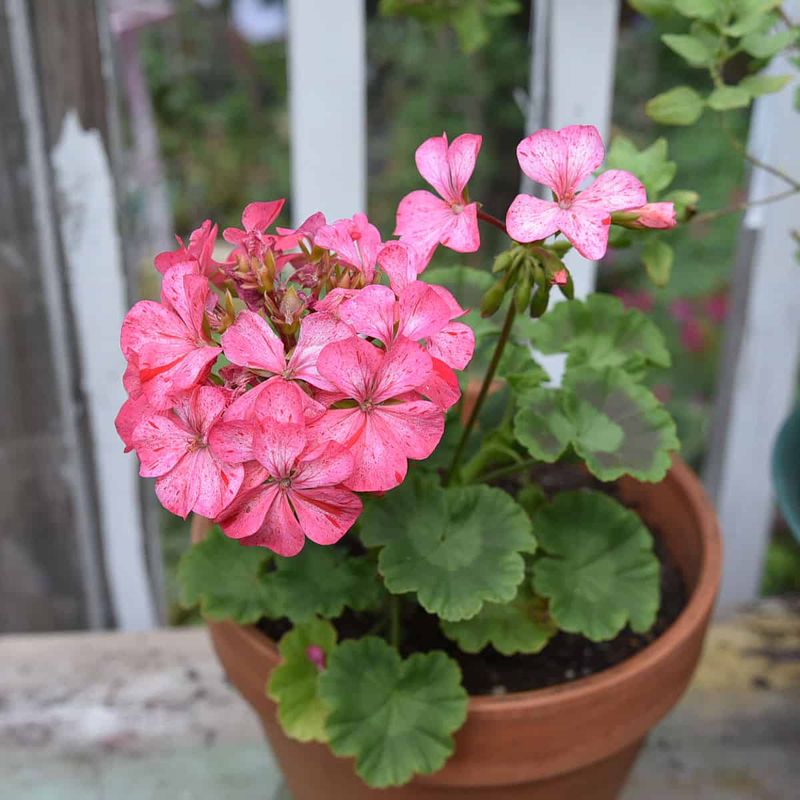
Spring fever hits hard after a long winter, but a little restraint helps here. Rushing plants outside too early can undo months of care.
Across most of Michigan, the last frost usually passes by mid to late May. Up north and in the Upper Peninsula, early June is often safer.
Before planting, your geraniums need time to toughen up. Gardeners call it hardening off, and it takes about a week.
Set the pots outside in a shady, sheltered spot for an hour or two. Each day, add more time and a bit more sun.
Bring them back in if nights dip below 45 degrees. Wind and strong sun can shock plants raised indoors, so go slowly.
After a week, they are ready for beds, window boxes, or containers. Pick a spot with at least six hours of sun for the best blooms.
Remove faded flowers through summer to keep new ones coming. Deadheading tells the plant to keep blooming instead of making seeds.
The best part comes in August when you can start the cycle again. One summer plant can become a whole garden full of color for years to come.