8 Michigan Wildflowers You’ll See Blooming In May
As May rolls in, Michigan’s landscapes burst into color with a variety of wildflowers that are a true sight to behold. From woodlands to meadows, the state comes alive with delicate blooms that attract pollinators and brighten the scenery.
Whether you’re hiking through the forest or strolling along the shore, these wildflowers offer a glimpse of Michigan’s natural beauty at its best.
Some of these plants are rare treasures, while others are familiar favorites, each adding its own charm to the spring landscape.
These wildflowers not only signal the arrival of warmer weather but also play vital roles in supporting local wildlife.
If you’re eager to witness Michigan’s springtime transformation, keep an eye out for these eight wildflowers blooming in May, each one more stunning than the last.
1. Trillium
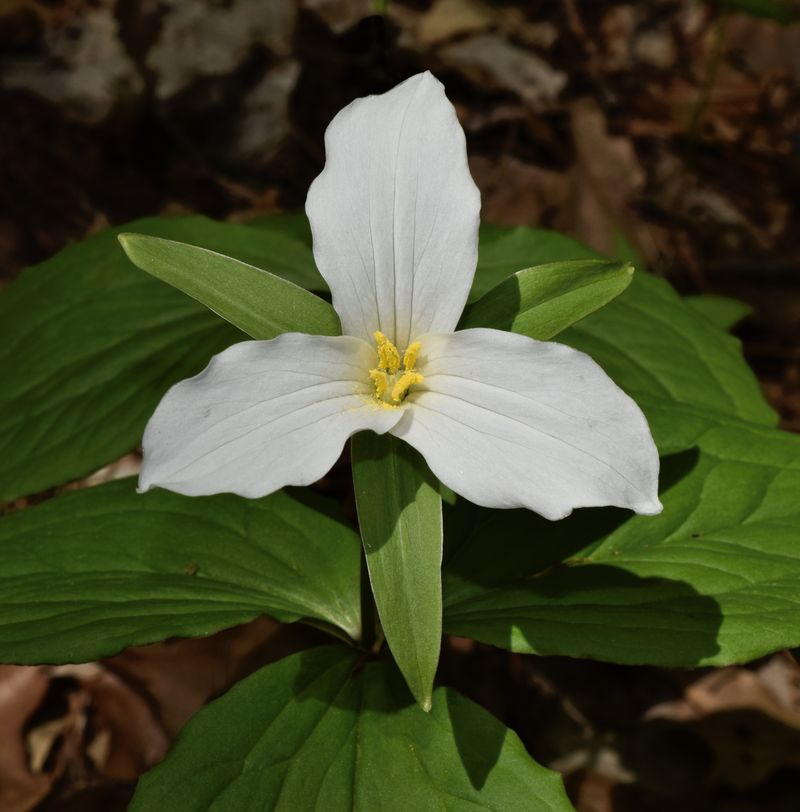
Few wildflowers stop hikers in their tracks the way trillium does. Spotted across Michigan’s forests every May, this three-petaled beauty is one of the most recognized native wildflowers in the entire state.
Its bold white blooms seem almost too perfect against the brown leaf litter of the forest floor.
Trillium thrives in rich, moist soil beneath a canopy of hardwood trees. You will find it growing in both the Lower and Upper Peninsula, often in large colonies that carpet entire sections of woodland.
It prefers partial to full shade, which makes it perfectly suited to Michigan’s dense beech-maple forests.
Bloom time typically peaks in early to mid-May, making it one of the signature flowers of Michigan’s spring season. The plant takes advantage of the light that filters through the trees before the canopy fully fills in.
That window of sunlight is short, and trillium has learned to make the most of it over thousands of years.
One important thing every nature lover should know: trillium should never be picked or dug up from natural areas. Removing the flower or leaves can seriously weaken the plant, and it may take years to recover.
If you spot one on a trail, enjoy the view, take a photo, and leave it exactly where it stands.
2. Wild Geranium
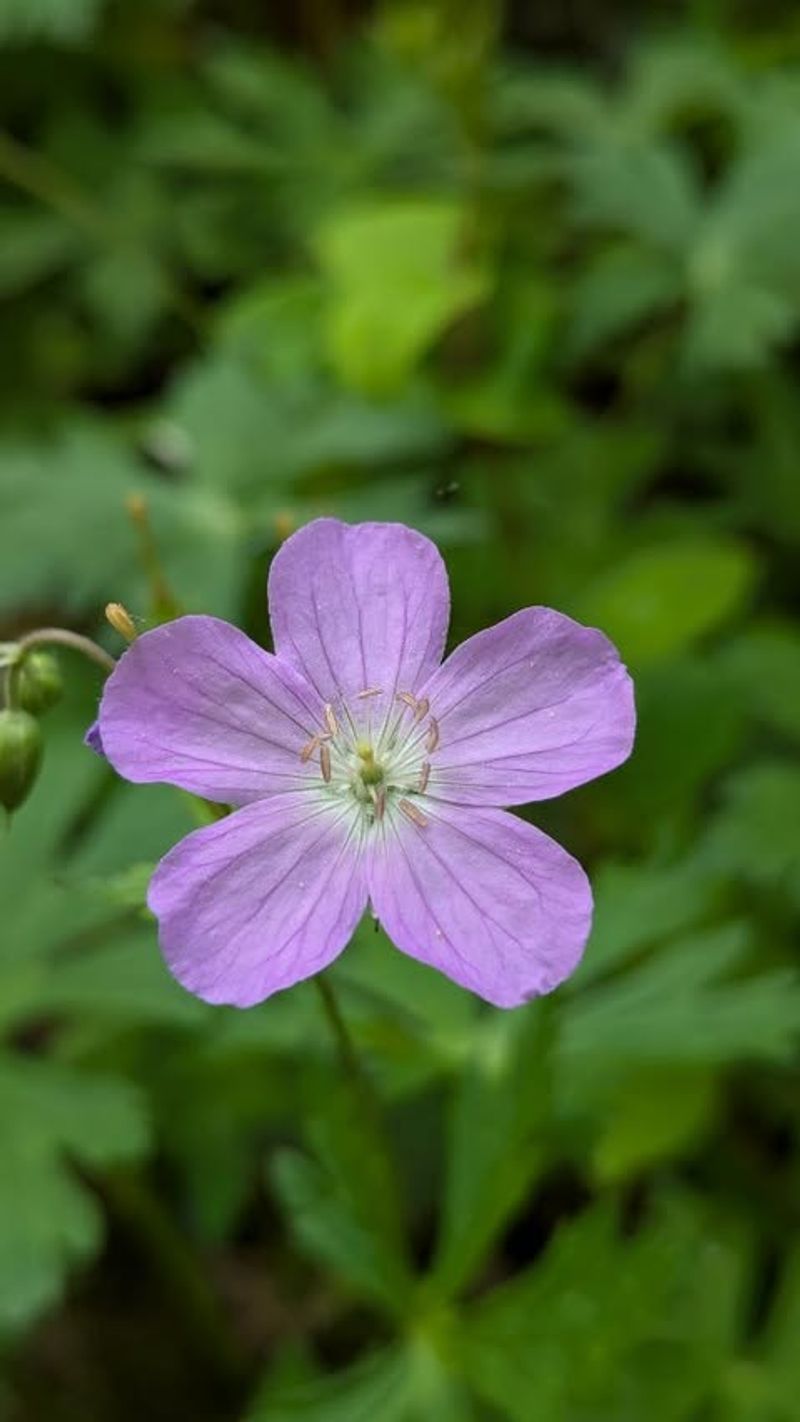
Walk along almost any shaded trail in Michigan during May and you will likely cross paths with wild geranium. Its soft pink to lavender flowers are cheerful and understated at the same time, adding a gentle splash of color to woodland edges across the state.
It is one of those plants that rewards the people who pay attention.
Wild geranium loves the transition zones between open fields and forested areas. It does particularly well in light to moderate shade, and it adapts to a range of soil conditions as long as moisture is reasonably consistent.
Michigan’s cool, wet spring weather is practically tailor-made for this plant to thrive.
Beyond its good looks, wild geranium plays a real role in supporting early-season pollinators. Bees and butterflies visit its blooms when few other flowers are available, making it an important food source during a critical window in spring.
Your Michigan Garden Changes Every Week. Your Plan Should Too.
Gardening in Michigan changes quickly throughout the season. Every Friday you’ll receive a simple weekly plan showing exactly what to plant, prune, fertilize, harvest, and protect so you never miss the right timing.
That ecological value makes it more than just a pretty face on the forest floor.
Gardeners across Michigan have discovered that wild geranium is surprisingly easy to grow in naturalized settings. It spreads gradually and fills in shaded spots where many other plants struggle.
If you want to attract pollinators and add native beauty to a shady corner of your yard, wild geranium is a smart and rewarding choice worth considering.
3. Virginia Bluebells
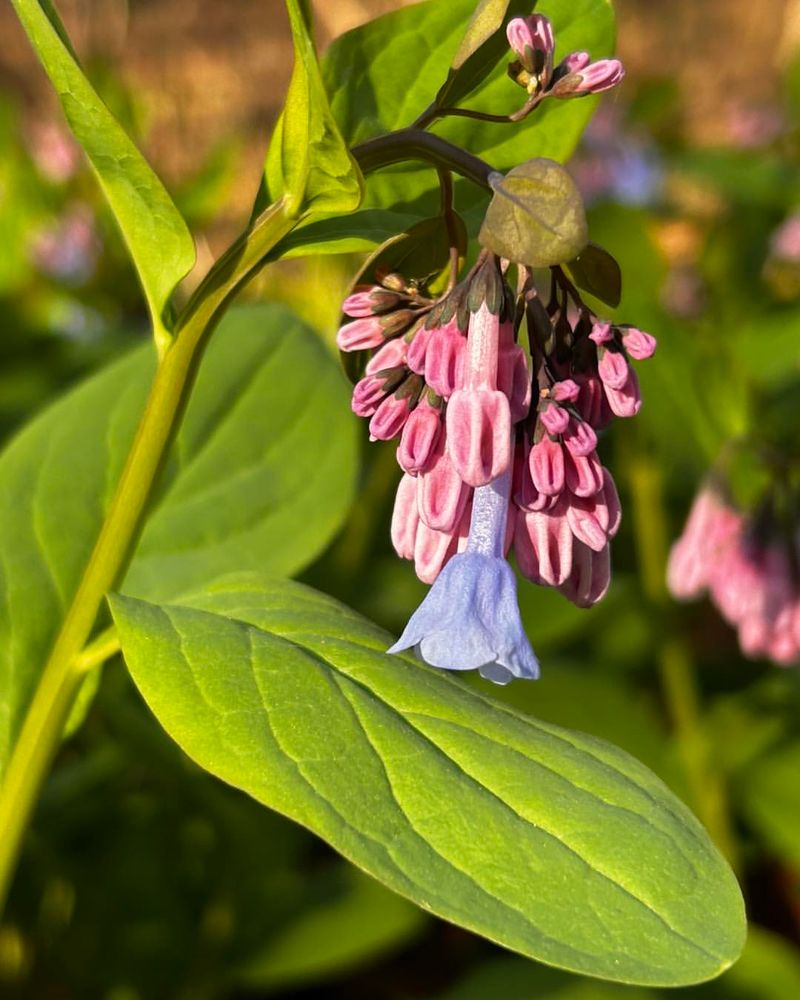
Virginia bluebells are the kind of wildflower that makes people stop and wonder if what they are seeing is real. The blooms shift from soft pink buds to brilliant sky blue as they open, creating a two-toned display that feels almost magical.
In Michigan, they tend to show up in full force during the first half of May.
These plants are most at home in moist, low-lying areas like floodplains, stream banks, and rich bottomland forests.
Michigan has plenty of these habitats, which is why Virginia bluebells can form breathtaking drifts of color along river corridors and in shaded ravines throughout the state.
The effect is genuinely stunning when conditions are right.
One of the clever things about Virginia bluebells is how they time their growth. They emerge early in spring, bloom quickly, and then go dormant before summer heat arrives.
That strategy lets them take full advantage of the bright sunlight that reaches the forest floor before the tree canopy closes in overhead.
Because they go dormant by early summer, it helps to plant them alongside other native perennials that fill in the space later in the season. Ferns and hostas work well as companions in shaded Michigan gardens.
Seeing a mass of Virginia bluebells in bloom along a Michigan riverbank in May is one of those natural experiences you genuinely do not forget.
4. Jack-In-The-Pulpit
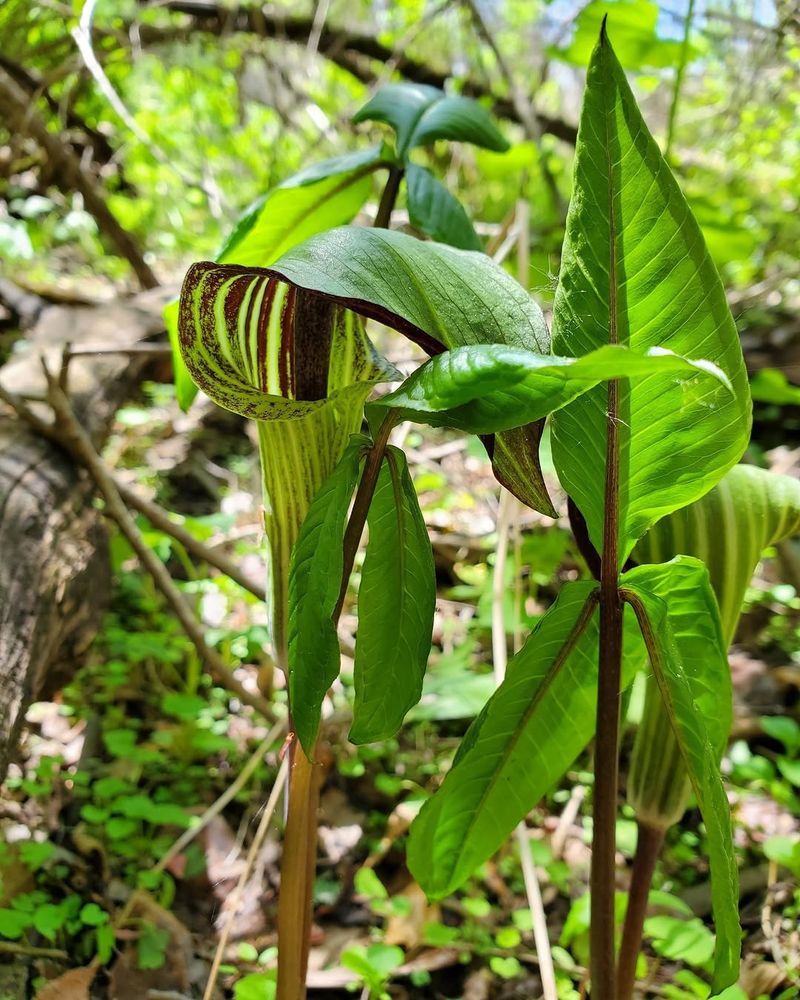
Jack-in-the-pulpit might be the most theatrical wildflower blooming in Michigan’s woodlands every May.
Its striped, hooded structure looks like something straight out of a storybook, with the spadix standing upright inside the curved spathe like a tiny preacher at a pulpit.
Once you see it, you never mistake it for anything else.
This plant is a true woodland specialist. It needs deep shade, consistently moist soil, and the kind of rich, organic ground that only old forests tend to provide.
Michigan’s mature hardwood forests in both peninsulas offer exactly those conditions, and Jack-in-the-pulpit takes full advantage of them each spring.
The flower structure is fascinating from a botanical standpoint. A single plant can actually switch between producing male and female flowers depending on how much energy it has stored in its underground corm.
Larger, well-fed plants tend to produce female flowers, while smaller ones produce male flowers. That kind of biological flexibility is rare and genuinely interesting.
After blooming, the plant produces a cluster of bright red berries by late summer that are eye-catching against the green forest understory. Wildlife, including thrushes and other birds, feed on those berries and help spread the seeds.
If you are exploring a shaded, wet woodland in Michigan during May, keep your eyes low and your pace slow because Jack-in-the-pulpit rewards the patient observer every single time.
5. Columbine
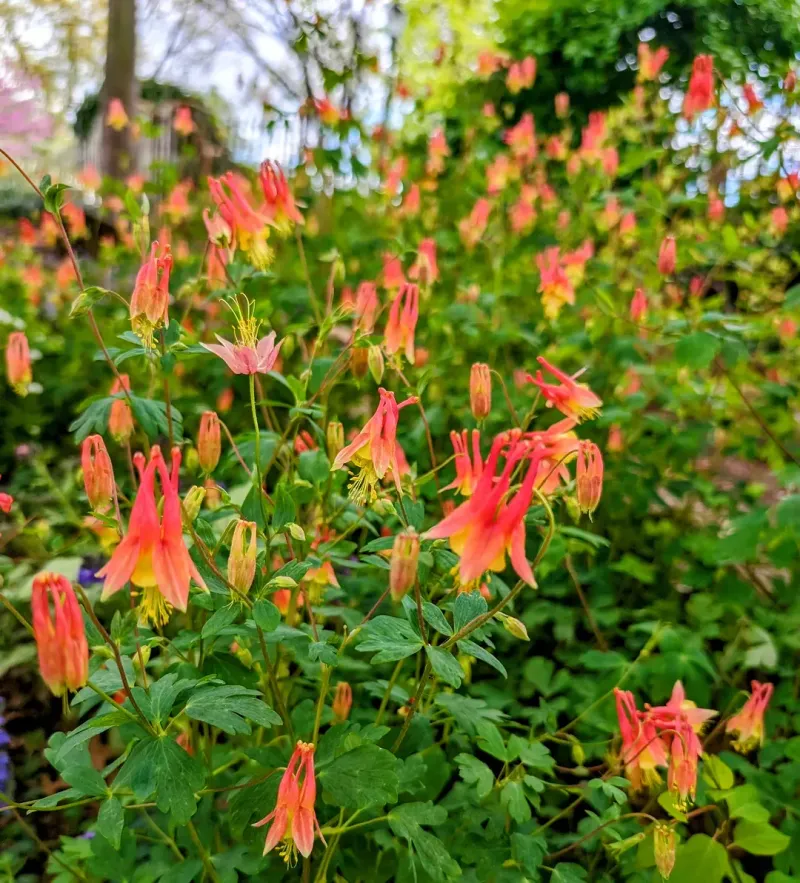
Native columbine brings a burst of red and yellow to Michigan’s spring landscape in a way that feels bold and wild at the same time.
The flowers dangle on slender stems with graceful, nodding heads, and their spurred petals have a shape that looks almost engineered for the long bill of a hummingbird.
That is not a coincidence at all.
Wild columbine, known scientifically as Aquilegia canadensis, blooms reliably across Michigan every May. It grows naturally on rocky outcrops, open woodland slopes, and well-drained forest edges where sunlight filters through the canopy.
Unlike many spring wildflowers that demand constant moisture, columbine actually prefers soil that drains well and does not stay soggy.
Hummingbirds returning to Michigan in spring make a beeline for columbine blooms.
The tubular, nectar-rich flowers are perfectly shaped for these birds, and the timing of the bloom lines up almost exactly with when ruby-throated hummingbirds arrive in the state each year.
That relationship between plant and bird has developed over a very long time.
Columbine is also a fantastic option for Michigan gardeners who want to add native beauty without a lot of fuss. It self-seeds readily, spreads into new spots on its own, and tolerates a range of growing conditions from partial shade to nearly full sun.
Few native plants offer that combination of visual drama and low-maintenance performance in a Michigan spring garden.
6. Foamflower
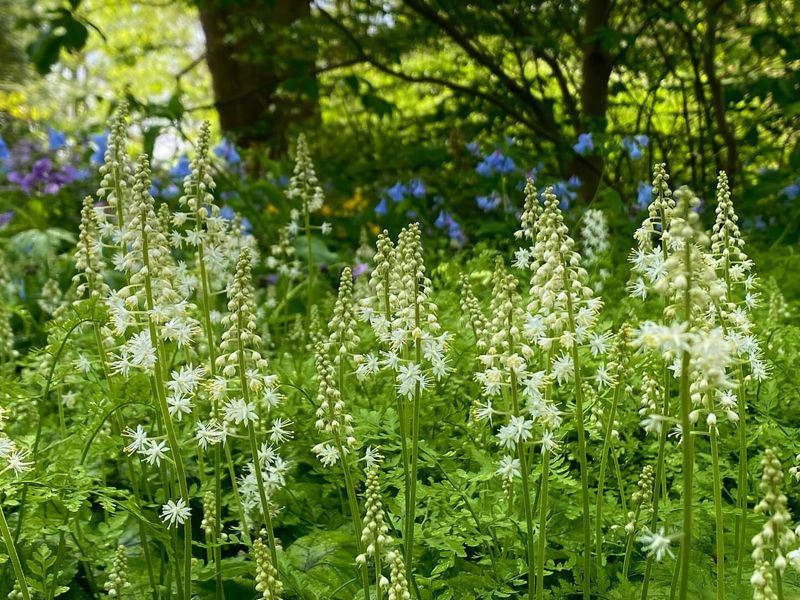
Foamflower earns its name the moment you see it in bloom. The slender white flower spikes rise above a mat of heart-shaped leaves and give the plant a frothy, cloud-like appearance that is soft and genuinely lovely.
In Michigan’s shaded woodlands during May, it often forms wide, low-growing patches that cover the ground like a lacy green-and-white blanket.
This plant is a natural fit for the forest understory. Foamflower thrives in full to partial shade with consistently moist, humus-rich soil, and Michigan’s northern hardwood forests provide those conditions in abundance.
It spreads slowly by runners, gradually filling in bare spots on the woodland floor without becoming aggressive or overwhelming neighboring plants.
Pollinators, especially small native bees, visit foamflower blooms during May when nectar sources are still building up across the landscape. That makes it a useful plant for supporting early-season insect populations in Michigan, not just a decorative one.
Its ecological contribution is quiet but consistent and worth appreciating.
For Michigan gardeners working with shady spots under trees or along the north side of a house, foamflower is one of the most reliable native groundcovers available.
It pairs beautifully with ferns, wild ginger, and trillium in naturalized plantings.
The foliage often develops attractive reddish markings in fall, so it earns its place in the garden long after the May blooms have faded away.
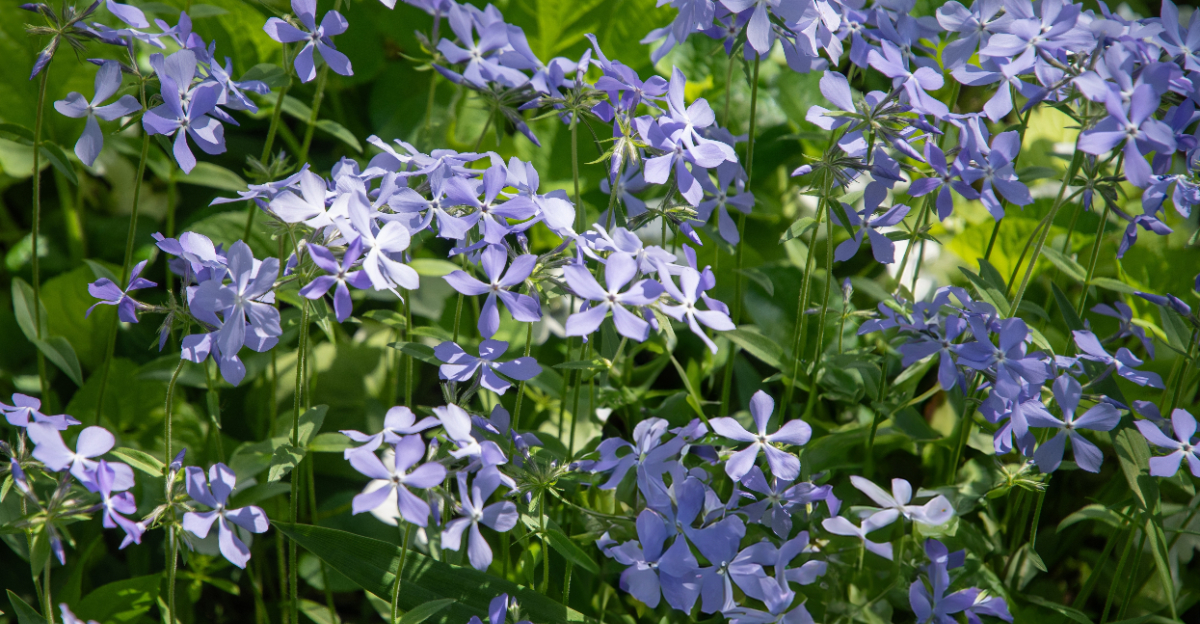
7. Blue Phlox
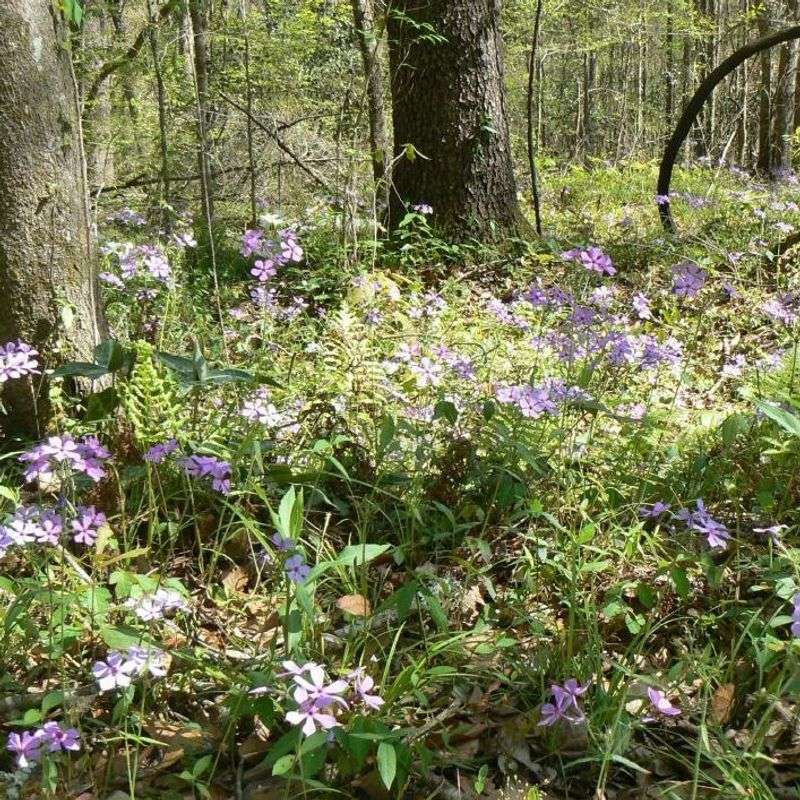
Blue phlox is one of those wildflowers that transforms a shaded Michigan woodland into something that looks like a painting.
The clusters of soft blue to lavender flowers spread across the ground in loose, cheerful drifts, and the fragrance they carry on a warm May afternoon is genuinely hard to walk past without stopping to appreciate it.
Woodland phlox, the botanical name being Phlox divaricata, grows naturally across a wide range of Michigan habitats. It settles comfortably along forest edges, in open woodlands, and on the shaded banks of streams.
Partial shade suits it best, and it handles the cool, moist conditions of Michigan’s spring season extremely well compared to many other flowering plants.
Butterflies and long-tongued bees are regular visitors to blue phlox during May. The flat flower clusters provide an easy landing platform for pollinators, and the nectar is accessible to a wide variety of insects.
In a season when many pollinators are just getting started, blue phlox provides a reliable and generous food source across Michigan’s landscapes.
As a groundcover in native plant gardens, blue phlox fills in shaded areas beautifully without requiring much attention. It spreads gradually and blends well with wild geranium, Virginia bluebells, and ferns in layered plantings.
Once established in a Michigan garden, it returns faithfully every May, spreading a little wider each year and making the whole space feel more alive and naturally wild.
8. Large-Flowered Bellwort
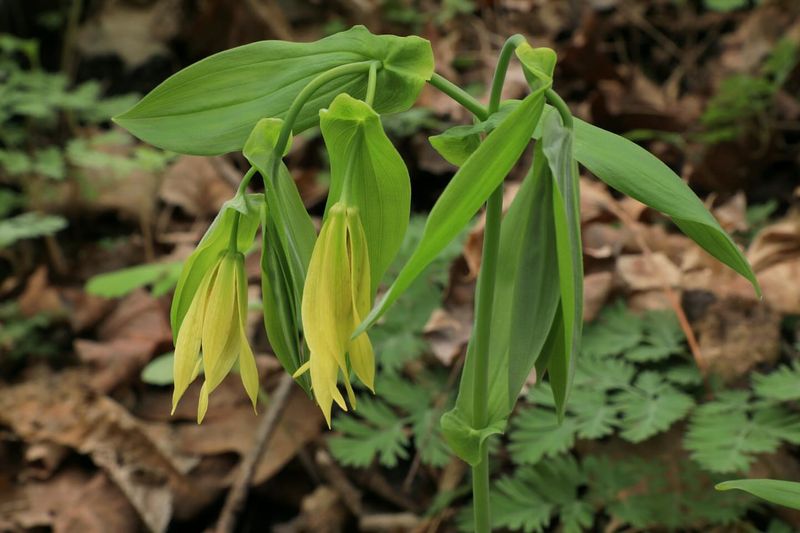
Large-flowered bellwort is the kind of wildflower that many Michigan hikers walk right past without ever noticing.
Its pale yellow, bell-shaped flowers hang downward beneath arching leaves in a modest, almost shy way that does not shout for attention.
But stop and look closely, and you will find a plant with real quiet charm that belongs entirely to the forest.
Uvularia grandiflora, as it is formally known, blooms in Michigan’s rich hardwood forests during May. It favors deep, fertile soil with good moisture retention, and it grows best in the partial to full shade that mature forest canopies provide.
Both the Upper and Lower Peninsula offer suitable habitat, and attentive hikers can spot it on the forest floor alongside trillium and Jack-in-the-pulpit.
The nodding flower habit is not just aesthetically interesting. It likely serves a practical purpose by protecting the pollen and nectar from rain, which can be frequent in Michigan during early May.
Bumblebees are the primary pollinators and are strong enough to push into the hanging blooms to access the rewards inside.
Bellwort fits naturally into native plant gardens designed to mimic Michigan’s woodland floor. It grows in clumps that expand slowly over time, adding vertical interest and a soft golden color to shaded spaces in spring.
Paired with ferns and foamflower, it creates a layered, naturalistic look that feels genuinely connected to Michigan’s native forest heritage and rewards anyone who pays attention.