Missouri Goldenrod Draws More Than Bees This Fall And The Guests Mean No Harm
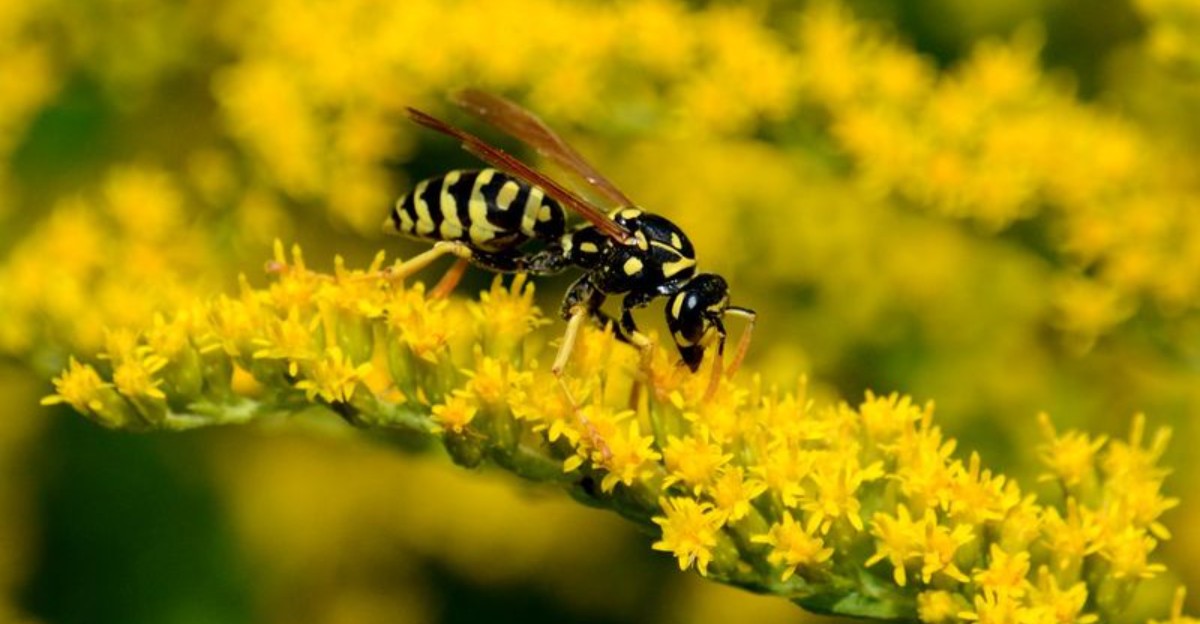
Last week I counted over a dozen insect visitors on one clump of yellow flowers in my backyard. Only a few of them were bees, and the rest had slender waists with a confident, buzzy swagger.
Across Missouri, those golden fall blooms act like a roadside snack bar for anything that sips sweet nectar. I love standing close enough to smell the faint honey scent while the whole patch hums around me.
Plenty of gardeners panic when they spot those striped visitors, and I used to feel the same. Most of them are far more interested in sugar than in you or the sandwich you carried outside.
Fall changes their priorities in a big way, because cooler nights push them to fuel up before winter arrives. A few lookalikes in the crowd cannot sting anyone at all, which still makes me grin every time.
Even the sandwich you carried outside turns out to be far less interesting to them than a patch of yellow flowers. A sunny October afternoon in a Missouri garden feels a lot less nervous with that in mind.
Those Busy Wasps Are Too Focused On Feeding To Bother You
Stand beside a blooming patch on a warm October afternoon, and you will see wasps sipping like tiny tourists. They bounce from flower to flower with heads buried in the blooms, barely noticing the person standing nearby.
Missouri goldenrod produces small, open flowers, so short-tongued insects like wasps can reach the nectar with ease. Many deeper blooms hide their sugar, but these shallow clusters work like an open buffet for them.
Entomologists at university extension services explain that adult wasps mostly eat sugary foods rather than meat themselves. The insects they hunt usually go back to the nest, where growing larvae need the protein to develop.
Stinging is mainly a defense tool, and wasps use it most often when someone threatens their home. A forager sitting on a flower far from its nest has very little reason to pick a fight.
Trouble usually starts only when a wasp gets swatted hard or accidentally pressed against your bare skin. Moving slowly around the patch gives these busy feeders plenty of room to finish their sweet afternoon meal.
I like to sit a few feet away with my morning tea and simply watch the steady parade. Watching them up close teaches you how focused they become once they find a good sugar source.
Of course, people with known sting allergies should keep extra distance and carry any medication their doctor recommends. For everyone else, a calm attitude turns a buzzing flower patch into a fascinating fall nature show.
Paper Wasps Are Stocking Up On Late-Season Sugar
Did you know that young queens are usually the only paper wasps that survive winter in Missouri? Workers and the old queen fade away as cold weather arrives, leaving the new queens to carry on.
Those future queens need plenty of stored energy to make it through months of hiding in sheltered spots. Fall nectar from late bloomers gives them a sweet energy boost right before they tuck themselves away.
Your Missouri Garden Changes Every Week. Your Plan Should Too.
Gardening in Missouri changes quickly throughout the season. Every Friday you’ll receive a simple weekly plan showing exactly what to plant, prune, fertilize, harvest, and protect so you never miss the right timing.
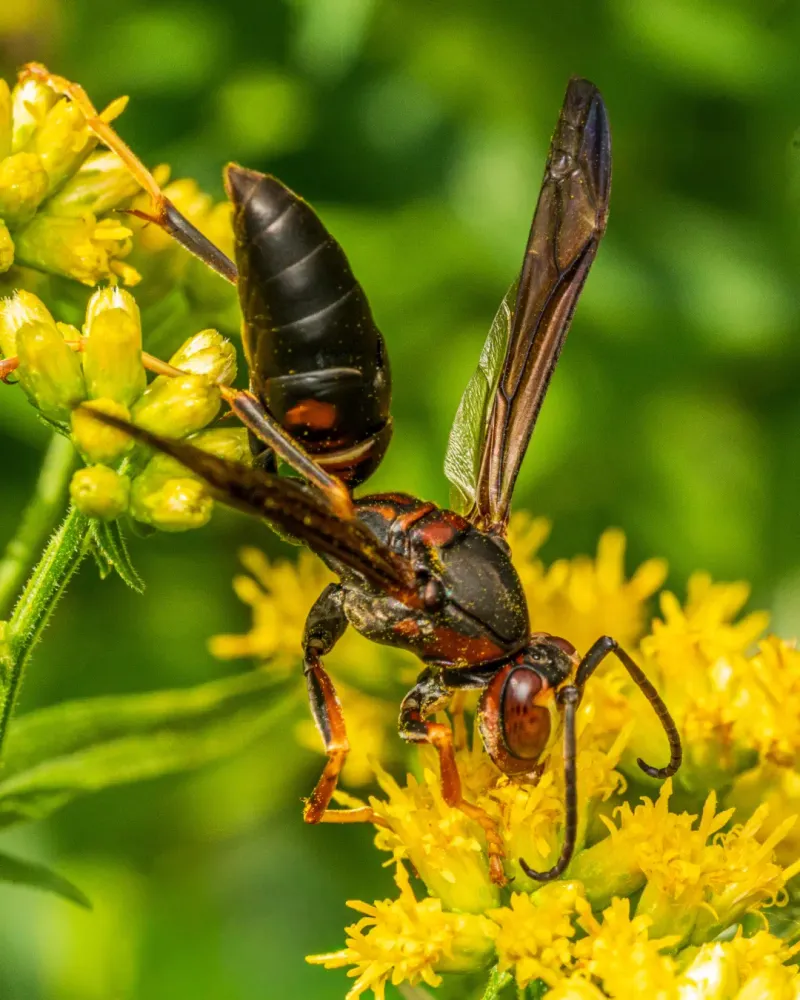
Paper wasps are easy to spot thanks to their long dangling legs and slim reddish or brown bodies. Many kinds also wear yellow markings, which makes people confuse them with the feistier yellowjackets buzzing nearby.
On the flowers, paper wasps act surprisingly mellow, often walking slowly over the blooms while they feed. Their umbrella-shaped paper nests are a different story, so give any nest under eaves a wide berth.
In October, many of those nests are already emptying out as the colony winds down for the year. Old paper nests are rarely reused, so you can usually remove them safely once frost settles in.
Paper wasps also help gardeners during the warmer months by hunting caterpillars that chew on vegetable leaves. Tomato hornworms and cabbage worms are common targets, which makes these hunters very useful garden partners.
You might find a sleepy queen tucked into a woodpile or shed corner as the weather turns cold. Leave her alone if possible, because she may start next year’s helpful colony of caterpillar hunters.
Solitary Mason Wasps Bring A Surprisingly Calm Nature
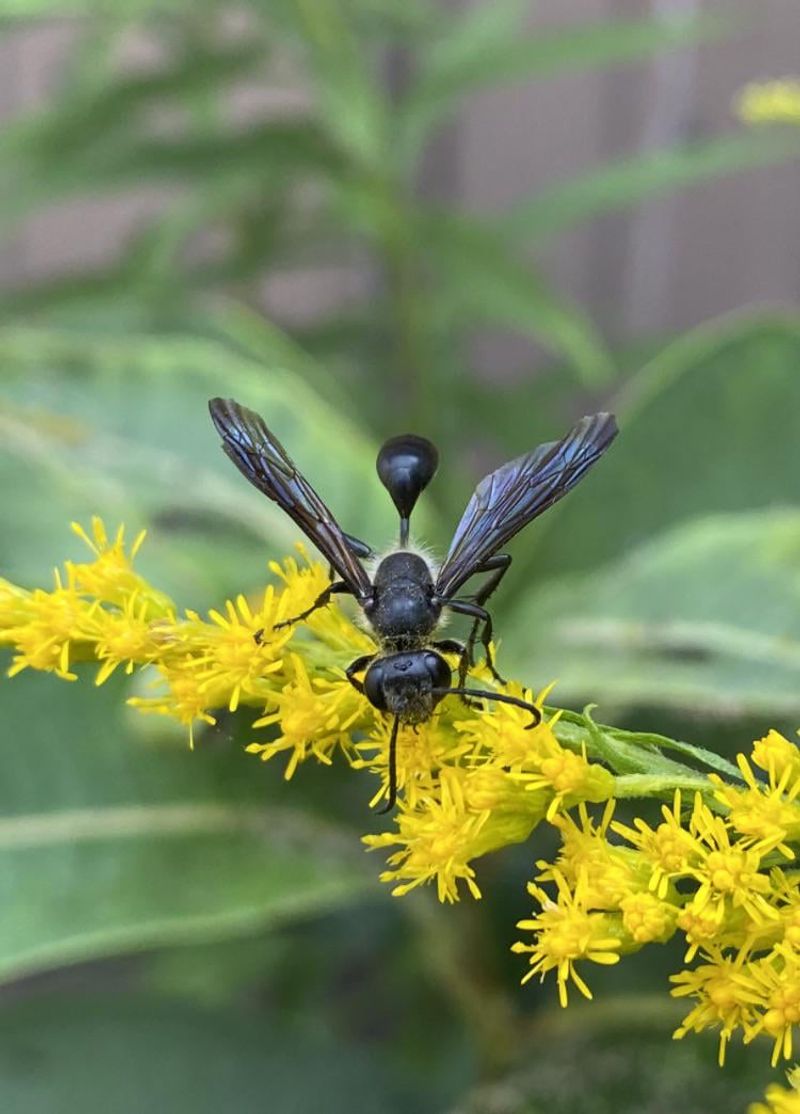
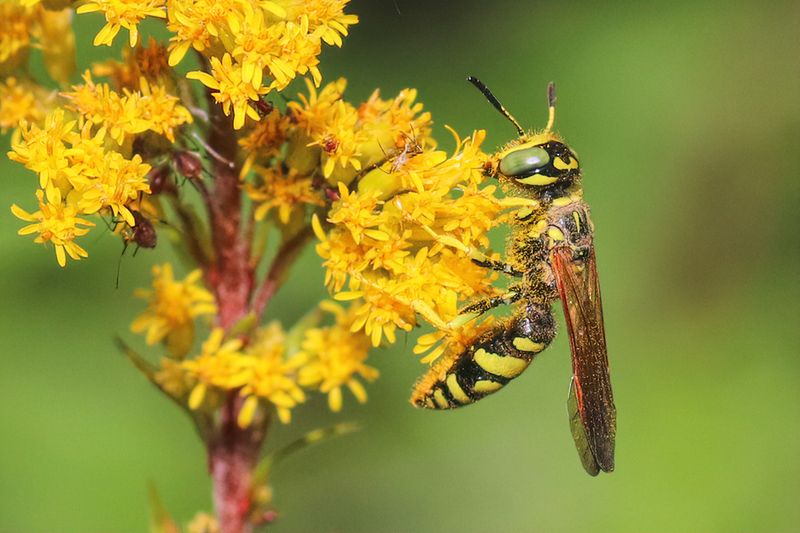
Some of the friendliest visitors on fall flowers live alone and have no colony to guard at all. Mason and potter wasps fit that description, and they spend their days quietly sipping nectar among the blooms.
Without a big nest full of sisters to protect, a solitary wasp has little reason to act defensive. Extension entomologists note that these wasps rarely sting people unless they are grabbed or squeezed by accident.
Many are black with white or yellow bands, and some look almost velvety in the soft autumn sunlight. A common one is the four-toothed mason wasp, which often nests inside hollow stems or old beetle holes.
Potter wasps earned their name by building tiny clay pots, each one shaped like a miniature round vase. Each little pot holds a single egg along with paralyzed caterpillars that feed the growing young wasp.
That caterpillar habit makes them handy allies for gardeners who grow leafy greens or other tender crops. Adults fuel their hunting trips with nectar, so late fall flowers help keep them active a bit longer.
In Missouri gardens, you can invite more of them by leaving some hollow plant stems standing through winter. Leave stalks about a foot tall after cleanup, and solitary wasps may move into those cozy tubes later.
I find their quiet manners oddly charming, like a polite guest who eats quickly and slips out early. Spotting one on your flowers is a sign that your yard supports a healthy mix of helpful insects.
Some Of Those Wasps Are Actually Harmless Flies
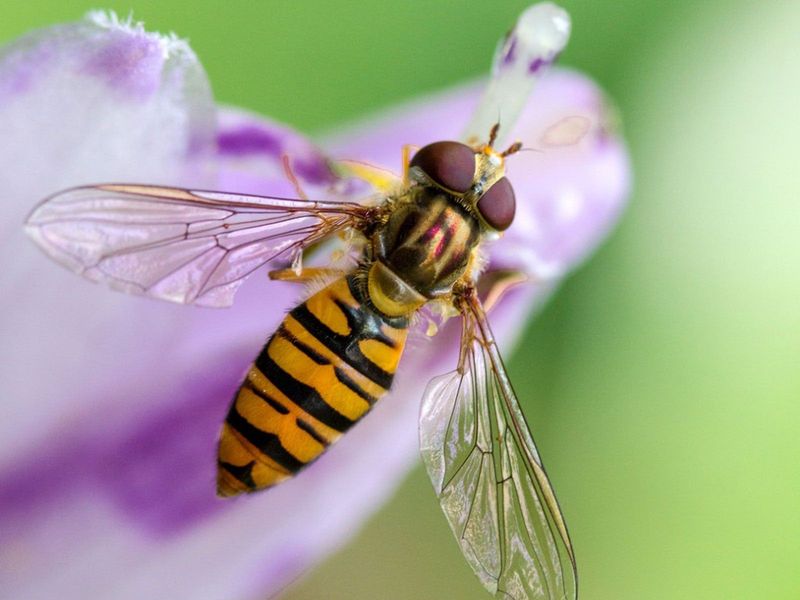
Look closely at a striped insect hovering midair, and you might discover it has only two wings. That detail gives away a hover fly, a harmless mimic that borrows wasp colors to scare off hungry birds.
Wasps and bees have four wings, though the pairs often hook together and look like one in flight. Hover flies also have short stubby antennae and huge eyes that cover most of their round heads.
Their flying style is another clue, since they can hang perfectly still in the air like tiny helicopters. Then they dart sideways in a flash, which is a move most wasps cannot copy very well.
Most important of all, hover flies cannot sting, so you can watch them land on your hand without worry. Kids often love this part, because a fly dressed as a wasp sounds like a goofy Halloween costume.
The real treasure hides in the next generation, because many hover fly larvae feast on soft-bodied aphids. University extension experts note that a single larva can eat hundreds of aphids while it grows up.
Other lookalikes show up too, including thick-waisted flies with bold bands that copy the look of yellowjackets. Plenty of Missouri gardeners mistake these mimics for wasps and swat at them for no good reason.
Next time a striped buzzer lands nearby, pause long enough to count the wings before you react. You may find that a good part of the scary crowd on your flowers is really harmless bluffers.
You Can Lower Your Chance Of A Sting With Simple Habits
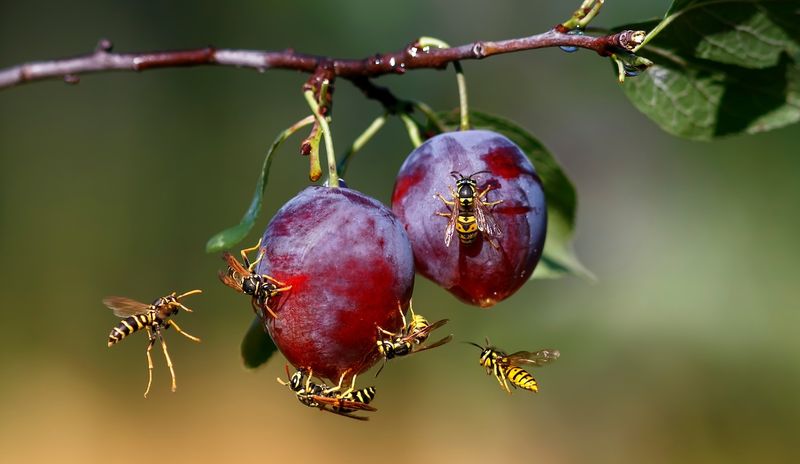
A few small changes in how you move around the garden can make fall chores feel much more relaxed. Most stings happen by accident, so the goal is simply to avoid surprising a busy insect.
Start by walking slowly near flowering patches instead of brushing straight through them with bare arms and legs. Long sleeves and gloves add a helpful layer when you cut back stems or pull weeds nearby.
Swatting is the habit that causes the most trouble, since a frightened wasp may sting to protect itself. Stay still or step away slowly, and the insect usually loses interest within a few calm seconds.
Yellowjackets get bolder in fall because their natural food runs short as the colony reaches peak size. Keep sweet drinks covered outdoors, and check cans before sipping, since wasps love crawling inside open containers.
Ground nests are another hidden risk, so watch for steady insect traffic going in and out of holes. Mowers and string trimmers can shake those nests, which explains many unexpected stings during autumn yard work.
Strong perfumes and fruity lotions may attract curious insects, so skip them before a long garden session. Picking up fallen fruit also helps, because rotting apples and pears draw hungry yellowjackets across much of Missouri.
If a sting does happen, wash the spot with soap and water, then apply a cool compress. Seek medical help right away for swelling around the face or any trouble breathing after a sting.
Leave This Late Food Source Standing In Your Garden
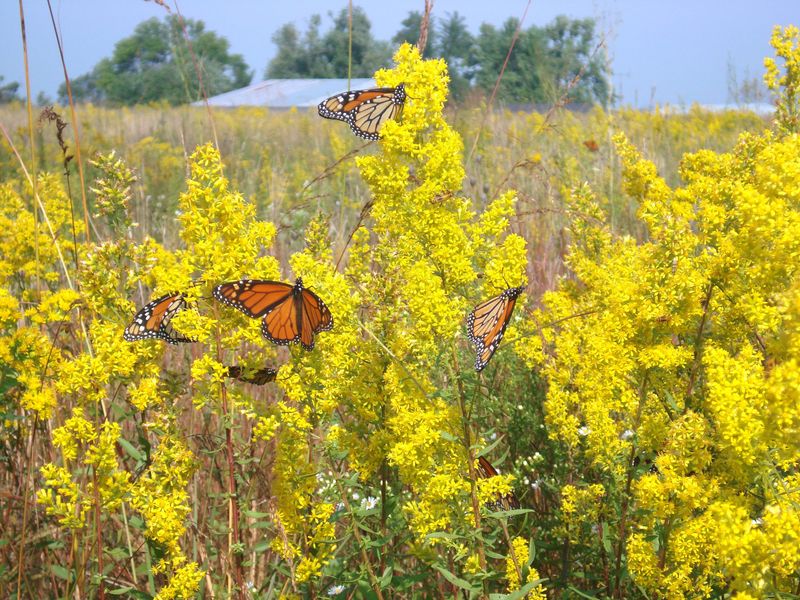
When most garden flowers fade in October, these bright yellow sprays keep the neighborhood pollinators fed for weeks. The Missouri Department of Conservation praises native goldenrods as valuable food plants for many hungry late-season insects.
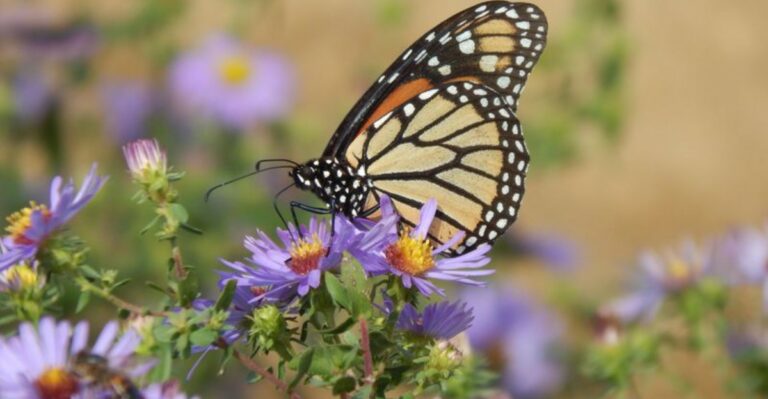
Monarch butterflies heading south often stop to refuel on the blooms during their long migration to Mexico. Bumblebee queens and many native bees also rely on that nectar and pollen before winter settles in.
Plenty of people still blame these plants for fall allergies, but the real culprit is usually ragweed. Goldenrod pollen is heavy and sticky, so it rides on insects rather than drifting on the breeze.
That fact surprised me years ago, and it changed the way I looked at the scruffy patch by my fence. Now I treat it like a prized flower bed and enjoy the golden glow on chilly mornings.
After the flowers fade, resist the urge to cut every stem down to the ground right away. Seed heads feed small birds like goldfinches, and the stems shelter goldenrod gall fly larvae through winter.
If you want to add more, October is a fine time to plant native goldenrods in Missouri soil. Showy goldenrod and stiff goldenrod stay fairly well behaved, so they fit nicely in smaller garden beds.
Give the plants full sun and decent drainage, and they will reward you with years of easy color. Those buzzing guests come along with the deal, and I think they make the whole show worth watching.