More Purple Martins Near Your Texas Home Means Fewer Mosquitos (Here’s How To Attract Them)
Mosquitoes in Texas are a warm weather constant that most homeowners just learn to live with. Sprays, candles, foggers, and all the rest of it become part of the summer routine without ever really solving the problem.
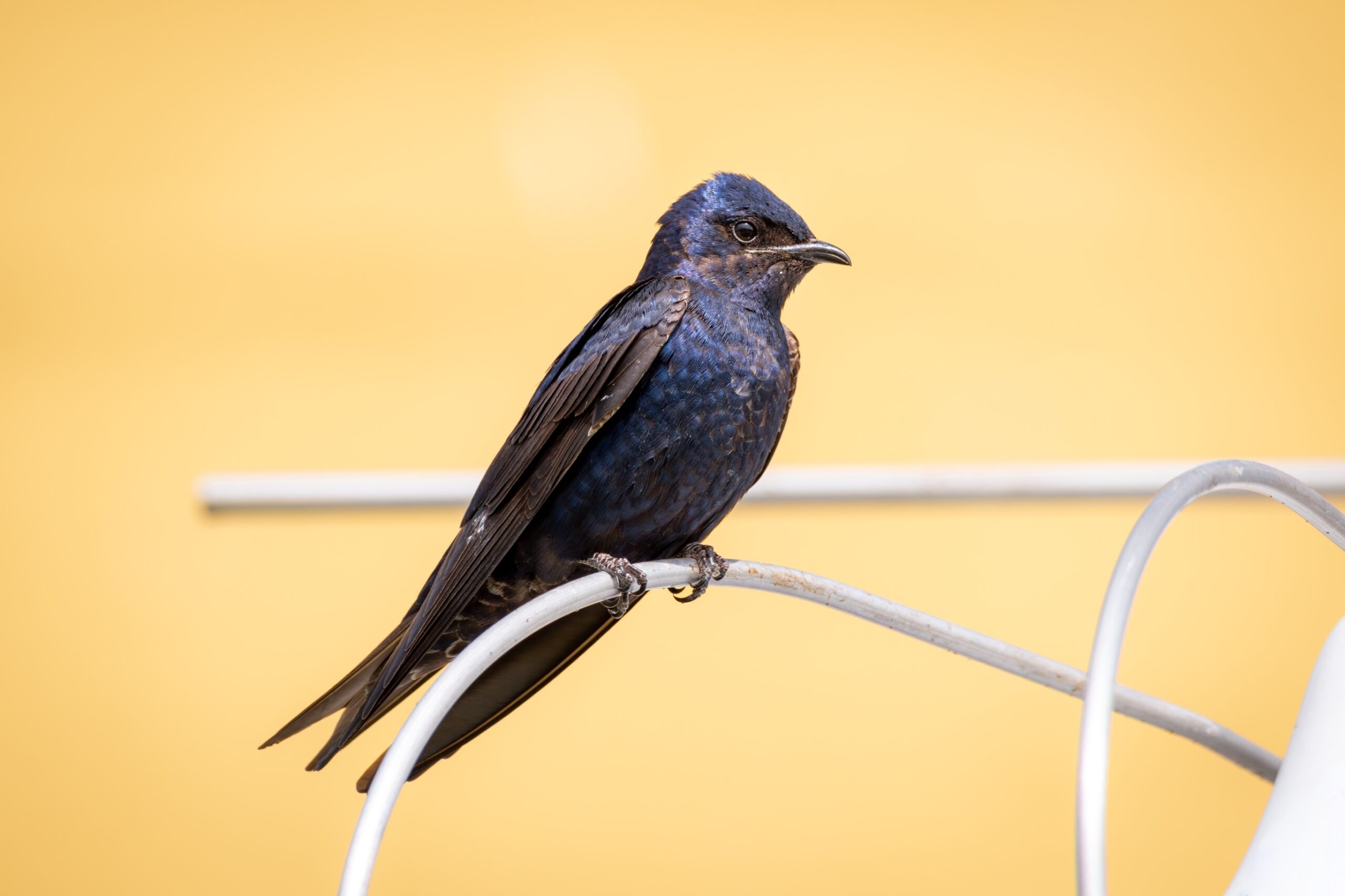
But there’s a natural solution that works overhead, around the clock, and with an appetite for flying insects that is genuinely impressive. Purple martins eat mosquitoes. A lot of them.
A thriving purple martin colony near your Texas home can make a noticeable difference in the mosquito pressure around your outdoor spaces, and the presence of these graceful, social birds adds something to your yard that no candle or fogger ever could.
The good news is that purple martins are actively looking for the right housing and habitat, and Texas happens to be one of the best states in the country for attracting them.
Getting them to choose your property comes down to understanding what they need and setting things up correctly.
1. Start With The Truth About Mosquitoes
Not everything you have heard about purple martins and mosquitoes is completely accurate.
Many people believe these birds eat thousands of mosquitoes every single day, but scientists have studied their stomach contents and found something surprising. Mosquitoes are usually only a very small portion of what purple martins actually eat.
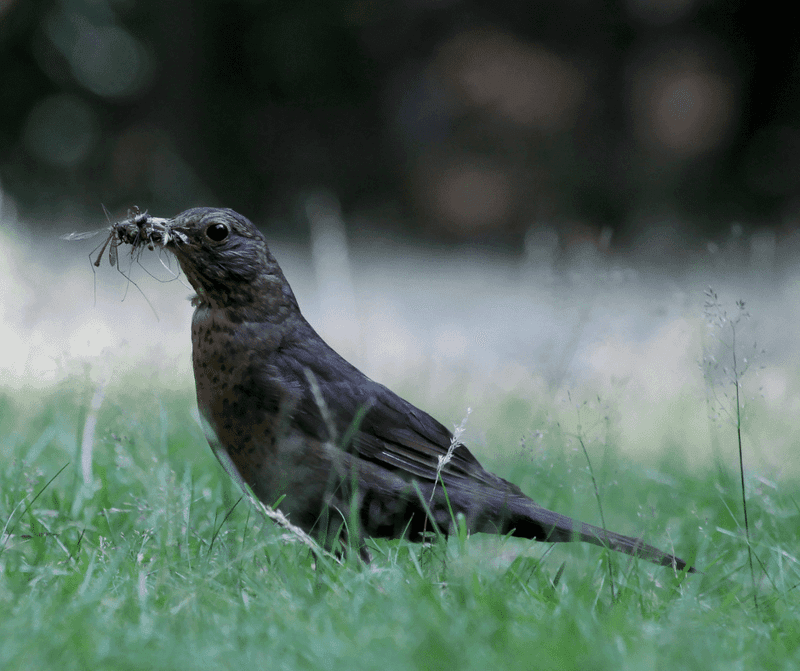
Purple martins are aerial insectivores, which means they catch their food while flying through the air. Their real diet is packed with flying beetles, moths, flies, dragonflies, mayflies, and winged ants.
These are larger, more energy-rich insects that the birds can spot and chase down more easily than tiny mosquitoes buzzing low near standing water.
So why bother attracting them at all? Because having purple martins around still helps create a healthier yard ecosystem.
They contribute to a natural food web that keeps many flying insect populations in check. A yard full of active, hunting birds is a yard where the insect balance shifts in your favor.
Mosquitoes tend to fly close to the ground and near shaded, damp areas. Purple martins prefer hunting high in open sky, which means the two do not always overlap much.
Understanding this honestly helps you set realistic expectations before you invest in housing or equipment.
That said, martins are still a wonderful addition to any Texas outdoor space. They are entertaining to watch, surprisingly social, and they do reduce the overall flying insect pressure in a yard.
Pair them with other smart strategies and you will notice a real difference on those warm Texas evenings when the bugs come out.
2. Put Up The Right Housing In An Open Spot
Location is everything when it comes to attracting purple martins. These birds are picky about where they nest, and if your housing is placed in the wrong spot, they will simply fly past without stopping.
The single biggest mistake backyard birders make is placing martin houses too close to trees or buildings.
Purple martins need wide-open airspace to feel comfortable. They want to be able to swoop in and out of their nesting cavities without dodging branches or rooflines.
Your Texas Garden Changes Every Week. Your Plan Should Too.
Gardening in Texas changes quickly throughout the season. Every Friday you’ll receive a simple weekly plan showing exactly what to plant, prune, fertilize, harvest, and protect so you never miss the right timing.
Experts generally recommend placing housing at least 30 to 40 feet away from any tall trees or large shrubs. Open lawns, fields, and yards near water are ideal.
You also want to think about the style of housing you choose. Traditional aluminum or wooden martin houses with multiple compartments work well.
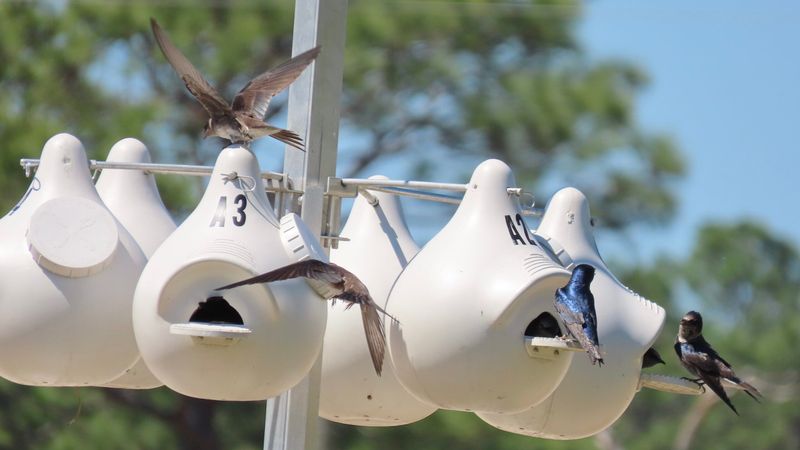
So do natural gourd racks, which are clusters of hanging gourds that mimic the natural cavities martins once used in hollow trees. Both options attract birds when placed correctly.
Gourds have become especially popular among serious martin landlords because they are easier to manage and clean. You can buy pre-made plastic gourds that are durable and weather-resistant, which matters a lot in the Texas heat and humidity.
Many experienced birders use a combination of gourds and a traditional house on the same pole rack.
Whatever style you choose, make sure it is clearly visible from the air. Purple martins scout for housing from high above, so a setup that stands out in an open yard is far more likely to catch their attention than something tucked near a fence or covered by shade.
3. Raise The House High Enough To Feel Safe
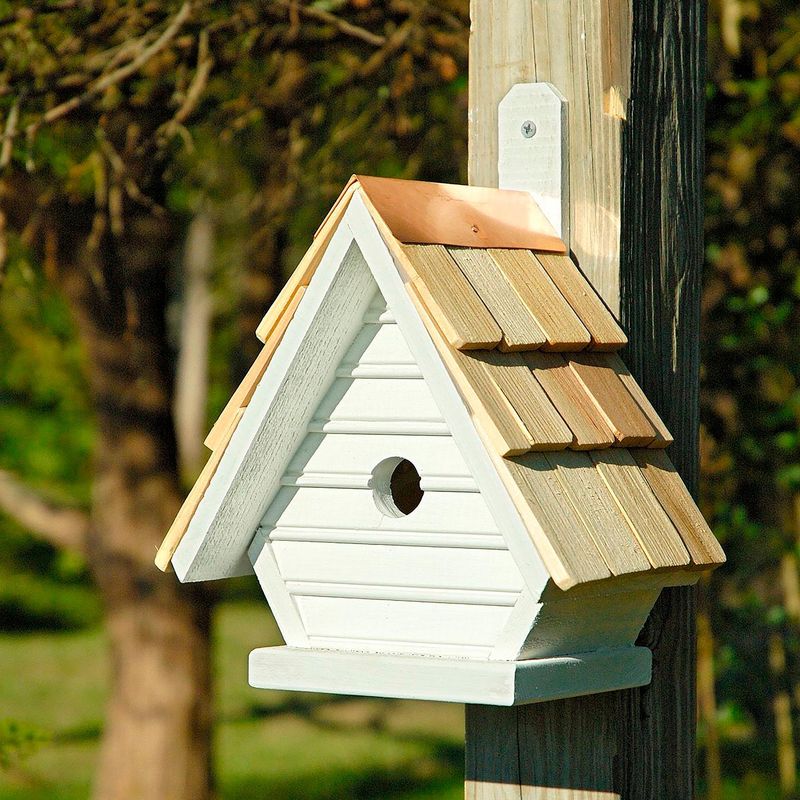
Height matters more than most new martin landlords realize. Purple martins have strong instincts about where they feel safe enough to nest, and a house that sits too low to the ground sends the wrong signal.
Predators like cats, raccoons, and snakes are a real threat, and martins know it. Most experts recommend mounting purple martin housing between 10 and 20 feet off the ground. The sweet spot for most Texas backyards is around 12 to 15 feet.
At that height, the birds feel protected from ground predators while still being easy to approach from the air during their fast, swooping flights.
A good pole system makes all the difference. Telescoping steel poles are popular because they allow you to raise and lower the housing easily for cleaning and nest checks.
This is a practical feature that saves a lot of frustration throughout the nesting season, especially when you are managing multiple compartments or gourds.
Pole guards and baffles are also worth adding right from the start. A baffle is a cone or cylinder that wraps around the pole and physically blocks climbing predators from reaching the nest.
Without one, even a perfectly placed house can get raided, and martins that experience a predator attack may abandon the site entirely.
Think of the whole setup as a combination of height, stability, and protection working together. A wobbly pole, a low mount, or a housing unit without predator guards is going to reduce your chances of attracting and keeping a martin colony.
Invest in a solid system and the birds will reward you with years of activity right in your own Texas yard.
4. Keep Nest Cavities Clean And Managed
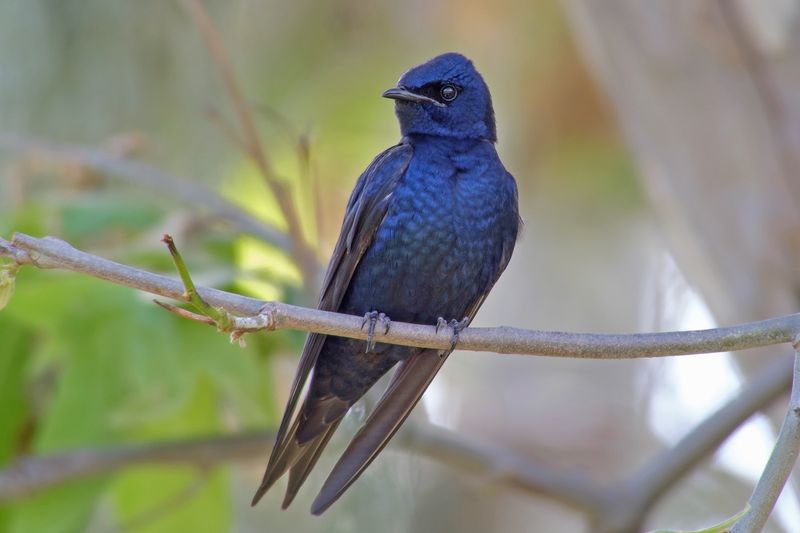
Purple martins are not low-maintenance backyard guests. Unlike many wild birds that find their own cavities in trees and old fence posts, eastern purple martins have become almost entirely dependent on human-provided housing.
That means the responsibility for keeping those homes safe and livable falls on you. One of the most important tasks is checking for nest competitors. House sparrows and European starlings are invasive species that aggressively take over martin housing.
Both birds were introduced to North America and have no natural predators to keep their numbers down. If they move into your martin house first, they will block the martins from using it at all.
Checking your housing every week or two during nesting season helps you stay ahead of the problem. Remove any sparrow or starling nests as soon as you find them.
Many experienced martin landlords use entrance hole reducers or starling-resistant entrance holes, which are specially shaped openings that martins can navigate but starlings cannot.
At the end of each nesting season, take down the housing and clean out all old nesting material. Old nests harbor mites, lice, and other parasites that can stress or weaken young birds during the next breeding cycle.
A good scrub with a mild bleach solution, followed by a thorough rinse and dry, gets the housing ready for next spring.
Nest monitoring is also genuinely fun. Many landlords keep simple records of how many eggs were laid, how many chicks hatched, and when the young birds fledged.
Over time, this creates a personal history of your martin colony that is rewarding to look back on and helps you improve your setup each year.
5. Avoid Broad-Spectrum Yard Sprays

Here is something that does not get talked about enough when people discuss attracting purple martins: the chemicals you use in your yard can quietly work against everything you are trying to build.
Broad-spectrum insecticides are designed to eliminate a wide range of insects, and that is exactly the problem.
Purple martins need a yard full of flying insects to survive and raise their young. A single nest of martin chicks can require thousands of insect feedings every day during the peak of the breeding season.
If your yard has been heavily treated with sprays that wipe out flying beetles, moths, and other airborne bugs, the birds will simply move on to find food somewhere else.
Many homeowners reach for insecticide sprays as a first response to any bug problem, but there are smarter, more targeted options available.
Mosquito dunks that use Bacillus thuringiensis israelensis, or Bti, target mosquito larvae specifically without harming other insects. Removing standing water sources is even more effective and costs nothing at all.
Reducing unnecessary spraying also benefits pollinators like bees and butterflies, which are already under pressure from habitat loss.
A yard that supports a diverse insect population is a healthier, more balanced outdoor space for everyone in the family, including the birds you are trying to attract.
Think of it as a trade-off worth making. You give up the convenience of blanket insecticide coverage, and in return you get a yard that buzzes with natural life.
Purple martins, barn swallows, and other aerial insect hunters will notice the difference and be far more likely to stick around when the food supply is steady and reliable.
6. Offer A Yard With Open Air And Nearby Water
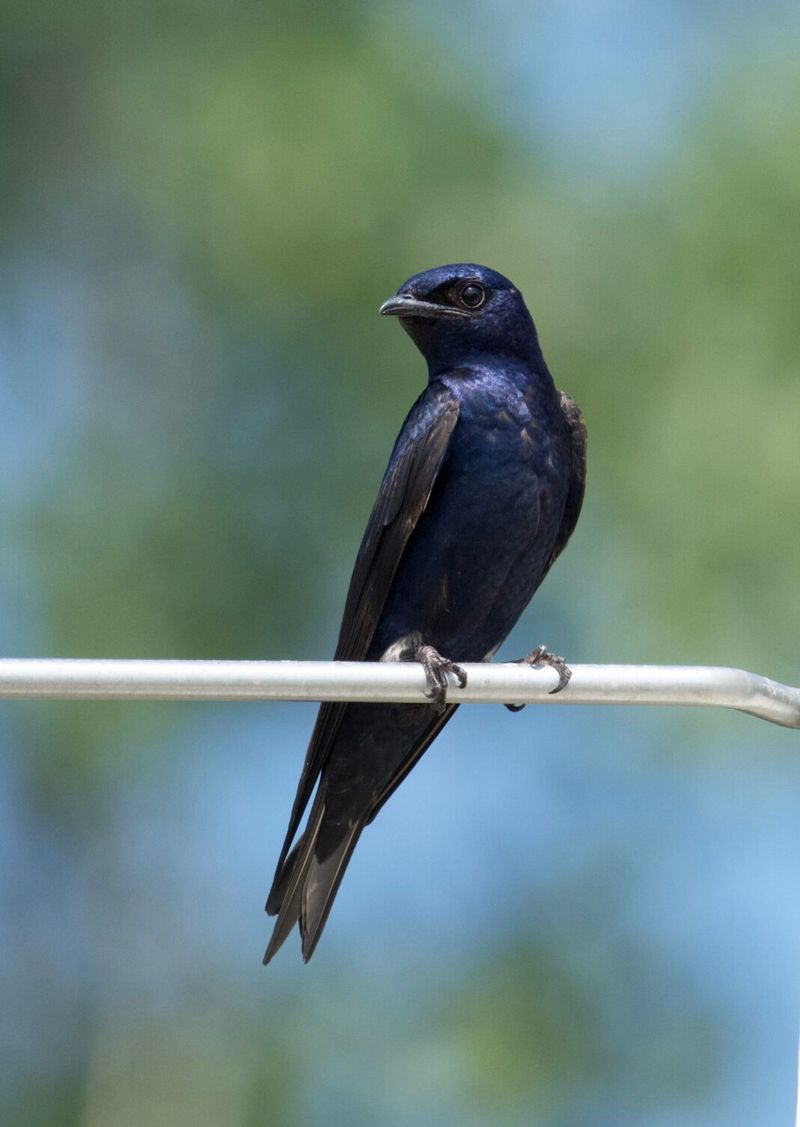
Purple martins are built for speed and open space. Watch them for a few minutes and you will notice they rarely hover or poke around in shrubs the way other birds do.
They hunt by flying fast through wide-open air, snatching insects on the wing with impressive precision. That hunting style tells you a lot about what kind of yard they prefer.
A yard with a big open lawn, minimal overhead obstructions, and good sightlines in multiple directions is the kind of place martins want to call home. If your property backs up to a field, a park, or an open green space, you already have a natural advantage.
These birds use those open corridors to travel, hunt, and scout for nesting sites. Water is an especially powerful draw. Purple martins drink and bathe on the wing, skimming the surface of ponds, lakes, and slow-moving streams.
A Texas yard near a body of water, even a small neighborhood retention pond, tends to attract more martins than a dry, landlocked lot. The water also supports the insect populations the birds depend on for food.
If your yard does not have natural water nearby, you can add a shallow birdbath or a small water feature. Keep it clean and refreshed regularly since stagnant water breeds mosquito larvae.
A gently moving water source like a dripper or a small fountain is even better because the sound and movement help birds locate it from above.
Combining open airspace with a reliable water source creates the kind of habitat purple martins actively seek out. Set up your housing in that environment and your chances of attracting a colony go up significantly.