Why North Carolina Zinnias Wilt By Afternoon And Bounce Back By Morning (And When To Worry)
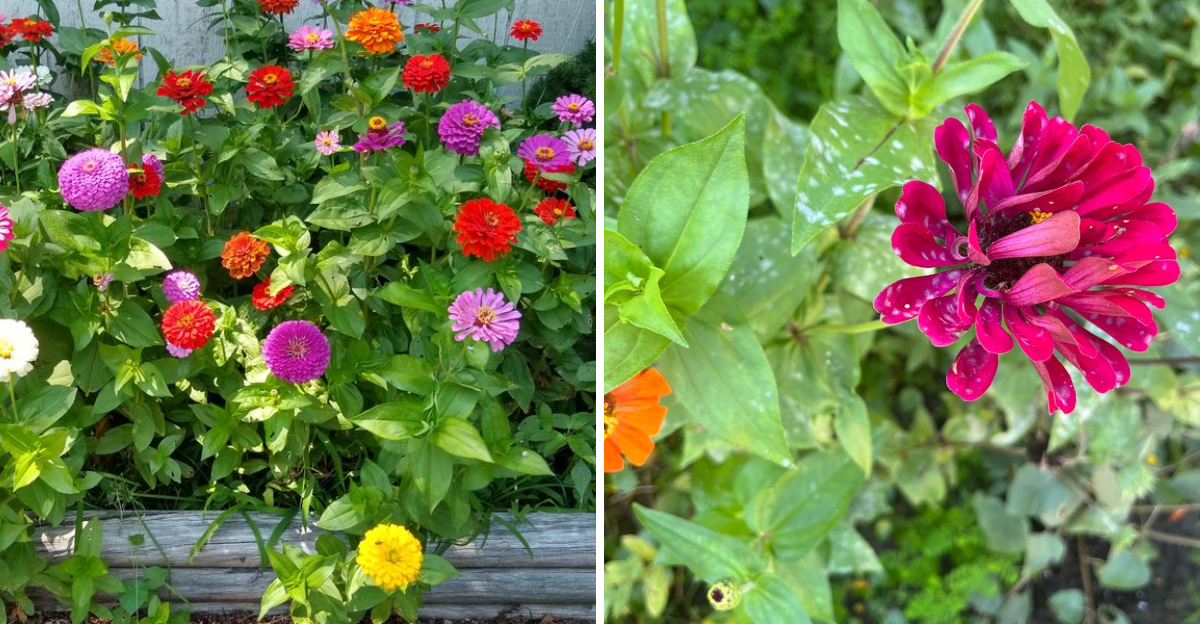
Zinnias wilting under the afternoon sun is a normal part of their daily rhythm, especially in North Carolina’s summer heat. The plant reduces water loss by drooping its leaves temporarily, then perks back up once temperatures drop in the evening.
This cycle can look alarming if you’re new to growing zinnias, but it rarely means anything is wrong. The real concern comes when plants stay wilted well into the next morning, which can point to root problems or insufficient watering.
Checking soil moisture is the easiest way to tell the difference between normal stress and a genuine issue. Zinnias planted in full sun with good drainage tend to handle heat waves better overall.
Mulching around the base also helps regulate soil temperature and moisture. Watch the pattern over a few days before assuming something serious is going on.
1. Afternoon Heat Temporarily Outpaces Water Uptake
Picture this: it is two in the afternoon, the sun is blazing, and your zinnias look like they have given up entirely. Before you reach for the hose, take a breath.
What you are seeing is one of the most common and harmless things that happens to zinnias during a North Carolina summer.
Here is what is going on beneath the surface. Zinnia leaves release moisture into the air through a process called transpiration.
When the afternoon heat spikes, leaves push out water faster than the roots can pull it up from the soil. The plant temporarily runs a moisture deficit, and wilting is its way of reducing the surface area losing water.
It is a built-in survival response, not a sign of trouble. As temperatures drop in the evening and humidity rises, the pressure balances out again.
By morning, the plant has had hours to rehydrate at a comfortable pace, and those blooms stand tall again like nothing happened.
Most healthy zinnias in North Carolina follow this pattern all summer long without any lasting harm.
The key is to check your plants twice. Go out after sunset and look at the foliage. If the leaves are already straightening up, you are in good shape. Then check again the next morning.
Full recovery, normal green color, and continued flowering are all encouraging signs. If the soil a few inches down still feels slightly moist and the plant looks great by sunrise, afternoon wilting was simply the heat doing what it does best in the South.
2. Dry Soil Below The Surface Limits Afternoon Moisture
Soil can be a little deceptive. The top inch or two might feel cool and slightly damp after a morning watering, but dig down three or four inches and things can tell a completely different story.
This gap between surface appearance and actual root zone moisture is one of the sneakiest reasons zinnias struggle in North Carolina gardens during summer.
Zinnia roots grow several inches into the soil, and that deeper zone is where most of the water uptake happens.
When hot sunshine and afternoon wind pull moisture away day after day without enough rainfall or deep watering to replace it, the root zone dries out even while the surface looks fine. The plant then has very little to draw from when heat peaks in the afternoon.
Your North Carolina Garden Changes Every Week. Your Plan Should Too.
Gardening in North Carolina changes quickly throughout the season. Every Friday you’ll receive a simple weekly plan showing exactly what to plant, prune, fertilize, harvest, and protect so you never miss the right timing.
Watch for a few patterns that separate this from ordinary heat stress. If your zinnias wilt earlier each afternoon, take longer to bounce back by morning, or show slightly curling leaf edges, the root zone is likely running low.
Gently pressing your finger or a wooden skewer several inches into the soil near the base of the plant gives you a much more honest reading than looking at the surface alone.
The fix is straightforward but requires patience. Water deeply and slowly in the morning, allowing moisture to soak down to the full root zone rather than just wetting the top layer.
Frequent shallow watering actually trains roots to stay near the surface, making the problem worse over time.
One thorough morning watering every few days during dry stretches tends to work far better for keeping zinnias strong and upright all afternoon.
3. Containers Heat And Dry Faster Than Garden Beds
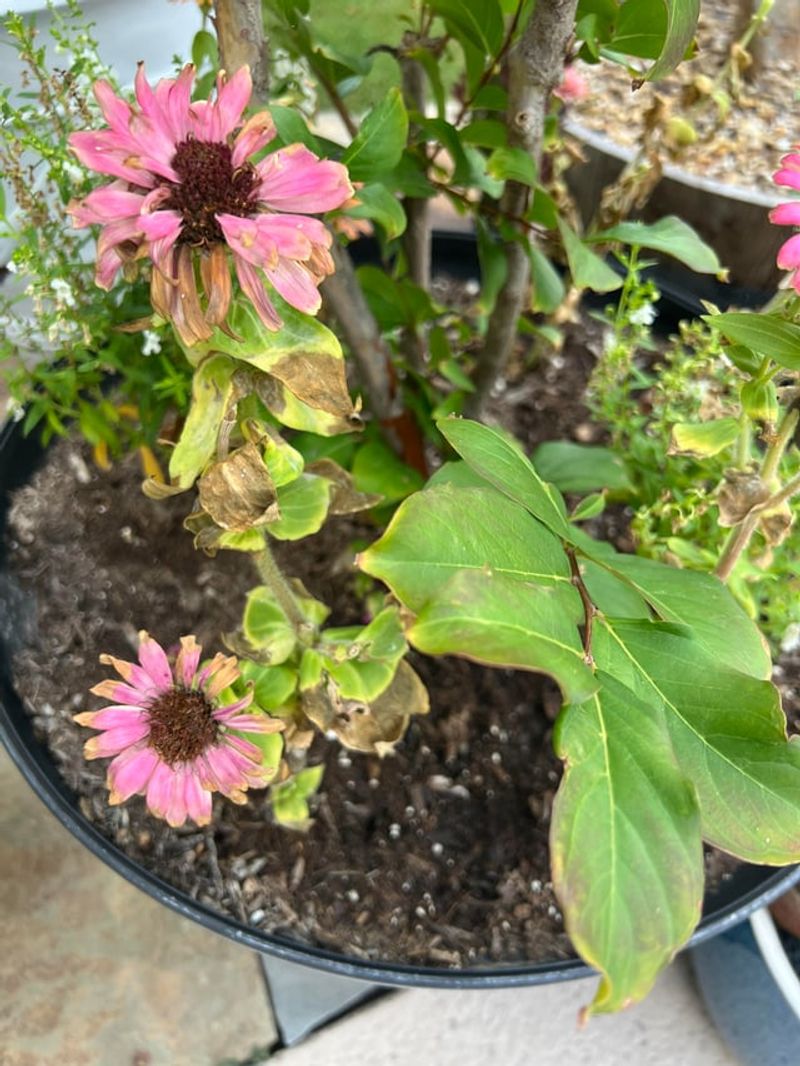
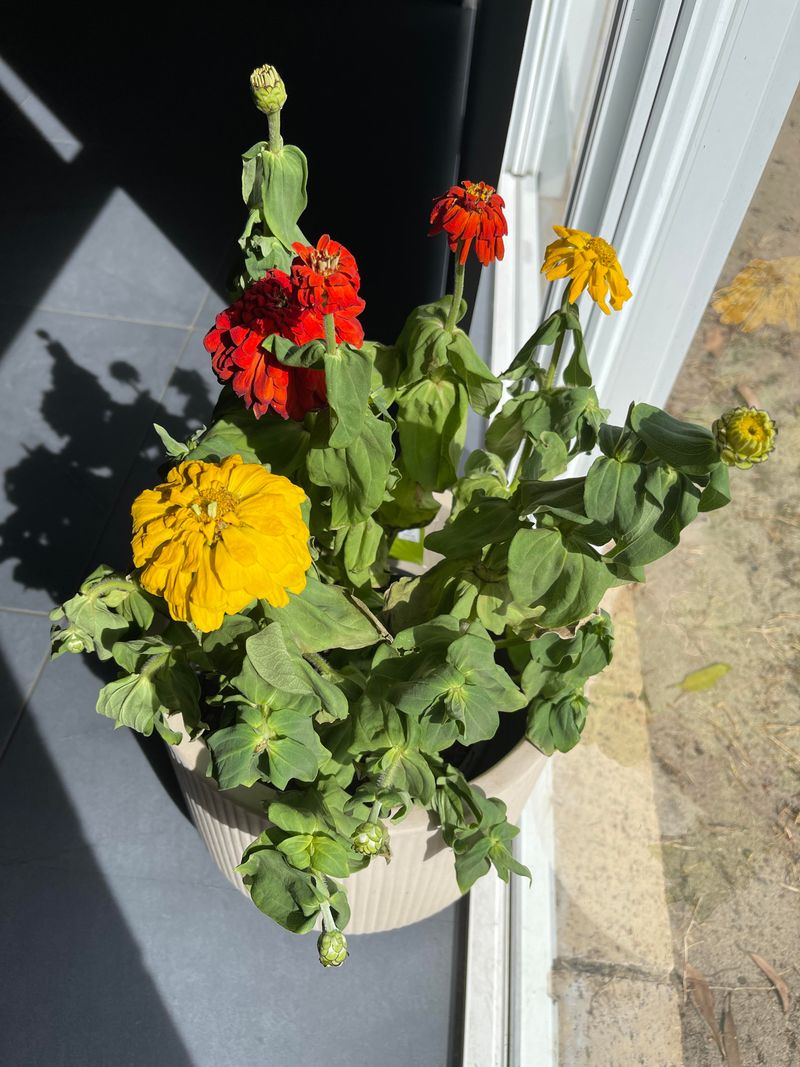
Container gardening is wonderful for zinnias right up until July hits and the temperatures start climbing past 90 degrees.
If your potted zinnias are wilting hours before your in-ground plants even look stressed, the container itself is likely a big part of the problem.
Pots heat up fast, and small volumes of soil simply cannot hold moisture the way a garden bed can.
Dark-colored containers absorb sunlight and transfer that heat directly into the root zone. Plastic and metal pots can become almost hot to the touch on a sunny North Carolina afternoon.
When the soil inside heats up that much, moisture evaporates quickly from both the surface and the drainage holes at the bottom.
Crowded roots in a pot that is too small make things even worse because there is less total soil to store water in the first place.
Before adding more water, always check the soil about two inches down. Overwatering a hot container is a real risk, especially if drainage holes are blocked or the pot sits in a saucer collecting water.
Lift the pot if you can. If it feels surprisingly light, it is likely dry throughout. If it feels heavy, moisture may still be present deeper down.
Morning watering is the most effective routine for container zinnias. Moving pots away from walls, concrete, or reflective surfaces that bounce extra heat onto them during the afternoon can also make a noticeable difference.
If your plant needs water twice a day consistently, it has outgrown its container and will perform much better with a larger one or a shadier afternoon spot.
4. Recently Planted Zinnias Have Limited Root Systems
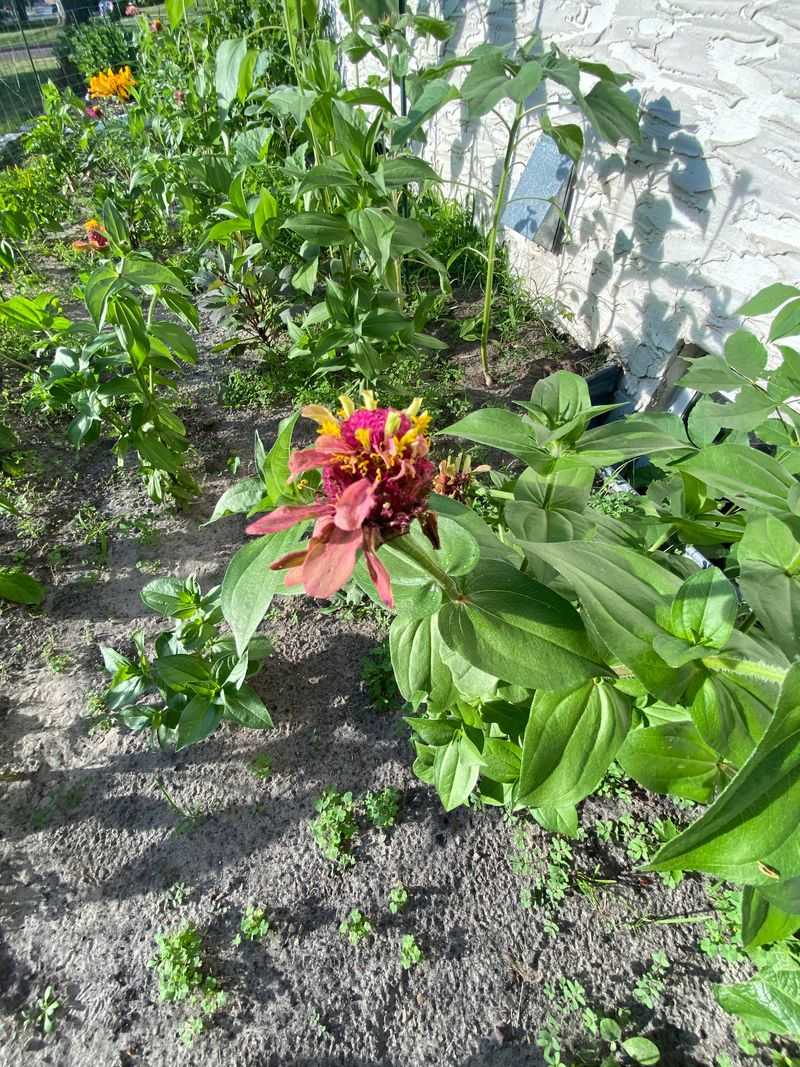
New zinnias are a little like new students on the first day of school. They look ready, they are full of potential, but they have not quite settled in yet.
When you transplant a zinnia from a nursery pot into your garden, that compact root ball needs time to spread out and connect with the surrounding soil before it can reliably pull enough water to stay upright through a hot North Carolina afternoon.
A nursery root ball is often a dense tangle of roots growing in a specific potting mix that dries out at a different rate than your garden soil.
Even when the garden soil around it feels adequately moist, the root ball itself can dry out quickly because it is smaller and more compact.
This creates a situation where the plant is technically surrounded by water it cannot reach efficiently, leading to afternoon wilting that can look alarming but is usually temporary.
Keeping the original root ball consistently moist during the first couple of weeks is the most important thing you can do. Press your finger directly into the center of where the plant was placed, not just the surrounding soil.
Providing a few hours of afternoon shade with a light cloth or a nearby taller plant can reduce stress while roots are still establishing.
Gradual improvement over several days is a great sign that roots are spreading and the plant is settling in well.
If wilting gets worse instead of better, or if the leaves turn yellow or fail to recover by morning, take a closer look at the root ball and soil drainage rather than simply adding more water and hoping for the best.
5. Compacted Soil Restricts Root Growth And Water Movement
Not all soil is created equal, and in many North Carolina yards, what looks like a garden bed might actually be compacted clay, leftover construction fill, or heavily walked ground that has been pressed into a dense layer over years.
Zinnias planted in this kind of soil face a daily uphill battle that no amount of watering can fully fix on its own.
Compacted soil creates two separate problems at once. First, roots struggle to push through it, so the plant never develops the wide, deep root system it needs to gather water efficiently.
Second, water moves through compacted soil unevenly. The surface can stay wet or even puddle after rain, while deeper layers remain dry and hard.
Roots end up crowded near the planting hole, and the plant has very little access to moisture when afternoon heat kicks in.
Signs worth paying attention to include zinnias that barely grow after planting, repeated afternoon wilting even after watering, water pooling on the soil surface instead of soaking in, and roots that stay balled up near where you originally placed them.
Gently loosening the soil around an established plant can sometimes reveal just how little root spread has happened.
Long-term improvement comes from working organic matter like compost into the bed before the next planting season, reducing foot traffic across the area, and loosening the planting hole wider than you think necessary when putting in new plants.
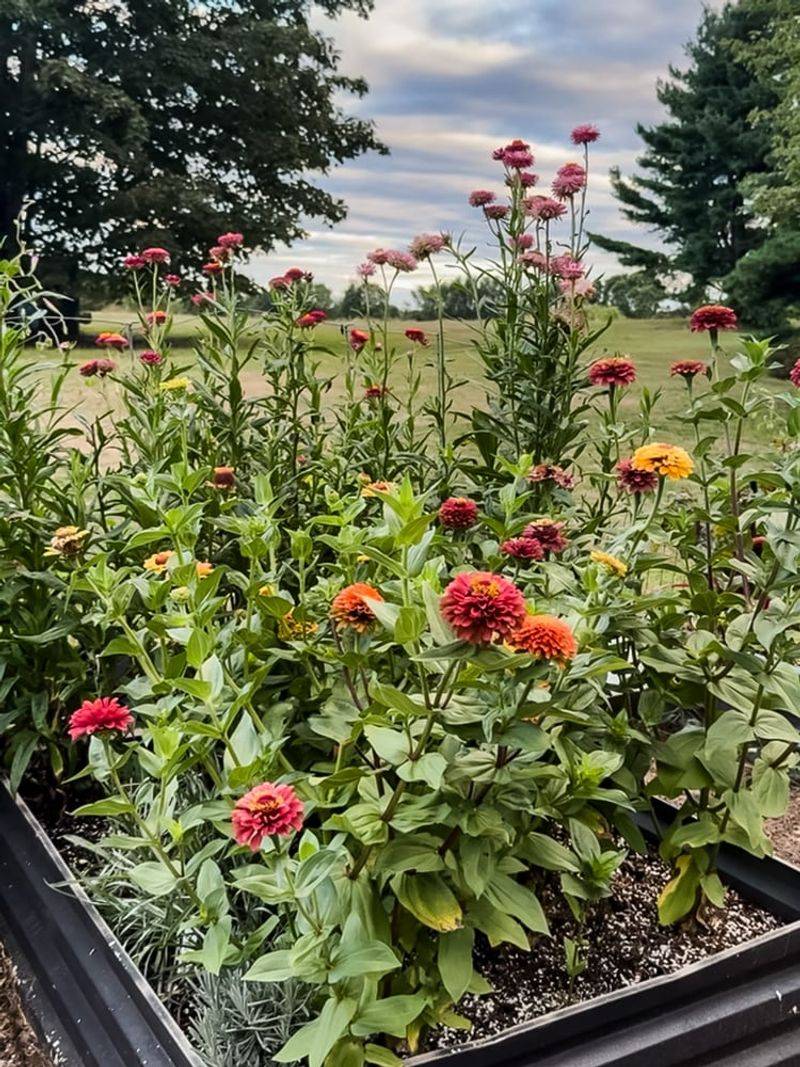
Raised beds filled with quality garden mix are another excellent option for North Carolina gardens where native soil is particularly challenging to work with.
6. Saturated Soil Reduces Oxygen Around The Roots
Here is something that surprises a lot of gardeners: zinnias can wilt from too much water just as easily as from too little.
When soil stays saturated for extended periods, the tiny air pockets between soil particles fill with water and oxygen disappears from the root zone.
Without oxygen, roots cannot function properly, and water uptake breaks down even though the plant is literally surrounded by moisture.
North Carolina summers can bring intense thunderstorms that drop large amounts of rain in short periods. Add that to heavy clay soil or a low spot in the yard, and you have a recipe for roots sitting in waterlogged conditions for days.
Frequent irrigation on top of natural rainfall makes the situation worse, especially when container drainage holes are blocked or garden beds have no way for excess water to escape.
Wilting from saturated soil often comes with a few other clues. Leaves may turn yellow or look pale and soft rather than crisp.
New growth might appear weak or stunted. Morning recovery tends to be slower and less complete than it would be with ordinary afternoon heat stress.
If you press into the soil and it feels spongy or water oozes up around your finger, that is a clear signal.
The right response here is to stop watering and give the soil time to drain and air out. Avoid the temptation to assume every wilted plant needs more water.
Check the root zone first, and if drainage is consistently poor in that area, consider improving the bed with raised planting, added organic matter, or a different location for next season.
7. Southern Blight Affects The Lower Stem
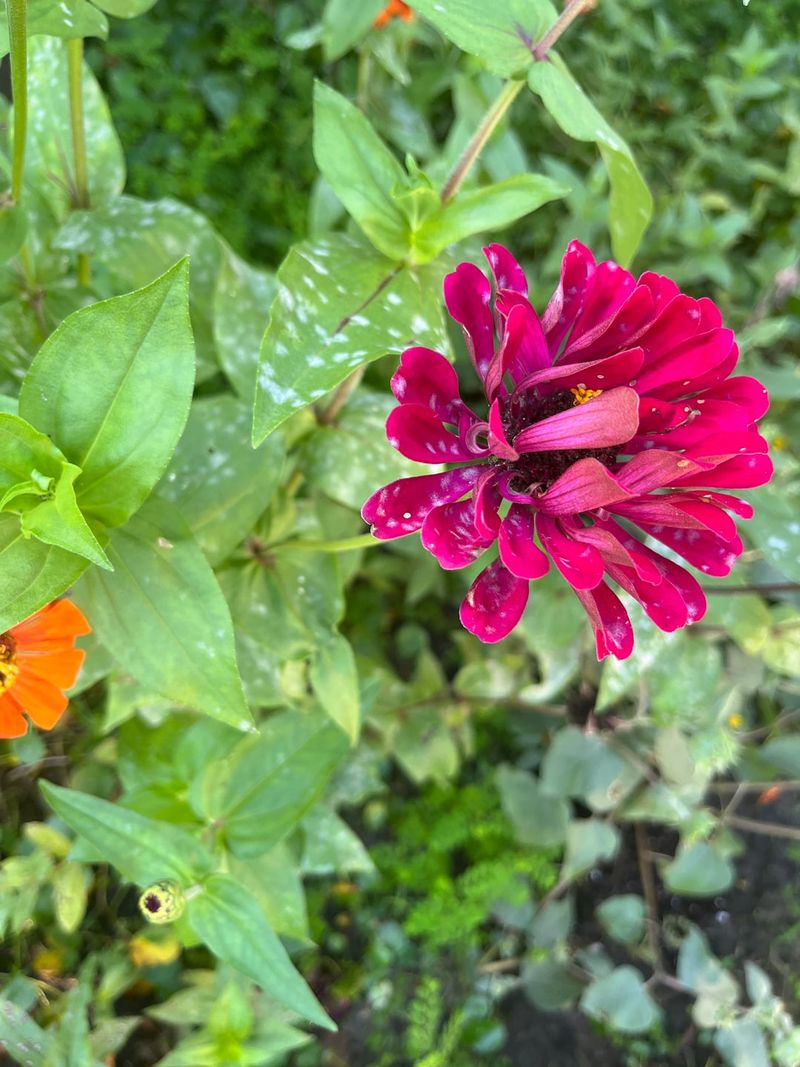
Most afternoon wilting in zinnias is completely harmless, but every now and then the cause is something that deserves real attention.
Southern blight is a soil-borne fungal condition that thrives in exactly the kind of hot, humid weather that North Carolina summers are famous for.
It targets the lower stem right where it meets the soil, and once it takes hold, ordinary watering and shade adjustments will not make things better.
The most important thing to look for is visible change at the base of the plant. Healthy afternoon wilting leaves the stem looking completely normal.
Southern blight, caused by the fungus Athelia rolfsii, produces white, thread-like growth that spreads outward from the stem base across the soil surface.
Small, round structures that start out white and gradually turn tan or brown may also appear nearby. These are called sclerotia and they help the fungus survive in the soil for long periods.
Wilting connected to these visible stem changes behaves differently from heat stress. The plant may wilt earlier, recover less each morning, and decline more quickly over a few days.
The lower stem often becomes discolored or looks pinched at the soil line even before full collapse. This is not something to dismiss or treat with extra fertilizer.
Avoid disturbing the soil around affected plants with tools, as this can spread the fungus to other parts of the garden.
Reaching out to your local county Extension office or submitting a sample to the NC State Plant Disease and Insect Clinic is the most reliable way to confirm what you are dealing with and get appropriate guidance for your specific situation.
8. Southern Bacterial Wilt Blocks Internal Water Flow
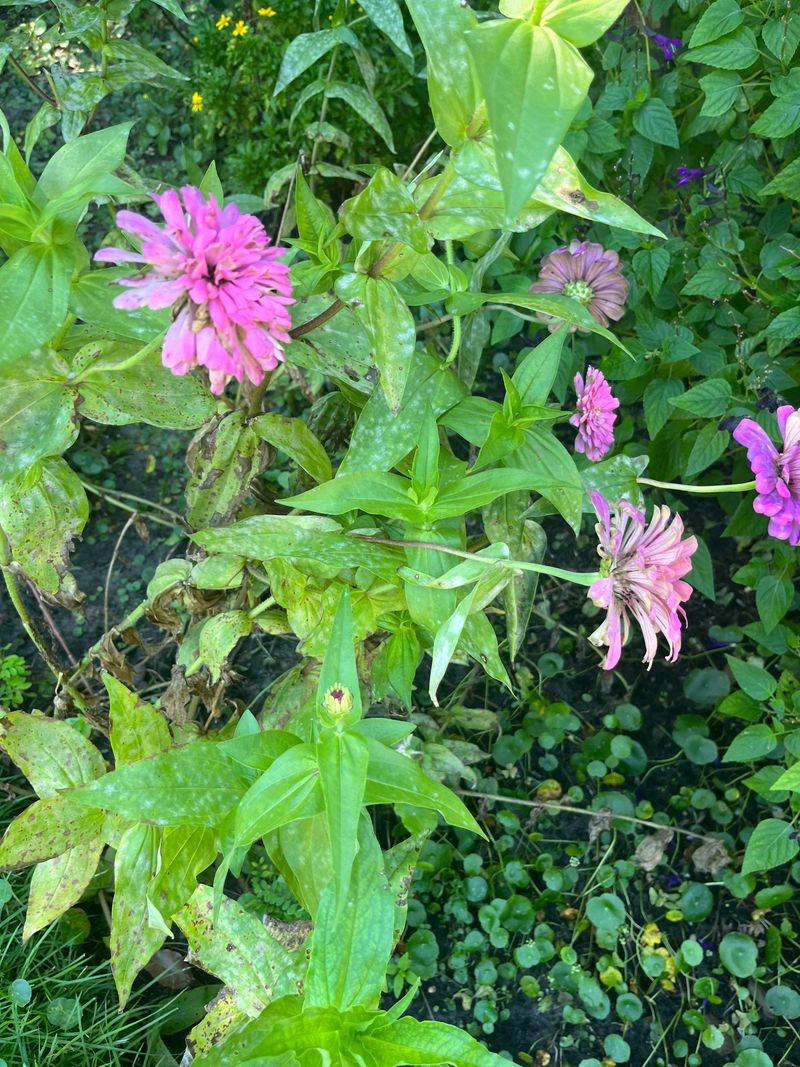
Some problems look almost identical to normal heat stress at first, and southern bacterial wilt is one of the most convincing impostors.
An affected zinnia may look weak and droopy in the afternoon and then appear noticeably better the next morning, following the same pattern as ordinary temperature-related wilting. This similarity is exactly what makes it tricky to catch early.
The bacteria responsible, Ralstonia solanacearum, travels through the water-conducting tissue inside the stem, gradually blocking the plant’s ability to move water from roots to leaves.
Zinnia is recognized among the ornamental hosts affected by this pathogen according to NC State research, so it is not an uncommon concern for North Carolina flower gardeners.
What makes bacterial wilt stand out from heat stress is the progression. Each day the wilting starts a little earlier and the morning recovery becomes a little less complete, even when temperatures and watering have not changed.
A few other warning signs help separate this from environmental causes. Leaves remain green even as wilting becomes more severe, which is unusual for drought stress.
Cutting the lower stem and looking at the inside may reveal brownish discoloration in the tissue. Eventually the plant stops recovering overnight entirely, which is the clearest signal that something internal has gone wrong.
Wilting alone cannot confirm bacterial wilt, because root problems, stem issues, and environmental stress can all look similar.
Getting a professional identification from your county Extension office or the NC State Plant Disease and Insect Clinic is the smartest initial step. Knowing the exact cause makes all the difference in choosing how to protect the rest of your garden.