10 Mushrooms Ohio Gardeners Should Know And How To Identify Them
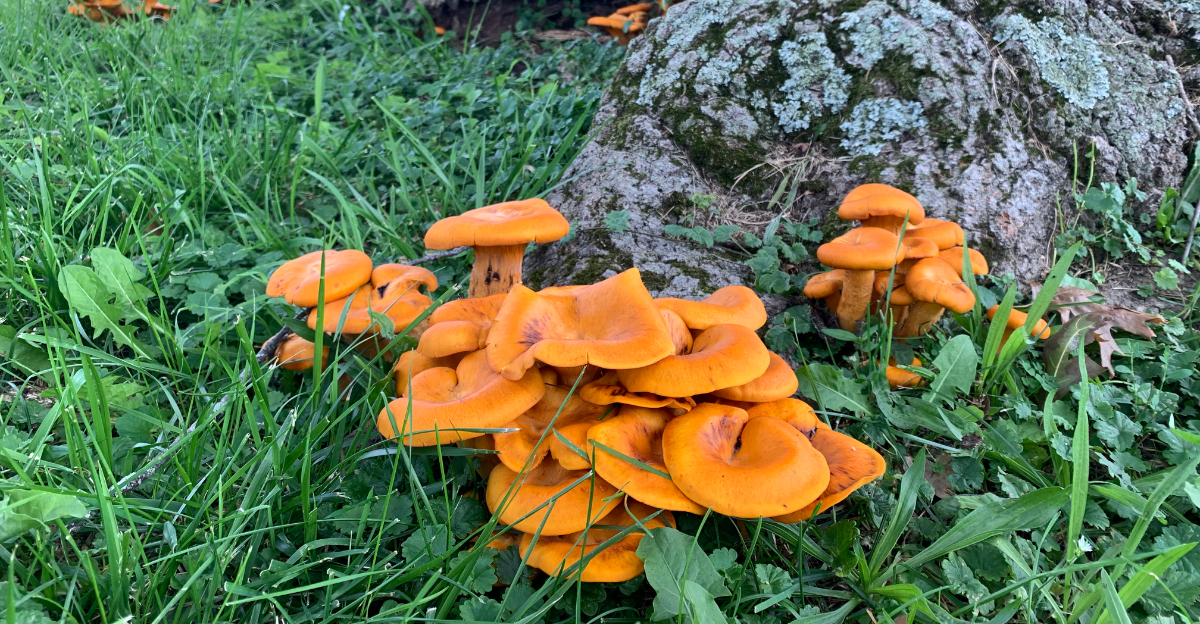
Ever walked out into your yard, spotted a mushroom, and thought, “That looks harmless… right?”
Yeah, that’s exactly how people get it wrong. In Ohio, mushrooms pop up like they own the place.
One day your lawn is clean, the next it looks like a mini forest moved in overnight. Some of them are just interesting.
Some are actually sought after. And a few?
They look perfectly normal but are something you really don’t want to mess with. Here’s the tricky part.
The difference between a great find and a bad mistake isn’t obvious. It’s not about big, dramatic features.
It’s the small stuff. The underside. Where it’s growing. What it’s growing on. Miss one detail, and you’re guessing.
You do not need to become a mushroom expert to stop making blind guesses in your own yard.
Most Ohio gardeners keep running into the same familiar types again and again. Learn the ones that matter, lock in the details that separate them, and suddenly that weird thing by the tree, the lawn, or the mulch bed does not feel like such a mystery anymore.
1. Morels Are The Honeycomb Gold Of Spring
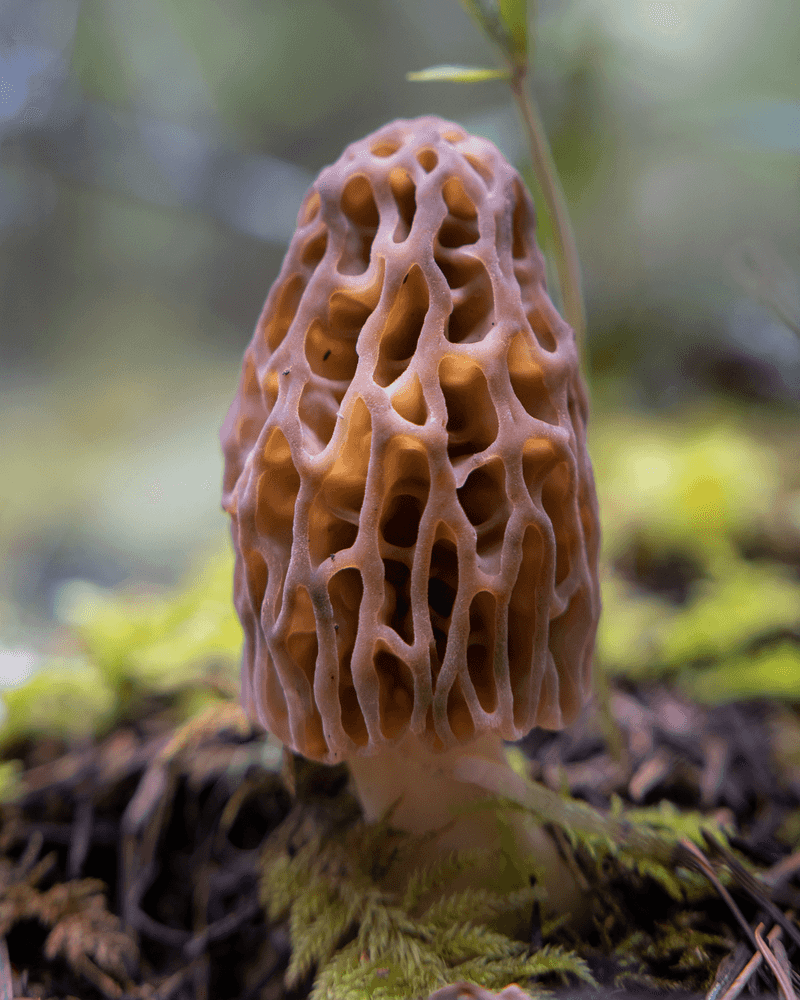
Every spring, experienced foragers across Ohio start watching the ground around elm, ash, and poplar trees with real excitement. Morels are the mushrooms they are waiting for, and for good reason.
The cap looks like a natural honeycomb, with deep pits and ridges forming a spongy, textured surface that is unlike any other mushroom you will find in Ohio.
Morels typically appear between April and May, often after warm rains when soil temperatures begin to rise. They tend to grow near declining or recently fallen hardwood trees, especially elms.
Slicing a morel straight down the middle reveals a completely hollow interior from cap to stem, which is one of the most reliable identification clues available.
False morels, sometimes called brain mushrooms, can fool beginners because they share a wrinkled appearance. However, false morels are not fully hollow inside and have a more irregular, lobed shape compared to the orderly pits of a true morel.
Color can also vary, ranging from pale cream to deep brown or gray. If you are new to morel hunting, bring along an experienced guide or cross-reference your find with Ohio State University Extension resources before making any final call on what you have found.
2. Chicken Of The Woods Is The Bright Orange Showstopper
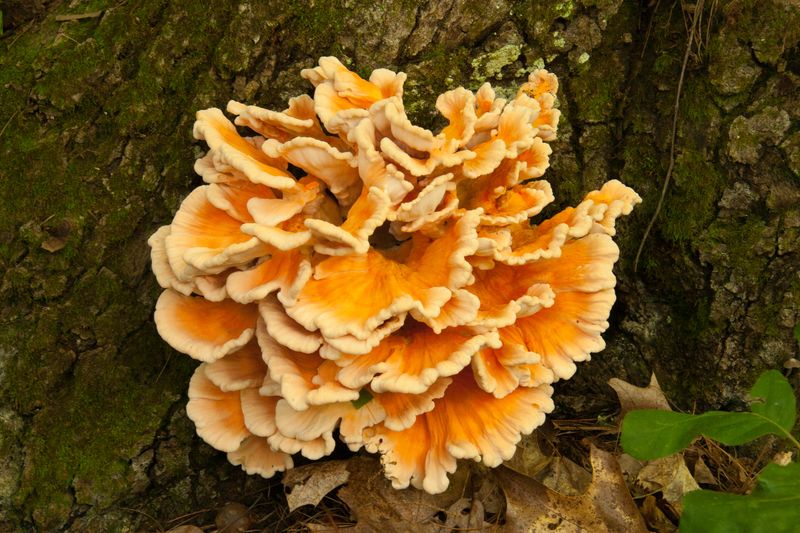
Spotting a burst of flame-orange on a tree trunk from across the yard is how most Ohio gardeners first meet Chicken of the Woods. The color is almost unreal, ranging from bright orange on the outer edges to a softer yellow closer to where it attaches to the wood.
It grows in overlapping, shelf-like layers that fan outward from declined or living hardwood trees.
Unlike many mushrooms, Chicken of the Woods has no gills on its underside. Instead, the surface beneath each shelf is covered with tiny pores, which is a key identification feature that sets it apart from other orange fungi.
Your Ohio Garden Changes Every Week. Your Plan Should Too.
Gardening in Ohio changes quickly throughout the season. Every Friday you’ll receive a simple weekly plan showing exactly what to plant, prune, fertilize, harvest, and protect so you never miss the right timing.
Ohio gardeners may find it growing on oaks, cherries, or other hardwoods from summer through early fall.
Even though some people do eat this mushroom, a clear word of caution is necessary here. Specimens growing on certain tree species, like locust or conifer, have been reported to cause stomach upset in some individuals.
Identification must be absolutely certain before any wild mushroom is consumed, and that standard applies here just as strictly as with any other species. Consulting a local mycologist or the Ohio Mushroom Society is always the smarter and safer choice.
3. Giant Puffballs Are The Backyard Giants You Can’t Miss
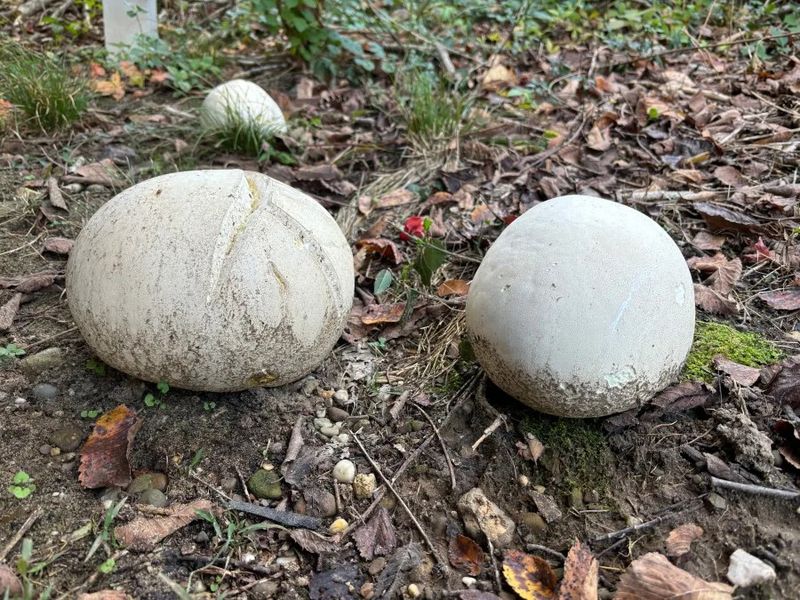
Finding a white ball the size of a volleyball sitting in the middle of your lawn is a memorable moment for any Ohio gardener. Giant Puffballs can grow to an impressive 20 inches across, and their smooth, round shape makes them look almost too perfect to be real.
They appear in open grassy areas, meadows, and woodland edges from late summer into October.
The most important identification step with Giant Puffballs is cutting one open. A young, edible Giant Puffball will show a completely solid, pure white interior with no visible outline of a developing cap or stem inside.
Any hint of yellow, purple, or a shadowy internal structure is a red flag, because toxic Amanita buttons can sometimes be mistaken for young puffballs from the outside.
As Giant Puffballs age, the interior turns yellow, then olive-green, and eventually breaks open to release billions of brown spores in a dusty cloud. Mature puffballs should not be eaten.
While young Giant Puffballs are considered edible by experienced foragers, proper identification is still essential.
The solid white interior test is non-negotiable and should always be performed before any further consideration is given to a puffball found in the field.
4. Shaggy Mane Is The Mushroom That Turns To Ink
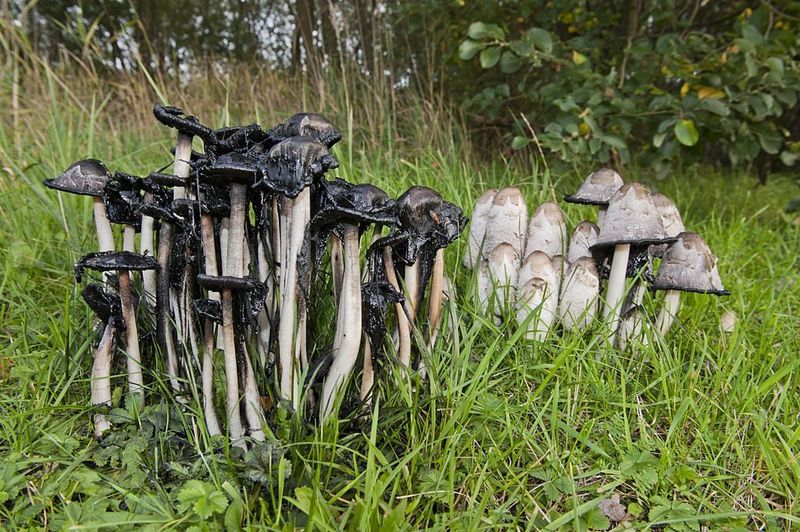
Few mushrooms put on a more dramatic show than the Shaggy Mane. In the morning, it stands tall and pristine, with a white cylindrical cap covered in shaggy, upward-curling scales.
By afternoon, the edges of that same cap may already be dripping with a thick black liquid as the mushroom begins a process called autodigestion, essentially dissolving itself from the bottom up.
Shaggy Manes pop up in lawns, along roadsides, and in compacted or disturbed soil from late summer through fall. They tend to grow in clusters or loose groups, and their tall, narrow shape makes them fairly easy to recognize early in the day.
The gills start out white, shift to pink, then rapidly turn black as the mushroom matures and begins to liquefy.
Timing truly matters with this species. Foragers who want to study or collect Shaggy Manes need to act quickly after spotting them.
By the next morning, a fresh cluster can become a puddle of black ink.
For gardeners who simply want to identify them, the combination of the shaggy white cap, the lawn or roadside habitat, and the black inky breakdown is a reliable set of clues that points clearly to Coprinus comatus.
5. Meadow Mushrooms Are The Lawn Lookalikes Everyone Knows
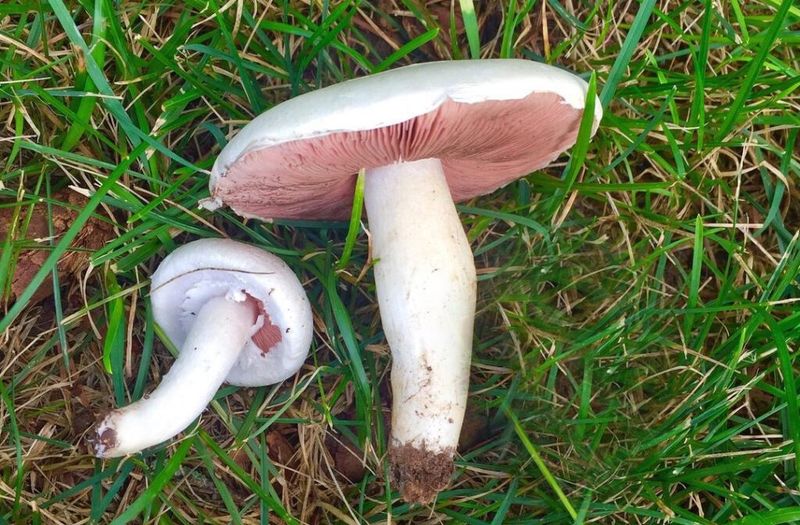
A mushroom that looks almost exactly like what you buy at the grocery store might seem like an easy identification, but Meadow Mushrooms deserve a closer look before any assumptions are made.
Agaricus campestris grows in grassy lawns and open fields across Ohio from late summer into early fall, and its resemblance to the common button mushroom is striking at first glance.
Gills are the key feature to examine here. Young Meadow Mushrooms have bright pink gills that gradually shift to a chocolate brown color as the mushroom ages and the spores mature.
The cap ranges from white to pale brown and sits on a short, sturdy stem. The flesh does not stain yellow when cut or bruised, which helps separate it from some of its more problematic Agaricus relatives.
The challenge is that Meadow Mushrooms share their lawn habitat with toxic lookalikes, including some Amanita species that also appear white and grow in grass.
Beginners often feel confident because the mushroom looks familiar, but that confidence can lead to mistakes.
Always check for pink gills that mature to chocolate brown, and rule out a cup-like structure at the base, which points to toxic Amanita species.
6. Jack-O’-Lanterns Are The Toxic Glow Imposters
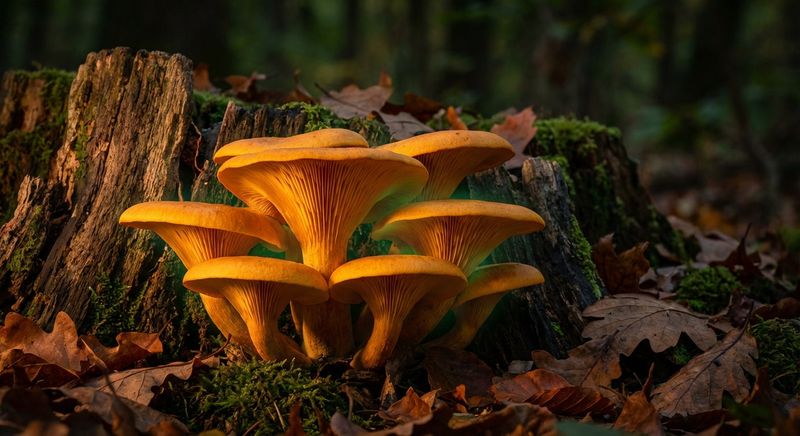
Bright orange clusters erupting from the base of a stump or buried wood root are hard to ignore, and Jack-O’-Lanterns are exactly that kind of attention-grabbing find.
Omphalotus illudens grows in dense, crowded clusters and displays a vivid orange color across both the cap and the stem.
What makes this species particularly notorious is the claim that the gills can emit a faint bioluminescent glow in complete darkness.
The real danger with Jack-O’-Lanterns is how closely they can resemble chanterelles at a quick glance. Both are orange, and both grow in wooded areas.
The critical difference is in the gills. Jack-O’-Lanterns have true, sharp, crowded gills running down the stem, while chanterelles have blunt, forking ridges that look more like folds than actual gills.
Chanterelles also tend to grow as individual mushrooms rather than tight clusters.
Jack-O’-Lanterns are toxic and cause significant gastrointestinal distress in people who consume them. They are found in Ohio from summer through fall, typically at the base of stumps or growing from buried decaying roots.
Even experienced foragers double-check every orange mushroom carefully. If you spot orange clusters near a stump, treat them as Jack-O’-Lanterns until proven otherwise by someone with solid expertise.
7. Destroying Angels Are The White Mushrooms To Never Eat
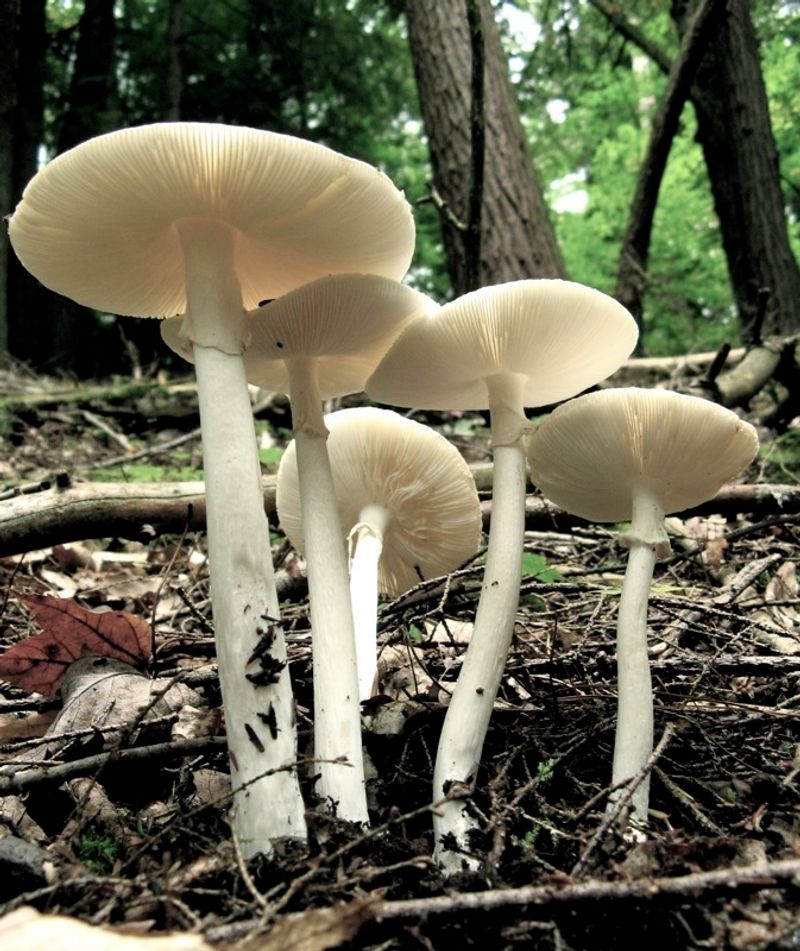
All-white mushrooms growing in Ohio woodlands deserve serious attention and a great deal of respect. Amanita bisporigera, commonly called the Destroying Angel, is one of the most dangerous mushrooms to misidentify anywhere in North America.
Its appearance is deceptively clean and simple, with a smooth white cap, white gills, a white stem, and nothing that immediately screams danger.
Three features set it apart from harmless white mushrooms. First, look for a skirt-like ring hanging around the upper portion of the stem.
Second, check the very base of the stem for a cup-shaped structure called a volva, which is often partially buried in the soil or leaf litter. Third, the gills are free, meaning they do not attach directly to the stem, and they remain white throughout the mushroom’s life.
Destroying Angels appear in Ohio’s mixed woodlands from summer through fall, often near oaks and other hardwoods.
The toxins they contain affect the liver and kidneys, and symptoms may not appear until a day or more after ingestion, which makes the situation especially serious.
White mushrooms should never be handled casually or confused with edible species like Meadow Mushrooms. If you see a pristine white mushroom in the woods, observe it carefully from a distance and walk away.
8. Chanterelles Are The Golden Gems Of The Forest
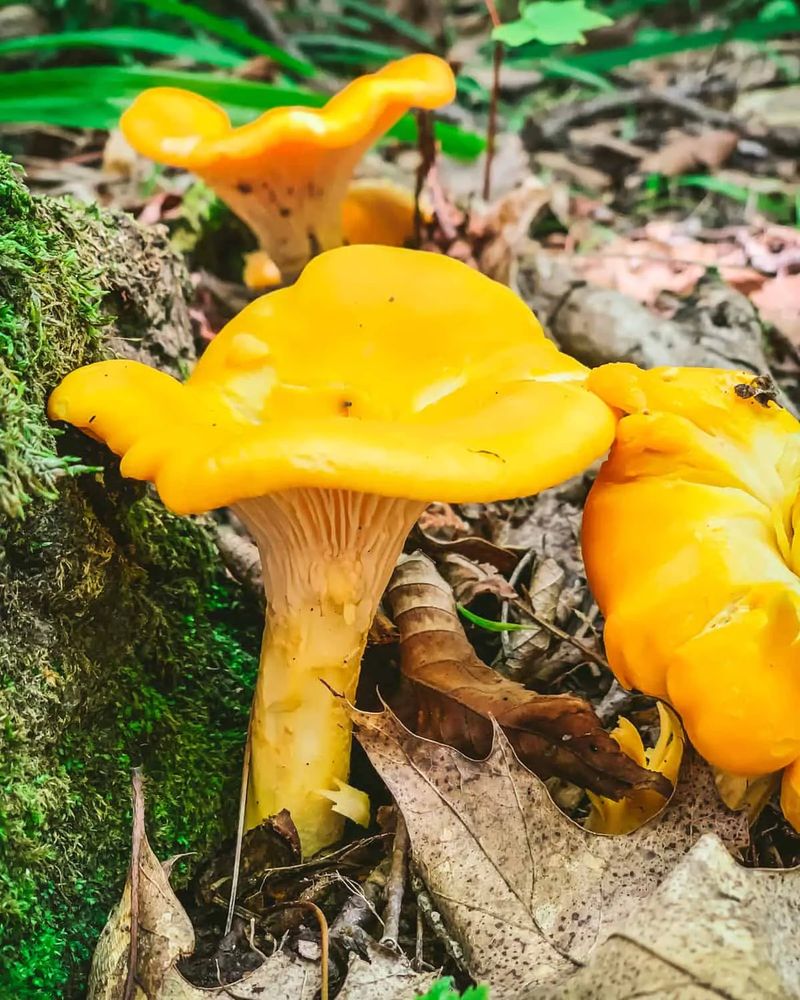
Golden, wavy, and faintly fruity-smelling, chanterelles are among the most sought-after mushrooms in Ohio’s forests. Cantharellus cibarius and related species glow like little lanterns on the forest floor, particularly in the humid months of June through September.
They favor the ground near hardwood trees like oaks and beeches, often appearing after periods of warm rain.
The cap has a wavy, irregular edge that gives the mushroom a slightly ruffled look. Flip one over and you will see the feature that experienced foragers rely on most: blunt, forking ridges that run partway down the stem rather than sharp, crowded gills.
These ridges feel almost rubbery to the touch and do not separate cleanly from the cap flesh the way true gills do. A gentle scratch near the cap often releases a pleasant, apricot-like scent.
Chanterelles grow as single mushrooms rather than clusters, which immediately separates them from Jack-O’-Lanterns in the field. Both are orange, but the habitat, growth pattern, and gill structure are distinctly different once you know what to look for.
Chanterelles grow from soil, not wood. Still, beginners should study both species side by side using a quality field guide before feeling confident enough to make any firm identification in the woods.
9. Shaggy Parasols Are The Big Lawn Mushrooms With A Twist
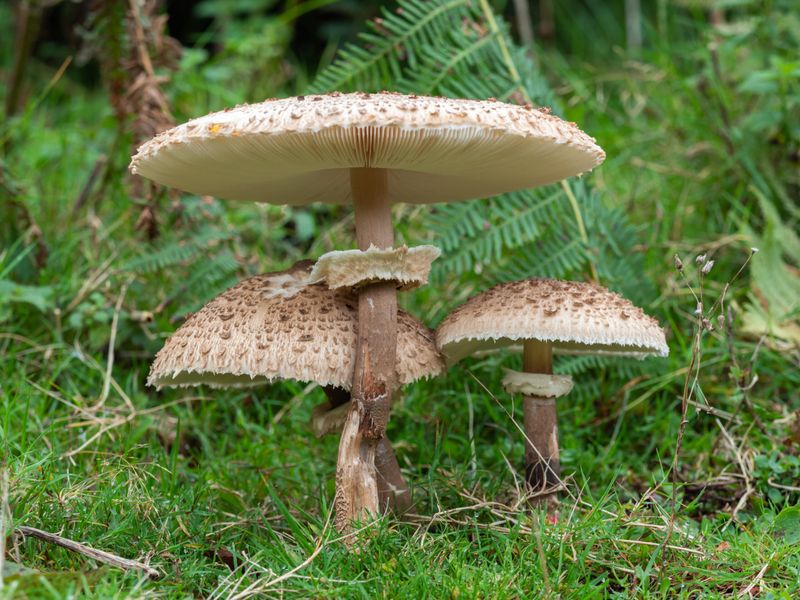
Pulling back a layer of mulch or turning the corner of a compost pile and finding a large, scaly-capped mushroom standing nearly knee-high is exactly the kind of surprise Ohio gardeners encounter with Shaggy Parasols.
Chlorophyllum rhacodes tends to appear in mulched garden beds, compost areas, and disturbed lawns, often in late summer or early fall when conditions are warm and moist.
The cap is one of the most distinctive features, covered with rough, shaggy brown scales against a pale background. As the mushroom matures, the cap expands and flattens out into a broad, parasol shape.
The stem is smooth and thick, with a prominent double ring that can slide up and down when touched. Cutting the flesh exposes white tissue that may turn slightly reddish or orange when exposed to air.
Even though Shaggy Parasols are considered edible by some experienced foragers, they cause stomach upset in a notable number of people, particularly when eaten raw or in large quantities.
Certain similar-looking species in the Chlorophyllum family are also more problematic and harder to distinguish without close examination.
For Ohio gardeners who find one, the best approach is to appreciate it from a distance, document it with a photo, and verify the identification thoroughly before any other consideration.
10. Slippery Jacks Are The Slimy Pine-Loving Finds
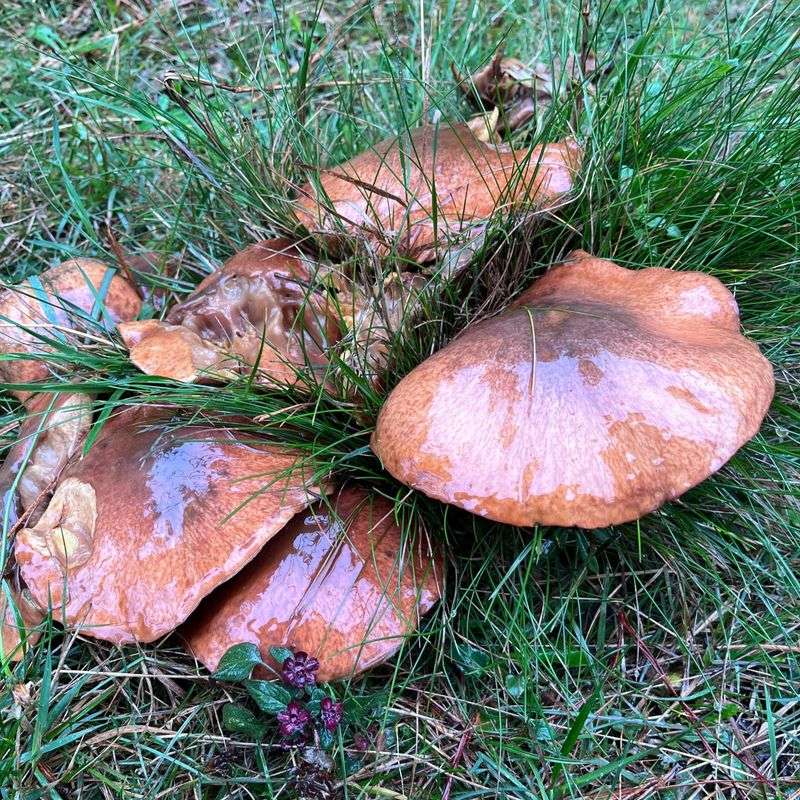
Reaching down to pick up what looks like an ordinary brown mushroom and pulling back a hand covered in slime is the classic introduction to Slippery Jack.
Suillus luteus has a cap that becomes distinctly sticky and slimy when wet, giving it a slick, almost varnished look after rain.
When conditions are dry, the cap dulls down to a more ordinary brown, so moisture levels at the time of the find can affect how the mushroom looks.
Habitat is the single most useful clue for identifying Slippery Jacks in Ohio. They grow almost exclusively near pine trees, forming a fungal partnership with pine roots that helps both organisms thrive.
Spotting a slimy brown mushroom under a stand of pines in late summer or fall puts Slippery Jack near the top of the list of possibilities right away.
Flip the cap over and you will find pores instead of gills, a shared trait among the bolete family. The pore surface is pale yellow and covers the entire underside of the cap.
A partial veil covers the pores when the mushroom is young, leaving a ring on the stem as it matures.
Slippery Jacks are considered edible by many foragers, but the slimy cap skin is usually removed before cooking, and proper identification must still be confirmed before any mushroom is consumed.