Native Arizona Trees To Plant Instead Of Crape Myrtle That Birds And Pollinators Actually Love

Crape myrtle looks pretty, but it does not do much for Arizona wildlife and it drinks more water than our desert can spare. If you want a yard that feeds birds, buzzes with bees, and shrugs off 110-degree afternoons, native trees are the smarter pick.
The trees below are built for our heat, our tricky caliche soil, and our short rainy seasons. Plant them in fall or early spring, and watch your yard turn into a real habitat.
1. Blue Palo Verde

Meet Arizona’s official state tree, and honestly, it earns the crown. The Blue Palo Verde (Parkinsonia florida) has a party trick that few plants can match: its bark is green and keeps making food through photosynthesis even after it drops its tiny leaves to survive drought.
Come spring, the whole tree lights up in a golden cloud of yellow blossoms. Carpenter bees, butterflies, and hummingbirds show up in droves, treating it like an all-you-can-eat buffet.
Birds get plenty out of it too. Verdins and cactus wrens tuck their nests into the branches, while Gambel’s quail and mourning doves feast on the fallen seeds.
The airy canopy, which can stretch 20 to 40 feet wide, shelters nearly 150 bird species and throws down filtered shade that cools your yard and eases the urban heat island.
Best of all, it barely sips water once established, handling temperatures near 120 degrees and as little as four inches of rain a year. That combination of beauty, wildlife value, and toughness makes it a far better bet than crape myrtle.
2. Foothills Palo Verde

If the Blue Palo Verde is the showy sibling, the Foothills Palo Verde (Parkinsonia microphylla) is the rugged old-timer that thrives where almost nothing else will. You’ll spot these on rocky slopes and bajadas, often acting as a nurse tree that shelters baby saguaros in its shade.
Its blooms open a little later and lean toward a softer, creamier yellow, but pollinators love them just the same. Native bees and butterflies work the flowers hard through the warm spring days.
Slow and steady is this tree’s whole personality. It grows patiently, drinks almost nothing, and can live for well over a hundred years, making it a legacy planting rather than a quick fix.
Quail, doves, and desert woodrats depend on its protein-rich seeds, and the tangled, twiggy structure gives small birds a safe hideout from hawks. For homeowners who want an authentic slice of Sonoran Desert that asks for zero fuss, this one delivers habitat, character, and heat resistance in a package crape myrtle simply cannot rival.
3. Desert Willow

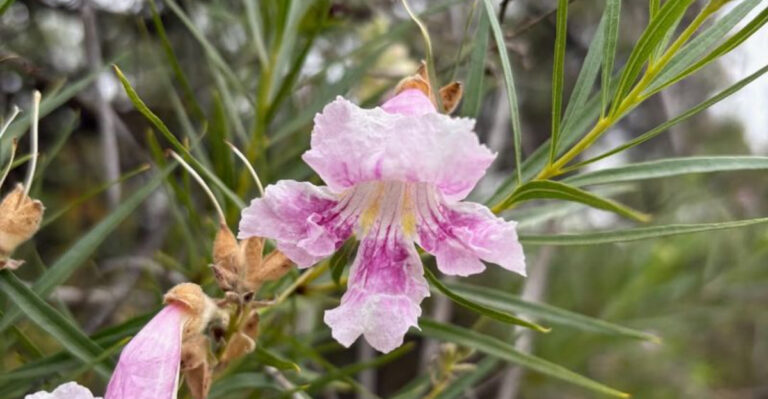
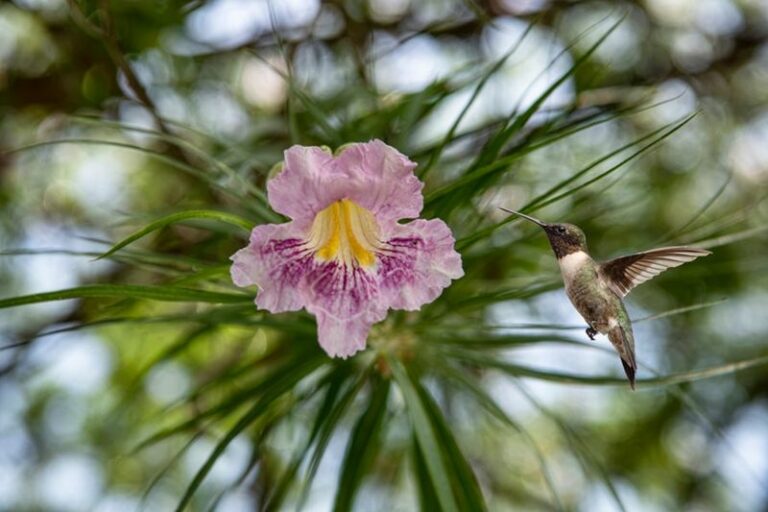
Do not let the name fool you, because the Desert Willow (Chilopsis linearis) is not a true willow at all, and it certainly does not need a swamp to be happy. What it does have is a jaw-dropping bloom season that runs from spring clear through fall.
Those trumpet-shaped flowers in pink, purple, and white are basically a neon sign for hummingbirds. Bees and butterflies crowd in too, especially during summer when a lot of other desert plants have called it quits.
Your Arizona Garden Changes Every Week. Your Plan Should Too.
Gardening in Arizona changes quickly throughout the season. Every Friday you’ll receive a simple weekly plan showing exactly what to plant, prune, fertilize, harvest, and protect so you never miss the right timing.
Songbirds like goldfinches and doves nibble the slender seed pods, and the leafy branches offer plenty of nesting cover. Since it drops its leaves in winter, you get cooling summer shade and welcome winter sun when planted on a west or south wall.
Growing 15 to 30 feet tall with roots that stay polite around foundations, it fits tidy suburban lots without causing headaches. It shrugs off reflected heat, needs far less water and babysitting than crape myrtle, and rewards you with color for months.
That is a hard combination to beat.
4. Velvet Mesquite

Few trees say Arizona quite like the Velvet Mesquite (Prosopis velutina), with its soft, fern-like leaves and sprawling, shady canopy. Underground it is a marvel, sending roots down more than 100 feet to reach water nobody else can touch.
In spring and early summer, fuzzy yellow catkins perfume the air and pull in a stunning crowd of pollinators. Over 60 native bee species may visit, and beekeepers prize the pale, delicate mesquite honey their bees produce.
The wildlife menu here is generous. Doves, quail, rabbits, and even coyotes snack on the sweet, nutritious seed pods, while countless birds nest and roost in the branches.
Because it fixes nitrogen, this tree quietly enriches your soil instead of depleting it, and it asks for barely any pruning or pest control. Its filtered shade cools patios without plunging them into gloom, and quick growth means you enjoy that relief sooner rather than later.
Once established, it barely needs supplemental water, making it a true water-conservation champion. For a working, wildlife-packed shade tree, mesquite runs circles around crape myrtle.
5. Honey Mesquite

Honey Mesquite (Prosopis glandulosa) brings the same desert toughness as its velvet cousin but with a slightly airier, more sculptural look that landscapers adore. Those twisting branches and glossy leaves make it a natural focal point for a native yard.
The name is a tip-off. Its abundant flower spikes drip with nectar that bees turn into some of the finest honey around, and butterflies and hummingbirds get in on the action too.
Pod season is a feast for desert critters. Quail and doves gather beneath the branches, and the long, sweet pods have fed both wildlife and people in this region for thousands of years.
Like all mesquites, it fixes nitrogen and improves the ground it grows in, so nearby plants benefit from having it as a neighbor. Its deep roots keep it thriving through brutal dry spells with almost no help from your hose.
The filtered canopy gives you comfortable shade for seating areas, and the tree’s easygoing, low-maintenance habit means you spend more time enjoying it than working on it. It is a functional, pollinator-friendly upgrade over any ornamental import.
6. Ironwood

Some trees are sprinters, and the Ironwood (Olneya tesota) is the ultimate marathon runner. Found only in the Sonoran Desert, this slow-growing giant can live for centuries, with some specimens estimated at over 800 years old.
Its wood is famously dense, so heavy it sinks in water, which is exactly why it earned the ironwood name. That toughness translates into a tree that laughs at drought and needs virtually no irrigation once it settles in.
Birdwatchers treasure it, and for good reason. The thick, evergreen-ish canopy is a genuine sanctuary sheltering close to 150 bird species, and its protein-rich seeds and the insects it hosts keep those birds well fed.
Underneath, its cool shade acts as a nursery, protecting young cacti and other desert plants from scorching sun and frost alike. Lavender to pink blooms in late spring add a soft splash of color and draw in pollinators too.
Patience is the price of admission, since it grows unhurriedly, but you are planting a living heirloom that supports wildlife for generations. That kind of ecological payoff leaves crape myrtle in the dust.
7. Texas Ebony

When you crave shade that sticks around all year, Texas Ebony (Ebenopsis ebano) answers the call. Native to the Chihuahuan Desert, it settles happily into southern Arizona and keeps its dense, dark green canopy through every season.
Because it stays evergreen, it delivers constant, deep shade rather than the seasonal on-and-off shade of deciduous trees. That makes it a smart pick for cooling a patio or blocking a hot western view year-round.
Late spring and fall bring cream-colored, sweetly fragrant flower clusters that perfume the air and likely draw pollinators looking for nectar. The blooms give the tree a soft, welcoming presence despite its rugged build.
It absolutely loves full sun and shrugs off intense heat with impressive drought tolerance, so your water bill stays low. A word of caution though: it grows slowly and carries thorny branches, so give it room away from walkways and play areas.
For homeowners wanting a lush, structured, evergreen shade tree that thrives on neglect and reflected heat, this desert native offers a personality all its own and a welcome break from thirsty ornamentals.