7 Native Florida Ground Covers That Are Replacing St. Augustine Grass
St. Augustine grass has ruled Florida lawns for decades, but plenty of homeowners are quietly losing that battle in the spots that matter most.
Heavy shade under live oaks, bone-dry sandy patches near the coast, salty air blowing in off the water, and low-traffic corners that just never seem to fill in right are all places where St. Augustine regularly falls short.
Native ground covers are stepping into those gaps, and the results are often more attractive, more resilient, and far less demanding than a struggling turf lawn.
Some of these plants are best suited to coastal Florida conditions, some shine in warm partly shaded gardens, and some are built for sunny low-traffic spaces where grass simply gives up.
None of them are a universal swap for every square foot of lawn, but in the right spot, they can outperform St. Augustine in ways that make you wonder why you waited so long to try them.
1. Sunshine Mimosa Is Replacing St. Augustine In Sunny Low Traffic Areas
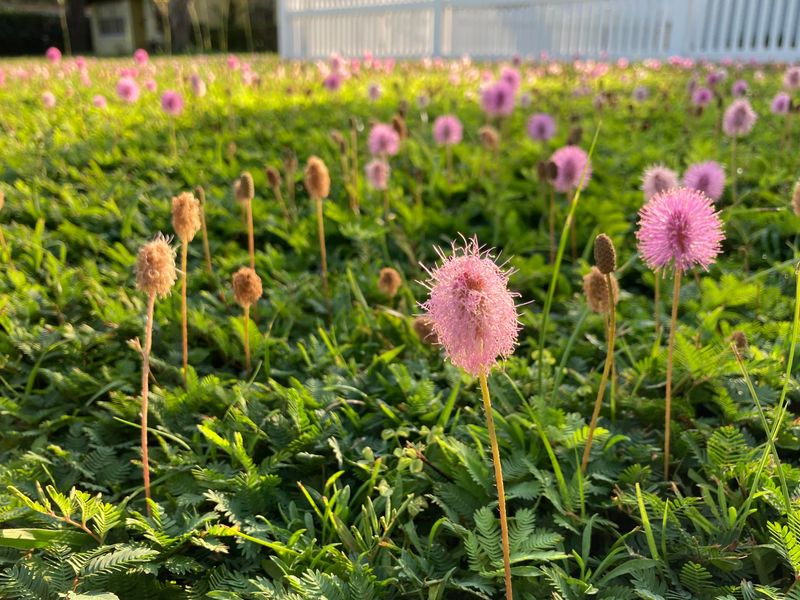
Walk barefoot across a patch of sunshine mimosa on a warm Florida morning and you will immediately understand why so many homeowners are swapping it in for St. Augustine in their sunniest, least-traveled spots.
The soft, fern-like leaves fold gently underfoot, and those small pink powder-puff blooms pop up from spring through fall, drawing in bees and butterflies without any effort on your part.
It is a plant that genuinely earns its keep.
Sunshine mimosa, known botanically as Mimosa strigillosa, is a low-growing, spreading native that forms a dense mat close to the ground.
It handles full sun beautifully and can manage in partial shade as well, making it versatile enough for a range of open yard conditions.
Once it establishes itself in well-drained, sandy soil, it asks for very little in return, which puts it squarely in the low-maintenance category that most Florida gardeners are actively chasing.
What makes it a realistic turf alternative is its ability to knit together quickly and crowd out weeds as it spreads.
It does not need frequent mowing, it tolerates Florida’s heat without complaint, and it can handle the kind of light foot traffic that comes with a casual backyard path or a side yard that people cross occasionally.
Heavy daily traffic is a different story, so this is not the right pick for a main play area or a busy walkway zone.
UF/IFAS recognizes sunshine mimosa as a strong candidate for lawn replacement in areas where turf underperforms, particularly in sunny, open sites with sandy or well-drained soil. The key is matching it to the right location.
Plant it where grass has been thin and frustrating, give it time to establish, and sunshine mimosa will likely reward you with a lush, living carpet that looks far better than a patchy St. Augustine lawn ever did.
2. Frogfruit Is Taking Over Where Florida Yards Stay Fairly Moist
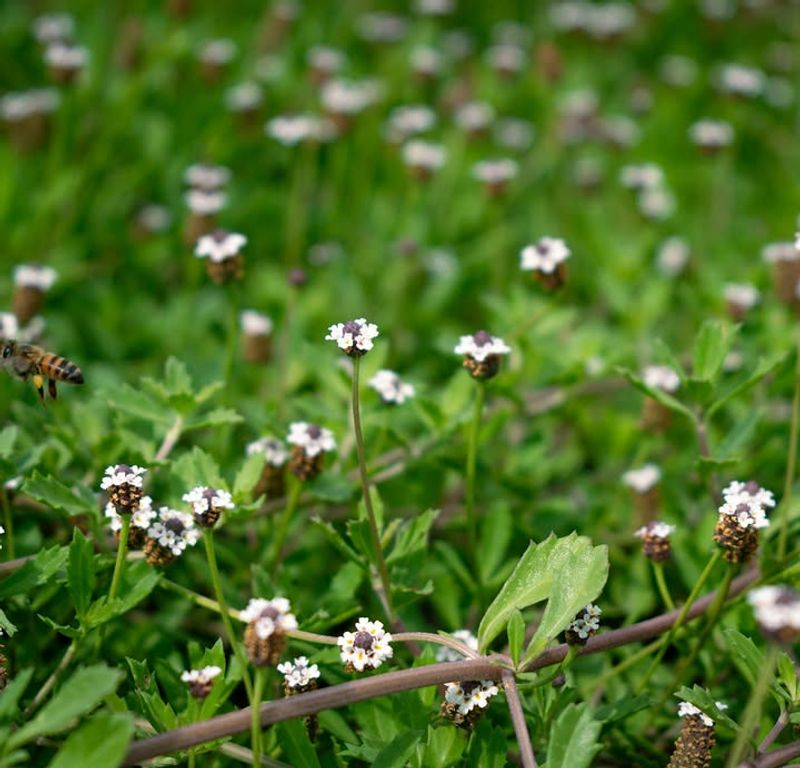
There is a particular kind of Florida yard problem that frogfruit seems almost designed to solve. You know the spot: a low-lying section that stays slightly damp after rain, where St. Augustine looks thin and patchy no matter how much you water or fertilize it.
Your Florida Garden Changes Every Week. Your Plan Should Too.
Gardening in Florida changes quickly throughout the season. Every Friday you’ll receive a simple weekly plan showing exactly what to plant, prune, fertilize, harvest, and protect so you never miss the right timing.
Frogfruit moves into that kind of space and fills it in with a confidence that turf grass rarely manages in similar conditions.
Phyla nodiflora, commonly called frogfruit, is a native Florida ground cover that spreads by creeping stems and forms a tight, low mat of small textured leaves.
Tiny white to purplish flowers appear nearly year-round, and those blooms are a magnet for pollinators, especially butterflies.
It is actually a larval host plant for several butterfly species, including the Common Buckeye, which gives it real ecological value beyond just looking tidy.
Frogfruit performs best in full sun to part shade and does well in yards or sections of yards that stay moderately moist rather than bone dry. It can handle some drought once established, but calling it a tough drought warrior would be overselling it.
The sweet spot is a site that gets reasonable moisture, whether from rainfall, irrigation, or natural drainage, without sitting in standing water for extended periods.
This is not a plant for a formal high-traffic lawn. It works best in softer, lower-use spaces where the goal is a natural-looking, pollinator-friendly ground layer rather than a traditional turf surface.
Think of it as a solution for the problem corner of your yard, the low area near the fence, or the strip along a garden bed where grass never quite commits.
UF/IFAS supports frogfruit as a turf alternative in appropriate Florida sites, and its adaptability to a range of light conditions makes it one of the more flexible native options available to homeowners looking for something genuinely useful.
3. Railroad Vine Is Beating St. Augustine In Coastal Sand
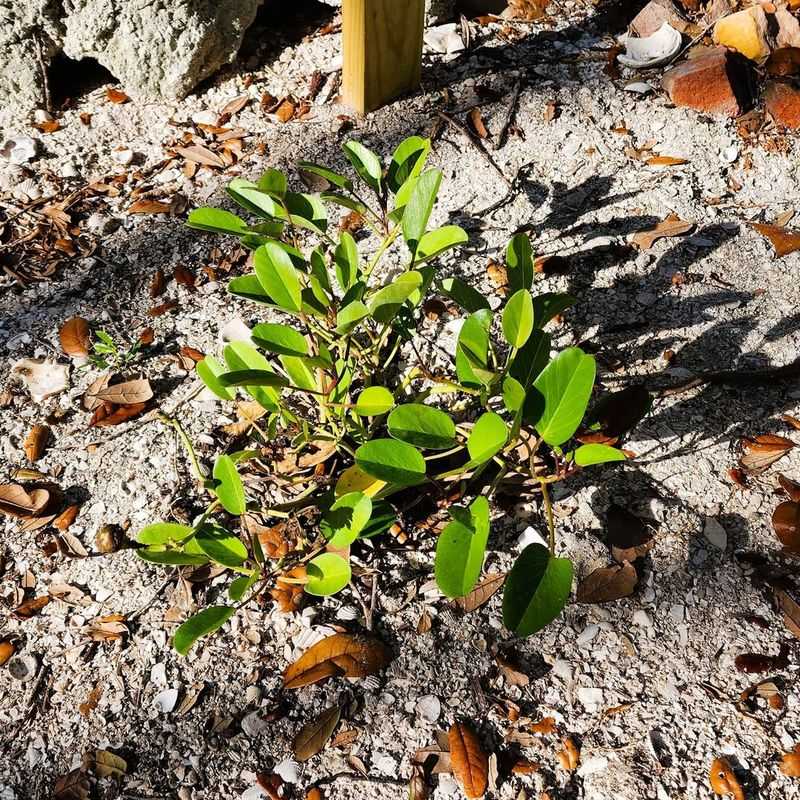
If you have ever tried to keep St. Augustine alive in a sandy coastal yard battered by salt wind, relentless sun, and soil that holds almost no moisture, you already know how discouraging that fight can be. Railroad vine does not just survive those conditions.
It genuinely thrives in them, which is exactly why it keeps showing up along Florida’s coastlines where turf has long since given up.
Ipomoea pes-caprae is a fast-moving, vigorous native vine that spreads across open sand with thick, leathery, kidney-shaped leaves and striking purple morning glory blooms.
The flowers are large and showy, appearing throughout the warmer months and adding real visual impact to a landscape that might otherwise be nothing but bare sand and struggling grass.
It spreads by long trailing stems that root as they go, which lets it cover ground quickly and hold sandy soil in place.
Salt tolerance is where railroad vine truly separates itself from most other ground cover options.
It handles salt spray, coastal winds, and intense reflected heat without missing a beat, which makes it one of the clearest examples of a native plant outperforming traditional turf in a specific environment.
This is a coastal solution first and foremost, and it should be understood in that context rather than as a broad inland lawn substitute.
Railroad vine needs space to roam. It is not a tidy, contained ground cover for a small formal yard.
But in the right coastal setting, on a dune edge, a sandy beachside property, or an exposed coastal lot where nothing else wants to grow, it can transform a bare, eroding, high-maintenance problem into something that looks purposeful and alive.
UF/IFAS recognizes its value as a coastal native, and its track record on Florida’s sandy shores speaks for itself. Few plants handle the coast with this much ease.
4. Beach Sunflower Is Brightening Hot Dry Spots Grass Hates
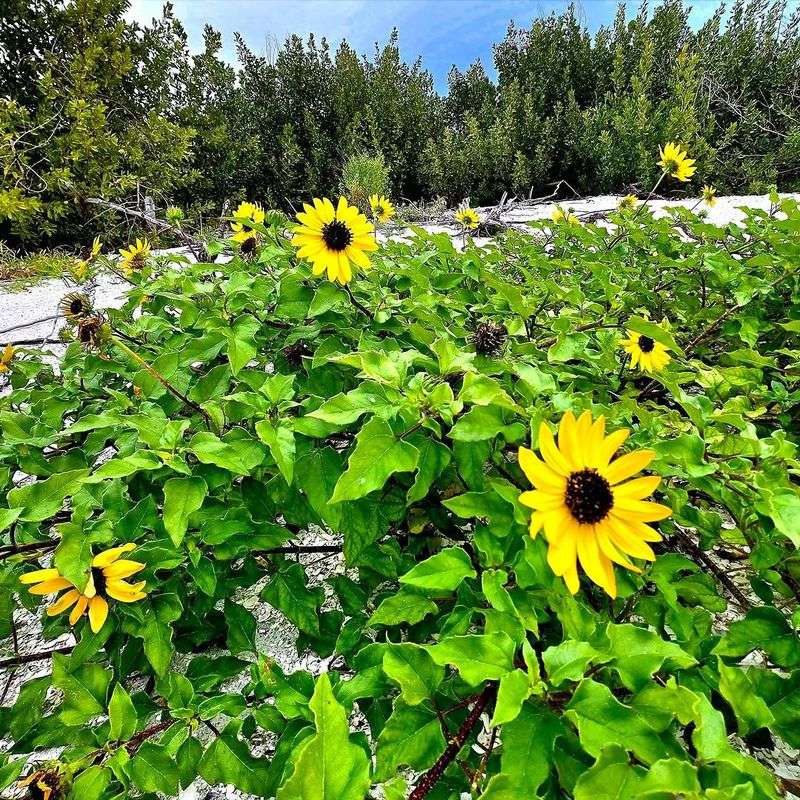
Some plants seem to actually enjoy the conditions that make other plants miserable. Beach sunflower is one of them.
Full sun beating down all day, sandy soil with almost no organic matter, salt in the air, and weeks without significant rain are not obstacles for this plant. They are basically its ideal resume of growing conditions.
Helianthus debilis is a Florida native that brings a steady stream of cheerful yellow blooms to the landscape from late spring through fall and sometimes beyond in warmer parts of the state.
The flowers look like small sunflowers with dark centers, and they appear in such numbers that a well-established patch creates a genuinely ornamental display, not just a functional ground layer.
This is a plant that earns its spot visually as well as ecologically.
The sprawling stems spread outward from a central base, rooting lightly as they go and creating a thick mat that does a solid job of shading out weeds.
That spreading habit is what makes it useful as a St. Augustine replacement in hot, dry, open trouble spots, particularly near the coast or in inland areas with similarly sandy, fast-draining conditions.
It is not a lawn substitute for shaded yards or heavy clay soils, and it is not what you want in a high-traffic area either.
Beach sunflower is distinct from railroad vine in both scale and character.
Where railroad vine is a vigorous, large-leafed spreader built for dunes and open coastal sand, beach sunflower is more of a sunny border and open-lawn trouble-spot solution, one that brings pollinators, color, and low-maintenance appeal all at once.
Bees, butterflies, and small birds are all drawn to it regularly.
For Florida homeowners dealing with a hot, dry, sunny patch where St. Augustine looks thin and burned, beach sunflower is one of the most rewarding swaps available. Plant it, step back, and let it do its thing.
5. Gopher Apple Is Solving Dry Sandy Lawn Problems
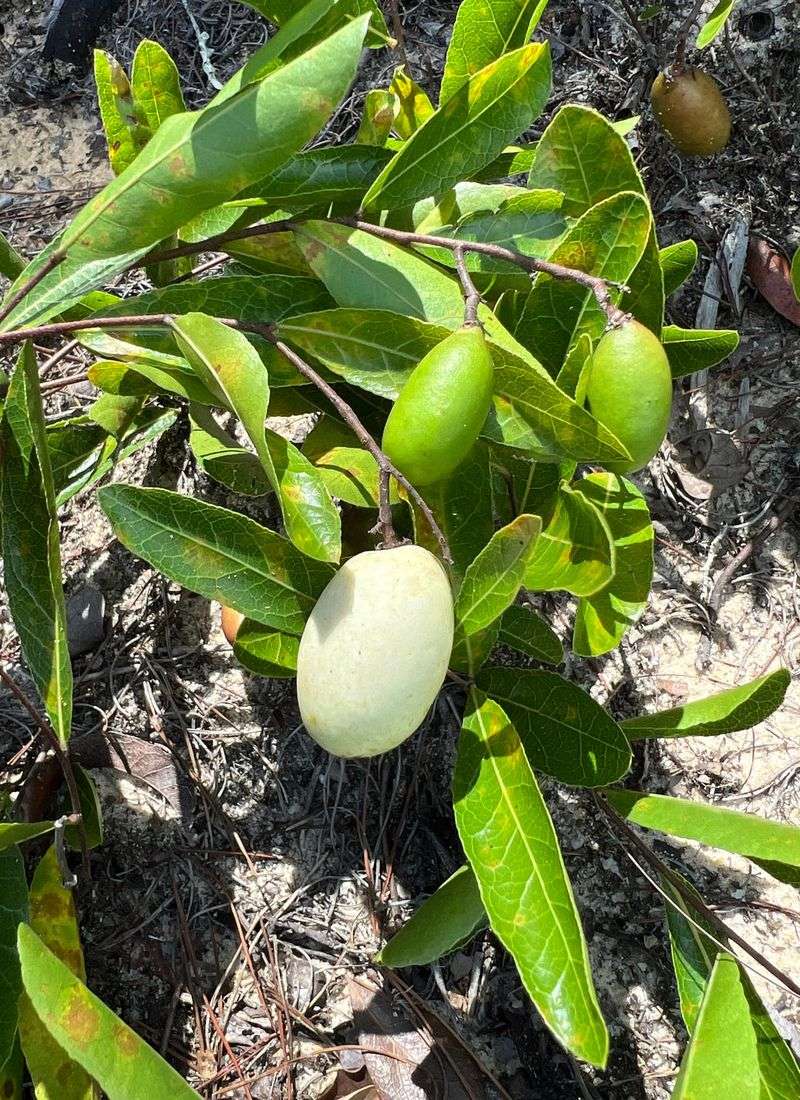
Sandy, dry, low-nutrient soil is a problem that a huge number of Florida homeowners deal with, especially in coastal and inland scrub areas where the ground barely holds water after a rain. St. Augustine in those spots tends to look perpetually stressed, thin, and faded.
Gopher apple takes a completely different approach to that same soil and actually looks at home in it.
Licania michauxii is a low-growing, woody native shrub that spreads slowly by underground runners to form a dense, knee-high or lower layer of glossy, leathery leaves. It is not a soft, grass-like ground cover, and it does not pretend to be.
What it offers instead is a tough, attractive, genuinely low-maintenance surface for dry sandy spots that would otherwise be a constant source of lawn frustration.
Gopher apple is named for its relationship with gopher tortoises, which rely on the small white fruit it produces as a food source. That ecological connection makes it more than just a landscape plant.
It is a functioning piece of Florida’s native scrub ecosystem, which is worth something in a state that has lost so much of that habitat to development.
This is not a plant for every yard, and it is definitely not a universal lawn replacement. Heavy foot traffic will not suit it, and it needs well-drained, sandy conditions to perform well.
But in a low-traffic sandy problem spot, along a dry sunny border, or in a coastal or scrub-type yard where turf has always been a struggle, gopher apple can fill in beautifully over time.
Patience is part of the deal. Gopher apple spreads slowly, so it rewards homeowners who are willing to give it a season or two to get established.
Once it does, it tends to hold its ground with very little help from you, which is exactly the kind of reliability that sandy Florida lots need most.
6. Twinflower Is Filling In Warm Partly Shaded Spaces
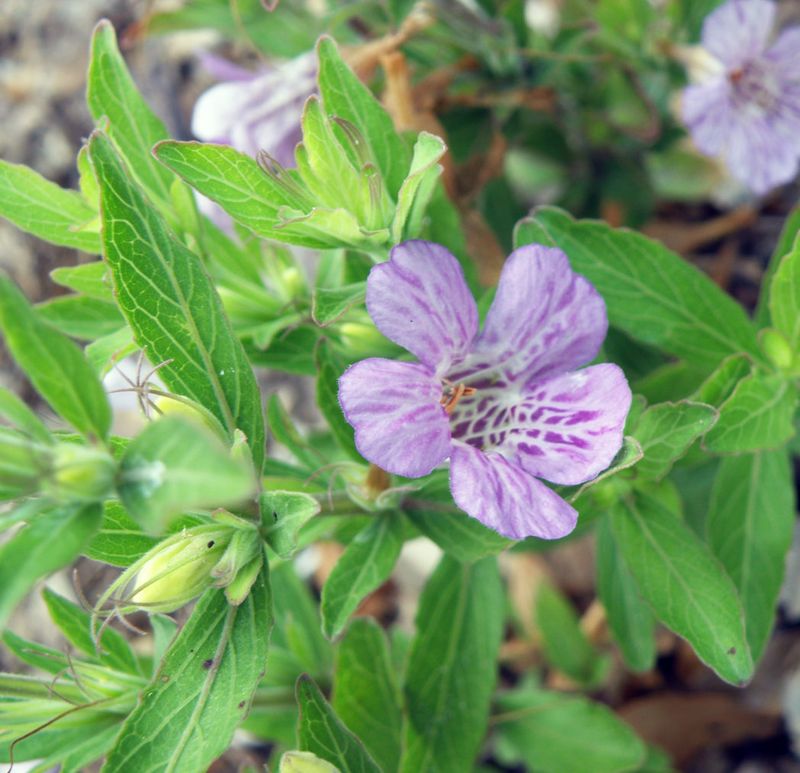
Partial shade in a Florida garden can be a tricky thing to work with. Too much sun and certain plants scorch.
Too little and others stretch and thin out looking for light. Twinflower sits right in that middle zone and seems genuinely comfortable there, which is part of what makes it such a useful native option for warm Florida gardens with a canopy overhead.
Dyschoriste oblongifolia is a low-growing Florida native perennial that spreads gently to form a soft ground layer in partly shaded conditions.
The small, paired lavender to purple flowers appear repeatedly through the warmer months, giving the planting a delicate, natural look that suits shaded garden spaces far better than a struggling patch of thin St. Augustine ever could.
It is a plant with quiet ornamental charm rather than bold showiness.
Twinflower is best suited to zones 8 through 11, which covers a broad swath of Florida from the Panhandle down through South Florida, though it is most at home in the warmer, more humid parts of that range.
It fits partly shaded, low-traffic spaces particularly well, such as the area under a large tree canopy, along a shaded fence line, or in a garden bed that gets morning sun and afternoon shade.
This is not a plant for open, sunny lawns or for areas that see regular foot traffic. It thrives in quieter, more undisturbed spots where it can spread at its own pace without competition from aggressive turf or heavy use.
Think of it as a finishing layer for a shaded landscape rather than a lawn replacement in the traditional sense.
UF/IFAS notes it as a native option for Florida gardens, and its ability to bloom repeatedly in low-light conditions makes it genuinely useful in spots where most ground covers either stall out or look washed out.
For warm, partly shaded Florida spaces, twinflower delivers real results without demanding much in return.
7. Partridgeberry Is Replacing Thin Grass In Quiet Shade
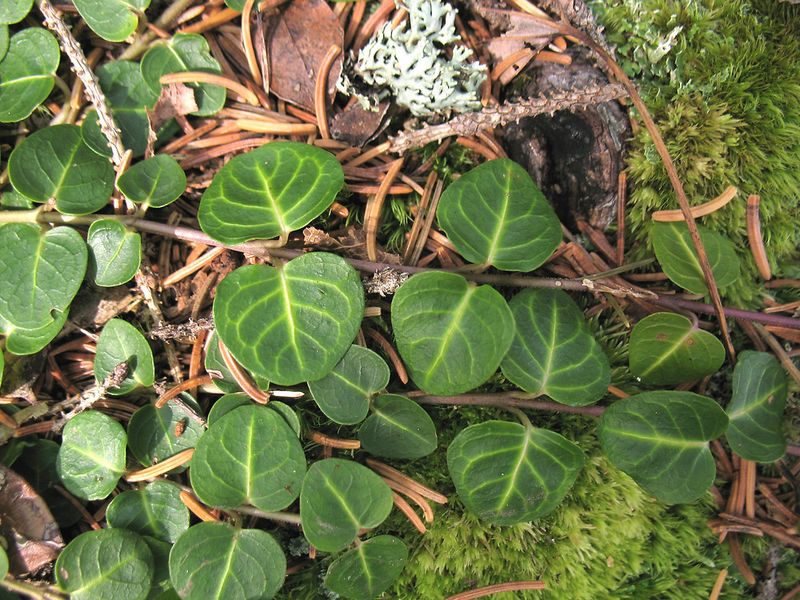
There is a specific kind of lawn defeat that happens under large shade trees in North and Central Florida. St. Augustine thins out, develops bare patches, and eventually just fades away in spots that simply do not get enough light to support a healthy turf surface.
Partridgeberry was practically designed for exactly that situation, even if most Florida homeowners have never heard of it.
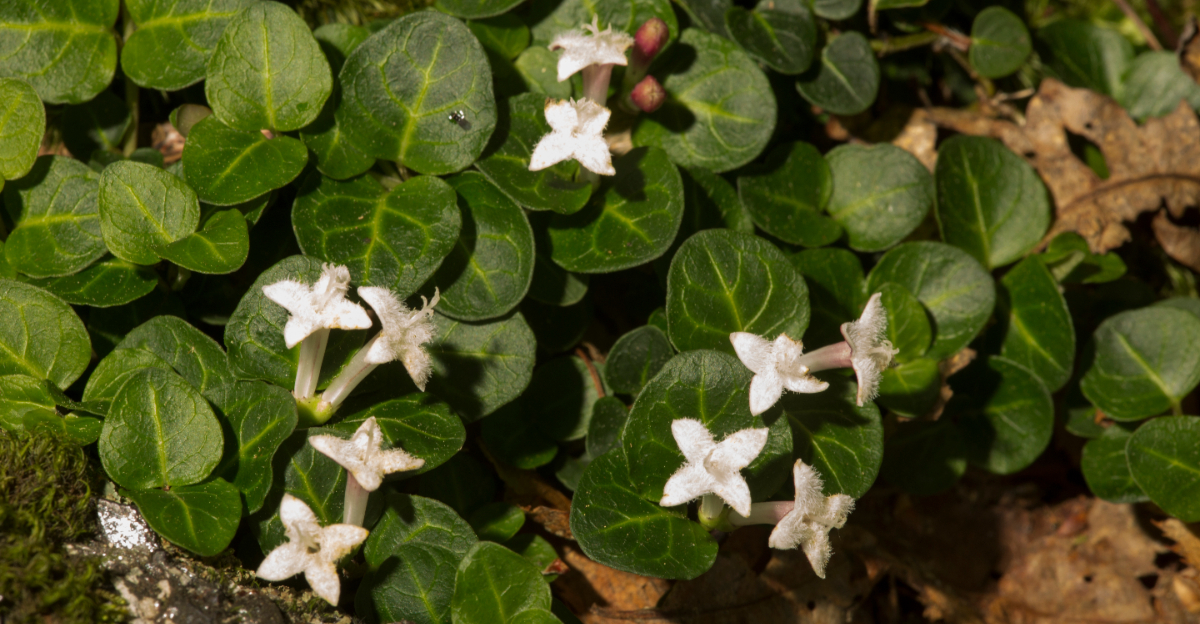
Mitchella repens is a low-growing, trailing native perennial with small, paired, glossy dark green leaves and a creeping habit that allows it to spread slowly across the forest floor or a shaded garden bed.
Tiny white tubular flowers appear in pairs in late spring, followed by bright red berries that persist well into winter and serve as a food source for birds and small wildlife.
The whole plant stays close to the ground and creates a rich, textured look that feels much more intentional than a bare patch of dirt under a tree canopy.
This plant is most at home in North Florida and much of Central Florida, where cooler winters and moister woodland conditions match its natural habitat preferences.
It is not a broad all-Florida solution, and it is not suitable for open sunny lawns or areas that see any regular foot traffic.
Partridgeberry belongs in quiet, undisturbed, shaded spaces where the goal is a soft, natural ground layer rather than a functional turf surface.
Moist, well-drained, slightly acidic soil works best, which makes it a natural fit under pines, oaks, and other native trees that create the kind of dappled shade it prefers.
It spreads slowly, so patience is genuinely required, but the result is a dense, attractive, wildlife-friendly carpet that holds up in shade far better than any struggling grass ever will.
For shaded North and Central Florida spots where St. Augustine has slowly lost the battle, partridgeberry offers a graceful, ecologically sound alternative that rewards a light touch and a willingness to let the landscape breathe.