10 Rock Garden Plants That Make Oregon Front Yards Look Better Fast
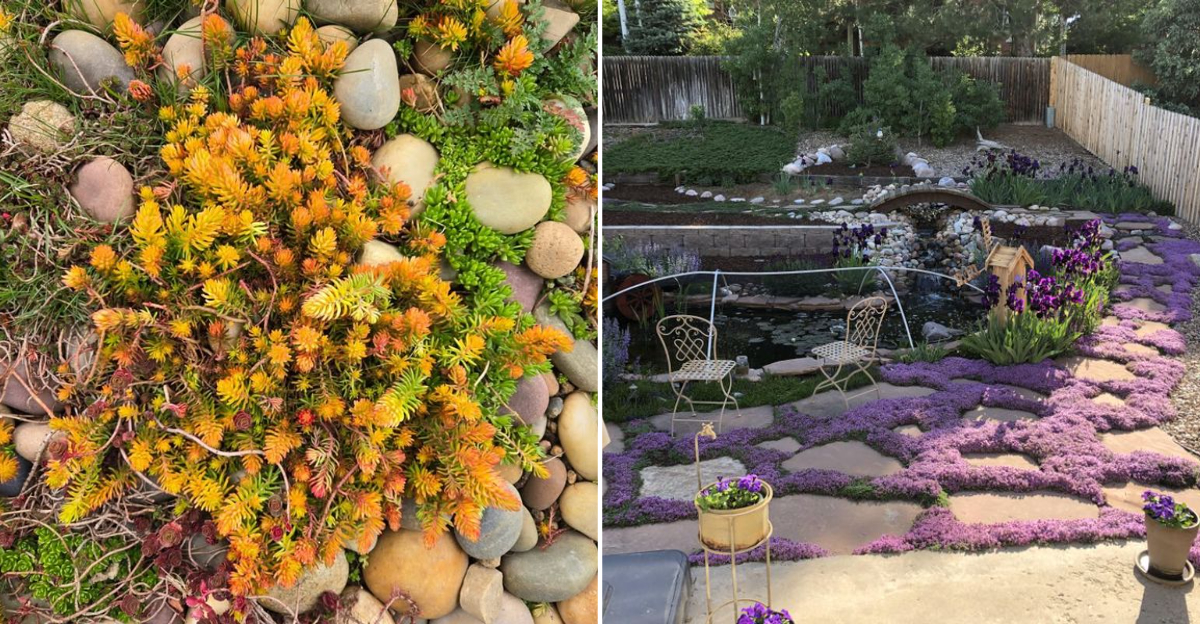
Rock gardens have a way of making Oregon front yards look sharper almost overnight. A few well-placed plants, some gravel or stone, and suddenly the whole space feels more intentional, more textured, and a lot less like an empty patch waiting for a plan.
That is the magic of a good rock garden. It does not need to be huge or fussy to make a strong first impression.
That is especially appealing in Oregon, where gardeners often want something that looks polished without turning into a high-maintenance chore by midsummer.
The right rock garden plants can handle leaner soil, show off against stone, and bring color and shape in a way that feels clean instead of crowded.
Some stay low and tidy, some spill softly over edges, and some bring just enough drama to make the front yard feel finished. Honestly, a smart rock garden can make the whole house look better, and the plants do a lot of the heavy lifting.
1. Lewisia
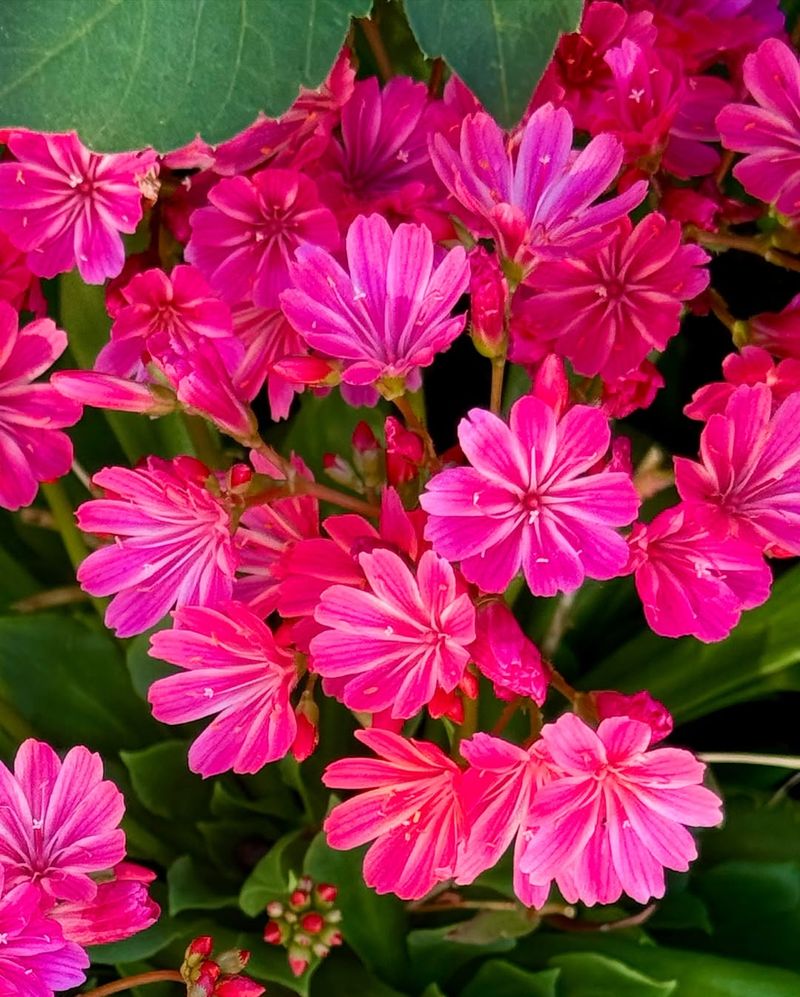
Few plants put on a show quite like Lewisia. Native to the western mountains of North America, this little gem feels right at home in Oregon rock gardens.
Its flowers burst open in shades of pink, orange, coral, and white, creating a rainbow effect between the rocks.
Lewisia loves sharp drainage above everything else. Plant it on a slope or tuck it between rocks so water runs away from the crown.
In Oregon’s rainy winters, crown rot is the biggest problem, so good placement makes all the difference.
Give it full sun to light shade, and it will reward you with blooms from spring into early summer. Sandy or gritty soil mixed with pumice works best.
Once settled in, Lewisia needs very little water during dry Oregon summers. It stays compact and tidy, which makes it perfect for the front yard.
Pair it with Sempervivum or Sedum for a stunning, low-effort combination that catches every neighbor’s eye.
2. Sedum
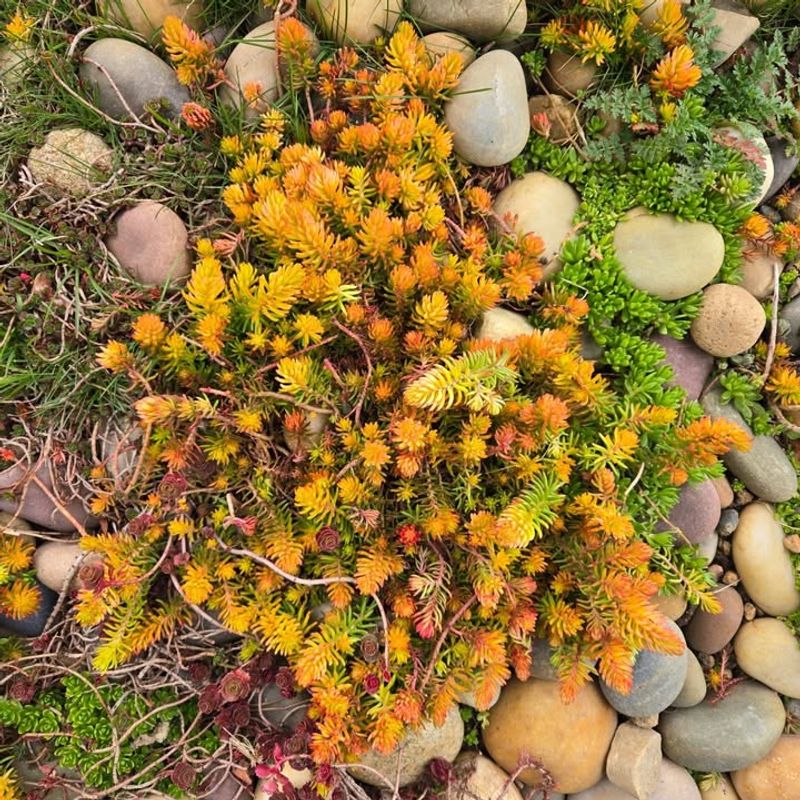
Tough, cheerful, and nearly impossible to neglect, Sedum is one of Oregon gardeners’ favorite rock garden picks. Also called stonecrop, this succulent stores water in its thick, fleshy leaves, making it a natural fit for dry, sunny spots between rocks.
It comes in so many shapes and colors that you could fill an entire garden with Sedum alone.
Low-growing varieties like Sedum spurium spread into a dense mat that chokes out weeds and softens the look of hard stone edges. Taller types like Sedum spectabile shoot up in late summer and explode with pink or red flower clusters that pollinators absolutely love.
Oregon’s mild climate suits most Sedum varieties perfectly.
Plant Sedum in well-drained soil and full sun for the best results. It handles Oregon’s wet winters surprisingly well as long as the soil does not stay soggy.
Water young plants regularly during the first season, then cut back once roots are established. Sedum pairs beautifully with Blue Fescue grass, creating a striking contrast of textures in any Oregon front yard rock garden.
Your Oregon Garden Changes Every Week. Your Plan Should Too.
Gardening in Oregon changes quickly throughout the season. Every Friday you’ll receive a simple weekly plan showing exactly what to plant, prune, fertilize, harvest, and protect so you never miss the right timing.
3. Sempervivum
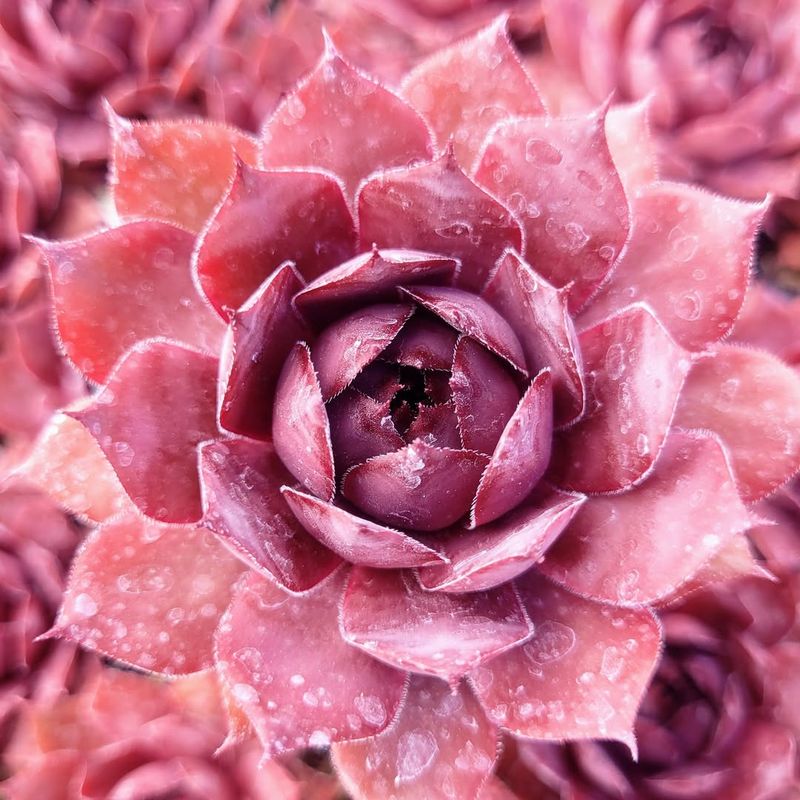
There is something almost addictive about collecting Sempervivum. Commonly called hens and chicks, these rosette-forming succulents multiply on their own by sending out tiny offsets around the mother plant.
Before long, you have a whole family of rosettes filling in every crack and crevice between your rocks.
Sempervivum comes in hundreds of varieties, ranging from bright green to deep burgundy to silvery purple. Some varieties even change color with the seasons, which keeps the garden looking fresh year-round.
In Oregon, they handle both the rainy winters and the warm, dry summers without much fuss at all.
Full sun brings out the richest colors, though Sempervivum tolerates partial shade too. Plant them in gritty, well-drained soil and avoid overwatering.
They are one of the most forgiving plants you can choose for an Oregon rock garden. Kids love watching the baby offsets pop up around the parent plant, making Sempervivum a fun, educational choice for family-friendly front yards.
Mix different varieties together for a tapestry effect that looks professionally designed but takes almost no effort to maintain.
4. Candytuft
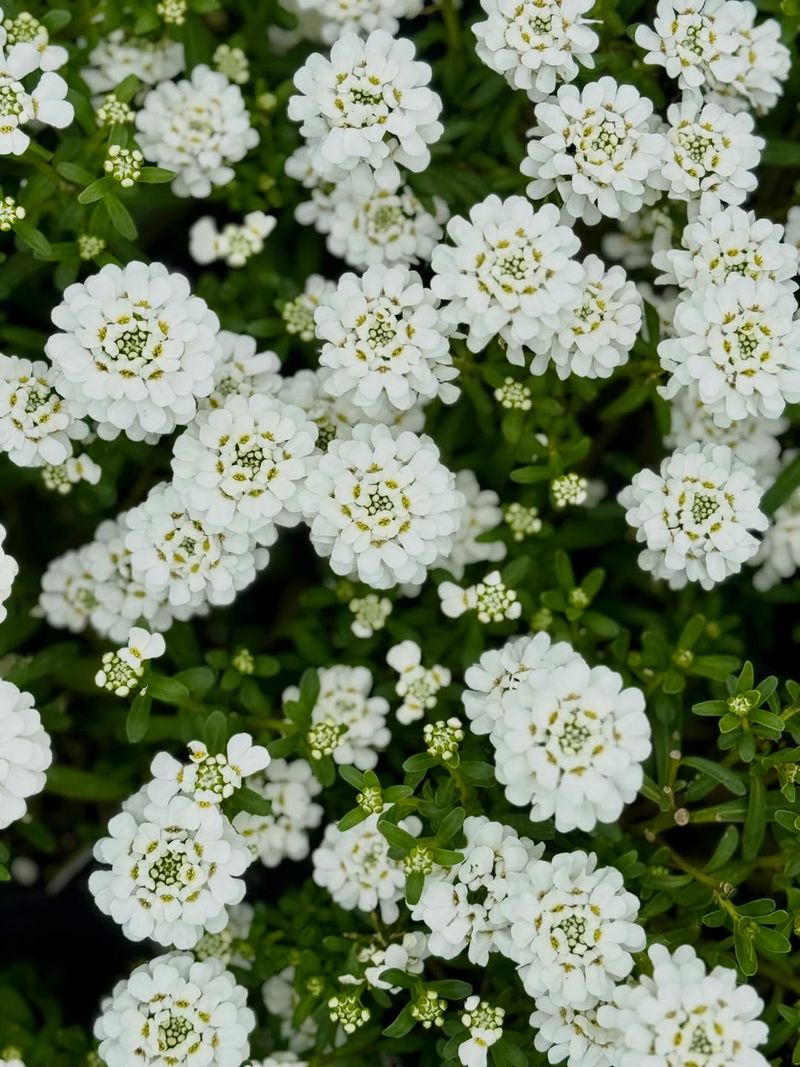
Picture a waterfall of white flowers tumbling over the edge of a rock wall in early spring. That is exactly what Candytuft looks like at its peak, and it is one of the most dramatic sights an Oregon front yard can offer.
This evergreen perennial blooms heavily in March and April, right when the garden needs color the most.
Candytuft grows low and wide, forming a dense mat of dark green foliage that stays attractive even after the blooms fade. It works brilliantly as an edging plant along pathways or spilling over retaining walls.
Oregon gardeners in both coastal and inland areas have great success with this plant.
Plant Candytuft in full sun and well-drained soil. It is fairly drought-tolerant once established, which makes summer care simple and easy.
After blooming, give it a light trim to keep the shape tidy and encourage fuller growth the following season. Candytuft pairs wonderfully with purple Aubrieta for a classic spring color combination.
It is also deer-resistant, which is a huge bonus for Oregon homeowners dealing with wildlife wandering into the front yard.
5. Aubrieta
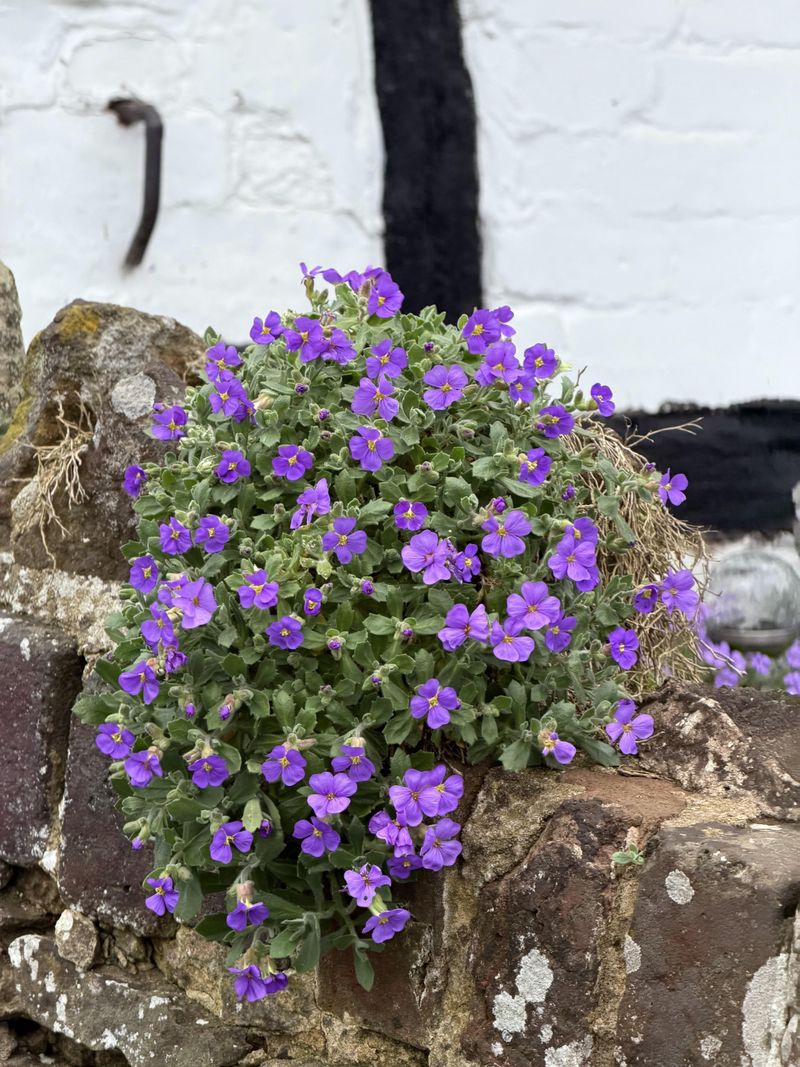
Walk through almost any established Oregon rock garden in spring, and you will likely spot a river of purple or violet cascading down the rocks. That is Aubrieta at work.
This low-growing perennial is one of the showiest spring bloomers available for Pacific Northwest gardens, and it earns every bit of the attention it gets.
Aubrieta thrives in full sun and well-drained soil, which makes it a natural partner for rocks and gravel. It forms a spreading mat that fills gaps quickly, reducing the need for weeding.
The flowers attract bees and butterflies, adding movement and life to the front yard during the warmer months.
After the main bloom period ends in late spring, cut the plant back by about half. This keeps it compact and encourages a second flush of flowers in fall.
Aubrieta handles Oregon’s occasional summer heat well as long as it has good drainage. It is also fairly cold-hardy, surviving mild Oregon winters without protection.
Pair it with yellow-flowered plants like creeping Jenny for a bold, two-tone color display that makes your front yard pop from the street.
6. Lithodora
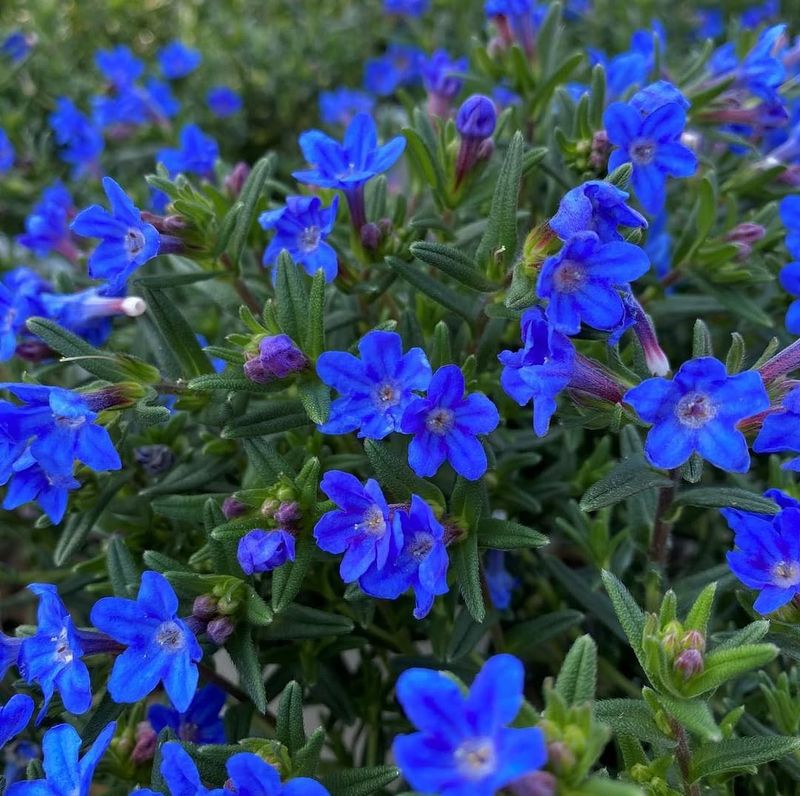
Blue flowers are rare in the plant world, which makes Lithodora something special. This low-growing evergreen shrub produces some of the most intense, electric blue flowers you will ever see in a rock garden.
In Oregon, where spring gardens tend to be dominated by purples and pinks, Lithodora stands out like a clear summer sky.
It grows slowly but steadily, spreading into a neat mat about one to two feet wide. The small, dark green leaves are slightly hairy and stay attractive through all four seasons.
Lithodora prefers acidic, well-drained soil, which suits many parts of Oregon quite well, especially in the western valleys.
Plant it in full sun to partial shade. It does not like soggy roots, so raised rock beds work perfectly.
Water regularly during the first growing season to help roots establish, then ease off as the plant settles in. Lithodora is not the fastest grower, but the payoff is worth the patience.
Once it blooms in spring and early summer, the vivid blue color against gray or tan rocks creates one of the most striking visual combinations possible in an Oregon front yard.
7. Thyme
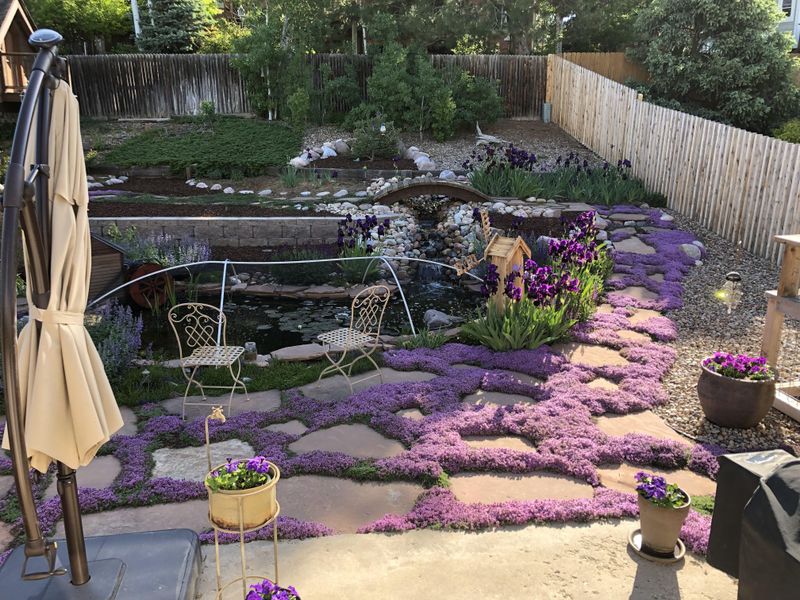
Most people know thyme as a kitchen herb, but creeping thyme is something else entirely in the garden. It hugs the ground in a tight, fragrant mat and erupts with tiny pink or purple flowers in early summer.
Every time you brush against it, a warm, herby scent fills the air, which makes the front yard feel incredibly inviting.
Creeping thyme is one of the hardest-working plants you can add to an Oregon rock garden. It fills gaps between stepping stones, softens harsh rock edges, and even tolerates light foot traffic.
Pollinators go absolutely wild for the flowers, so expect to see bees and butterflies visiting regularly throughout the summer.
Full sun and lean, well-drained soil are all thyme needs to thrive. Avoid rich, fertilized soil because it causes leggy, floppy growth.
In Oregon’s rainy season, thyme holds up well as long as drainage is good. Trim it lightly after blooming to keep it dense and tidy.
It is drought-tolerant once established, making summer maintenance effortless. Creeping thyme also works as a living mulch around larger rock garden plants like Dianthus or Rockrose, tying the whole design together beautifully.
8. Blue Fescue
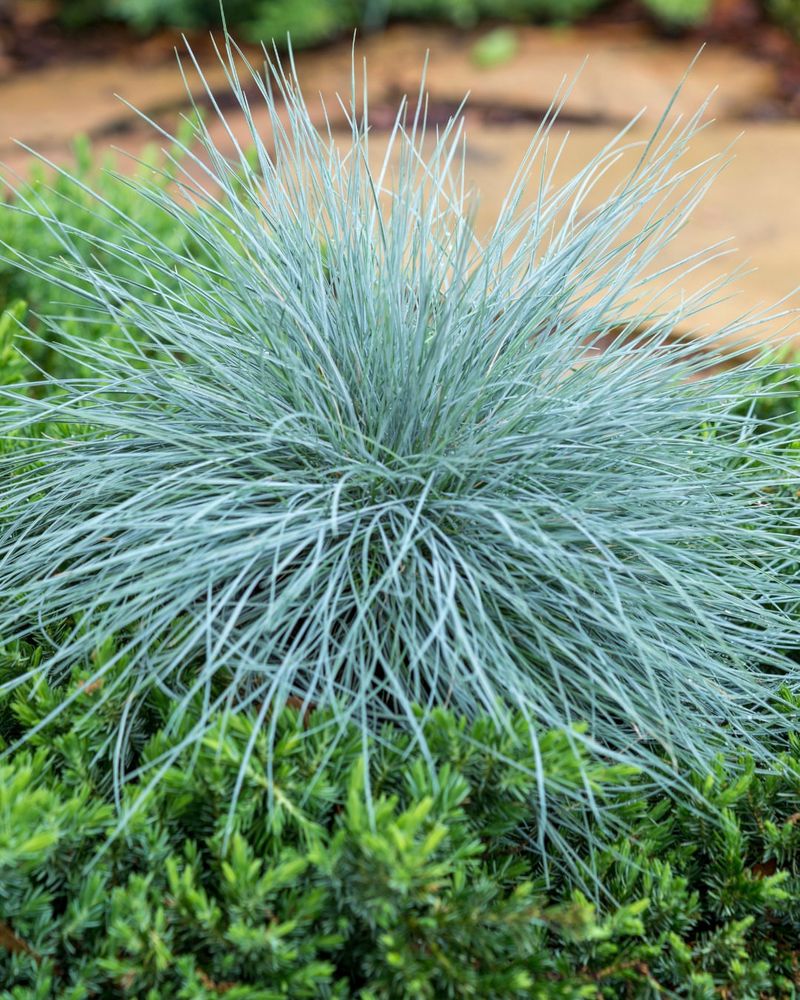
Not every rock garden plant needs to produce flowers to make a big impact. Blue Fescue proves that with its striking silver-blue blades that form perfect little mounds about eight to twelve inches tall.
The cool, icy color adds a modern, architectural feel to Oregon front yards and contrasts beautifully with warm-toned rocks and colorful flowering plants.
Blue Fescue is an ornamental grass that loves full sun and excellent drainage. It is drought-tolerant once established, which makes it ideal for Oregon’s dry summer months.
The compact mounding habit means it never gets out of control or overtakes neighboring plants.
In late spring, Blue Fescue sends up slender flower stalks that add a feathery texture to the garden. The color tends to be most vibrant in cooler weather, so Oregon’s mild springs and falls are when it really shines.
Cut the clumps back hard in late winter to refresh the foliage and encourage healthy new growth. Plant several clumps together in a staggered pattern for a bold, sculptural effect.
Blue Fescue pairs especially well with the bright blooms of Dianthus or the cascading flowers of Aubrieta in any Oregon rock garden design.
9. Dianthus
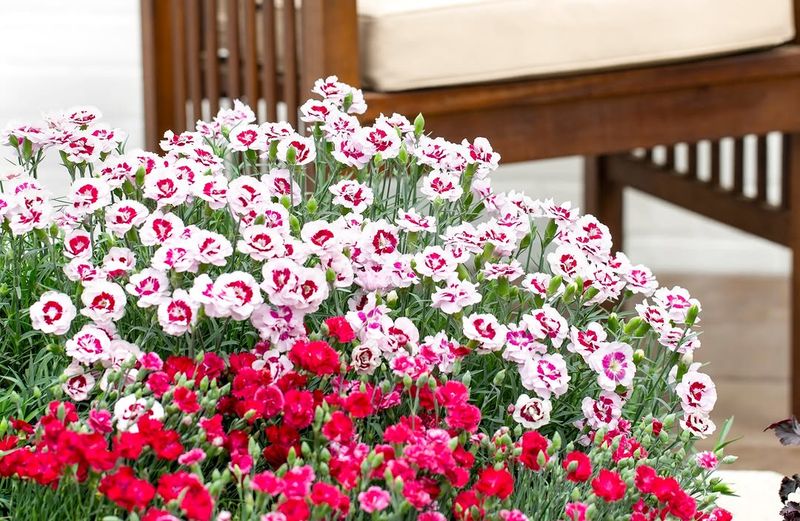
Sweet, spicy, and undeniably charming, Dianthus brings something extra to an Oregon rock garden. Often called pinks, these perennials produce fringed flowers in shades of pink, red, white, and bicolor blends.
The fragrance is light and clove-like, which makes walking past the front yard a genuinely pleasant experience for anyone nearby.
Dianthus stays low and compact, rarely growing more than a foot tall. The blue-green foliage looks attractive even when the plant is not in bloom, providing year-round ground coverage between rocks.
Most varieties bloom in late spring and early summer, with some reblooming again in fall if deadheaded regularly.
Oregon’s climate suits Dianthus well in most parts of the state. Plant it in full sun and sharply drained soil.
Avoid clay-heavy ground, which holds too much moisture for this plant’s liking. Raised rock beds with added pumice or sand work perfectly.
Dianthus is also relatively deer-resistant, which is always welcome news for Oregon gardeners. It looks stunning planted alongside Silver Thyme or Blue Fescue, where the soft flower colors and blue-green foliage create a cohesive, polished front yard design that impresses from the curb.
10. Rockrose
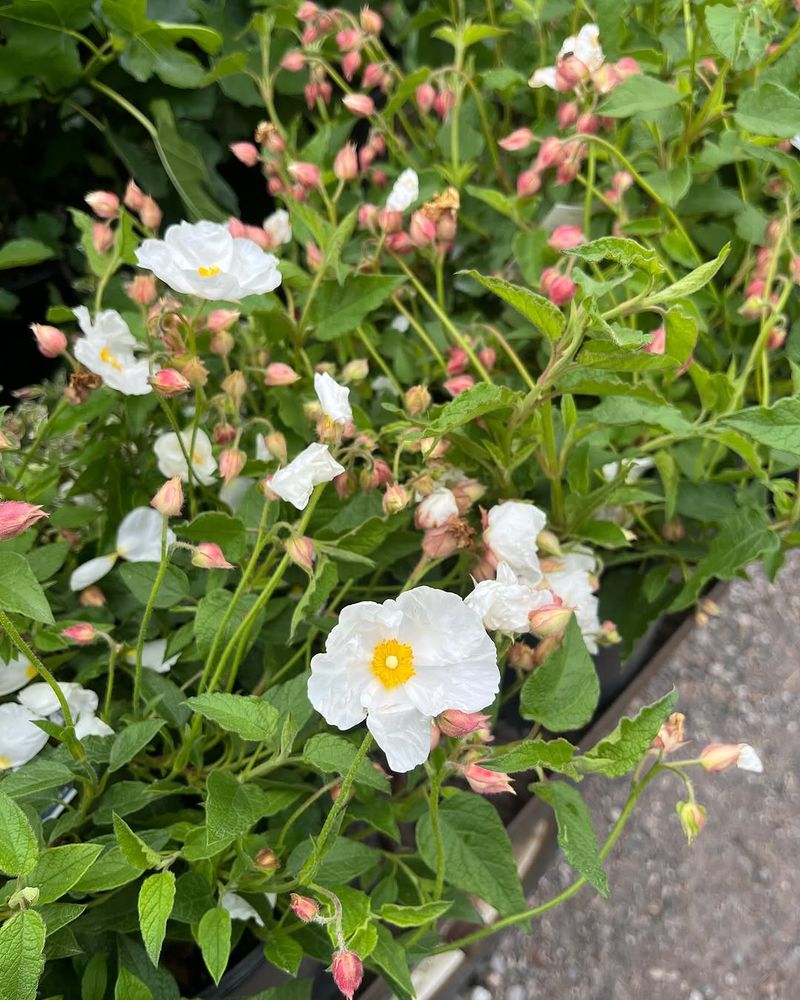
Rockrose sounds like it was made for this list, and in many ways, it was. Known botanically as Cistus, this Mediterranean shrub thrives in exactly the conditions a rock garden provides: full sun, poor soil, and excellent drainage.
In Oregon’s Willamette Valley and southern regions, Rockrose performs exceptionally well during the long, dry summers.
The flowers resemble wild roses, with crinkled petals in shades of pink, white, or magenta. Each individual bloom lasts only a day, but the plant produces so many buds that it stays covered in color for weeks.
There is something almost magical about watching a fresh set of flowers open each morning throughout the bloom season.
Rockrose grows into a rounded shrub anywhere from two to five feet tall, depending on the variety. Choose compact varieties for smaller front yards to keep the scale appropriate.
Once established, Rockrose is remarkably self-sufficient and handles Oregon’s dry summers without supplemental watering. It is also deer-resistant and tolerates salty coastal air, making it a versatile choice across different Oregon growing zones.
Plant it as a focal point in the rock garden and surround it with lower plants like Sedum or Thyme for a layered, professional look.