9 Native Florida Shrubs That Handle Drought, Humidity, And Full Sun Without Complaining
Ever plant something in a Florida yard that looked strong at the nursery, then watch it struggle the minute the heat, humidity, and dry spells team up? It happens more often than most people expect.
A plant can look perfect on day one, then start fading, stalling, or demanding constant care just to hold on.
Florida does not ease plants into anything. The sun is intense, the air stays heavy, and rain can disappear right when you need it most.
That combination exposes weak choices fast and turns a simple planting into extra work.
Some shrubs handle all of it without putting up a fuss. They settle in, take the heat, ride out dry stretches, and keep their shape without asking for constant attention.
Build around those, and your yard starts working with the climate instead of fighting it, with structure and color that hold steady through the toughest parts of the season.
1. Cocoplum Holds Up When Florida Yards Heat Up
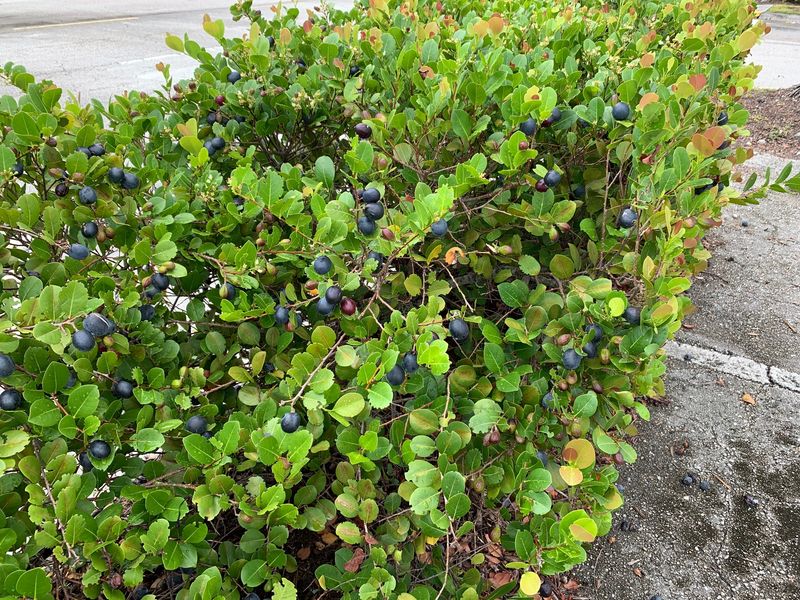
Few native Florida shrubs can match cocoplum when it comes to sheer toughness in a hot, exposed landscape. This evergreen shrub handles full sun without flinching, shrugs off drought once its roots are established, and holds up remarkably well against salt spray and coastal winds.
That combination makes it a genuinely reliable choice for South and Central Florida yards that need serious performance without constant babying.
Cocoplum grows into a dense, rounded form that works beautifully as a privacy hedge, a property screen, or a bold landscape anchor. The glossy, rounded leaves give it a clean, polished look even in the middle of summer when other plants start looking ragged.
It also produces small fruits that attract wildlife, which is a nice bonus for gardeners who want to support local birds.
Growth rate is moderate, so patience is needed early on, but once cocoplum settles in, it rarely needs much intervention. It handles sandy coastal soils well and does not demand heavy fertilization or irrigation after establishment.
Homeowners in South Florida especially appreciate how it keeps its shape and color through heat waves that would stress most non-native alternatives. It is a workhorse shrub that earns its place in any hot, sunny Florida yard.
2. Yaupon Holly Stays Strong Through Sun And Dry Spells
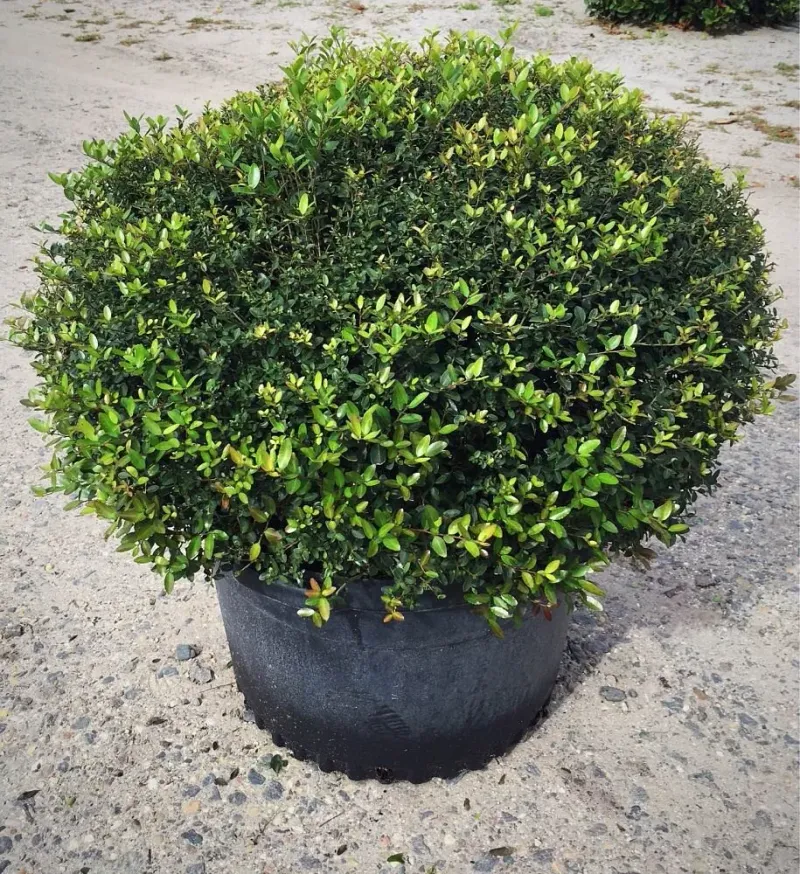
Yaupon holly is the kind of plant that makes experienced Florida gardeners smile because it almost never complains.
Whether the weather turns brutally dry or the site gets hammered with salt spray off the coast, yaupon just keeps growing, keeps its leaves, and keeps looking like it belongs there.
It is one of the most adaptable native shrubs in the state, tolerating full sun, partial sun, sandy soils, and clay-heavy soils with equal ease.
As an evergreen, yaupon holds its structure and color through every season, which gives Florida yards a sense of stability even when summer heat pushes temperatures into the upper nineties.
Female plants produce small red berries through fall and winter that birds absolutely love, adding seasonal interest without any extra effort from the gardener.
Your Florida Garden Changes Every Week. Your Plan Should Too.
Gardening in Florida changes quickly throughout the season. Every Friday you’ll receive a simple weekly plan showing exactly what to plant, prune, fertilize, harvest, and protect so you never miss the right timing.
The plant can be left to grow naturally into a multi-stemmed shrub or pruned into a tighter formal hedge depending on the look a homeowner wants.
Mature plants can reach fifteen to twenty feet if left alone, but yaupon responds well to pruning and can be kept much smaller. Salt tolerance and drought toughness make it a legitimate option for both coastal and inland Florida sites.
It is rare to find a native shrub this versatile that also asks for so little in return.
3. Wax Myrtle Handles Tough Florida Conditions With Ease
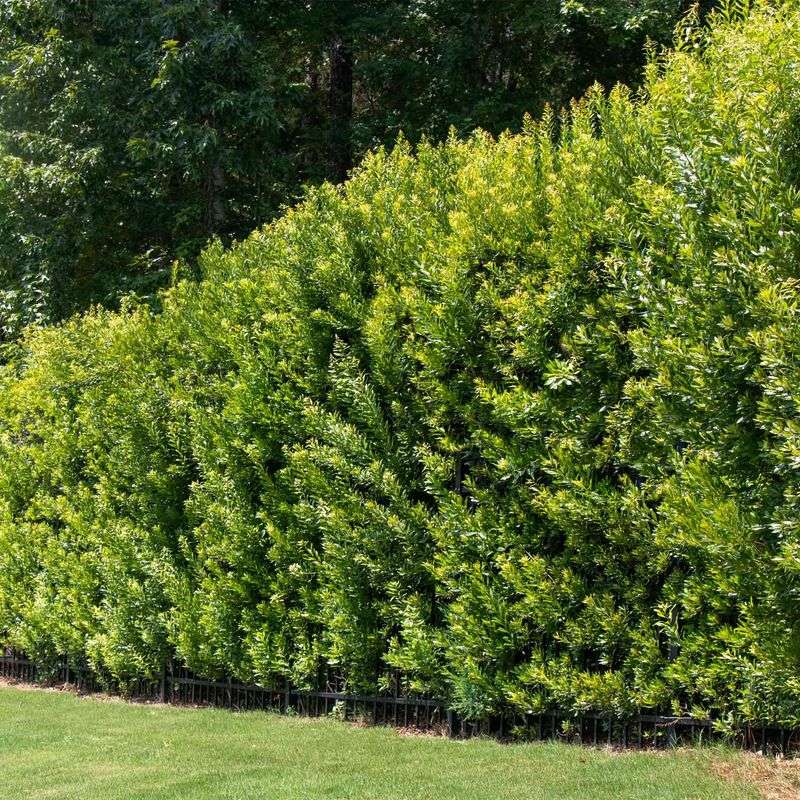
Speed and toughness are two things wax myrtle brings to the table right away.
This fast-growing native evergreen can shoot up quickly after planting, making it one of the better options for homeowners who want to establish a privacy screen without waiting years to see results.
Once it is settled in, wax myrtle handles drought, salt exposure, and the relentless Florida sun without needing much attention from the gardener.
The aromatic leaves are a distinctive feature that sets wax myrtle apart visually, and the small waxy berries attract a steady stream of birds, particularly during the cooler months.
It grows naturally in a range of Florida habitats, from coastal scrub to wet flatwoods, which tells you something about how adaptable this shrub really is.
That flexibility makes it useful across a wider range of Florida sites than many other natives.
Left unpruned, wax myrtle can reach twenty feet or more, functioning almost like a small tree. Regular trimming keeps it shrub-sized and dense, which works well for screening or hedging purposes.
It is not the most refined-looking plant in the nursery, but that is not really the point. Wax myrtle is a practical, reliable workhorse that earns its keep in tough spots where fussier plants would quickly fall apart.
4. Simpson’s Stopper Brings Color Without Extra Fuss
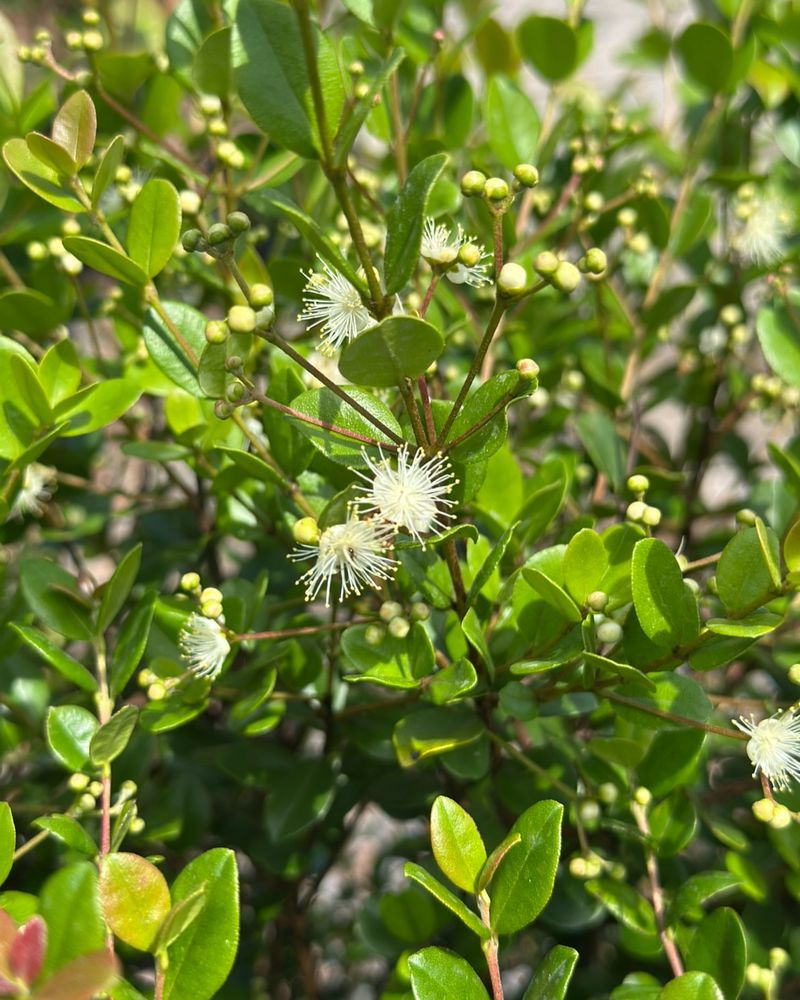
There is something genuinely satisfying about a shrub that looks good without demanding constant attention, and Simpson’s stopper delivers that in spades.
Native to South Florida and the Keys, this evergreen shrub produces fragrant white flowers followed by showy red-orange berries that birds find irresistible.
The ornamental payoff is real, and it comes from a plant that handles full sun, humid air, and dry stretches with a quiet confidence that is hard to find in non-native alternatives.
Simpson’s stopper forms a naturally dense canopy that works well as a hedge or privacy screen in full sun without needing heavy pruning to stay tidy. The foliage is dark and glossy, giving it a polished look that holds up through the hottest parts of Florida summer.
Once established, it does not need supplemental irrigation in most South Florida settings, which is a meaningful advantage for homeowners trying to reduce water use.
Growth rate is moderate, which means it is not the fastest option for screening, but the trade-off is a shrub that stays denser and more manageable over time. It performs best in South and Central Florida rather than the northern parts of the state.
For gardeners who want beauty and toughness in the same package, Simpson’s stopper is a genuinely compelling choice that rarely disappoints.
5. American Beautyberry Shines In Sunny Inland Florida Spots
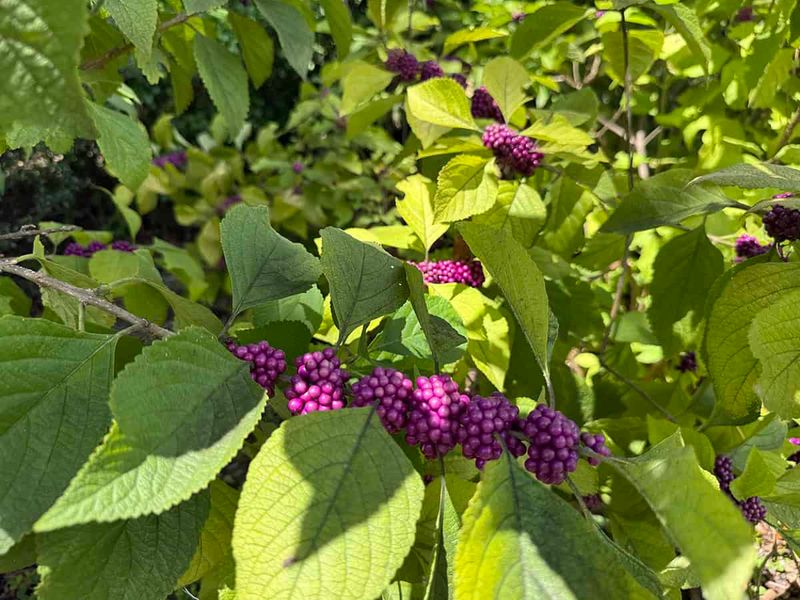
Walk past an American beautyberry loaded with its signature clusters of bright purple-magenta berries and it is almost impossible not to stop and look.
The color is genuinely striking, almost electric, and it shows up in late summer and fall right when many other shrubs in the landscape are looking their most tired.
For inland Florida yards with full sun and well-drained soil, it is one of the most rewarding native shrubs a gardener can plant.
American beautyberry handles summer heat and drought once established, making it a practical choice for sunny spots in Central and North Florida.
It grows relatively fast, reaching six feet or more in good conditions, and it tends to have a loose, arching form that looks natural rather than stiff.
Birds are drawn to the berries heavily in fall, which makes it a strong option for anyone trying to support local wildlife.
One thing to be very clear about: American beautyberry is not salt tolerant, and UF/IFAS recommends keeping it away from coastal areas. It belongs in inland Florida landscapes, not beachfront yards or sites with regular salt spray exposure.
Treating it as a coastal option would be a mistake. Keep it where it belongs, in a sunny inland setting, and it will put on a show every single year.
6. Necklace Pod Loves Sun, Heat, And Sandy Florida Soil
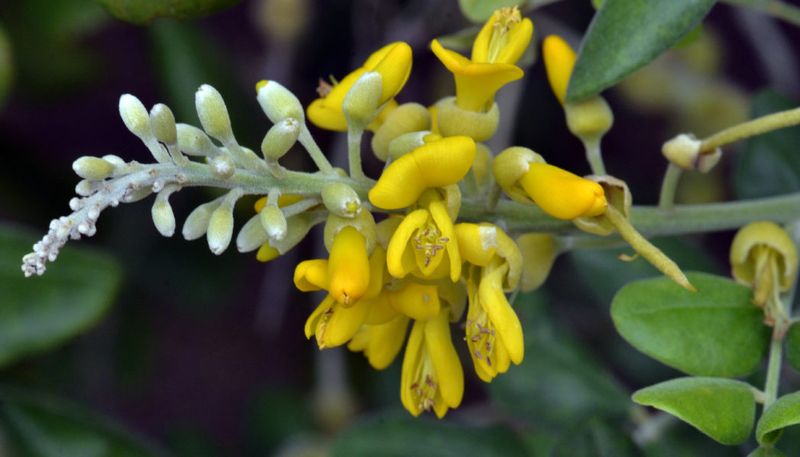
Bright yellow flowers, unusual twisted seed pods, and a genuine tolerance for sandy coastal soil make necklace pod one of the more visually interesting native shrubs in Florida.
It thrives in full sun and handles both drought and salt spray without losing its composure, which makes it a practical fit for exposed coastal sites that would stress out most other plants.
The flowers appear in clusters and attract pollinators, adding ecological value on top of the ornamental appeal.
Here is something buyers need to know before heading to the nursery: there are two subspecies of necklace pod, and they are not interchangeable.
The Florida-native subspecies is Sophora tomentosa subsp. truncata, and that is the one that belongs in Florida landscapes.
The Texas-native subspecies, Sophora tomentosa subsp. occidentalis, is the one more commonly sold at commercial nurseries. Shopping carefully and asking specifically for the Florida subspecies matters if you want a plant that is genuinely native to the state.
Necklace pod stays relatively compact, typically reaching four to six feet, which makes it manageable in smaller coastal gardens. It does not need much supplemental water once established in the right sandy, well-drained site.
For beachfront and near-coastal landscapes in South and Central Florida, it is a distinctive and tough native option that stands out from the usual hedge plants.
7. Saltbush Takes Dry Coastal Exposure In Stride
Some yards are just rough. Exposed coastal sites with sandy, nutrient-poor soil, relentless wind, and salt-laden air can make landscaping feel like a losing battle.
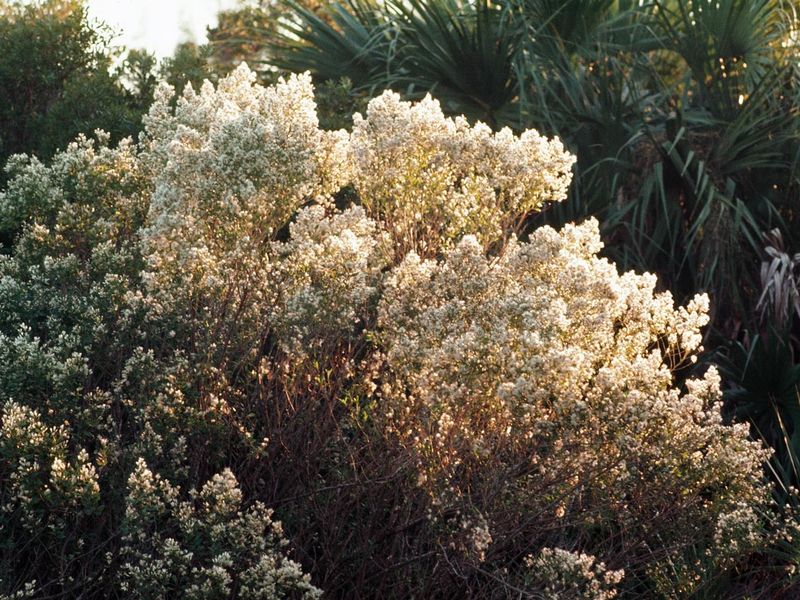
Saltbush, known botanically as Baccharis halimifolia, is one of the native Florida shrubs actually built for those conditions. It handles full sun, dry soils, and coastal salt exposure with a toughness that few other plants can honestly match in truly harsh, windswept sites.
The silvery-green foliage has a slightly dusty texture that suits the look of coastal landscapes naturally.
Saltbush grows into a loose, open shrub that can reach eight feet or more under good conditions, and it produces small white flowers in fall that attract pollinators before turning into fluffy seed heads.
It is not a formal-looking plant, but in rough coastal settings, that relaxed form actually works in its favor.
Saltbush is most useful as a buffer, windbreak, or naturalistic planting on exposed coastal sites rather than as a manicured hedge in a tidy suburban yard. It is low-maintenance once established and does not need supplemental irrigation in most Florida coastal settings.
Gardeners dealing with genuinely difficult, exposed sites will find saltbush to be one of the most honest and reliable options the native Florida plant palette has to offer.
8. Silver Buttonwood Thrives Where Sun And Salt Team Up
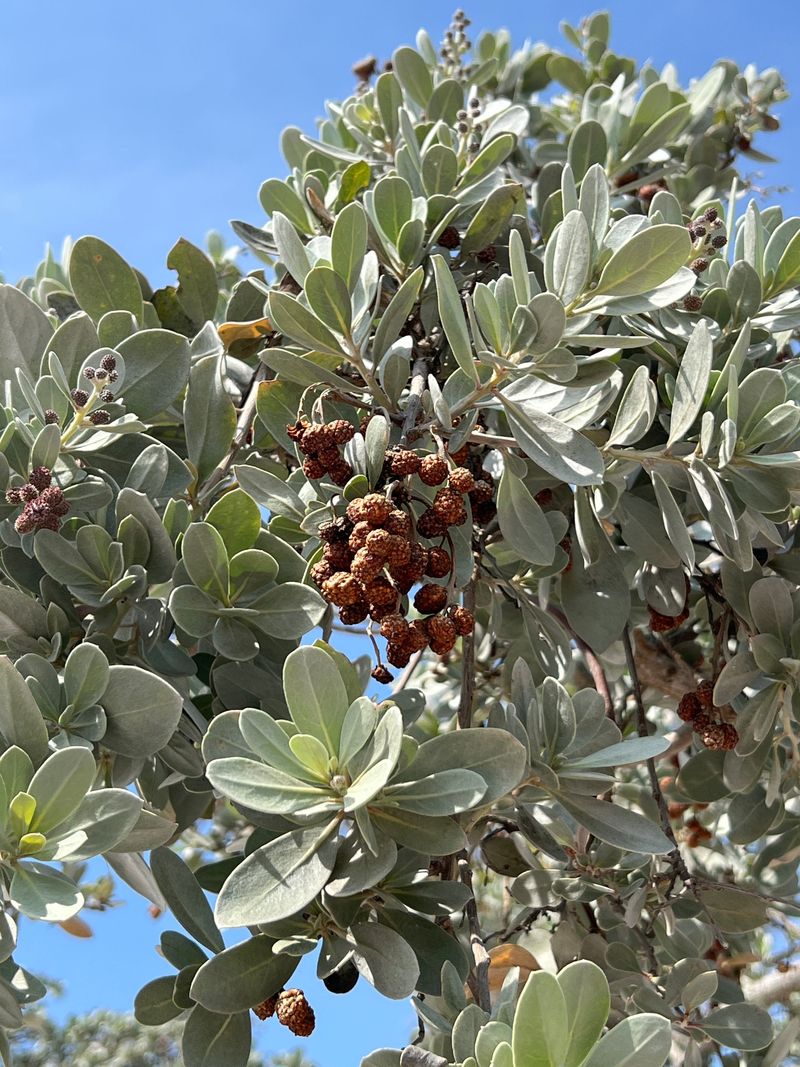
That distinctive silvery-gray foliage is the first thing most people notice about silver buttonwood, and it is striking in the right setting.
In a hot South Florida coastal yard where sandy soil, salt spray, and intense sun are the daily reality, silver buttonwood looks like it was designed specifically for the job because in many ways it was.
It is native to coastal areas of South Florida and the Caribbean, and it performs best when planted in the kind of tough coastal conditions that would stress most other landscape plants.
Silver buttonwood can be grown as a shrub or allowed to develop into a small tree depending on how it is managed.
It handles full sun without any issue and tolerates both salt spray and salty soils, which are genuine advantages in beachfront and near-coastal settings.
The silvery leaves reflect light beautifully and give the plant a visual presence that works well against blue water or pale sandy backgrounds.
This is not a plant for every Florida yard. It is best suited to South Florida and similar warm coastal environments rather than inland or northern Florida sites where winter temperatures can cause problems.
Gardeners who have the right coastal site and want a native shrub with real visual character will find silver buttonwood to be a rewarding and dependable landscape choice.
9. Seagrape Stays Unbothered In Hot Coastal Florida Yards
There is a reason seagrape shows up on so many Florida beachfront properties: it genuinely does not care how hot, salty, or dry things get.
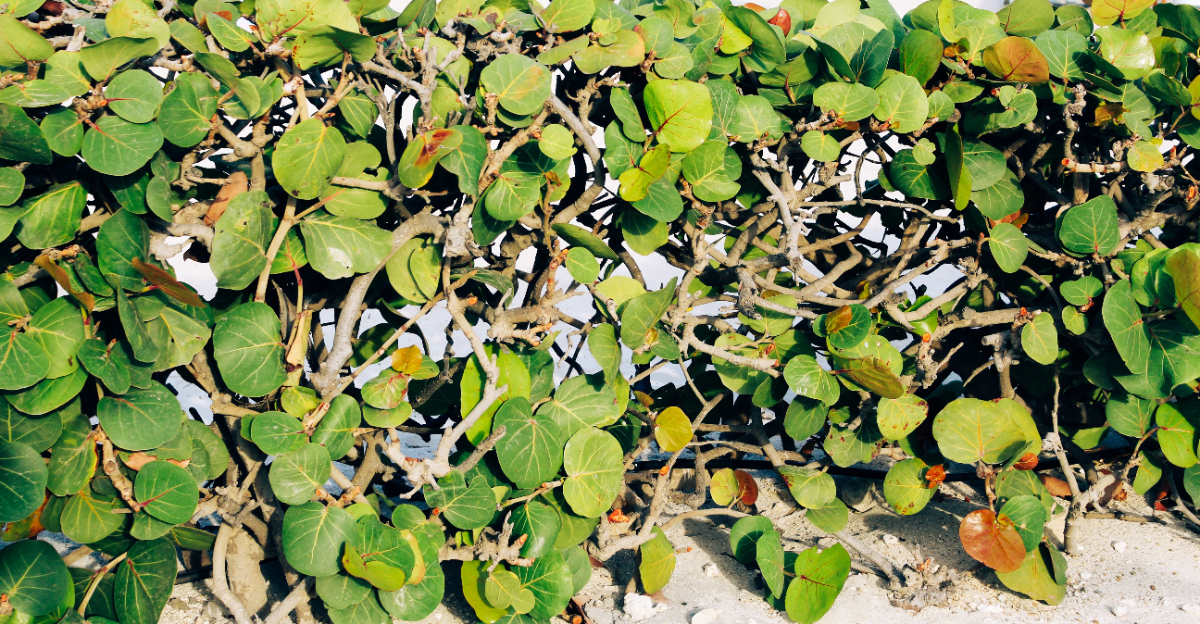
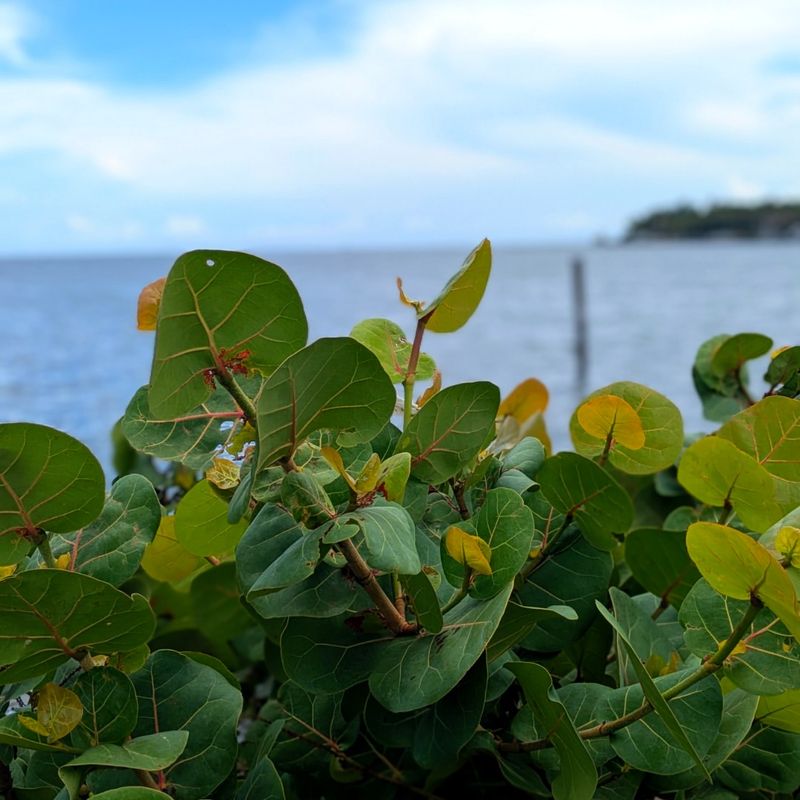
Large, leathery, round leaves give this native shrub a bold tropical look that fits coastal Florida landscapes naturally, and the plant backs up that visual confidence with serious environmental toughness.
Full sun, salt spray, salty soils, and long dry stretches are conditions seagrape handles without missing a beat once it is established.
Seagrape produces clusters of small grape-like fruits that ripen to a deep purple color and attract birds and other wildlife. In some coastal communities, the fruit is even used to make jelly, which is a fun bit of Florida tradition attached to a very practical plant.
The thick, waxy leaves are well adapted to reflect heat and reduce water loss, which is exactly why this shrub performs so well in exposed beachfront conditions where thinner-leafed plants would struggle.
It can grow quite large if left unmanaged, sometimes reaching twenty feet or more as a small tree, but regular pruning keeps it in shrub form for most landscape purposes. Seagrape is primarily a South Florida and coastal Central Florida plant, not a statewide fit.
For gardeners with a true coastal site and a need for a low-maintenance, visually commanding native, seagrape is one of the most dependable options available anywhere in the Florida native plant palette.