8 Native Georgia Flowers That Peak In Summer Heat And Keep Producing Color Through The Worst Of It
Georgia summer arrives with a specific kind of confidence. Hot. Humid. Relentless from June through September, with no apology for any of it.
Most garden plants respond by stepping back and waiting for October. A handful of native Georgia flowers do the opposite.
These plants evolved in this climate, in this soil, under these exact conditions. The heat that exhausts fussier flowers is the same heat that tells certain Georgia natives to push harder.
The humidity that invites problems for plants from somewhere else barely shakes flowers that have been growing here for generations.
Georgia gardeners who plant them stop fighting summer and start watching their garden peak in it.
The color does not fade in July. It gets bolder. The pollinator activity does not slow down. It picks up.
The garden that looks best in August, while the neighbors are waiting for fall, is the one planted with flowers that actually belong here.
That is where these native Georgia bloomers earn their spot.
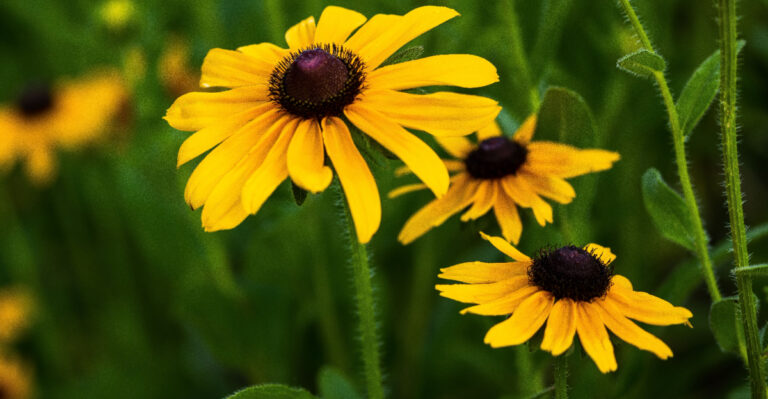
1. Black-Eyed Susan
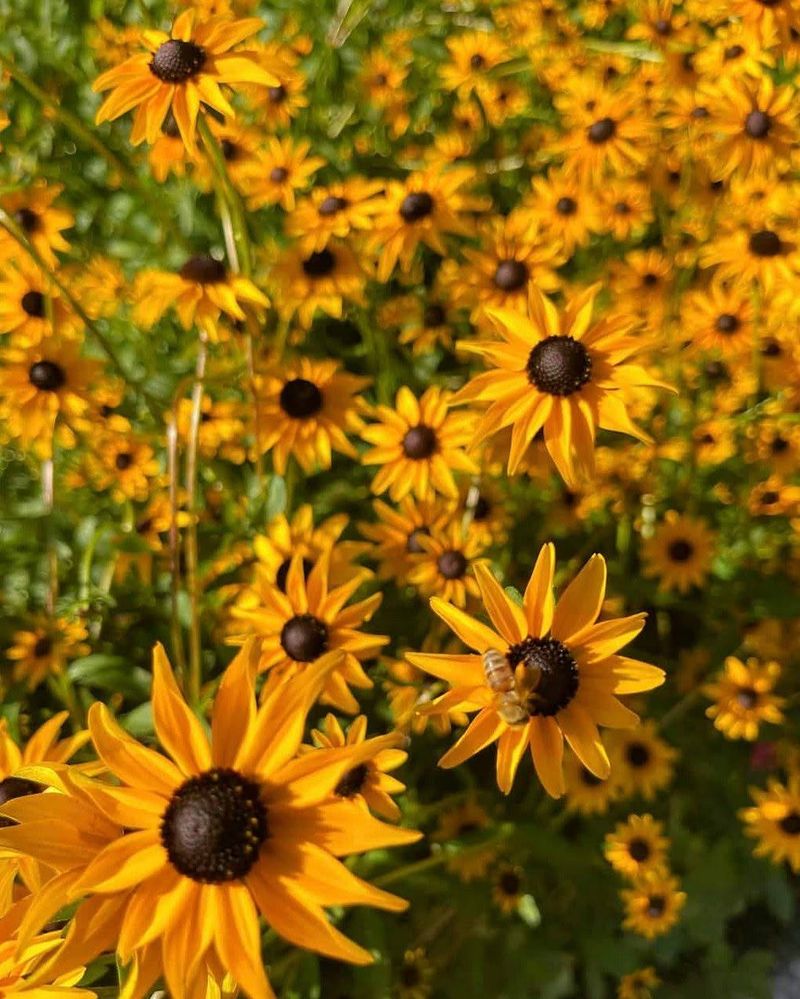
A garden bed glowing like a patch of sunlight that never moves is not an exaggeration when Black-Eyed Susan is planted correctly.
The golden yellow petals surrounding that bold dark brown center button deliver cheerful, reliable color from June through August without the kind of drama that more demanding plants require.
Rudbeckia hirta is a true Georgia native that handles full sun and dry summer stretches better than most plants available at the average garden center.
It thrives in well-drained soil and produces its best flower show without any fertilizer. Rich soil actually works against it by causing the stems to flop, so lean native Georgia soil is genuinely an advantage here.
Pollinators respond to Black-Eyed Susan consistently throughout summer. Bees, butterflies, and goldfinches visit regularly, and the garden benefits from that activity in ways that go beyond the visual interest the flowers provide.
Deadheading spent blooms keeps fresh flowers coming steadily through the season. Skipping that step toward late summer lets the seed heads form, which feeds birds heading into fall.
Both approaches have their value depending on what the garden needs at a given moment.
Planting in groups of three or more creates visual impact that single specimens cannot match. It pairs naturally with purple coneflower and Blazing Star for a classic Georgia wildflower combination.
The plant spreads by seed over time, so a small initial planting builds into a fuller colony across several seasons.
Black-Eyed Susan earns the title of low-maintenance without the fine print that usually comes with it.
2. Blazing Star
A monarch butterfly drifting across a Georgia garden in July makes one consistent choice when Blazing Star is present.
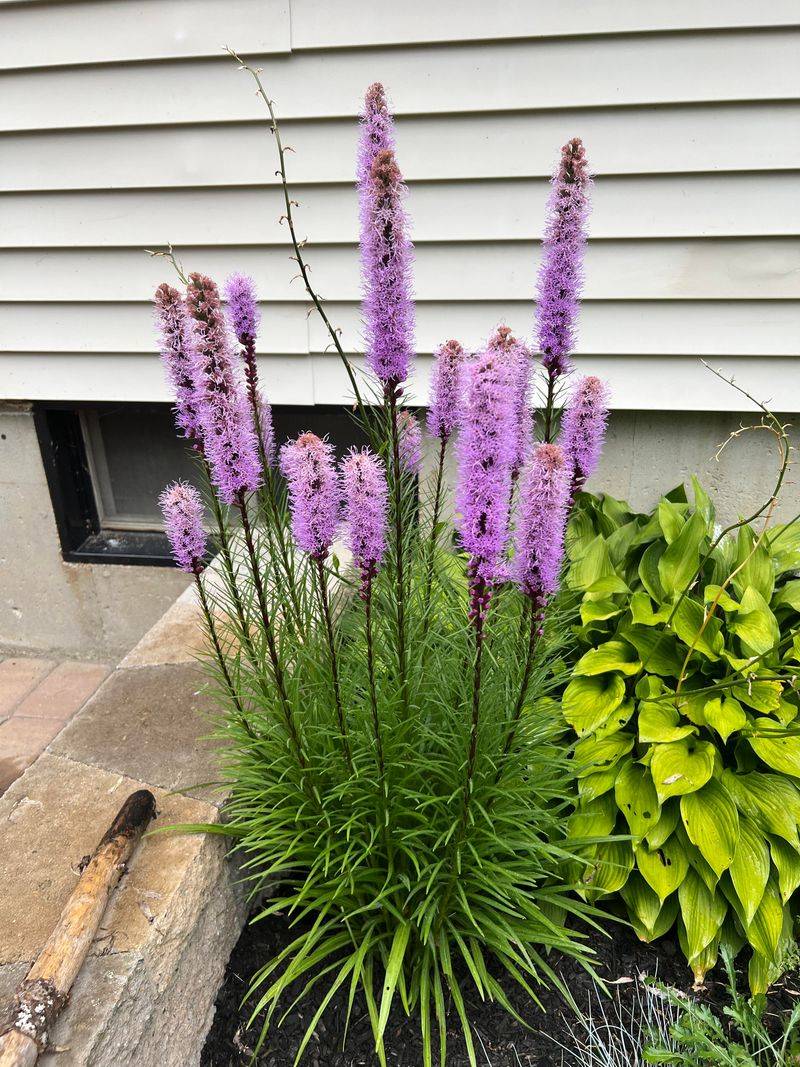
It heads directly for the tall purple spikes rising above everything else in the bed and stays for an extended visit. That magnetic pull is one of the most reliable things a Georgia gardener can count on from this plant.
Liatris spicata blooms differently from most flowers. The spike opens from the top downward rather than from the bottom up.
Your Georgia Garden Changes Every Week. Your Plan Should Too.
Gardening in Georgia changes quickly throughout the season. Every Friday you’ll receive a simple weekly plan showing exactly what to plant, prune, fertilize, harvest, and protect so you never miss the right timing.
Fresh flowers keep appearing lower on the stalk as upper ones finish, which creates a longer bloom window from a single stem than most plants offer. One spike can stay colorful for weeks at a stretch.
Blazing Star grows from a corm that stores energy and moisture underground. That underground reserve helps the plant handle drought without irrigation in a way that most garden perennials cannot.
Full sun and decent drainage are the primary requirements, and both sandy and clay Georgia soils work well once the plant settles in during its first season.
Height runs two to four feet depending on variety, which makes it a strong vertical accent in mixed borders.
Planting it behind shorter flowers creates layers of color that draw the eye upward through the bed. Monarchs, swallowtails, and bumblebees all visit consistently through the bloom period.
The cut stems hold beautifully in a vase if the urge to bring some inside becomes irresistible, which it usually does by the second or third summer.
3. Spotted Beebalm
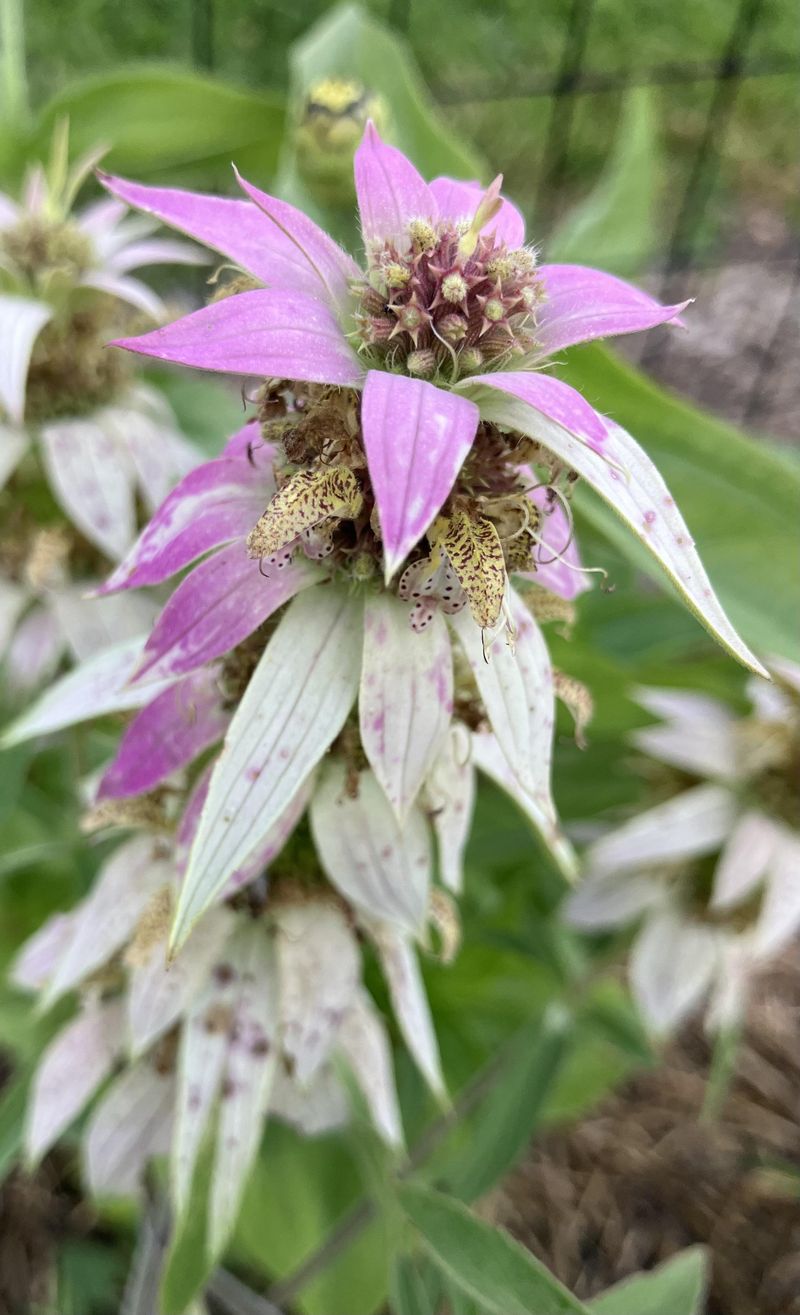
Not every summer flower announces itself through bold color. Spotted Beebalm earns attention through a different quality entirely.
The layered whorls of cream and lavender-spotted tubular flowers sitting above colorful bracts create a stacked, almost architectural look that has no close comparison in the summer garden. People stop to look at it and then reach for their phones.
Monarda punctata is genuinely built for Georgia heat. It is native to sandy, dry soils across the southeastern United States and thrives in conditions where other flowers struggle noticeably.
Full sun without wilting, drought tolerance once established, and natural resistance to the powdery mildew that affects its relative the common garden beebalm are all built into its character.
Georgia summers are not a challenge for Spotted Beebalm. They are its preferred operating conditions, and the plant performs accordingly.
Pollinators respond with impressive enthusiasm. Bumblebees, native bees, and wasps visit the flowers constantly through summer. Hummingbirds have been observed working the blooms as well.
The fragrance, similar to oregano, also attracts beneficial insects that help manage garden pests naturally. Planting it near vegetables supports the broader garden ecosystem in practical, measurable ways.
Growth reaches one to three feet tall. The plant spreads gradually by seed and forms loose colonies in the right conditions over multiple seasons.
Sandy, well-drained soil suits it best, though it adapts to average garden beds with solid drainage.
Pair it with Black-Eyed Susan and Blazing Star for a pollinator trio that carries the garden from early summer through September with almost no intervention required.
4. Scarlet Sage
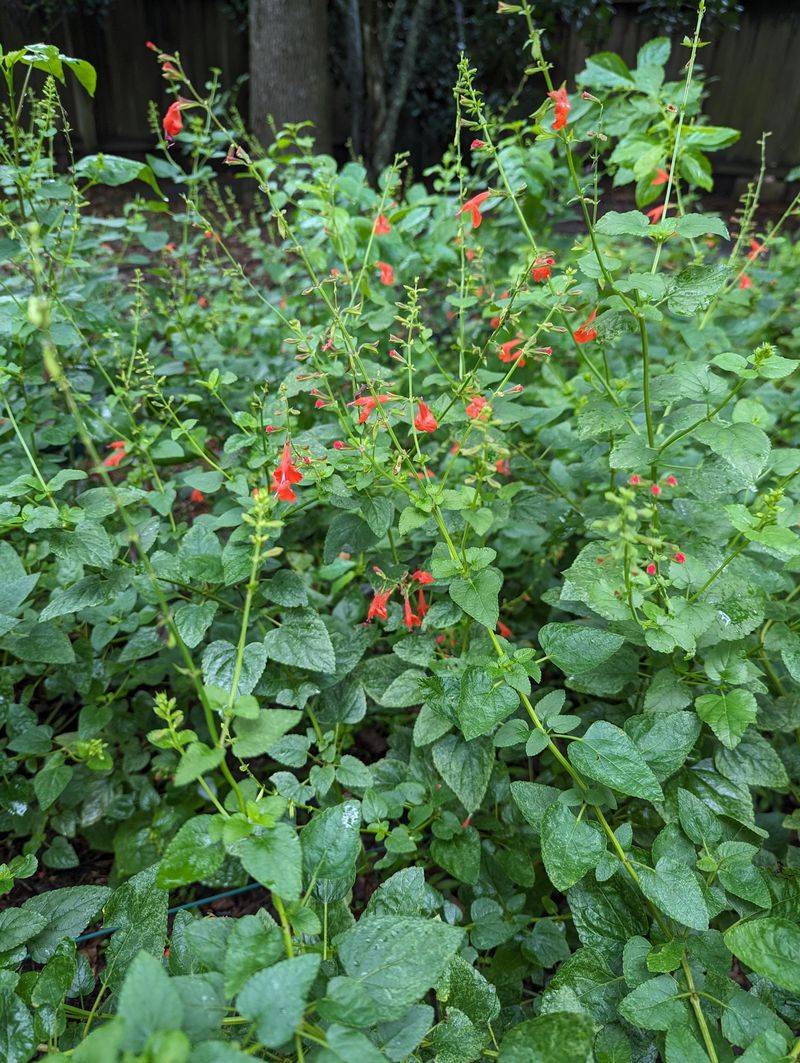
The flash of green and red near the garden bed is not imagination. A ruby-throated hummingbird found the Scarlet Sage, and it has no immediate plans to leave.
Salvia coccinea is one of the most reliable hummingbird plants in Georgia and blooms continuously from late spring straight through the first cold snap without much help from the gardener.
The bright red tubular flowers are shaped precisely for hummingbird feeding, and the plant produces new blooms steadily rather than in concentrated flushes that leave gaps in the season.
Heat does not slow Scarlet Sage down. High humidity is not a concern either. This plant shifts into a higher gear right when most garden flowers are managing rather than thriving through Georgia’s July and August conditions.
It grows two to three feet tall and fits easily into mixed borders, container plantings, or pollinator gardens.
Self-seeding is reliable, which means one planting often becomes multiple plants by the following summer without any additional investment or effort.
Full sun produces the strongest bloom, though light afternoon shade is tolerated in the hottest parts of the state.
Beyond hummingbirds, butterflies and native bees visit regularly. The red blooms contrast sharply against green foliage and photograph beautifully next to white or yellow summer flowers.
Removing spent flower spikes encourages fresh ones through the full bloom window.
Scarlet Sage earns its garden space every summer without complaint, which is more than can be said for a significant number of its non-native alternatives.
5. Swamp Sunflower
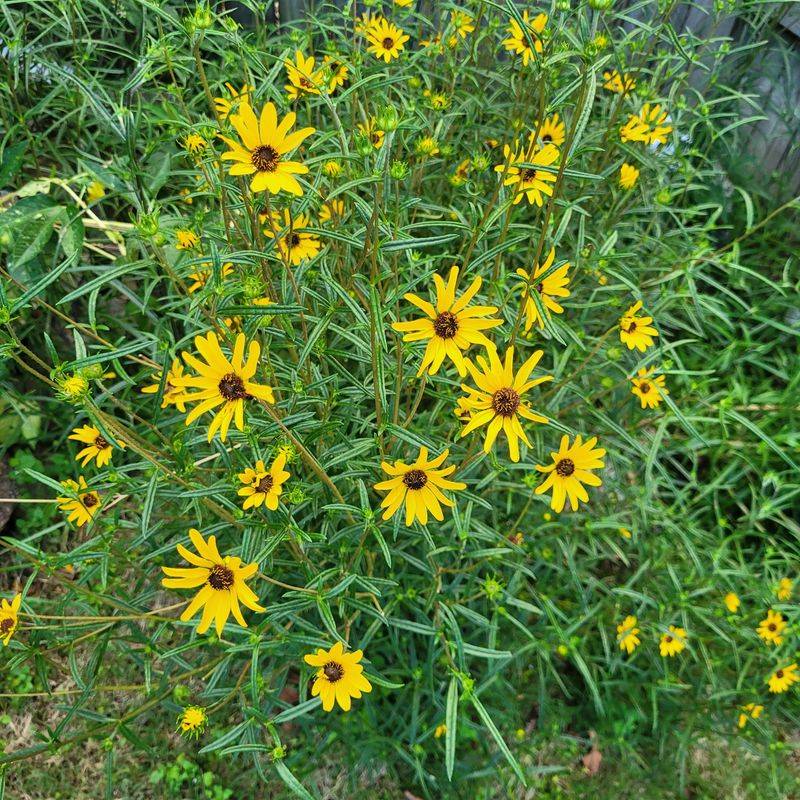
By the time August slides into September, most summer gardens look like they need a break. Swamp Sunflower has different plans and considerably more energy.
Helianthus angustifolius bursts into bloom right when everything else is winding down. It covers itself in dozens of bright yellow daisy-like flowers that carry the garden through the end of summer and deep into fall.
That late-season timing is genuinely strategic. The garden that peaks in September belongs to whoever planted Swamp Sunflower.
Despite the name, wet ground is not required. Swamp Sunflower simply tolerates moist sites better than most sunflowers, which makes it a smart choice for low spots in the yard that collect water after heavy Georgia rain.
Average garden soil with regular watering works equally well. Avoiding prolonged drought in the weeks leading up to bloom time is the main consideration.
Height is significant. Swamp Sunflower reaches six to ten feet by bloom time, so placement matters considerably.
Back of the border or along a fence line turns that height into a dramatic feature rather than a visibility problem. Bees, butterflies, and goldfinches all visit during the bloom period.
The Chelsea chop manages height effectively.
Cutting stems back by about one-third in late May or early June causes the plant to branch out and produce more stems, resulting in more flowers and a bushier shape that holds itself together better through late summer storms.
Divide clumps every two to three years to maintain strong blooming performance.
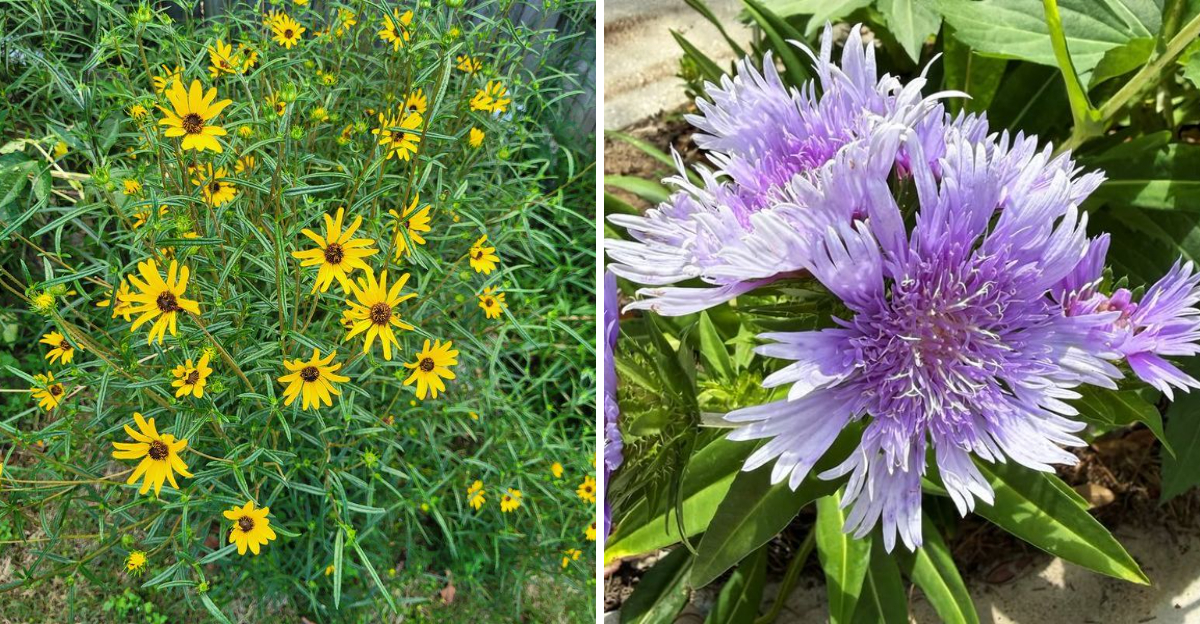
6. Stokes Aster
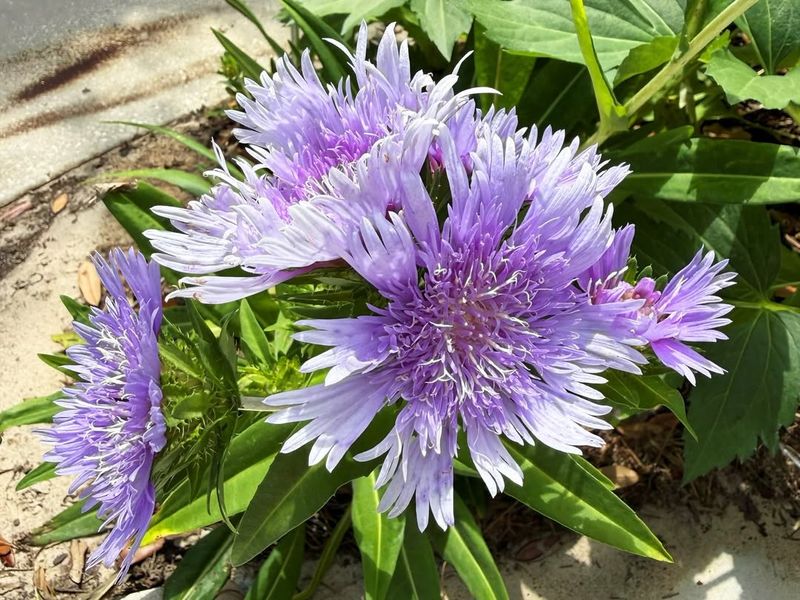
Blue flowers are genuinely rare in the summer garden, which gives Stokes Aster a specific kind of value that does not depend on any other quality. The color alone earns its place before the first petal opens.
Stokesia laevis is native to the southeastern United States including Georgia, and it produces large fringed blooms in soft blue, lavender, and near-white from late spring through midsummer.
The blooms are two to three inches across with a layered, intricate texture that looks deliberate and complex up close in a way that most summer flowers do not achieve.
Each plant produces multiple flower stems. Consistent removal of spent blooms encourages fresh ones well into July, and in cooler parts of Georgia the season extends even further.
Full sun produces the best flower output, though light afternoon shade is handled without significant reduction in performance.
The plant stays compact at one to two feet tall and wide. That scale makes it ideal at the front of a border or along a garden path where the detailed blooms can be appreciated at close range rather than admired from a distance.
Paired with Black-Eyed Susan, the blue-and-gold combination creates a contrast that reads boldly from across the yard while feeling balanced rather than jarring.
Soil drainage determines long-term success more than any other factor. Standing water creates root problems quickly.
Raising the bed slightly or amending with compost before planting addresses that concern before it becomes a problem.
Divide established clumps every three years to maintain the strongest bloom production.
7. Coreopsis
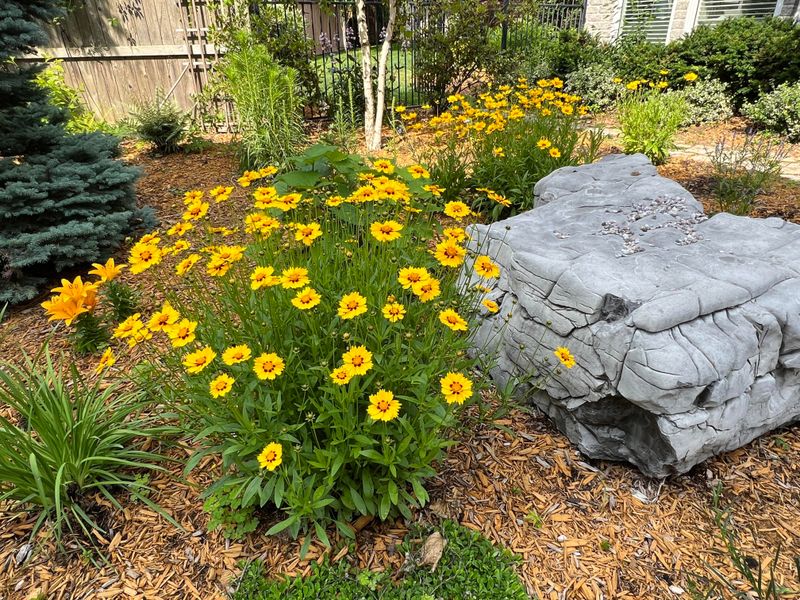
Some plants project cheerfulness regardless of what is happening around them. Coreopsis is one of them, and Georgia made it official by designating it the state wildflower for a reason the summer garden confirms every single season.
Rudbeckia hirta covers itself in yellow blooms from late spring through summer and practically never stops as long as conditions stay sunny.
Several species grow natively in Georgia including Coreopsis lanceolata and Coreopsis tinctoria, and both handle summer heat with the kind of ease that comes from evolving specifically for these conditions.
Full sun and lean, well-drained soil are the preferred growing conditions. Rich garden beds and heavy fertilization push lush foliage at the direct expense of flower production.
The counterintuitive truth is that less nutrition produces more blooms, and Georgia’s naturally lean soils are actually doing Coreopsis a favor rather than limiting it.
Deadheading is the single most effective habit for extending the bloom season. Removing spent flowers every week or two signals the plant to keep producing rather than shifting energy toward seed production.
Allowing a few plants to go to seed toward late summer creates natural reseeding that fills gaps with no additional effort or expense.
Coreopsis pairs well with almost every other summer native. The combination with Scarlet Sage creates a red-and-yellow display that hummingbirds and butterflies both actively seek out. Containers, window boxes, and sunny pathways all suit it equally well.
At one to two feet tall, it fits into nearly any garden space without creating crowding problems for neighbors.
8. Great Blue Lobelia
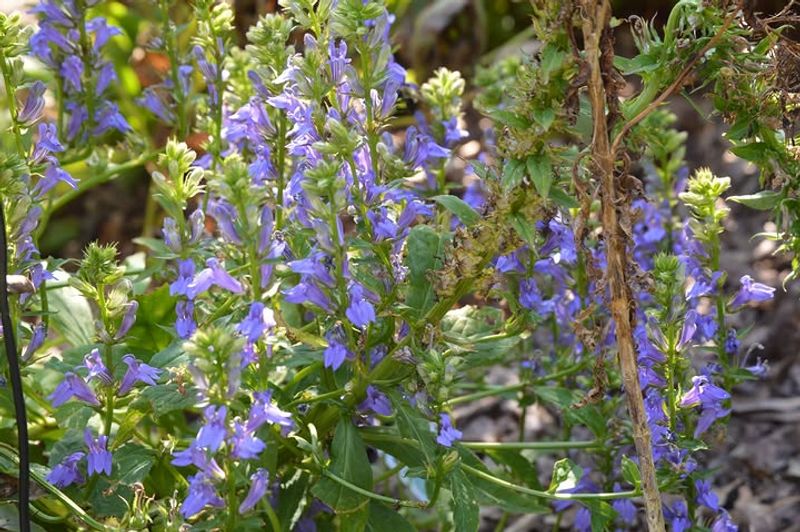
That low corner of the yard that stays wet after every summer storm has been waiting for exactly one plant.
Great Blue Lobelia fills it with tall spikes of vivid blue flowers from late summer into fall and turns a persistent drainage problem into the most interesting spot in the late-season garden.
Lobelia siphilitica thrives in consistently moist soil and rewards wet areas with upright stems reaching two to four feet tall covered in tubular two-lipped blooms ranging from true blue to blue-violet.
Bumblebees are the primary pollinators and visit constantly through the bloom period. Hummingbirds also work the flowers during their late summer migration through Georgia, which turns a wet corner into a genuine wildlife destination.
Partial shade suits Great Blue Lobelia well in Georgia’s climate. Morning sun with afternoon shade produces strong plants and long-lasting blooms through the most demanding weeks of summer heat.
Consistent soil moisture is the non-negotiable requirement. This plant does not handle drought, and mulching heavily around the base helps maintain the moisture levels it needs between rain events.
Self-seeding is reliable in moist garden spots. One initial planting gradually becomes a colony over several seasons without any replanting effort required.
Pairing it with Swamp Sunflower and native ferns creates a wet border planting that covers the full late-summer and fall window with complementary colors and varied textures.
The blue blooms provide a cool contrast against the bold yellows of its tall neighbors.
A plant that solves the drainage problem while feeding hummingbirds is not solving one problem. It is solving several.