Native Georgia Plants To Grow Instead Of Boxwood Along Foundation Beds
Boxwood has had a really long run in foundation beds, and for a while it made a lot of sense. Tidy, evergreen, and easy to shape, it checked a lot of boxes.
But boxwood in Georgia has been having a rough time lately. Pests, disease, and heat stress have been quietly taking their toll, and a lot of homeowners are finding themselves replacing the same shrubs over and over without great results.
Here’s the thing though: there are some genuinely impressive native shrubs that can do everything boxwood does and bring a lot more to the table while doing it.
Seasonal blooms, berries, interesting texture, and real evergreen structure are all on offer, and these plants are naturally suited to Georgia’s climate in ways that boxwood simply isn’t anymore.
1. Dwarf Yaupon Holly Mimics Boxwood Structure
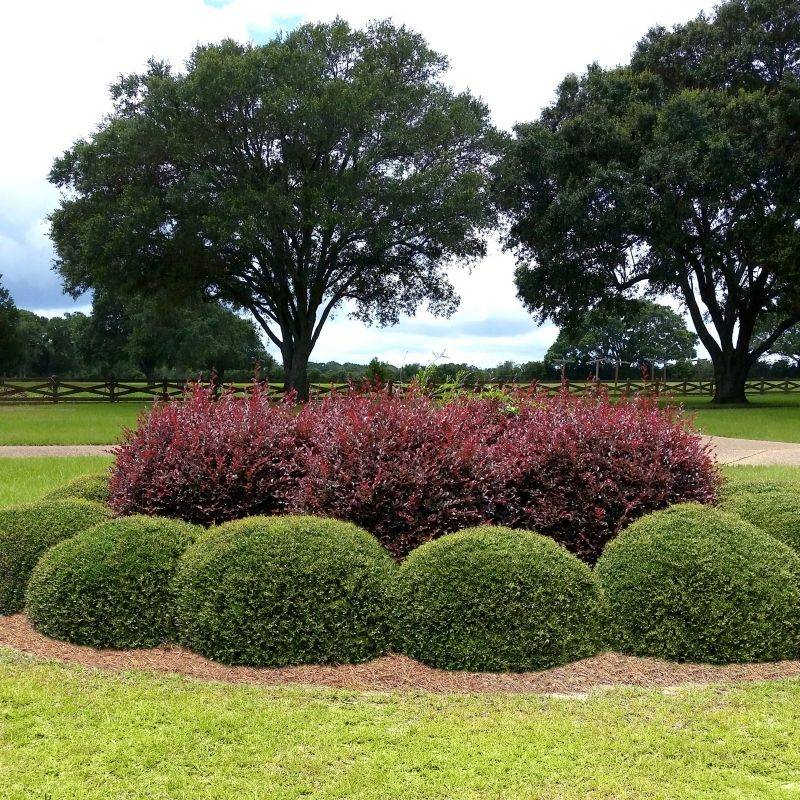
Front-yard foundation beds often call for something low, dense, and evergreen, and dwarf yaupon holly checks nearly every one of those boxes.
Native to Georgia and the broader Southeast, this compact shrub brings the kind of clipped, rounded structure that made boxwood so popular in the first place.
It holds its small, glossy green leaves year-round, giving foundation plantings a finished look through every season.
Dwarf yaupon holly typically stays between two and four feet tall and wide, making it a manageable choice near windows, walkways, or low-slung ranch-style homes.
It tolerates a wide range of soil conditions, including clay-heavy soils that can cause problems for boxwood.
Full sun to partial shade both work well, which gives homeowners some flexibility when foundation exposures vary.
One underrated quality is its drought tolerance once established, which matters during summers when rainfall can be unpredictable. Pruning is optional rather than required, since the natural form stays tidy on its own.
Female plants may produce small red berries that attract birds through fall and winter, adding a layer of seasonal interest beyond simple structure.
Spacing plants about three feet apart along a foundation line creates a soft hedge effect without the formality of a clipped row.
For Georgia gardeners replacing boxwood, dwarf yaupon holly is often the most visually similar and regionally reliable swap available.
2. Inkberry Holly Adds Evergreen Foundation Texture
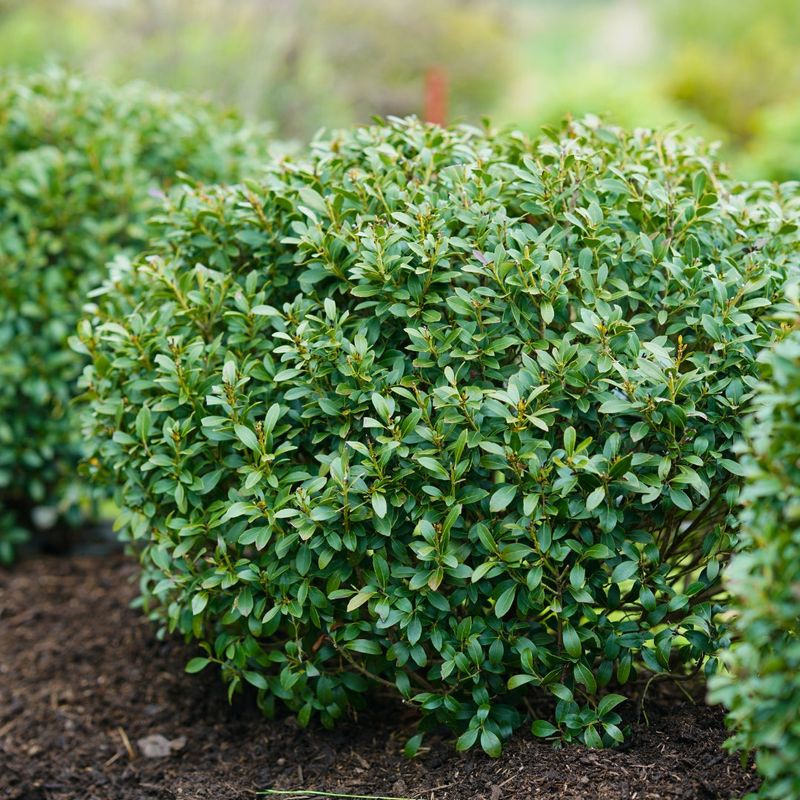
Not every foundation bed gets full sun, and inkberry holly is one of the few native Georgia shrubs that genuinely thrives in shadier, moister spots where boxwood often struggles.
The dark, glossy leaves give it a clean evergreen presence that holds up through winters without browning or thin patches.
It has a slightly more upright form than boxwood, but compact cultivars have brought that height and spread down to a more foundation-friendly scale.
Cultivars like Shamrock and Gem Box stay in the three-to-four-foot range and work well in foundation beds that receive morning sun with afternoon shade.
Inkberry holly is naturally adapted to moist, acidic soils, which suits many Georgia properties near drainage swales or low spots around the home.
That said, it can handle average garden soil as long as it does not dry out completely during establishment.
Your Georgia Garden Changes Every Week. Your Plan Should Too.
Gardening in Georgia changes quickly throughout the season. Every Friday you’ll receive a simple weekly plan showing exactly what to plant, prune, fertilize, harvest, and protect so you never miss the right timing.
The small black berries that appear in late summer and persist through winter give this plant a seasonal quality that boxwood simply does not offer.
Birds, including bluebirds and cedar waxwings, are drawn to those berries, which can make a foundation planting feel more alive.
Spacing plants about three feet apart works well for a low, textured hedge effect.
For homeowners dealing with wet soil near a foundation or a north-facing bed that stays shaded, inkberry holly brings dependable evergreen texture with genuine regional usefulness.
3. Little Leaved Viburnum Brings Compact Native Form
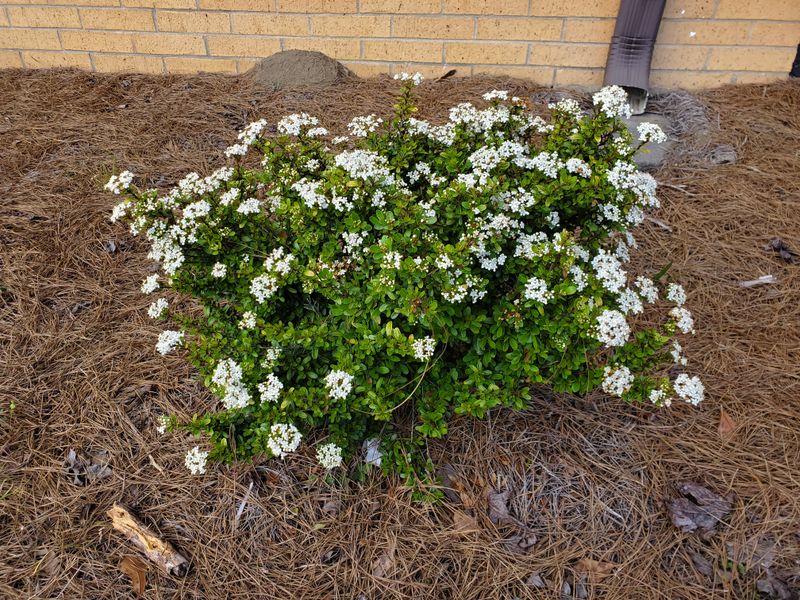
Compact native shrubs with fine-textured foliage are not always easy to find, but small-leaved viburnum offers something genuinely useful for foundation beds.
Known botanically as Viburnum obovatum, this Florida native extends naturally into Georgia and brings a refined, small-leaved texture that reads as tidy and structured without requiring constant shearing.
The leaves are small, dark green, and semi-evergreen to evergreen depending on winter temperatures.
In Georgia, small-leaved viburnum may hold most of its foliage through mild winters, which gives foundation beds a reasonably green appearance even in January and February.
White flower clusters appear in late winter to early spring, adding a soft seasonal bloom that boxwood cannot match.
The flowers are small but numerous, creating a frothy effect along foundation lines that homeowners often find surprising and charming.
Mature size varies by cultivar, but compact selections typically stay between three and six feet, making them suitable for mid-height foundation plantings near taller walls or corners.
It prefers well-drained soil and full sun to partial shade, which suits many Georgia front-yard exposures.
Watering during the first season or two helps it settle in, after which it becomes more self-sufficient. Birds are attracted to the small dark fruit that follows the flowers.
For gardeners who want something with a little more seasonal personality than boxwood but still appreciate a tidy, structured form, this viburnum is worth considering.
4. Dwarf Fothergilla Adds Blooms Near Foundations
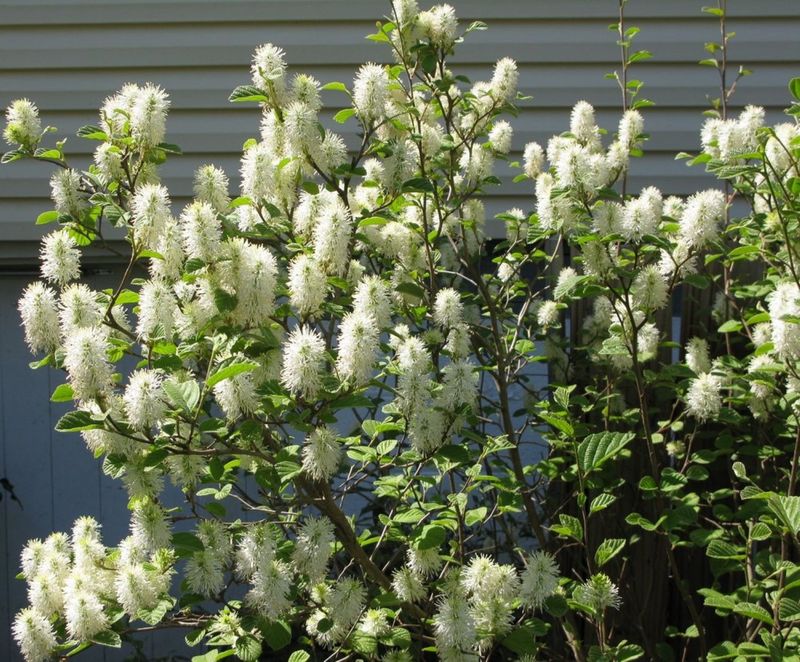
Few native shrubs pack as much seasonal interest into a small package as dwarf fothergilla, and that quality makes it a standout choice for Georgia foundation beds that need more than just green filler.
In early spring, before the leaves fully open, the plant produces white bottlebrush-shaped flower spikes with a honey-like fragrance that carries across the yard.
That kind of front-yard moment is something boxwood simply cannot offer.
Dwarf fothergilla typically reaches two to three feet tall and about as wide, making it one of the more genuinely compact native shrubs available for low foundation plantings.
The summer foliage is a clean blue-green, and then fall brings one of the best color displays of any native shrub, with leaves turning shades of yellow, orange, and red before dropping.
That seasonal arc, from spring blooms through vivid fall color, gives foundation beds a reason to look interesting throughout the year.
It grows best in moist, well-drained, acidic soil and performs well in full sun to partial shade, which suits many Georgia front-yard foundation exposures. Clay soil amended with organic matter can work, though consistent moisture during establishment is helpful.
Spacing plants about two to three feet apart creates a low, informal hedge with a natural feel.
For homeowners who want a foundation planting that earns its space across multiple seasons, dwarf fothergilla brings reliable charm and a genuinely native regional character.
5. Virginia Sweetspire Softens Mixed Foundation Beds
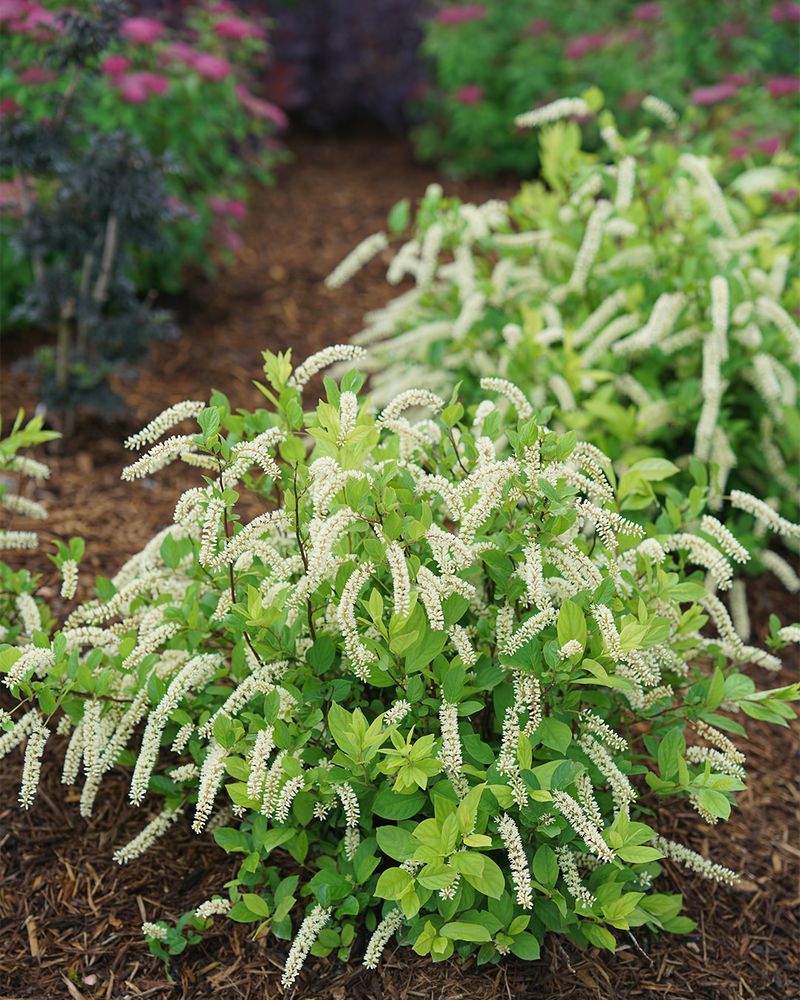
Arching stems and soft, layered foliage give Virginia sweetspire a flowing quality that can break up the stiffness of a foundation bed in a way that clipped boxwood rows never quite manage.
Native across much of the eastern United States, including Georgia, this shrub brings a relaxed but intentional form that works well when mixed with more upright companions or used on its own along a foundation edge.
The overall effect feels natural rather than overworked.
White bottlebrush flower spikes appear in early summer, dangling gracefully from the branch tips with a light fragrance that makes the plant pleasant near entryways and walkways.
The blooms last for a couple of weeks and attract pollinators, which adds another layer of function to the foundation planting.
As summer moves into fall, the foliage shifts to shades of red, burgundy, and orange, giving the plant a second seasonal moment that carries into late autumn.
Virginia sweetspire handles moist to wet soil conditions well, making it a practical option for Georgia foundation beds near downspouts or areas where water tends to collect.
It tolerates partial to full shade, which suits north-facing or heavily shaded foundations where many shrubs struggle.
Compact cultivars like Little Henry stay around three feet tall and work well for low-border planting. Spreading gradually by suckers, it can fill in a foundation bed over time without becoming aggressive.
For gardeners who want softness and seasonal movement in a foundation planting, Virginia sweetspire fits naturally.
6. Oakleaf Hydrangea Brings Bold Seasonal Interest
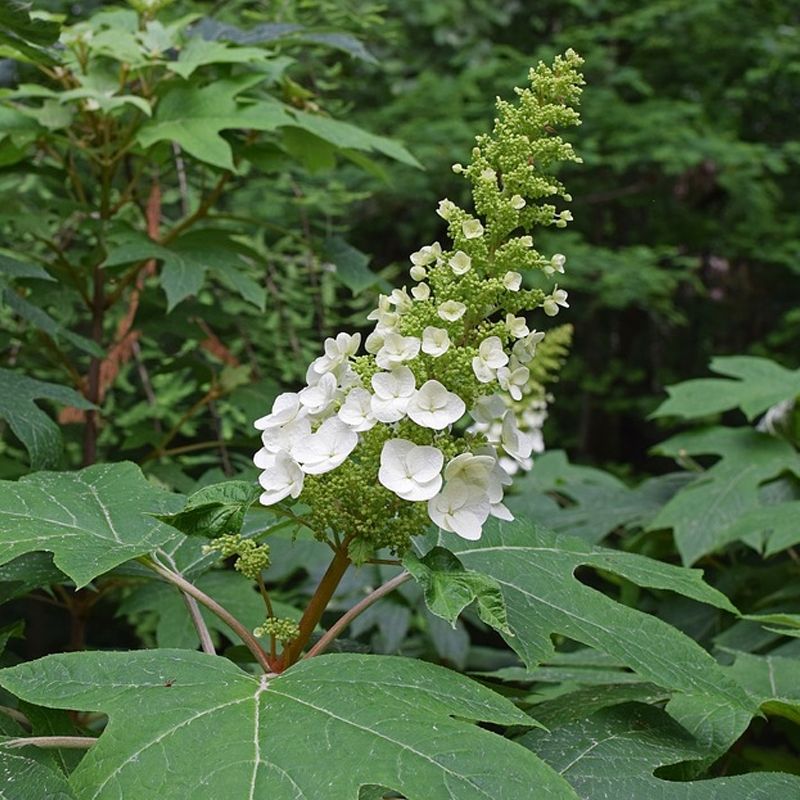
Bold is not a word most people associate with foundation planting, but oakleaf hydrangea earns it honestly.
Native to the Southeast and well-suited to Georgia conditions, this shrub produces large, cone-shaped white flower panicles in early summer that can stretch eight to twelve inches long.
Those blooms age from white to parchment to rose as the season progresses, giving the plant a slow, seasonal color shift that keeps foundation beds looking interesting for months.
Beyond the flowers, oakleaf hydrangea offers a striking four-season presence.
The large, deeply lobed leaves turn rich burgundy and red in fall, the dried flower heads persist through winter with a papery elegance, and the peeling cinnamon-colored bark adds texture during the bare months.
Few native shrubs offer that kind of year-round visual layering in a Georgia foundation bed.
Mature size varies by cultivar, with compact selections like Pee Wee staying around four feet and larger types reaching six to eight feet, so site selection matters.
Oakleaf hydrangea grows well in partial shade to full shade, which makes it a strong candidate for north-facing foundations or spots under roof overhangs that stay somewhat dry.
It prefers well-drained, organically rich soil and benefits from a layer of mulch to retain moisture during summers. Spacing depends on the cultivar, but leaving four to five feet between plants gives each one room to develop its natural form.
For homeowners wanting a real showpiece in a Georgia foundation bed, this plant delivers.
7. Southern Wax Myrtle Adds Evergreen Screening
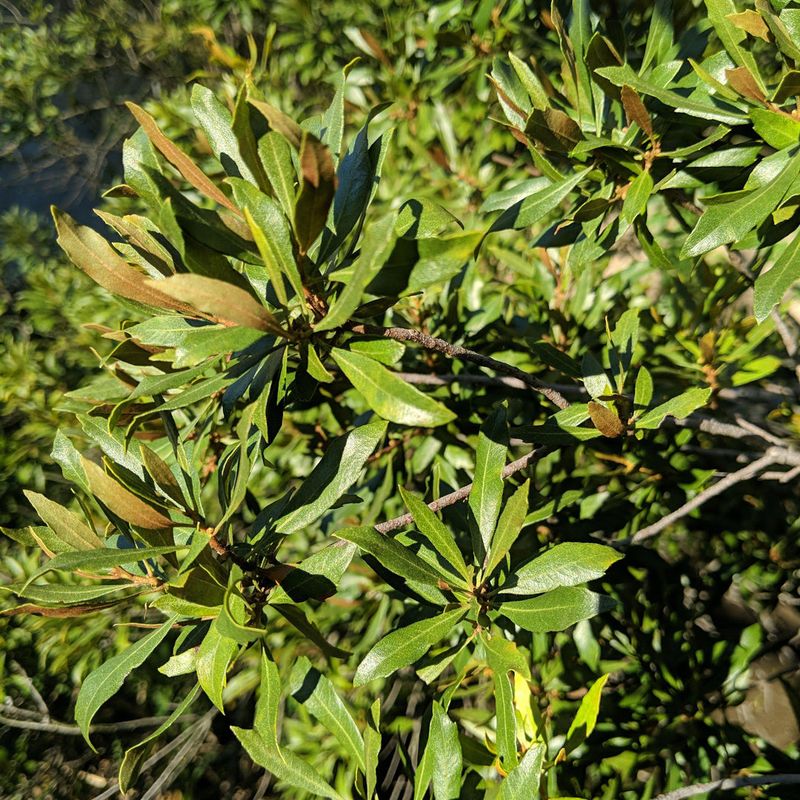
Evergreen screening along a foundation line does not always require a formal hedge, and southern wax myrtle proves that point with its dense, aromatic, gray-green foliage that fills in quickly and holds its color through Georgia winters.
Native across the coastal plain and piedmont of Georgia, this shrub has been part of the Southern landscape long before anyone planted a boxwood.
The leaves carry a pleasant bayberry-like fragrance when brushed, which makes it a sensory bonus near entryways.
Southern wax myrtle can grow quite large if left unchecked, reaching ten to fifteen feet or more, but regular pruning keeps it at whatever height suits the foundation bed.
Compact cultivars like Pumila stay in the three-to-five-foot range and require far less management.
The small, waxy blue-gray berries that appear on female plants in late summer and fall are a significant wildlife draw, attracting yellow-rumped warblers and other birds that rely on the high-fat fruit during migration.
It handles a range of soil conditions well, tolerating both wet and dry sites, sandy coastal soils, and the clay-heavy ground common in Georgia’s piedmont region. Full sun produces the densest growth, but partial shade is manageable.
Once established, southern wax myrtle is notably drought-tolerant, which reduces irrigation needs during dry summers.
For homeowners replacing boxwood along a foundation that needs more height, more wildlife value, and more regional character, southern wax myrtle brings all three with minimal fuss.
8. Florida Anise Fills Shaded Foundation Corners
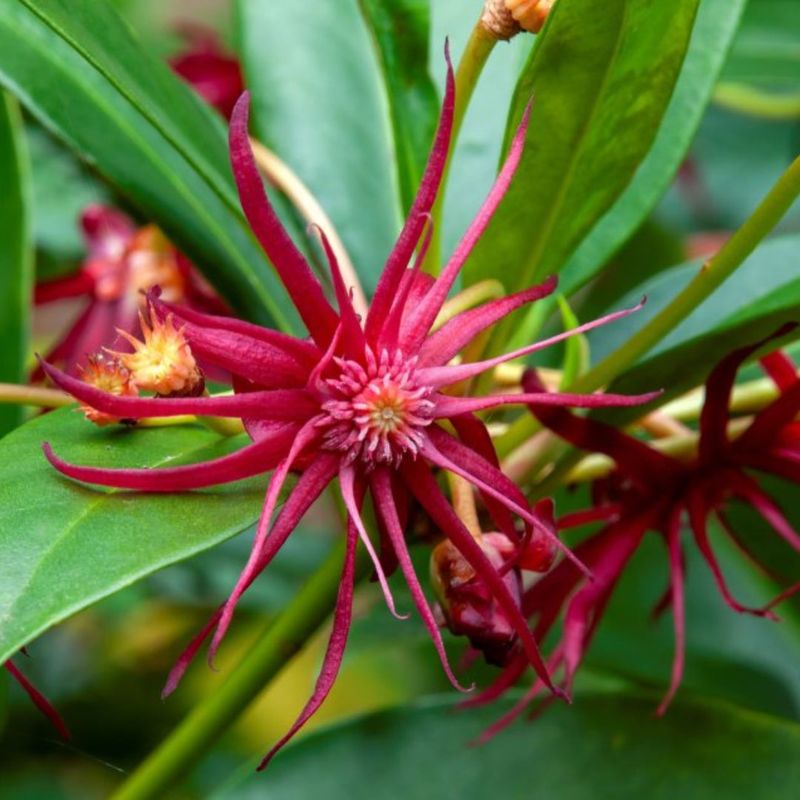
Shaded corners along a home foundation are some of the hardest spots to plant well, and Florida anise handles them with a quiet confidence that few other evergreen shrubs can match.
Native to the Gulf Coast and extending into Georgia, this broadleaf evergreen produces large, glossy, dark green leaves that give foundation beds a lush, tropical-feeling texture even in dense shade.
The foliage stays green year-round, which makes it genuinely useful in spots where seasonal deciduous shrubs would leave bare patches through winter.
In early spring, Florida anise produces unusual star-shaped flowers in deep burgundy-red, which are small but striking up close and tend to surprise homeowners who were not expecting blooms from such a shade-tolerant plant.
The flowers and leaves both carry a licorice-like fragrance, which is pleasant in a garden setting.
Mature height typically ranges from five to ten feet, so it works best in taller foundation areas or corner spots where some vertical presence is welcome.
Florida anise prefers moist, well-drained, acidic soil and grows best in partial to full shade, making it a natural fit for north-facing foundations or spots shaded by roof overhangs and mature trees.
It is not suited to hot, sunny exposures, so site selection is important.
Spacing plants four to five feet apart allows each one to develop its full, rounded form. For homeowners dealing with a difficult shaded corner that needs year-round evergreen presence, Florida anise fills that role reliably and with real visual elegance.