Native Georgia Plants To Grow Instead Of Nandina Along Fence Lines
Fence lines do a lot of quiet work in Georgia yards. They mark boundaries, add a sense of privacy, and often double as a long planting strip just waiting to be filled.
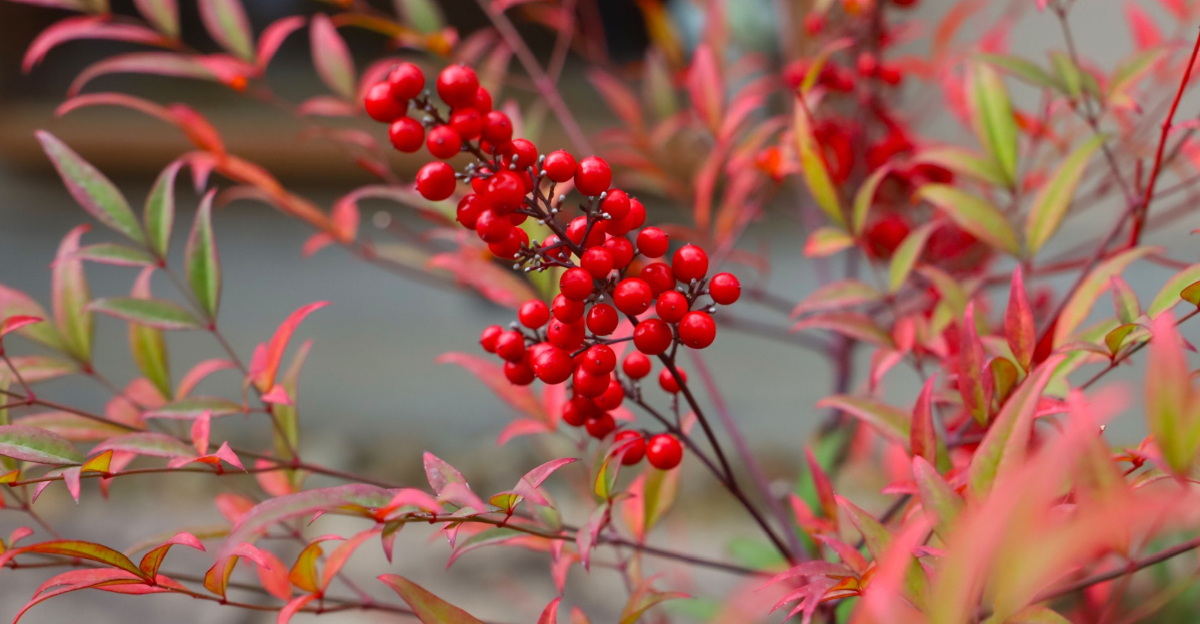
For years, nandina has been a go-to for that space, thanks to its tidy shape and bright red berries.
But here’s the catch, those berries can cause problems for birds, and the plant itself tends to spread more than many gardeners expect.
That has more people in Georgia taking a second look at what they plant along the fence.
Native shrubs bring that same visual appeal, sometimes even more, while fitting right into the local climate and soil.
They also invite birds, pollinators, and other helpful wildlife to stick around.
If your fence line feels a little outdated or just not quite right, this is a great chance to rethink it with plants that truly belong.
1. Inkberry Adds Evergreen Structure Along Fence Lines
Few native shrubs hold their color through a Georgia winter quite the way inkberry does.
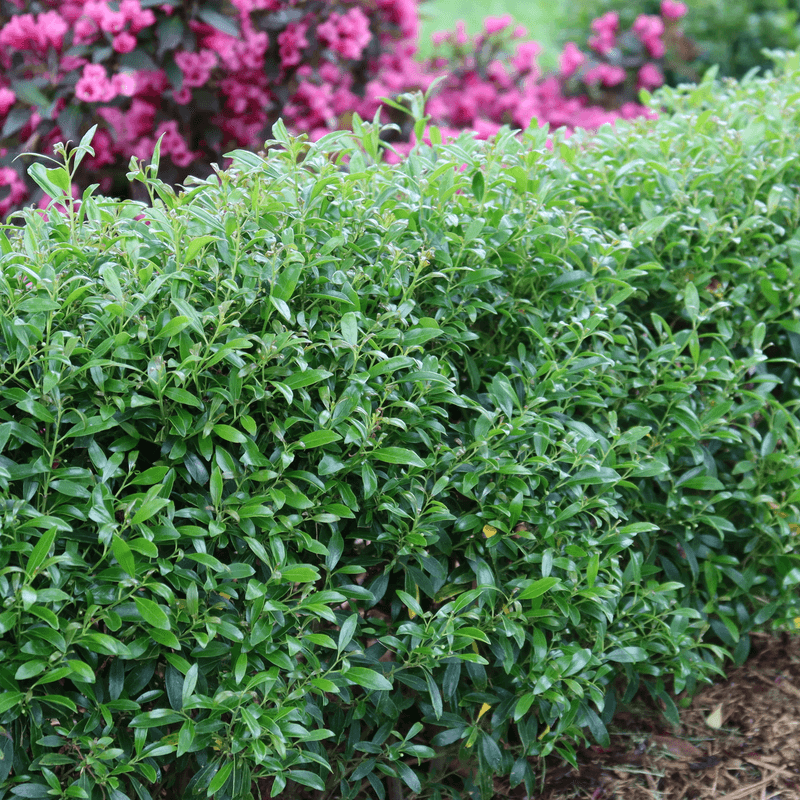
Known botanically as ilex glabra, this evergreen holly grows naturally in the coastal plain and piedmont regions of Georgia, where it tends to thrive in moist, slightly acidic soils.
Along a fence line, its dense, upright growth habit creates a reliable green backdrop that looks tidy throughout the year without much fuss from the gardener.
inkberry typically reaches six to eight feet tall and spreads at a moderate pace, making it a solid choice for homeowners who want year-round screening along a property border.
It handles both full sun and partial shade, which is helpful when part of your fence line falls under a tree canopy.
Small black berries appear in fall and persist through winter, giving birds like bluebirds and mockingbirds a food source during leaner months.
Unlike nandina, inkberry is not aggressive or invasive, and it does not produce berries that harm wildlife.
For Georgia yards that deal with wet or occasionally soggy soil near fence lines, inkberry is one of the more forgiving native options available.
You can plant it in groups of three or more for a fuller hedge effect, or use it as a single specimen anchor at a corner post. It rarely needs pruning to keep a neat appearance, and it tends to settle in well once established.
2. Yaupon Holly Brings Dense Growth For Natural Screening
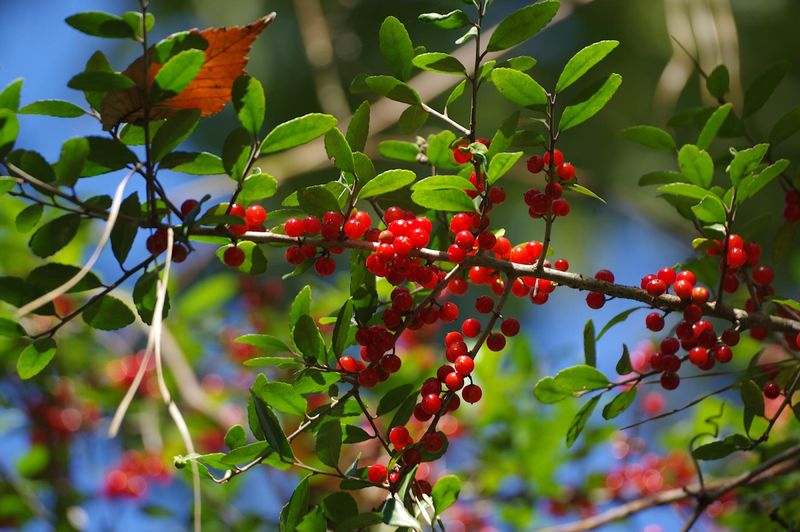
Along sunny Georgia fence lines where privacy matters most, yaupon holly is one of the hardest-working native shrubs you can plant.
Iex vomitoria is native to the southeastern United States, including much of Georgia, and it has a long history of growing along woodland edges, roadsides, and open borders.
Its small, glossy leaves and naturally dense branching make it a genuinely effective screen without requiring constant shaping.
One thing that sets yaupon apart from other native hollies is its tolerance for a wide range of conditions.
It handles drought, wet spells, sandy soils, and clay with fairly equal ease, which is a real advantage in Georgia where soil types vary considerably from one county to the next.
Your Georgia Garden Changes Every Week. Your Plan Should Too.
Gardening in Georgia changes quickly throughout the season. Every Friday you’ll receive a simple weekly plan showing exactly what to plant, prune, fertilize, harvest, and protect so you never miss the right timing.
Female plants produce small red berries in fall that songbirds find attractive, adding seasonal color and wildlife value at the same time.
yaupon holly comes in several cultivated forms, including upright varieties that can reach fifteen feet or more and compact forms that stay under four feet.
For fence line screening, an upright or semi-upright selection tends to work best when planted in a staggered row.
Because it grows relatively quickly for a native shrub, you may notice meaningful coverage within two to three growing seasons. It also responds well to light pruning if you prefer a more structured hedge look along your Georgia yard border.
3. American Beautyberry Adds Bright Berries In Fall
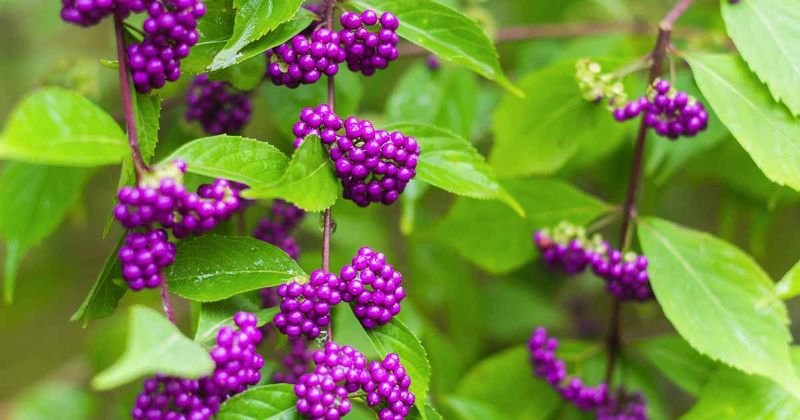
There is really nothing else in the Georgia native plant palette that looks quite like American beautyberry in autumn.
Callicarpa americana produces clusters of vivid magenta-purple berries that wrap tightly around each stem in a way that stops people in their tracks.
From late summer through early fall, those berry clusters are genuinely eye-catching along a fence line, and they tend to attract a long list of bird species including robins, cardinals, and mockingbirds.
American beautyberry is a deciduous shrub that grows naturally in the open woodlands and forest edges of Georgia. It tends to reach four to eight feet tall with a loose, arching habit that softens the hard lines of a fence.
Because of that arching growth, it works especially well when planted slightly in front of a fence rather than directly against it, giving the stems room to spread naturally.
It grows in full sun to partial shade, though berry production tends to be heavier with more sunlight.
One practical note for Georgia gardeners is that American beautyberry benefits from a hard cutback in late winter, which encourages fresh, vigorous growth and stronger berry production the following season.
It is not a shrub that needs to look manicured to be effective.
Its casual, relaxed form actually adds a naturalistic quality to fence line plantings that many gardeners find more appealing than a stiffly trimmed hedge. It is also notably easy to establish from container-grown plants.
4. Virginia Sweetspire Offers Soft Blooms Along Borders
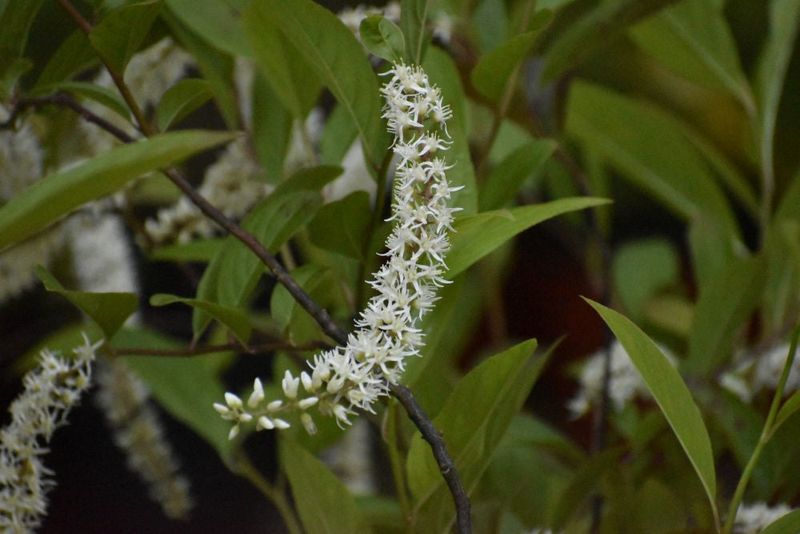
Running a hand through the drooping white flower clusters of Virginia sweetspire on a warm Georgia morning is one of those small backyard pleasures that is easy to overlook until you have actually experienced it.
Itea virginica is a native deciduous shrub that blooms in late spring to early summer, producing slender, fragrant white racemes that arch gracefully outward from the tips of each stem.
Along a fence line, those blooms create a soft, flowing look that feels far less stiff than many traditional hedge plants.
Virginia sweetspire grows naturally along streambanks and forest margins throughout the southeastern United States, including Georgia, which means it is well suited to the moist, sometimes wet conditions that can develop along low-lying fence lines.
It handles partial shade quite well, making it a thoughtful choice for fence borders that fall in the shadow of larger trees during part of the day.
In fall, the foliage shifts to shades of red, orange, and burgundy, giving the plant a second season of visual interest.
For Georgia fence line plantings, Virginia sweetspire works beautifully when grouped in masses of three to five plants. It spreads slowly by suckers, gradually filling in gaps and creating a more naturalistic border over time.
The compact cultivar ‘Henry’s garnet’ is particularly popular for residential landscapes because it stays under five feet tall and tends to display especially vivid fall color.
It rarely requires much maintenance once established in the right spot.
5. Summersweet Brings Fragrance To Shaded Fence Lines
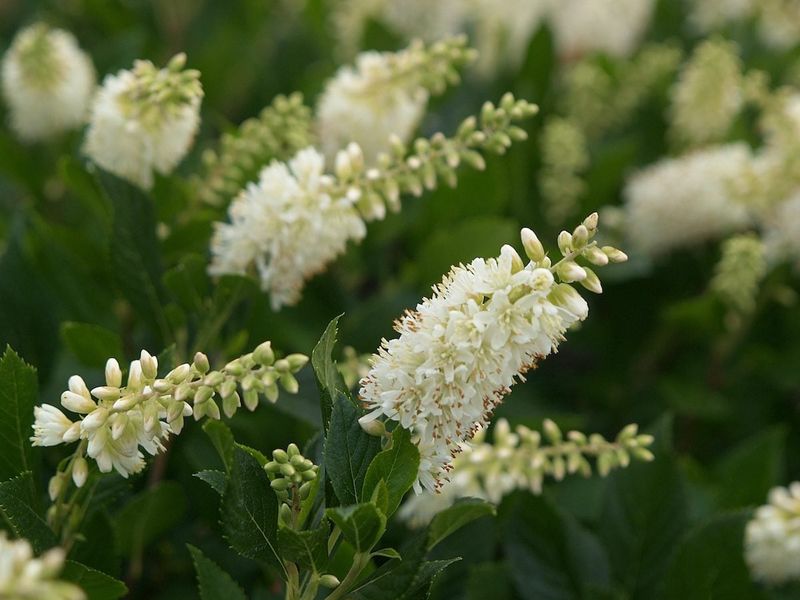
Not every Georgia fence line gets full sun, and in those shadier spots summersweet is one of the most rewarding native shrubs you can choose.
Clethra alinifolia, also called sweet pepperbush, blooms in midsummer when many other shrubs have already finished flowering.
Its upright spikes of small white or pale pink flowers carry a sweet, spicy fragrance that can drift across a yard on a warm afternoon, making it a sensory experience as much as a visual one.
summersweet grows naturally in moist woodlands and along stream edges throughout the eastern United States, and it fits comfortably into the shaded or semi-shaded fence lines that are common in Georgia neighborhoods with established tree canopies.
It tolerates wet soil better than most shrubs, which is a genuine advantage along fence lines where water tends to pool after heavy rain.
The foliage is clean and attractive throughout the growing season, turning golden yellow in fall before dropping.
In a Georgia yard, summersweet typically grows four to six feet tall with a somewhat upright, rounded form that fills in nicely along a fence without becoming overwhelming.
It spreads gradually by root suckers, so a small initial planting can slowly develop into a more substantial colony over several years.
For gardeners who want fragrance, summer bloom, fall color, and shade tolerance all in one native shrub, summersweet checks a lot of boxes that nandina simply cannot match. Birds and pollinators are drawn to it as well.
6. Oakleaf Hydrangea Adds Bold Leaves And Seasonal Interest
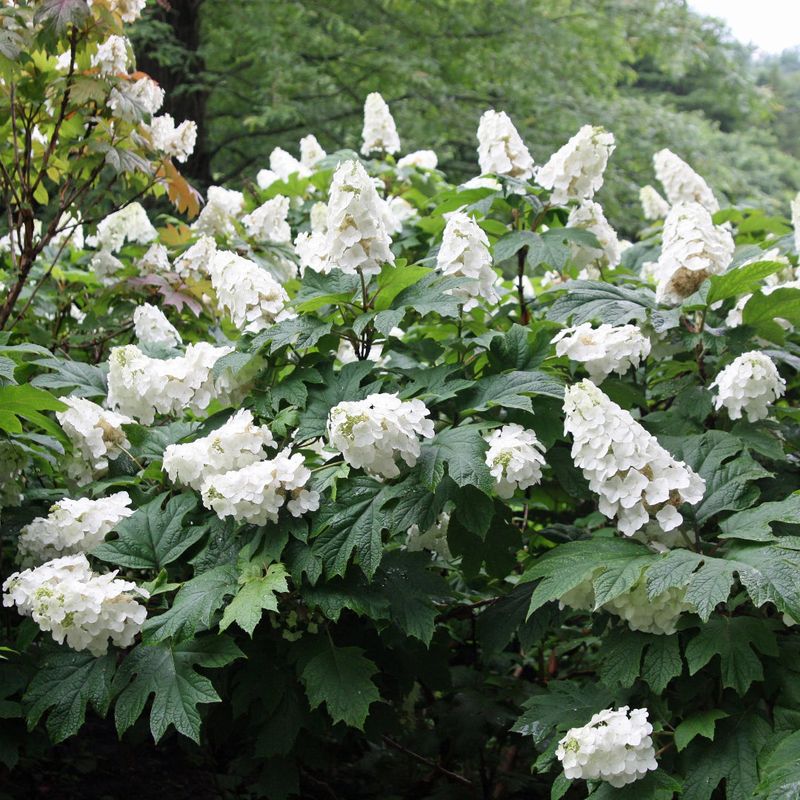
Bold is probably the best single word to describe what oakleaf hydrangea brings to a Georgia fence line.
Hydrangea quercifolia is a native species that grows naturally in the understory forests of Georgia and the broader southeastern United States, and it earns its common name from its deeply lobed leaves that bear a real resemblance to those of an oak tree.
Those leaves can reach eight to twelve inches across on mature plants, giving the shrub a tropical, lush appearance that draws attention even when it is not in bloom.
The flower show arrives in early summer, when large, cone-shaped panicles of creamy white blooms open at the tips of each stem.
Those flower heads gradually age to shades of tan and parchment, and many gardeners leave them on the plant through fall and winter because they add texture and structure to the fence line during quieter months.
In autumn, the foliage shifts to deep burgundy and orange-red tones before dropping, giving the plant yet another moment of seasonal interest.
For Georgia fence lines with partial shade, oakleaf hydrangea is a standout choice. It grows six to eight feet tall and wide in most home landscapes, so it needs a bit of room to spread comfortably.
Plant it where the fence line has some depth, or use it as a layered backdrop behind lower-growing natives.
The exfoliating cinnamon-colored bark adds winter interest even after the leaves have fallen, which makes it a genuinely year-round presence in the landscape.
7. Fetterbush Provides Evergreen Growth In Partial Shade
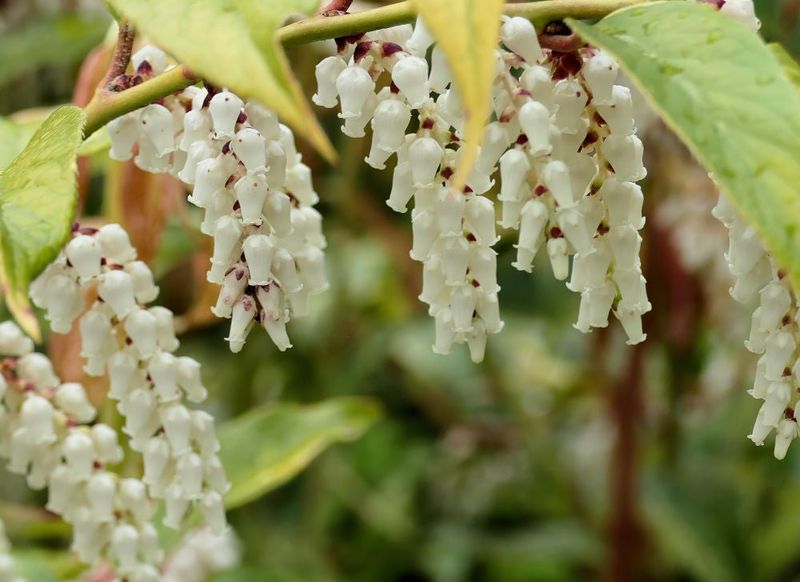
Some of the most overlooked native shrubs in Georgia are the ones that quietly do their job year after year without demanding much attention, and fetterbush fits that description well.
Leucothoe fontanesiana, sometimes called drooping leucothoe, is an evergreen shrub native to the mountain and piedmont regions of Georgia.
Its long, arching stems carry lance-shaped, glossy leaves that maintain their deep green color through winter, making it a reliable choice for fence lines that need year-round foliage coverage in shaded spots.
In spring, fetterbush produces small, white, bell-shaped flowers that dangle in clusters along the undersides of the stems.
The blooms are subtle rather than showy, but they add a delicate charm to the fence line during a season when many native shrubs are still waking up.
In fall and winter, the foliage often takes on hints of bronze and burgundy in response to cooler temperatures, adding a warm tone to what might otherwise be a quiet corner of the yard.
fetterbush typically grows three to five feet tall with a loose, fountain-like form that softens the base of a fence naturally. It spreads by underground stems over time, gradually filling in a shaded border without becoming aggressive.
For Georgia gardeners dealing with dry or moderate shade along a fence line beneath mature pines or oaks, fetterbush is one of the more adaptable evergreen options available.
It pairs well with other shade-tolerant natives like Virginia sweetspire and summersweet.
8. Florida Doghobble Forms Dense Growth In Shady Areas
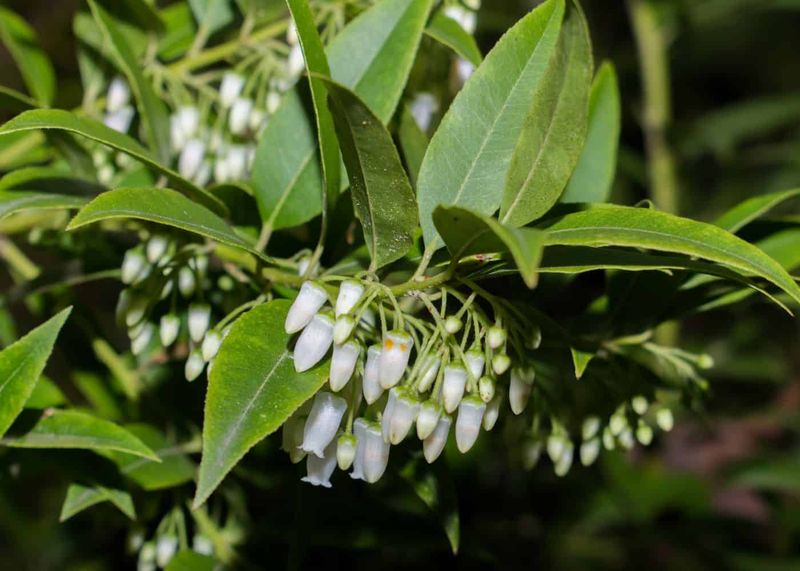
Along the shadier, lower-lying fence lines of Georgia yards, Florida doghobble earns its place as one of the more underappreciated native evergreen shrubs in the southeastern plant palette.
Agarista populifolia is closely related to fetterbush but tends to grow taller and more upright, often reaching six to ten feet in favorable conditions.
That extra height makes it particularly useful for fence line plantings where you need a native shrub that can build meaningful vertical coverage in a shaded or semi-shaded location.
Florida doghobble grows naturally in moist, shaded woodlands and floodplain edges across the coastal plain of Georgia and the broader Southeast.
Along a fence line that borders a wooded area or stays damp from nearby drainage, it tends to settle in and spread steadily without requiring much intervention.
The glossy, lance-shaped leaves stay green through winter in most Georgia locations, providing the kind of year-round visual coverage that gardeners often look for when replacing nandina.
Small white flowers appear in spring along the arching stems, and while they are not the main attraction, they add a quiet seasonal detail that pollinators appreciate.
For Georgia homeowners who want a tall, dense, low-maintenance native shrub along a shaded back fence, Florida doghobble is a practical and ecologically sound choice.
It works well planted in groups, and its layering habit means it gradually builds a fuller, more naturalistic screen over time without the invasive tendencies that have made nandina a concern for local ecosystems.