7 Native Michigan Perennials That Look Better Than Shasta Daisies Along Sunny Walkways
Shasta daisies offer classic charm, but several native Michigan perennials provide even more visual interest along sunny walkway borders.
Black eyed susan brings bold yellow blooms that last through summer and into early fall, far outlasting shasta daisy’s shorter window.
Purple coneflower adds striking color and texture while attracting far more pollinators than shasta daisies typically draw. Blanket flower offers a similar daisy like shape but in warmer, more varied tones of red, orange, and yellow.
Prairie coreopsis provides cheerful yellow blooms with a longer flowering period and better drought tolerance overall. Wild bergamot brings unique, spiky purple flowers along with a pleasant fragrance shasta daisies simply cannot match.
New England aster extends color well into fall, filling the gap left once summer bloomers finish. Culver’s root adds architectural height and interest, creating variety that a single row of shasta daisies cannot provide.
Choosing any combination of these natives creates a walkway border with more color, texture, and ecological value overall.
1. Black Eyed Susan Brings Months Of Gold
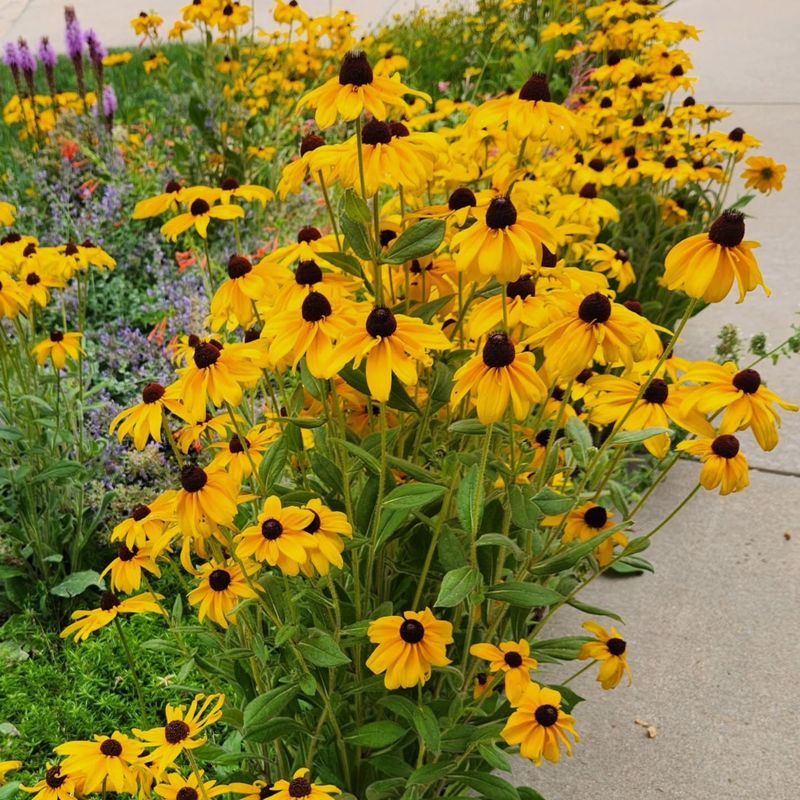
Picture a path lined with golden blooms that keep glowing from midsummer straight into fall. That is exactly what Black Eyed Susan gives you, and it does the job without begging for attention.
The flowers show off sunny yellow petals wrapped around a rich chocolate-colored center. That bold contrast pops next to a walkway far more than a plain white daisy ever could.
Bees and butterflies love landing on the flat centers, so your path turns into a busy little rest stop for pollinators.
One reason gardeners adore this plant is how tough it is. Once the roots grab hold, it handles heat, dry spells, and poor soil like a champ.
You will not need to baby it or water it constantly through a warm July.
The plants grow in tidy mounds that stay full and neat, which is perfect for edging a sidewalk or garden trail. They usually reach about two to three feet tall, tall enough to be seen but short enough to stay polite.
Here is a fun bit: Black Eyed Susan spreads happily on its own, so a small patch turns into a golden ribbon over a few seasons. If you want to control the spread, just snip off some faded blooms before they drop seeds.
Leave a few flower heads standing in fall, though. Birds like goldfinches will visit to nibble the seeds, giving you a second season of life along your path.
2. Butterfly Weed Adds Brilliant Orange
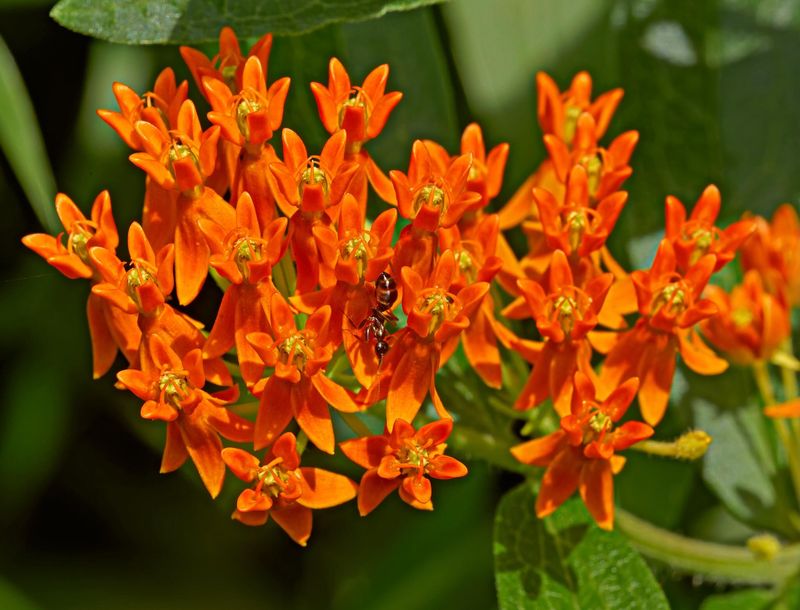
Few flowers grab your eyes like butterfly weed on a bright summer morning. Its clusters of glowing orange blooms look like tiny fireworks frozen in place along the edge of a path.
This plant is a type of milkweed, which makes it a superstar for monarch butterflies. Female monarchs lay their eggs on the leaves, and the caterpillars munch away happily.
Watching that whole story unfold right beside your walkway feels like magic.
Butterfly weed loves sunny, dry beds where other flowers might sulk. It sends down a deep taproot that reaches for water underground, so it shrugs off dry weather with ease.
Your Michigan Garden Changes Every Week. Your Plan Should Too.
Gardening in Michigan changes quickly throughout the season. Every Friday you’ll receive a simple weekly plan showing exactly what to plant, prune, fertilize, harvest, and protect so you never miss the right timing.
That same taproot means you should plant it once and leave it be, since it does not like being moved.
The plant stays fairly compact, usually reaching one to two feet tall and wide. That neat size keeps it from flopping over onto the sidewalk or crowding out its neighbors.
Bees, hummingbirds, and all sorts of butterflies swing by for the sweet nectar. Your path will hum with visitors from June through August, giving you plenty of front-row shows.
Here is a handy tip: butterfly weed wakes up slowly in spring, so do not panic if it seems slow to appear. Mark its spot with a small stake so you do not accidentally dig it up.
Set it against green leaves or purple flowers, and that hot orange color practically glows. It brings a punch of energy that no calm daisy can offer.
3. Sand Coreopsis Keeps Things Bright
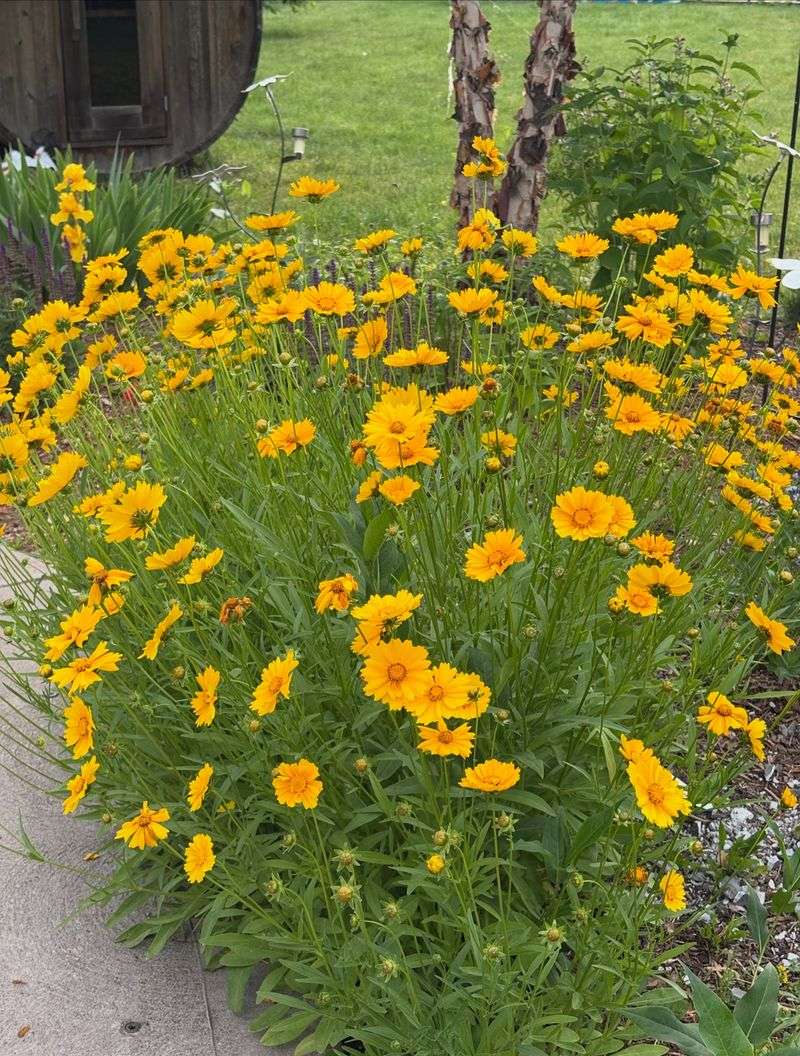
Cheerful is the first word that comes to mind with sand coreopsis. Its sunny yellow flowers dance on thin stems, waving with every little breeze that rolls down the path.
The blooms are daisy-shaped but lighter and airier than a Shasta daisy, giving your walkway a soft, playful feel. Instead of one stiff flower, you get a whole scattering of bright stars floating above feathery green leaves.
This plant is built for sandy, well-drained spots, which makes it a natural fit for many Michigan yards. If your soil drains fast and dries out easily, sand coreopsis will feel right at home and reward you with steady color.
Pollinators cannot resist it. Small native bees and butterflies flock to the open flowers, sipping nectar all through the summer months.
That steady buzz of activity makes the path feel lively and full of purpose.
One thing gardeners love is how long it keeps blooming. Snip off faded flowers, and the plant answers by pushing out even more, stretching the display for weeks on end.
The plant stays low and gentle, usually one to two feet tall, so it drapes softly along a border without blocking the view. It pairs beautifully with taller purple flowers for a bright contrast.
Give it plenty of sun and skip the rich soil or heavy fertilizer. Sand coreopsis actually prefers lean ground, so leaving it a little hungry keeps it strong, upright, and covered in blooms.
4. Nodding Wild Onion Adds Soft Pink
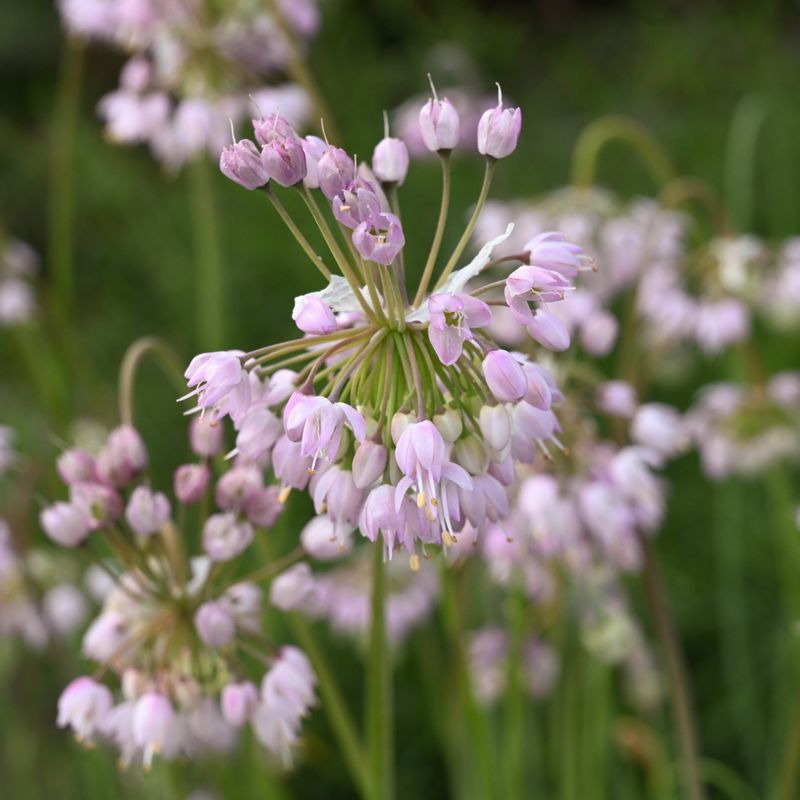
Some flowers whisper instead of shout, and nodding wild onion is one of them. Its soft pink blooms hang down like tiny bells, nodding gently as the wind passes by.
That drooping shape is what makes it so charming beside a walkway. While most flowers stand straight up, these little clusters bow their heads, adding a sweet, relaxed mood to the edge of a path.
Do not let the word onion fool you into thinking it smells strong. The plant only gives off a mild scent when you crush the leaves, so it stays pleasant in the garden.
It is related to onions and garlic, which is a fun surprise for visitors.
Its compact size is a big win for tight spaces. Reaching only about one foot tall, it slips easily into the front of a border without crowding anything else.
Bees and small butterflies gather around the pink flowers in mid to late summer, drawn to the easy nectar. The blooms even turn into pretty seed heads later on, keeping the plant interesting after the color fades.
Nodding wild onion loves full sun and handles dry soil without complaint. Plant a few together in a small clump for the best effect, since a group of nodding heads looks better than a single stem.
Once it settles in, this plant asks for almost nothing. Water it during a long dry stretch, and otherwise let it do its own quiet, graceful thing all season.
5. Hairy Beardtongue Changes The Flower Shape
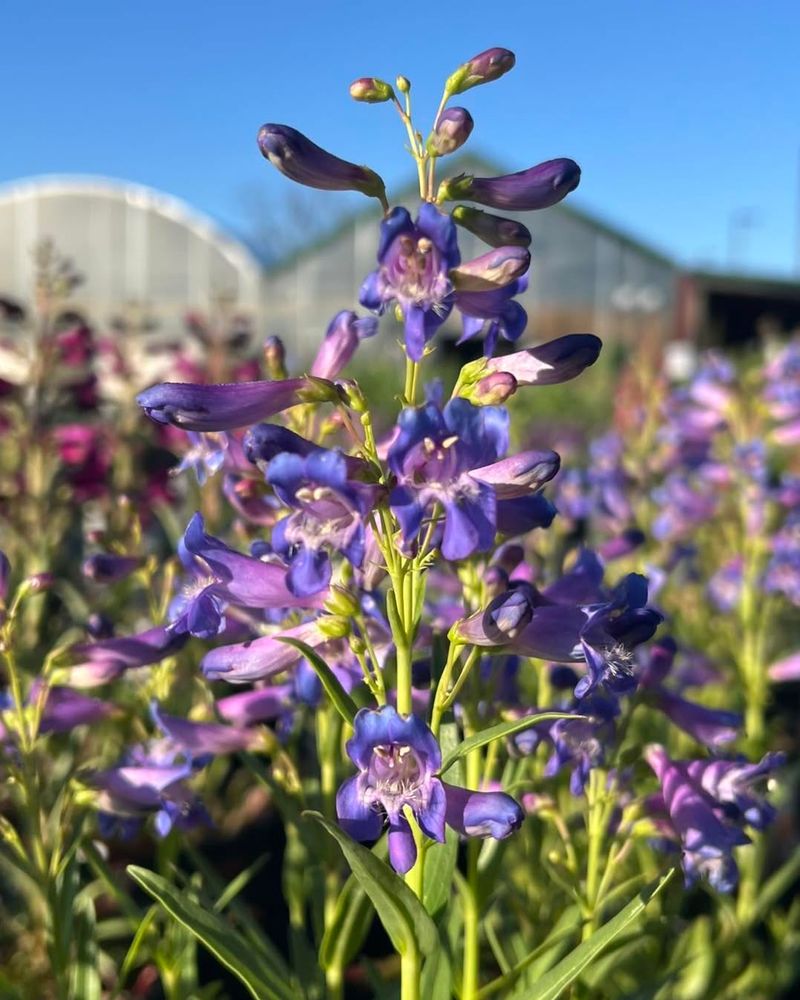
Ready for a flower that breaks the daisy mold completely? Hairy beardtongue trades flat petals for slender tubes, giving your walkway a fresh new shape to enjoy.
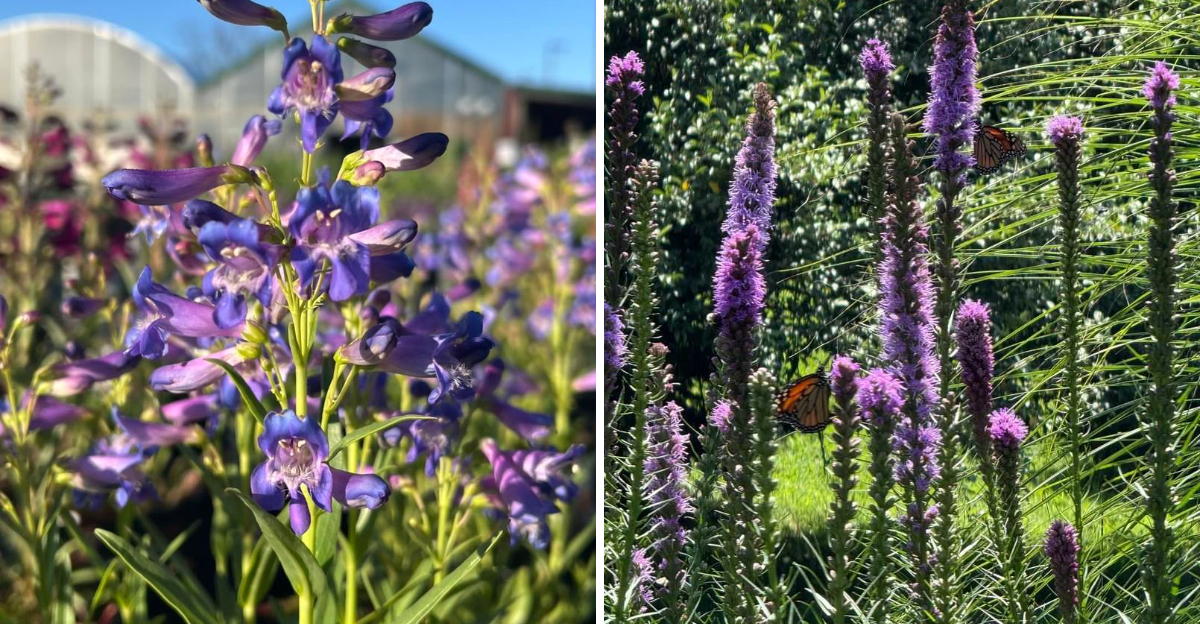
The blooms look like tiny trumpets in soft white or pale purple, lined up along tall, upright stems. That vertical form adds height and structure, something a low, round daisy simply cannot deliver.
The name might sound funny, but it comes from a fuzzy little part inside each flower that looks a bit like a bearded tongue. That quirky detail always makes garden visitors lean in for a closer look.
Hummingbirds and long-tongued bees adore these tube-shaped flowers because they can reach deep inside for nectar. Watching a hummingbird hover along your path is a treat you will not soon forget.
This plant thrives in full sun and well-drained soil, and it stays sturdy even in dry conditions. The stems hold themselves upright without flopping, so your border stays neat and tidy.
Blooming in late spring and early summer, it fills a gap when many other flowers are just getting started. That early show helps your walkway look full from the very beginning of the warm season.
Mix hairy beardtongue with rounder flowers like coreopsis for a garden that plays with different shapes. The contrast between tubes and daisies keeps your eyes moving and makes the whole path feel richer.
Once established, it needs very little care, rewarding you with texture, height, and pollinator visits year after year.
6. Rough Blazing Star Adds Purple Spikes
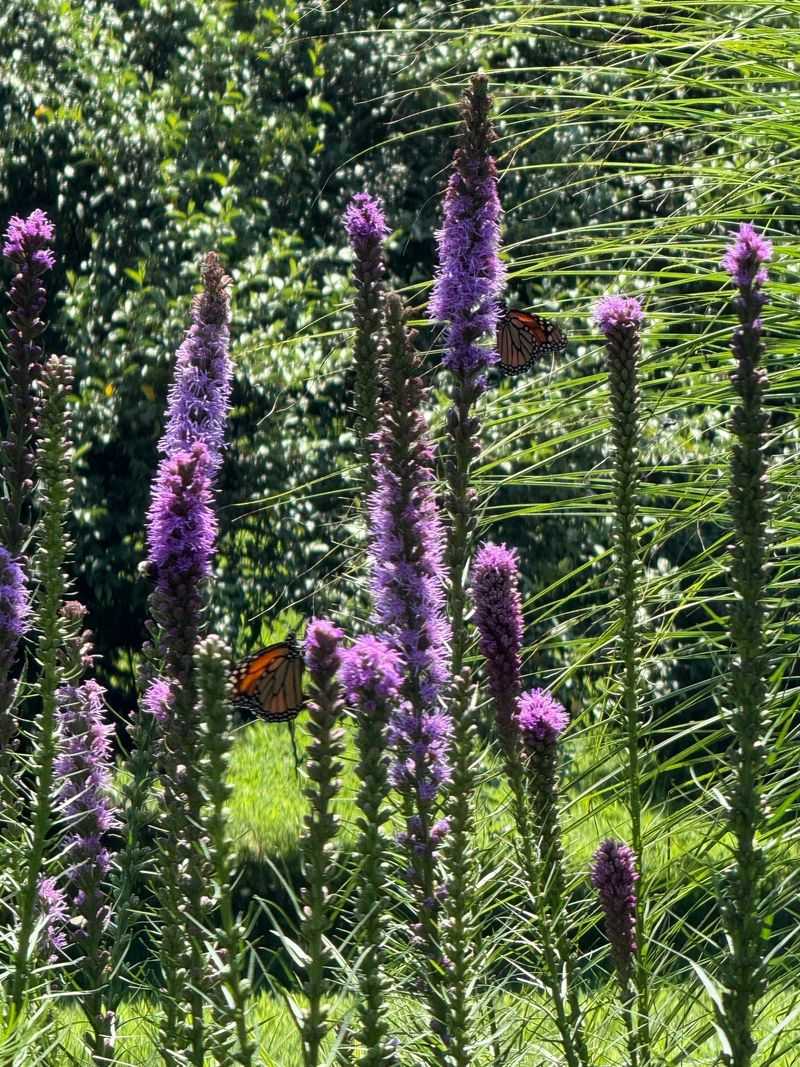
When late summer rolls in, rough blazing star lights up the garden with tall purple spikes that shoot straight for the sky. It is a bold splash of color right when many gardens start to fade.
The flowers open from the top down, which is the opposite of most plants. That upside-down blooming makes the fuzzy purple spikes look like glowing wands standing along your path.
Butterflies simply cannot stay away. Monarchs stopping to fuel up for their long fall journey often cover these spikes, turning your walkway into a stunning, fluttering scene.
Rough blazing star grows from a bulb-like root that stores water, so it powers through hot, dry Michigan summers with ease. It thrives in full sun and does best in soil that drains well.
Standing two to four feet tall, it adds welcome height to the back or middle of a walkway border. The upright shape contrasts beautifully with shorter, rounder flowers nearby.
Here is something neat: the purple spikes make excellent cut flowers, lasting a long time in a vase. Snip a few for your table and enjoy the garden indoors too.
The plant looks amazing when planted in small groups, since a cluster of spikes creates a dramatic vertical display. Pair it with golden Black Eyed Susan for a purple and yellow combo that pops.
Leave the seed heads standing through fall, and songbirds will drop by for a snack. That extra activity keeps your path lively well past the peak of summer.
7. Spotted Bee Balm Looks Completely Different
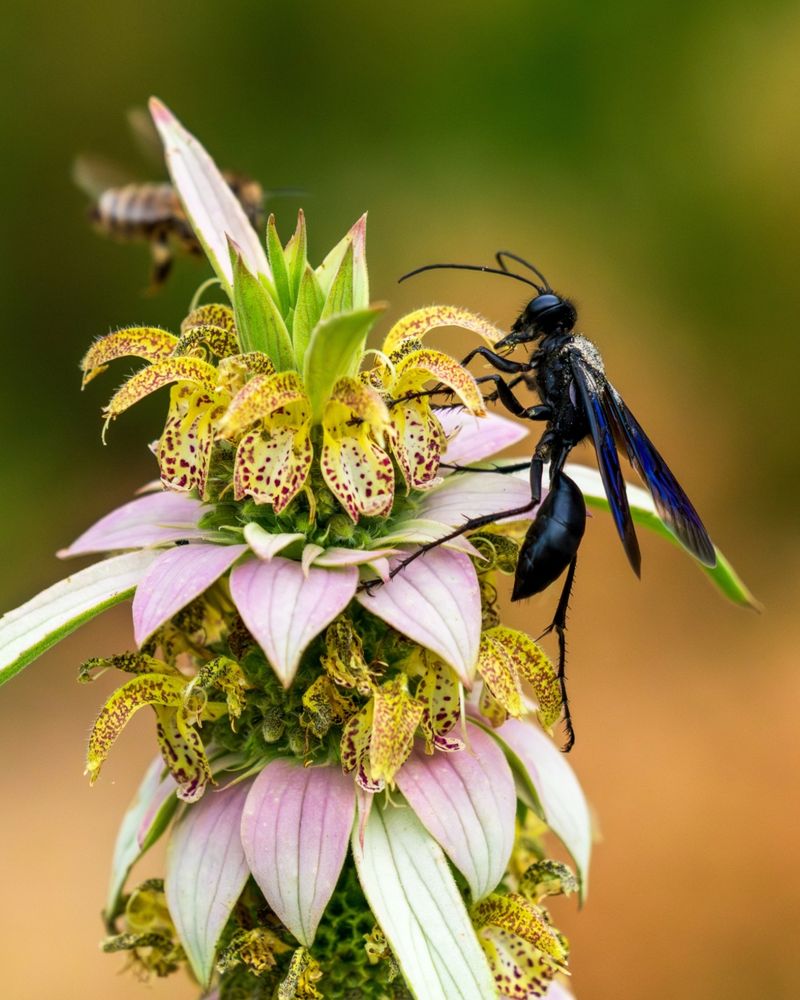
If you crave a flower that looks like nothing else, spotted bee balm is your plant. Its blooms stack up in strange, layered tiers that seem almost too wild to be real.
Each layer holds pale yellow flowers dotted with purple spots, framed by soft pink leafy bracts. The whole thing looks like a tiny, decorated tower, and it never fails to make people stop and stare.
Pollinators go absolutely wild for it. Bees, wasps, and butterflies swarm the blooms, and the plant is one of the busiest nectar stops you can add to a sunny path.
Spotted bee balm handles dry, sandy soil like a pro, making it a smart pick for tough spots where other flowers struggle. Full sun keeps it happy and covered in those odd, eye-catching blooms.
Crush a leaf between your fingers and you will catch a spicy, minty scent, since this plant belongs to the mint family. That fragrance drifts pleasantly as you brush past it on the walkway.
The plant usually grows one to three feet tall, filling the middle of a border with texture and color. It blooms through midsummer, adding interest during the hottest stretch of the year.
Because it self-seeds, spotted bee balm can spread into a lovely little colony over time. If you want more of that strange beauty, just let a few seeds scatter naturally.
Team it up with orange butterfly weed for a combo that feels bold, playful, and totally unlike any daisy-filled border.