Native Michigan Shrubs That Work Better Than Arborvitae Along Driveways And Side Yards
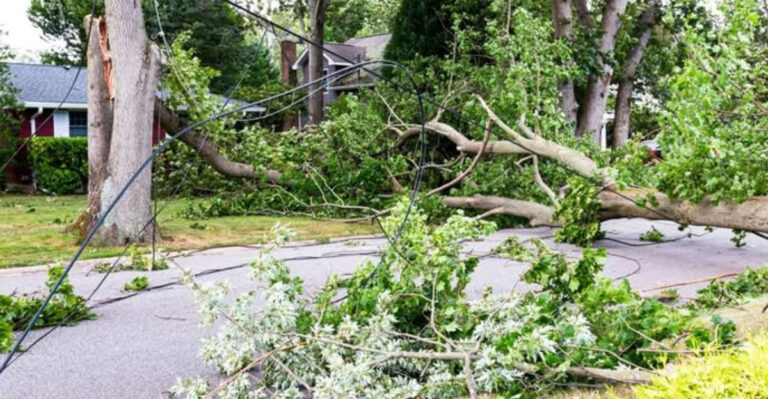
Arborvitae may be the usual choice for driveways and side yards in Michigan, but they are not always the easiest shrubs to live with.
In narrow spaces, they can struggle with road salt, snow piles, drying winds, and the kind of winter stress that leaves them looking rough by spring.
That is why more gardeners are starting to look at native shrubs instead. These plants are better suited to Michigan’s weather and often handle tough spots with less fuss.
Many stay attractive through the season while also bringing flowers, berries, texture, or fall color that arborvitae simply cannot match. They can soften hard edges, create privacy, and make overlooked areas feel more natural and inviting.
If you want shrubs that can handle the pressure and still look great, these native Michigan options are well worth a closer look.
1. Northern Bayberry (Myrica pensylvanica)
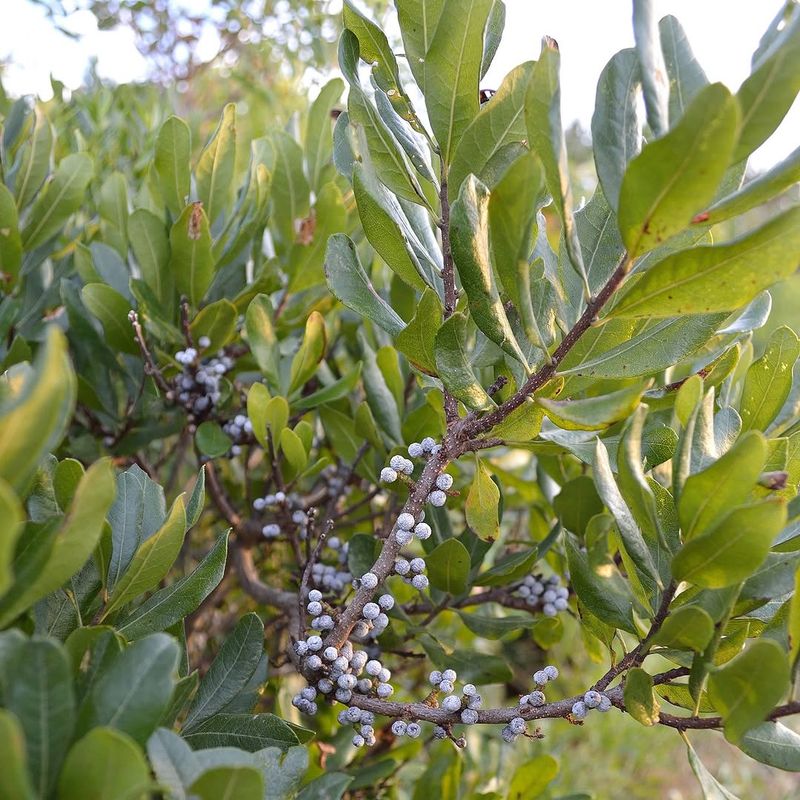
Road salt is one of the biggest reasons arborvitae fails along Michigan driveways, and northern bayberry laughs in the face of it. This tough native shrub handles salt spray, poor soils, wind, and both wet and dry conditions without missing a beat.
Reaching about 5 to 10 feet tall, it forms a dense, rounded screen that works beautifully along tight side yards or busy driveways.
Northern bayberry is semi-evergreen, meaning it holds onto its waxy, aromatic leaves well into winter in many Michigan locations. The gray-white berries that appear in fall are a favorite for birds, so you get wildlife action right outside your window.
Gardeners love that this shrub actually improves poor soil because it fixes nitrogen through its root system.
Once established, northern bayberry needs almost no attention. It rarely needs pruning and shrugs off drought and flooding with equal ease.
Few shrubs on the market, native or otherwise, offer this kind of real-world toughness for Michigan landscapes.
If your driveway border has struggled for years with other plants, bayberry is the fresh start your yard has been waiting for. Plant it in full sun to partial shade and watch it settle in like it owns the place.
2. Inkberry Holly (Ilex glabra)
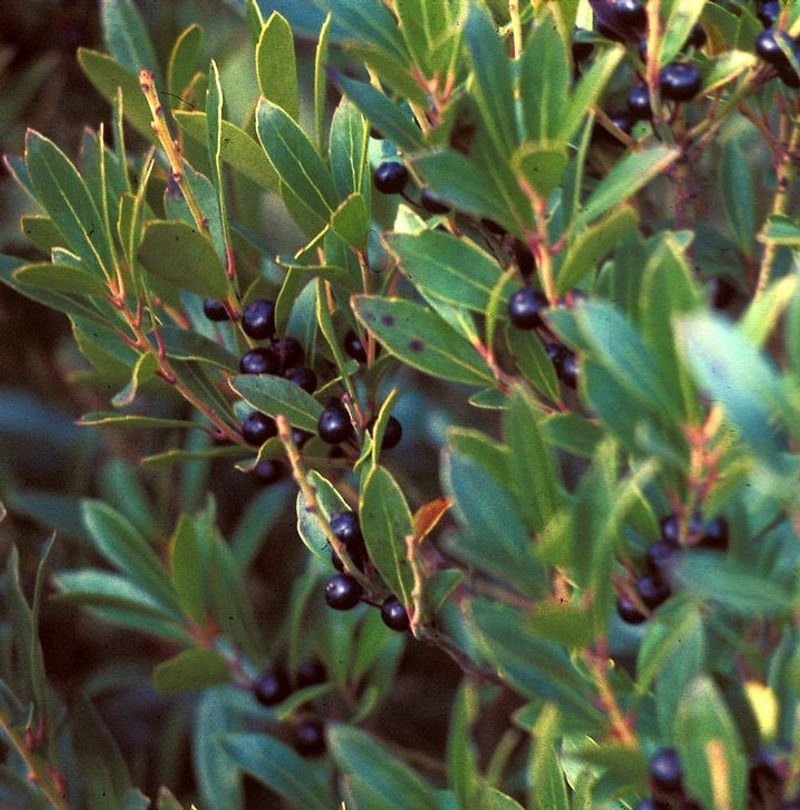
If you love the year-round green look of arborvitae but want something far more dependable in Michigan, inkberry holly is your answer.
This native evergreen shrub keeps its dark, glossy leaves through all four seasons, giving your driveway or side yard a clean, polished appearance even in January.
It grows 5 to 8 feet tall and can be lightly shaped to create a tidy hedge or left natural for a softer look.
Inkberry holly really shines in Michigan landscapes because it handles moisture swings that would stress most evergreens. Wet spring soil, summer dry spells, and everything in between are no problem for this adaptable plant.
The small black berries that ripen in fall attract birds like thrushes and bluebirds, adding lively movement to your yard through the colder months.
One thing gardeners appreciate about inkberry holly is how low-maintenance it truly is once it settles in. It rarely needs pruning, tolerates clay soil, and holds its form without much fuss.
Your Michigan Garden Changes Every Week. Your Plan Should Too.
Gardening in Michigan changes quickly throughout the season. Every Friday you’ll receive a simple weekly plan showing exactly what to plant, prune, fertilize, harvest, and protect so you never miss the right timing.
For Michigan homeowners tired of replacing arborvitae that browns out or thins at the base, inkberry holly offers a reliable evergreen alternative that earns its place year after year.
Plant it in full sun to partial shade for the densest growth and best berry production along your property edge.
3. Red Osier Dogwood (Cornus sericea)
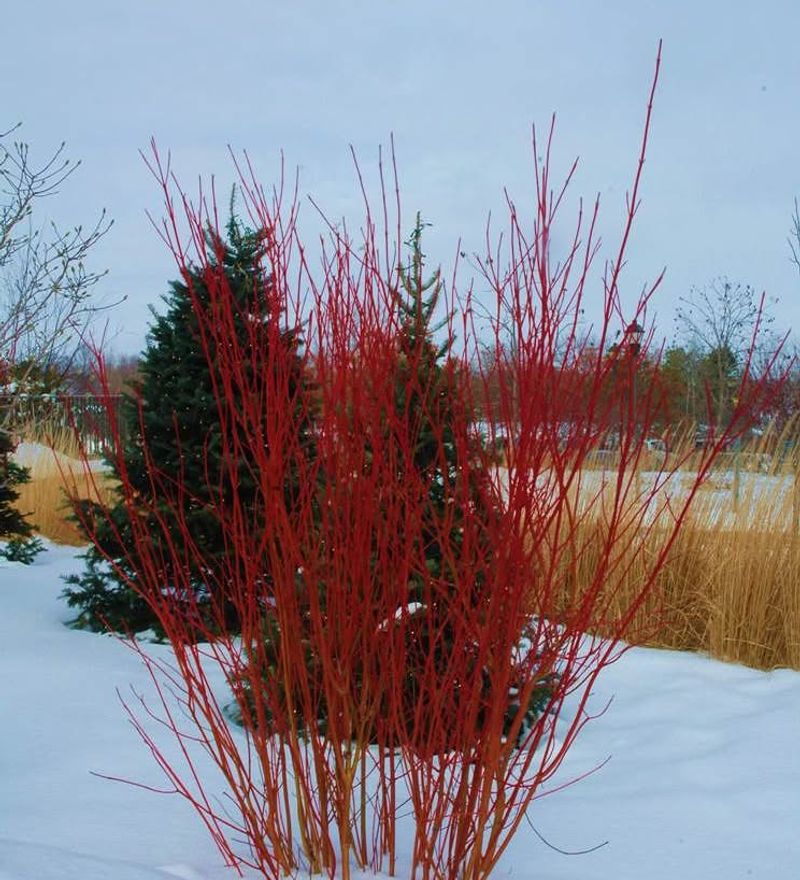
Picture a row of blazing red stems glowing against a fresh Michigan snowfall. That is exactly what red osier dogwood delivers in winter, something arborvitae simply cannot compete with.
This native shrub earns its spot along driveways and side yards through four full seasons of interest, from white spring flowers to creamy berries, green summer foliage, and finally those unforgettable red stems.
Red osier dogwood grows 6 to 9 feet tall and spreads into a dense, full thicket over time. It is one of the most moisture-tolerant native shrubs available in Michigan, thriving in areas where the ground stays wet or where drainage is poor.
Roadside exposure, salt spray, and even occasional flooding barely slow it down, which makes it ideal for the tricky spots where arborvitae consistently struggles.
Birds absolutely love this shrub. The berries feed dozens of species, and the dense branching provides excellent nesting cover throughout the warmer months.
For Michigan gardeners who want a border plant that genuinely supports local wildlife while looking spectacular, red osier dogwood delivers on every front.
Plant it in groups of three or more for the fullest screening effect, and prune one-third of the oldest stems each spring to keep the red stem color as vivid and eye-catching as possible.
4. Gray Dogwood (Cornus racemosa)
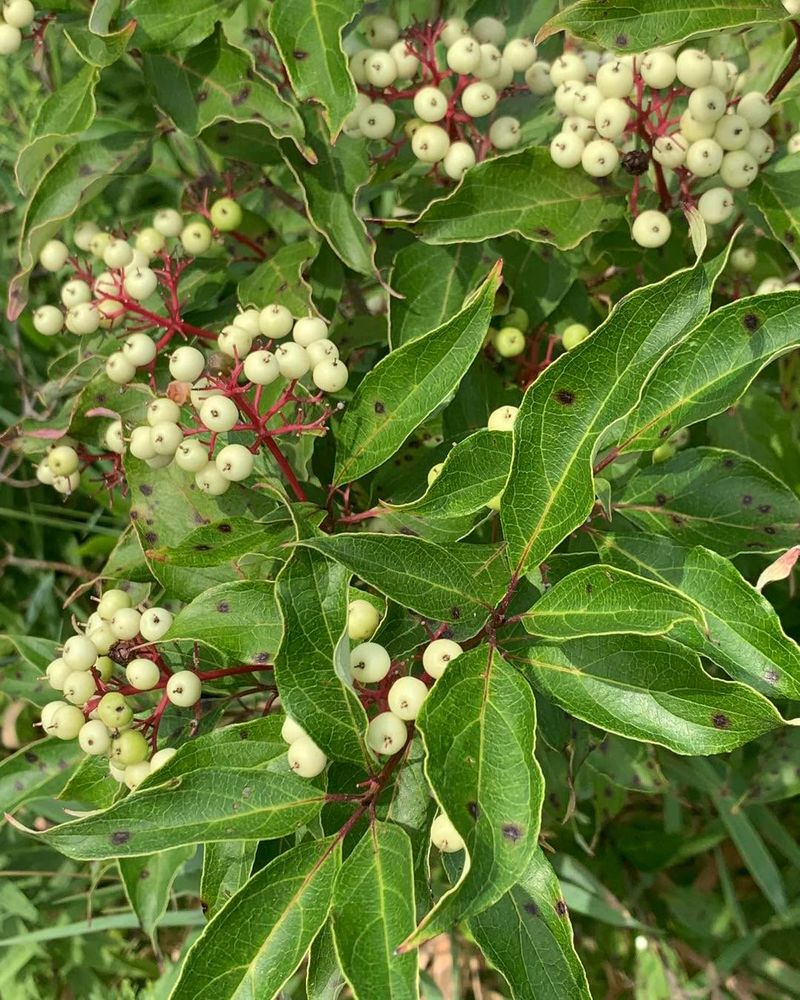
Few native shrubs in Michigan are as quietly impressive as gray dogwood. It does not shout for attention with flashy flowers or neon foliage, but it earns deep respect from gardeners who know tough sites.
Gray dogwood handles drought, poor soil, clay, sand, shade, and full sun with the kind of flexibility that makes it almost unfair to compare to arborvitae.
Growing 5 to 10 feet tall, gray dogwood spreads by root sprouts to form a thick, natural barrier along driveways and side yards.
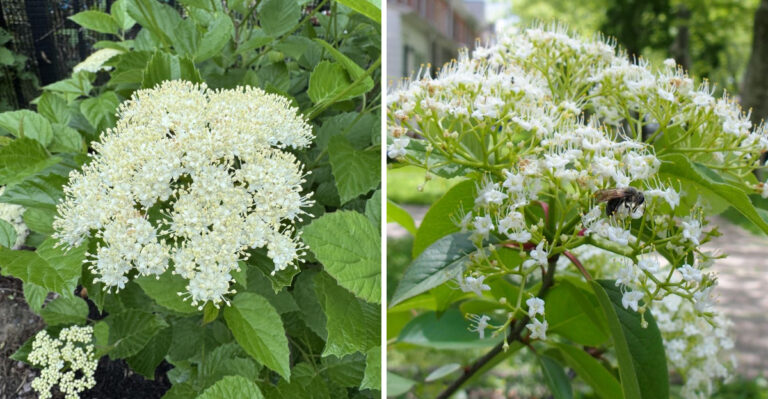
The white flower clusters in late spring are attractive and fragrant, followed by white berries on deep red stems that birds find irresistible.
Come fall, the foliage turns rich shades of reddish-purple that bring warm color to Michigan landscapes before winter arrives.
Gardeners dealing with difficult, neglected, or compacted soil will find gray dogwood to be one of the most forgiving plants in the native palette. It establishes quickly, spreads steadily, and rarely needs any intervention once it gets going.
For Michigan homeowners who want a natural privacy screen without the constant maintenance that arborvitae demands, this shrub is a genuinely smart investment.
Pair it with red osier dogwood for a dynamic, wildlife-rich border that looks intentional and beautiful through every season of the year.
5. Ninebark (Physocarpus opulifolius)
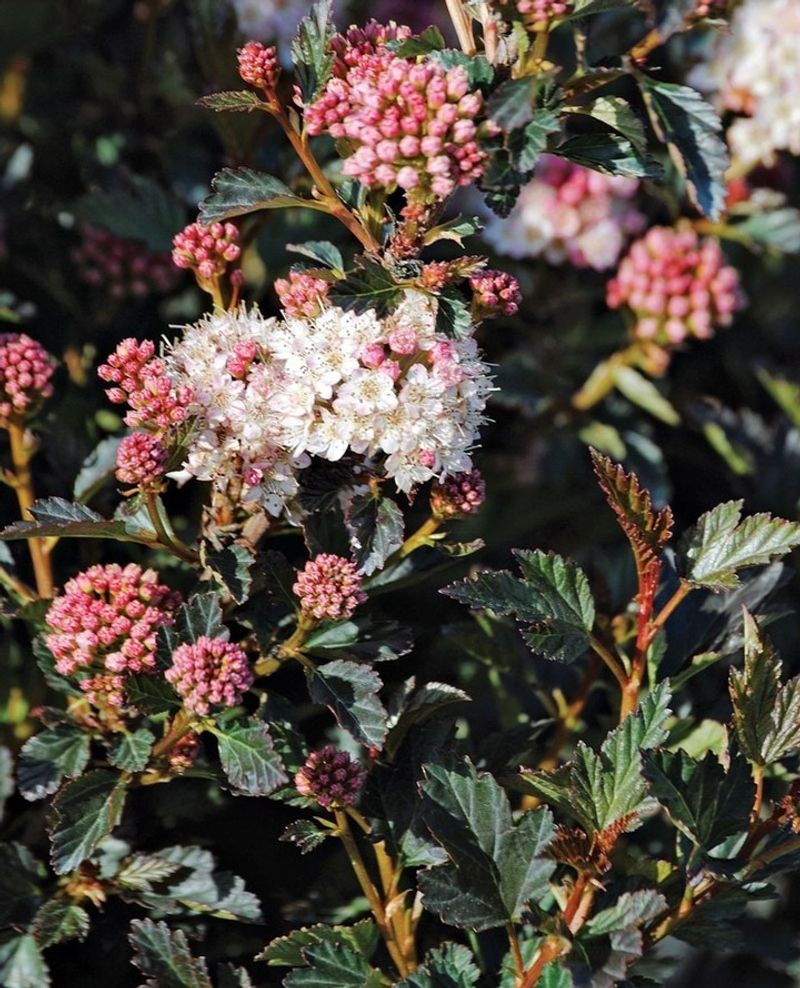
Ninebark has a secret weapon that most shrubs do not have: bark that literally peels away in thin, papery layers to reveal warm cinnamon and orange tones underneath. That textural detail makes it a showstopper in Michigan yards even when nothing else is blooming.
Add in clusters of white or soft pink flowers in late spring and bold foliage in green, burgundy, or gold depending on the variety, and you have a shrub that earns its space every single month.
Along driveways and side yards, ninebark performs where arborvitae gives up. It handles drought, poor soils, and full sun without complaint, growing 6 to 10 feet tall with a naturally arching, layered form.
Michigan gardeners appreciate that it does not need rich soil or extra watering once it establishes, which makes it genuinely low-effort compared to many alternatives.
Ninebark also supports pollinators in a big way. The spring flowers attract native bees and butterflies, and the seed clusters feed small birds through fall and early winter.
For a Michigan driveway border that looks professionally designed without requiring constant care, ninebark is a standout choice.
Varieties like Diablo and Coppertina offer dramatic foliage colors that stay rich and bold all season long, giving your yard a polished, curated look that neighbors will definitely notice and ask about.
6. Buttonbush (Cephalanthus occidentalis)
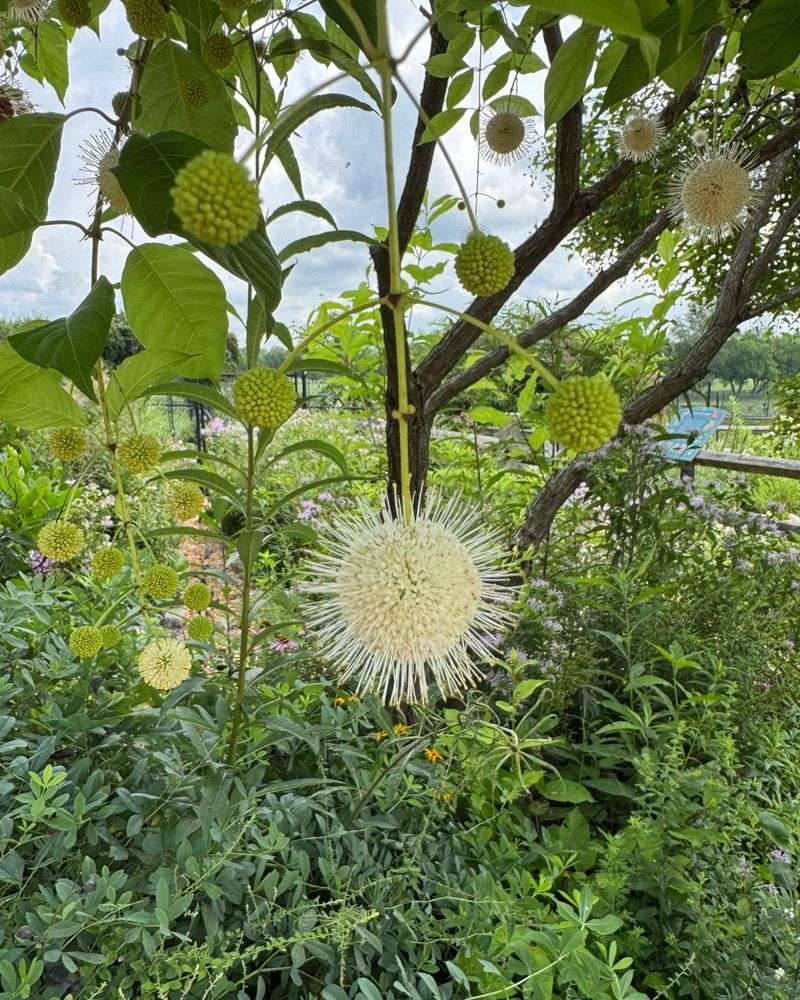
Buttonbush is the shrub that solves the soggy driveway problem once and for all. If you have a low spot along your side yard or a section of driveway where water collects and other plants rot away, buttonbush was practically designed for that exact situation.
It thrives in wet to moist soils and can even handle short periods of flooding, making it one of the most practical native choices for challenging Michigan landscapes.
The flowers are genuinely unlike anything else in the native shrub world. Round, spiky white globes appear in midsummer and attract an impressive parade of butterflies, bees, and hummingbirds.
Growing 6 to 12 feet tall, buttonbush fills space quickly and creates a lush, tropical-looking screen that is surprisingly tough given Michigan winters.
Beyond the flowers, buttonbush produces round seed clusters that waterfowl and shorebirds actively seek out through fall and winter.
For Michigan homeowners near wetlands, retention ponds, or low-lying driveways, this shrub is a practical and beautiful solution that arborvitae could never be in those conditions.
Plant it in full sun for the most flowers and fastest growth, and give it room to spread naturally. Once established, buttonbush is remarkably self-sufficient, asking very little while delivering a lot of visual and ecological value to your yard.
7. American Hazelnut (Corylus americana)
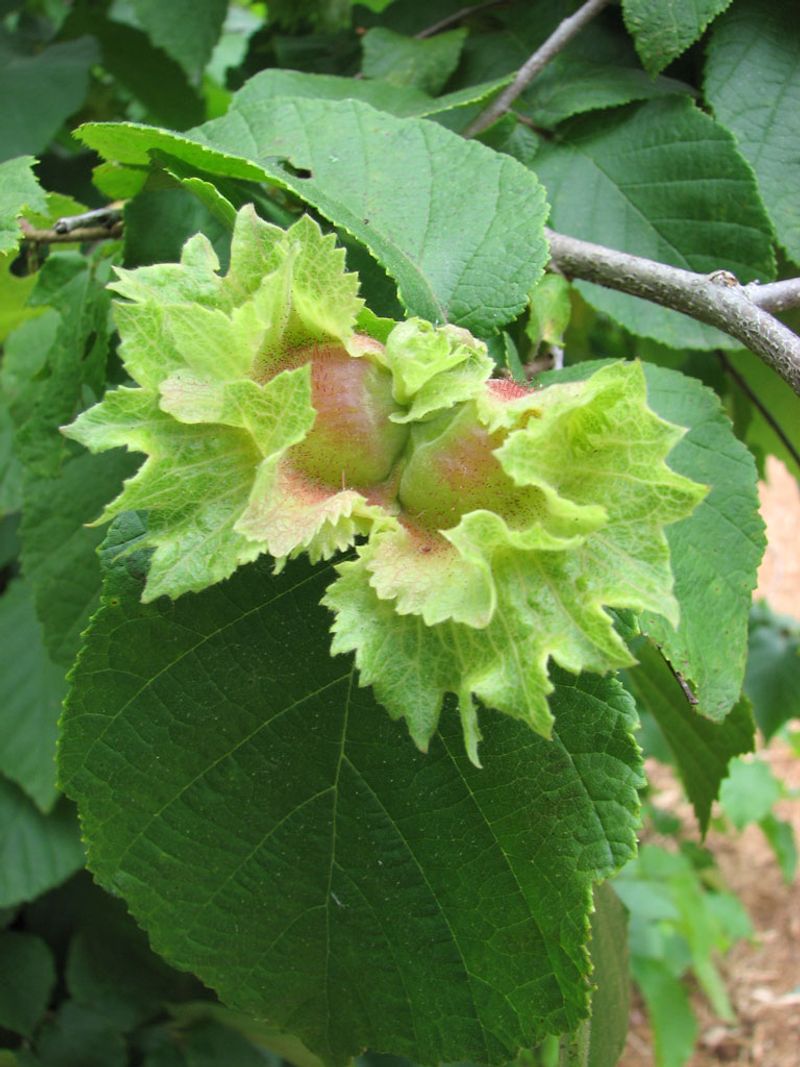
American hazelnut brings something rare to the Michigan landscape: a native shrub that is both a serious privacy screen and a food producer at the same time.
Growing 6 to 10 feet tall with a dense, multi-stemmed form, it creates a thick natural barrier along driveways and side yards that fills in beautifully over a few seasons.
The broad, textured leaves give it a lush, full appearance from spring right through to fall.
Squirrels and birds go absolutely wild for the hazelnuts that ripen in late summer, so planting this shrub means inviting a lively cast of wildlife characters to your yard.
The fall foliage turns warm shades of yellow, orange, and red, giving Michigan landscapes a rich seasonal finish before the leaves drop.
Catkins appear in very early spring, adding soft texture and early-season interest before most other plants wake up.
Adaptability is one of American hazelnut’s strongest qualities. It grows well in full sun to partial shade and tolerates a wide range of soil types found across Michigan, from sandy to clay-heavy.
Unlike arborvitae, which can thin out at the base over time, hazelnut stays full from the ground up, making it genuinely effective as a screen.
For gardeners who want a native plant with multi-season appeal, real wildlife value, and reliable screening power, American hazelnut is an outstanding and underused option.
8. New Jersey Tea (Ceanothus americanus)
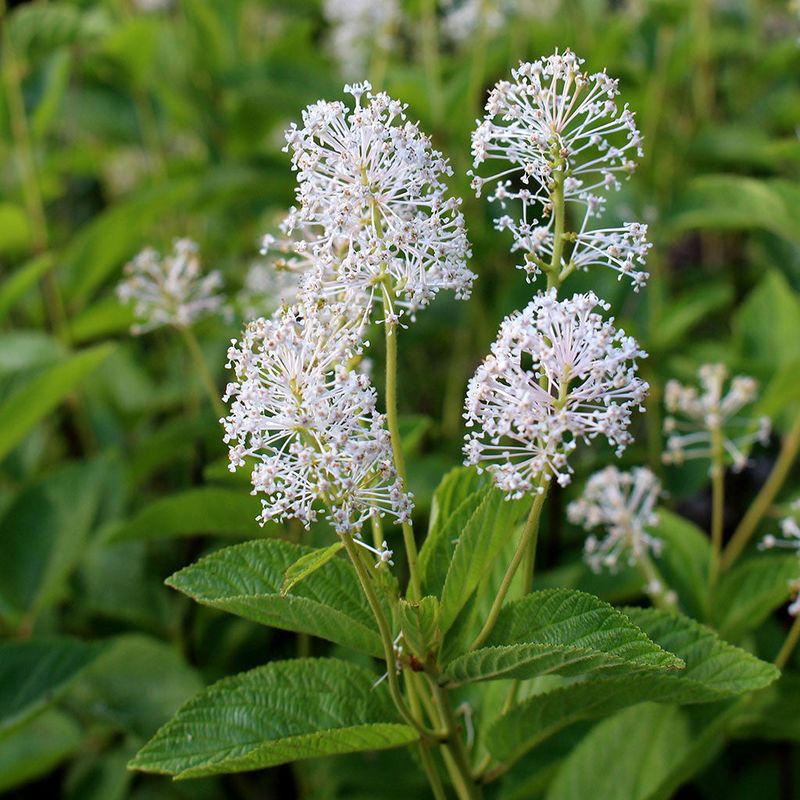
New Jersey tea is a small but mighty native shrub that thrives in exactly the conditions that send arborvitae into decline. Dry, sandy, or rocky soil in full sun?
No problem. This compact Michigan native grows 3 to 4 feet tall with a tidy, rounded form that works especially well along narrow side yards or sunny driveway edges where space is limited and soil quality is poor.
In early summer, New Jersey tea puts on a stunning show of fluffy white flower clusters that cover the entire shrub.
The blooms attract native bees, butterflies, and other pollinators in impressive numbers, turning your driveway border into a buzzing, living garden feature.
The deep taproot that makes this shrub so drought-tolerant also makes it excellent at stabilizing sandy or loose soils along slopes and edges.
Historically, the leaves of this plant were used as a tea substitute during the American Revolution, which gives it a fun story to share with curious visitors. In modern Michigan gardens, it earns its place through sheer toughness and cheerful summer blooms.
Once established, New Jersey tea rarely needs watering or fertilizing, and it even fixes nitrogen in the soil to benefit neighboring plants.
For dry, sunny spots along Michigan driveways where other shrubs have repeatedly struggled, this native gem is a refreshingly reliable solution worth planting.
9. Meadowsweet (Spiraea alba)
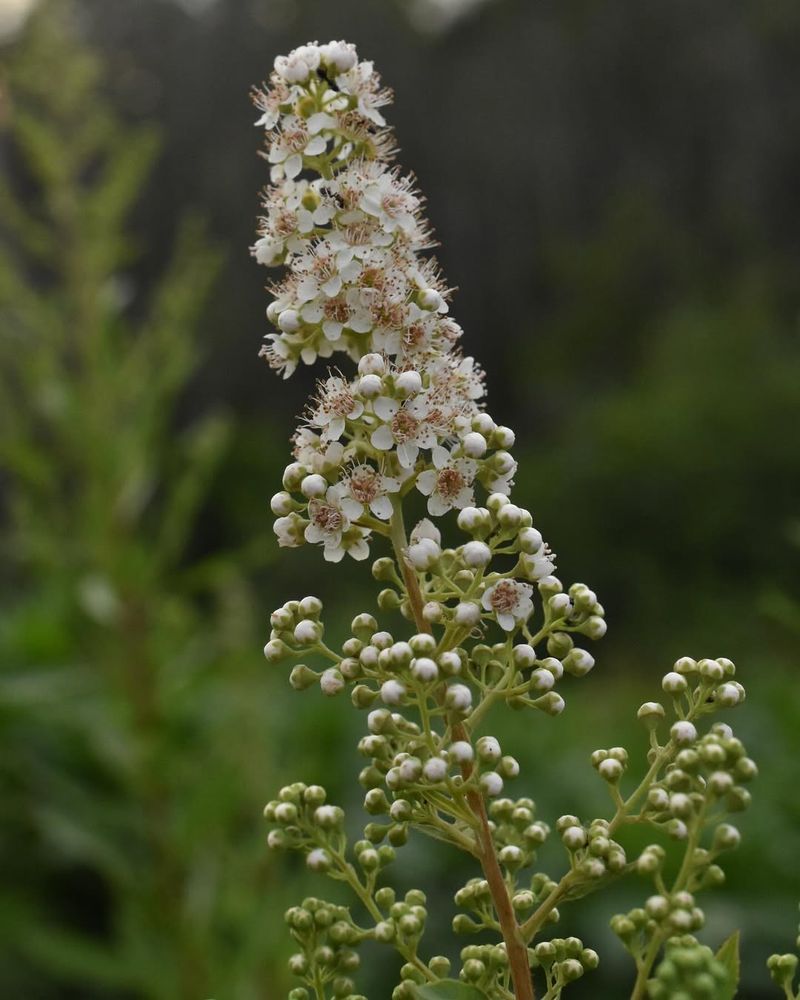
Meadowsweet is the kind of native shrub that makes a Michigan garden feel soft, natural, and effortlessly beautiful all at once.
Unlike the non-native spirea varieties sold at most garden centers, meadowsweet belongs here, growing naturally in moist meadows and along stream banks across Michigan.
That native heritage means it is perfectly tuned to local soils, rainfall patterns, and seasonal temperature swings.
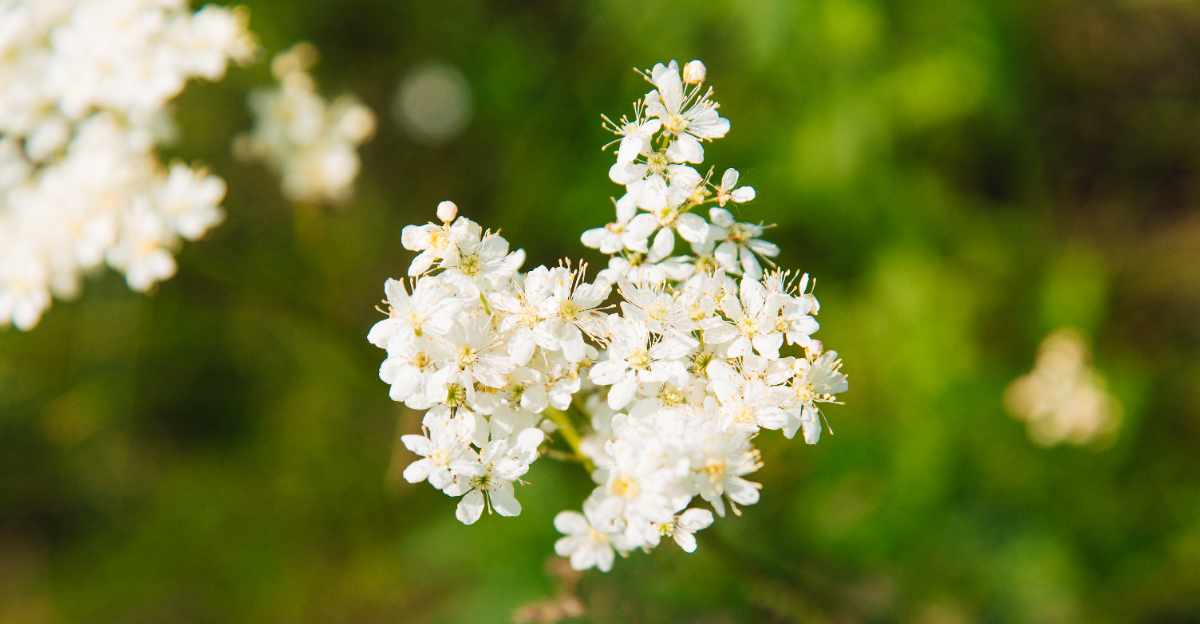
Growing 3 to 5 feet tall, meadowsweet forms an upright, arching clump of slender stems topped with fluffy white flower spires in midsummer.
The bloom period extends for several weeks, which is longer than many competing shrubs, and the flowers attract a steady stream of native bees and beneficial insects.
Along driveway edges or side yards with average to moist soil, it creates a graceful, cottage-style border that stays manageable without constant pruning.
Fall brings additional interest as the foliage shifts to warm yellow tones before dropping, and the dried seed heads add subtle texture through winter.
For Michigan gardeners who prefer a relaxed, naturalistic aesthetic over a clipped formal hedge, meadowsweet fits that vision perfectly.
It also works beautifully alongside other Michigan natives like red osier dogwood or buttonbush in areas with seasonally wet soil.
Maintenance is genuinely minimal, making it a smart choice for busy homeowners who want a beautiful yard without spending every weekend managing it.
10. Sweetfern (Comptonia peregrina)
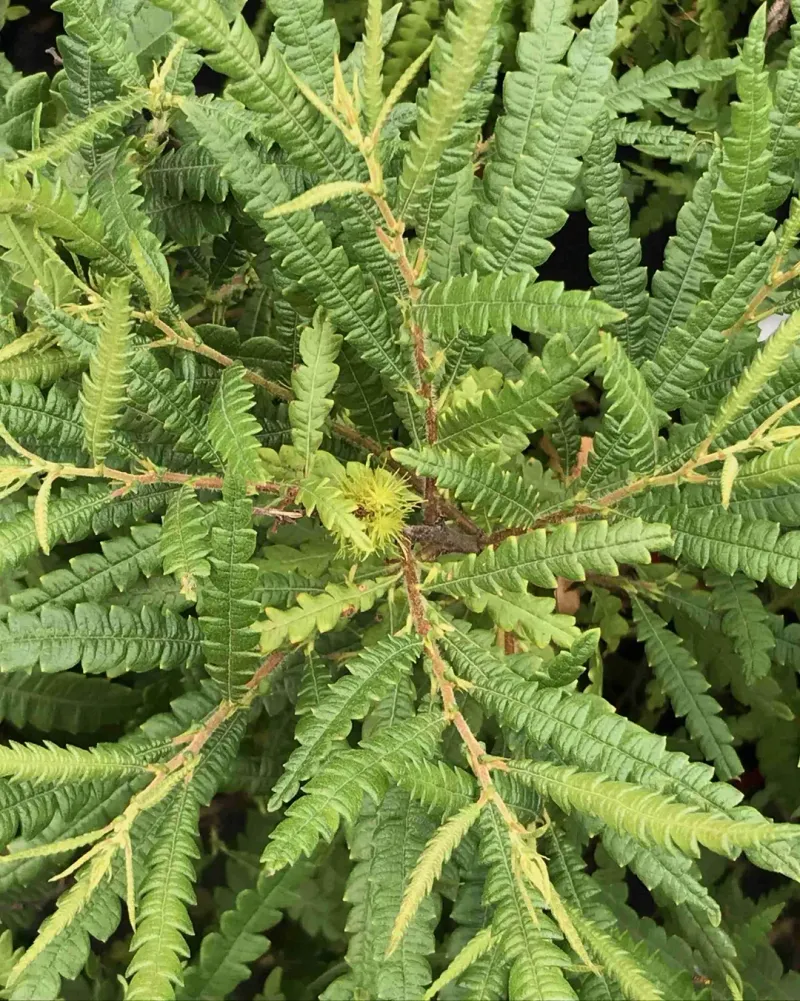
Sweetfern is one of Michigan’s best-kept native plant secrets, and once you discover it, you will wonder why it is not in every yard. Despite the name, sweetfern is not actually a fern at all.
It is a low, spreading native shrub that grows 2 to 4 feet tall with deeply lobed, aromatic leaves that smell absolutely wonderful when you brush against them on a warm summer day.
Sandy, dry, nutrient-poor soil is where sweetfern truly excels, making it perfect for Michigan driveways that run through sandy or gravelly areas where arborvitae would never survive.
It spreads by underground runners to form a dense, weed-suppressing mat that stabilizes loose soil and prevents erosion along driveway edges.
The nitrogen-fixing root system actually improves poor soil over time, benefiting everything planted nearby.
Sweetfern is also remarkably fire-resistant and tolerates full sun and dry conditions that would stress most other shrubs. The catkins in early spring add a delicate, feathery texture, and the aromatic foliage stays fresh and appealing all season long.
Michigan gardeners dealing with difficult, infertile, or sandy driveway borders will find sweetfern to be an honest, hardworking plant that asks almost nothing in return.
It is one of those rare native plants that genuinely gets better and more attractive with each passing year as it fills in and matures across your landscape.