This Invasive Florida Vine Can Destroy Your Fence In One Summer (And How To Identify It)
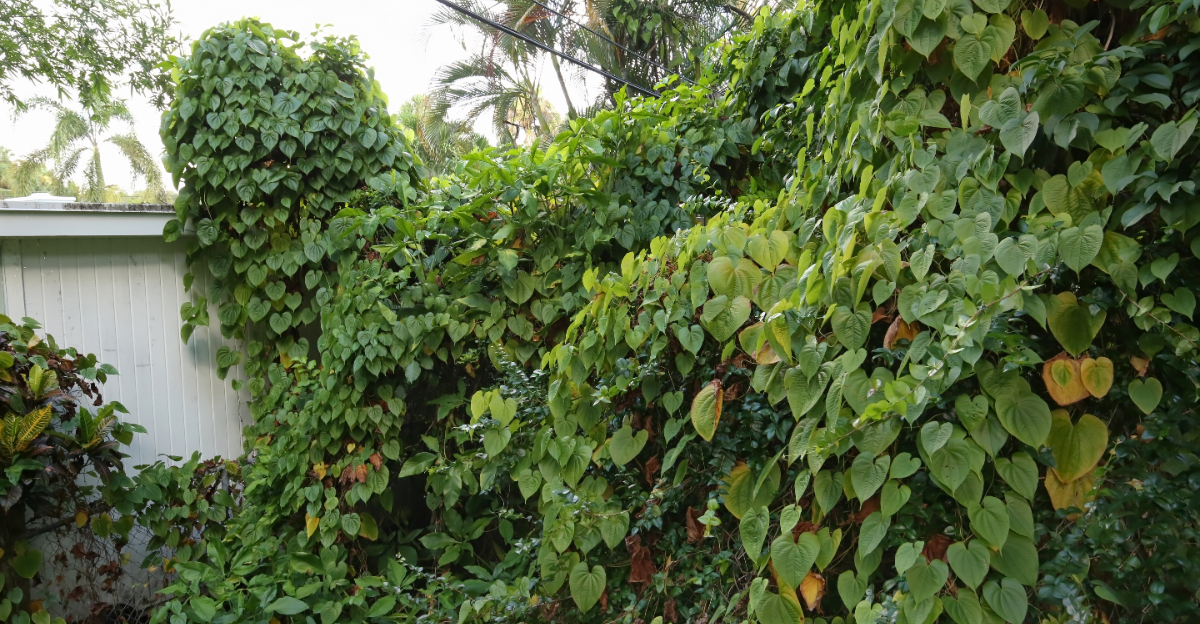
Ever walked outside and noticed a vine where there wasn’t one a few weeks ago, already climbing, already wrapping, already pushing its way across your fence? In Florida, that kind of fast takeover is not unusual.
Some vines do not ease in or stay contained. They move quickly, grab onto anything nearby, and turn a clean fence line into a tangled mess before you realize what is happening.
It often starts small. A few leaves, a thin stem, nothing that looks like a problem.
Then the growth picks up speed. Warm temperatures, steady moisture, and long days give certain aggressive vines exactly what they need to spread without slowing down.
That is where trouble sets in. By the time most people take a closer look, the vine has already taken hold and started doing real damage.
One of the worst offenders behind this kind of rapid takeover is air potato vine, a fast-growing invasive that can cover structures and choke out everything around it in a single season.
1. Air Potato Vine Is The Florida Fence Wrecker To Watch For
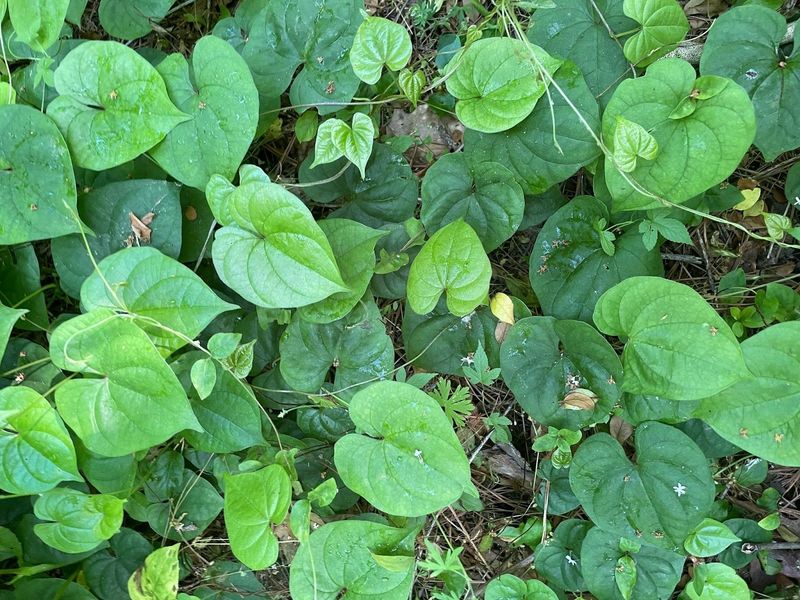
Most Florida homeowners have heard warnings about invasive plants, but Air Potato Vine tends to catch people off guard because it does not look threatening at first.
The vine, known scientifically as Dioscorea bulbifera, is classified as an invasive species in Florida and is actually illegal to plant in the state.
That legal status is not an accident. It reflects just how seriously Florida land managers and plant scientists take the damage this vine causes to yards, natural areas, and native plant communities.
Air Potato Vine is not simply a fast-growing ornamental that got a little out of hand. It is a non-native twining vine originally from Asia and Africa that has no natural competitors in Florida to slow it down.
Without those natural checks, it climbs aggressively over fences, smothers shrubs, and wraps around trees with very little effort.
The University of Florida IFAS program describes it as a vine that spreads quickly and overwhelms native vegetation, which makes it a genuine ecological and structural threat.
Florida homeowners need to pay attention to this one right away, not later. By the time the vine has fully wrapped around a fence section or covered a shrub, removing it cleanly becomes a much harder job.
Catching it early, knowing what it looks like, and understanding why it is classified as invasive rather than just vigorous gives you a real advantage before the growing season gets away from you.
2. The Fast Growth Gets Out Of Control Before Most People React
Seventy feet. That is the length Air Potato Vine can reach, and it does not take years to get there.
University of Florida IFAS plant-directory material describes this vine as a twining herbaceous vine capable of growing 70 feet or more in length, which puts it in a completely different category from most backyard nuisances.
A vine that can push that kind of length in a single growing season is not something you can monitor casually and address later.
Your Florida Garden Changes Every Week. Your Plan Should Too.
Gardening in Florida changes quickly throughout the season. Every Friday you’ll receive a simple weekly plan showing exactly what to plant, prune, fertilize, harvest, and protect so you never miss the right timing.
The growth pattern is part of what makes it so disorienting for homeowners. Early in the season, the vine may look like a manageable shoot coming up near the base of a fence or along a shrub edge.
A few weeks later, that same shoot has become several branching stems moving in multiple directions at once. By midsummer, sections of fencing that looked completely normal in spring can be buried under thick layers of broad leaves.
Most people do not react until they notice that something looks wrong, and by that point the vine has already made significant progress.
The twining habit of the stem means it winds itself around fence rails, wire, and plant stems in a way that makes physical removal more complicated than just pulling it free.
Speed is genuinely the defining characteristic of this vine, and underestimating how fast it escalates from a small patch to a major structural problem is one of the most common mistakes Florida homeowners make with it.
3. Aerial Tubers Make This Vine Easy To Spot
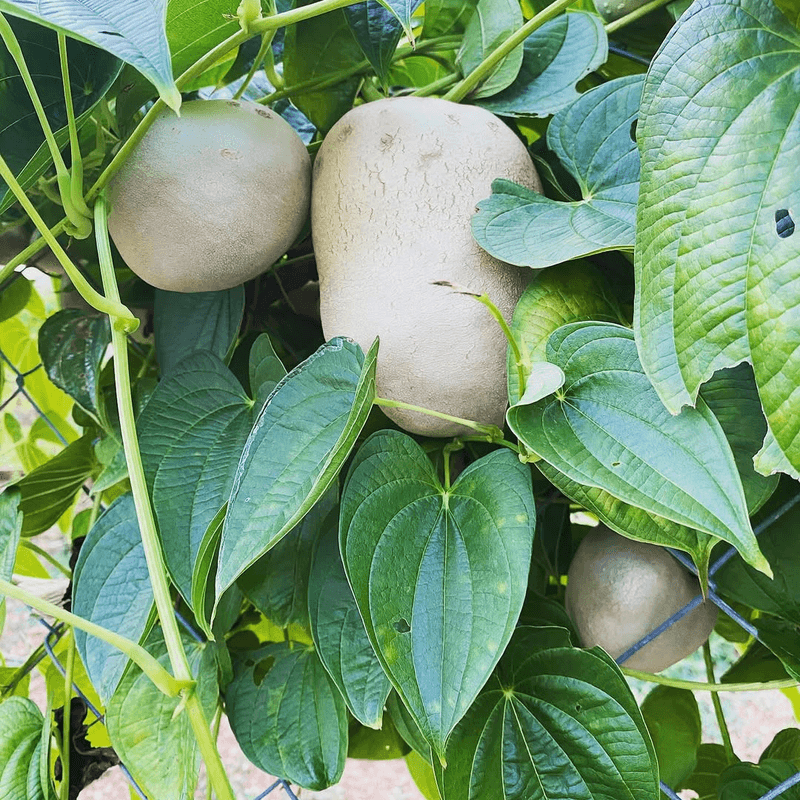
One of the strangest and most recognizable things about Air Potato Vine is the small potato-like growths that form directly on the vine above the ground.
These are called aerial tubers, or bulbils, and they are one of the easiest identification clues you will find on this plant.
They look exactly like what the name suggests: small, rough-textured, brownish lumps that hang from the stem among the leaves, looking almost like tiny potatoes growing in mid-air.
University of Florida IFAS highlights these tubers as a key feature of the plant and notes that Air Potato Vine sprouts from both underground and aerial tubers.
That detail matters a lot for identification because most other common vines in Florida do not produce above-ground growths that look anything like this.
If you spot a fast-climbing vine with heart-shaped leaves and what appear to be small potato-shaped bulges hanging off the stems, there is a very good chance you are looking at Air Potato Vine.
The aerial tubers are also worth noting because they are not just an identification feature. They are how the plant multiplies and spreads.
When they drop to the ground, they can sprout into new vines, which is why a single mature vine can seed an entire fence line or garden bed if left unmanaged through the season.
Spotting those tubers early is one of the most useful skills a Florida homeowner can develop when it comes to staying ahead of this vine.
4. Thick Heart Shaped Leaves Help It Hide In Plain Sight
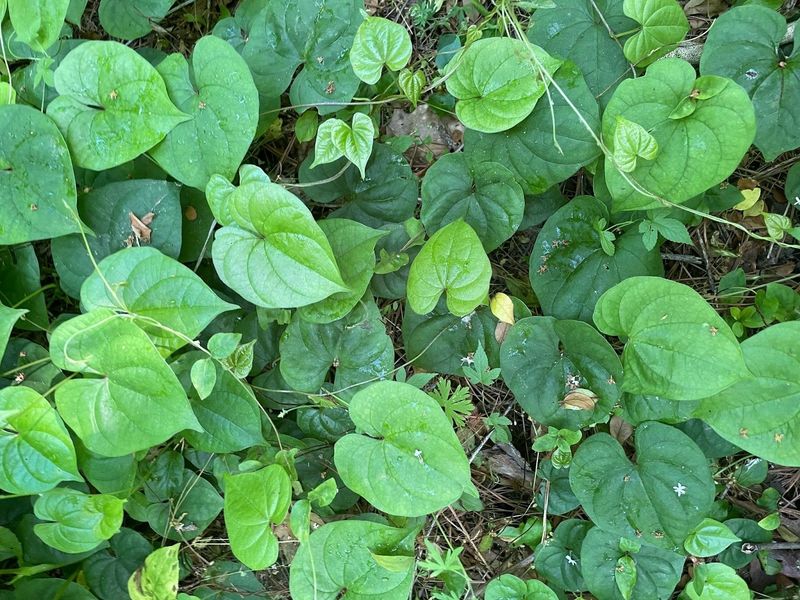
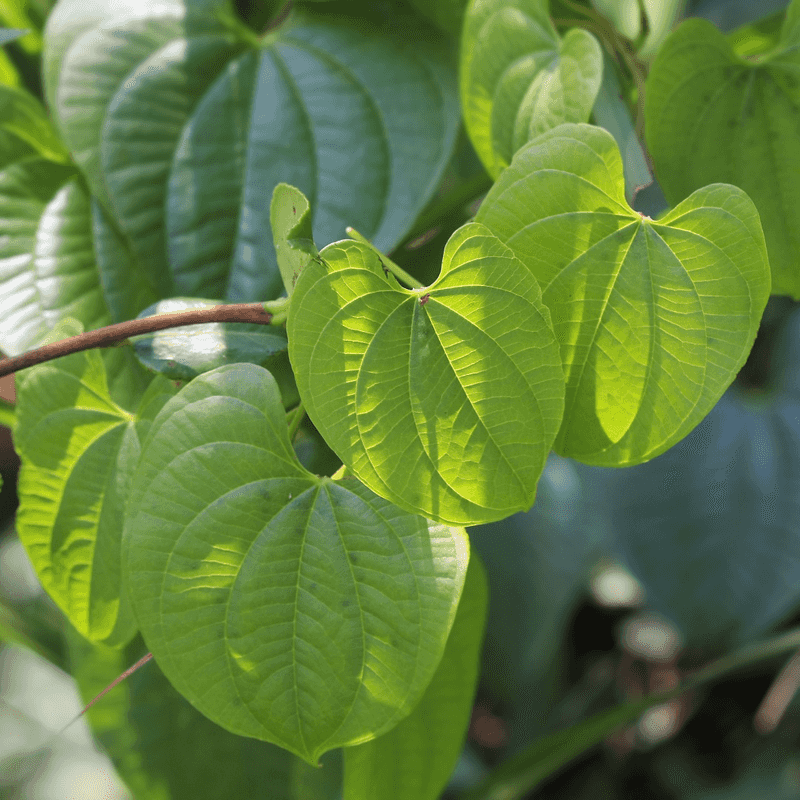
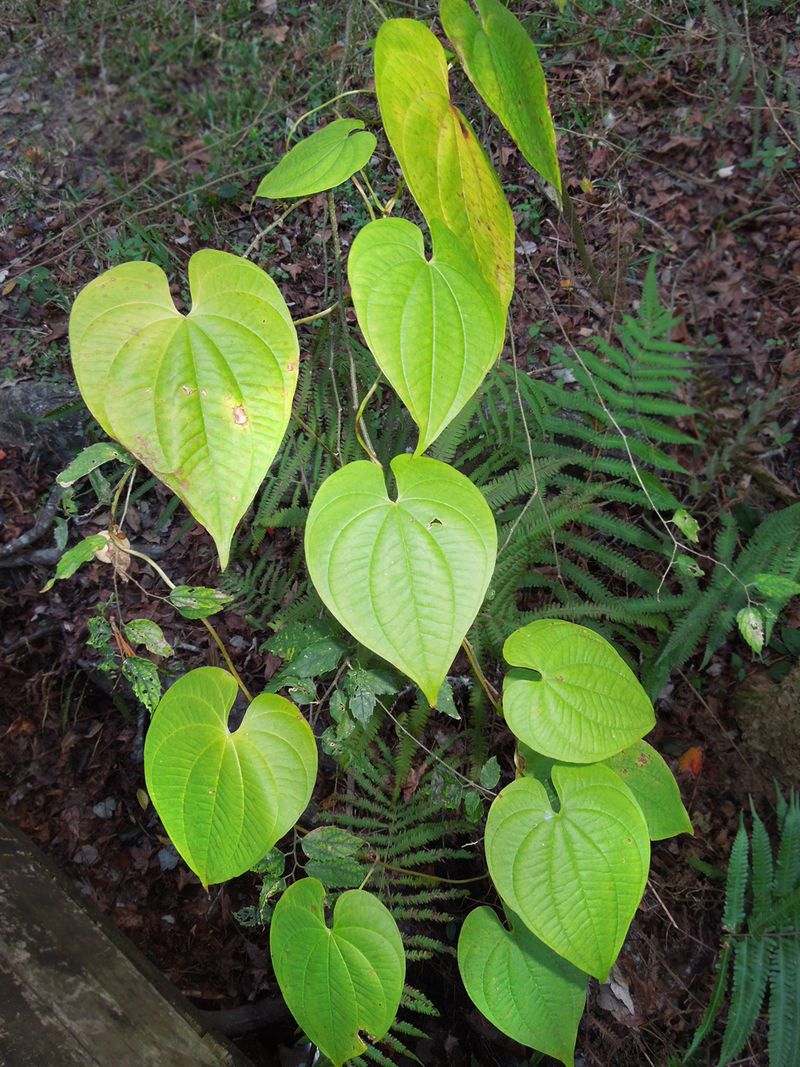
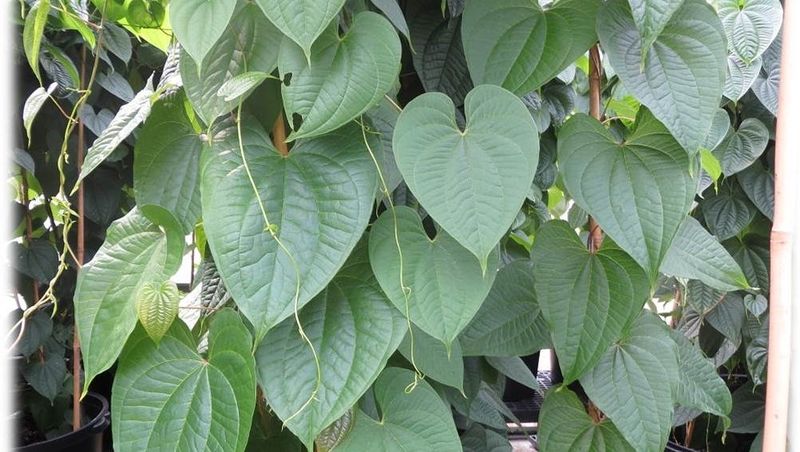
At a quick glance, Air Potato Vine can almost look like something you planted on purpose. The leaves are broadly heart-shaped, a shape botanists call cordate, and they are arranged alternately along twining stems in a way that creates a full, lush appearance.
University of Florida IFAS describes the leaves as broadly cordate and alternately arranged, and that description matches what you will see in the field.
The leaves are large enough and green enough to blend into a fence line or garden border without immediately raising alarm.
That lush, leafy appearance is part of what makes this vine tricky. Homeowners sometimes assume a green, leafy vine growing along a fence is just a harmless ornamental that wandered in from a neighbor’s yard.
The heart-shaped leaf shape is not exclusive to Air Potato Vine, but the combination of that leaf form with the twining growth habit and the aerial tubers described in the previous section gives you a reliable picture of what to look for.
The stems themselves are also worth a second look. They are slender and twining, meaning they wind around supports rather than clinging with tendrils or sticking with adhesive pads like some other climbing plants.
That twining habit, combined with the alternating cordate leaves and the aerial tubers, makes the overall plant fairly recognizable once you know what the full picture looks like.
Spending a few minutes in your yard looking for that combination of features during the growing season is one of the best early-detection habits you can build.
5. Fences, Trees, And Shrubs Can Disappear Under It Fast
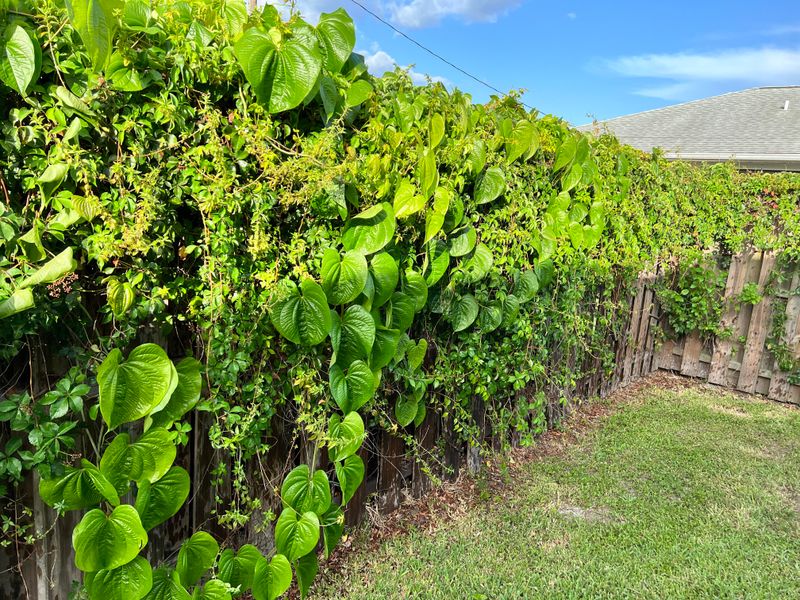
Walk along a Florida fence line in late summer and you might find sections where the fence itself is nearly invisible. Air Potato Vine does not just drape over a structure lightly.
It covers. University of Florida IFAS sources describe the vine as capable of taking over a fence line, smothering shrubs, or overwhelming a small cluster of trees if it is neglected long enough.
That is a significant range of damage for a single vine to cause in one growing season.
The way it covers is worth understanding. Because the vine twines around whatever support it finds, it does not just sit on top of a surface.
It wraps and winds itself into and through the structure, which means fence rails, wire panels, and plant stems all become part of the vine’s support system. Shrubs that get caught under a heavy layer of Air Potato Vine lose access to sunlight and can struggle badly as a result.
Small trees are not immune either, especially younger ones whose canopies can be overtaken before the tree is strong enough to push back.
Fences take on a different kind of damage. The weight of a thick vine layer, especially after rain, adds real physical stress to fence boards and rails.
Wooden fences are particularly vulnerable because the moisture held against the wood by the dense vine coverage creates conditions that weaken the material over time.
What starts as a visual problem on the fence line can become a structural one if the vine is allowed to stay through the season unchecked.
6. This Is Why It Spreads So Aggressively Across Florida Yards
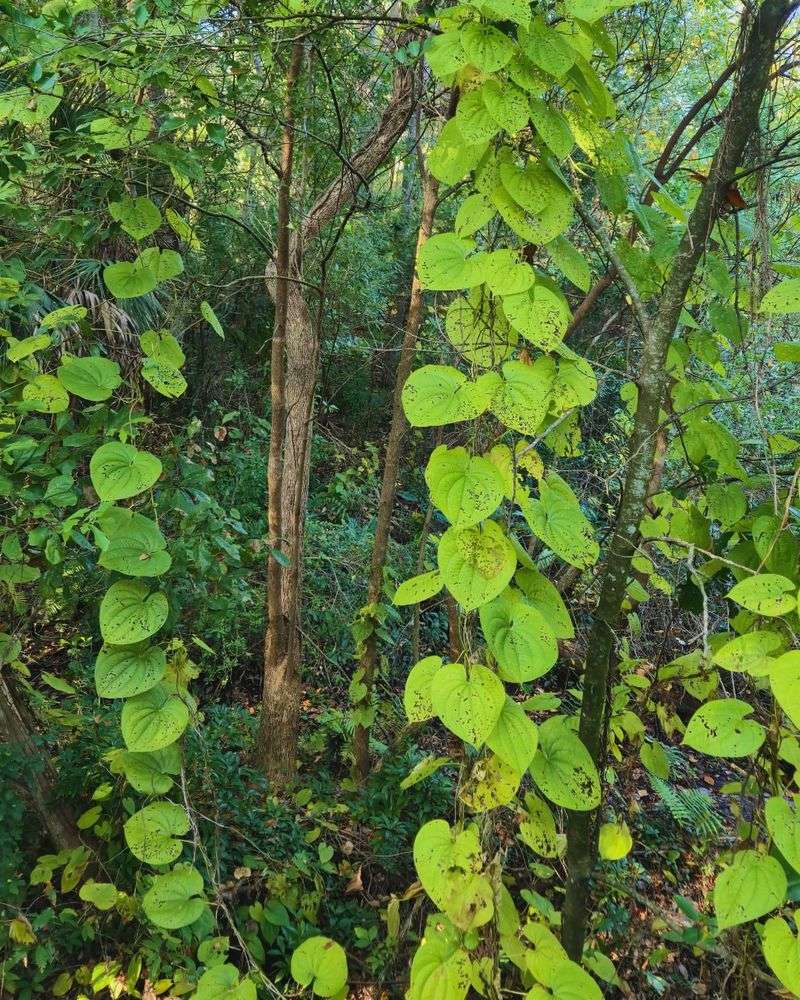
Understanding why Air Potato Vine spreads so relentlessly starts with those aerial tubers. When the bulbils mature and drop from the vine, each one is capable of sprouting a new plant.
A single established vine can produce a large number of these tubers in one growing season, which means the ground beneath and around the vine can end up seeded with potential new plants before the season ends.
University of Florida IFAS county guidance confirms that bulbils drop to the ground and sprout new vines, which explains how an infestation can expand well beyond its original location in a short period of time.
The underground portion of the plant adds another layer to the spread problem. Air Potato Vine also grows from underground tubers, and those root-level structures can survive even when the above-ground vine is removed.
That means a cleanup effort that focuses only on what is visible above the soil surface often leaves the plant with enough stored energy to push new growth back up the following season.
The combination of aerial tubers falling and spreading plus underground parts surviving removal is what makes this vine so persistent in Florida landscapes.
Florida’s climate works in the vine’s favor throughout all of this. The warm temperatures and humid conditions that define much of the state’s growing season give Air Potato Vine a long window to grow, produce tubers, and spread.
There is no hard frost arriving to slow things down the way it might in cooler states, which gives the vine more time each year to expand its footprint across your yard and into neighboring properties.
7. Getting Rid Of It Takes More Than One Quick Pull
Grabbing the vine and giving it a hard pull feels satisfying in the moment, but it rarely solves the problem on its own.
Air Potato Vine is classified by University of Florida IFAS and other Florida invasive-plant resources as a persistent invasive that regrows from tubers and spreads through bulbils.
That persistence is exactly why quick removal attempts so often fall short. Pulling the above-ground stems without addressing the tubers, both aerial and underground, leaves the plant with plenty of material to restart from.
A more effective approach requires careful attention to the tubers at every stage of removal. Collecting the aerial tubers from the vine before or during removal keeps them from dropping and sprouting in the same spot or spreading to new areas nearby.
Any tubers already on the ground around the base of the vine need to be gathered as well. Leaving them behind is essentially replanting the problem.
Bagging all collected plant material securely before disposal is important because tubers that are simply tossed aside can still sprout.
Follow-up matters just as much as the initial removal.
Because underground tubers can survive the first round of cleanup and send up new growth later, checking the area regularly through the rest of the growing season helps catch regrowth before it gets established again.
Treating the vine as a one-time job is one of the most common reasons homeowners find themselves dealing with the same infestation the following year. Persistence in removal has to match the persistence of the plant itself to make real progress.
8. Early Removal Matters Before New Tubers Drop And Spread
Timing is one of the most underrated factors in managing Air Potato Vine. University of Florida IFAS identifies the aerial tubers as a central part of how the plant spreads, which makes the window before those tubers mature and drop especially important.
Acting early in the growing season, before the vine has had a chance to produce a full crop of aerial tubers, can significantly reduce how much harder the job gets later.
Every tuber that forms, matures, and drops before removal happens is another potential vine waiting to start somewhere nearby.
Early spring is the best time to start looking. The vine tends to emerge from underground tubers as temperatures warm up, and catching those early shoots before they have climbed far gives you the most manageable starting point.
The vine is much easier to trace and remove when it is still short and has not yet tangled deeply into fence rails or wrapped around shrub branches.
Waiting until midsummer, when the vine is fully established and aerial tubers are already forming, makes the job significantly harder and the chance of missing tubers much higher.
The practical takeaway here is straightforward: walk your fence line and check the edges of your yard regularly starting in early spring, especially if you have seen Air Potato Vine in your yard or in neighboring properties before.
Learning to recognize the early shoots, the heart-shaped leaves, and the first signs of tuber development gives you the best possible chance of managing this vine before it turns one season into a much bigger, longer-term problem.