Native Ohio Ground Covers That Handle Mower Edges Better Than Grass

Mower edges are where Ohio lawns quietly fall apart. That strip between the lawn and the bed, the border along the fence, the awkward line the mower cannot reach cleanly.
Every week, the same effort, the same result, ready to do again in seven days. Native Ohio ground covers solve that problem at the source.
The right plant in that strip handles the transition without weekly attention. No bare patches, no constant trimming, no fighting a spot that grass was never suited for.
Several Ohio natives were built for edge conditions. Low, spreading, tough enough to handle foot traffic and mower proximity that edges see more than anywhere else in the yard.
One good plant choice replaces a maintenance task that never needed to exist in the first place.
1. Use Pennsylvania Sedge Where Grass Scalps Out
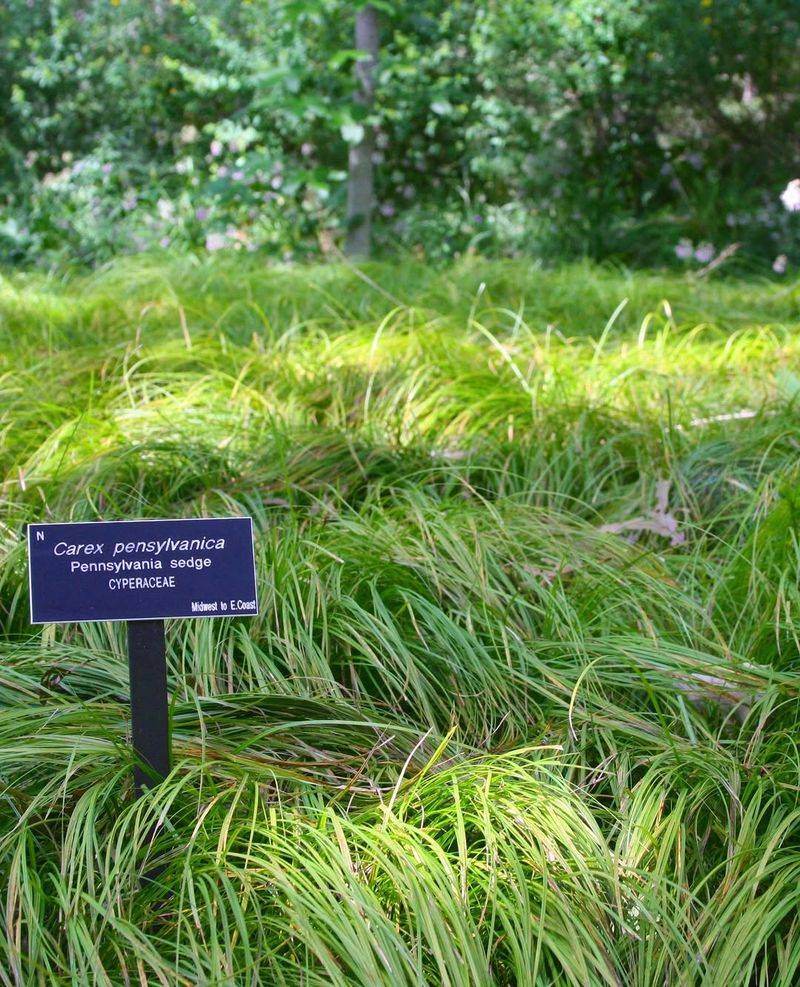
Picture a shaded tree ring where the mower blade keeps hitting exposed roots and the grass looks more like a dirt patch every summer. That is exactly where Pennsylvania sedge, known botanically as Carex pensylvanica, tends to shine.
OSU Extension and native plant guidance describe it as a fine-textured, low-growing sedge. It naturally occurs in dry to medium shade across much of the eastern United States, including Ohio.
Unlike turfgrass, Pennsylvania sedge does not need weekly mowing to stay tidy. It forms a soft, grassy-looking layer that stays relatively low on its own, usually around six to twelve inches.
It works especially well under oaks and other canopy trees where grass scalps out or fades from lack of light and moisture competition from roots.
Plant plugs or divisions in spring or fall for best results. Give the patch time to knit together, because it spreads slowly by rhizomes and may take a season or two to fill in fully.
Keep mower wheels out of the planting area while it establishes. A light trim in late winter can refresh the look before new growth emerges, but it does not require regular cutting to perform well.
Avoid planting it in high-traffic paths or sunny, wet spots, since it prefers dry to moderate shade. Treat it as a managed ground cover, not a turf replacement, and it can make a shaded edge look cared for with far less effort than struggling grass.
2. Let Wild Strawberry Creep Along Sunny Edges
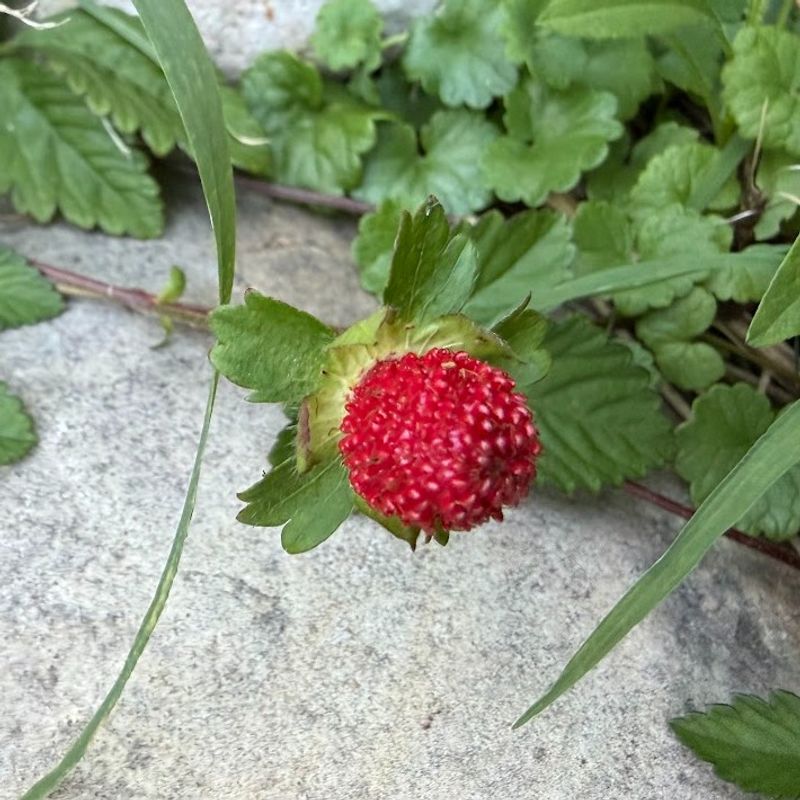
Along a sunny bed border where grass thins and the mower keeps scalping the soil, wild strawberry has a quiet way of moving in and making things look intentional. Fragaria virginiana is a native perennial that spreads by slender runners.
It forms a low mat of trifoliate leaves that can fill gaps along path edges, sunny slopes, and bed fronts where turf struggles to stay thick.
Ohio Department of Natural Resources lists it as a native species found throughout the state. It handles part sun to full sun best and prefers well-drained soil.
The plant stays low enough to avoid most mower conflicts when kept along the outer edge of a bed rather than in the middle of a lawn strip. Small white spring flowers can attract native pollinators, and wildlife may find the tiny summer fruits useful.
Your Ohio Garden Changes Every Week. Your Plan Should Too.
Gardening in Ohio changes quickly throughout the season. Every Friday you’ll receive a simple weekly plan showing exactly what to plant, prune, fertilize, harvest, and protect so you never miss the right timing.
Fruit production can vary depending on site conditions and competition. Give wild strawberry room to run.
It can wander into nearby vegetable beds or lawn areas, so a clear edging line helps keep it where you want it. Avoid planting it in deep shade or consistently wet spots, since it performs best where light and drainage suit it.
Pull or redirect runners that stray beyond the intended area. It does not need frequent mowing, just occasional edging to keep the patch from spreading beyond its border.
Used thoughtfully, it can turn a bare sunny edge into a living, low-maintenance transition.
3. Keep Common Blue Violet In Shady Mower Strips
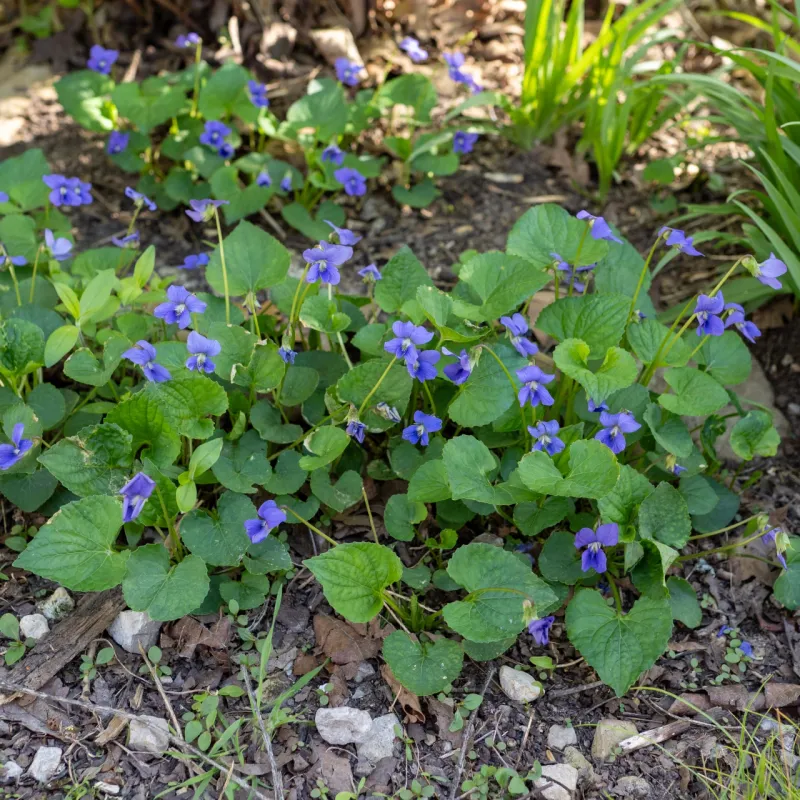
Shady mower strips along fence lines or under low-branching shrubs are some of the hardest spots to keep green. Common blue violet, Viola sororia, often shows up in exactly those places on its own.
That is a hint that it may be better suited to the spot than the grass it is slowly replacing. OSU Extension and native plant sources confirm it as a native species widespread across Ohio, found naturally in moist to moderately dry shade and woodland edges.
Violets can fill thin, shady strips with heart-shaped foliage and cheerful purple blooms in spring. They spread by seed and short rhizomes, so a patch can develop over time without much help.
That spreading habit is useful in a neglected mower strip but requires some management if the area borders a tidy lawn or a neighbor’s yard. Keep the patch edged clearly and remove volunteers that pop up in unwanted spots.
One practical note worth keeping in mind is that some homeowner associations have rules about lawn appearance, and a violet patch may not meet those standards. Check local guidelines before letting a strip go fully violet.
Mow the surrounding turf carefully to avoid running wheels over the planting. Spring bloom can be left for pollinators if neighborhood rules allow it.
Violets are not a high-traffic plant and should not be placed in areas where people walk regularly. Used in the right shady strip, they can be a reliable, low-effort edge filler.
4. Plant Creeping Phlox Where Edges Stay Dry
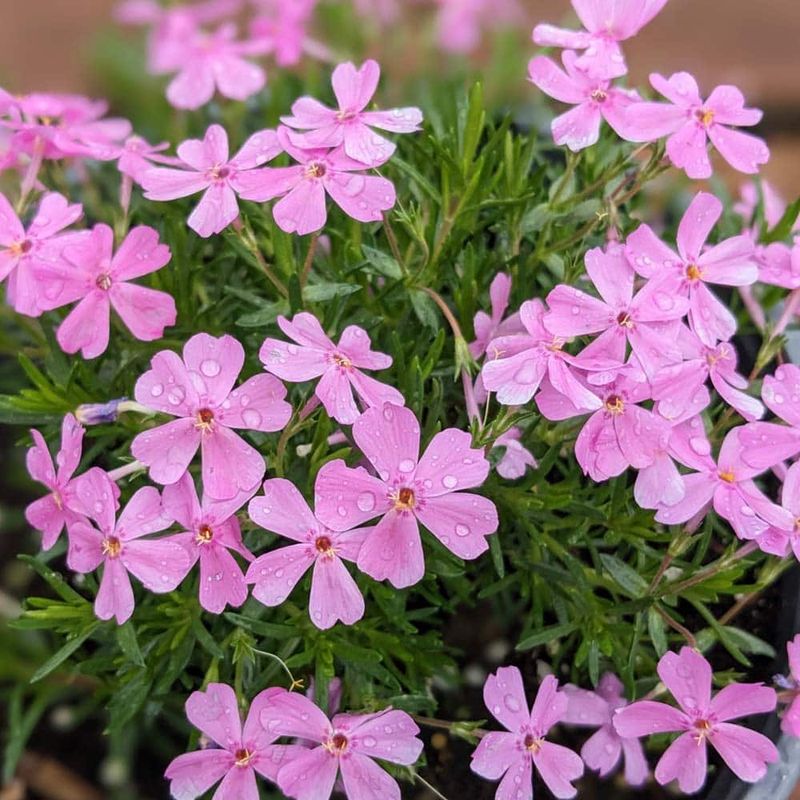
Few things look as sharp as a dry, sunny slope covered in a carpet of spring bloom right where the mower used to struggle and scalp.
Creeping phlox, Phlox subulata, is a mat-forming perennial that can do exactly that along well-drained edges, rock borders, and path fronts.
It works where grass burns out in summer heat or gets clipped too short near a curb or driveway.
Native plant and extension sources note that Phlox subulata is native to parts of the eastern United States. It is widely used in Midwestern gardens as a low-maintenance edge plant.
It thrives in full sun with sharp drainage and stays relatively low, forming a dense mat that crowds out weeds once established. Spring flowers in pink, white, or lavender add seasonal color to an otherwise plain edge.
After bloom fades, a light trim can help the plant stay compact and tidy, though it does not require heavy cutting. Avoid planting creeping phlox in wet or shaded spots, since soggy soil and low light can cause the mat to thin out and rot.
Keep mower wheels off the planting, since repeated wheel pressure can break up the mat and create bare patches. Weeds can sneak through a thin mat, so pull them early before they establish roots.
Give the plant a full season to spread and anchor before judging its performance. In the right dry, sunny edge, it can replace a scalped grass strip with something far more attractive and far less work.
5. Try Golden Ragwort For Moist Part Shade Borders
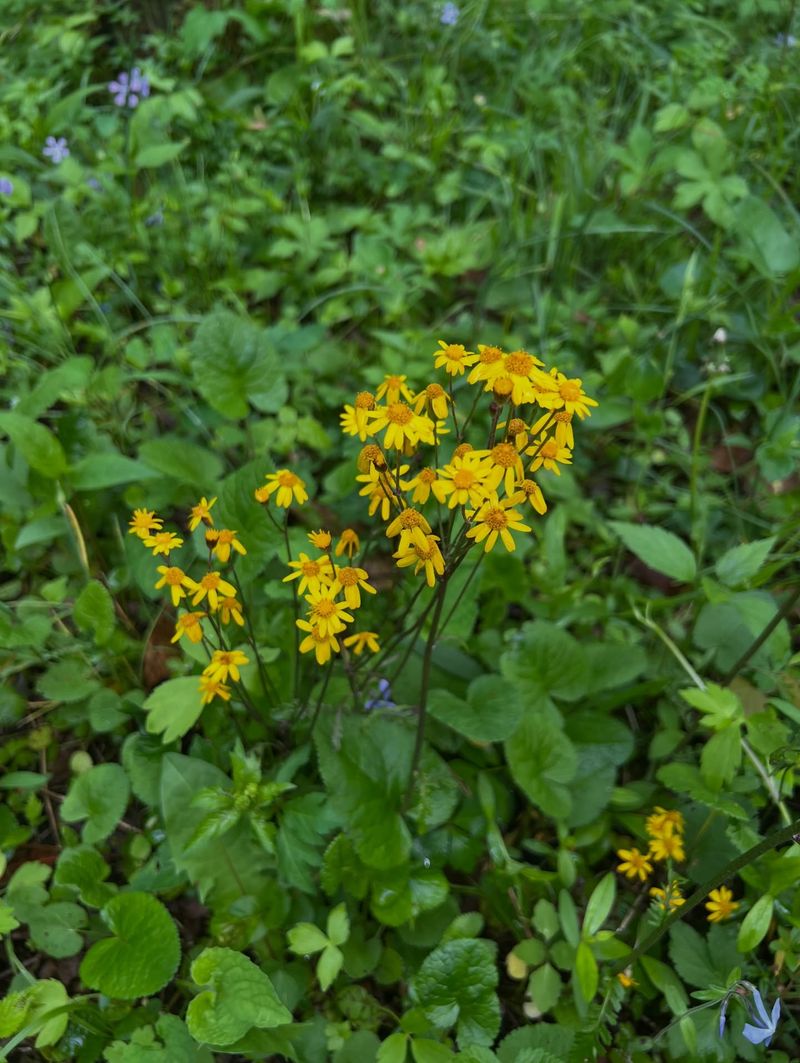
Along a damp, shaded bed border where grass fades and moss starts to creep in, golden ragwort can turn a problem spot into a seasonal highlight. Packera aurea is a native perennial well-suited to moist, part-shade to shade conditions.
OSU Extension and native plant sources recommend it for woodland edges, rain garden borders, and shaded lawn transitions where turf consistently struggles.
It spreads by stolons to form a low rosette layer of rounded basal leaves that stays semi-evergreen in mild winters. In spring, it sends up stems topped with bright yellow, daisy-like flowers that can attract early-season pollinators.
That combination of ground-covering foliage and spring bloom makes it a practical and attractive choice for damp edges. It works where those edges need a living cover rather than bare mulch or thin grass.
Golden ragwort can spread assertively once it settles in, so plan for some editing if it moves beyond the intended border. It works well near downspout areas, shaded rain garden edges, or bed borders that stay moist after rain.
Keep it away from dry, sunny spots, since it performs best where moisture is consistent. A clear edging line helps contain the patch and keeps it from wandering into neighboring lawn areas.
It does not need mowing, just occasional removal of plants that stray too far. Used thoughtfully in a moist shaded border, it can create a lush, managed ground layer that grass simply cannot match in those conditions.
6. Use Wild Ginger Under Trees Instead Of Thin Grass
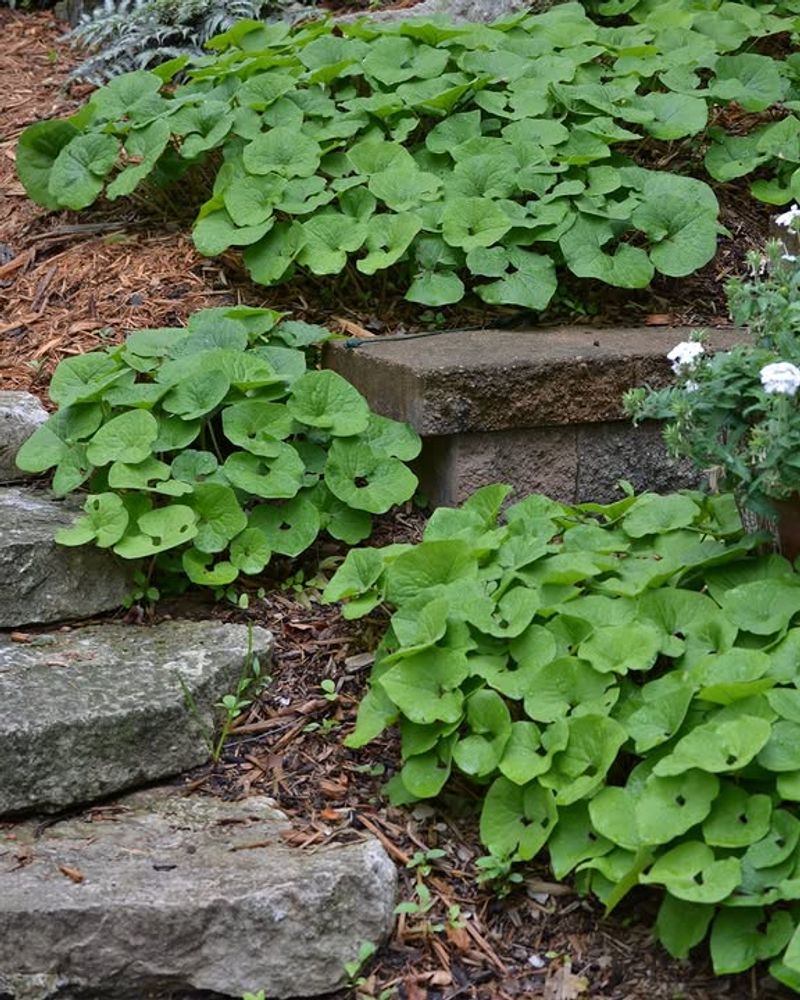
Under a large tree where mower blades scrape roots and turf has given up entirely, wild ginger offers a calm, reliable solution. Asarum canadense is a native woodland ground cover that Ohio Department of Natural Resources and native plant sources confirm as indigenous to the state.
It naturally grows on shaded forest floors and moist woodland slopes where little else thrives.
The plant spreads slowly by rhizomes, forming a low, dense layer of broad, heart-shaped leaves that stays under six inches tall. That low profile means it sits quietly beneath tree canopies without competing with overhead branches or requiring any regular cutting.
It is not a plant for sunny spots or high-traffic areas, but in a shaded tree ring or a woodland border, it can fill in beautifully over a few seasons.
Plant wild ginger in spring or fall using divisions or nursery-grown plants from a reputable native plant source. Avoid transplanting it from the wild.
Keep leaf litter light enough that it does not smother new growth, and hold off on heavy mulch directly over the planting.
Mower wheels should stay out of the area entirely, since the rhizomes sit close to the soil surface and can be damaged by wheel pressure or blade contact.
Give it two to three seasons to fill in before deciding it is not working. Wild ginger is a slow, steady performer that rewards patience with a clean, dark-green ground layer.
It makes a shaded tree ring look deliberately designed rather than neglected.
7. Choose Foamflower Where Shade Needs A Soft Edge
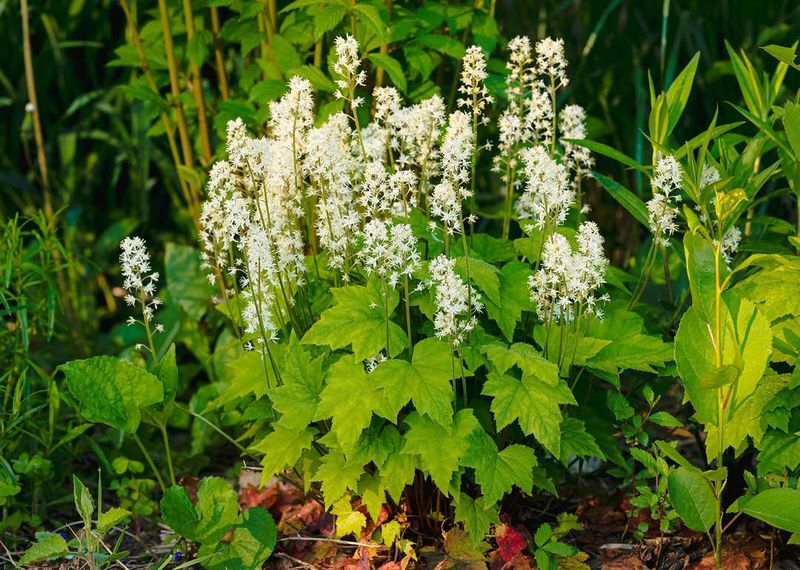
Some shaded edges call for something with a little more texture and visual softness than plain foliage alone can offer. Foamflower, Tiarella cordifolia, fits that role well.
Native plant and botanical garden sources describe it as a native woodland perennial. It is found in moist, shaded habitats across the eastern United States, including suitable areas of the Buckeye State.
It forms a low mound of lobed, maple-like leaves topped in spring with delicate, foamy white flower spikes that give the plant its name.
Tiarella cordifolia can spread by runners to form a soft ground layer in part shade to full shade. Its behavior can vary between the straight species and cultivated varieties.
The straight species tends to run more freely, while many cultivars stay in tighter clumps. Verify the specific plant’s habit before purchasing if spreading coverage is the goal.
It prefers moist, humus-rich soil and does not perform well on dry, sunny edges or in compacted ground.
Pair foamflower with wild ginger or Pennsylvania sedge in a shaded border for a layered, naturalistic edge that requires almost no mowing. Keep mower wheels and string trimmers away from the patch, since the crowns can be damaged easily.
Remove weeds by hand before they establish, since foamflower does not compete aggressively with vigorous weed species. A light layer of leaf mulch around the planting helps retain moisture and mimic woodland conditions.
In the right shaded spot, foamflower can make a mower-adjacent bed border look quietly elegant through spring and into summer.