Native Pennsylvania Perennials That Outperform Black-Eyed Susans In Every Yard
Black-Eyed Susans have earned their place in Pennsylvania gardens through sheer reliability, coming back year after year, supporting pollinators generously, and asking almost nothing from the gardener in return.
For a lot of Pennsylvania yards they are the native perennial that everything else gets measured against.
What rarely comes up in that conversation is how many other native Pennsylvania perennials quietly outperform black-eyed Susans in specific ways that matter depending on what a garden actually needs.
Longer bloom periods, better performance in difficult soil, more striking visual presence through summer, or stronger wildlife value through the fall months are qualities that certain overlooked natives bring to a yard in ways that black-eyed Susans simply do not.
This is not about replacing a reliable plant. It is about expanding beyond the familiar one and discovering what Pennsylvania’s native perennial lineup is actually capable of when you start looking past the most obvious choices.
1. Smooth Aster
Just when most flowers start winding down for the season, Smooth Aster is only getting started.
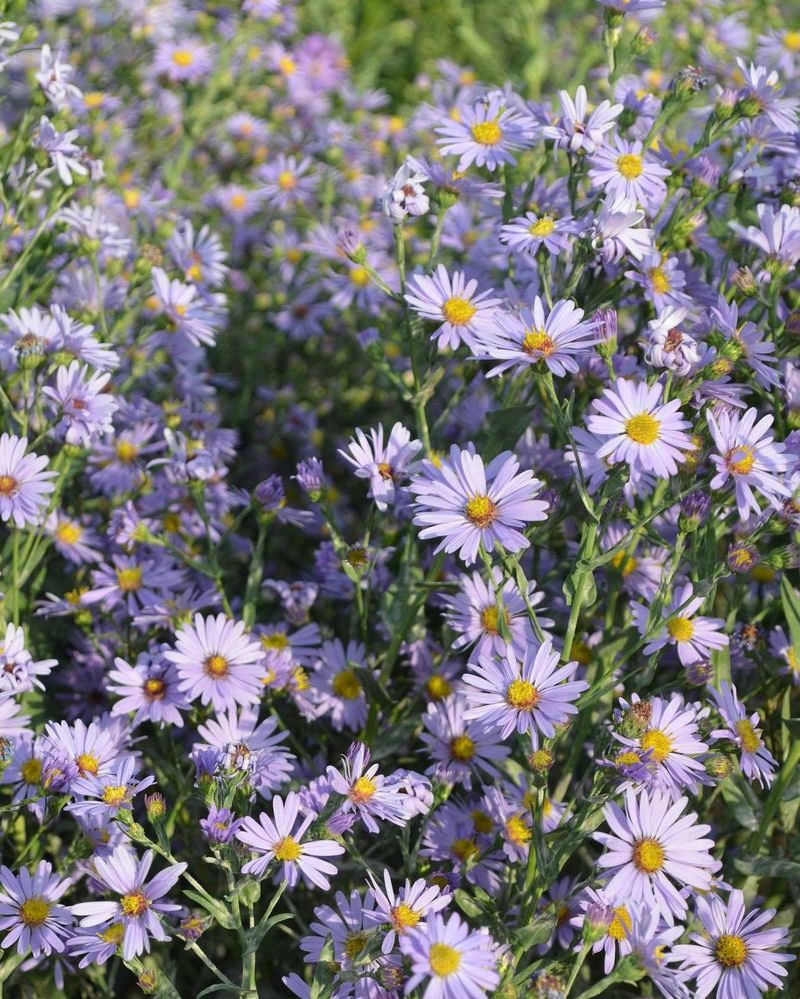
This stunning native perennial bursts into bloom in late summer and keeps going strong well into fall, filling your yard with soft lavender-blue flowers long after Black-Eyed Susans have faded.
That extended color is a huge deal for gardeners who want their outdoor space to look lively through October.
Smooth Aster grows to about two to four feet tall and has a naturally tidy, upright shape. The flowers are small but plentiful, creating a cloud-like effect that looks beautiful in garden beds or along walkways.
Bees and butterflies absolutely love it, making it one of the top pollinator plants you can grow in Pennsylvania. Monarch butterflies, in particular, rely on fall-blooming asters as a critical nectar source during their migration south.
One of the best things about this plant is how low-maintenance it really is. It tolerates drought once established, thrives in average well-drained soil, and does not need frequent dividing or fertilizing.
You can basically plant it and let it do its thing. It also resists deer browsing, which is a bonus if you live near wooded areas.
Smooth Aster pairs beautifully with goldenrod, ornamental grasses, and Joe-Pye Weed for a stunning fall display. You can start it from seed or buy transplants from a native plant nursery.
Either way, once it settles into your garden, it will return year after year with minimal effort and maximum impact on both your landscape and local wildlife.
2. Wild Bergamot
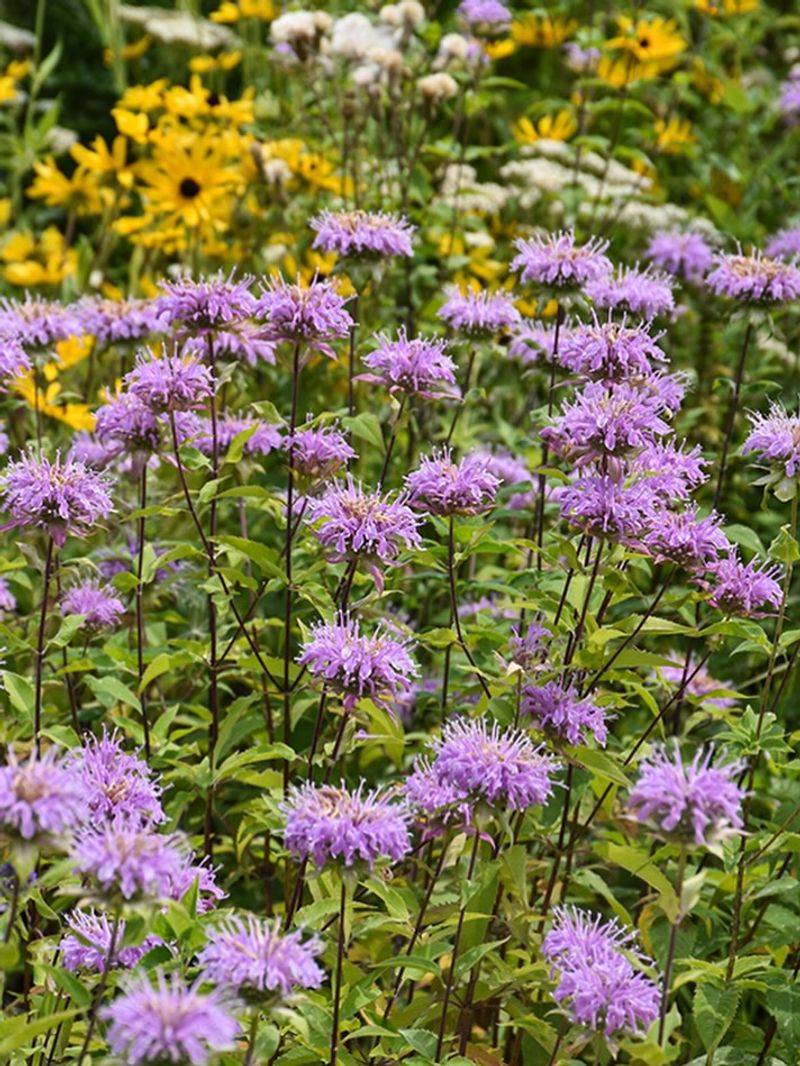
Walk past a patch of Wild Bergamot on a warm summer afternoon and you will immediately notice two things: the cheerful lavender-pink blooms and the incredible buzz of activity around them.
Bees, butterflies, hummingbirds, and even hawk moths cannot resist the tubular flowers that bloom for weeks from mid to late summer. It is one of those plants that practically runs its own pollinator party right in your backyard.
Wild Bergamot is a member of the mint family, and you can actually smell that herbal, oregano-like fragrance when you brush against the leaves. That scent is also what makes it so deer-resistant.
Your Pennsylvania Garden Changes Every Week. Your Plan Should Too.
Gardening in Pennsylvania changes quickly throughout the season. Every Friday you’ll receive a simple weekly plan showing exactly what to plant, prune, fertilize, harvest, and protect so you never miss the right timing.
Deer tend to avoid strongly scented plants, so this one gets to bloom without being nibbled down. It grows two to four feet tall and spreads gradually to form attractive clumps over time.
This plant is incredibly adaptable. It handles dry, rocky, or sandy soils with ease and thrives in full sun.
Once established, it needs very little water, making it a smart choice for low-maintenance landscapes. Unlike some other Monarda species, Wild Bergamot is less prone to powdery mildew, especially when given good air circulation.
Did you know Native Americans used Wild Bergamot medicinally for centuries? It was brewed into teas and used as a natural remedy for respiratory issues.
Today, it is prized mostly for its garden value, but that rich history adds a layer of meaning to growing it. Plant it in drifts for the biggest visual impact, and enjoy weeks of color that Black-Eyed Susans simply cannot match in duration or pollinator appeal.
3. Obedient Plant
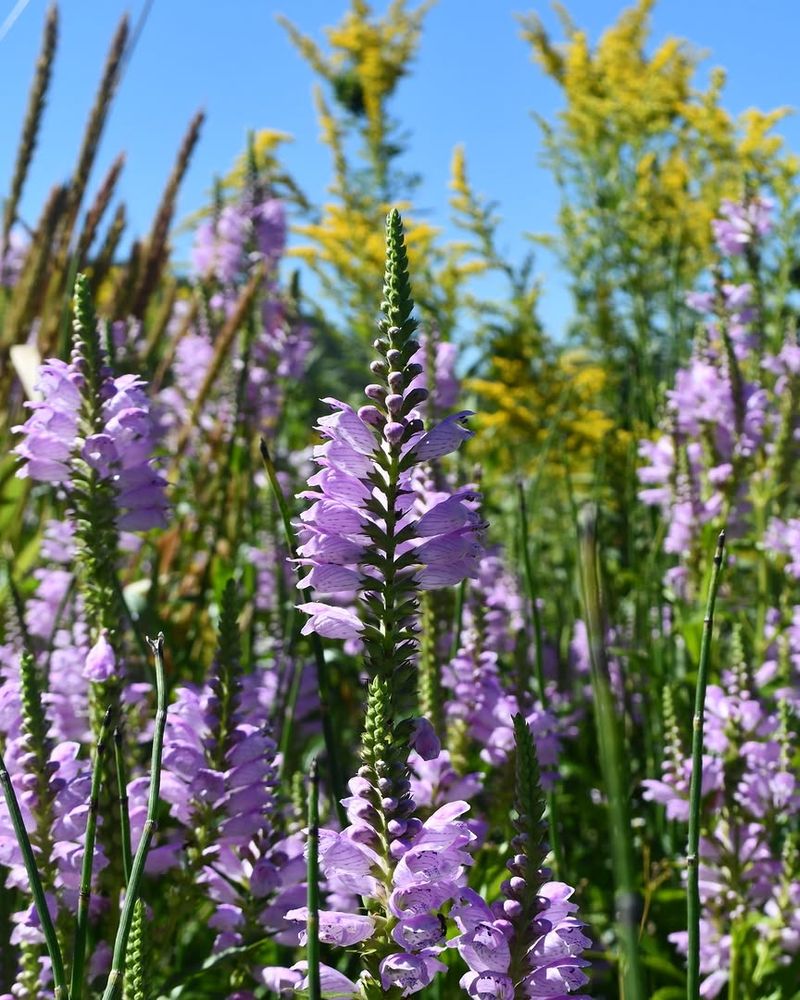
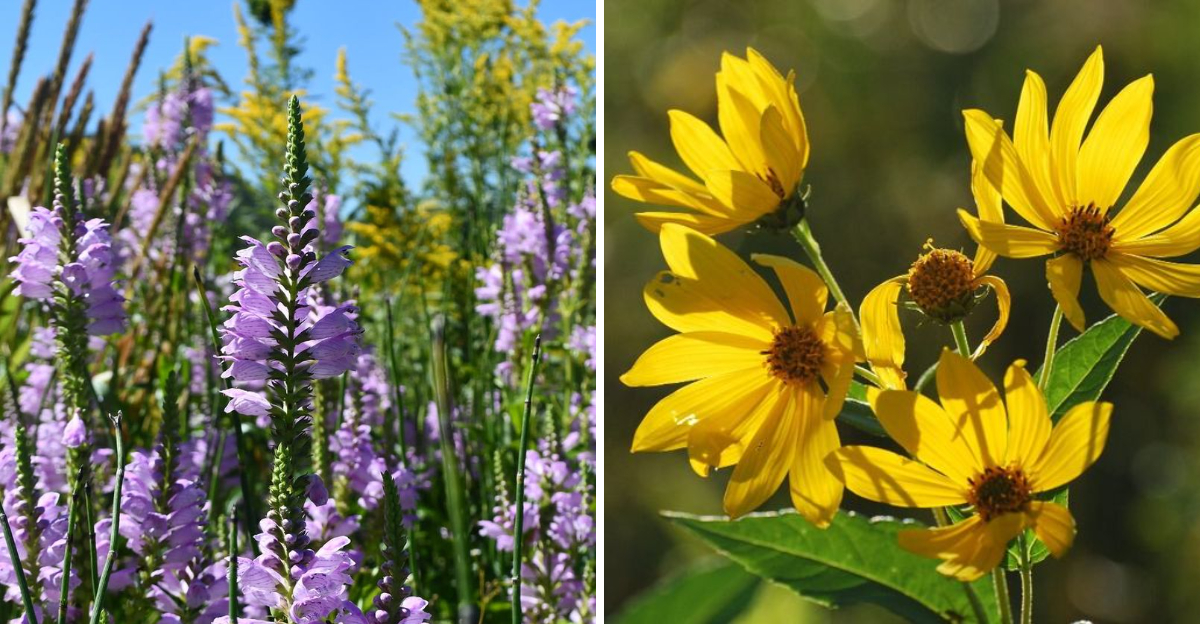
The name might make you chuckle, but Obedient Plant earns it in a fun way. If you push one of its individual flowers to the side on the stem, it stays right where you put it instead of springing back.
That quirky trait made it a hit with kids and curious gardeners for generations. Beyond the novelty though, this plant is a genuine standout in late-summer gardens across Pennsylvania.
Obedient Plant produces tall, elegant spikes of pink to lavender flowers from August into September. The upright form gives it a bold, architectural look that works beautifully in the back of a border or alongside fences.
It grows two to four feet tall and fills in nicely, creating a lush wall of color when planted in groups. Bees and hummingbirds visit the blooms regularly, adding even more life to your yard.
Unlike some spreading natives that can get pushy in the garden, Obedient Plant spreads at a manageable pace through underground runners. It fills in gaps naturally without taking over nearby plants.
You can easily divide clumps every few years to keep growth in check or share extras with neighbors. It tolerates both full sun and part shade, which makes it more versatile than Black-Eyed Susans, which strongly prefer full sun.
Soil-wise, it handles average to moist conditions well and does not demand rich or amended soil. It is a tough, adaptable plant that rewards you with reliable late-season blooms year after year.
If your yard has a shady corner that needs some late-summer color, Obedient Plant is one of the smartest choices you can make.
4. Joe-Pye Weed
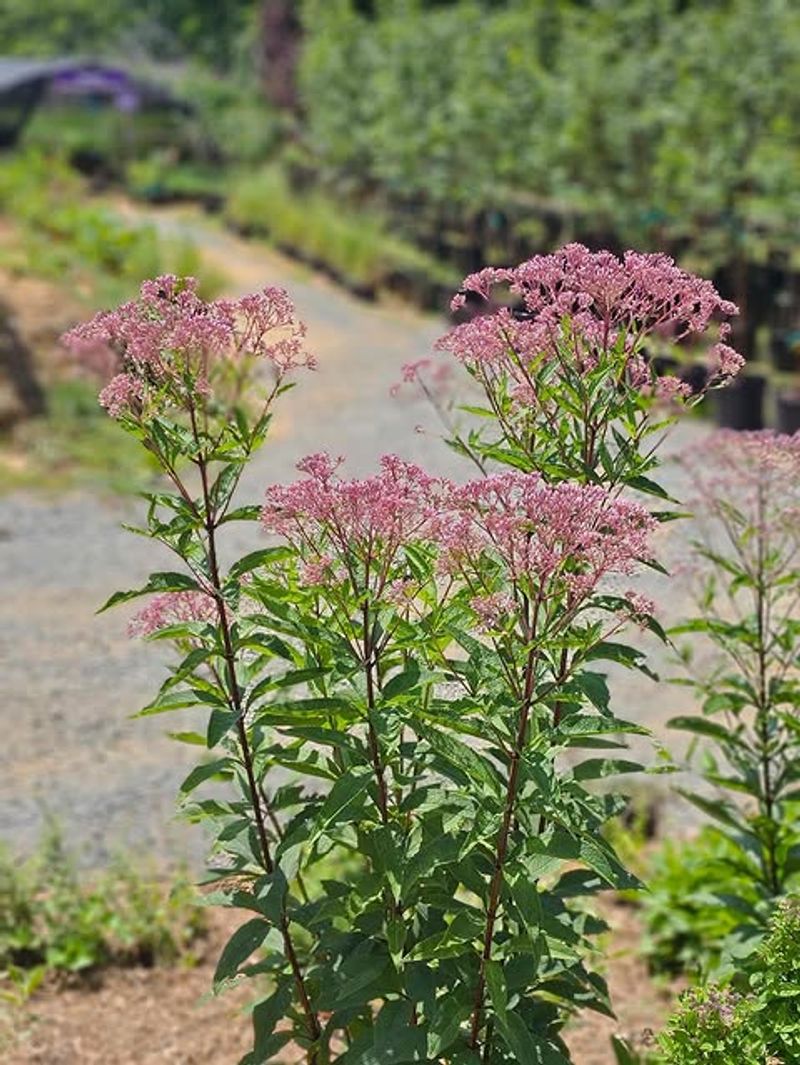
There is something almost majestic about Joe-Pye Weed. It towers above most garden plants at five to seven feet tall, topped with large, domed clusters of dusty pink-purple flowers that bloom from mid-summer into early fall.
Standing near a mature clump in full bloom feels like being surrounded by a living butterfly magnet. Swallowtail butterflies especially love it, and on a sunny afternoon you might count a dozen visiting at once.
Despite its wild-sounding name, Joe-Pye Weed is an elegant, well-behaved plant in the landscape. It has sturdy stems that rarely need staking, attractive whorled leaves, and a bold presence that anchors large garden beds beautifully.
It also provides excellent vertical interest in spots where most other perennials fall flat. The dried seed heads add winter texture and feed birds through the colder months.
This plant thrives in moist to average soils and handles partial shade better than many sun-loving natives. Rain gardens, pond edges, and low-lying areas where water collects are perfect spots for it.
Once established, it comes back reliably every year and gets bigger and more impressive with age. It does not spread aggressively, so you will not spend weekends pulling it out of places it does not belong.
Joe-Pye Weed was named after a Native American healer who reportedly used the plant to treat fevers. Whether or not that story is fully accurate, it adds a fascinating layer of history to a plant that is already hard to beat in the garden.
Pair it with tall grasses and Cardinal Flower for a showstopping late-season display that will impress every visitor to your yard.
5. Cardinal Flower
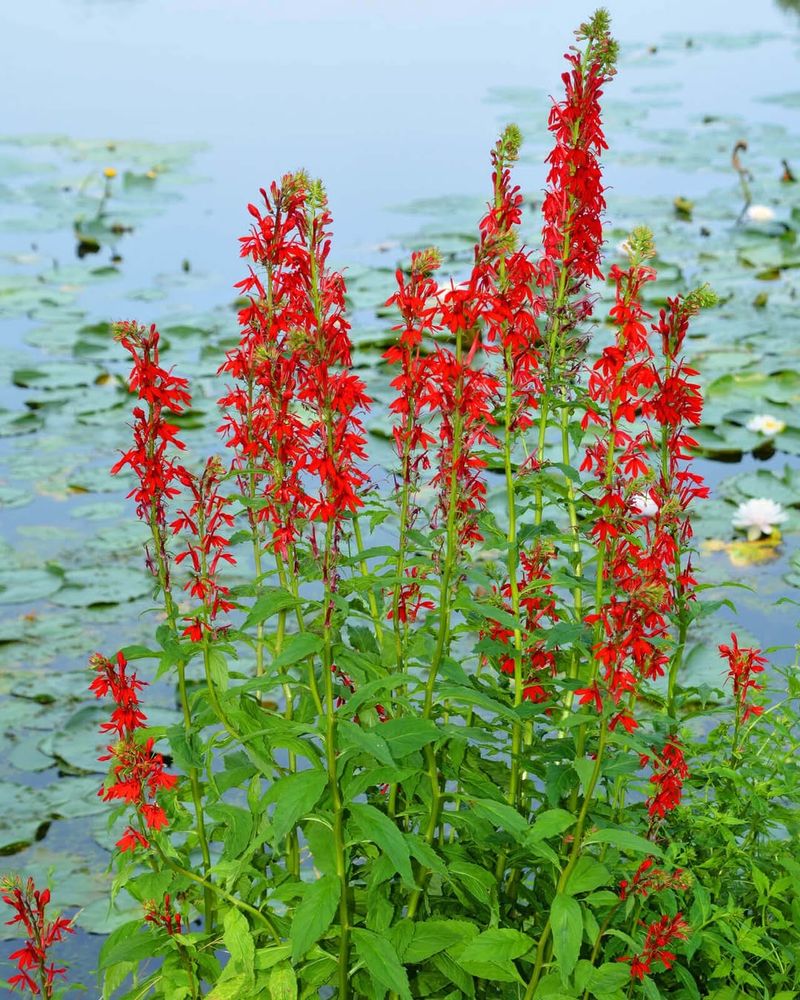
Few plants in the native Pennsylvania landscape stop people in their tracks the way Cardinal Flower does. The blooms are an almost unreal shade of red, so vivid and saturated that they practically glow in the garden.
Hummingbirds are wild about them, and for good reason. The long, tubular flowers are perfectly shaped for hummingbird beaks, making this one of the single best plants you can grow if attracting those tiny, fast-moving birds is on your wish list.
Cardinal Flower blooms from late summer into fall, which is exactly when most other garden plants are starting to slow down.
It grows two to four feet tall with a clean, upright habit and makes a striking focal point near water features, rain gardens, or low spots in the yard where moisture naturally collects.
It thrives in consistently moist to wet soil, which is a condition that many other perennials struggle with.
One thing to know is that individual Cardinal Flower plants tend to be short-lived, usually lasting two to three years. But they self-seed freely, so new plants pop up nearby and keep the colony going season after season.
You can also collect seeds in fall and scatter them where you want new plants to grow next year. It is a simple way to keep a continuous, self-renewing patch going.
Cardinal Flower also attracts swallowtail butterflies and bumblebees, though hummingbirds are its most famous visitors. Plant it where you can see it from a window or patio to enjoy the show.
The brilliant red color is unmatched by Black-Eyed Susans or most other native perennials, making it a true garden gem worth every bit of the attention it gets.
6. Golden Ragwort
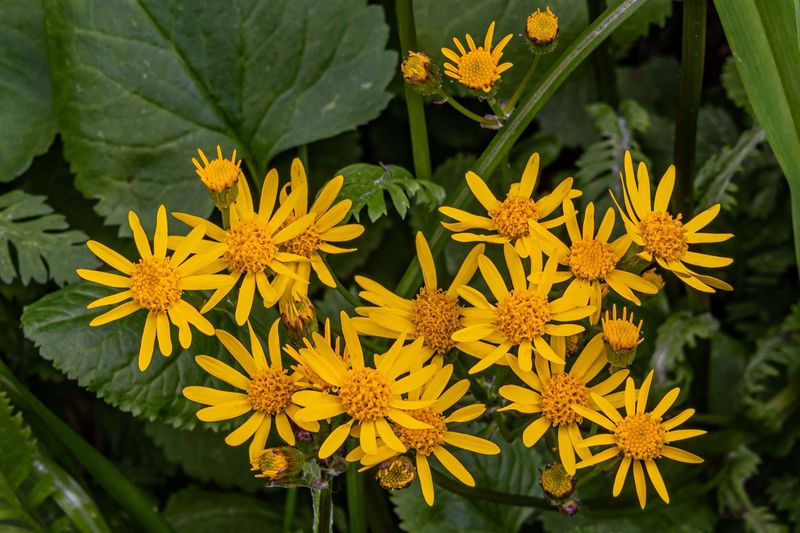
Most gardeners spend spring desperately searching for something colorful to fill the gap before summer bloomers kick in. Golden Ragwort is the answer to that exact problem.
It blooms in mid to late spring with cheerful clusters of bright yellow flowers, weeks before Black-Eyed Susans even think about opening. That early-season color is genuinely valuable in a landscape that can feel bare and dull after a long Pennsylvania winter.
Golden Ragwort grows about one to two feet tall in bloom, but its real magic is in the foliage. The dark green, heart-shaped basal leaves form a dense, attractive mat that spreads steadily over time to create excellent groundcover.
It fills in shaded or semi-shaded areas where grass struggles to grow, making it a practical solution for tricky spots under trees or along north-facing slopes. It stays green and lush through most of the growing season even after the flowers are done.
This plant handles a wide range of soil conditions, from moist woodland edges to average garden beds. It is especially at home in partly shaded spots with slightly moist, humus-rich soil.
Once it gets going, it spreads by both seeds and runners, gradually forming a weed-suppressing carpet that reduces maintenance over time. That groundcover quality alone sets it apart from Black-Eyed Susans, which do not spread the same way.
Pollinators love the early blooms, arriving right when they need nectar most after waking up from winter dormancy. Beetles, bees, and small butterflies are frequent visitors.
If you want a plant that does double duty as a colorful bloomer and a hardworking groundcover, Golden Ragwort might just become one of your absolute favorites in the native garden.
7. Woodland Sunflower
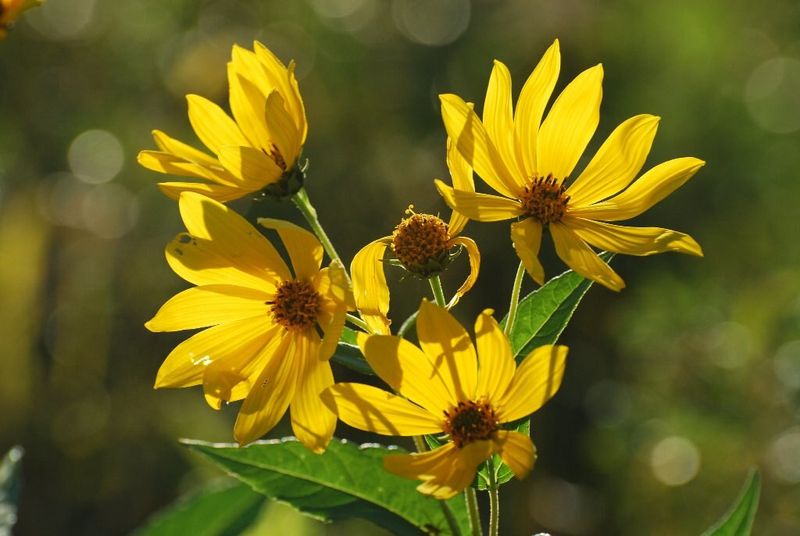
Sunflowers and shade do not usually belong in the same sentence, but Woodland Sunflower breaks that rule in the best possible way.
Unlike the giant annual sunflowers most people picture, this native perennial is built for the shaded edges of yards, woodland gardens, and spots where traditional Black-Eyed Susans would struggle.
It brings that same cheerful yellow color but handles dappled shade and dry, rocky soil with remarkable ease.
Woodland Sunflower grows three to five feet tall and produces a generous display of two-inch bright yellow blooms from mid-summer through early fall.
The flowers are slightly smaller than Black-Eyed Susans but appear in greater numbers per plant, creating a longer-lasting and more abundant show overall.
Bees, beetles, and butterflies flock to the blooms, and goldfinches love the seeds that follow in late fall, giving the plant multi-season wildlife value.
Spreading through both rhizomes and seeds, it naturally fills in open spaces along yard edges and under tree canopies. That spreading habit makes it ideal for naturalizing areas where you want coverage without constant replanting.
You can manage its spread easily by dividing clumps every few years or simply letting it roam in wilder garden areas where it has room to grow freely.
Soil quality is not a major concern with Woodland Sunflower. It handles poor, dry, or average soils without complaint, which is a big advantage over many other perennials that need regular amendments.
If you have a tricky shaded corner or a dry slope that needs some summer color, this plant will step up and deliver season after season. It is one of the most underrated natives in Pennsylvania, and it absolutely deserves a spot in your yard.