8 Native Wildflowers That Outperform Annuals In Georgia Gardens
Georgia gardens can look full early in the season, but many annuals start to fade faster than expected once heat and humidity settle in.
That is where native wildflowers start to stand out, holding their color and structure without constant replanting or extra care.
Native options are built for Georgia conditions, which means they handle heat, soil, and weather shifts far better than most annuals. Once established, they come back reliably and keep the garden looking alive even when other plants start to struggle.
Choosing the right wildflowers can change how a garden performs through the entire season. Instead of short bursts of color, the focus shifts to steady growth, longer blooms, and a space that stays consistent without needing constant effort.
1. Purple Coneflower Stays Strong Through Heat And Drought
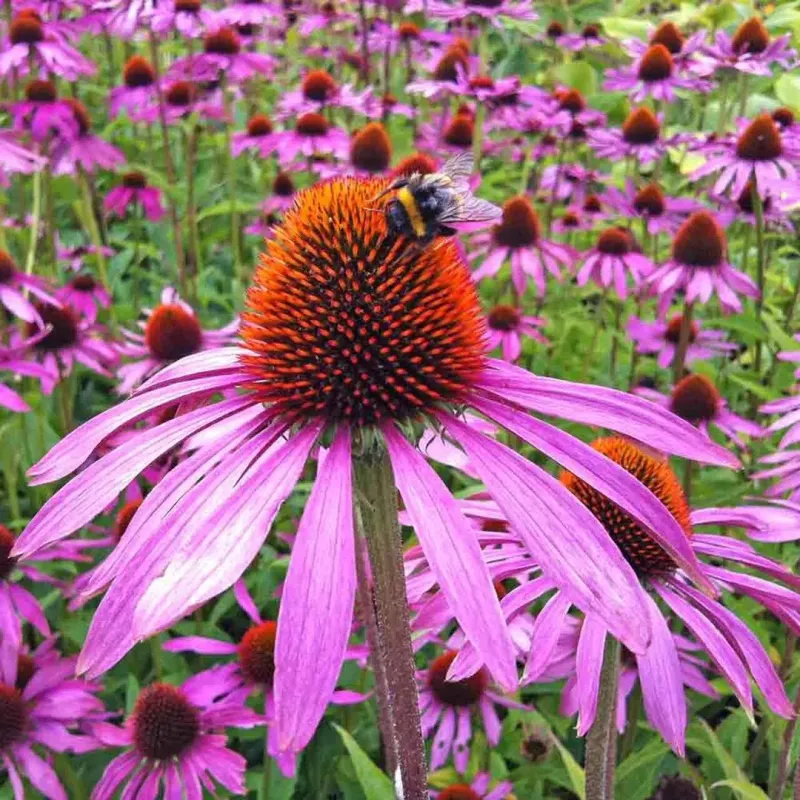
Few plants shrug off a Georgia summer like Purple Coneflower does. While annuals start looking tired by July, Echinacea purpurea keeps pushing out fresh blooms even when the thermometer sits above 95 degrees and rain hasn’t fallen in two weeks.
Native to the eastern United States, this plant is completely at home in Georgia’s heat. Its deep taproot reaches moisture that shallow-rooted annuals simply can’t access.
Plant it once, and it will reward you for years without needing much attention at all.
Purple Coneflower grows well in full sun and handles poor, dry soil without complaint. It reaches about two to four feet tall and blooms from late spring through early fall, giving you months of color from a single planting.
Goldfinches love the seed heads in late summer, so skip deadheading at least part of the plant and let nature take over. Bees and butterflies flock to the flowers constantly throughout the blooming season.
In Georgia, plant Purple Coneflower in fall or early spring. Space plants about 18 inches apart and water regularly for the first season.
After that, established plants rarely need supplemental watering except during extended dry spells.
Once established, it also tolerates humidity better than many other perennials, which makes it especially reliable across Georgia.
Clumps will slowly expand over time, and dividing them every few years helps keep plants vigorous and full of blooms.
2. Black Eyed Susan Blooms Longer Than Most Annuals
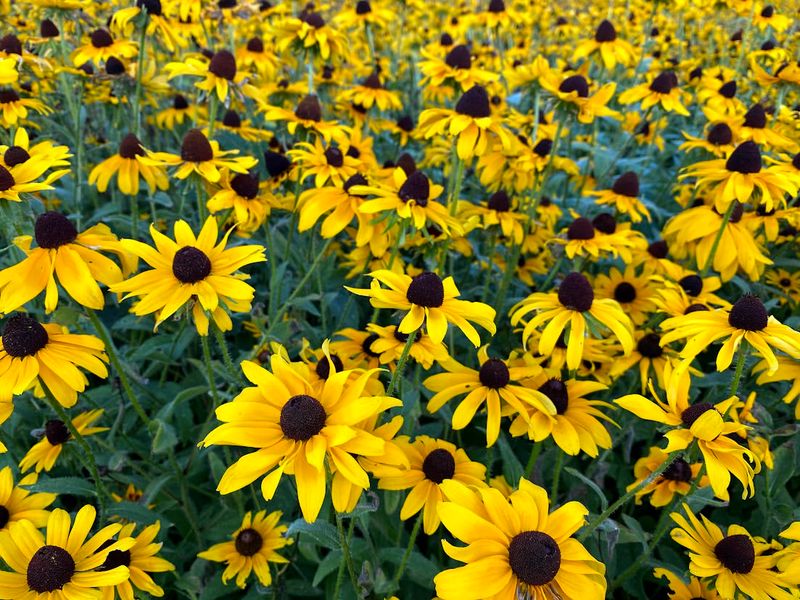
Walk past a patch of Black-Eyed Susans in Georgia and it’s almost impossible not to stop and look. That bold yellow with the dark chocolate center is one of the most cheerful combinations in the plant world, and the blooming season stretches far longer than most annuals can manage.
Rudbeckia hirta typically starts flowering in late spring and keeps going strong into fall, especially in Georgia’s long warm season.
While marigolds and zinnias need regular deadheading to stay productive, Black-Eyed Susan just keeps blooming with very little fuss from the gardener.
It handles drought reasonably well once established and grows in both average and poor soils. Full sun brings out the best performance, though it tolerates light afternoon shade in Georgia’s hottest inland regions without shutting down completely.
Your Georgia Garden Changes Every Week. Your Plan Should Too.
Gardening in Georgia changes quickly throughout the season. Every Friday you’ll receive a simple weekly plan showing exactly what to plant, prune, fertilize, harvest, and protect so you never miss the right timing.
Black-Eyed Susan self-seeds freely, which means your original planting can expand into a larger, more impressive drift over several years. Control spreading by removing spent flower heads before seeds fully mature if you want to keep plants contained.
Shorter varieties work nicely in containers or along borders, while taller types look great mixed with ornamental grasses in naturalized Georgia landscapes. Either way, you get reliable color without replanting every single spring.
In Georgia, planting in early spring or fall gives roots time to settle before peak heat arrives.
Pollinators stay active around these blooms all season, making them a strong choice for supporting bees and butterflies.
3. Coreopsis Handles Poor Soil And Keeps Flowering
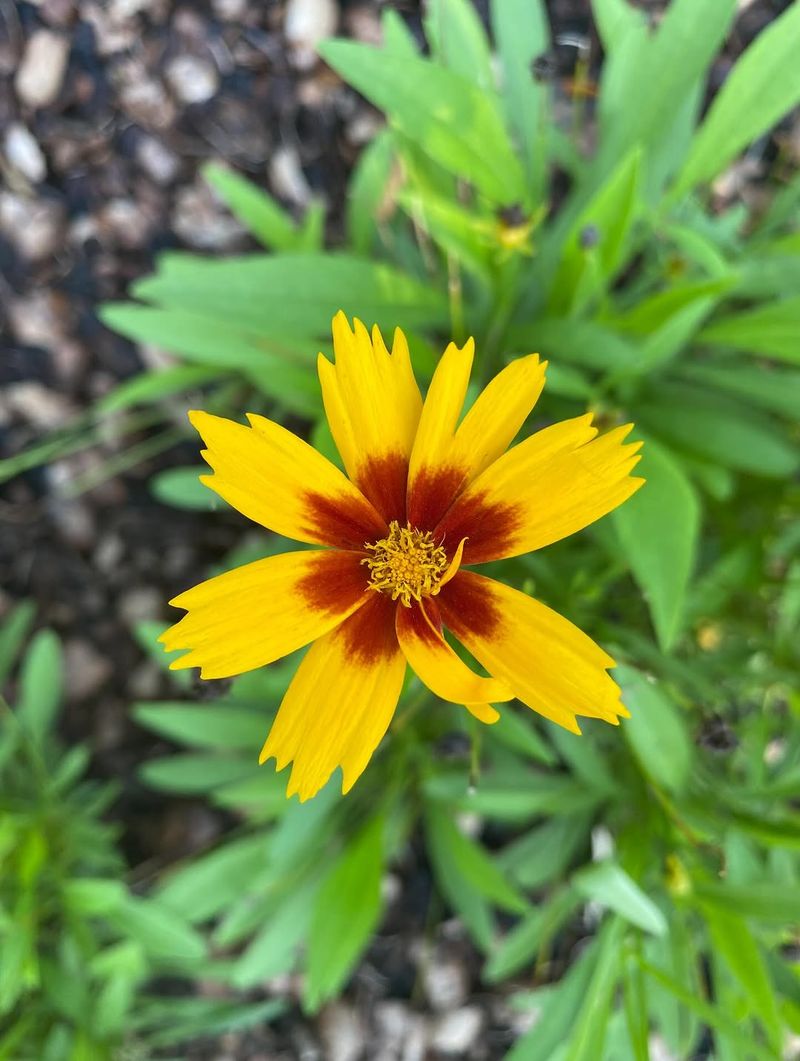
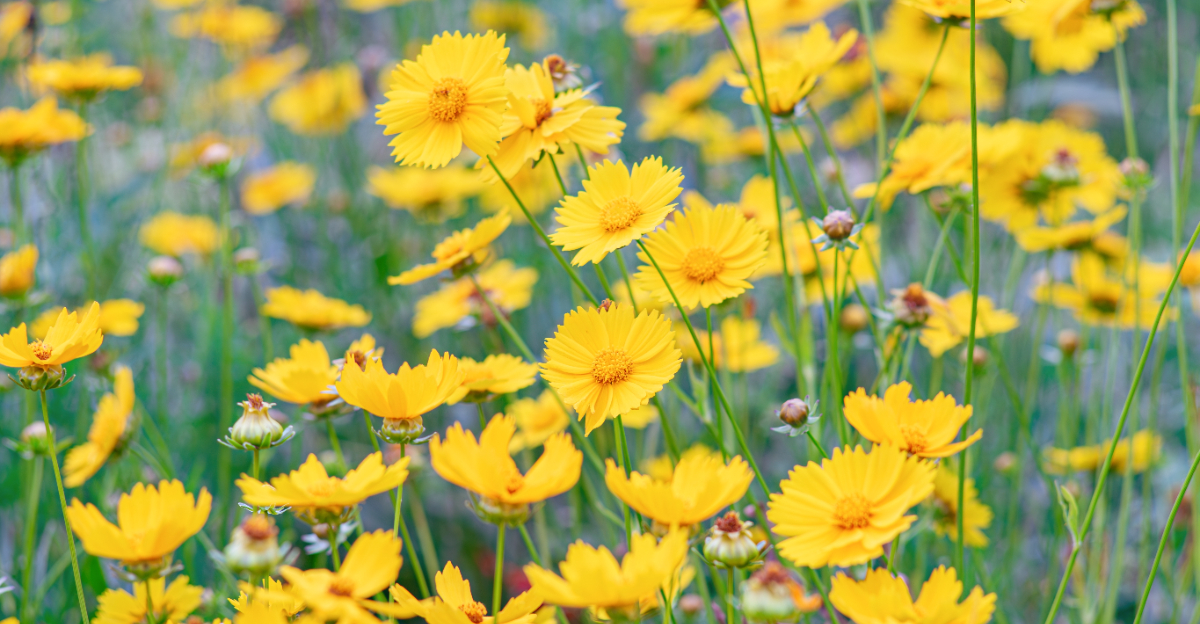
Georgia’s state wildflower deserves every bit of that honor. Coreopsis, particularly Coreopsis lanceolata and Coreopsis tinctoria, grows naturally across roadsides, fields, and meadows throughout the state, which tells you a lot about how tough it really is.
Poor, sandy, or compacted soil? No problem.
Coreopsis actually performs better in lean soil than in rich, amended beds. Overly fertile ground encourages too much leafy growth and fewer flowers, so skip the fertilizer and let it do its thing.
Full sun is non-negotiable for best results.
In Georgia gardens that receive at least six hours of direct sunlight daily, Coreopsis produces an almost unbelievable number of small, cheerful flowers from late spring through summer and often into fall with some deadheading.
It reseeds generously, creating natural drifts that fill empty spaces without any help. This self-spreading habit makes it especially useful in new garden beds where you want ground coverage without spending a lot on plants upfront.
Perennial types like Coreopsis verticillata come back reliably each year in most Georgia growing zones. Annual varieties reseed so reliably that the difference barely matters in practice.
Either way, you end up with a low-effort, high-reward plant that annual flowers simply cannot match over time.
Over time, clumps stay tidy and rarely need dividing, which keeps maintenance low compared to many other flowering plants.
4. Blanket Flower Thrives In Heat With Very Little Care
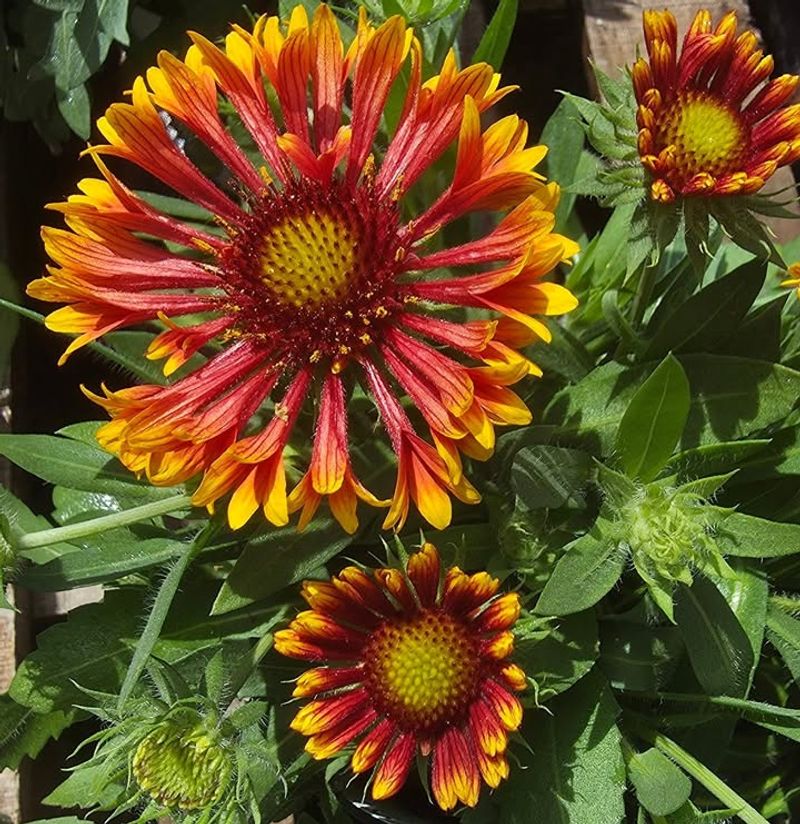
Blanket Flower was practically built for Georgia summers.
Gaillardia pulchella and its perennial cousin Gaillardia aristata produce fiery red, orange, and yellow blooms that look almost tropical against green garden foliage, and they do it in heat that would flatten most annuals within days.
One of the standout qualities here is drought tolerance. Once established, Blanket Flower can go weeks without rainfall and still push out fresh flowers.
Georgia’s summer dry spells, which can stretch for several weeks in areas like Macon or Albany, are not a problem for this plant at all.
Sandy or gravelly soil actually suits it better than heavy clay. If your Georgia garden sits on well-draining ground, Blanket Flower will likely outperform almost anything else you plant.
Avoid overwatering and definitely skip the fertilizer, which causes floppy stems and fewer blooms.
Blooming typically starts in late spring and continues through fall in Georgia’s warmer zones. Deadheading spent flowers regularly encourages new buds and extends the show considerably.
Without deadheading, flowering slows but doesn’t stop entirely.
Perennial varieties return each spring in USDA zones 5 through 9, which covers most of Georgia. Plants may need dividing every two or three years to stay vigorous, but that’s a small investment for years of reliable, heat-defying color.
Good air circulation helps prevent issues in Georgia’s humidity, so avoid crowding plants too closely when planting.
5. Bee Balm Brings Pollinators And Keeps Coming Back Each Year
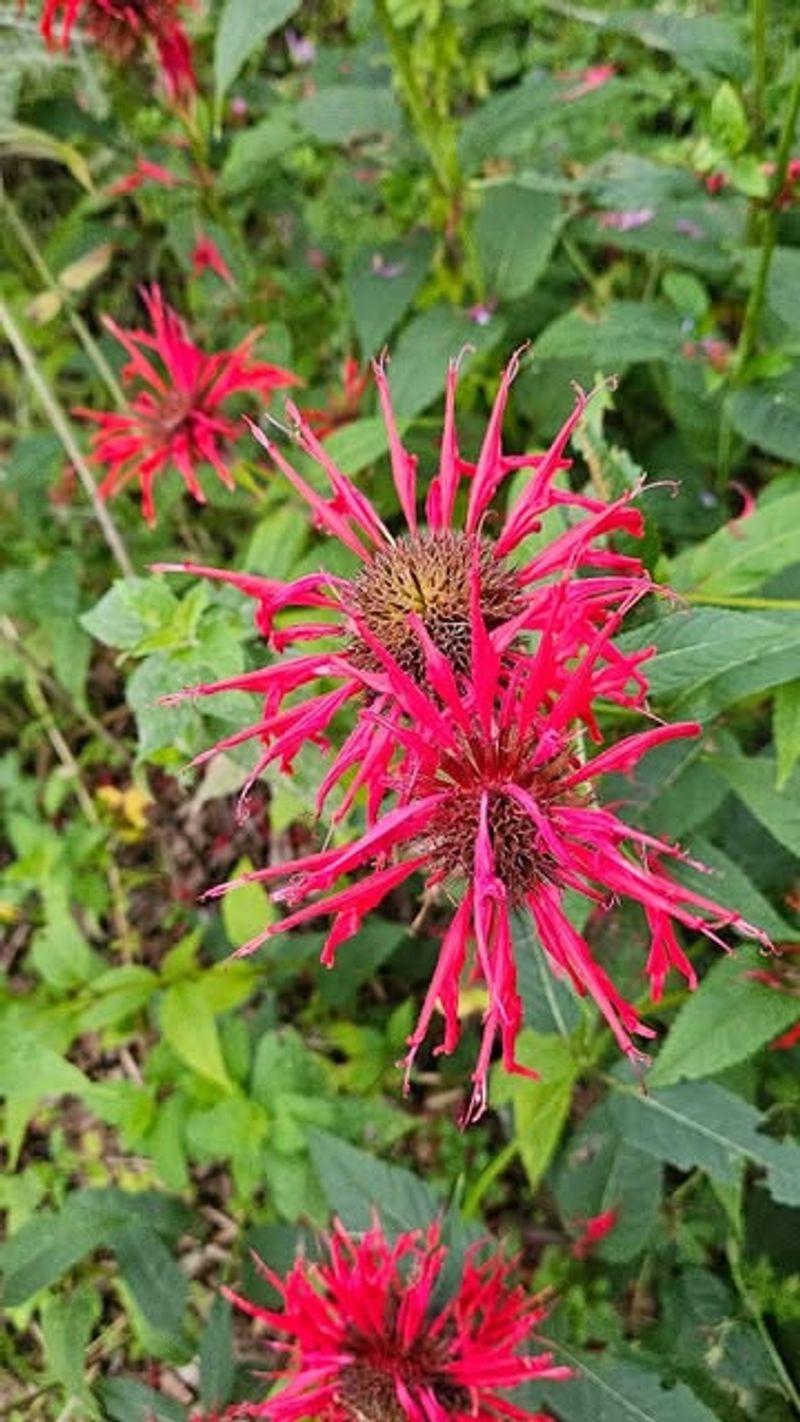
Plant Bee Balm once and your Georgia garden will never feel quiet again.
Monarda didyma and Monarda fistulosa produce shaggy, brilliant blooms in red, pink, and lavender that act like a landing strip for hummingbirds, native bees, and butterflies from the moment flowers open.
Native to North America and well adapted to Georgia’s climate, Bee Balm spreads steadily through underground rhizomes, forming larger clumps each season. That spreading habit means your garden gets bigger and better without any extra spending on new plants.
It prefers moist, well-drained soil and does well in both full sun and partial shade. In Georgia’s hotter southern regions, afternoon shade actually helps Bee Balm stay more productive through the peak heat of summer without stressing the foliage.
Powdery mildew can appear on leaves in humid conditions, which Georgia gardeners know well. Choosing mildew-resistant varieties like ‘Jacob Cline’ or ‘Raspberry Wine’ solves most of that problem without any spraying required.
Bloom time runs from early to midsummer, typically June through August across most of Georgia. After flowers fade, cut plants back by about half to encourage a second flush of growth and keep the clumps looking tidy.
Division every three years keeps Bee Balm vigorous and prevents overcrowding in the garden bed.
Strong fragrance from the foliage also helps deter deer, which makes it a practical choice in areas where browsing is a problem.
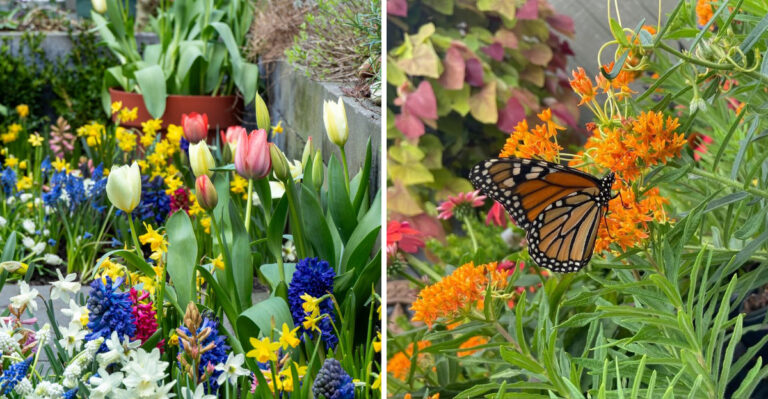
6. Butterfly Weed Handles Dry Conditions And Supports Monarchs
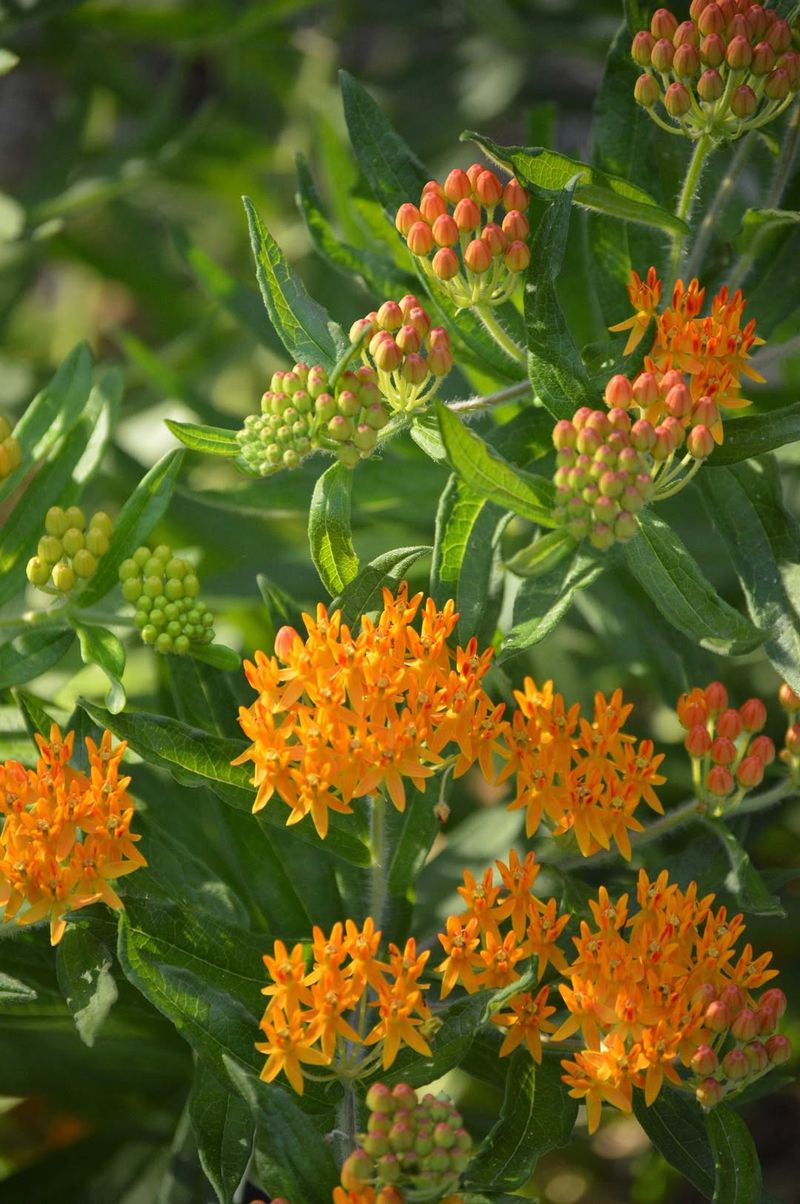
Bright orange flower clusters on a plant that practically ignores drought? That’s Butterfly Weed in a nutshell.
Asclepias tuberosa is one of the most striking native wildflowers you can grow in Georgia, and it does something no annual can claim: it serves as the only host plant for Monarch butterfly caterpillars.
Monarch populations have declined sharply in recent decades, and planting Butterfly Weed in Georgia gardens is one of the most practical ways individual gardeners can help.
Female Monarchs lay eggs specifically on milkweed species, and Asclepias tuberosa is one of the best options available in the Southeast.
Unlike many plants in the milkweed family, Butterfly Weed thrives in dry, well-drained, even sandy soil. Heavy clay or consistently wet ground causes root rot, so good drainage is the one firm requirement.
Full sun is equally important for strong flowering.
Blooms appear from late spring through midsummer, usually June and July in most Georgia locations. Plants emerge late in spring, so mark their spots carefully to avoid accidentally disturbing them before growth starts.
A deep taproot makes established plants very drought-resilient but also difficult to move once settled. Choose your planting spot thoughtfully because relocating an established Butterfly Weed rarely goes smoothly.
Given the right conditions, it will reward you with years of brilliant color and ecological value.
Deer tend to avoid it because of the milky sap, which adds another layer of reliability in Georgia landscapes where browsing can be an issue.
7. Blazing Star Sends Up Tall Blooms That Return Reliably
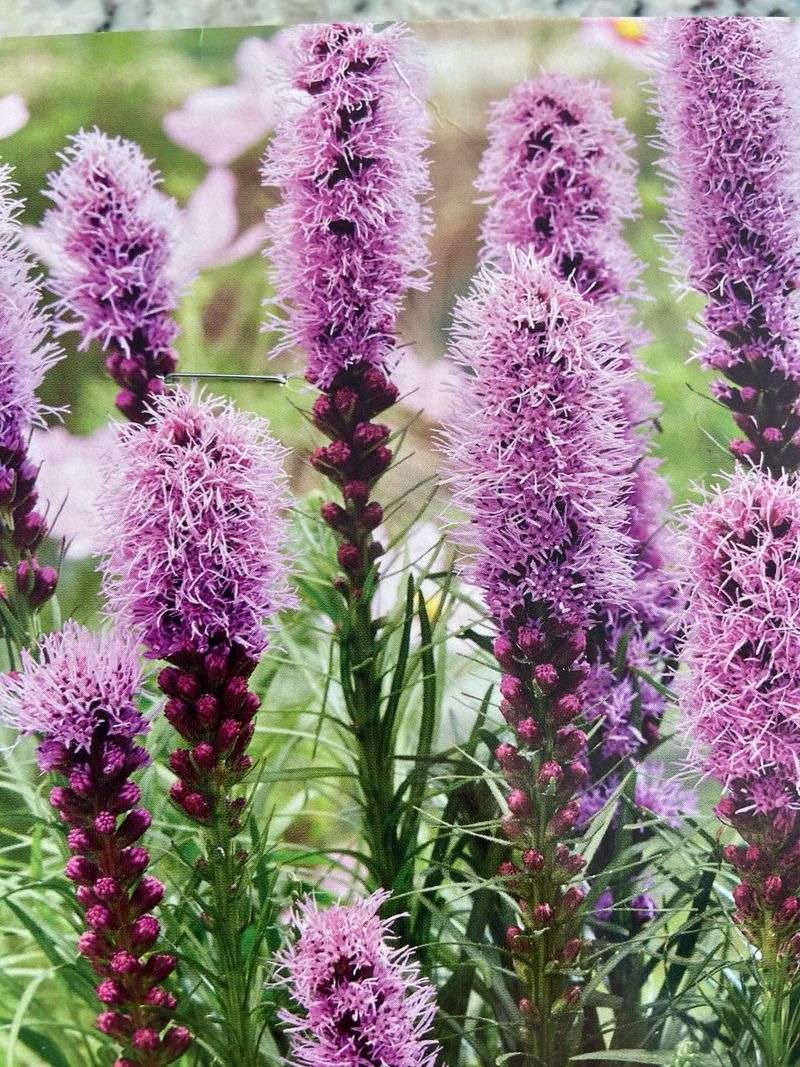
Blazing Star does something unusual in the wildflower world: it blooms from the top of the spike downward, which means your display starts at the tips and works its way down over several weeks.
That slow-burn bloom style keeps Liatris spicata interesting far longer than a plant that opens all at once.
Native to the eastern United States and perfectly suited to Georgia’s climate, Blazing Star grows from a corm-like root structure that stores energy through winter and returns reliably each spring.
Once established, these plants are genuinely long-lived with very little maintenance required from the gardener.
Full sun and well-drained soil are the two conditions it needs most. In Georgia’s clay-heavy soils, raised beds or amended planting areas improve drainage enough to keep plants healthy.
Wet feet in winter is the main thing to avoid with this species.
Bloom time in Georgia typically falls between July and September, filling a gap when many spring bloomers have already finished. That late-season timing makes Blazing Star especially valuable in garden designs that need consistent color through summer and into early fall.
Butterflies and bees absolutely swarm the flowers, and goldfinches visit seed heads after blooming ends. Leaving seed heads standing through winter provides food for birds and adds visual interest to the garden during Georgia’s quieter cold months.
8. Goldenrod Fills Late Season Gaps When Annuals Fade
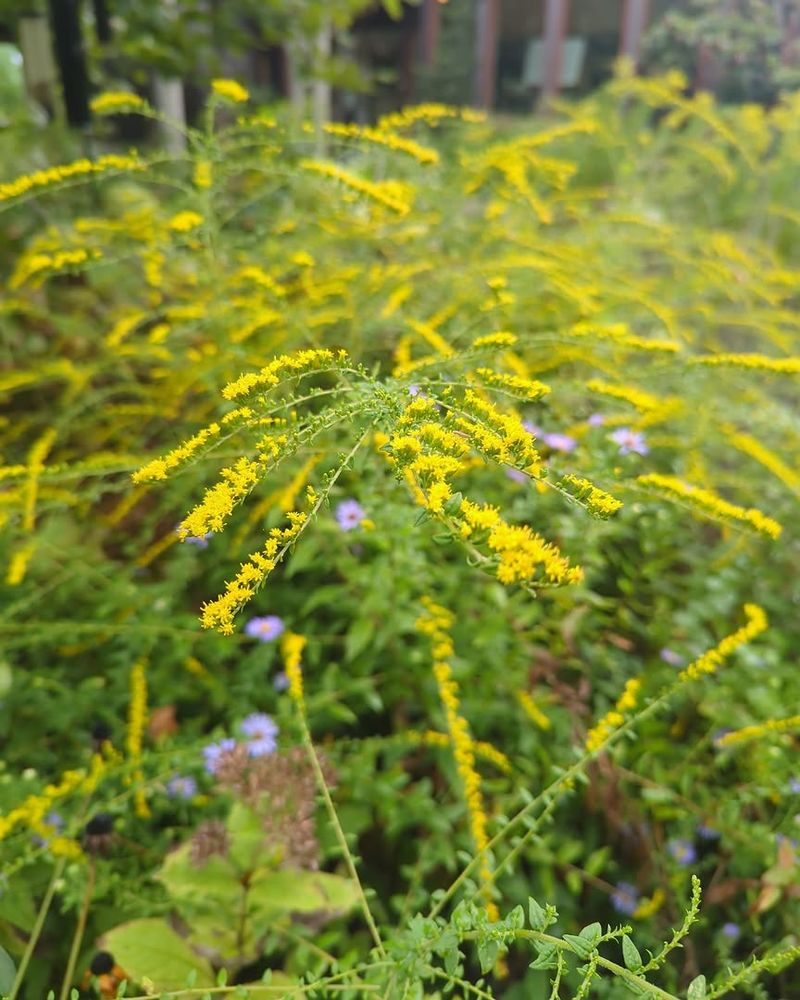
Goldenrod gets blamed for hay fever it didn’t cause. That reputation belongs to ragweed, which blooms at the same time but releases wind-borne pollen.
Goldenrod’s heavy, sticky pollen is carried by insects, not air, so it’s actually one of the safest plants for allergy sufferers to grow in a Georgia garden.
Solidago species native to Georgia, including Solidago rugosa and Solidago odora, bloom from August through October, precisely when most annuals are giving up and garden color becomes hard to find. That late-season performance is genuinely difficult to replace with anything else.
Goldenrod thrives in average to poor soil and handles both dry and moderately moist conditions well. It spreads by rhizomes and reseeds freely, so give it room or plan to manage its enthusiasm with occasional division and seed head removal.
Pollinators rely heavily on Goldenrod as a late-season nectar source before winter arrives. Native bees, wasps, beetles, and butterflies all visit the flowers, making it one of the most ecologically productive plants you can grow in a Georgia garden.
Shorter, clump-forming varieties like ‘Fireworks’ and ‘Little Lemon’ work well in smaller spaces without the aggressive spreading of wild types.
Either way, Goldenrod delivers reliable fall color and wildlife value that no annual can match once September arrives in Georgia.
Cutting plants back in early summer helps keep growth more compact and encourages fuller, more controlled flowering later in the season.