Never Ignore Dark Green Droppings Under Your Tomato Plants
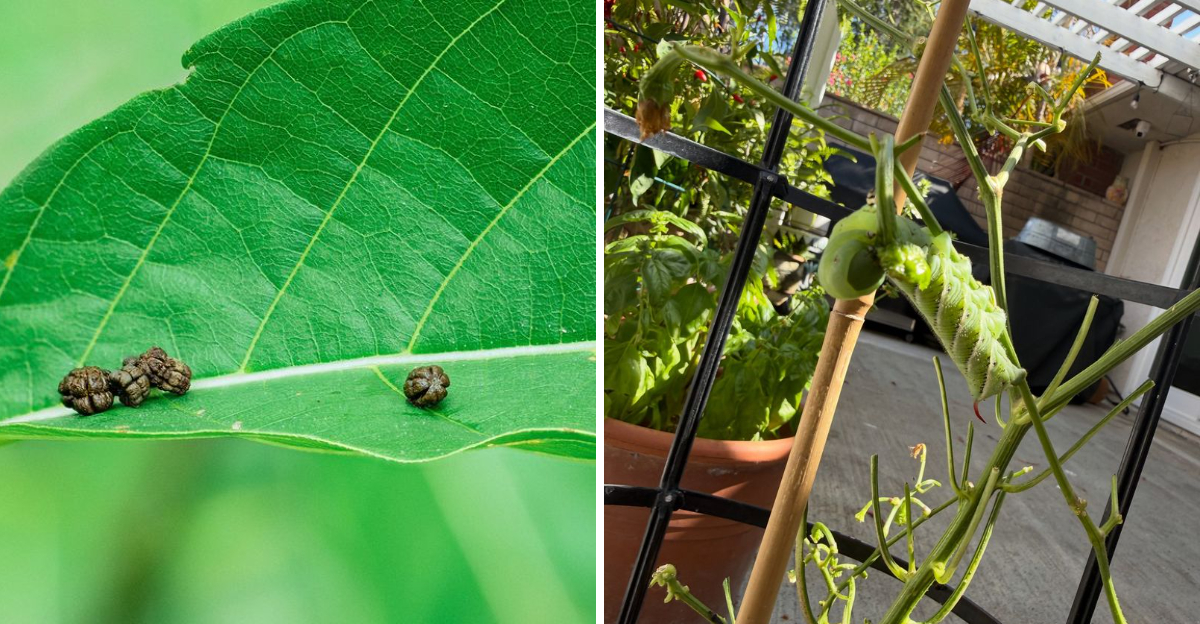
Dark green pellets beneath an Ohio tomato plant can look harmless until you notice what is missing above them.
A few leaflets may be gone. A tender stem may look strangely bare, and one green tomato might carry a fresh chewing mark that was not there the day before.
Those pellets are often frass, the solid waste left by a large caterpillar feeding somewhere in the canopy.
Tomato hornworms and their close relatives can consume foliage quickly, so fresh droppings are worth treating as an early warning rather than garden debris.
So what should you do when you spot them?
Start directly above the freshest pile. Search stems, leaf joints, undersides, and the upper canopy before checking nearby peppers, eggplants, and potatoes. The caterpillar may be surprisingly large and still nearly disappear against the foliage.
Dark pellets do not prove a hornworm is present.
They do tell you that something has been eating.
Following that clue early can save a lot of tomato leaves before the hidden diner finishes breakfast.
1. Read Dark Green Pellets As A Hornworm Clue
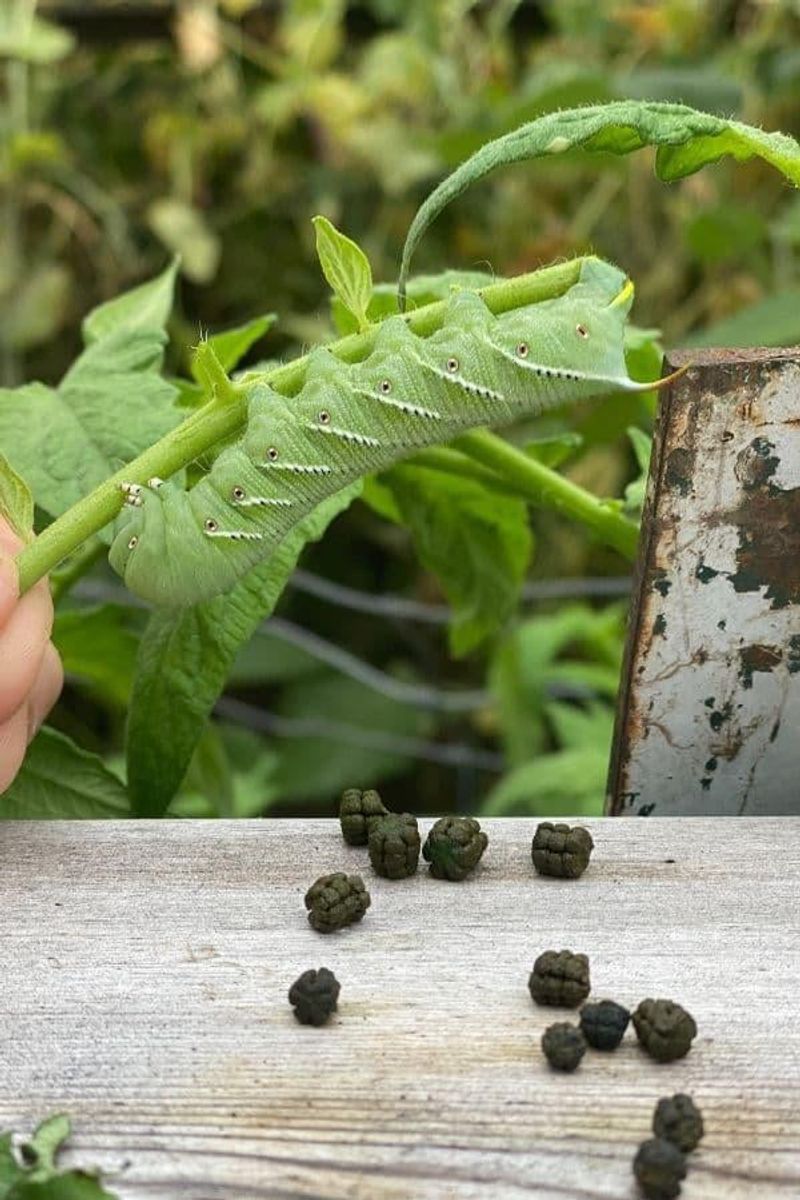
Fresh dark green pellets beneath tomato foliage are one of the strongest clues that a large caterpillar is feeding overhead.
The pellets are frass, which is simply insect waste. Large hornworms produce much bigger droppings than tiny caterpillars, so a cluster of ridged green or nearly black pellets can point toward a well-developed feeder hidden above.
Size matters.
A mature tomato hornworm can reach several inches long, and its frass may approach the size of a small pea. Fresh pellets often look darker and slightly moist, while older ones dry, fade, and crumble.
That difference helps with timing.
Fresh frass suggests feeding happened recently and the caterpillar may still be close. Older droppings show where it fed earlier but may lead you toward an empty section of the plant.
Do not stop at the droppings.
Birds, other caterpillars, and garden debris can create confusing clues, so confirm the problem by looking for missing leaf tissue, bare petioles, chewed fruit, or the caterpillar itself.
The good news is that frass usually appears before a gardener notices the full extent of the damage.
That makes those ugly little pellets surprisingly useful. The hornworm may be dressed perfectly for camouflage, but its bathroom habits are much less discreet. Read the evidence first, then start looking upward.
2. Search The Upper Canopy First
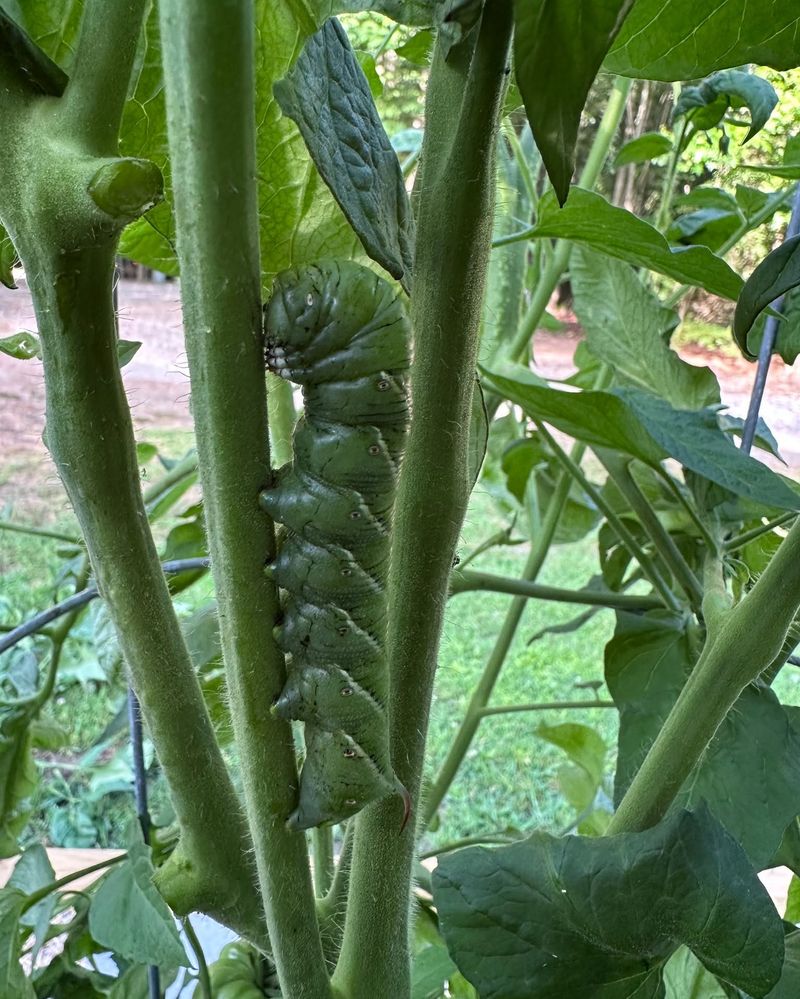
The top of a tomato plant deserves the first close inspection.
Hornworms often feed on tender new growth, flower clusters, and upper leaves where the foliage is soft and abundant. That means a quick glance at the bottom half of the plant can miss the caterpillar completely.
Start at the growing tips.
Look along the main stem, then follow larger side branches outward. Pay close attention to leaf joints because a hornworm can rest tight against a stem and disappear into the same shade of green.
Part the canopy gently.
Large indeterminate tomatoes can hide a surprisingly big caterpillar inside a dense wall of foliage. Brandywine, Cherokee Purple, and other vigorous types can create enough shade and overlap to conceal one only inches from your face.
Your Ohio Garden Changes Every Week. Your Plan Should Too.
Gardening in Ohio changes quickly throughout the season. Every Friday you’ll receive a simple weekly plan showing exactly what to plant, prune, fertilize, harvest, and protect so you never miss the right timing.
Check both sides of leaves.
Hornworms may feed along edges, rest under broad foliage, or grip stems during the warmer part of the day.
Morning inspections can be especially useful because cooler conditions make caterpillars easier to approach and fresh feeding damage easier to spot.
Work in one direction rather than jumping around the plant.
A top-to-bottom search keeps you from checking the same branch twice while missing another completely.
The caterpillar may be enormous by garden-pest standards, but camouflage gives it an unfair advantage. Methodical searching takes that advantage away.
3. Follow Fresh Frass Toward The Feeder
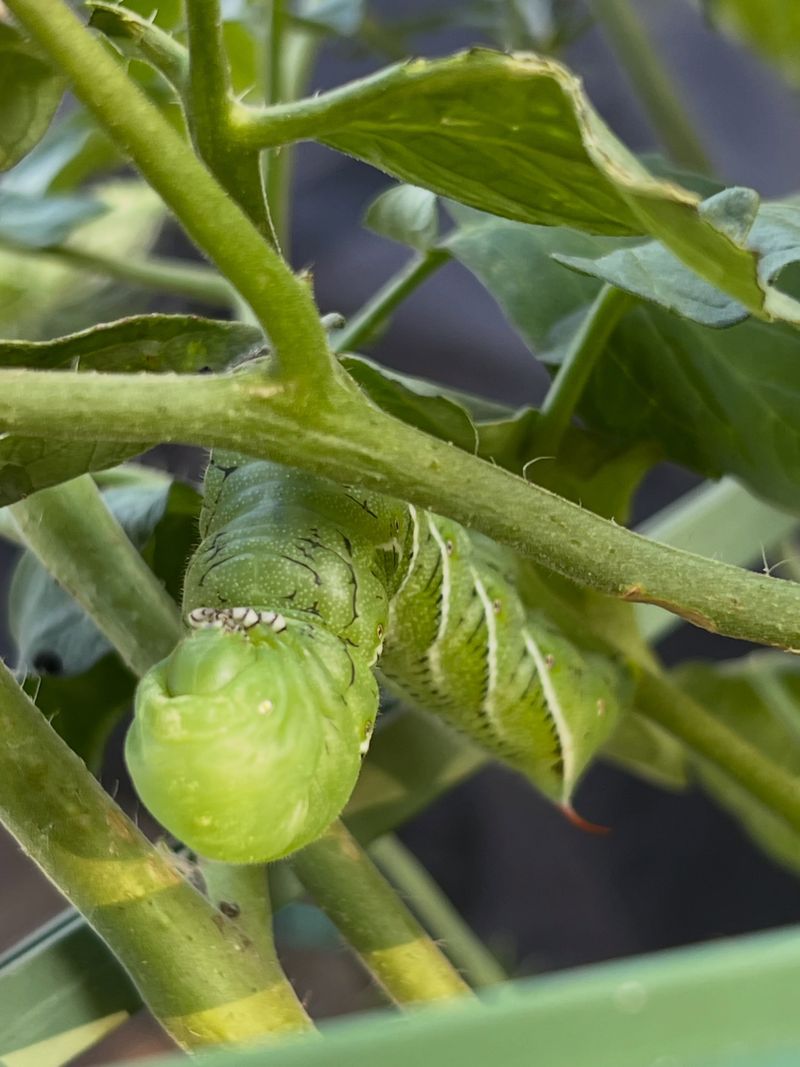
Frass can do more than confirm that something has been chewing.
It can help you narrow down exactly where the feeder is hiding.
Stand back and look at the soil, mulch, or lower leaves beneath the plant. Find the heaviest concentration of fresh, dark pellets, then trace a line straight upward through the canopy.
That vertical path is your best starting point.
A hornworm feeding on an upper branch often drops frass onto leaves below before it reaches the ground. A fresh pellet sitting on a broad tomato leaf can therefore point toward a caterpillar only one branch higher.
Focus on the newest droppings.
Dark, intact, slightly moist pellets are more useful than faded pieces scattered after rain or wind. Older frass may mark yesterday’s feeding site rather than the caterpillar’s current location.
Then compare the clue with damage.
Missing leaflets, bare petioles, or a freshly chewed stem above the pellet pile make the case much stronger.
Keep moving upward slowly.
The caterpillar may sit directly beside the damage, or it may have crawled several inches to rest along a thicker stem.
This is much faster than staring at the entire plant and hoping a green caterpillar suddenly becomes obvious.
Hornworms are excellent at hiding their bodies. They are much worse at hiding the trail they leave beneath them.
4. Check For Stripped Leaves And Bare Stems
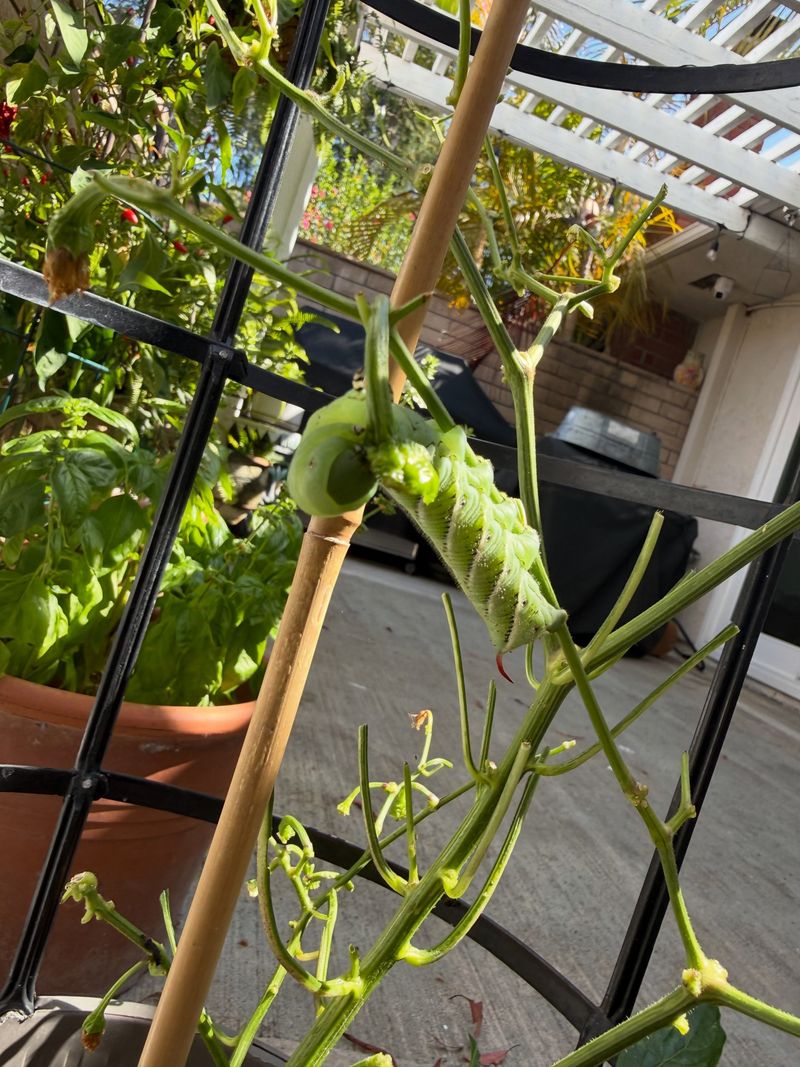
A tomato stem that suddenly looks stripped clean deserves immediate attention.
Hornworms are heavy feeders, and larger caterpillars can remove entire leaflets rather than leaving the scattered pinholes associated with smaller pests.
The result can be a bare petiole, a clipped-looking branch, or a section of stem that seems to have lost foliage overnight.
Fresh chewing has a different look from old damage.
Recently eaten edges often appear lighter and greener before drying. Older wounds become duller and less useful for locating the caterpillar.
Check the newest bare areas first.
A hornworm usually does not travel far between feeding bouts when plenty of foliage remains nearby. Search the stem above and below the stripped section, then inspect neighboring leaves and branch junctions.
Young plants deserve faster action.
A mature tomato can tolerate some lost foliage. A small transplant with only a limited canopy has much less leaf area to spare, so one large caterpillar can set it back quickly.
Do not confuse hornworm feeding with disease.
Leaf spots, yellowing, or collapsed tissue create different patterns. Hornworms remove plant material physically, leaving obvious chewing and missing sections behind.
The plant often looks as though someone took tiny pruning shears to it and forgot all sense of proportion.
Bare stems plus fresh green frass make a strong combination of clues. At that point, the hidden caterpillar is probably much closer than it seems.
5. Inspect Green Tomatoes For Feeding Marks
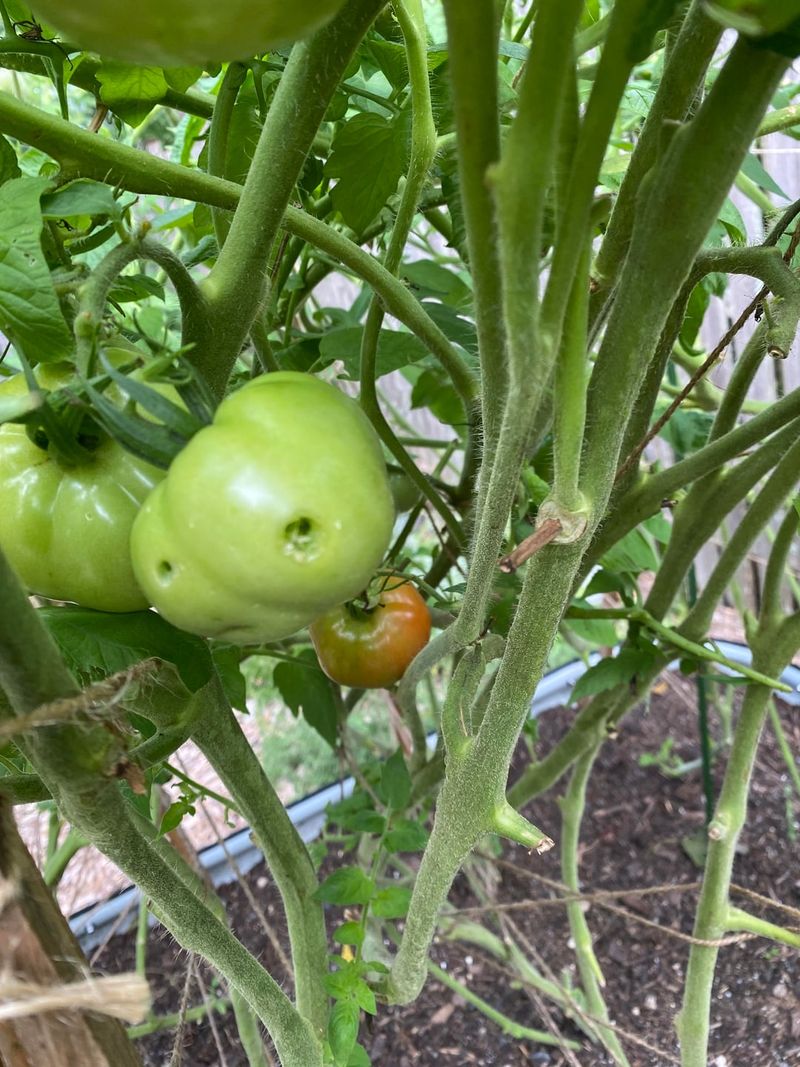
Leaves are the usual target, but green tomatoes can end up on the menu too.
Hornworm feeding on fruit often appears as a shallow, irregular gouge rather than a neat round hole. Fresh damage may look moist or pale where the outer skin has been scraped away, while older wounds dry and become rougher.
Check fruit near damaged foliage first.
A caterpillar resting on a thick stem may move easily between nearby leaves and a tomato hanging only a few inches away. Fruit partly shaded by the canopy can be especially easy to overlook during a quick inspection.
Small surface wounds deserve attention because damaged skin no longer protects the fruit as well.
Warm, humid Ohio summer weather can allow secondary decay to develop around an open feeding site, especially after rain.
Minor damage does not always ruin the tomato.
A firm fruit with a small superficial chew may continue developing, though it should be watched closely as it ripens. A soft, expanding, or discolored wound is a different situation and may justify removing the fruit.
Use fruit damage as another directional clue.
A freshly chewed tomato tells you to search the stems, leaves, and petioles immediately around that cluster.
Hornworms usually advertise themselves with missing foliage first, but a hungry caterpillar is not particularly loyal to the salad course. Once leaves become scarce, the tomatoes themselves can start looking surprisingly appetizing.
6. Look Beneath Leaves For Camouflaged Caterpillars
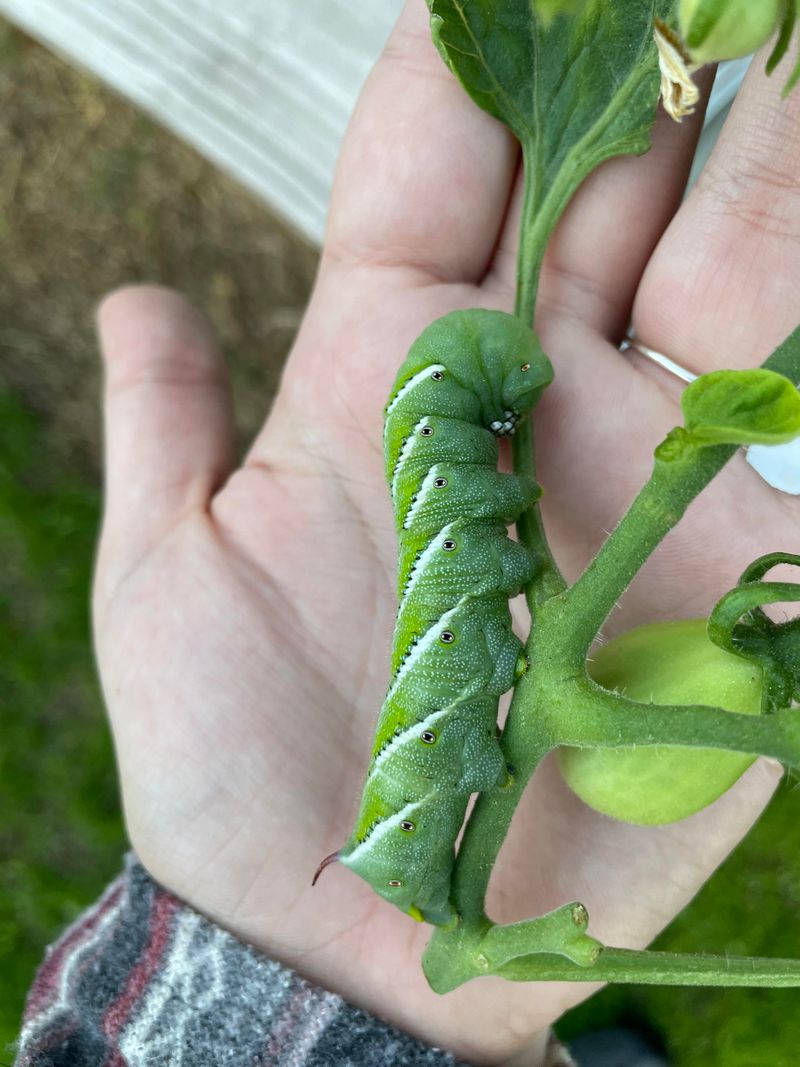
The hardest part of dealing with a hornworm is often seeing it.
Tomato hornworms are large, bright green caterpillars, yet their coloring blends almost perfectly with tomato stems and leaves.
Pale diagonal markings break up the outline of the body, making a four-inch caterpillar surprisingly easy to overlook.
Search slowly instead of scanning broadly.
Look beneath leaves, along thick stems, and around branch junctions. A hornworm may grip a stem lengthwise and remain almost motionless, which makes its body resemble another piece of the plant.
The rear horn looks dramatic but is not a stinger.
That projection helps give the caterpillar its familiar name, but it does not make the insect dangerous to handle.
Use touch as a backup.
Running gloved fingers lightly along a suspicious stem can reveal a caterpillar your eyes missed. A hornworm may shift, tighten its grip, or move enough to break the camouflage.
Look for its head too.
The front end may be tucked against a leaf while the rest of the body follows the stem, leaving only subtle movement around the mouthparts.
Once you find one, pause before moving on.
More than one caterpillar can occupy the same plant or nearby tomatoes.
The first hornworm is usually the hardest to spot. After that, your eyes start recognizing the shape, and suddenly the garden’s best camouflage artist becomes much less convincing.
7. Check Nearby Peppers And Tomatoes Too
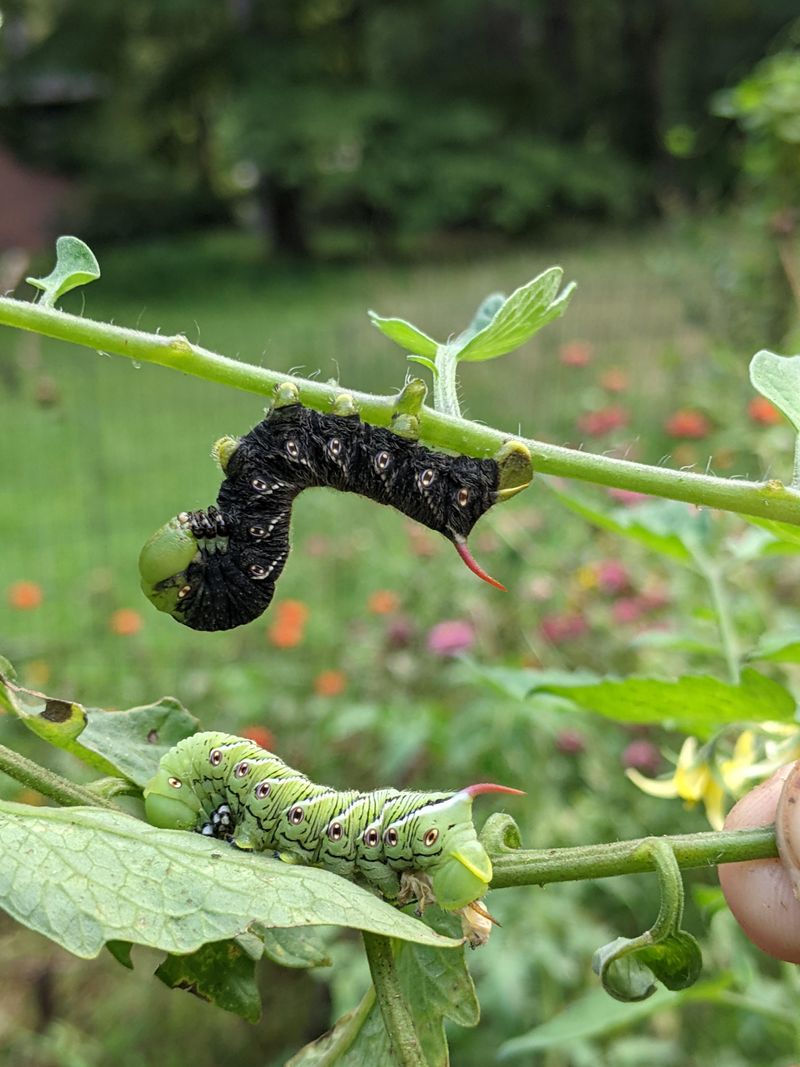
One hornworm on a tomato plant is a reason to inspect the rest of the nightshade patch.
Tomatoes are not the only suitable hosts. Peppers, eggplants, and potatoes can also support hornworms or closely related caterpillars, so nearby plants deserve the same careful search.
Start with plants closest to the original find.
Look for fresh frass, missing leaves, bare petioles, and chewing on tender upper growth. A female moth can lay eggs on more than one host in the same garden, which means the caterpillar you found may have siblings nearby.
Pepper plants are easy to overlook.
Their foliage is smaller and less dense than a large tomato canopy, but a green caterpillar can still blend along a stem or leaf midrib surprisingly well.
Check potatoes too.
Closely related tobacco hornworms can use the same plant family and create very similar feeding damage. Identification details differ, but the immediate scouting response is essentially the same.
Do not forget volunteer nightshades or weedy relatives around the garden edge.
They can provide additional feeding sites and make the local picture more complicated.
A five-minute sweep of neighboring plants is easier than discovering another stripped stem two days later.
Hornworms do not respect vegetable-bed labels. To them, the nightshade family is less a botanical category and more a menu with several acceptable entrées.
8. Let The Droppings Lead You Before The Damage Gets Worse
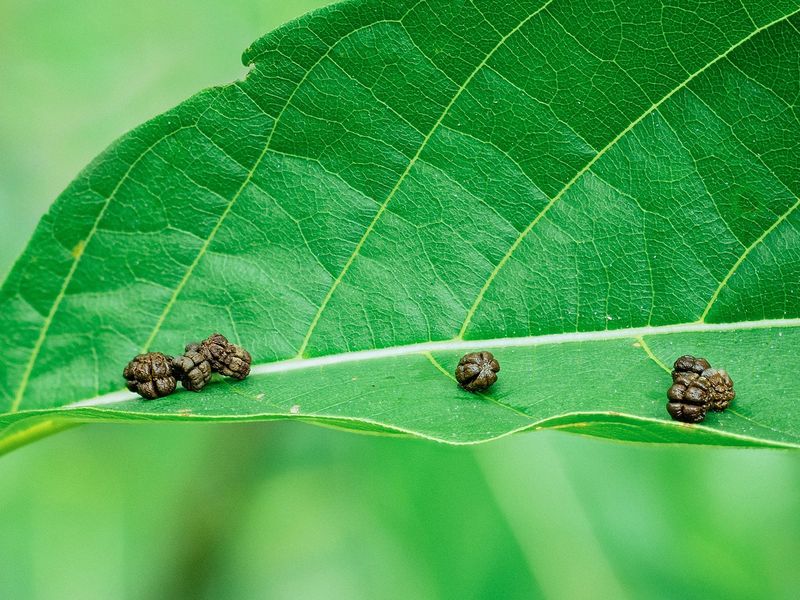
Dark green droppings beneath an Ohio tomato plant are easy to brush aside, but they can be one of the earliest useful signs that a large caterpillar is feeding overhead.
Start with the freshest frass.
Trace it upward, inspect tender top growth, and look for bare stems, missing leaflets, or fresh chewing on green fruit. Then slow down enough to search stems and leaf undersides carefully.
Hornworms are large, but their camouflage can make them disappear against a tomato plant almost completely.
Keep nearby nightshades in the inspection.
Peppers, eggplants, and potatoes can provide additional feeding sites, so one caterpillar discovery deserves a broader garden check.
Once you find the hornworm, look closely before removing it.
White parasitoid wasp cocoons are a reason to leave that individual alone and let beneficial insects finish their work. Unparasitized caterpillars can be removed by hand, followed by another scouting round several days later.
The biggest advantage is catching the clue early.
A hornworm may hide beautifully, but fresh frass gives away the general location.
Those dark green pellets are not the most glamorous garden discovery.
They may be the warning that saves the next cluster of tomato leaves from becoming breakfast.