Ohio Bees Need These 8 Native Plants After June Blooms Disappear
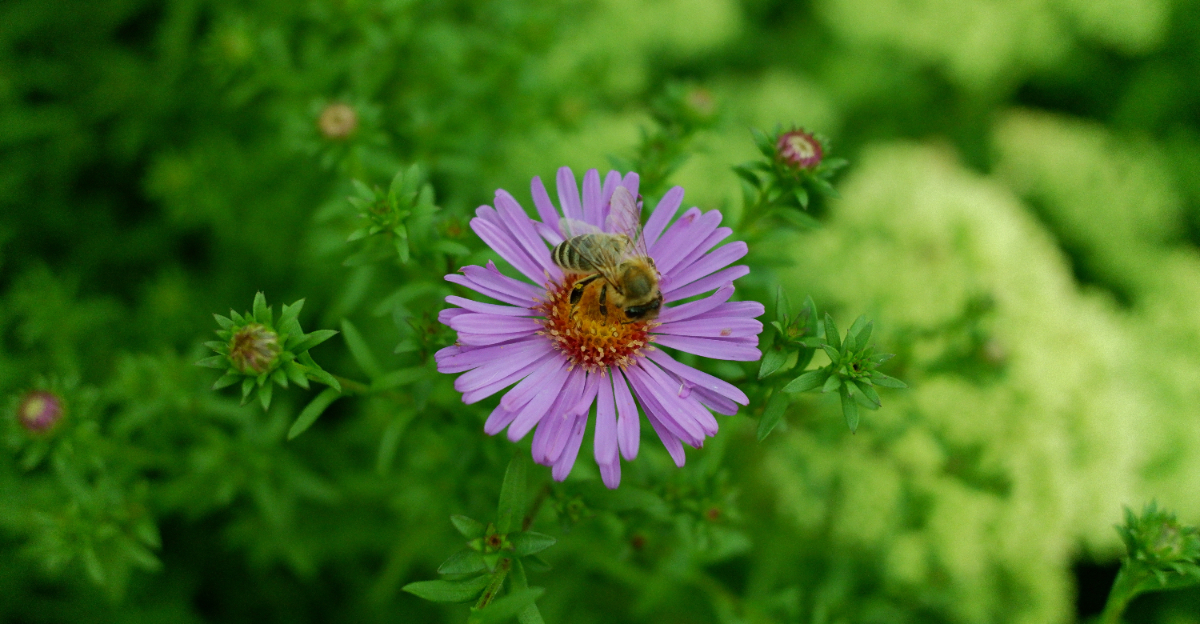
The flowers that buzzed with bee activity all spring and early June suddenly fade, and the bees have nowhere to go.
They circle the yard, land on empty stems, and eventually move on to search elsewhere for the food they desperately need.
That mid-summer slump is a real problem for native bees trying to survive the season, and most gardeners do not even realize it is happening right under their noses.
Planting the right native plants can fill that gap and keep bees fed from July all the way through fall, turning a dead zone into one of the most productive stretches of the entire growing season.
Ohio is home to hundreds of native bee species, from tiny sweat bees to chunky bumblebees, and they all need steady sources of nectar and pollen to raise their young and store energy for the colder months ahead.
The good news is that several tough, beautiful native plants bloom right when bees need them most.
You do not need a big yard or a green thumb to make a difference. Even a small patch of native plants in a sunny spot can become a genuine lifeline for pollinators struggling through that empty middle stretch of summer.
1. Purple Coneflower Keeps Bees Visiting
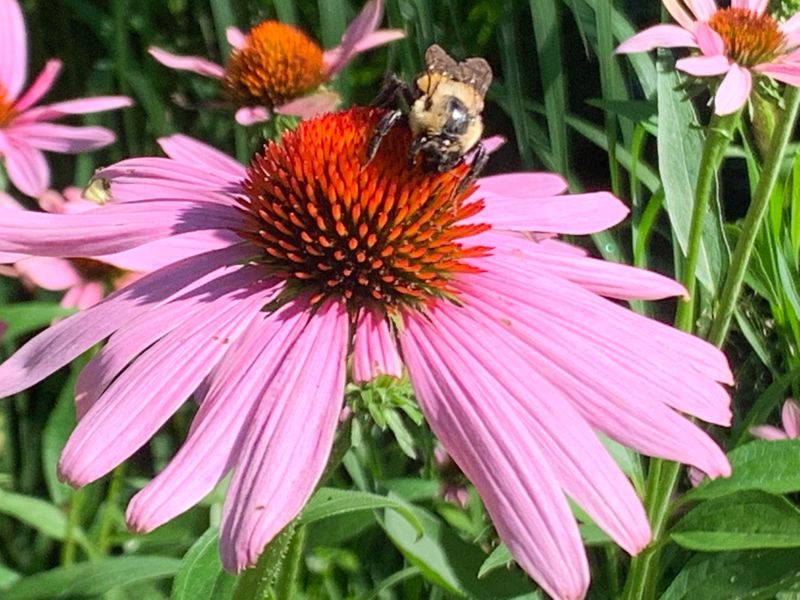
Few plants earn their garden spot quite like purple coneflower, known by its scientific name Echinacea purpurea.
Gardeners across Ohio have grown it for decades, and native bees keep coming back every single season.
The reason is simple: those wide, open flower faces make pollen easy to reach, even for smaller bee species that struggle with complicated blooms.
Purple coneflower typically starts blooming in late June and keeps going strong through August in most Ohio locations.
That timing is perfect for bridging the early summer peak and the late-season stretch. Bumblebees, sweat bees, and mining bees all work these flowers heavily.
You will often spot multiple bee species visiting the same plant at the same time, sometimes within seconds of each other.
One of the best things about this plant is how tough it is.
It handles Ohio’s hot, humid summers without much complaint. It thrives in full sun and tolerates dry soil once established, which means less watering and less fuss for you.
Plant it in groups of five or more for the biggest impact on pollinators.
Avoid trimming spent flowers too quickly. The seed heads that form after blooming attract goldfinches and provide structure in the garden through winter.
Ohio State University Extension recommends Echinacea purpurea as one of the top native plants for supporting pollinators in residential landscapes, and starting with nursery-grown plants from a local Ohio native plant sale gives you the best results for your specific region.
2. Wild Bergamot Bridges The Summer Gap
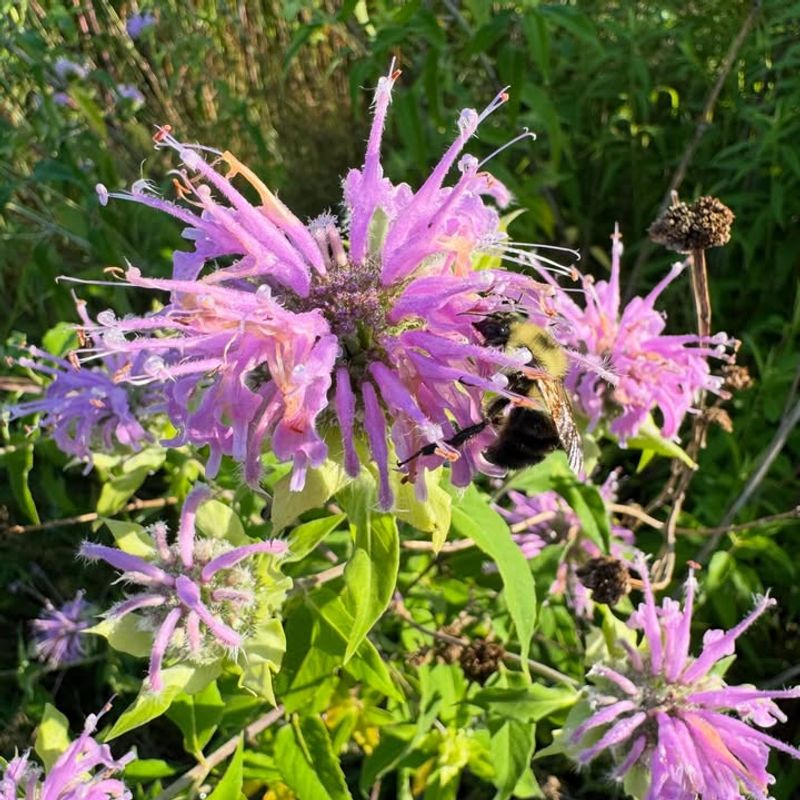
Right around the time the spring wildflowers pack up and head out, wild bergamot steps in like it owns the place.
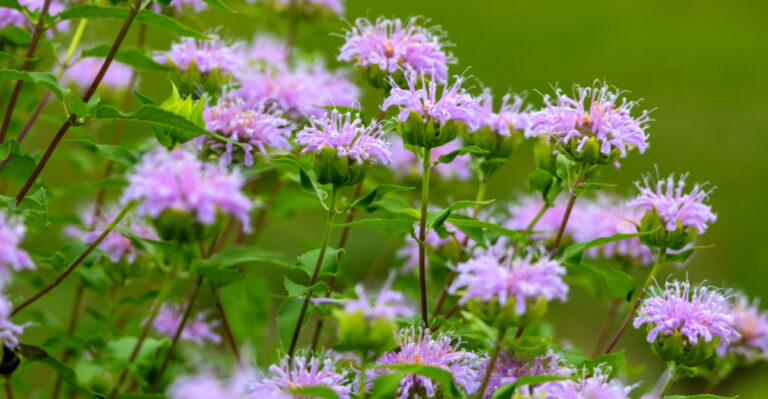
This native plant, Monarda fistulosa, blooms from late June through August and fills a critical window when many other nectar sources are scarce.
Your Ohio Garden Changes Every Week. Your Plan Should Too.
Gardening in Ohio changes quickly throughout the season. Every Friday you’ll receive a simple weekly plan showing exactly what to plant, prune, fertilize, harvest, and protect so you never miss the right timing.
Bees seem to sense it immediately. A patch of wild bergamot in full bloom can look like a tiny airport, with pollinators landing and taking off in every direction.
Native bumblebees are especially fond of wild bergamot.
The tubular flowers fit their longer tongues well, and the lavender-purple color seems to attract them from a distance.
Smaller native bees, including sweat bees and small carpenter bees, also work the blooms steadily throughout the day. The plant produces both nectar and pollen, making it a two-for-one resource for foraging bees.
Wild bergamot is surprisingly easy to grow in Ohio gardens.
It prefers full sun to light shade and does well in average, well-drained soil. Once established, it spreads slowly by rhizomes, forming a natural colony that becomes more attractive to pollinators each year.
Plant it in groups rather than as single specimens to maximize its visual and ecological impact.
One fun fact worth knowing: wild bergamot is in the mint family, and crushing a leaf releases a pleasant oregano-like scent.
It is deer resistant, drought tolerant after its first season, and virtually maintenance free.
Ohio native plant experts consistently list it among the most valuable midsummer pollinator plants available to home gardeners looking to fill that exact summer gap.
3. Mountain Mint Feeds Tiny Native Bees
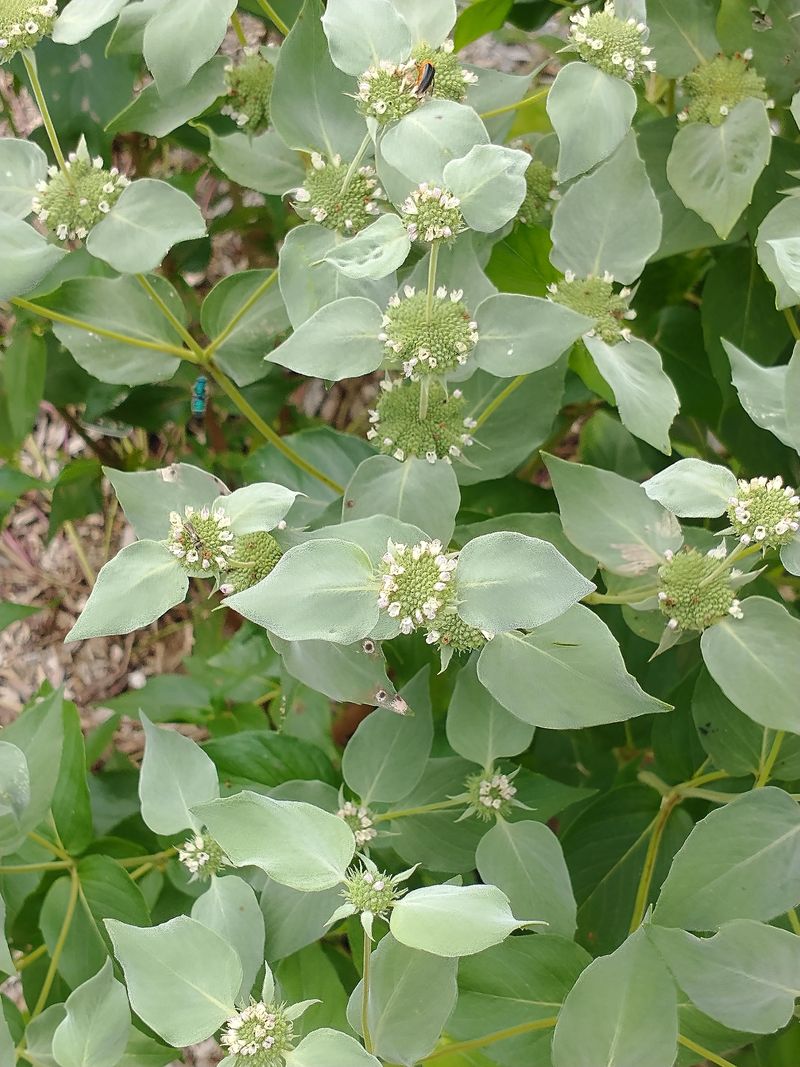
If you want to see the most bee activity possible in a small space, plant mountain mint. Seriously, almost nothing else comes close.
Pycnanthemum virginianum, the species native to Ohio, produces dense clusters of tiny white flowers from July into September, and the insect traffic it attracts is almost unbelievable.
On a warm afternoon, you might count thirty or more individual bees on a single plant.
What makes mountain mint so special is its appeal to smaller native bee species that often get overlooked.
Sweat bees, halictid bees, and small mining bees all visit heavily. These tiny bees play a huge role in pollinating Ohio’s native plants and crops, but they need accessible flowers with short floral tubes.
Mountain mint delivers exactly that. The flat-topped flower clusters are perfectly designed for quick, efficient foraging.
This plant grows naturally in moist meadows and along stream edges in Ohio, but it adapts well to average garden soil with decent drainage.
It spreads by underground stems over time, which can actually be a feature rather than a flaw if you want a larger pollinator patch. Simply pull extra stems if it grows beyond your desired area.
Mountain mint also holds up beautifully during Ohio’s muggy July and August heat.
It rarely needs supplemental watering once established, and pests leave it mostly alone thanks to its strong minty fragrance.
Plants in the mint family are consistently identified as some of the highest-value native species for supporting diverse bee communities across the state.
4. Black-Eyed Susan Holds Summer Color
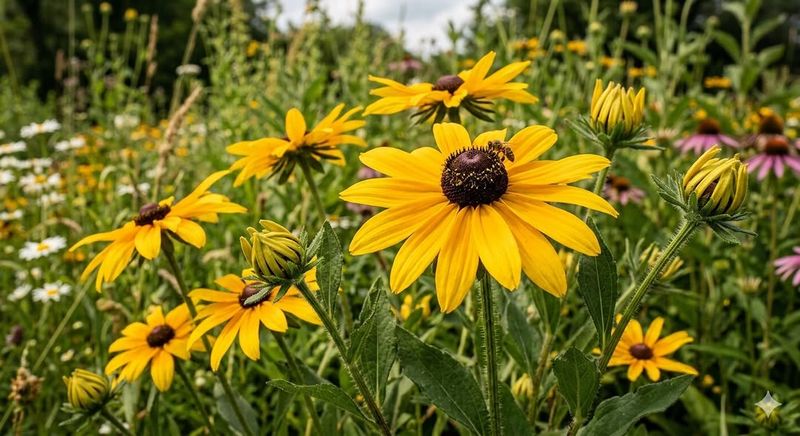
Bright yellow petals surrounding a dark chocolate center make black-eyed Susan one of the most recognizable wildflowers in Ohio.
Rudbeckia hirta blooms from June through September, making it one of the longest-performing native plants you can grow.
Bees love it for a very practical reason: the pollen is plentiful, easy to access, and available for weeks at a stretch without any real interruption.
Bumblebees and sweat bees are frequent visitors, but you will also spot native beetles and butterflies working the blooms alongside them.
The open, flat flower face means almost any bee can land and get to work without struggling. That accessibility matters a lot for smaller native bee species that cannot force their way into tightly closed flowers.
Black eyed Susan is a workhorse in Ohio gardens.
It tolerates heat, humidity, clay soil, and occasional drought without throwing a fit. Full sun brings out the best blooms, but it manages reasonably well with four to six hours of light per day.
Planting it in drifts of ten or more creates a bold splash of color that pollinators spot from a distance and head straight toward.
One practical tip: let some plants go to seed at the end of the season.
The seeds feed birds through fall and winter, and the plant self-sows readily, giving you new plants the following year at no cost.
Ohio State University Extension highlights black-eyed Susan as a top-tier native plant for residential pollinator gardens, praising both its visual appeal and its ecological value across multiple seasons.
5. Joe Pye Weed Brings Late Nectar
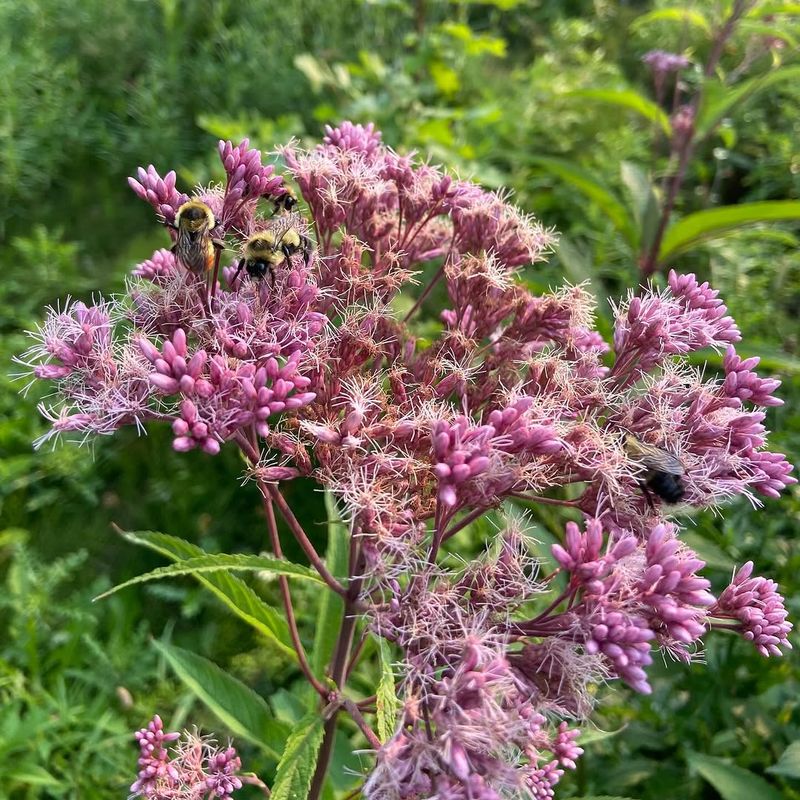
Standing six to eight feet tall in peak summer, Joe Pye weed commands attention.
Eutrochium purpureum is not a wallflower, and it does not pretend to be.
The towering stems topped with domed clusters of dusty rose flowers bloom from late July through September, arriving precisely when many other native plants are winding down for the season.
Bumblebee queens, which need to fatten up before the season ends, visit Joe Pye weed heavily in August and early September.
Sweat bees, mining bees, and even some specialist bee species also work the flowers. The nectar is accessible and abundant, and the large flower clusters mean a bee can forage for a long time without moving far.
That efficiency matters when energy reserves are running low for the colony.
Joe Pye weed grows naturally in moist, low-lying areas of Ohio, but it adapts to average garden soil as long as it gets regular moisture, especially during establishment.
It thrives in full sun to partial shade and looks stunning planted at the back of a border where its height becomes an asset rather than a problem. Pair it with shorter plants in front to create a layered pollinator habitat.
This plant also offers structural interest long after blooms fade.
The dried seed heads and sturdy stems hold their shape through winter, giving overwintering insects a place to shelter.
Joe Pye weed is specifically recommended for rain gardens and naturalized areas where its love of moisture can really shine throughout the season.
6. Goldenrod Carries Bees Into Fall
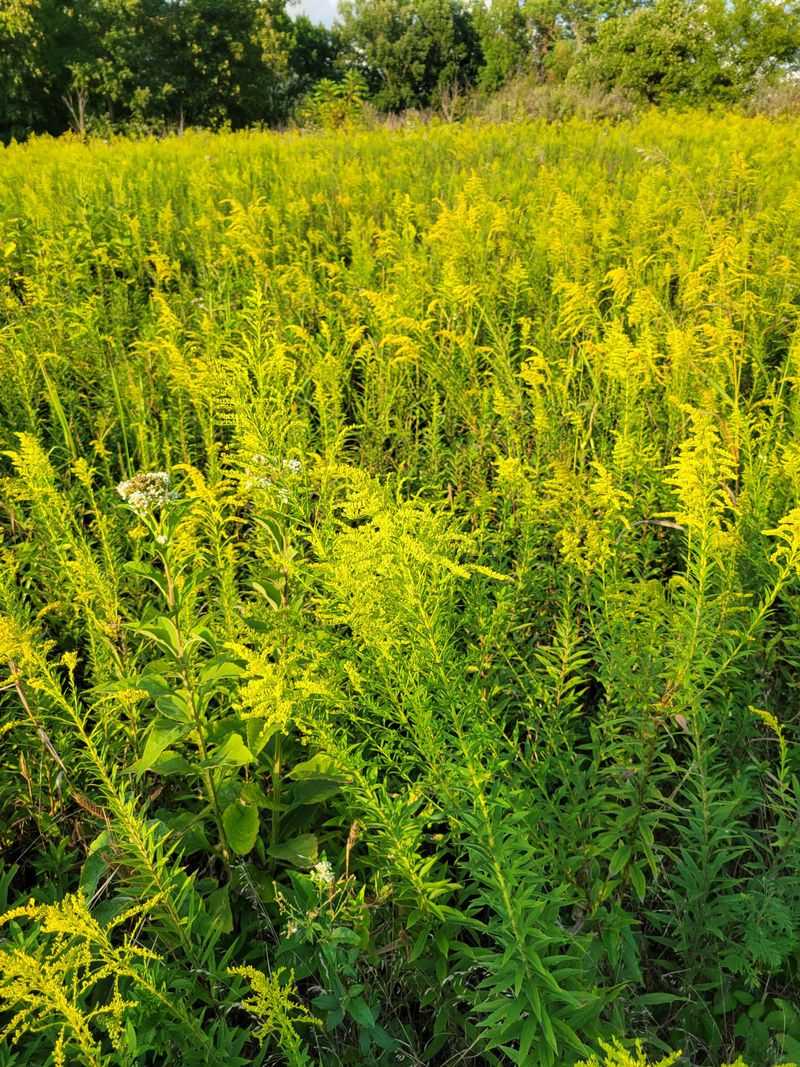
Goldenrod gets blamed for a lot of sneezing it did not cause. Here is the truth: goldenrod pollen is heavy and sticky, carried by bees rather than the wind.
The real culprit behind late-summer allergies is ragweed, which blooms at the same time but releases lightweight airborne pollen.
Once you clear up that misunderstanding, goldenrod becomes one of the most exciting plants you can grow for Ohio bees.
Several goldenrod species are native to Ohio, with Solidago canadensis, Solidago rugosa, and Solidago speciosa among the top choices for gardens.
They bloom from August through October, giving bees one of the last major nectar and pollen sources of the season.
Bumblebee queens and workers rely on goldenrod heavily as they prepare for the end of the colony cycle. Sweat bees, mining bees, and specialist Colletes bees that evolved alongside goldenrod also visit in enormous numbers.
Goldenrod is nearly impossible to grow wrong in Ohio.
It tolerates poor soil, clay, dry conditions, and neglect with equal cheerfulness. Plant it in full sun for the most flowers, and give it room to spread, because it will.
That spreading habit actually works in your favor if you want a large pollinator patch with minimal effort on your part.
Planting goldenrod near asters creates a late-season combo that keeps bees working right up until frost.
Ohio native plant experts call this pairing one of the single most impactful things a homeowner can do for fall pollinators, and the bright yellow blooms look spectacular alongside russet and orange autumn foliage.
7. New England Aster Finishes Strong
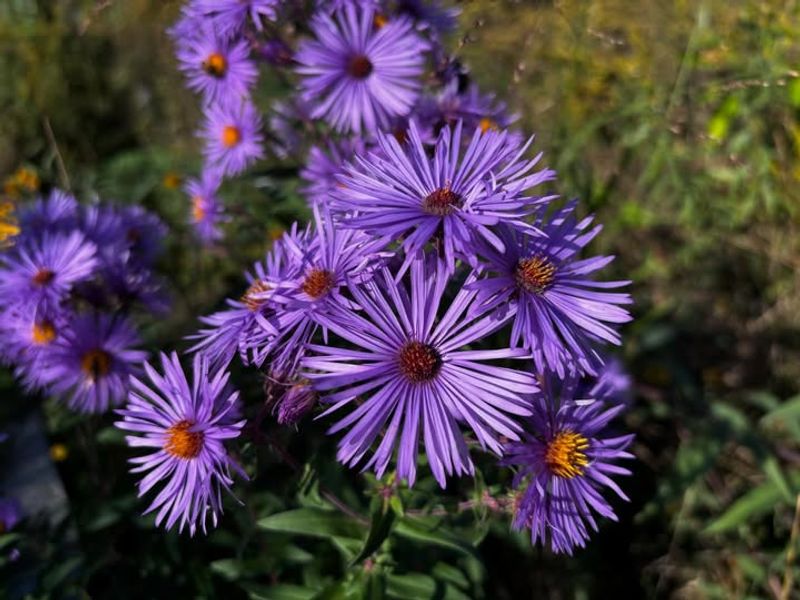
When almost everything else in the garden has called it a season, New England aster is just hitting its stride.
Symphyotrichum novae-angliae blooms from September into October, sometimes pushing into November during mild Ohio falls.
Those vivid purple flowers with bright yellow centers are not just pretty; they are one of the last major pollen and nectar sources available to native bees before the season truly closes.
Bumblebee queens are the most dramatic visitors.
You can watch them work New England aster flowers with obvious intensity, moving quickly from bloom to bloom and packing pollen onto their legs.
They need every calorie they can get at this point in the season before winter dormancy sets in. Sweat bees and small native bees also visit regularly, taking advantage of the accessible, open flower structure.
New England aster grows naturally across Ohio in meadows, roadsides, and woodland edges.
In gardens, it performs best in full sun with average to moist soil. It can get tall, sometimes reaching five feet, so plan for that when choosing a planting spot.
Pinching stems back by half in late May or early June encourages bushier growth and more flowers without reducing bloom time significantly.
The color range available in native New England aster is genuinely impressive.
You can find plants with flowers ranging from pale lavender to deep magenta, all of which bees visit equally.
Ohio nurseries that specialize in native plants often carry locally sourced ecotypes that are better adapted to your specific region’s rainfall and temperature patterns.
8. Blue Mistflower Adds Late Season Fuel
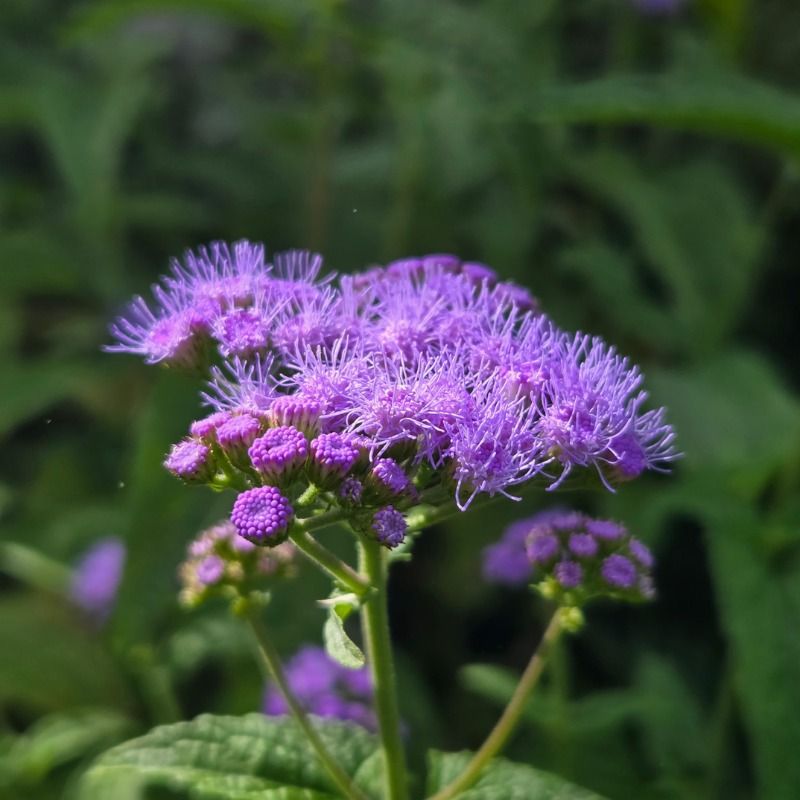
Not every pollinator plant needs to be a towering giant or a sun-loving powerhouse.
Blue mistflower, Conoclinium coelestinum, plays a quieter but genuinely important role in the late-season garden.
It blooms from August through October with fluffy clusters of soft blue-purple flowers that look almost like a cloud drifting through the garden bed. And bees notice it immediately.
Smaller native bees are the primary visitors to blue mistflower.
Sweat bees, small mining bees, and tiny specialist bees work the flowers steadily during warm fall afternoons.
The bloom clusters are made up of many tiny individual flowers, each one offering a small but accessible dose of nectar and pollen. That structure suits small-bodied bees that might struggle with larger, more complex flowers.
Blue mistflower is one of the few native Ohio plants that genuinely thrives in partial shade.
It grows naturally along stream banks and in woodland edges, so it is a smart choice for garden spots that do not get full sun all day.
It spreads by runners over time, forming a low, spreading colony that increases its value to pollinators each season.
Moisture helps this plant perform at its best.
It pairs naturally with Joe Pye weed and cardinal flower in rain garden settings or along the edges of low spots in the yard.
Planting all three together creates a fall pollinator scene that is both ecologically rich and genuinely beautiful to look at through October.