Ohio Potato Tops Turning Brown? September May Be Telling You It’s Harvest Time
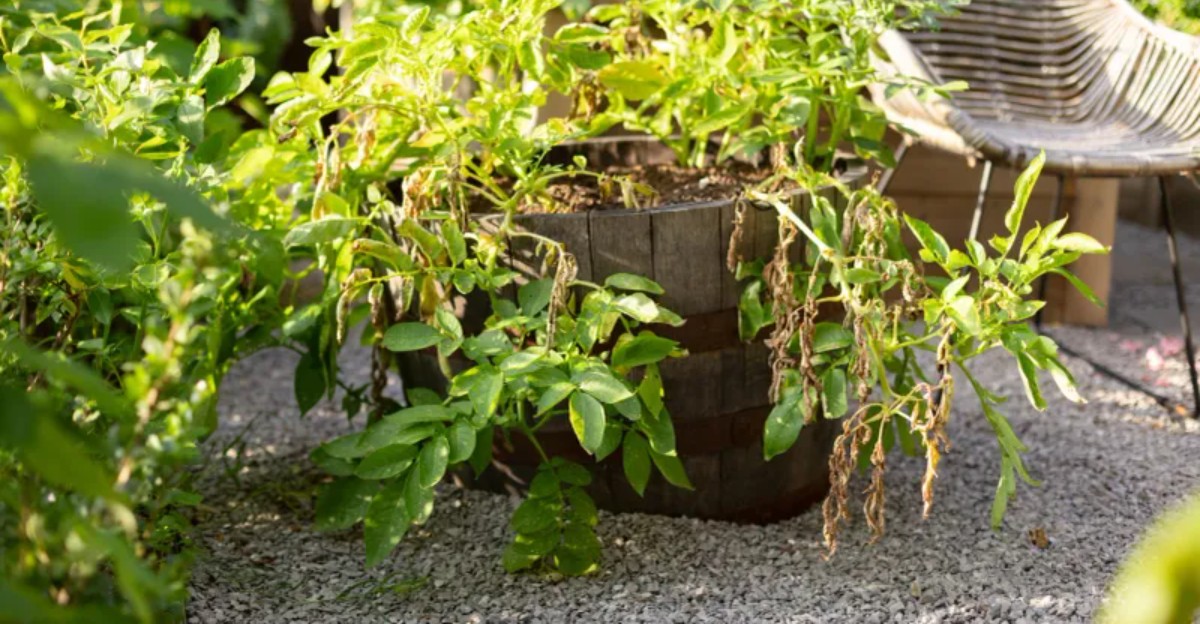
Brown potato tops in your Ohio garden might look like a problem, but your plants could be sending you good news.
You’d assume browning leaves mean disease or stress, and sometimes that’s right. This time of year though, it usually means something else.
Potato plants fade back once they finish their work underground, signaling the tubers below have reached full size.
Pull too early and you shortchange your harvest. Wait too long and you risk rot setting into soil holding more moisture than it did months ago.
Check what’s happening below the surface before you decide what those brown leaves mean. Your potatoes might be more ready than you think.
1. Brown Tops Can Signal Mature Potatoes
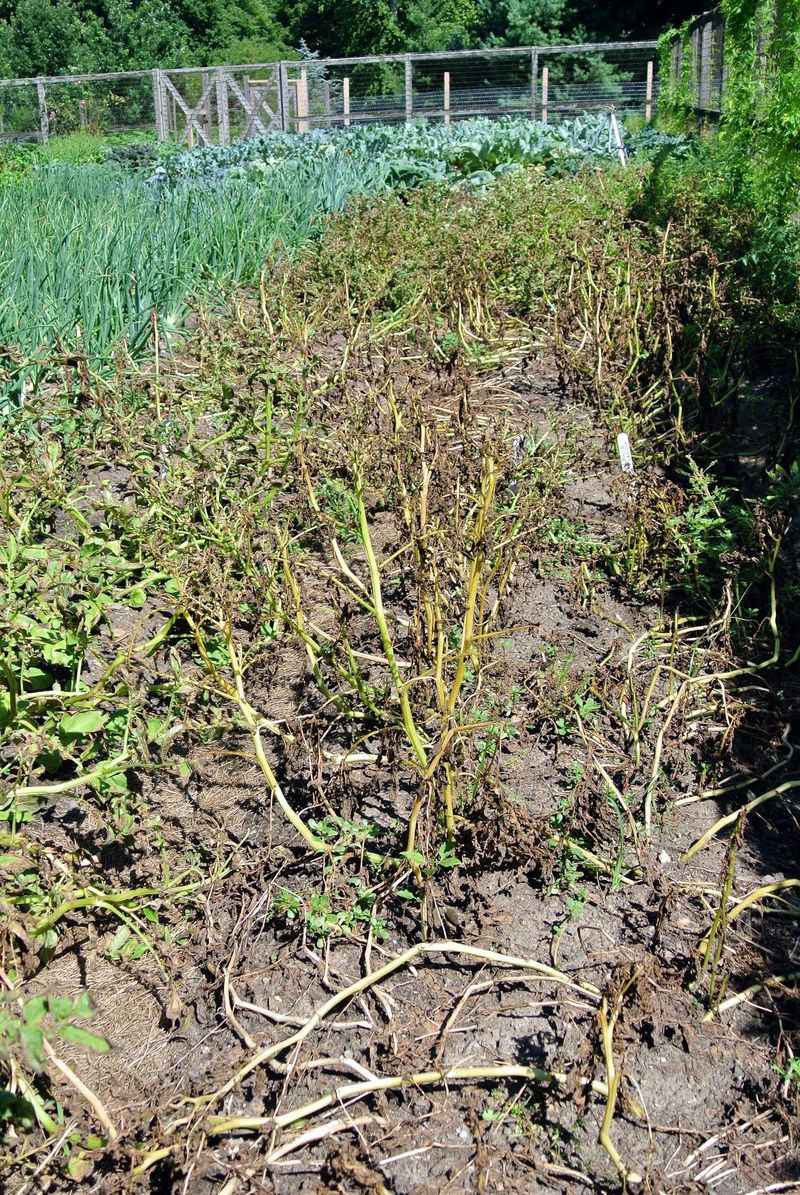
Gardeners often panic at the sight of tan, floppy vines, but that fading foliage is frequently good news. When potato plants finish their job, they naturally wind down in a process called senescence.
What happens next is pretty clever. The plant pulls its remaining energy out of the leaves and sends it down into the tubers, helping them bulk up and firm their skins.
So the sad-looking top growth is really the plant making a final deposit into your harvest account.
Here is the test that matters most. Dig up one plant, pick a potato, and rub your thumb across the skin with light pressure.
If the skin stays put and feels thick and snug against the flesh, the crop has reached maturity and can handle storage.
Skins that flake or roll off under your thumb tell a different story. Those tubers need more time in the ground, so cover them back up and check again in a week or two.
Timing in Ohio usually lands in late August through September, depending on variety and planting date. Early types finish first, while late-season storage varieties hold on longer.
Watching the vines rather than the calendar keeps you honest, since weather shifts the schedule every single season.
2. Separate Natural Decline From Disease
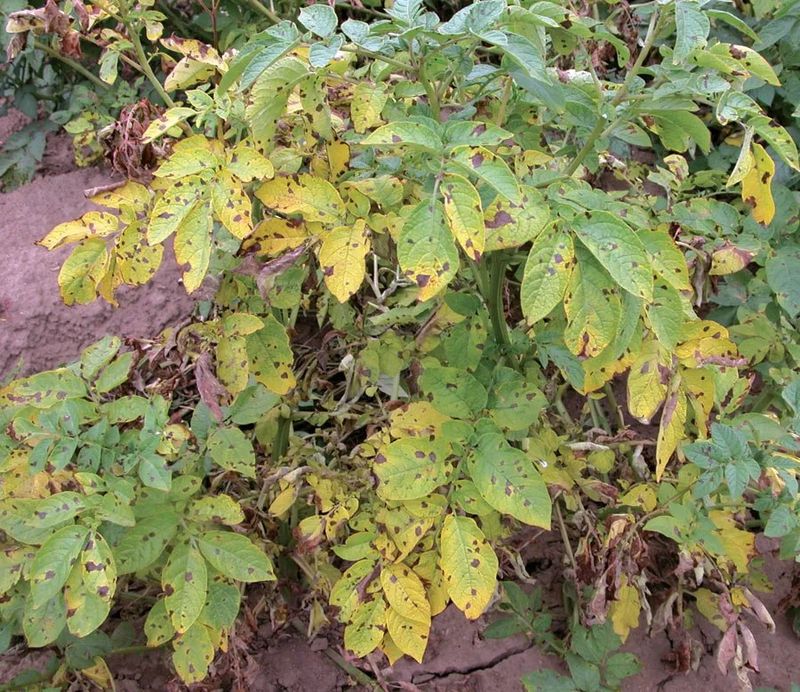
Not every brown leaf is a victory lap. Sometimes those spots mean a disease has moved in, and telling the difference protects both this harvest and next year’s soil.
Early blight shows up as circular dark brown or black lesions with concentric rings, almost like a tiny target. It starts on the older, lower leaves and spreads upward, merging into larger patches that cause wilting and browning.
Yields shrink and tubers stay smaller than they should.
Late blight is the one that worries Ohio growers during cool, damp stretches. Watch for dark, water-soaked spots that expand quickly, sometimes with a fuzzy white mold on the leaf undersides.
Stems and leaves can shrivel within days.
Brown leaf spot creates small, irregular dark marks on lower leaves, but without those neat rings that give early blight away. Bacterial wilt, also called brown rot, causes wilting, stunted growth, and yellow foliage, and a sliced tuber may show grayish-brown streaks or ooze a sticky slime.
When symptoms point toward disease, pull and destroy the affected foliage rather than composting it. Keep questionable or damaged tubers separate from the main storage crop, since disease or rot can spread during storage.
Your Ohio Garden Changes Every Week. Your Plan Should Too.
Gardening in Ohio changes quickly throughout the season. Every Friday you’ll receive a simple weekly plan showing exactly what to plant, prune, fertilize, harvest, and protect so you never miss the right timing.
3. Let Mature Tubers Finish Developing Underground
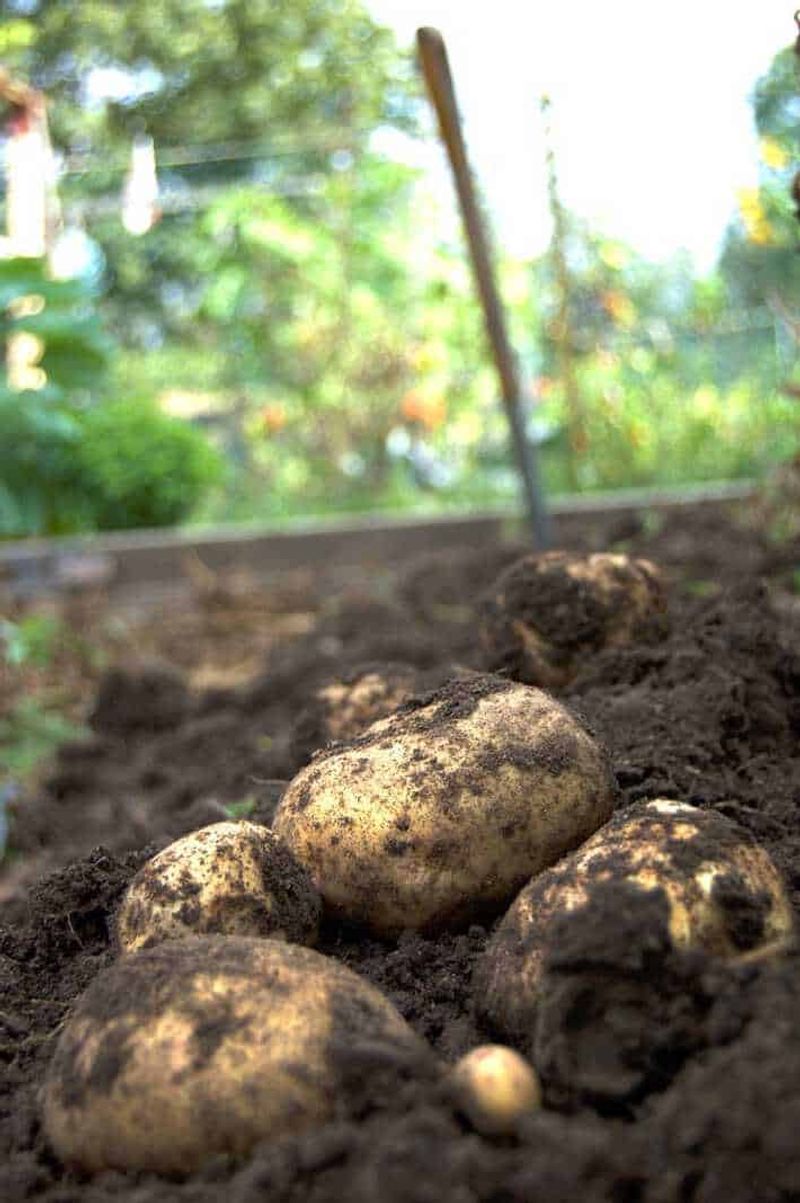
Patience pays real dividends here. Once the tops have browned and collapsed, the smartest move is often to walk away for a couple of weeks.
Leaving mature tubers in the ground for a period after the tops decline can help the skins thicken and harden, provided the soil stays in good condition. Thicker skin acts like armor, shrugging off the scrapes and bruises that come with digging, hauling, and sorting.
There is a quality bonus too. That extra underground time raises the dry matter content, which translates to potatoes that bake fluffier and fry better instead of turning watery in the pan.
Dry soil makes the waiting period work in your favor. If September turns soggy and the ground stays saturated, the math changes and pulling the crop sooner protects it from rot.
Ohio autumns can swing either way, so keep an eye on the forecast.
Mark your calendar the day the vines finish browning. Counting forward gives you a target window rather than a vague guess, and it keeps you from digging out of impatience on the first nice weekend.
One caution worth remembering: if disease took down the foliage, skip the waiting game entirely and harvest promptly to limit further trouble in the soil.
4. Dig Before Frost Reaches The Soil
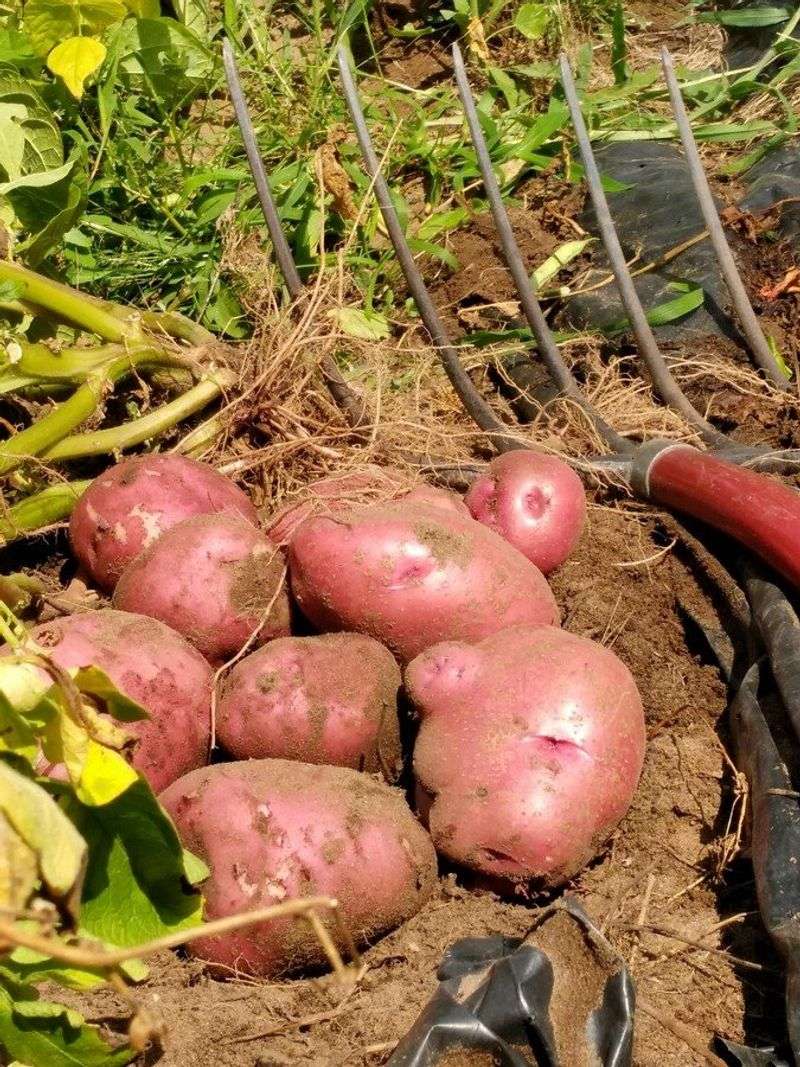
Frost is the thing nobody negotiates with. A light frost between 30 and 32 degrees usually nips only the foliage, leaving the tubers below unbothered.
Harder freezes are another matter. When temperatures drop under roughly 30 degrees, tuber tissue can freeze, especially for potatoes sitting close to the soil surface.
Ice crystals form inside the cells, and once things thaw you are left with mushy, watery spots.
Flesh that turns gray or black after a hard freeze signals reduced quality and a much shorter shelf life. Storage potential drops sharply, which is a rough trade after a whole season of work.
Ohio averages give you a planning framework. Northwest counties typically see a first frost around October 6, with a first freeze near October 17, while southern parts of the state often wait until October 21 through the 31st.
Those are averages, not promises. A cold snap can arrive ahead of schedule, so hilling extra soil over shallow tubers adds a buffer if you want a few more days.
My rule of thumb: when the ten-day forecast shows anything near 30 degrees, grab the fork that weekend. Digging a little early beats gambling with a bin of ruined potatoes in November.
5. Handle Freshly Dug Potatoes With Care
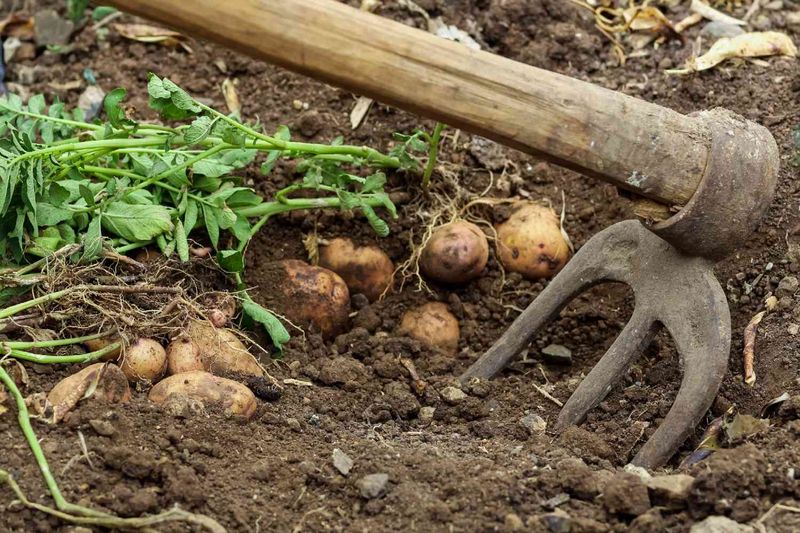
Potatoes bruise easier than most people expect, and every ding shortens how long they last. Treat them like eggs that happen to be covered in dirt.
A spading fork or dedicated potato fork beats a shovel every time, since flat blades slice right through hidden tubers. Start digging well away from the base of the plant, then work inward and lift from underneath.
Brush off loose soil with your hands and leave it at that. Washing seems helpful but adds moisture that invites rot, so save the rinse for the day you actually cook them.
Choose a dry harvest day when the soil is workable rather than saturated or sticky. Tubers resist damage best when their internal temperature sits between 50 and 60 degrees.
Set up a separate basket for anything you nick, spear, or scuff. Damaged potatoes spoil first and can take a whole crate down with them, so move those to the kitchen queue right away.
Cover your harvest as soon as it leaves the ground. A burlap sack, an old towel, or even a cardboard flap blocks light and prevents the greening that starts faster than you would guess.
6. Give Thin-Skinned Potatoes Different Treatment
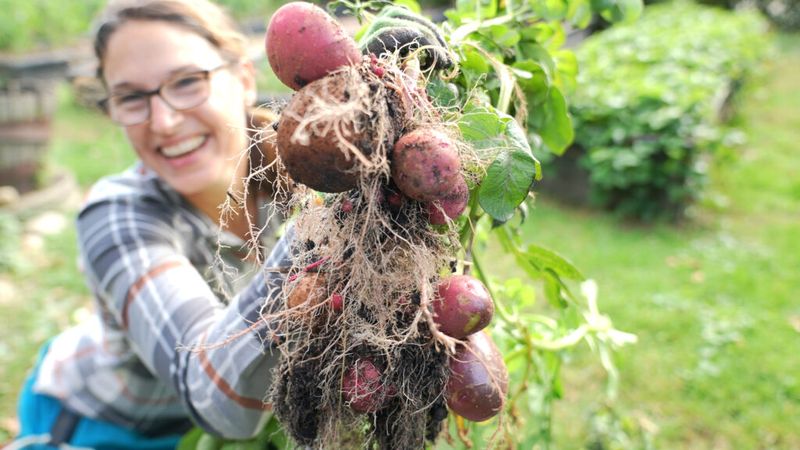
Ask any gardener about new potatoes and watch their face light up. These are the young tubers pulled early, before the skins have had a chance to toughen.
Timing runs roughly seven to eight weeks after planting, often lining up with flowering. Slide your hand into the soil beside a plant and feel around, taking a few small ones while leaving the rest to keep growing.
Their paper-thin skins flake off at the slightest touch, which is exactly what makes them so tender on the plate. Boil them whole, toss with butter and a little chopped dill, and skip peeling altogether.
Long-term storage is where they fall short. Those delicate skins offer almost no protection against moisture loss and rot, so plan on using them within about ten days.
Refrigeration helps stretch that window a bit. Keep them in a paper bag or open container rather than sealed plastic, which traps humidity and speeds spoilage.
For the potatoes you intend to keep through winter, resist the temptation to dig early. Wait for firm, set skins that pass the thumb-rub test, because a fully mature tuber behaves like a completely different vegetable once it reaches the storage bin.
7. Cure Storage Varieties Before Putting Them Away
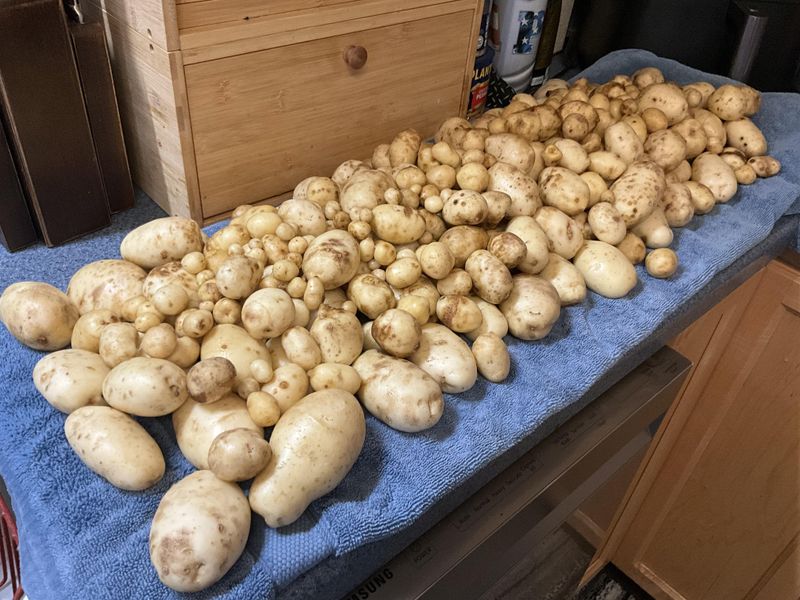
Curing sounds fancy, but it is basically letting your potatoes heal in peace. During this rest period the skins toughen up and small nicks or scrapes seal themselves over.
Plan on seven to fourteen days, roughly two weeks. Rushing this step is the most common reason a promising harvest starts going soft by Thanksgiving.
Target a temperature range of 45 to 60 degrees, though some sources allow up to 70. Pair that warmth with high humidity, ideally 85 to 95 percent, which keeps the tubers from shriveling while their skins firm up.
Spread everything in a single layer so air can circulate around each potato. Stacking them in deep piles traps moisture and heat in the middle, and that is where trouble begins.
Darkness matters just as much as temperature. A basement corner, an unheated garage, or a shaded shed all work well as long as sunlight stays out.
A little air movement speeds things along nicely. A fan on low, aimed at the wall rather than directly at the potatoes, keeps the air from going stale.
After two weeks, run your hand over a few tubers. Skins should feel dry, firm, and slightly rough, ready for the long haul ahead.
8. Keep Light Away From Stored Tubers
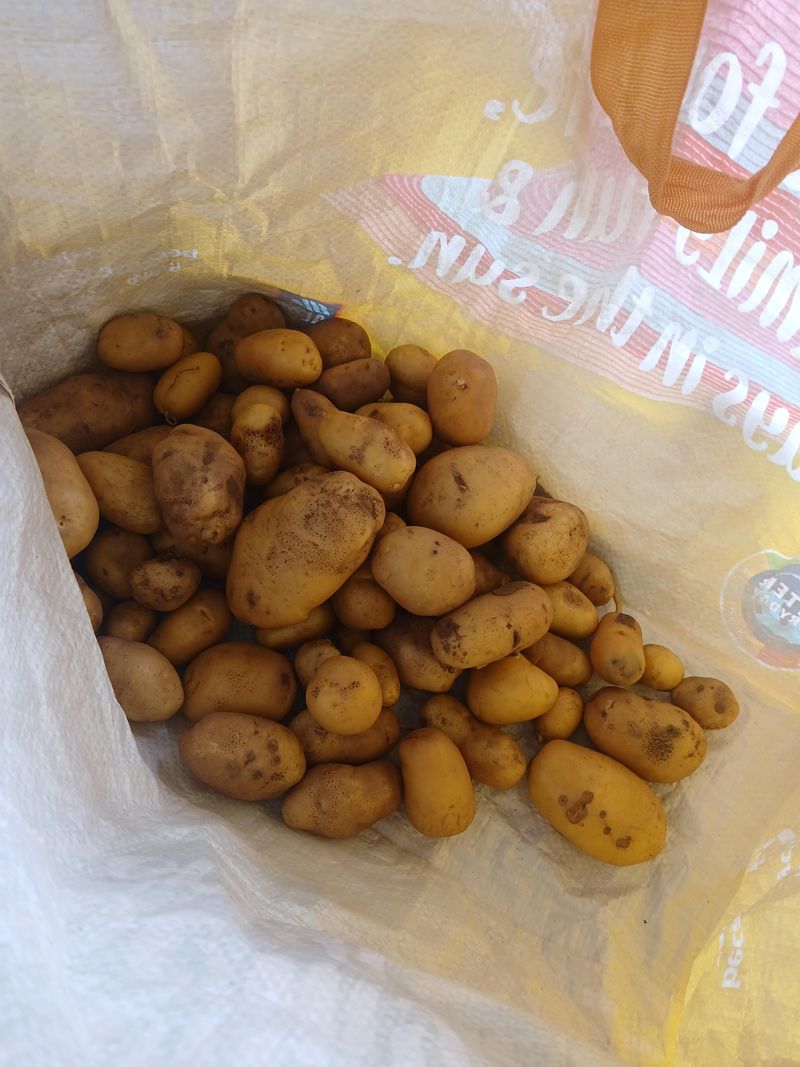
Light is the sneaky enemy of a good potato stash. Even a small amount leaking through a window or a bare bulb can start changing your tubers.
Green patches are the first clue. That color comes from chlorophyll, which is harmless on its own, but it shows up alongside solanine, a natural compound that tastes bitter and can upset your stomach if you eat a lot of it.
Sprouting picks up speed under light too. Those pale shoots pull energy out of the potato, leaving it soft, wrinkled, and far less appealing on the dinner plate.
Trimming works for mild cases. Cut away the green portions generously before cooking, and if a potato tastes noticeably bitter, toss it rather than pushing through.
Simple fixes handle most situations. Line a shelf with cardboard, drape a burlap sack over open crates, or store boxes inside a closed cupboard away from any window.
Avoid the kitchen counter for anything beyond a few days of supply. Daylight plus warmth is the fastest route to green shoulders and stubby sprouts.
Fun detail worth knowing: the same greening reaction is why grocery stores keep potatoes in dim corners rather than under bright produce lights.
9. Use The Right Conditions For Winter Storage
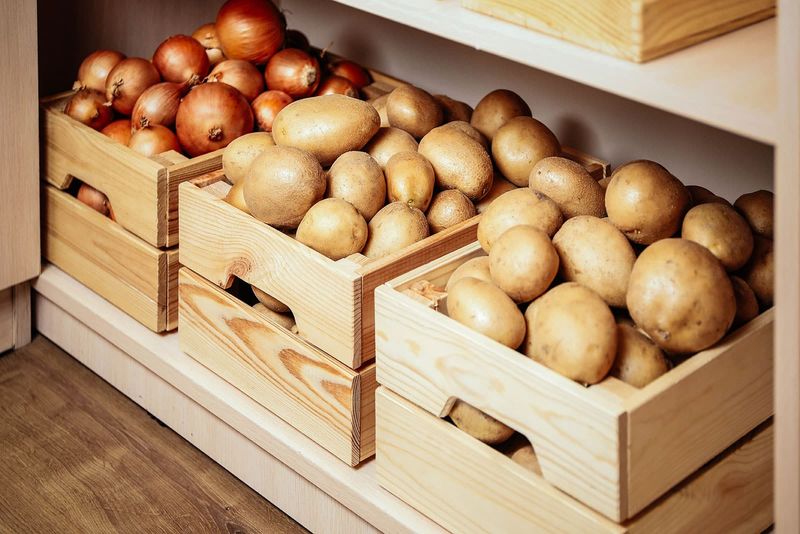
A well-set-up storage spot turns September’s work into February’s dinner. A good storage spot should be cool, dark, well ventilated, and humid enough to limit shriveling.
Aim for 40 to 50 degrees. Dip below 40 and the starches convert into sugars, which makes potatoes taste oddly sweet and turn dark when cooked, so the refrigerator is not your friend here.
Humidity should stay high, around 90 to 95 percent. Dry air pulls moisture out and leaves you with shriveled, rubbery tubers by midwinter.
Skip airtight containers and sealed plastic bags entirely. Trapped moisture breeds mold and rot, while cardboard boxes, wooden crates, and mesh bags let air move freely.
Keep apples and other ethylene-producing fruit in a different room. That invisible gas nudges potatoes toward sprouting and spoiling much sooner than they otherwise would.
Check your stash every couple of weeks. Pull out anything soft, shriveled, or blemished, because one bad tuber can spread trouble through an entire crate quickly.
Should the storage area drift above 45 degrees for a long stretch, expect sprouts after a few months. Rub them off before cooking and the potato underneath usually remains perfectly fine for mashing or roasting.