Hummingbird Predator And Pests You Don’t Want Near Your Ohio Feeders
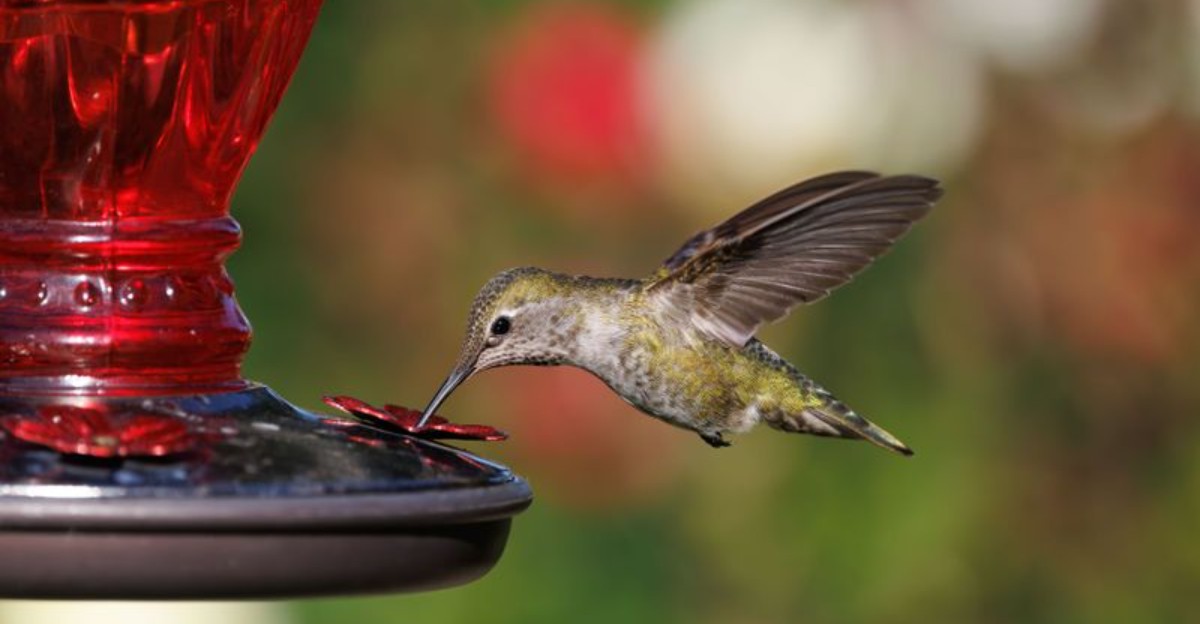
A hummingbird feeder can turn into a busy little attraction in your Ohio yard, but the tiny visitors it draws are not the only ones paying attention. The same flashes of movement that catch your eye can also reveal an easy opportunity to other creatures nearby.
Some arrive for the sugar water. Others wait for the birds themselves.
A feeder placed in the wrong spot can quietly change the safety of the area around it without you noticing. The problem is not that you should remove the feeder or stop enjoying the activity.
It is that every feeding station creates a small gathering point, and every gathering point changes what happens around it. The clues are often subtle: fewer hummingbirds appearing, birds acting nervous, or unwanted visitors spending more time nearby.
Before you refill that feeder again, take a look at what else has started treating it as part of the yard.
1. Domestic And Feral Cats
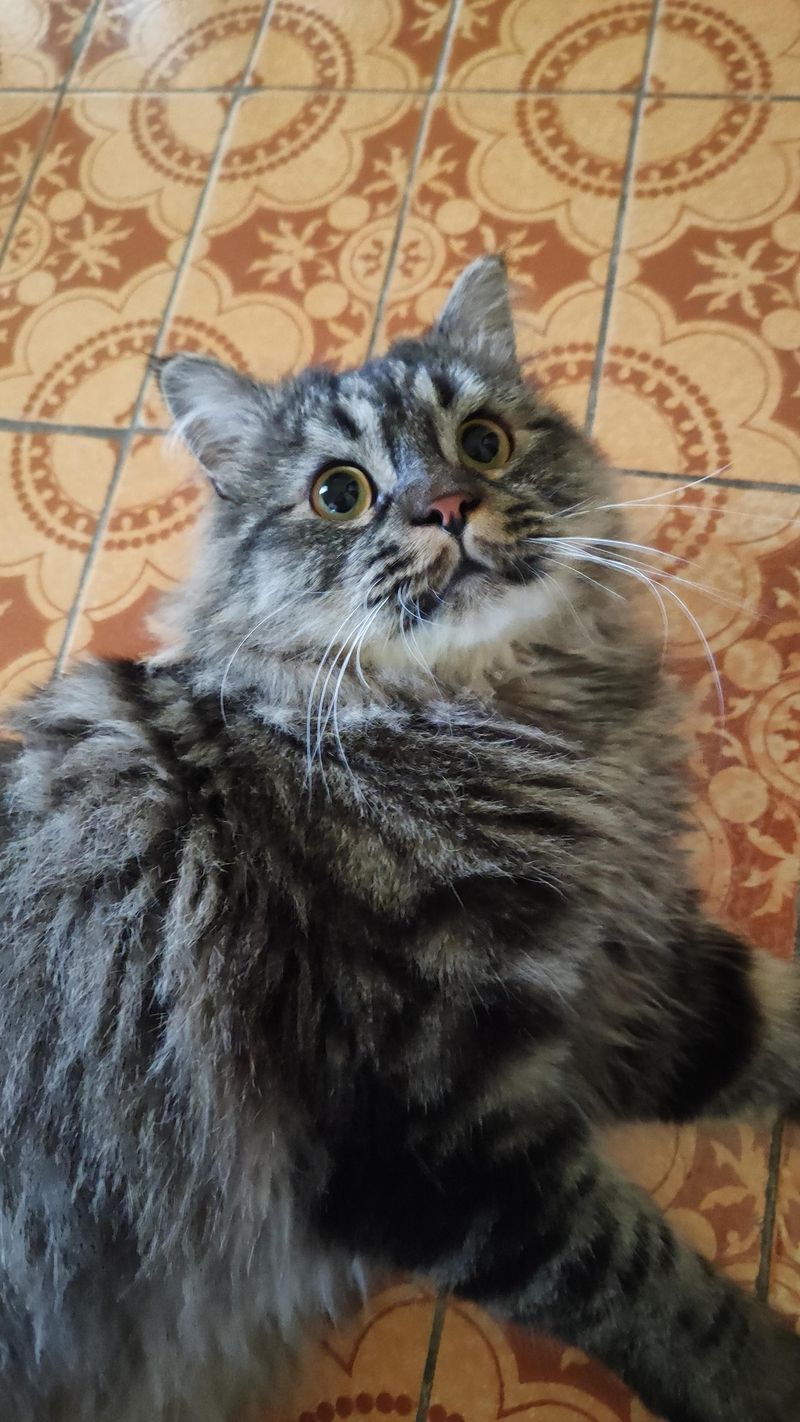
That fluffy pet napping on your porch might be more dangerous than it looks. Cats, both house pets and stray ones, rank among the biggest threats to hummingbirds across the United States.
They unalive billions of birds every year, and hummingbirds are easy targets when they hover close to the ground or rest on low branches. To a cat, a darting hummingbird looks like the perfect toy to pounce on.
Feeders placed too low or near bushes give cats the perfect hiding spot to launch a surprise attack. A patient feline can wait for hours, then strike when a bird least expects it.
You can help by keeping your own cats indoors, especially during early morning and evening when birds feed most. Adding a bell to their collar gives birds a warning, too.
Try mounting feeders high up on poles, away from fences, shrubs, or anything a cat could climb or hide behind. A wide open space around the feeder makes ambushes much harder.
Feral cat colonies can be a bigger challenge, so contacting local shelters about humane trapping programs may help. Small changes in feeder placement make your yard a safer stop for the tiny birds you love to watch.
2. Sharp-Shinned Hawks
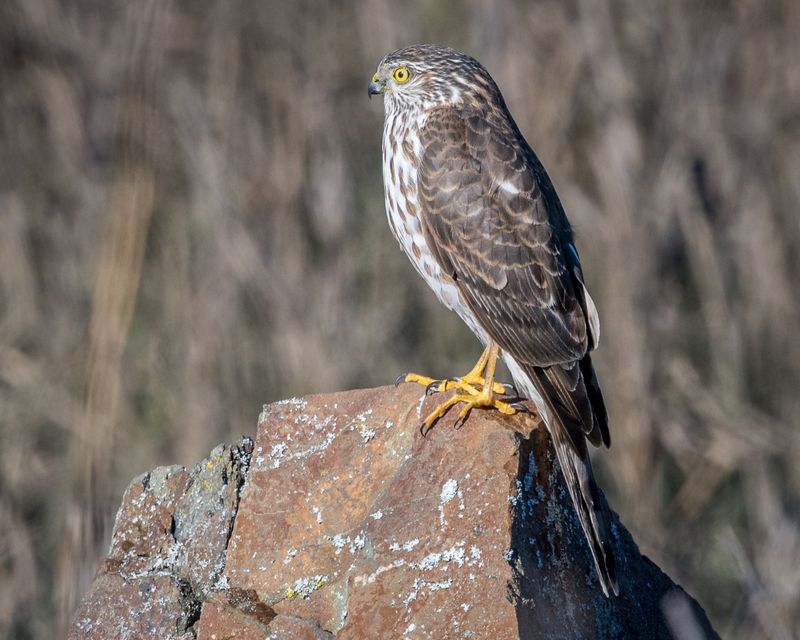
Meet the smallest hawk in North America, and one with a big appetite for tiny birds. The Sharp-shinned Hawk is quick, nimble, and built to chase prey through tight spaces between trees.
These hawks are well-known hummingbird hunters, using their speed and sharp talons to snatch birds right out of the air. Their small size lets them zip around feeders where bigger hawks simply cannot follow.
During migration and breeding season in Ohio, these raptors often patrol areas where songbirds gather, and a busy feeder is like a dinner bell to them. They perch quietly, then dive with surprising force.
Bigger hawks like Red-tailed and Cooper’s Hawks usually ignore hummingbirds because the tiny birds are too fast and small to bother with. Sharp-shinned Hawks are built for chasing small birds, and a busy feeder can sometimes attract their attention.
Your Ohio Garden Changes Every Week. Your Plan Should Too.
Gardening in Ohio changes quickly throughout the season. Every Friday you’ll receive a simple weekly plan showing exactly what to plant, prune, fertilize, harvest, and protect so you never miss the right timing.
If you notice a hawk hanging around, consider taking feeders down for a few days until it moves on. Placing feeders near cover like leafy branches gives hummingbirds quick escape routes.
Providing dense shrubs nearby lets your little visitors dart to safety when danger swoops in. While hawks are simply part of nature, a thoughtful setup keeps your yard fair for everyone.
3. Eastern Rat Snakes
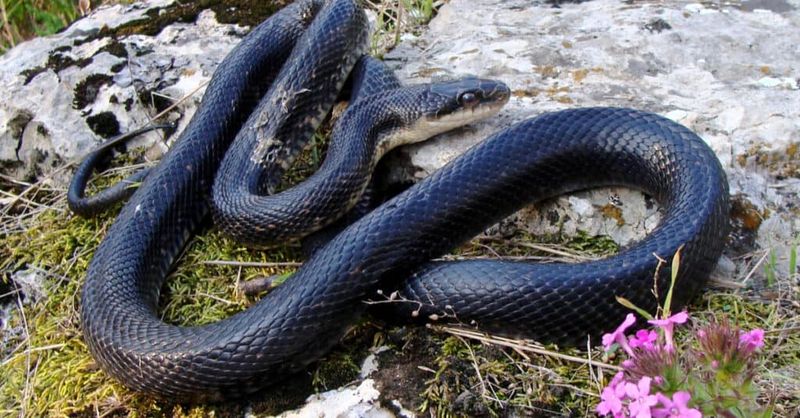
Snakes climbing poles sounds like something from a scary movie, but it happens more than you would think. Eastern rat snakes, also called black rat snakes, are excellent climbers found throughout Ohio.
Eastern rat snakes are excellent climbers and can raid bird nests, including those hidden in shrubs and trees around your yard. Their biggest threat is to eggs and nestlings rather than adult hummingbirds visiting feeders.
Their climbing skills make even tall feeder setups vulnerable.
Beyond snatching adults, rat snakes are famous nest raiders. They will happily eat hummingbird eggs and helpless nestlings when they find an unguarded nest.
Gray rat snakes do the same thing across the eastern and central parts of the country. Both species blend into tree bark and shadows, making them hard to spot until it’s too late.
Installing a baffle on your feeder pole is one of the best ways to stop them. This dome or cone-shaped guard makes it nearly impossible for snakes to climb past it.
Keeping the area around your pole clear of tall grass, wood piles, and brush also removes hiding spots snakes love. A tidy yard gives these reptiles fewer places to lurk.
Remember that rat snakes help control mice and rats, so relocating them is kinder than harming them. With a good baffle, you can protect birds while letting snakes do their useful work elsewhere.
4. Orb-Weaver Spiders
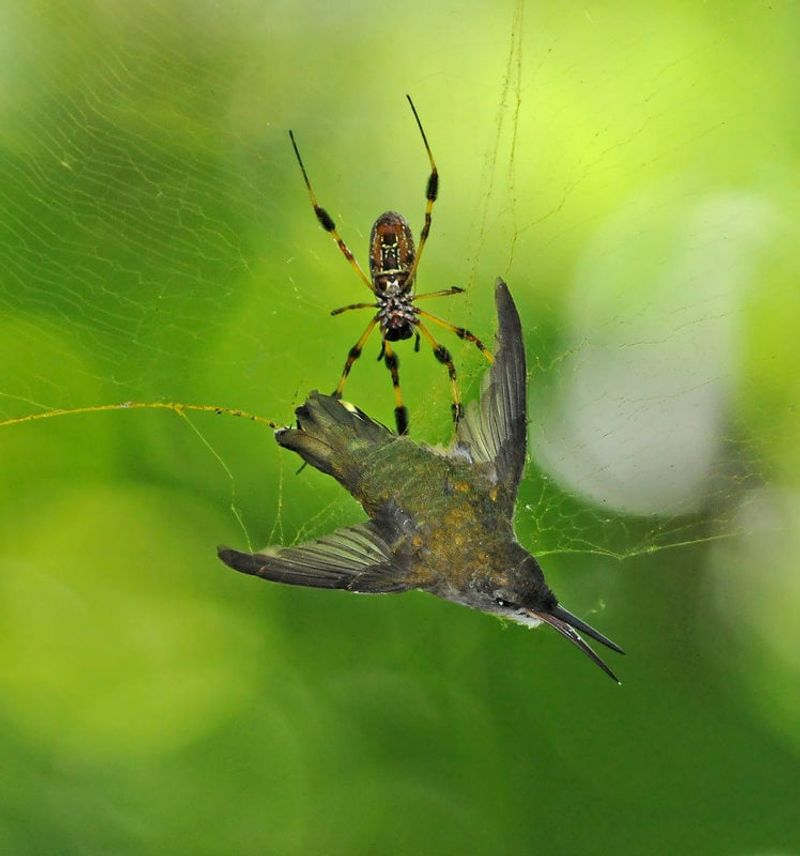
Spider webs may look delicate, but for a hummingbird they can be a fatal trap. Large orb-weaver spiders spin webs so strong and sticky that a tiny bird can get tangled and stuck.
Because hummingbirds use spider silk to build their tiny nests, they naturally spend more time around webs, which can occasionally create a dangerous situation. This happens when they fly too close while feeding or while gathering silk for their nests.
Once trapped, a hummingbird may struggle helplessly, unable to break free from the sticky strands. In some cases, the spider itself is large enough to harm the exhausted bird.
Ironically, hummingbirds actually use spider silk to build their tiny, stretchy nests, so they are naturally drawn toward webs. That helpful habit can sometimes turn dangerous.
Smaller spiders aren’t a big worry, and hummingbirds even eat tiny ones for protein. It’s the huge orb-weavers with massive webs that cause the most trouble.
Check around your feeders and porch regularly for large webs and gently clear them away. A long broom or stick works well without harming the spider.
Relocating big webs to a corner of the yard away from feeders keeps everyone safe. A quick sweep each morning can prevent a sticky, dangerous surprise for your feathered guests.
5. Chinese Praying Mantises
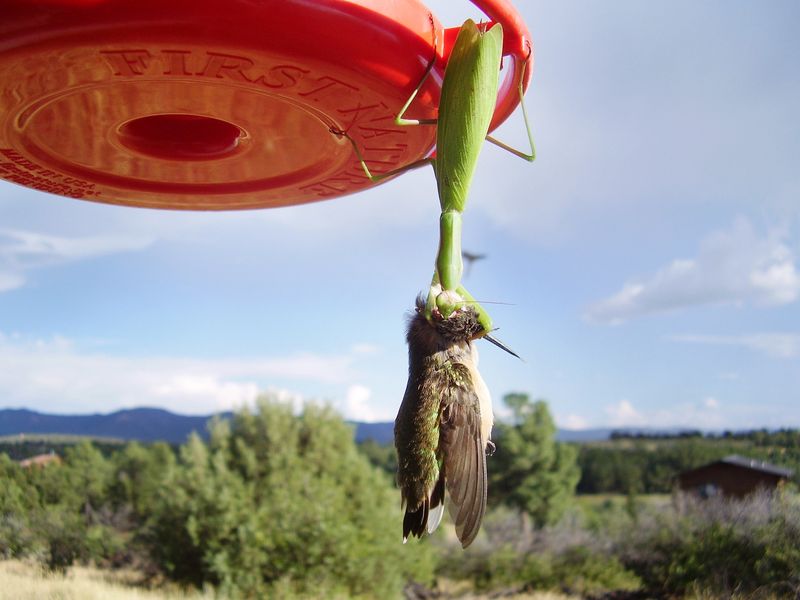
It’s hard to believe an insect could take down a bird, but the praying mantis proves it can. The large invasive Chinese mantis is skilled at ambushing hummingbirds right at the feeder.
These clever hunters cling to the edges of feeders, staying perfectly still and blending in with green surroundings. When a hummingbird lands to sip nectar, the mantis strikes.
Using its spiked front legs, a big mantis can grab and hold a hummingbird with surprising strength. It’s a shocking sight for anyone who assumed bugs were harmless to birds.
The Chinese mantis grows much larger than native species and poses the greatest risk. It was introduced to North America long ago and has spread widely, including across Ohio.
Check your feeders daily for mantises hiding near the feeding ports or perches. They can be tricky to spot because they hold so still.
If you find one, gently move it to a garden area far from your feeders using a stick or gloved hand. Mantises do eat garden pests, so there’s no need to harm them.
Keeping tall plants and flowers a little distance from feeders reduces the perches mantises use. A careful eye each day keeps these stealthy hunters from surprising your visitors.
6. Blue Jays And Crows
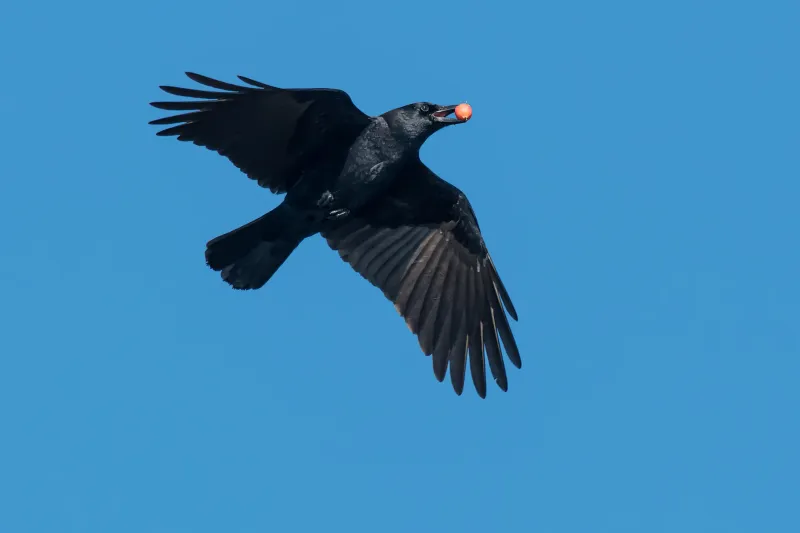
Bold, loud, and surprisingly clever, jays and crows have a darker side to their personalities. These members of the corvid family are well-known raiders of hummingbird nests.
Blue jays in particular will search out tiny hummingbird nests and eat the eggs or young chicks inside. Their sharp eyes miss very little in the treetops.
Crows do the same, using their intelligence to remember where nests are hidden. Once they find a nest, they may return again and again.
Because hummingbird nests are so small, parents often struggle to defend them against these much larger birds. A determined jay can overwhelm a nest in seconds.
You can help by planting dense shrubs and trees that give hummingbirds better hiding spots for their nests. Thick cover makes it harder for jays and crows to spot them.
Avoid tossing out food scraps or leaving pet food outside, since these attract corvids to your yard. Fewer crows and jays around means safer nesting for hummingbirds.
Keep in mind that jays and crows are simply doing what nature designed them to do. They also eat harmful insects and clean up messes, so the goal is balance, not removal, in your backyard.
7. Squirrels And Chipmunks
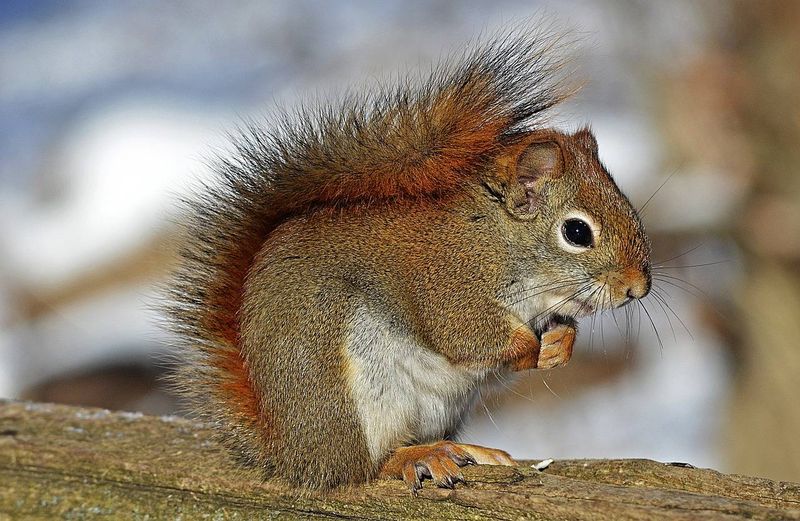
Those cute, bushy-tailed acrobats aren’t always as innocent as they seem. Squirrels and chipmunks are opportunistic raiders that will plunder hummingbird nests when the chance arises.
When their usual foods like nuts and seeds run low, these rodents search for other meals. Unguarded eggs and tiny nestlings can become an easy snack.
Chipmunks, small enough to scurry along thin branches, can reach nests that many other animals cannot. Their nimble bodies make them sneaky climbers.
You may have heard that squirrels snatch adult hummingbirds from midair, but that claim isn’t really supported. It’s the nests they truly threaten, not the flying adults.
Raccoons join the nest-raiding crowd too, climbing trees at night to steal eggs and chicks. Together these mammals make nesting season risky for hummingbird parents.
Using pole baffles and keeping feeders away from tree limbs can reduce rodent traffic in your yard. Squirrels love an easy path, so cut off their bridges.
Providing plenty of natural food sources nearby may keep squirrels focused on nuts instead of nests. A well-fed squirrel is less likely to go hunting.
While you can’t watch every nest, thoughtful planting and feeder placement give hummingbirds a fighting chance against these clever climbers.
8. Wasps, Hornets, And Yellow Jackets
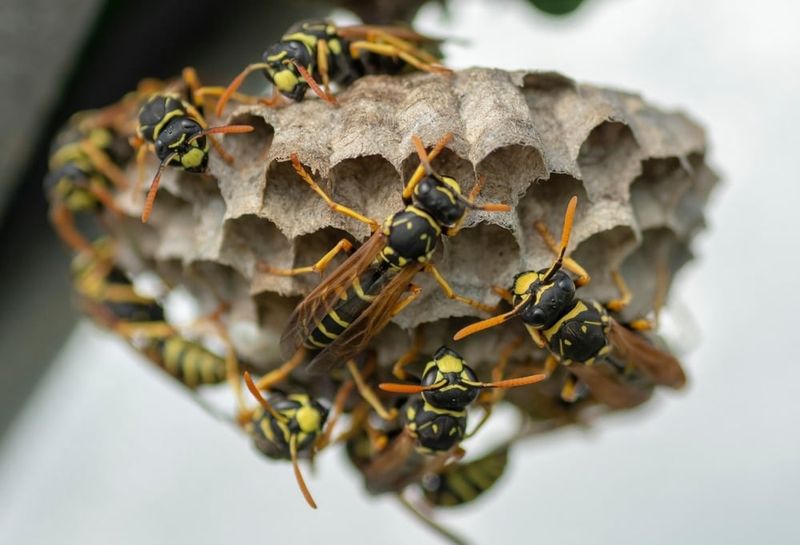
Sharing is not exactly a strong point for these buzzing backyard bullies. Wasps, hornets, and yellow jackets are strongly attracted to the sugar water in hummingbird feeders.
They swarm the feeding ports and can act aggressively toward hummingbirds trying to sip. Sometimes they chase the tiny birds away entirely.
Even worse, a swarm of stinging insects can deliver painful or even fatal stings to a hummingbird. Their presence turns a peaceful feeder into a danger zone.
Feeders with bright yellow parts seem to attract these insects the most. That cheerful color that looks harmless to us practically shouts dinner to a wasp.
Choosing feeders that are mostly red, with no yellow accents, can help keep these pests away. Red draws hummingbirds while offering less appeal to wasps.
Look for feeders with bee guards, which are little screens that block insects from reaching the nectar. These simple tools make a real difference.
Keeping the outside of your feeder clean and wiping away any dripped sugar water also reduces the temptation. Sticky spills invite unwanted guests.
Moving the feeder every few days can confuse wasps that have marked it as a food source. With a few smart tricks, your hummingbirds can dine in peace.
9. Ants
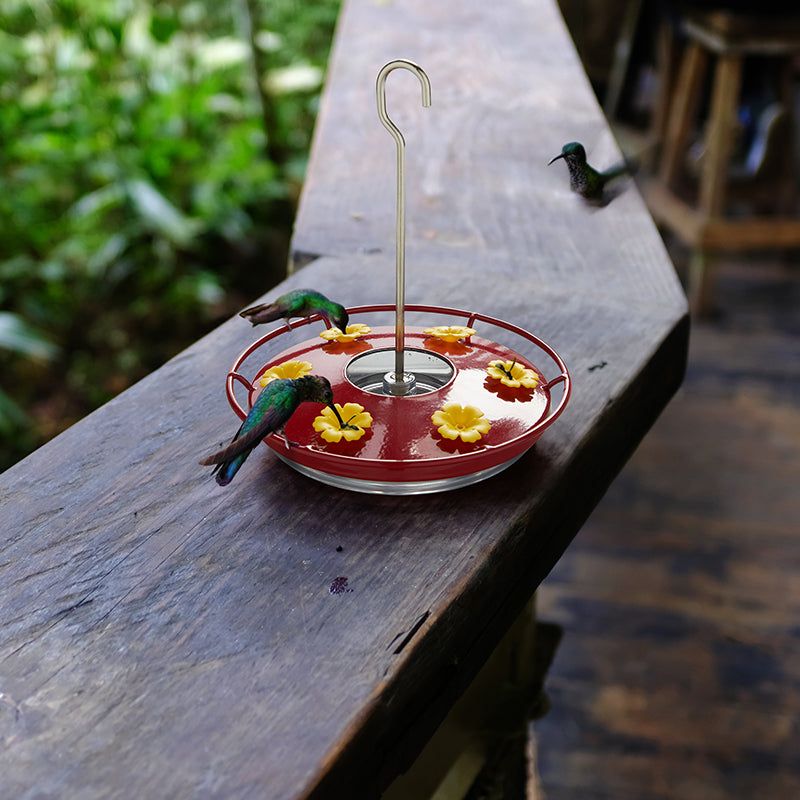
Tiny but relentless, ants can turn a fresh feeder into a sticky mess overnight. Drawn by the sweet nectar, these little insects march in long lines straight to your feeders.
Once they arrive, ants crawl inside and contaminate the sugar water. Their presence makes the nectar dirty and unappealing to hummingbirds.
Deceased ants floating in the mix can spoil the whole batch, forcing you to clean and refill more often. Nobody wants a feeder full of drowned bugs.
They can also clog up the feeding ports, blocking hummingbirds from reaching the nectar at all. A clogged feeder quickly loses its visitors.
The best defense is an ant moat, a small water-filled cup that hangs above the feeder. Ants can’t cross the water barrier to reach the sweet reward below.
Some feeders come with built-in moats, or you can buy one to add separately. Keeping it filled with water is the key to success.
Avoid using sticky sprays or oils on your pole, since these can harm hummingbirds if they touch them. Water moats are safe and simple.
Regularly cleaning your feeder and checking for ant trails helps you catch problems early. With a good moat in place, ants stay out and your hummingbirds stay happy.