Peak Monarch Weeks Are Starting Across Illinois Skies
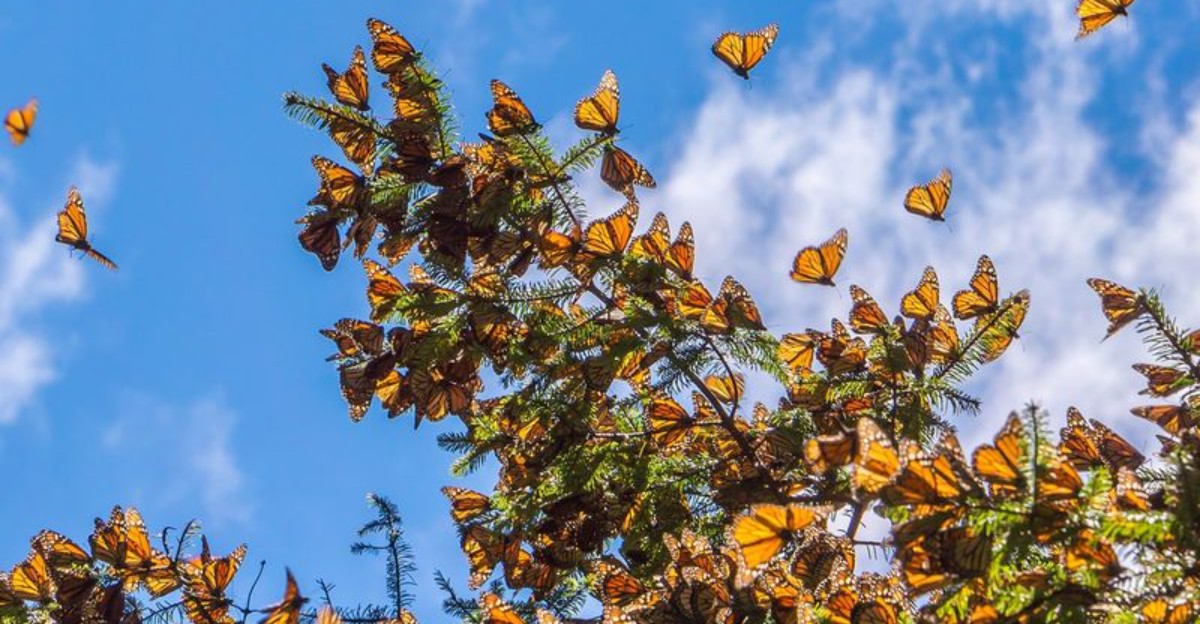
Step outside on a warm Illinois afternoon this month and look up, past the rooftops. Something orange keeps sliding across the sky, and it heads the same direction.
It is not random, and it is not a trick of the breeze. Millions of tiny travelers are moving through the state right now on a schedule set by instinct, not the highways below them.
The prairie helps them along with a last burst of purple and gold blooms. Roadsides, cemeteries, and backyard gardens all turn into rest stops for a few busy weeks.
Timing is everything, and those weeks are opening now from Rockford to Carbondale. Here is what drives the wave, and how your own yard can be part of it.
Why Late August Flips The Switch In Illinois
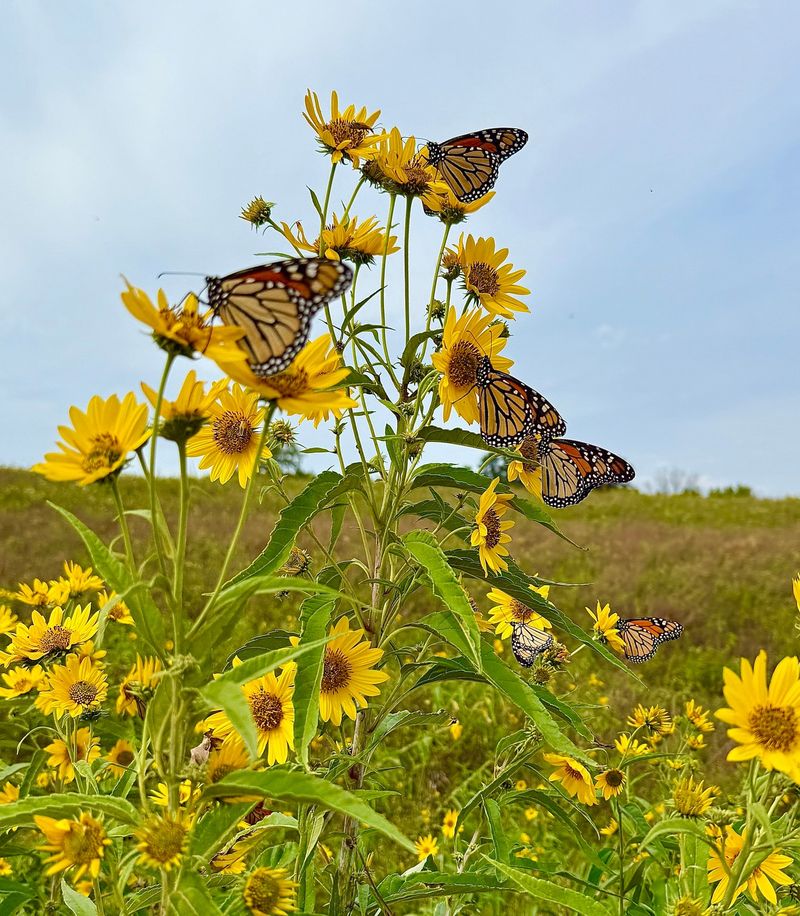
Ask any longtime prairie watcher and they will tell you the calendar matters less than the light. Around the third week of August, orange wings begin drifting south across northern Illinois in numbers that turn heads.
Chicago area yards usually see the heaviest traffic between late August and mid September. Central counties near Springfield and Champaign follow roughly a week behind, and the southern tip near Cairo often peaks in early October.
The shift happens because breeding slows down while travel speeds up. Butterflies that emerge now skip mating and spend their energy on flying and feeding instead.
Illinois sits in a natural funnel, so the state collects travelers from Wisconsin, Minnesota, and Michigan. Lake Michigan acts like a wall, nudging thousands of them down the shoreline through Evanston, Chicago, and into Indiana.
Watch mid morning through late afternoon, once the air warms above roughly sixty degrees. Cool mornings keep them clustered in trees, wings folded and easy to miss. Field edges, cemeteries, and prairie plantings tend to hold the biggest crowds.
Peak weeks rarely land on the same dates twice. A warm, dry stretch can pull the wave forward, while a soggy cool spell can hold it back by several days.
Backyard observers can help by logging sightings with Journey North or Monarch Watch. Those reports build the maps researchers use to track each season.
Keep a notebook by the window this month. Once you learn the flight pattern, that low steady glide across the yard is hard to miss.
How Shorter Days And Cooler Nights Set The Timing
Day length runs the whole show, and these insects read it better than any calendar app. As days shrink toward twelve hours in September, developing caterpillars pick up the signal and change course.
Cooler nights add a second nudge. When temperatures dip into the fifties, the hormone that triggers breeding stays switched off.
Scientists call the resulting pause diapause. Reproductive organs stay undeveloped, which frees up fuel for a trip of up to two thousand miles.
Aging milkweed plays a part too. Late season leaves grow tough and lose nutrition, sending one more hint that the season has turned.
Temperature swings explain why two neighboring towns can peak days apart. A cold front sliding through DeKalb can start the movement while Effingham stays quiet.
Your Illinois Garden Changes Every Week. Your Plan Should Too.
Gardening in Illinois changes quickly throughout the season. Every Friday you’ll receive a simple weekly plan showing exactly what to plant, prune, fertilize, harvest, and protect so you never miss the right timing.
Nights below fifty degrees also slow their metabolism, which conserves fuel. That thrifty chemistry is part of why such a long trip works at all.
Practical takeaway for gardeners: eggs laid in Illinois after the first week of September rarely have enough warm days to finish. If you find late caterpillars, leaving them outdoors on healthy plants gives them the best shot. Local frost dates vary widely, so watch your own forecast.
Flight style offers clues as well. Summer butterflies bounce around flower beds, while travel minded ones fly with purpose, low and southwest, barely stopping.
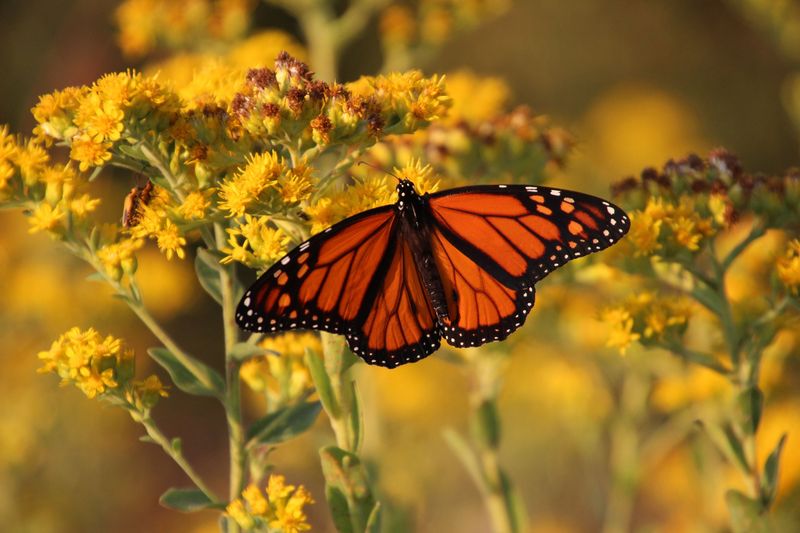
Another tell is wing condition. Fresh scales look deep orange and velvety, since these individuals emerged only days before setting out.
Track sunset times this month and you are reading the same clock they are.
The Super Generation Built For A Two Thousand Mile Trip
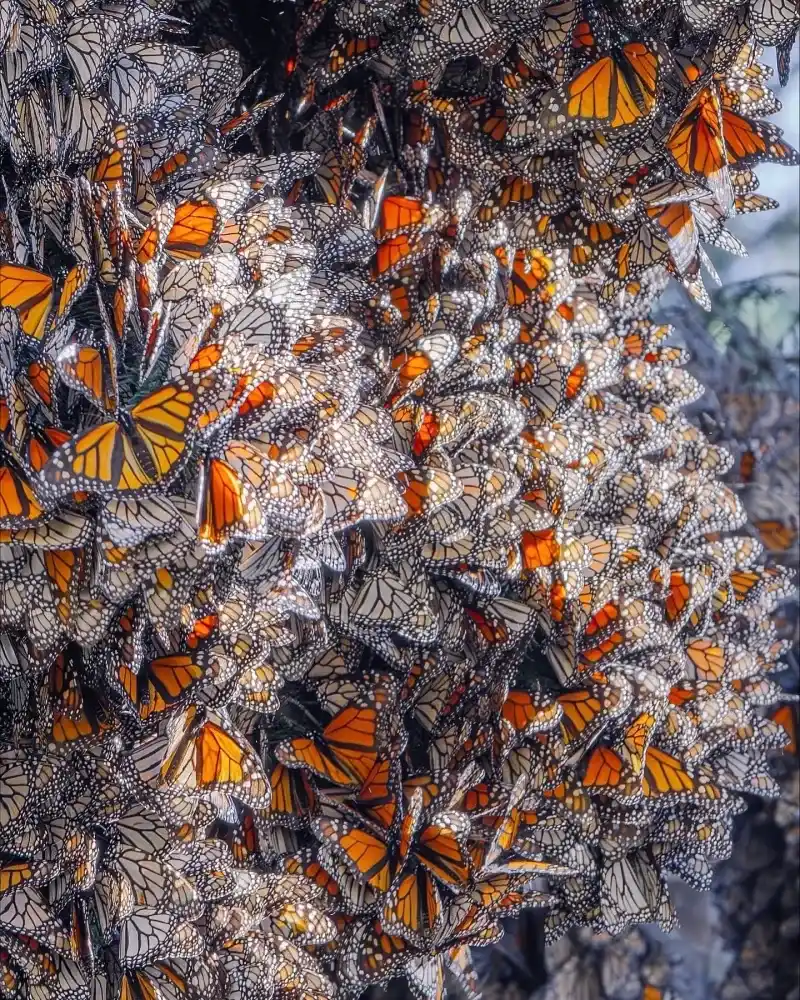
This generation skips the usual rules of monarch life. Most summer butterflies live two to six weeks, but the ones flying over Illinois now can last eight or nine months.
Researchers nicknamed them the super generation. They hatch in late summer, skip romance, and head for a handful of mountain forests in central Mexico.
The destination is a cluster of oyamel fir groves in Michoacan, roughly two thousand miles from Peoria. Cool, humid air on those slopes keeps them in a slow, energy saving state until spring.
This is the first trip for this generation of butterflies. Their guidance system combines a sun compass in the eyes with an internal clock in the antennae, plus some sensitivity to the planet’s magnetic field.
Body chemistry differs too. Nectar sugars convert into fat that must last through winter, and stored fuel can make up a large share of their weight by the time they cross the Ohio River.
On a good day with a helpful breeze, one can cover fifty to a hundred miles. Gliding on rising warm air saves far more energy than constant flapping.
Here is the part that surprises most people: the individuals returning north next spring will not be the same ones you see now. Their great grandchildren finish the trip back to Illinois.
Knowing that changes how a September afternoon feels. That single orange speck over the driveway is starting one of the longest journeys any insect attempts.
Reading The Weather Maps That Push Wings South
Weather nerds have an edge during peak weeks, and the trick is simple. Watch for the first crisp cold front sliding down from Canada.
North and northwest winds behind a front act like a moving walkway. Butterflies ride the tailwind and cover ground with hardly any effort.
The day after a front passes often brings the biggest counts in Illinois. Skies turn deep blue, the air feels dry, and flight lines get busy by late morning.
Rain and headwinds do the opposite. Southerly gusts push against them, so they settle into sheltered trees and wait it out.
Temperature matters as much as wind. Below the mid fifties they stay grounded, and above eighty five they often rest in shade during midday.
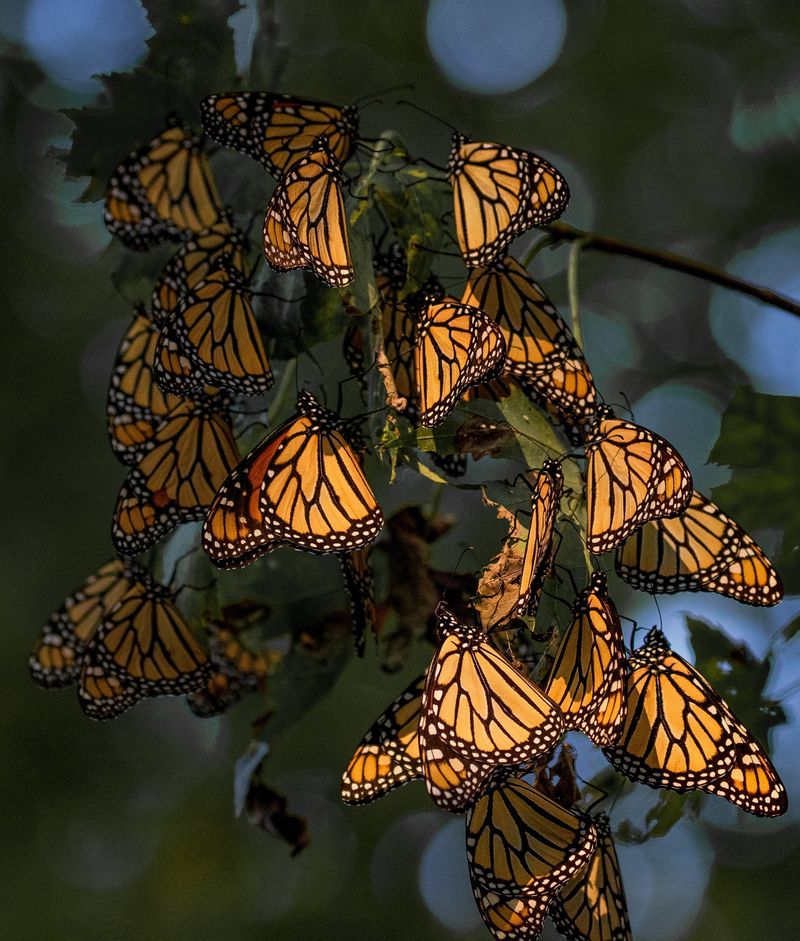
That waiting creates the show many butterfly watchers hope to catch: a roost. Dozens or hundreds gather on the same pine, willow, or cottonwood, folded up and looking like clusters of pale leaves.
Roosts usually form in late afternoon near water, windbreaks, or field edges. Check the same tree at sunrise, because they linger until the air warms.
Lakefront parks from Waukegan to Jackson Park are reliable spots when north winds blow. Downstate, river corridors along the Illinois and Mississippi channel plenty of traffic. Reporting a roost to Journey North helps map the wave in real time.
Set a weather app alert for wind direction this month. A quick glance at tomorrow’s forecast tells you whether to grab your camera or wait a day.
The Yard Cleanup Mistake That Empties The Fuel Stops
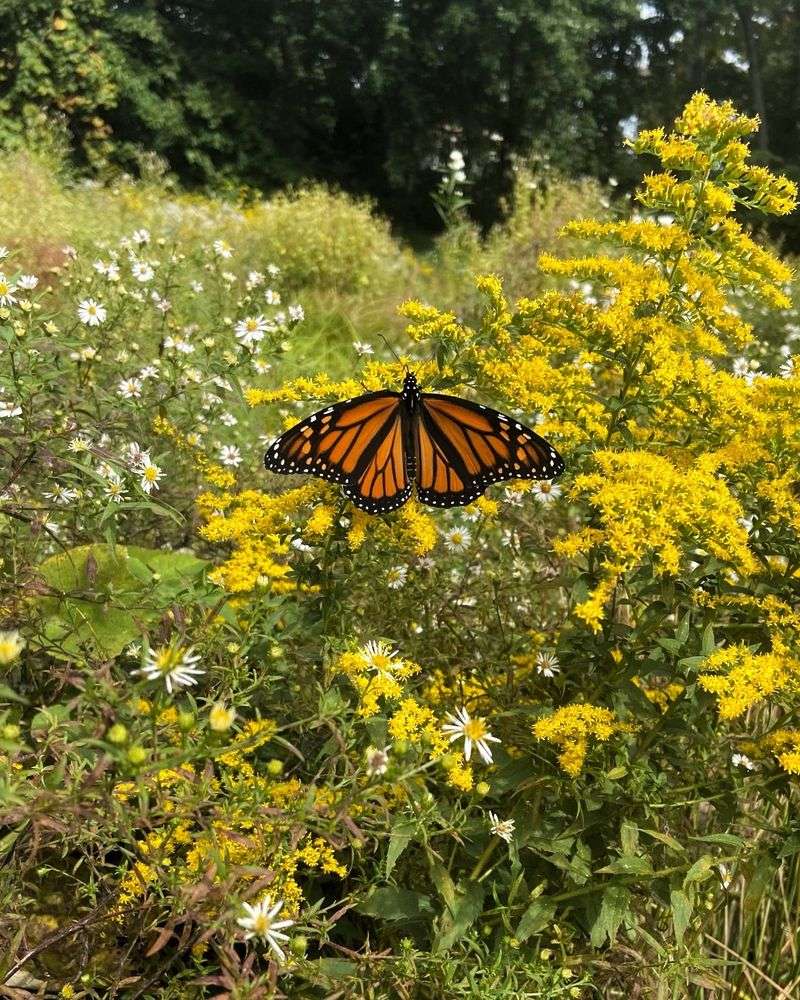
Here is the slip that trips up even well meaning gardeners: the big autumn cleanup, done too early. Mowers and trimmers hum across Illinois in September, right when the sky traffic peaks.
Late blooming flowers are the fuel stations of this migration. Clearing goldenrod, asters, and ironweed in early September removes meals exactly when they are needed most.
Roadside mowing has the same effect on a larger scale. Long stretches of blooming ditch can go bare in a single afternoon.
Broad spectrum yard sprays cause trouble too. Mosquito fogging drifts onto flowers and lingers on petals where insects feed. Spot treatments on calm, wind free evenings reduce that drift.
Another common misstep involves tropical milkweed sold at some garden centers. It keeps blooming late and can encourage butterflies to linger instead of moving on.
The fix costs nothing. Postpone trimming until late October or, better yet, leave stems standing through winter for shelter.
If you must mow, work in strips and leave blooming patches untouched. Cutting half the area now and half in spring keeps food available through the busy stretch.
Timing beats effort here. A yard trimmed in November looks nearly the same next May, but the difference to a hungry traveler in September is huge.
Talk with your park district or township road crew about delayed mowing. Polite requests have changed schedules in plenty of Illinois communities.
Small choices stack up fast. A single unmowed corner of asters can feed dozens of travelers in one afternoon.
Planting Late Season Blooms That Truly Help
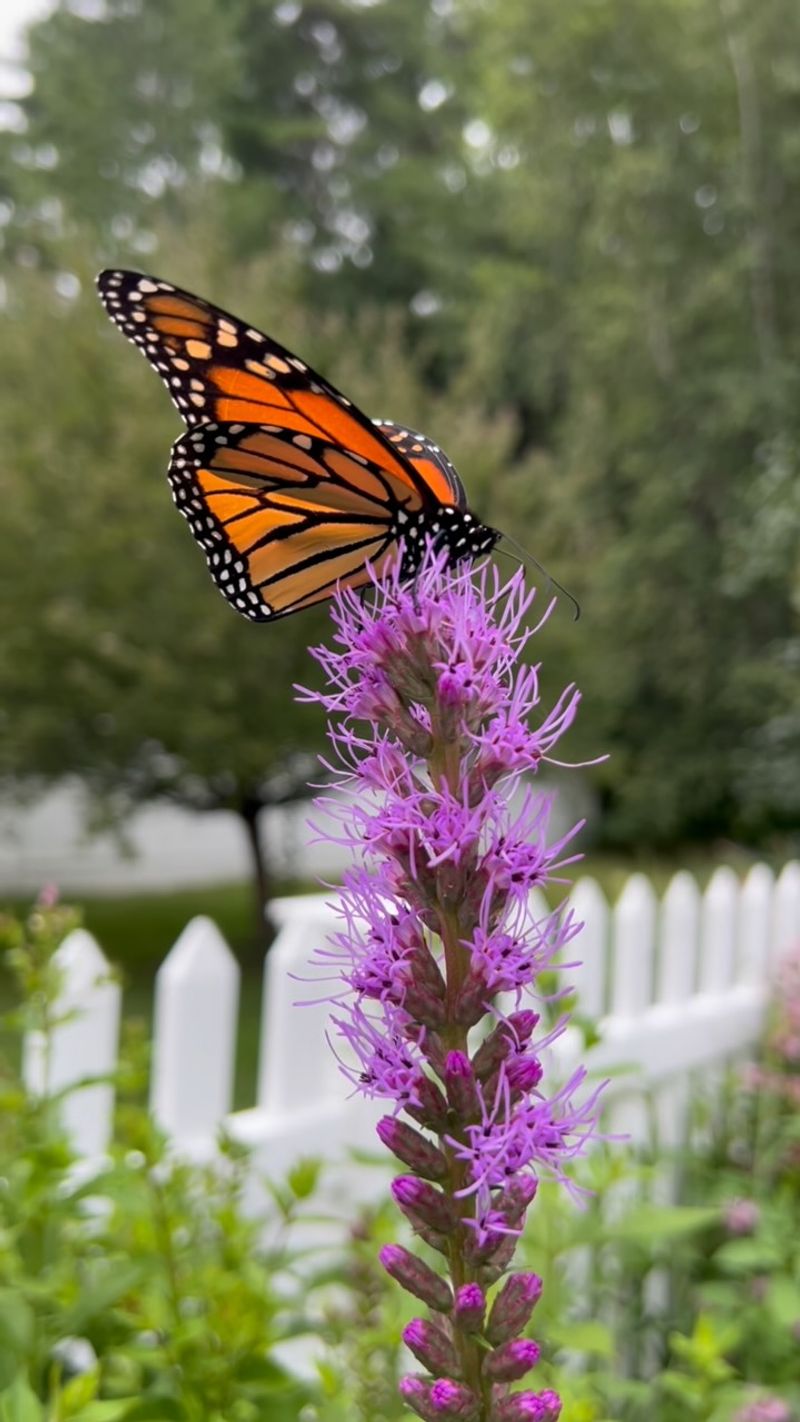
Right now, Illinois yards can offer a stopover for migrating monarchs. The most useful blooms are purple, gold, and rusty pink.
New England aster, smooth aster, stiff goldenrod, and showy goldenrod bloom exactly when the crowd arrives. Blazing star, ironweed, and joe pye weed stretch the season on both ends.
Plant in clumps of three to five rather than single specimens. Bigger color blocks are far easier to spot from the air.
Sun and shelter make a difference. A south facing bed backed by shrubs or a fence offers feeding space out of the wind.
Skip pesticides in those beds and let a few scruffy natives stay. Sweat bees, skippers, and hummingbirds will crash the party too.
Milkweed still belongs in the plan for spring and summer generations. Common, swamp, and butterfly weed all thrive in Illinois soil, and cutting stems back in June encourages fresh growth later.
A shallow dish of damp sand supplies minerals and moisture on hot afternoons. Set it near the flowers and refresh it every couple of days.
Autumn is a fine planting season here, since native roots settle in before the ground freezes. Many Illinois conservation districts hold plant sales in September and October.
Water new plantings through their first fall. Roots that reach deep now handle next summer’s dry spells much better.
Start with one four by six foot patch. That small strip can serve travelers for years with almost no upkeep.