Pennsylvania Native Vines That Cover A Fence In One Growing Season
Most landscaping projects take years to pay off. Trees need time to fill out. Hedges grow slowly.
Perennials often take a season or two before they really hit their stride. Fast-growing native vines are a refreshing exception.
Plant one in spring, and by late summer it can wrap a plain fence in a thick curtain of green. Some burst into bright tubular flowers that hummingbirds can’t resist.
Others turn brilliant red in the fall or produce berries that feed songbirds into winter. Because they evolved here, they handle Pennsylvania’s cold winters and humid summers without much help.
They also make a smart alternative to the invasive vines that have taken over so many local woods and roadsides.
If you want privacy, color, and more wildlife without waiting years for results, these natives can deliver in a single season.
1. Virginia Creeper Brings Fall Fireworks
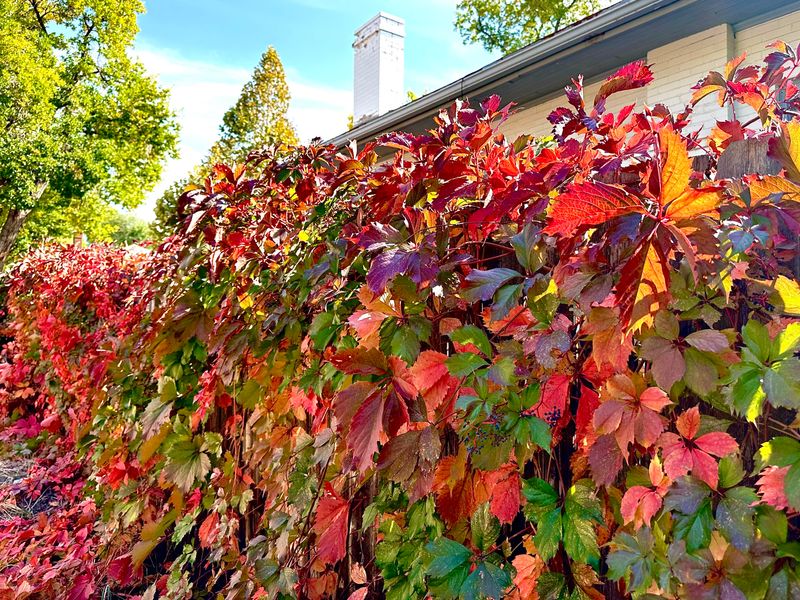
Walk past almost any old stone wall in Pennsylvania in October, and you might see it glowing bright red. That fiery color often comes from Virginia creeper, one of the toughest native vines around. It grows fast, often 10 feet or more in a single season.
Climbing is easy for this plant. Its tendrils end in tiny sticky pads that grab onto wood, brick, and stone like little suction cups. You do not need to tie it up or build a trellis, which makes it great for busy gardeners.
The leaves are a good way to identify it. Each one has five leaflets spread out like fingers on a hand. People sometimes confuse it with poison ivy, but poison ivy has only three leaflets. A simple rhyme helps: leaves of three, let it be, leaves of five, let it thrive.
Fall is when the show really starts. The green leaves turn shades of red, crimson, and purple. Small dark blue berries form on bright red stems, and birds like bluebirds, robins, and woodpeckers gobble them up well into winter.
Planting tips are simple. Virginia creeper grows in full sun or deep shade and handles poor soil, drought, and city air. Water it well the first few weeks, then mostly leave it alone.
One warning is worth keeping in mind. The sticky pads can leave marks on painted surfaces, and the vine can creep into gutters or under siding. Keep it on fences and away from your house, and trim it back each spring.
Fun fact: the berries are not safe for people, so enjoy them with your eyes and let the birds have the feast.
2. Virgin’s Bower Adds A Snowy Late Bloom
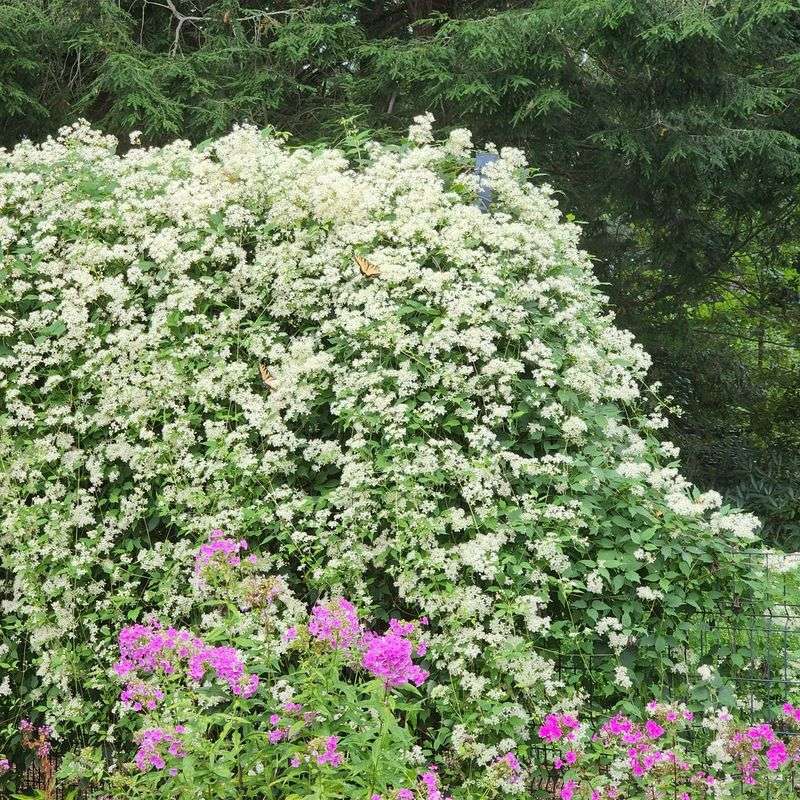
Late summer in the garden can feel a bit tired. Many flowers are fading, the grass looks dry, and the heat drags on. Then Virgin’s bower bursts open, covering fences in what looks like a fresh dusting of snow.
This plant is a native clematis, a cousin of the big fancy clematis sold at garden centers. Unlike those picky hybrids, Virgin’s bower is a tough Pennsylvania local. With good support, it can climb up to 20 feet in one year.
Your Pennsylvania Garden Changes Every Week. Your Plan Should Too.
Gardening in Pennsylvania changes quickly throughout the season. Every Friday you’ll receive a simple weekly plan showing exactly what to plant, prune, fertilize, harvest, and protect so you never miss the right timing.
Its climbing trick is fun to watch. Instead of tendrils, it wraps its leaf stems around wires, fence slats, and trellis bars. Chain-link fences are perfect because the leaf stems can easily loop through the small openings.
From August into September, the vine fills with clouds of tiny white flowers. They smell sweet, a bit like honey. Bees, moths, and small butterflies visit all day long, so your fence turns into a busy snack bar for pollinators.
After the blooms fade, the female plants make fluffy, feathery seed heads. They look silvery and soft, and they shine in the low fall sun. Some people call the plant old man’s beard because of them.
Growing it is pretty easy. Give it moist soil and at least half a day of sun. It likes its roots shaded, so a layer of mulch or a few low plants at the base helps a lot.
Each early spring, you can cut it back hard to about a foot tall. It blooms on new growth, so it will roar back and flower the same year. Watch for seedlings, since it can spread itself around.
3. Wild Cucumber Grows Like A Summer Rocket
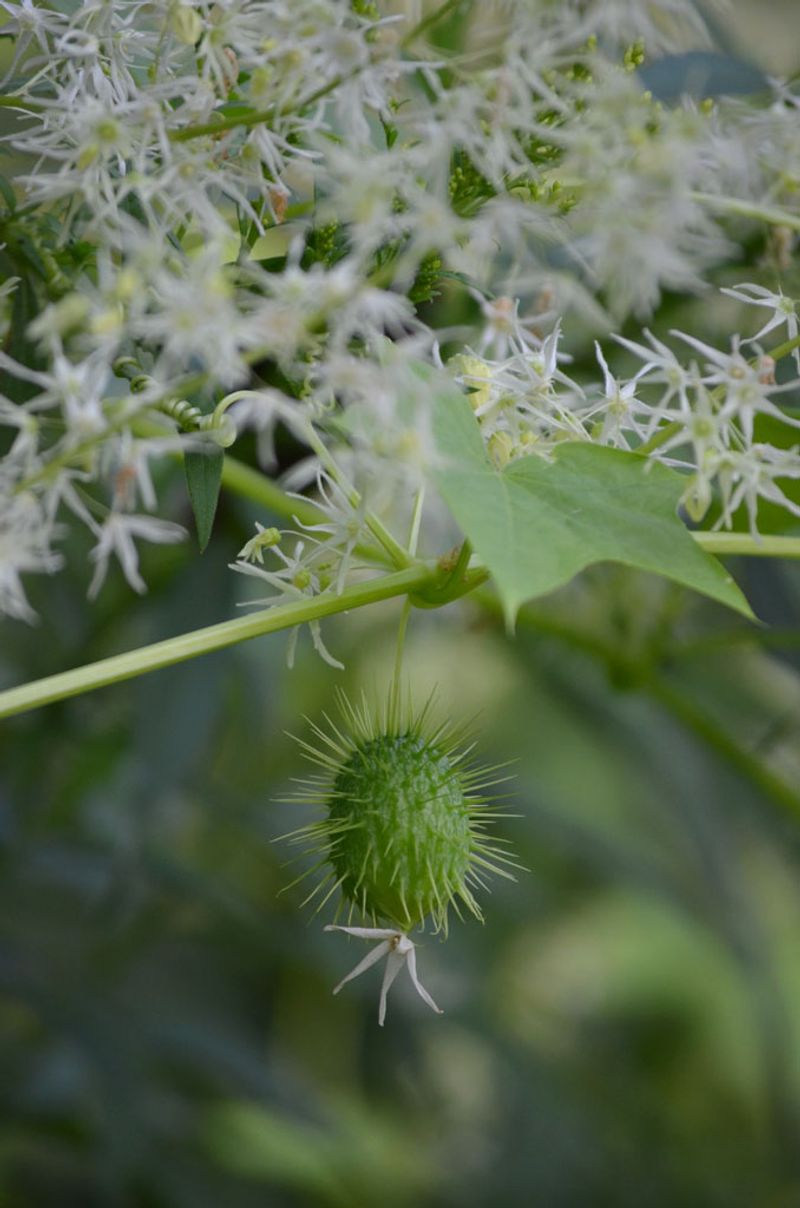
Ever wish a fence could go from bare to buried in just a few months? Wild cucumber might be your answer. It is an annual vine, so it grows from seed to full size in one summer, and it does not waste any time.
Most plants grow 15 to 25 feet before fall. That is enough to cover a big stretch of fence or even climb over a small shed. It uses curly tendrils to grab onto anything nearby, including wire, wood, and other plants.
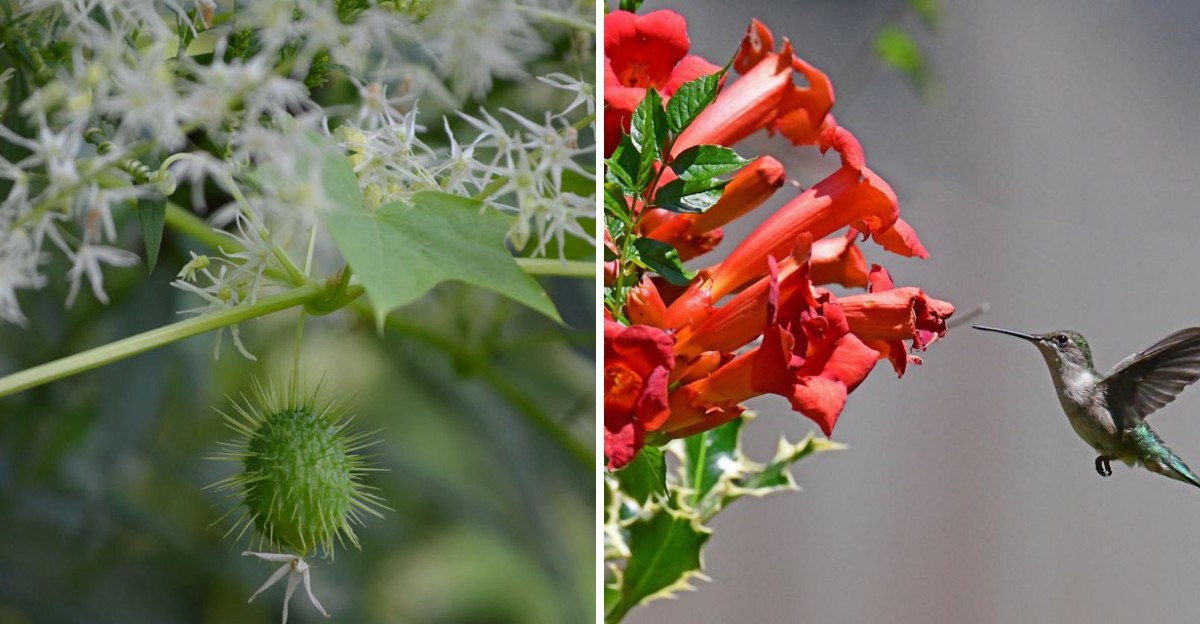
By late summer, the vine is covered with lacy clusters of tiny white flowers. They look like little stars and give off a light, sweet smell. Bees love them, and the blooms can make the whole fence look frothy and bright.
Next come the seed pods, which are the real conversation starters. They are puffy, green, and covered in soft spines, kind of like a tiny cucumber wearing a porcupine coat. Kids usually think they look like little alien eggs.
Do not eat them, though. Despite the name, these pods are not food. When they dry, they split open and pop out flat seeds onto the ground.
Those seeds are why wild cucumber often comes back on its own. You plant it once, and new vines sprout the next spring. If you get too many, just pull the extras when they are small.
For best results, plant it in moist soil near the fence, in sun or part shade. Since it is gone by winter, it is a smart choice for a temporary screen while slower plants fill in.
4. Dutchman’s Pipe Makes A Leafy Green Curtain
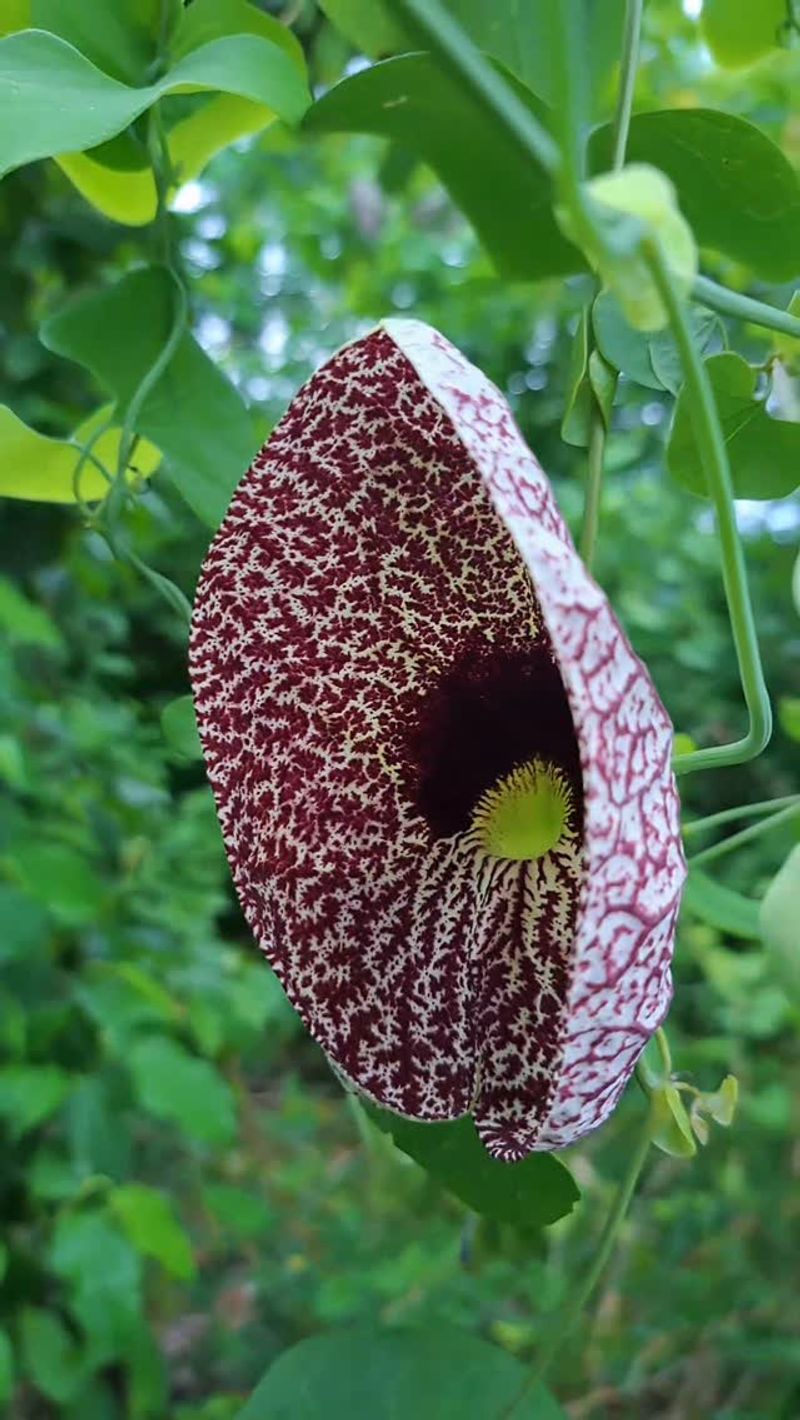
Back in the 1800s, porches all over the eastern United States were shaded by one big-leafed vine. People called it Dutchman’s pipe, and it was the air conditioning of its day. Today, it can still turn a fence into a cool, solid wall of green.
The plant is native to the Appalachian Mountains, including western Pennsylvania. It is a twining vine, which means its stems wind around posts, wires, and rails as it climbs. Once settled in, it can grow 15 to 30 feet.
The leaves are the main attraction. They are large and heart-shaped, sometimes as wide as a dinner plate. They overlap like shingles, so they block views, wind, and summer sun very well.
So where did the funny name come from? The small flowers are curved like an old tobacco pipe. They are brownish purple and usually hidden behind the leaves, so you have to peek to find them.
Butterfly fans will love this vine. It is a host plant for the pipevine swallowtail, a stunning black butterfly with shiny blue wings. The caterpillars munch on the leaves, and that chewing is a good sign your garden is helping wildlife.
To grow it, pick a spot with rich, moist soil and sun or part shade. It may sit still the first year while roots settle. After that, it takes off quickly.
Make sure your fence is sturdy, because the leaves add weight. Some patience at the start pays off with years of shady privacy.
5. American Bittersweet Glows In Orange And Red
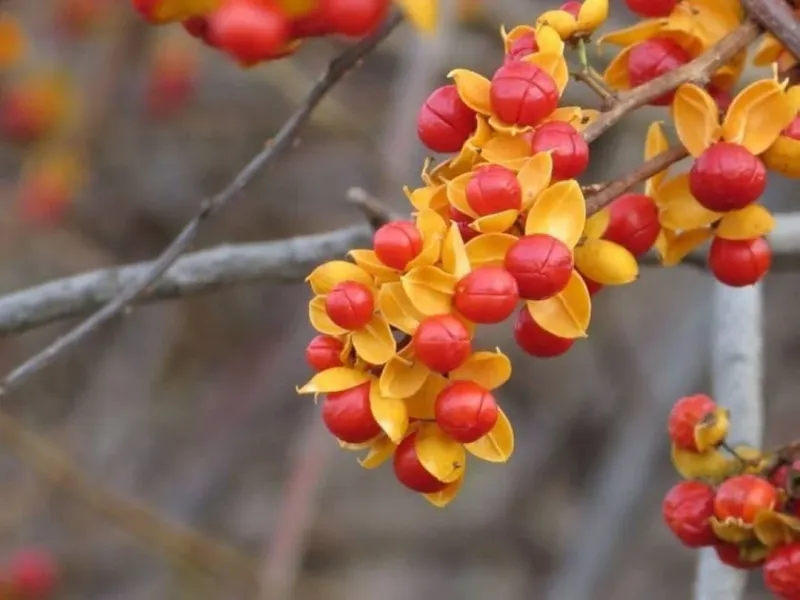
Grandma’s fall wreath may have held a few sprigs of bright orange berries. Chances are those came from bittersweet, a vine people have loved for decorating since colonial times. Our native kind, American bittersweet, is a real treasure for Pennsylvania fences.
It grows fast and climbs by twining its stems around supports. A healthy vine can stretch 15 to 20 feet. Summer leaves are glossy and green, which makes a nice backdrop for other plants.
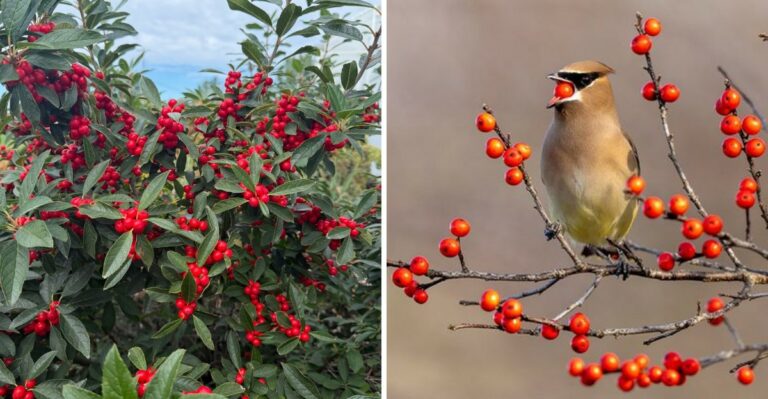
Fall is when it steals the show. Yellow-orange husks crack open to reveal shiny red berries inside. They hang on long after the leaves drop, feeding birds like bluebirds, cardinals, and grouse during cold winter months.
Here comes the tricky part. There is an invasive look-alike called oriental bittersweet that takes over forests and smothers trees. Always buy from a native plant nursery and check the label for Celastrus scandens, the native species.
One easy clue helps tell them apart. American bittersweet has berries at the tips of its branches. Oriental bittersweet has berries tucked all along the stems where leaves meet.
Another tip saves a lot of frustration. American bittersweet has separate male and female plants, and only females make berries. You need at least one male planted nearby, or your vine will stay plain green.
Give it full sun for the most berries, and plant it in well-drained soil. Keep it on a fence rather than a young tree, since its twining stems can squeeze trunks too tightly. Cut a few berry branches in fall for a homegrown wreath of your own.
6. Trumpet Creeper Calls In The Hummingbirds
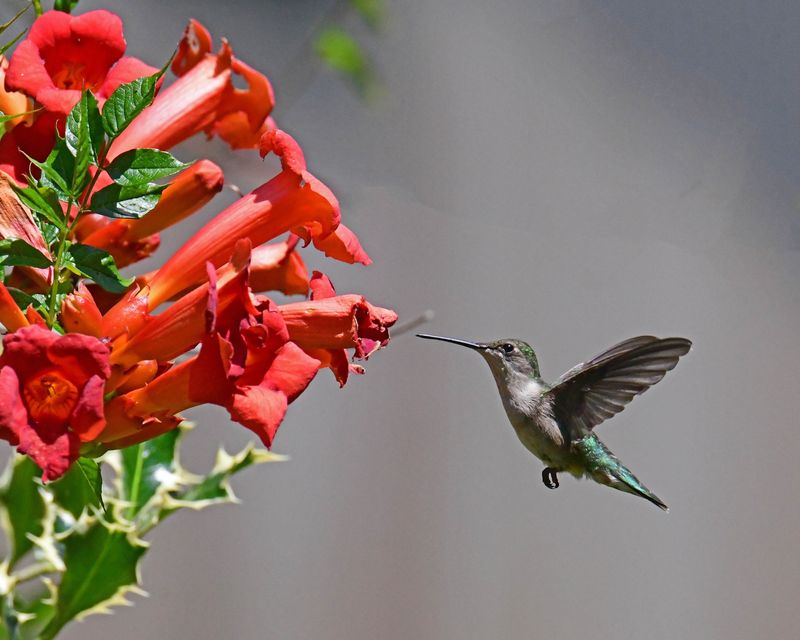
Want a front-row seat to a hummingbird show? Plant trumpet creeper along a sunny fence, grab a lawn chair, and wait. In midsummer, the tiny birds zip in again and again to sip from its bright blooms.
The flowers are the big reason people grow it. They are long, tube-shaped, and colored orange to deep red. They come in clusters from July through September, and hummingbirds have bills that fit them perfectly.
Trumpet creeper is native to southern Pennsylvania and much of the eastern United States. It climbs with little aerial roots that grip wood, stone, and brick. It also grows quickly, often adding 10 to 20 feet in a season once it is settled.
Now for the honest truth. This vine is a bit of a bully. It sends up new shoots from its spreading roots, sometimes several feet away from the main plant.
Because of that, location matters a lot. Choose a sturdy fence at the edge of your yard, where it has room to roam. Keep it away from your house, garden beds, and thin wooden trellises that could snap under its weight.
Care is simple. Plant it in full sun for the most flowers, and it will grow in almost any soil. Mow or pull any suckers that pop up where you do not want them.
Trim it hard in late winter to keep it tidy. Flowers form on new growth, so pruning will not cost you any blooms. Some gardeners also wear gloves when handling it, since the sap can bother sensitive skin.
7. Riverbank Grape Feeds A Crowd Of Wildlife
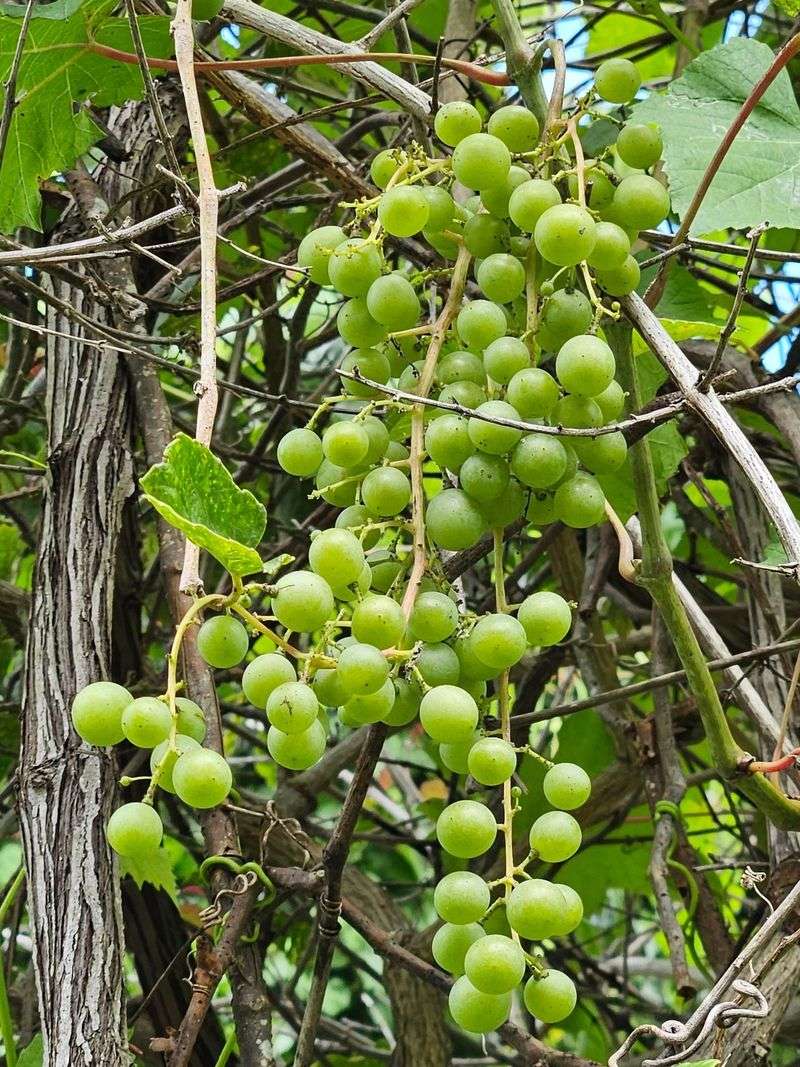
Long before vineyards dotted the hills, wild grapes were already climbing trees along Pennsylvania creeks. Riverbank grape is one of those old-timers. It still grows naturally along streams, river banks, and woodland edges all across the state.
Speed is one of its strengths. The vine uses forked tendrils to grab and climb, and it can spread quickly across a fence in a single season. Its large, toothed leaves make a thick, leafy cover that blocks views well.
In late summer, small clusters of dark purple grapes appear. They are tart and full of seeds, so they are not much like store-bought grapes. Still, some people use them to make jelly after the first frost sweetens them a bit.
Wildlife is the real fan club. Robins, catbirds, cardinals, foxes, and even turkeys love the fruit. The shaggy bark is also a favorite nesting material for birds, and the leaves feed several kinds of moth caterpillars.
Here is the catch. A mature riverbank grape gets heavy, especially when it is loaded with leaves and fruit. A flimsy fence can sag or tip over, so plan on strong posts and solid rails or heavy wire.
Planting is not hard. It grows best in moist soil with full sun or light shade, just like its natural creekside homes. It handles flooding, cold winters, and tough conditions with ease.
Prune it every winter to control its size and keep it from climbing into nearby trees. With a little trimming, this old native turns any strong fence into a busy wildlife buffet.