Pennsylvania Vegetables That Grow Well In Straw Bales Instead Of Soil
A cracked driveway in Lancaster County. A gravel patch behind a Pittsburgh row house. A yard where nothing but weeds seem interested.
Plenty of Pennsylvania gardeners look at ground like that and write off vegetables entirely.
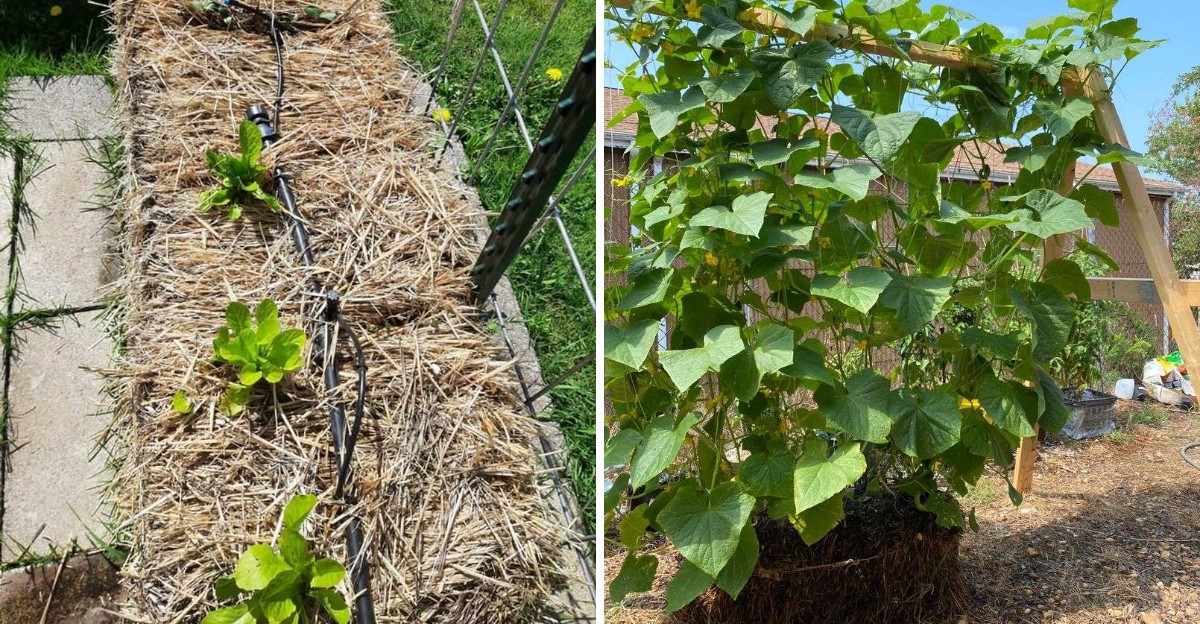
Straw bales offer a way around it.
Set a few in a sunny spot, condition them, and you have raised beds requiring no digging, no tilling, and no truckload of topsoil.
Here’s the catch though. A bale is not soil, and that difference matters more than the convenience suggests.
Straw drains fast, holds almost no nutrients, and gives roots roughly a foot of loose material to work with.
Conditioning takes 10 to 14 days with high-nitrogen fertilizer and steady water before anything goes in. Fresh straw heats up as it breaks down and can damage tender roots.
Once that period passes, certain crops perform genuinely well while others belong in the ground.
Curious which ones actually work?
1. Determinate Tomatoes Fit Compact Bales Well
Staking a six-foot tomato vine into a bale of straw ends one way. Sideways on the driveway.
Bales offer no anchor, no deep grip, and no heavy clay to hold a stake steady. Physics rather than gardening skill.
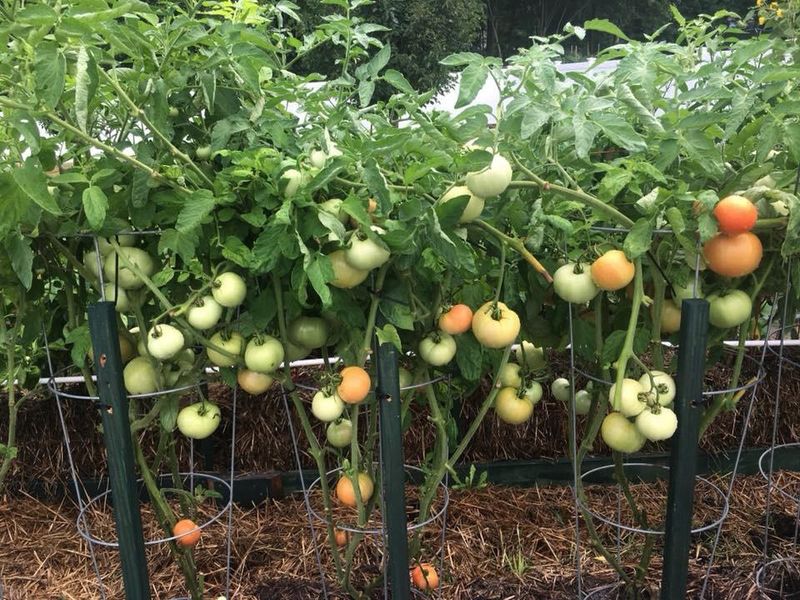
Determinate bush-type varieties solve that problem. They grow to a set height, flower, and ripen fruit over a few weeks.
Roma, Celebrity, and Bush Early Girl all stay compact enough for a short cage pushed through the straw.
Indeterminate vines like Brandywine keep stretching until frost. A bale cannot hold them upright.
Set transplants deep into the conditioned bale, tucking the stem so buried leaves sprout new roots.
Two plants per bale is plenty. Three crowds them and invites leaf disease during humid Pennsylvania Julys.
Water daily, since straw drains considerably faster than garden loam. That schedule isn’t optional.
Feed lightly every week or two once fruit sets. Straw holds almost no nutrients, so plants live entirely on what you supply.
A soluble tomato fertilizer or fish emulsion handles it. Nothing complicated required.
Fruit hanging over straw instead of wet ground stays cleaner, and slugs face a harder climb.
Blossom end rot still appears if watering swings from soaked to bone dry, so keep the schedule steady.
2. Peppers Root Easily In Warm Straw
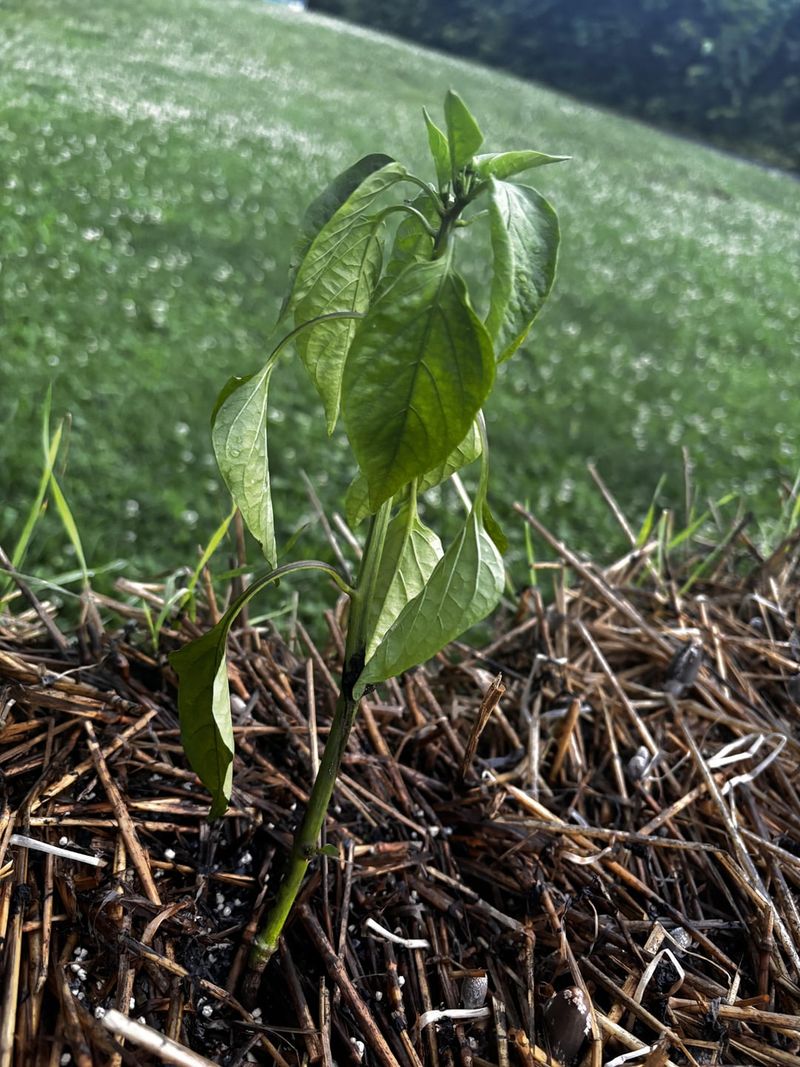
Peppers sulk in cold soggy ground, which is why Pennsylvania springs test them. A conditioned bale addresses both complaints at once.
Decomposing straw sits above the ground, drains freely, and stays several degrees warmer than a raised bed. Root temperature makes a real difference here.
Bell types, banana peppers, jalapenos, and shishitos all take to bales without trouble. Space two to three plants per standard bale depending on variety size.
Tuck each transplant into a pocket of loose straw. A handful of potting mix around the roots helps establishment.
Warm roots translate directly into earlier flowering. Gardeners in cooler counties often see fruit set sooner than plants in chilly clay.
Fast drainage has a downside worth planning for. Bales dry out quickly during a July heat wave.
Peppers drop blossoms when they get thirsty. Check moisture with your finger every morning.
Your Pennsylvania Garden Changes Every Week. Your Plan Should Too.
Gardening in Pennsylvania changes quickly throughout the season. Every Friday you’ll receive a simple weekly plan showing exactly what to plant, prune, fertilize, harvest, and protect so you never miss the right timing.
If straw feels dry two inches down, water. Simple test, reliable answer.
Peppers are hungry without being excessive. A balanced liquid feed every ten days keeps leaves dark green.
Too much nitrogen produces a leafy bush and an empty harvest basket. Restraint helps.
Add a short stake for heavy-fruited bells. A loaded plant tips easily in a thunderstorm.
Wait until nighttime temperatures hold above 55 degrees. That means late May across most of the state.
3. Cucumbers Climb Right Off The Bale
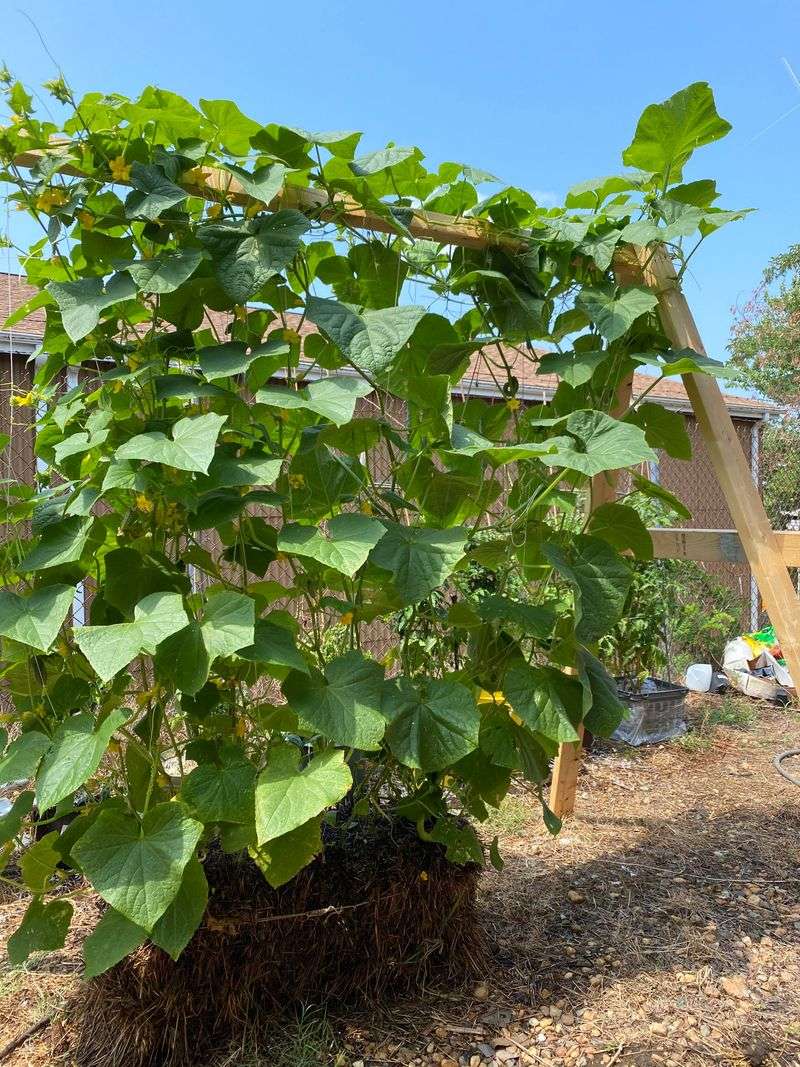
Cucumber seeds sown directly into damp straw sprout fast and rarely struggle. Direct seeding saves money and avoids root disturbance.
Cucumbers dislike transplanting anyway. Two advantages from one decision.
Poke three or four seeds an inch deep into pockets of moist potting mix on the bale top. Vines want to run, so give them something to climb.
A cattle panel, string trellis, or leaning wooden pallet all work behind the bale. Trellised cucumbers grow straighter and ripen cleaner.
Bales offer a hidden advantage in airflow. Powdery mildew and downy mildew both hit Pennsylvania cucumbers hard by August.
Leaves hanging above ground dry faster after morning dew. That timing slows disease meaningfully.
Thin seedlings to two strong plants per bale section. Crowded vines compete for limited water.
Straw stores very little moisture. Daily watering during fruit set isn’t optional in July.
Pick young and pick often. Slicers left on the vine turn bitter and shut down new flowering.
A cucumber checked every other day keeps producing into September. Frequency drives total yield.
Bush varieties like Spacemaster work without a trellis. Vining types like Marketmore 76 yield more when given something to climb.
Test the bale interior with your hand before seeding. Straw still warm from decomposition can affect young seedlings.
4. Bush Beans Thrive With A Simple Trellis
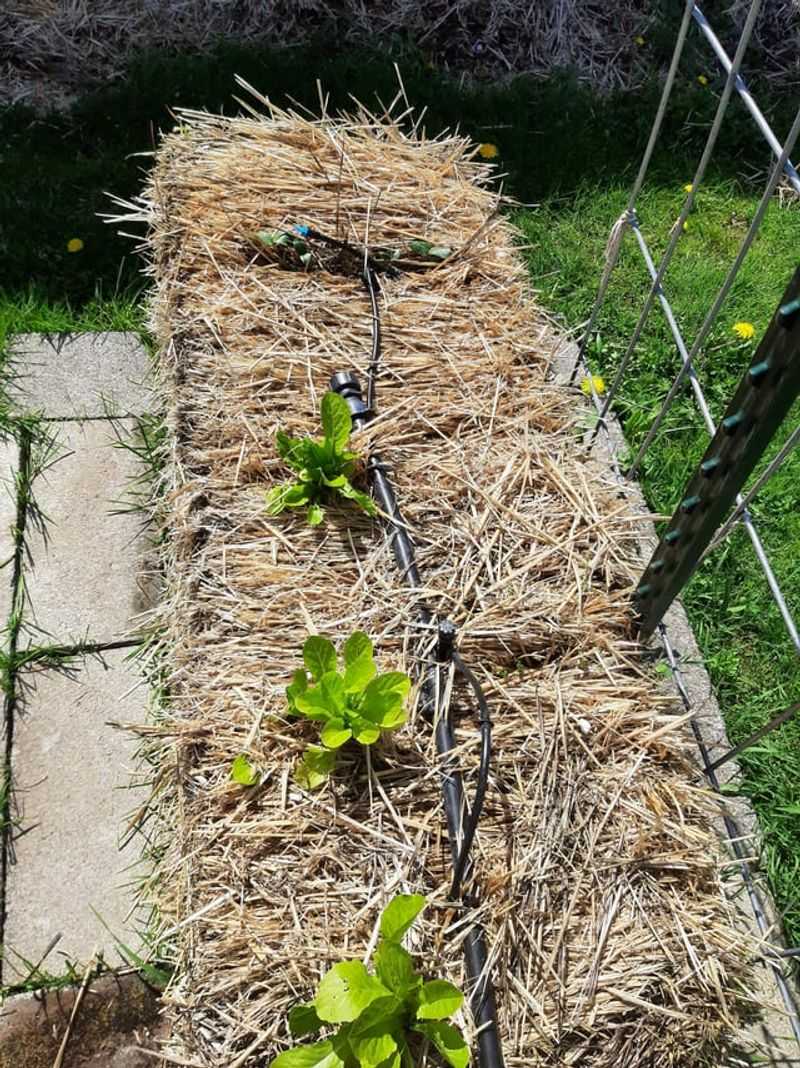
Few crops forgive a beginner the way beans do. Drop seeds an inch deep into conditioned straw, water, and wait about a week.
Germination in warm bales runs quick and even. Confidence follows.
Bush beans stay knee-high, so heavy staking isn’t necessary. A low string trellis still keeps loaded plants from flopping over the bale edge during storms.
Upright plants make picking easier on your back too. Small effort, real payoff.
Sow a dozen seeds across the top of a standard bale. Then thin to eight sturdy plants.
Provider, Contender, and Blue Lake Bush all perform reliably in Pennsylvania. Succession sow every two weeks through early July.
Beans fix some nitrogen, and young plants in straw still need help. Straw supplies almost nothing until it breaks down further.
Use a light balanced feed once flowers appear. Then ease off considerably.
Pole beans work in bales provided the trellis stands in the ground. Posts sunk on either side of the bale give real anchoring.
A teepee pushed into loose straw leans by August. Straw grips nothing.
Harvest snap beans while pods still snap cleanly. Overgrown pods turn leathery and signal the plant to stop.
Beans also make a smart first crop for a nervous bale gardener. Seeds cost little and success builds confidence.
5. Lettuce And Greens Suit Shallow Roots
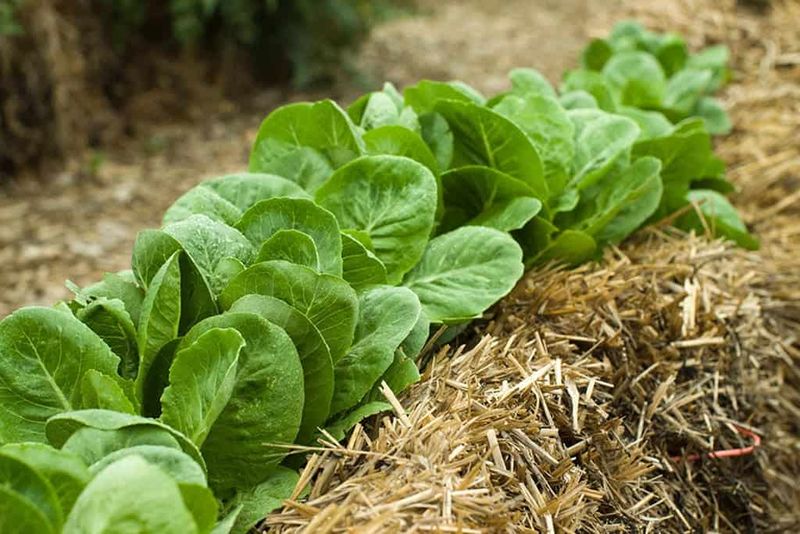
Salad crops barely notice they’re growing in straw. Lettuce, spinach, arugula, kale, and Swiss chard all send roots only a few inches down.
That depth matches a conditioned bale perfectly. Natural fit rather than a compromise.
Plant transplants or scatter seed into a shallow furrow of potting mix pressed into the straw. A standard bale holds roughly eight to twelve lettuce plants.
A dense band of cut-and-come-again mesclun works too. Snip outer leaves and let the centers keep growing.
Bale height is a quiet advantage. Working at waist level saves your knees.
Rabbits face a two-foot climb before reaching your spinach. Groundhogs stay determined, so fencing may still be needed.
Cool weather is prime time for these crops. Sow in April for spring salads and again in late August for fall.
Fall greens sweeten after light frost. Summer heat turns lettuce bitter and pushes it to bolt.
Shade helps considerably in June. A tomato plant on the sunny side of the bale buys extra weeks of tender leaves.
Water gently so seeds don’t wash into straw crevices. Fine spray beats a hard stream.
Greens also make good use of a bale in its second season. By then straw has broken down into crumbly compost-like material.
One caution applies. Greens dislike drying out, so a skipped watering day leaves foliage limp and tough.
6. Eggplant Rewards Warm Bale Temperatures
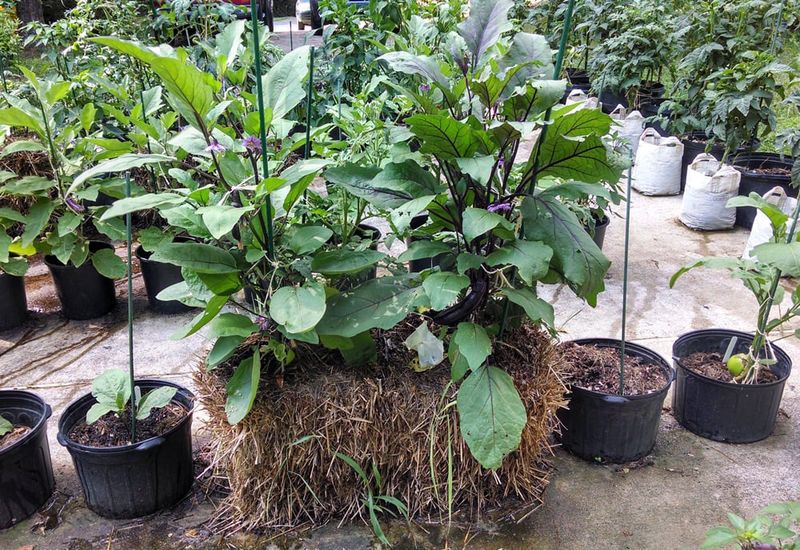
Ask an eggplant what it wants and the answer is heat. Pennsylvania summers deliver eventually.
Our springs and cool clay soils hold plants back early though. Straw bales tilt the odds by keeping the root zone warm and free of standing water.
Set two transplants per bale after nights stay reliably above 55 degrees. Black Beauty, Fairy Tale, and Ichiban all fruit well in bales.
Smaller-fruited types tip over less readily. Weight matters on a loose base.
Flea beetles are the main nuisance here. Small shot-hole damage on young leaves appears within days of planting.
Floating row cover over hoops for the first few weeks protects seedlings. Remove it once plants gain size.
Stake early rather than late. A loaded eggplant gets top-heavy and straw grips a stake loosely.
Drive a sturdy stake through the bale into the ground beneath where possible. Real anchoring beats hope.
Feed steadily and water daily. Eggplants stalled by drought produce bitter seedy fruit with tough skin.
Consistent moisture gives you glossy tender fruit. Direct relationship between the two.
Harvest when skin still shines and springs back slightly under a thumb. Dull skin means seeds inside have hardened.
Gardeners near Erie or in the Poconos gain the most from this crop. Warmer straw shortens the wait for first fruit.
7. Summer Squash Produces Heavily In Bales
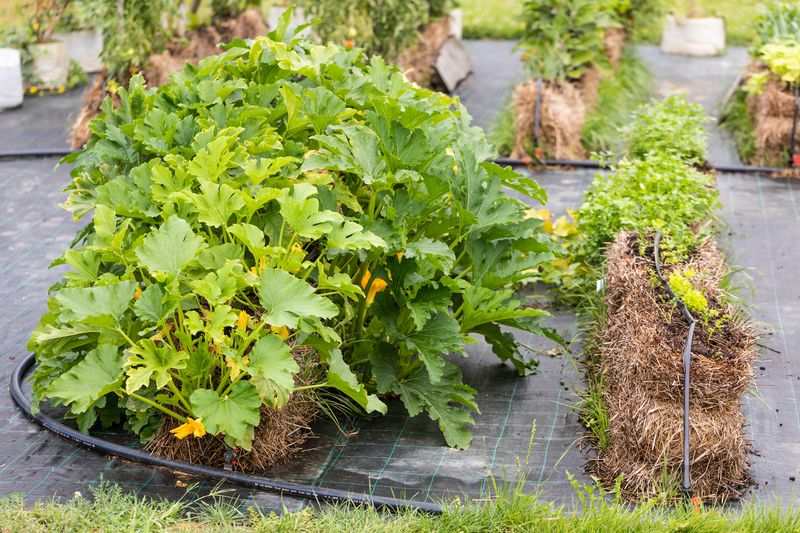
Squash treats a conditioned bale like an upgrade. Warm loose material and excellent drainage suit it well.
Yellow squash, zucchini, and pattypan all perform reliably. Bush types matter more than variety color.
Set two plants per bale at most. Squash leaves get large and crowding invites the mildew that Pennsylvania humidity encourages anyway.
Direct seeding works well since squash dislikes transplanting. Poke seeds an inch deep into pockets of potting mix.
Bale height offers a genuine advantage with this crop. Fruit hangs clear of soil rather than resting on damp ground.
That positioning reduces rot and makes picking considerably easier. No bending required.
Water daily during fruit production. Squash carries a lot of leaf surface and loses moisture fast in a free-draining bale.
Feed every week or two once flowering starts. Straw contributes nothing nutritionally.
Squash vine borer is the main threat in Pennsylvania. Adults lay eggs at the stem base, and larvae tunnel inside.
Wrapping the lower stem with foil or row cover early can prevent access. Timing matters more than product.
Harvest small and harvest often. Zucchini at six to eight inches beats anything larger for texture.
Missing two warm days produces a squash nobody wants. Daily checking keeps quality high and production continuing.
8. Get The Conditioning Right First
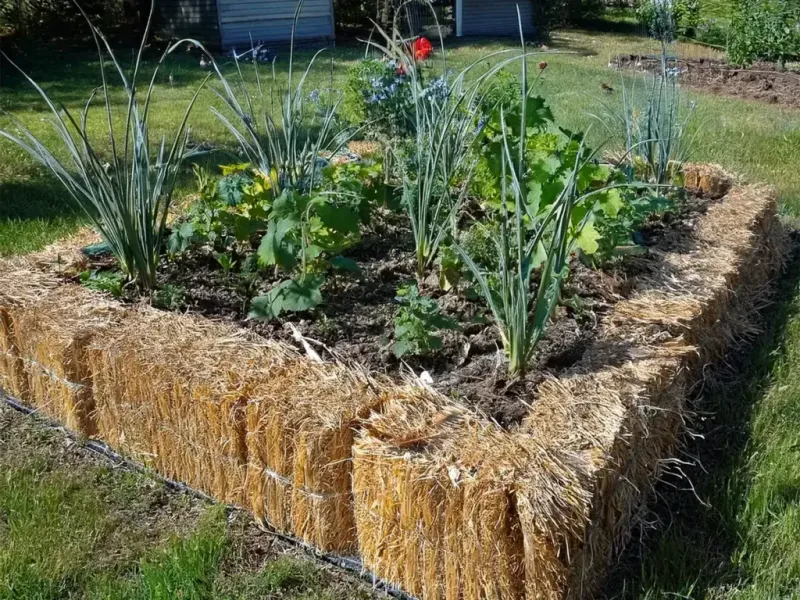
Everything above depends on one step people rush. Fresh straw heats up as microbes begin breaking it down.
That process generates enough warmth to damage young roots. Patience prevents a real setback.
Conditioning takes 10 to 14 days with high-nitrogen fertilizer applied and watered in regularly. The nitrogen feeds the microbes doing the decomposition.
Without it, the process stalls and the bale stays inhospitable. Both inputs are necessary.
Water deeply every day during that window. Wet straw decomposes while dry straw simply sits there.
Bale temperature tells you when it’s ready. Push a hand into the interior, and merely warm means go.
Orientation matters more than people expect. Set bales with cut ends facing up, since water penetrates that direction more easily.
Baling twine should stay intact. It holds the bale together as the interior softens.
Straw rather than hay is the requirement. Hay carries seed and produces a bale full of grass and weeds.
Wheat, oat, and barley straw all work fine. Check whether the field received persistent herbicides, since those can affect vegetables.
Position bales before conditioning starts. A wet bale weighs considerably more than a dry one.
A layer of cardboard underneath suppresses weeds growing up through the bale. Two weeks of patience prevents a season of disappointment.