Plant These Orange Perennials In Texas Once And Enjoy Them Forever
Orange might just be the most underused color in the Texas garden, and that’s a real missed opportunity. It’s warm, it’s bold, it catches the eye from across the yard, and when it’s done right it brings an energy to a garden bed that softer colors simply can’t match.
The gardeners who commit to orange always seem a little surprised by how much they end up loving it. What makes these particular picks even better is that they’re perennials, meaning you put them in the ground once and they just keep coming back.
No replanting, no starting over every spring, and no wondering whether this year’s investment is going to make it through summer.
In Texas, where the heat tests everything, finding perennials that return reliably and bloom in rich orange tones is the kind of gardening win that pays off for years. One good planting decision and your garden keeps the color going season after season.
1. Esperanza / Yellow Bells
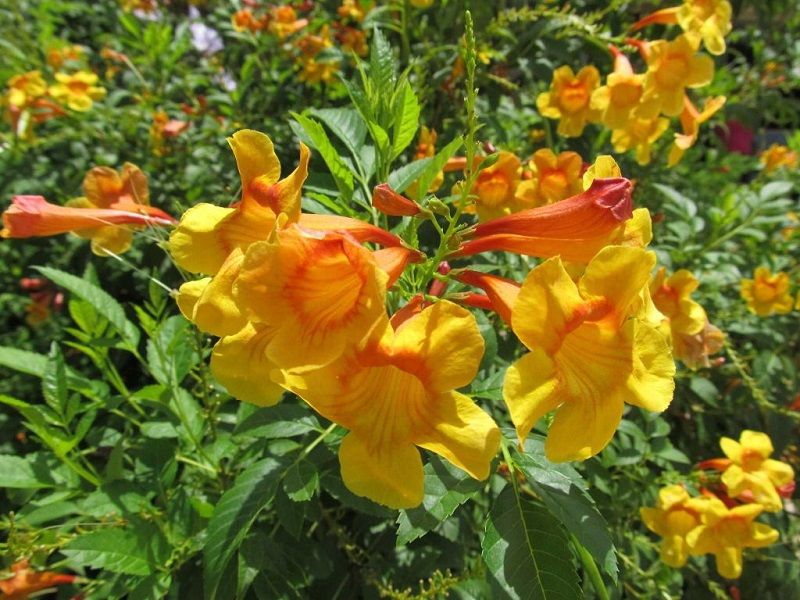
Most people know Esperanza for its cheerful yellow blooms, but the orange flowering varieties are just as stunning and every bit as tough.
The name Esperanza means hope in Spanish, and that feels fitting for a plant that keeps blooming through some of the hottest, driest summers Texas can throw at it. Plant it once in the right spot and it will reward you for decades.
Esperanza is a fast grower. In warm parts of Texas like Laredo, McAllen, and Corpus Christi, it can reach six feet or more in a single growing season.
It thrives in full sun and well-drained soil, and once it is established it is remarkably drought tolerant. The tubular flowers are a favorite of hummingbirds and sphinx moths, making your garden feel alive with movement all summer long.
In North Texas and the Panhandle, Esperanza behaves more like a root-hardy perennial, freezing back to the ground in winter and shooting back up vigorously in spring. Further south, it may stay semi-evergreen.
Either way, it comes back reliably year after year with very little help. Cutting it back in late winter before new growth starts keeps the plant looking tidy and encourages strong flowering.
The orange varieties are sometimes harder to find than the yellow ones, so check local Texas nurseries in spring when the selection is best. Look for named cultivars like Crimson Flare or Orange Jubilee for the richest orange color.
Paired with purple salvias or blue plumbago, the orange blooms of Esperanza create a color combination that stops people in their tracks.
2. Blackberry Lily
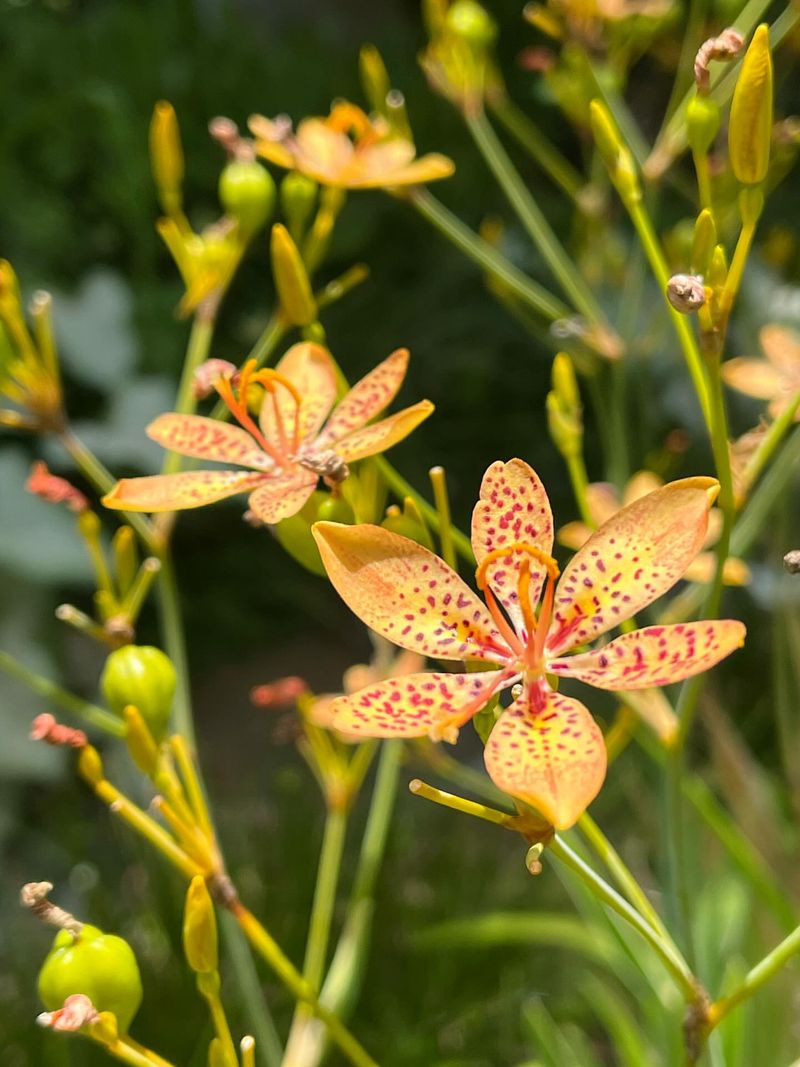
Not many plants offer two seasons of interest the way Blackberry Lily does. In summer, it produces flat, iris-like fans of foliage topped with clusters of orange blooms dotted with red spots.
Then in fall, the seed pods split open to reveal tight clusters of shiny black seeds that look exactly like a blackberry. It is genuinely one of the most fascinating plants in any Texas garden.
Despite its delicate appearance, Blackberry Lily is a tough, long-lived perennial that handles Texas heat without complaint. It grows well in full sun to part shade and adapts to a wide range of soil types.
Your Texas Garden Changes Every Week. Your Plan Should Too.
Gardening in Texas changes quickly throughout the season. Every Friday you’ll receive a simple weekly plan showing exactly what to plant, prune, fertilize, harvest, and protect so you never miss the right timing.
Plant the rhizomes just at the soil surface in spring, and expect blooms by the second year. Once established, it naturalizes freely, spreading into larger clumps over time and self-seeding throughout your garden beds.
Gardeners in Central and East Texas tend to have especially good results with Blackberry Lily because the climate there closely matches its preferred growing conditions. In West Texas, a little afternoon shade and extra water during the hottest months helps it perform at its best.
It pairs beautifully with ornamental grasses and black-eyed Susans in a mixed perennial border.
Did you know this plant was once classified as a belamcanda? Botanists reclassified it as part of the iris family relatively recently.
The seed pods are so decorative that many Texas gardeners cut them for dried arrangements in fall. It is a plant that earns its space in the garden at least twice every year, and it asks for almost nothing in return.
3. Daylily
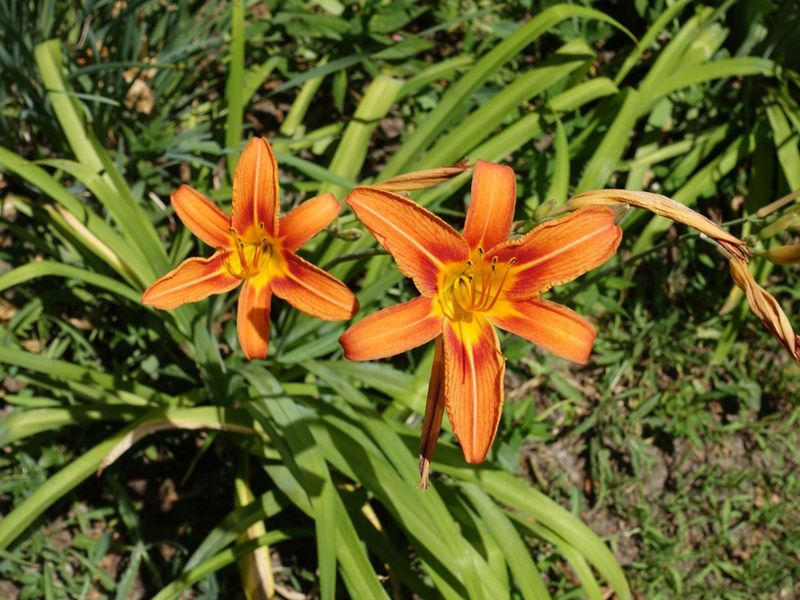
Few plants have earned their place in Texas gardens quite like the daylily. Orange varieties like the classic Hemerocallis fulva, sometimes called the ditch lily, have been thriving in Texas for over a century.
You can spot them growing along old fence lines, abandoned homesteads, and rural roadsides all across the state, proof of just how tough and self-sufficient they really are.
Once planted, daylilies spread gradually into larger and larger clumps without becoming invasive or taking over the garden. They return faithfully every year with zero maintenance, producing abundant blooms throughout the summer months.
Each individual flower lasts only one day, but a single clump produces so many buds that the display goes on for weeks. In Texas, established clumps can produce dozens of bloom stalks in a single season.
Daylilies perform well across the entire state, from the Piney Woods of East Texas to the dry rocky soils of the Trans-Pecos. They tolerate clay, sand, drought, and flooding better than almost any other perennial you can name.
Full sun gives the best flowering, but they will manage in part shade too. Dividing clumps every few years keeps them blooming at their best and gives you extra plants to share with neighbors.
For the richest orange color, look for varieties like Autumn Red, Caballero, or the old-fashioned fulva types at local Texas plant sales and native plant nurseries.
Pairing orange daylilies with purple coneflowers or white phlox creates a classic summer combination that looks like it belongs on a magazine cover. They are reliable, beautiful, and completely at home in Texas.
4. Mexican Sunflower
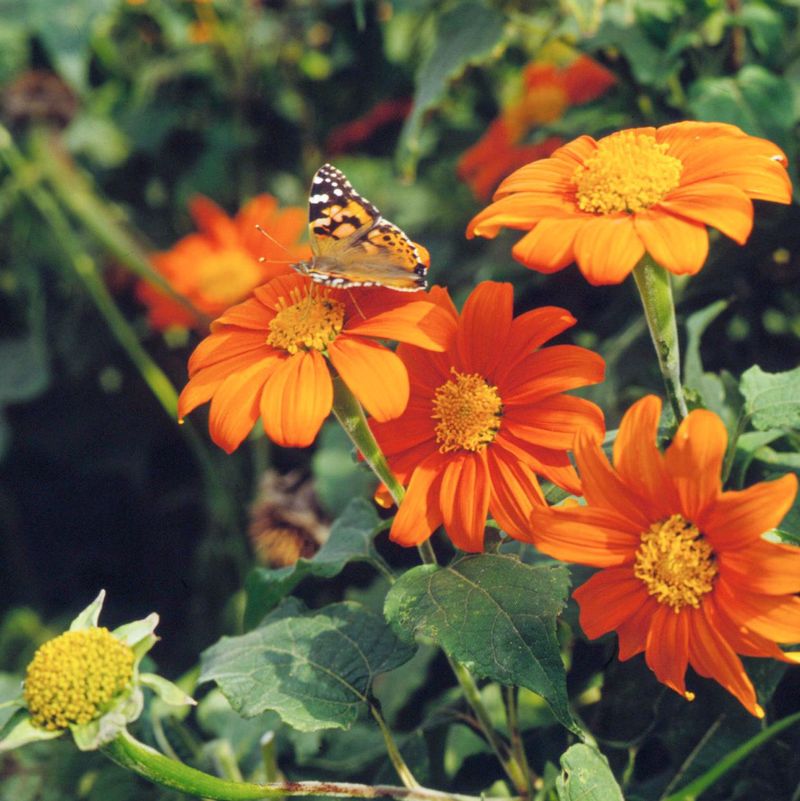
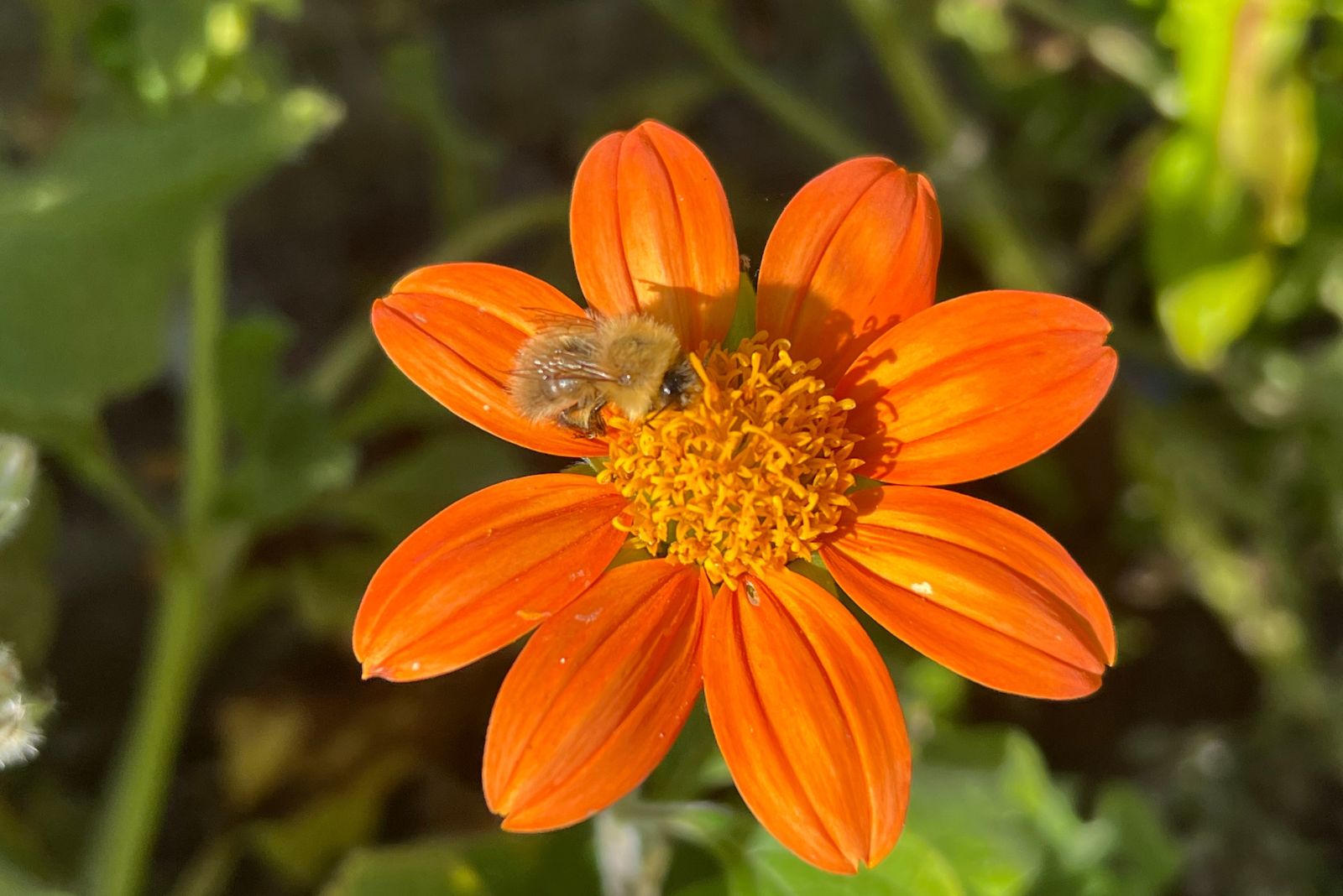
Bold, fast, and brilliantly orange, Mexican Sunflower is the kind of plant that makes a statement from across the street. The blooms are a rich, velvety orange that catches the light in a way that almost seems to glow.
In South and Central Texas, it behaves as a true perennial, coming back from established roots year after year and growing taller and more impressive every season.
One of the best things about Mexican Sunflower is how enthusiastically it self-seeds. Once it is settled into your garden, it essentially maintains itself by dropping seeds that sprout the following spring.
You end up with a generous, spreading colony of plants that fills in large garden areas with almost no effort on your part. In the right Texas climate, it can reach six to eight feet tall by midsummer.
Butterflies are wild about Mexican Sunflower. Monarchs, swallowtails, and fritillaries visit the blooms constantly during their migration seasons, making this plant a genuine wildlife magnet.
It grows best in full sun with average to poor soil. Rich, heavily amended soil actually encourages too much leafy growth at the expense of flowers, so hold back on the compost and let it grow lean.
In North Texas, Mexican Sunflower behaves more like an annual but still self-seeds reliably enough to come back each year. Starting seeds indoors in late winter gives you a head start on the season.
Cut stems back by about a third in midsummer to encourage a fresh flush of blooms going into fall. For sheer visual impact in a Texas garden, very few plants can compete with this one.
5. Firebush
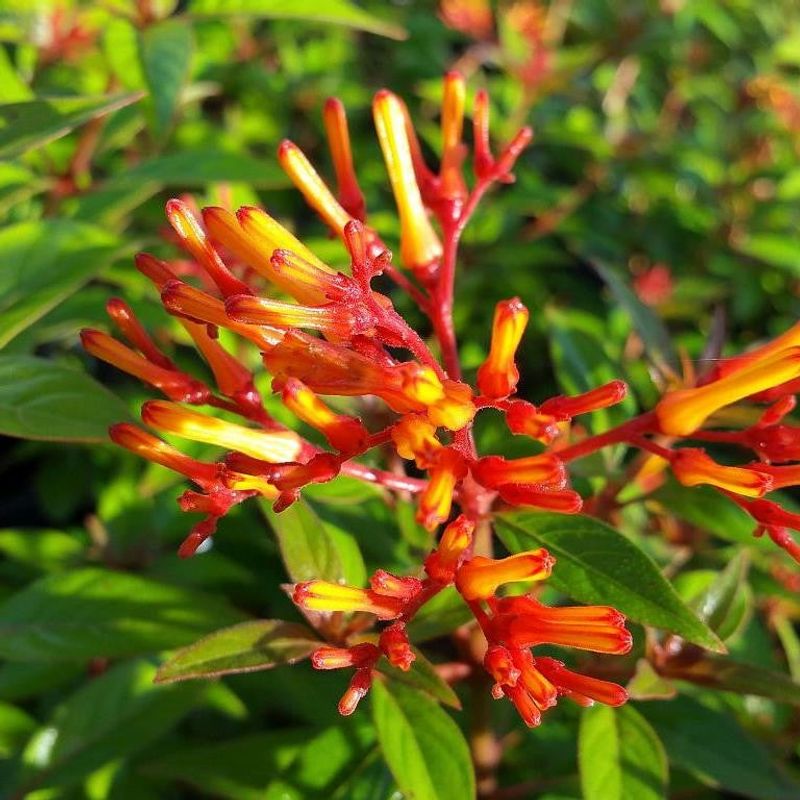
Firebush earns its name every single season. From the moment it leafs out in spring to the first hard freeze of winter, it produces non-stop clusters of tubular orange-red blooms that light up the garden like a flame.
Hummingbirds treat it like a buffet, hovering around the flower clusters for hours at a time. If attracting wildlife is part of your garden goal, Firebush belongs at the top of your list.
Native to tropical and subtropical America, Firebush has found a perfect second home in Texas. It thrives in the heat and humidity of Houston, the dry warmth of San Antonio, and the subtropical climate of the Rio Grande Valley.
It grows fast, often reaching four to six feet in a single season, and fills in garden spaces with lush, tropical-looking foliage. The leaves even turn a fiery red in cooler fall temperatures, adding a second layer of seasonal interest.
In South Texas, Firebush is essentially evergreen and may bloom nearly year-round. Further north, it freezes back to the ground in winter but returns vigorously from the roots each spring.
Cut the dry stems back in late winter and the plant bounces back faster than you might expect. It handles both full sun and light shade, though it blooms most heavily in a sunny spot with good drainage.
Butterflies, including queens and long-tailed skippers, visit Firebush regularly alongside the hummingbirds. The small dark berries that follow the flowers are eaten by mockingbirds and other native birds.
Planting Firebush near a patio or outdoor seating area gives you a front-row seat to all that wildlife activity. It is one of the most rewarding perennials any Texas gardener can grow.
6. Copper Canyon Daisy
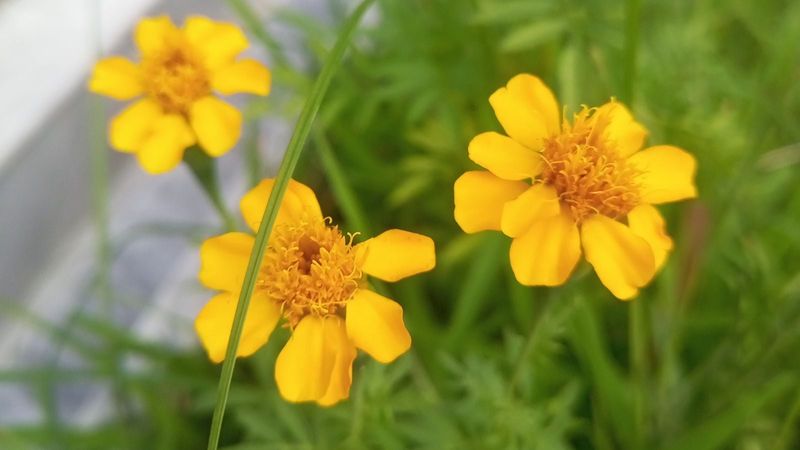
Walk past a Copper Canyon Daisy on a warm Texas morning and you will immediately understand what all the fuss is about.
The leaves release a spicy, lemony fragrance when brushed, and the plant is absolutely covered in golden-orange blooms from fall through spring. It is one of those plants that makes people stop their cars to ask what it is.
Native to the mountains of Mexico and the American Southwest, this shrubby perennial is perfectly matched to Texas growing conditions. It handles drought, reflected heat, and poor soils without skipping a beat.
Once established in your garden, it rarely needs watering and never needs fertilizer to perform beautifully. In warmer parts of Texas like the Rio Grande Valley and San Antonio, it can grow into a four to five foot mound of color.
Planting is straightforward. Choose a sunny spot with well-drained soil and give it room to spread.
Water it regularly for the first season, then step back and let it do its thing. Pruning it back in late spring after the bloom cycle ends keeps it tidy and encourages fresh growth for the next season.
Some Texas gardeners treat a hard prune like a reset button for this plant. Hummingbirds, butterflies, and bees are regular visitors when Copper Canyon Daisy is in bloom.
It is deer resistant, which is a huge bonus for gardeners in the Hill Country and other areas with heavy deer pressure. Few plants deliver this much beauty for this little effort in Texas gardens.
7. Turk’s Cap
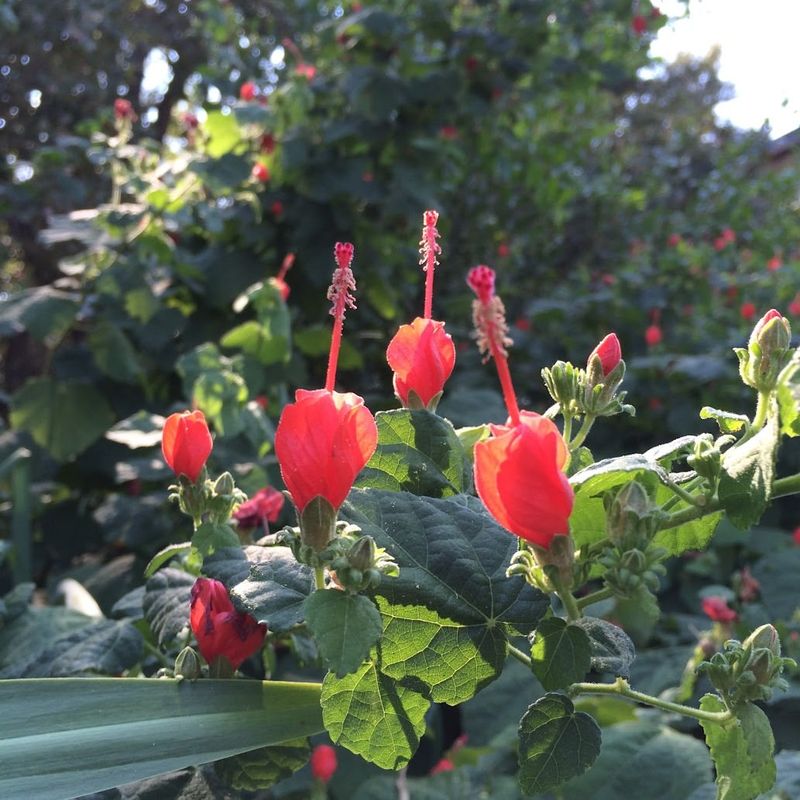
Tough, cheerful, and almost impossibly easy to grow, Turk’s Cap is one of the true heroes of Texas gardening. The blooms never fully open, staying twisted into a little turban shape that gives the plant its quirky name.
Hummingbirds absolutely love this plant and will visit it constantly from summer through fall.
What makes Turk’s Cap so special is its ability to thrive in spots where other plants struggle. It performs in full shade, part shade, or full sun, which gives Texas gardeners a ton of flexibility.
It handles the heavy clay soils common in Houston and Dallas just as well as it handles the rocky, alkaline soils of the Hill Country. Few perennials in Texas can make that claim.
Once you plant Turk’s Cap in your yard, you basically never have to think about it again. It spreads gradually over time by both underground runners and self-seeding, filling in garden spaces with a lush, tropical look.
It returns reliably every spring after winter dormancy, often sprouting back even after a hard freeze. In South Texas, it may stay evergreen through the winter entirely.
Plant it along a fence line, under a tree, or in a shady corner that nothing else will grow in. It pairs beautifully with native ferns and cast iron plants in shaded spots.
Butterflies and native bees visit the blooms regularly, and birds eat the small red fruits that follow the flowers. Turk’s Cap is genuinely one of the most rewarding plants any Texas gardener can add to their landscape.