8 Plants That Help Bees Thrive In Michigan Backyards
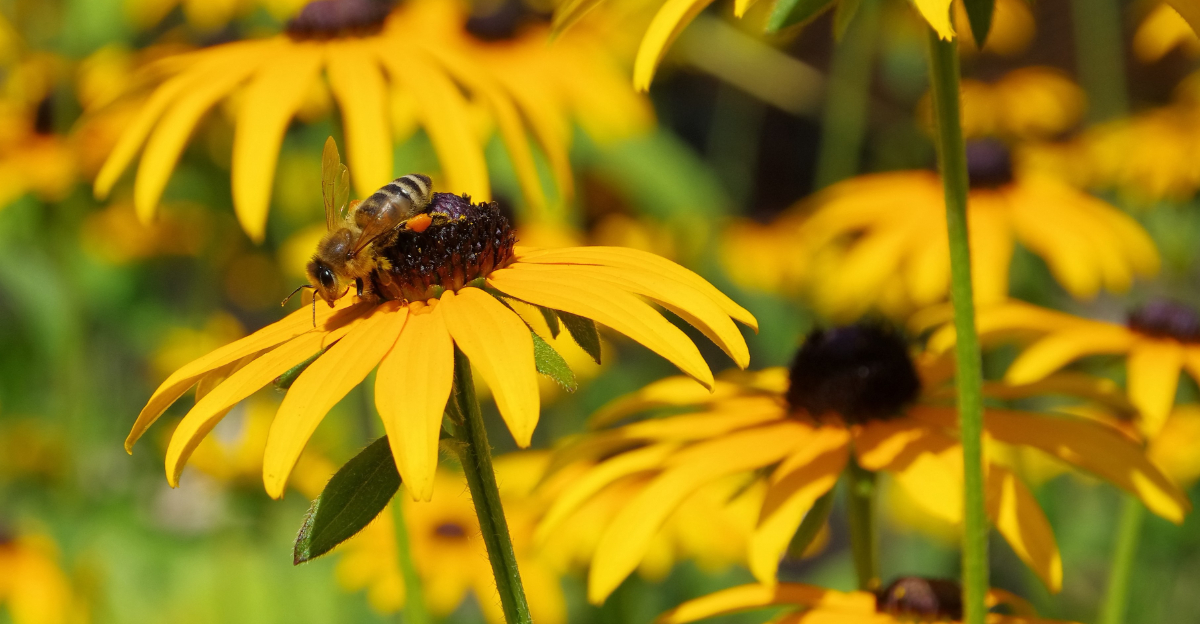
Bees are essential for a thriving garden, yet they’re often overlooked. In Michigan, supporting bees is as simple as choosing the right plants for your backyard.
By incorporating bee-friendly plants, you not only attract these important pollinators, but you also create a healthier garden.
Some plants offer the perfect mix of nectar and pollen, helping bees stay strong through the seasons.
In Michigan, where the climate can change drastically, planting the right flowers, shrubs, and herbs can make all the difference. These plants thrive in local soil and weather, providing the bees with much-needed food.
By selecting the right plants, your garden becomes a haven for bees, ensuring they thrive while helping your own plants grow better.
It’s a simple yet powerful way to help the environment and boost your garden’s success.
1. Purple Coneflower
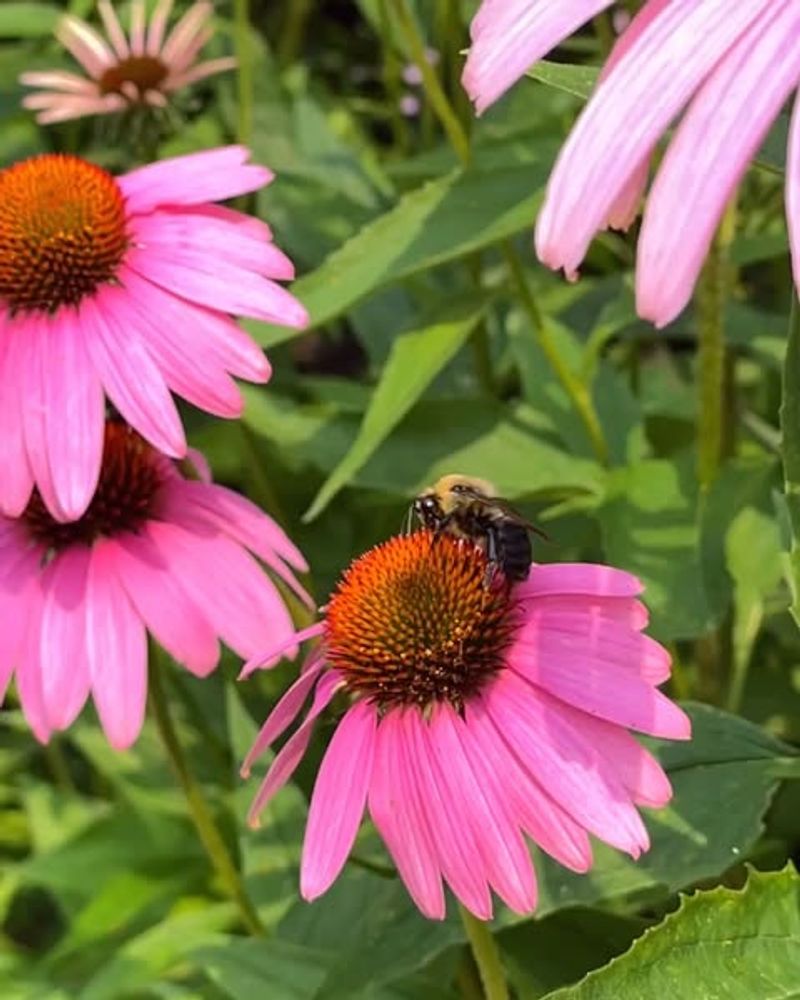
Few plants put on a show quite like Purple Coneflower, and bees across Michigan absolutely cannot resist it.
Known scientifically as Echinacea purpurea, this bold native perennial produces large, daisy-like blooms with bright pink-purple petals and a raised, spiky orange center that practically glows in summer sunshine.
Bees land on these centers to collect both nectar and pollen, making it one of the most productive pollinator plants you can grow.
Purple Coneflower blooms from June through September, giving Michigan bees a reliable food source during the heart of the warm season. It thrives in full sun and prefers well-drained soil, making it an easy choice for most backyards.
Once established, this plant is impressively drought-tolerant, so it keeps performing even during dry Michigan summers without much fuss from you.
One of the best things about this plant is what happens after the blooms fade. Leaving the seed heads standing through fall and winter benefits birds like goldfinches while also sheltering ground-nesting bees nearby.
Plant it in groups of three or more for the biggest visual impact and the strongest draw for pollinators.
Purple Coneflower also pairs beautifully with grasses and other native perennials, creating a layered garden that supports Michigan wildlife from spring all the way through the coldest months.
2. Wild Bergamot
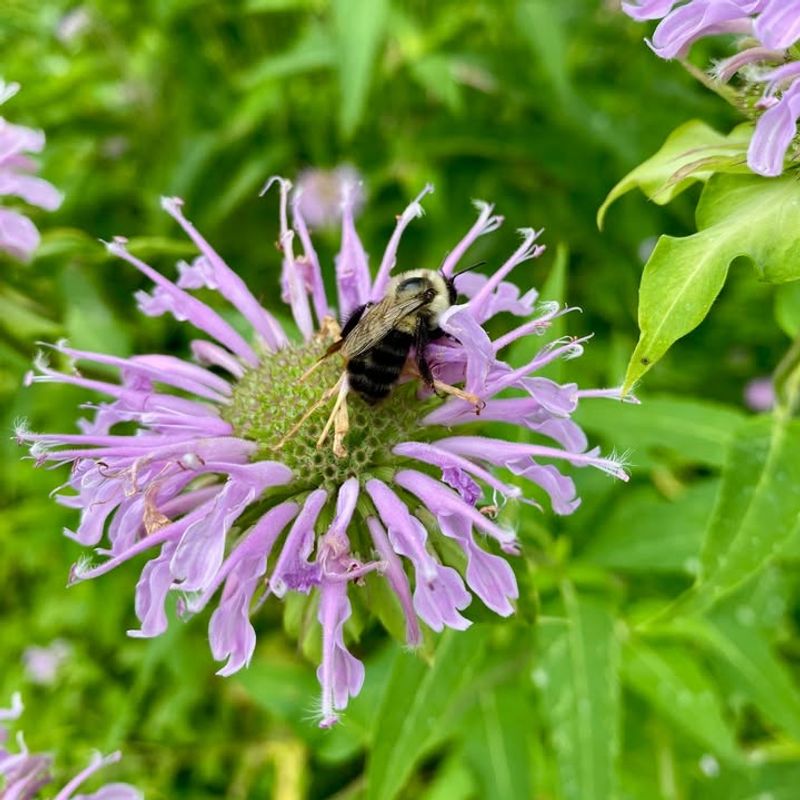
Wild Bergamot carries a secret that most Michigan gardeners overlook: its lavender blooms are basically a bee magnet hiding in plain sight.
Monarda fistulosa is a native prairie and meadow plant that has grown across Michigan and the Midwest for thousands of years, and native bees evolved right alongside it.
Bumblebees, sweat bees, and even specialist mining bees all show up when Wild Bergamot starts flowering in midsummer.
The flowers appear in rounded clusters at the tops of sturdy stems, blooming from July into August with a soft, herbal fragrance that also attracts butterflies.
This plant handles full sun beautifully but also tolerates partial shade, which gives Michigan gardeners plenty of flexibility when planning a pollinator garden.
Well-drained soil is ideal, though Wild Bergamot adapts to average conditions without complaint.
One thing worth knowing is that Wild Bergamot spreads gradually through underground rhizomes, so giving it a bit of room to roam pays off over time.
Your Michigan Garden Changes Every Week. Your Plan Should Too.
Gardening in Michigan changes quickly throughout the season. Every Friday you’ll receive a simple weekly plan showing exactly what to plant, prune, fertilize, harvest, and protect so you never miss the right timing.
A patch of three to five plants can expand into a stunning colony that hums with activity all summer long.
Unlike its showier cousin Bee Balm, Wild Bergamot tends to have better resistance to powdery mildew, which is a real advantage in Michigan’s humid summers.
Plant it along a fence line or in a naturalized border for an effortlessly beautiful and bee-friendly feature in your yard.
3. Bee Balm
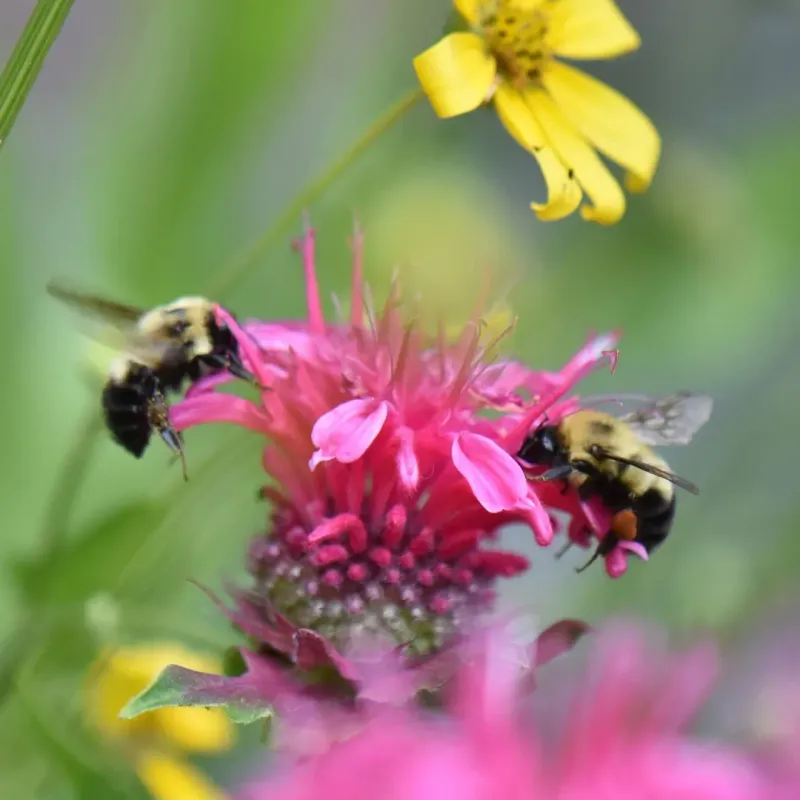
Walk past a patch of Bee Balm in full bloom and you will immediately understand how it got its name. Monarda didyma produces spectacular clusters of tubular red or pink flowers that seem to glow like fireworks at the top of tall stems.
Bees are completely drawn to it, and so are hummingbirds and butterflies, making it one of the most exciting and lively plants you can add to a Michigan backyard garden.
Bee Balm blooms throughout summer, typically from July into August, providing a steady nectar supply during peak pollinator season. It grows well in full sun and tolerates partial shade, which is a bonus for yards with mixed light conditions.
Good air circulation around the plants helps reduce the chance of powdery mildew, a common issue in Michigan’s warm, humid summers, so avoid crowding plants too closely together.
Dividing Bee Balm every two to three years keeps the plants healthy and vigorous, and it also gives you extra plants to spread around your garden or share with neighbors.
Moist, moderately fertile soil produces the best results, though established plants handle average conditions reasonably well.
Plant it near a window or along a garden path so you can enjoy watching the steady parade of bees and hummingbirds that visit throughout the season. Few plants deliver this much wildlife action in a Michigan yard.
4. Goldenrod
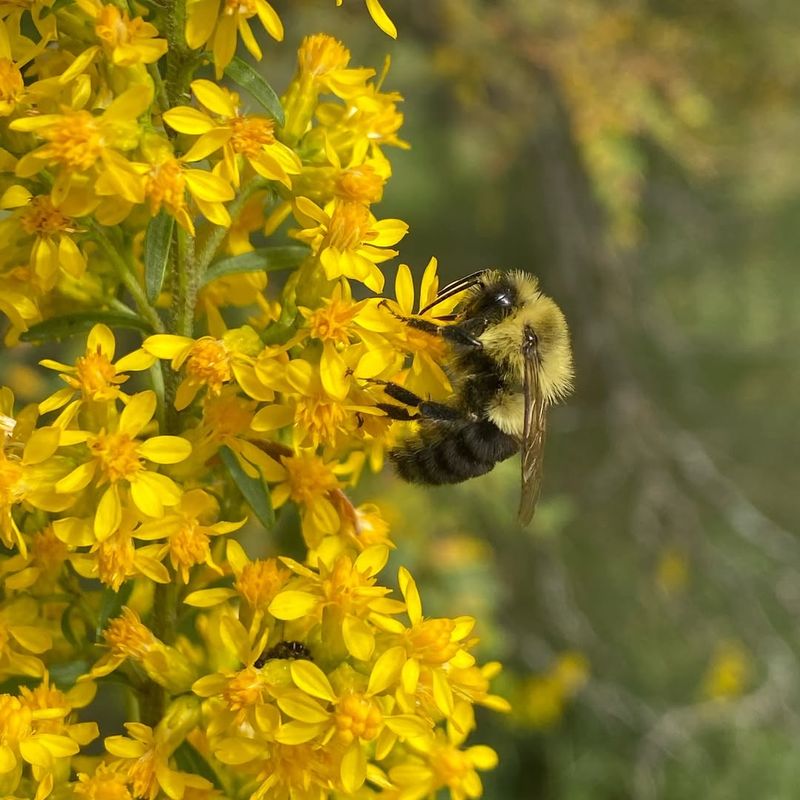
Goldenrod gets a bad reputation it simply does not deserve. Many people blame it for fall allergies, but the real culprit is ragweed, which blooms at the same time and releases airborne pollen.
Solidago canadensis, or Canada Goldenrod, actually has heavy, sticky pollen that bees carry rather than wind, making it one of the most bee-friendly plants in all of Michigan. When other flowers have finished for the season, goldenrod steps up in a big way.
This native plant blooms in late summer and early fall, typically from August through October, filling a critical gap in the nectar calendar.
Michigan bees rely on late-season food sources to build up their energy reserves before cooler weather arrives, and goldenrod delivers in abundance.
The arching golden plumes are covered in tiny flowers that produce both nectar and pollen, attracting dozens of bee species along with butterflies and beneficial wasps.
Growing goldenrod is refreshingly simple. Plant it in full sun with average soil and it will handle the rest, spreading gradually to form a cheerful, wildlife-rich colony.
It works well along fence lines, in rain gardens, or at the back of a naturalistic border. One thing to keep in mind is that it can spread enthusiastically in ideal conditions, so planting it where it has room to roam makes managing it much easier.
Michigan native plant enthusiasts consistently rank goldenrod among their top picks.
5. Black-Eyed Susan
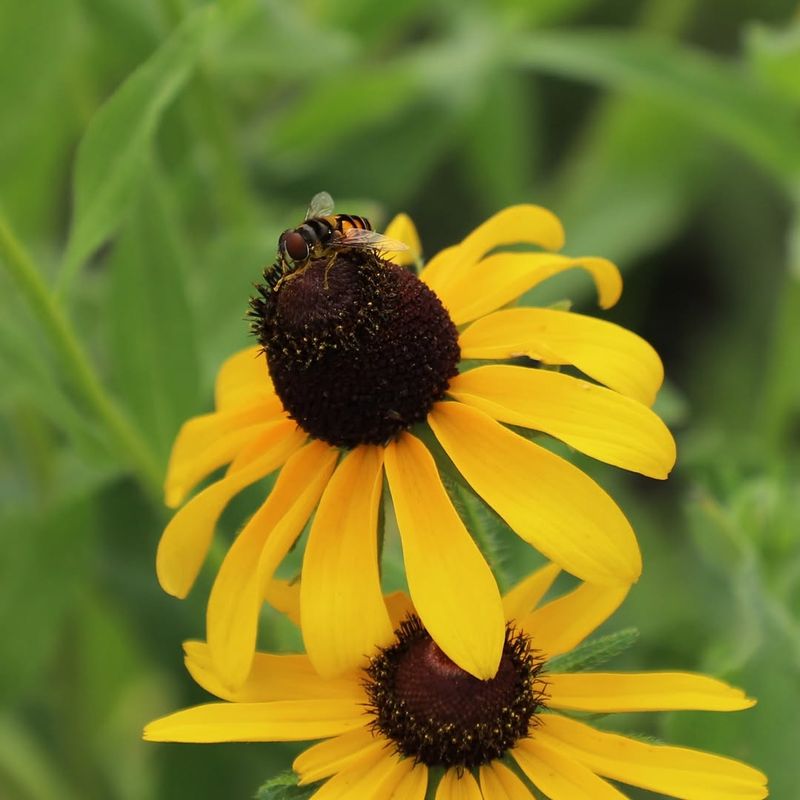
Bright, cheerful, and unmistakably Midwestern, Black-Eyed Susan is one of those plants that feels like it belongs in every Michigan backyard.
Rudbeckia hirta produces bold yellow petals around a rich dark brown center, creating a high-contrast flower that bees can spot from a distance.
This native wildflower blooms from midsummer well into fall, filling the gap between early bloomers and late-season plants like asters and goldenrod.
Bees visit Black-Eyed Susan for both nectar and pollen, and the open flower shape makes feeding easy for a wide variety of bee species. Planting it in full sun gives you the strongest performance, and this plant handles dry, average, or even slightly sandy soils with ease.
That flexibility makes it a natural fit for the varied soil types found across different parts of Michigan.
For a more naturalistic look, try mixing Black-Eyed Susan into a meadow-style planting with grasses and other native wildflowers.
Allowing some flowers to go to seed at the end of the season encourages self-seeding, which means your patch can grow and fill in naturally over the years.
Birds also enjoy the seed heads during fall and winter, adding even more wildlife value to your garden. Short-lived as a perennial, it often reseeds itself readily, so your Michigan garden keeps enjoying fresh, vibrant plants year after year without replanting.
6. New England Aster
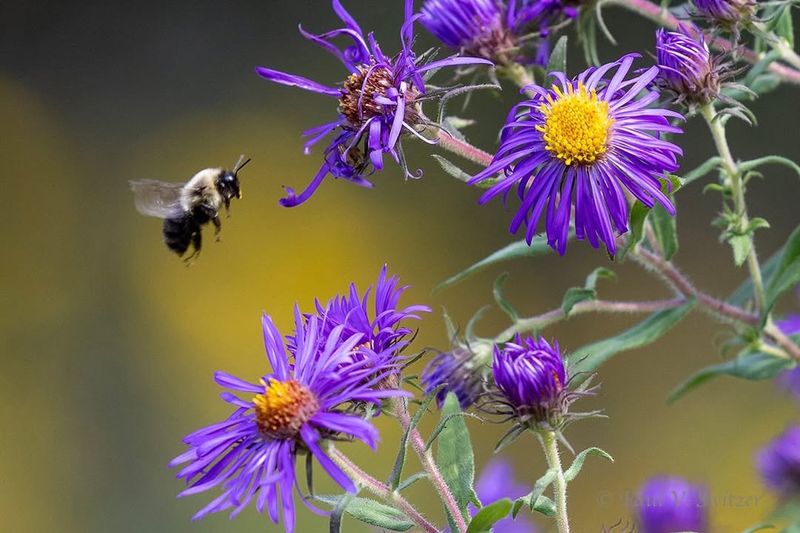
When most of the garden has gone quiet in September and October, New England Aster bursts into color like a grand finale.
Symphyotrichum novae-angliae is a native perennial that produces masses of rich purple flowers with golden-yellow centers, and the timing could not be more important for Michigan bees.
Late-season pollinators are actively searching for nectar sources, and a patch of New England Aster can draw dozens of bee species in a single afternoon.
Bumblebees are especially fond of this plant, and watching them work their way through a blooming aster patch is one of fall gardening’s genuine pleasures. The flowers are open and accessible, making it easy for many different bee species to feed efficiently.
Plant New England Aster in full sun and give it moist, well-drained soil for the best performance, though it adapts well to average Michigan garden conditions once it settles in.
Tall varieties can reach four to six feet, so pinching the stems back by half in early June encourages bushier growth and more flowers. Shorter, more compact varieties also exist if space is limited in your yard.
Planting asters alongside goldenrod creates a stunning late-season combination that is as beautiful as it is functional for pollinators.
New England Aster is a Michigan native, meaning it supports local bee populations that have evolved alongside it for generations, making it an especially meaningful addition to any pollinator-friendly backyard.
7. Joe-Pye Weed
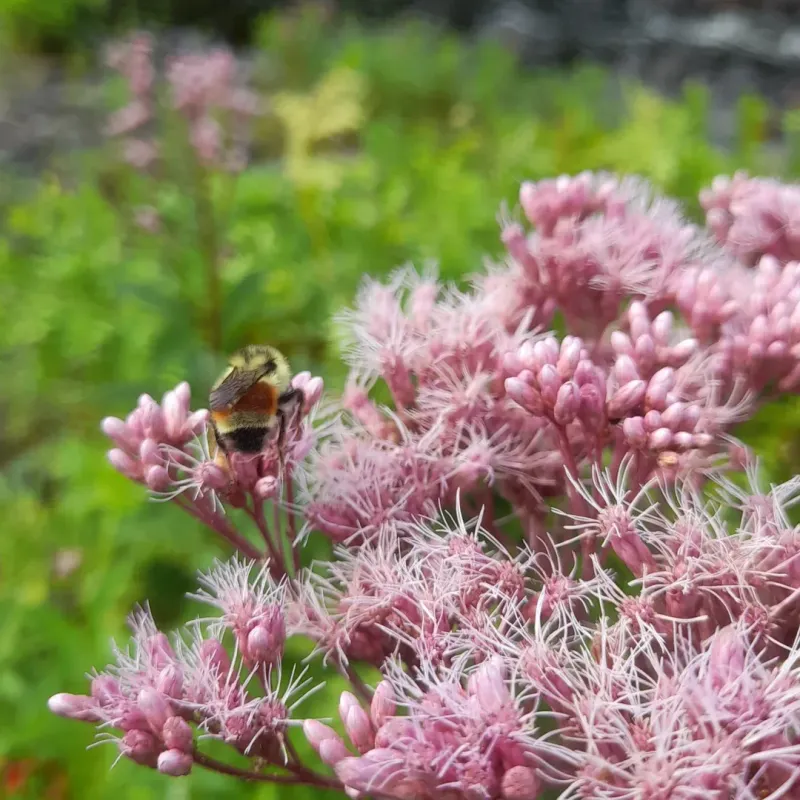
Towering, bold, and absolutely buzzing with activity, Joe-Pye Weed is the kind of plant that makes people stop and stare.
Eutrochium purpureum grows anywhere from four to seven feet tall and produces enormous domed clusters of pinkish-purple flowers that are irresistible to pollinators.
Native to wetland edges and moist meadows across Michigan, this plant has supported native bees and butterflies for centuries and brings a dramatic vertical element to any garden design.
Blooming from mid to late summer, Joe-Pye Weed fills a key window in the pollinator calendar when many spring and early summer plants have already finished.
The flowers are rich in nectar and attract a remarkable variety of visitors, including bumblebees, sweat bees, swallowtail butterflies, and fritillaries.
Planting it in moist soil with full sun to partial shade mirrors the conditions it naturally prefers in Michigan landscapes.
Rain gardens, low spots in the yard, and areas near downspouts are perfect locations for Joe-Pye Weed because it genuinely loves consistent moisture.
It combines beautifully with other tall native plants like goldenrod and New England Aster, creating a layered habitat that supports pollinators across multiple seasons.
Despite its impressive size, Joe-Pye Weed rarely needs staking and holds its shape well through summer storms. Once established in a Michigan garden, it comes back reliably every year, growing larger and more impressive with each passing season.
8. Anise Hyssop
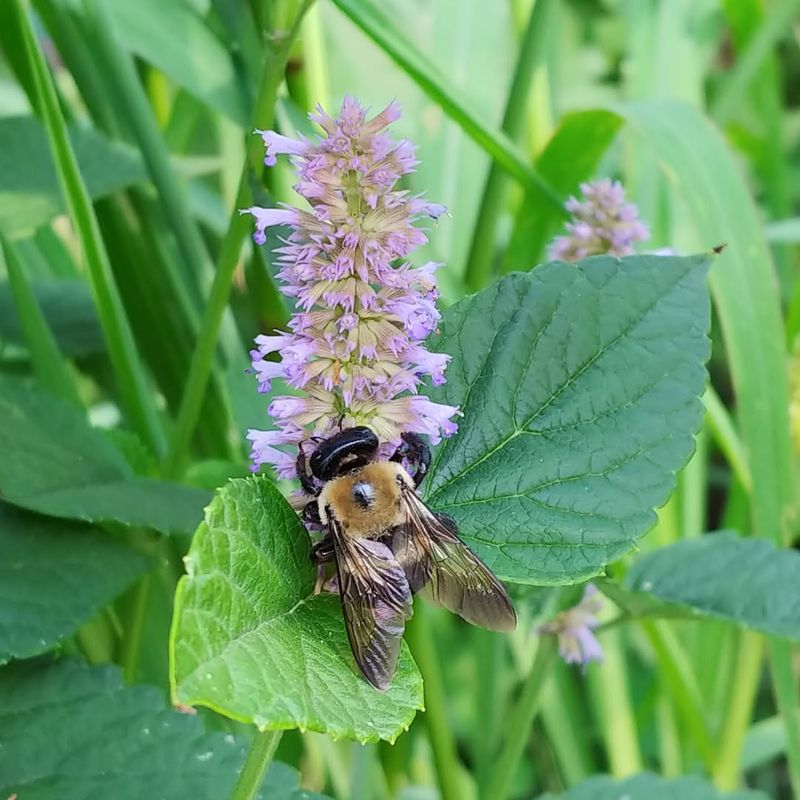
There is something almost magical about Anise Hyssop on a warm Michigan summer afternoon. Agastache foeniculum produces tall, elegant spikes of purple-blue flowers that seem to shimmer with bee activity from the moment they open.
The plant also releases a pleasant licorice-like fragrance from its foliage, which adds a sensory bonus to any garden space. Native to North America and well-suited to Michigan’s climate, it is both beautiful and genuinely powerful for supporting pollinators.
Blooming from midsummer through early fall, Anise Hyssop provides a long and consistent nectar supply during the busiest part of bee season.
Honeybees, bumblebees, and smaller native bee species all visit frequently, and the high nectar production keeps them coming back day after day.
Plant it in full sun with well-drained soil for the strongest growth, and avoid overly rich or wet soils that can cause the roots to struggle.
One of the most rewarding things about growing Anise Hyssop is how easily it self-seeds.
Allowing a few plants to scatter seed naturally at the end of the season means new plants will pop up the following spring, gradually expanding your patch without any extra effort.
Michigan gardeners who want a low-maintenance, high-impact pollinator plant consistently find Anise Hyssop to be one of the smartest choices they make. Plant it near a seating area and enjoy the constant hum of happy bees all season long.