Plants With Near Black Leaves Give Georgia Yards A Spooky Look That Lasts Past Halloween
Halloween decorations eventually come down, but dark foliage can keep that moody garden look going long after October ends.
Some ornamental plants produce leaves so deeply purple or burgundy that they appear almost black. Against lighter greenery, those unusual shades create contrast without relying on seasonal flowers.
You can use that difference to make ordinary planting beds more interesting throughout the year.
Georgia gardeners have several options, although not every dark-leaved plant stays colorful through winter. Some remain evergreen, while others lose their leaves or go dormant when temperatures drop.
Consider sunlight requirements before choosing where each plant belongs. Dark foliage can fade or perform poorly when growing conditions are unsuitable.
The right combination can give your yard a distinctive appearance that lasts beyond Halloween without requiring elaborate decorations.
1. Black Mondo Grass Holds Its Inky Leaves Through Winter
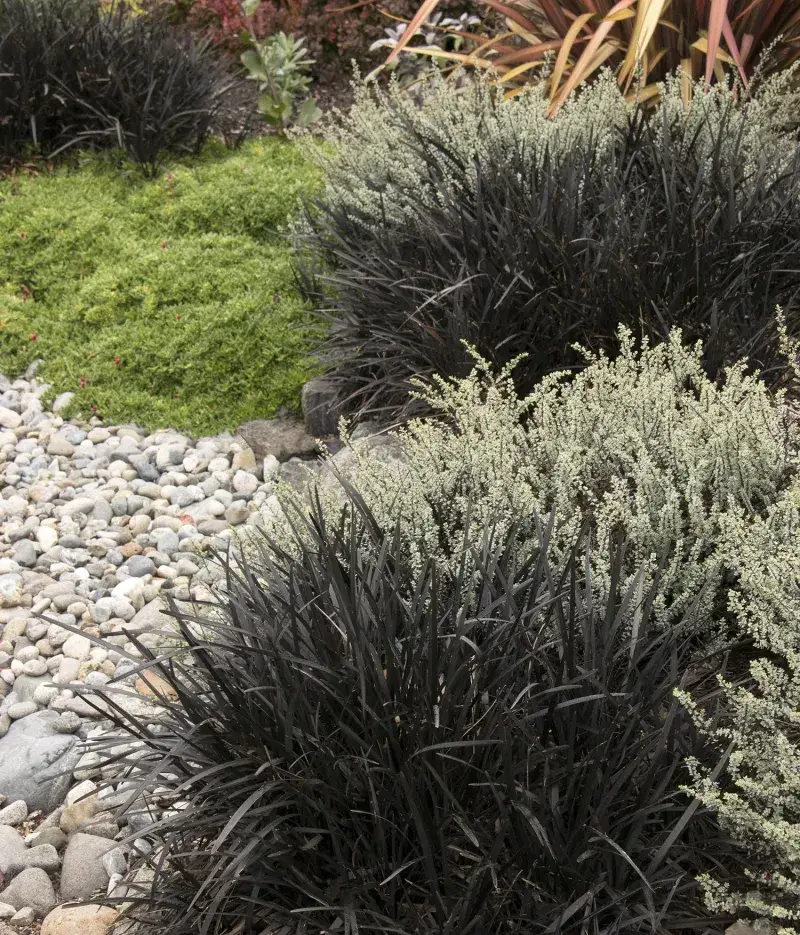
Few plants look as close to true black as this little grass lookalike. Black mondo grass, sold as Ophiopogon planiscapus ‘Nigrescens’, forms low tufts of strappy, purple-black leaves.
Despite the name, it is not a real grass at all.
It belongs to the asparagus family and grows from slow-spreading roots. That slow pace means a single pot will not cover a bed quickly, so plan on planting several close together.
Most Georgia gardeners find it evergreen, keeping its color through the cold months when other plants fade.
Part shade tends to suit it best, especially in the southern half of the state where afternoon sun can scorch the leaves. Morning sun with afternoon shade is a safe middle ground.
Soil should drain well but stay slightly moist. Soggy clay can lead to root rot, so mixing in compost or planting on a slight rise helps.
In summer, small pinkish bell flowers may show up, followed by dark berries in fall.
Pair it with gold or chartreuse plants like golden creeping Jenny for a strong contrast. It also looks sharp tucked between stepping stones or along the front of a shady border.
Very little upkeep is needed beyond trimming tattered leaves in late winter. Growth is slow, so patience pays off with this one.
2. Glossy Ajuga ‘Black Scallop’ Carpets Shady Ground Year-Round
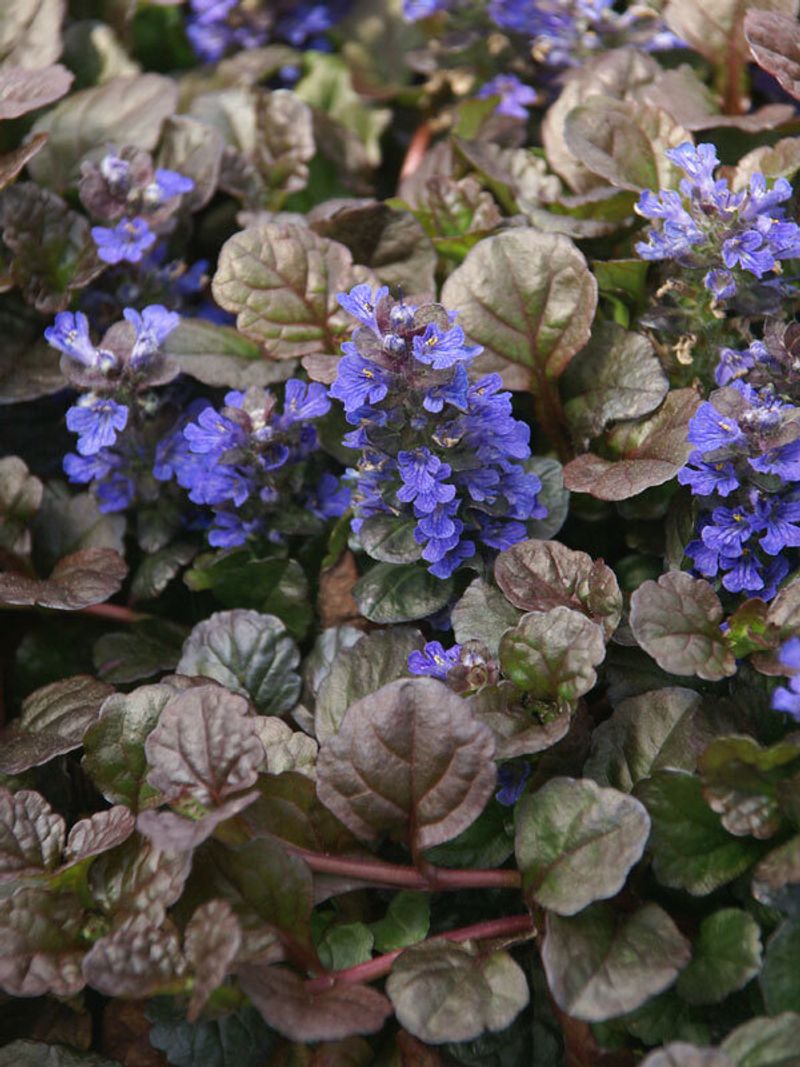
Shiny leaves that look almost lacquered make ‘Black Scallop’ stand out on the forest floor. Ajuga reptans, often called bugleweed, spreads by runners into a low, dense mat.
Leaves on this selection are a deep purple that reads nearly black, with wavy, scalloped edges.
Color depends a lot on light. In more sun the leaves usually darken, while deep shade can push them toward green-purple.
Across much of Georgia, dappled shade or morning sun is the sweet spot. Hot afternoon sun on the coastal plain can be too much, especially in dry spells.
Good drainage matters more than almost anything else for ajuga.
Crown rot can show up in humid summers when soil stays wet and air does not move. Spacing plants a bit apart and avoiding heavy mulch over the crowns may help, though results vary from yard to yard.
Your Georgia Garden Changes Every Week. Your Plan Should Too.
Gardening in Georgia changes quickly throughout the season. Every Friday you’ll receive a simple weekly plan showing exactly what to plant, prune, fertilize, harvest, and protect so you never miss the right timing.
In spring, short spikes of blue-violet flowers rise above the foliage and draw bees.
Leaves often stay evergreen in mild winters, though a hard freeze can bronze or tatter them. Fresh growth usually fills back in once the weather warms.
Ajuga works well under trees where grass struggles, or as a dark edge around hostas and ferns.
Runners can creep into lawns, so a simple edging strip keeps it where you want it.
3. Heuchera ‘Obsidian’ Adds Dark Mounds Beside Lighter Foliage
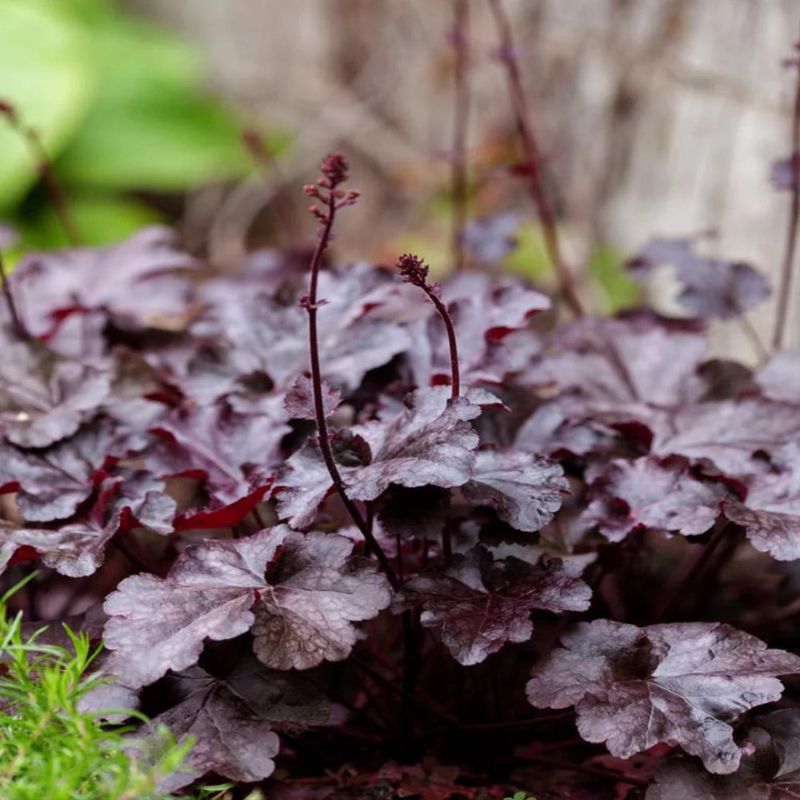
Set a mound of ‘Obsidian’ next to a bright green fern and watch both plants suddenly look better. Coral bells come in many colors, but this one has some of the darkest leaves available.
Its rounded, glossy foliage holds a deep purple-black tone through much of the year.
Heuchera can be picky in the heat, so placement matters a lot. In Georgia, afternoon shade is close to a must, especially below the fall line.
Gardeners in the north Georgia mountains often have an easier time with heuchera than those in the hot, humid south.
Drainage is the other key. Wet clay in winter is a common reason coral bells struggle, so raised beds, containers, or amended soil can make a real difference.
Many growers plant heuchera a little high and keep mulch away from the crown.
Over a few years the crown may rise out of the soil and look woody. Lifting and replanting it deeper in fall or early spring can refresh the clump.
Small cream flowers on thin stems appear in late spring or early summer.
Try pairing it with lime heuchera, silver lamium, or Japanese painted fern. The contrast makes shady corners feel planned instead of empty.
Containers on a porch are another smart option, since you control the soil and can move the pot if the sun gets too strong.
4. For A Dark Evergreen Shrub, Try Loropetalum ‘Black Diamond’
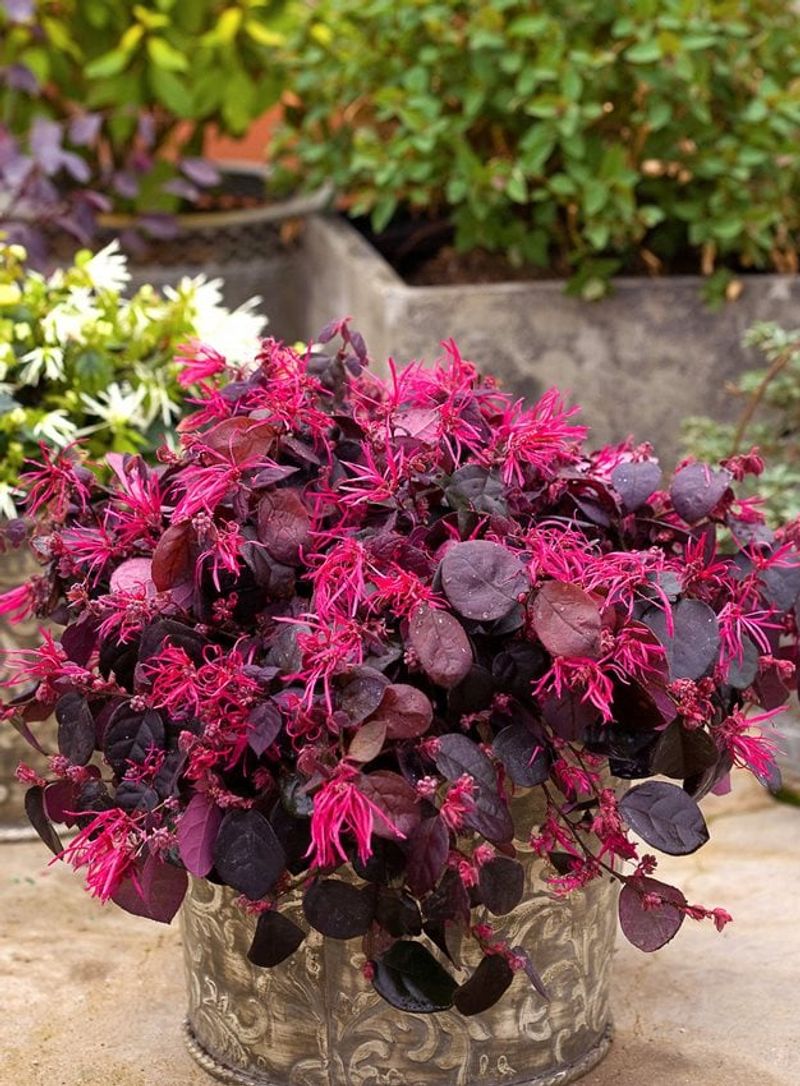
Loropetalum already shows up in plenty of Southern yards, but most kinds read reddish purple. ‘Black Diamond’, part of the Ruby Snow and Black series, holds much darker foliage that can look almost black in good light.
As a dwarf type, it tends to stay smaller than older loropetalums, though size can vary with growing conditions.
Evergreen leaves keep the dark color in winter, which makes it a solid choice for year-round structure in Georgia landscapes. New growth often comes in a bit redder before deepening.
Bright pink, fringe-like flowers usually open in spring, with a light rebloom possible later in the season.
Full sun to part shade works, and more sun generally means darker leaves. In the hottest spots, some afternoon relief keeps the plant looking fresh.
Loropetalum likes slightly acidic, well-drained soil, which suits much of the state.
Yellowing leaves can point to high soil pH or poor drainage, though a soil test from your county Extension office gives a clearer answer. Guessing often leads to the wrong fix.
Prune lightly right after spring bloom if shaping is needed.
Heavy cuts later in the year can remove next season’s flower buds. Use it as a low hedge, a foundation plant, or a dark backdrop for silver and gold perennials.
5. Euphorbia ‘Blackbird’ Pairs Near-Black Leaves With Lime Spring Bracts
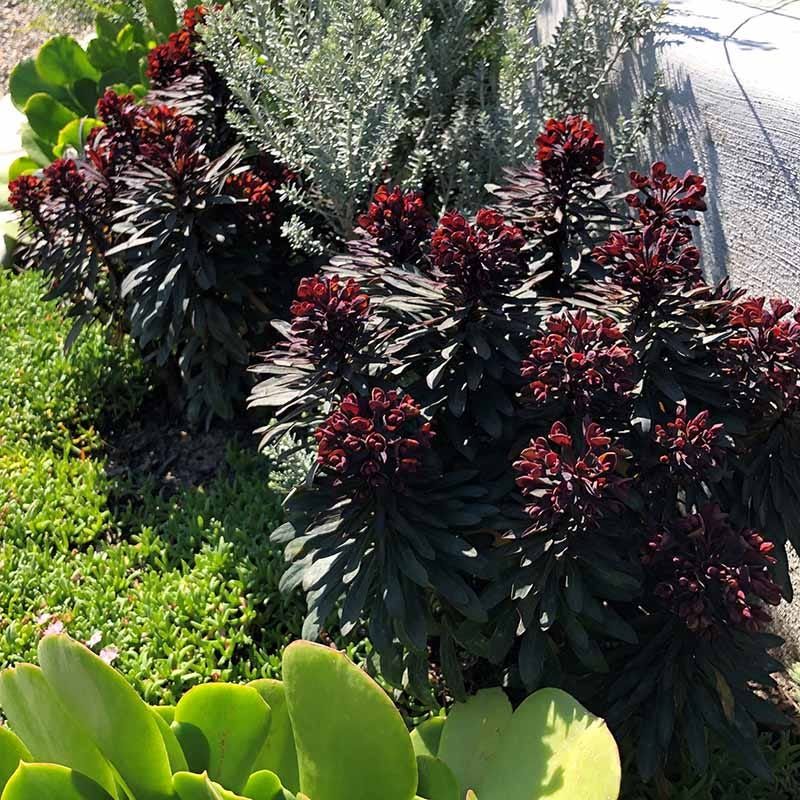
Picture a plant that looks like midnight all winter, then lights up with neon green in spring. Euphorbia ‘Blackbird’ does exactly that, with dusky purple-black leaves and bright lime bracts.
Those colorful parts are bracts and small flowers, and they usually show up from late winter into spring.
Here is the honest part. This spurge prefers sharp drainage and does not love long, humid summers.
In Georgia, it often performs best in the Piedmont and mountains, while gardeners near the coast may treat it as a short-lived plant.
Full sun to light shade helps keep the foliage dark. Rocky slopes, raised beds, and gravel gardens give it the dry feet it wants.
Skip the heavy fertilizer, since rich soil can make it floppy.
Once the bracts fade, cutting spent stems back to the base helps tidy the plant. Wear gloves when you do this, because the milky sap can irritate skin and eyes.
Keep it out of spots where kids or pets might chew on it.
Deer tend to avoid euphorbias, which is a nice bonus in suburban areas with heavy browsing.
Pair it with silver plants like lamb’s ear or with spring bulbs. The lime and black combination looks striking in late winter, when most beds are still brown.
6. Late Pink Flowers Glow Against Sedum ‘Black Jack’ Foliage
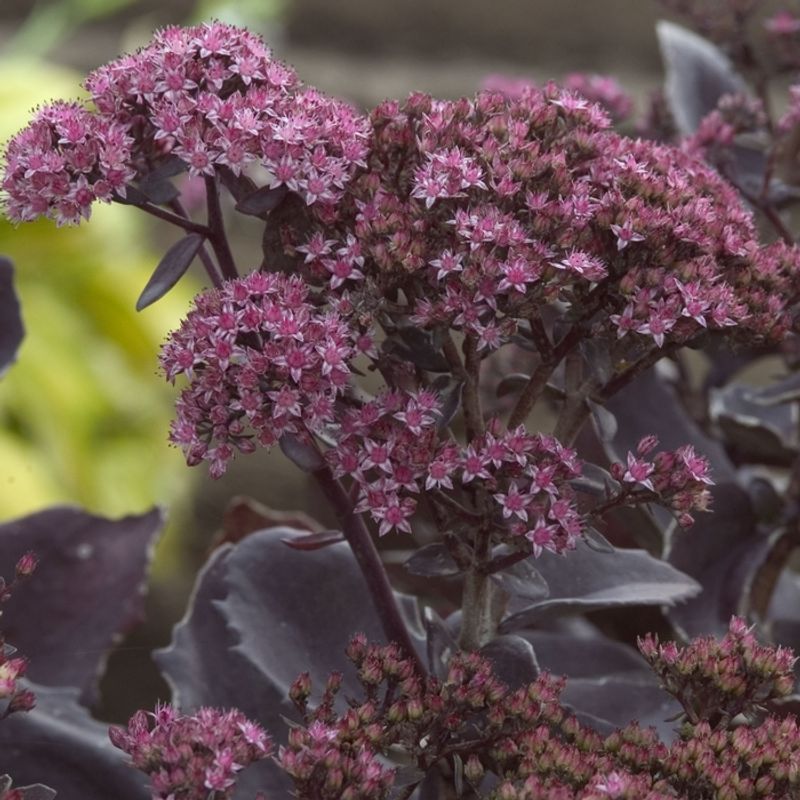
Bees seem to find ‘Black Jack’ before you even notice it has bloomed. Late in the season, this upright sedum opens broad heads of dusty pink flowers on top of dark, fleshy leaves.
Foliage starts out a deep burgundy and can look nearly black in full sun.
Sun is the main thing it asks for. In shade, stems tend to stretch and flop, and the leaf color often turns muddy.
Bloom time usually falls from late summer into fall, so it overlaps nicely with Halloween decorating.
Once flowers fade, the dried seed heads can stay standing into winter. Many gardeners leave them for texture and cut the stems back in late winter before new growth starts.
Drainage is critical, as with most succulents.
Heavy, wet clay is common in Georgia, so adding grit or planting on a slope can help. Overwatering is a more likely problem than drought once the plant settles in.
Skip rich fertilizer, which can lead to soft, sprawling stems.
If clumps open up in the middle, a light pinch in late spring may keep them tighter, though results depend on sun and soil. Dividing older clumps in spring also renews them.
Plant it with ornamental grasses, asters, or orange mums for a fall scene that looks just right on a dark autumn evening.
7. Black Lace Elderberry Shows Off Dark, Lacy Foliage Until Leaf Drop
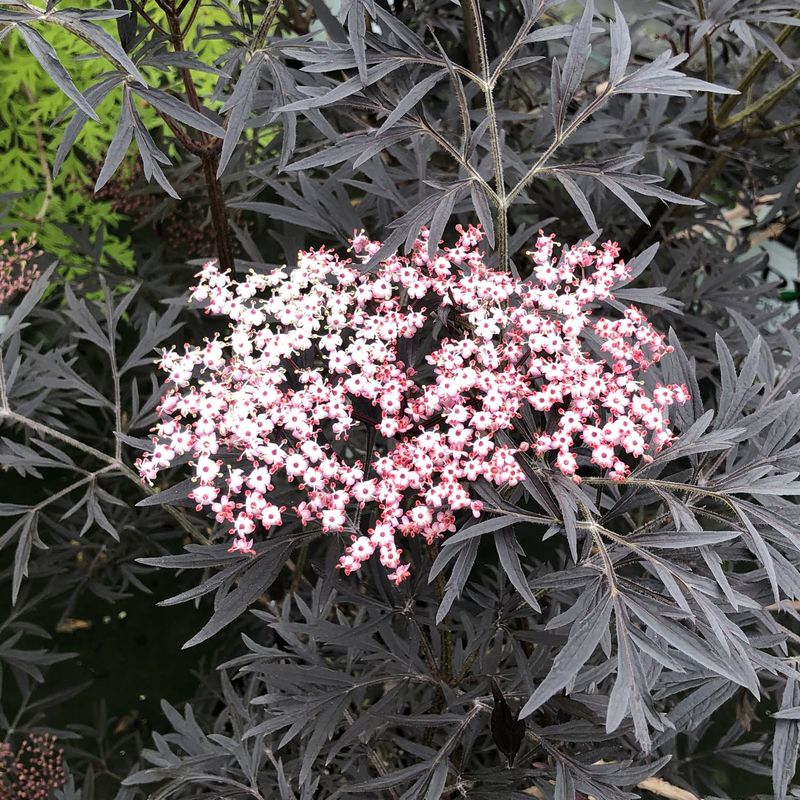
From a distance, Black Lace can pass for a Japanese maple. Up close, you see a deciduous elderberry with finely cut, deep purple leaves that look almost black.
Sold under the Proven Winners label, it is a selection of Sambucus nigra.
Flat clusters of pink flowers usually appear in late spring to early summer. Dark berries may follow if another elderberry grows nearby for cross-pollination.
Foliage holds its color through the growing season, then drops in fall like any deciduous shrub.
So it will not stay spooky all winter, but it carries the dark look well into autumn. Timing of leaf drop changes from year to year with the weather.
Full sun brings out the darkest leaf color. In hot parts of Georgia, though, a bit of afternoon shade can reduce leaf scorch and stress.
Steady moisture helps a lot, since elderberries like soil that does not dry out completely.
Mulch around the root zone holds water during summer dry spells. Watering deeply during long droughts keeps leaves looking cleaner.
Pruning is flexible. You can trim lightly after flowering, or cut older stems out in late winter to keep the shrub fresh and full.
Plant it behind bright perennials like coneflowers or black-eyed Susans, where its lacy dark leaves make a soft, shadowy backdrop.
8. Diabolo Ninebark Performs Better Where Summers Run Cooler
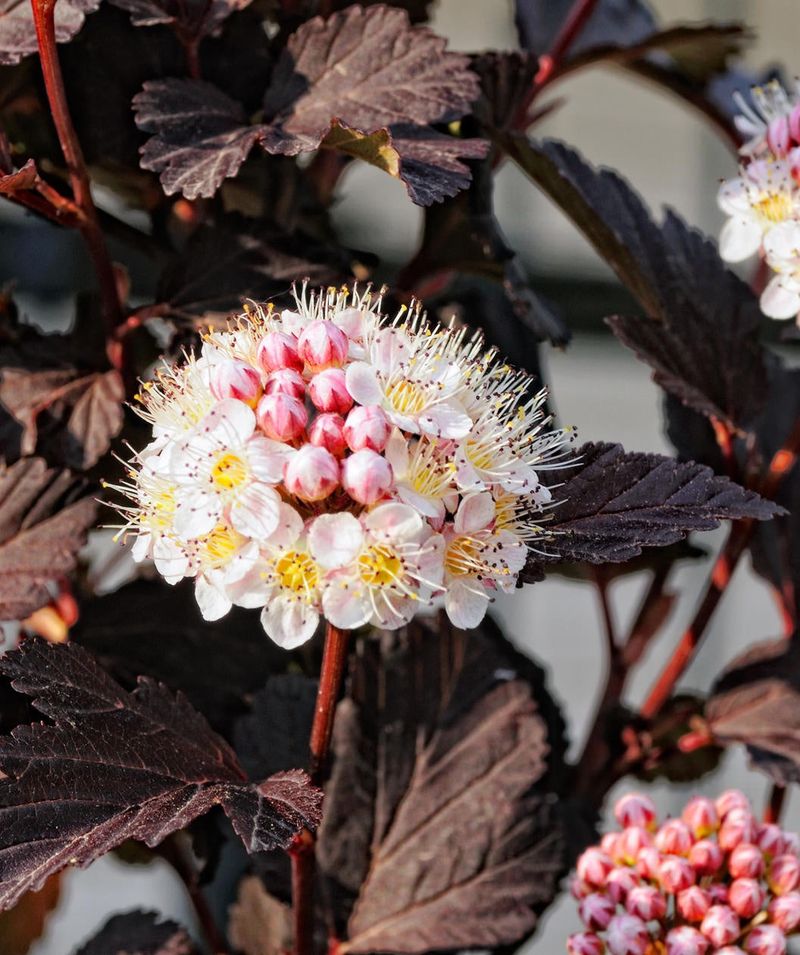
Mountain gardeners have the edge with this one. Diabolo ninebark is a selection of Physocarpus opulifolius, a shrub native to parts of eastern North America, including north Georgia.
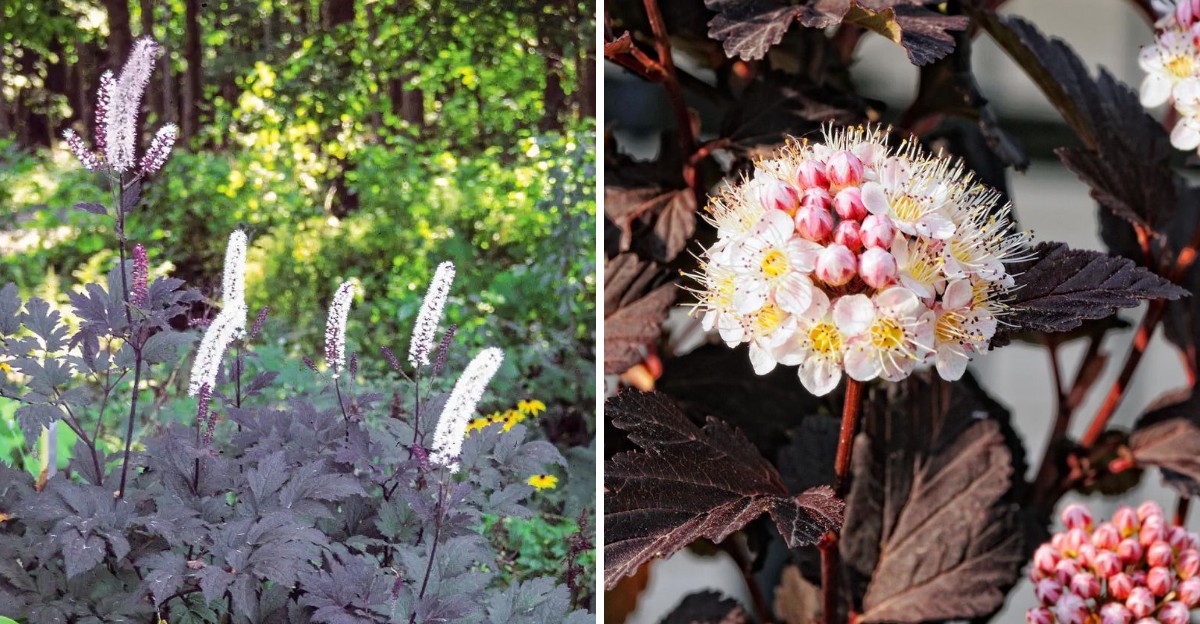
Its rounded leaves are a rich purple that reads close to black in strong sun.
Clusters of small white to pinkish flowers appear in late spring. Red seed capsules may follow, adding a bit more interest into summer.
Heat and humidity are where things get tricky.
In hot, muggy areas, powdery mildew can coat the leaves and the dark color may fade toward green. Results vary by site, airflow, and summer weather.
Gardeners in the Blue Ridge and upper Piedmont often see the best performance. South of Atlanta, many find newer, more mildew-resistant ninebarks a safer pick.
Full sun keeps the foliage darkest, though afternoon shade can help in warmer spots.
Good air movement matters, so avoid crowding it against walls or other shrubs. Water at the base instead of spraying the leaves.
Older stems have peeling bark, which is where the name ninebark comes from, and it adds winter texture after the leaves drop.
Thin out a few of the oldest stems at the base in late winter to keep the shrub open.
Paired with gold spirea or white hydrangeas, its dark leaves make the lighter plants glow.
9. Hillside Black Beauty Actaea Sends Up Fragrant Spikes In Early Fall
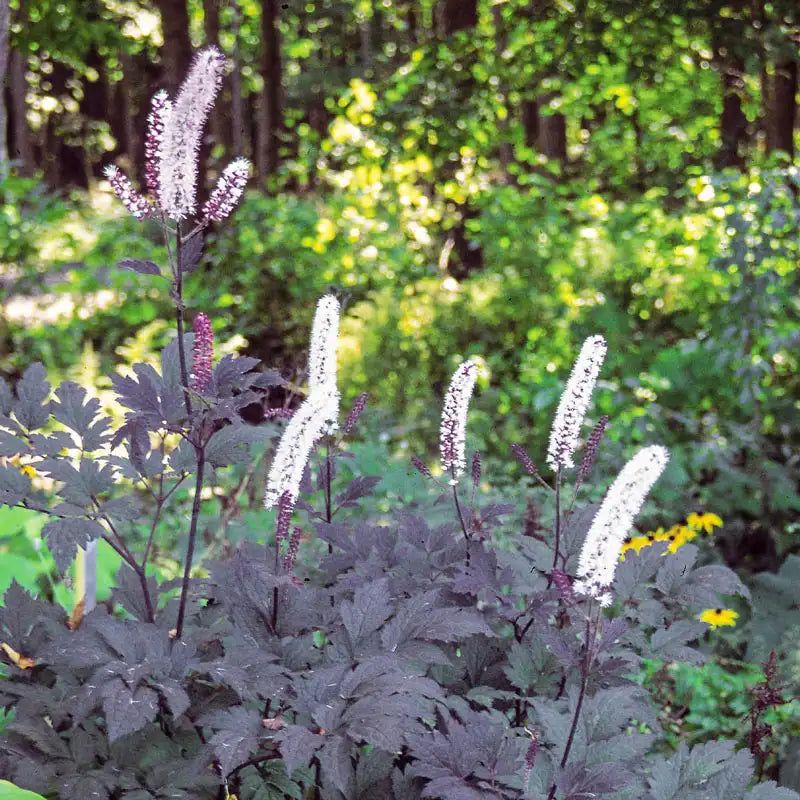
Walk past a blooming ‘Hillside Black Beauty’ on a cool evening and you may smell it before you see it. Tall, bottlebrush spikes of white to pale pink flowers rise above dark, ferny foliage, often from late summer into early fall.
Once called Cimicifuga, the plant now sits in the genus Actaea and goes by bugbane or black cohosh.
Leaves are deeply divided and hold a deep purple-black color through the season. As a deciduous perennial, it goes underground in winter and returns in spring.
Shade lovers will appreciate it, since it prefers part shade and rich, moist soil.
Hot, dry conditions are its weak spot. In Georgia, it tends to do best in the mountains and cooler upper Piedmont, where summer nights give it some relief.
Gardeners farther south can try it in deep afternoon shade with steady watering, though success varies.
Compost worked into the soil helps hold moisture, and a layer of mulch keeps roots cooler. Avoid letting it dry out during summer heat.
Patience helps, because plants may take a couple of years to settle in and bloom well.
Tall flower stems can lean toward light, so a spot with even shade keeps them straighter.
Plant it behind hostas, ferns, or Japanese forest grass for a woodland scene with dark leaves and late, ghostly white spires.