13 Poisonous Plants Ohio Gardeners Should Know And How To Identify Them
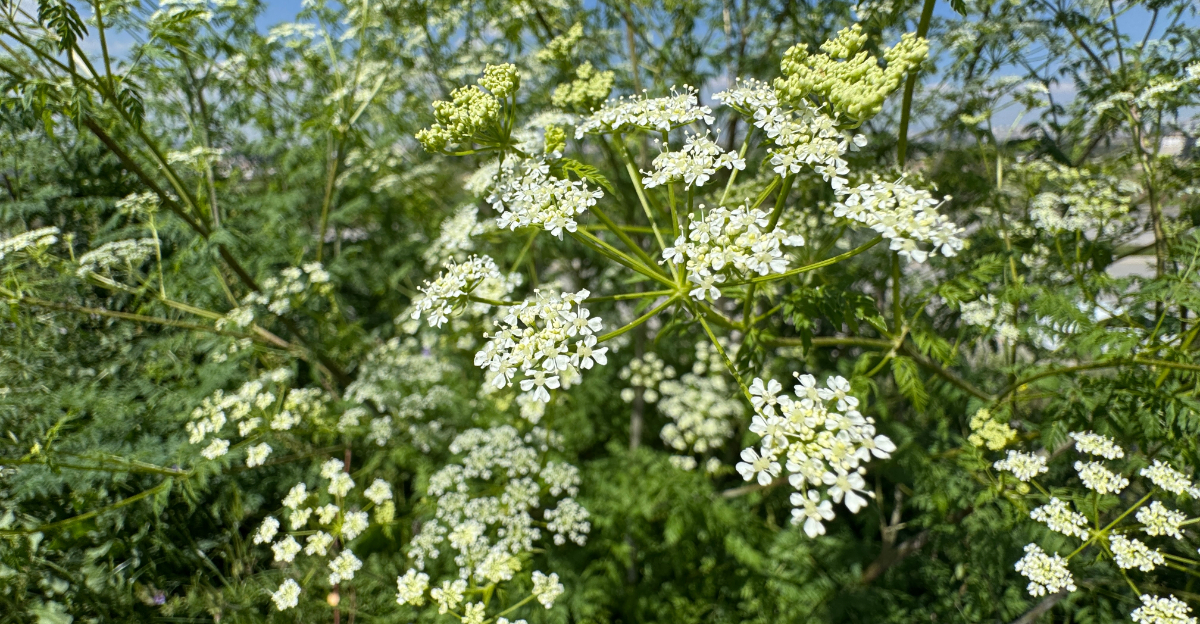
Most Ohio gardeners spend their time worrying about weeds, pests, and what is eating the tomatoes.
Far fewer realize that some of the most dangerous plants in the state may already be growing just a few steps from the porch, tucked along a fence line, mixed into the landscaping, or hiding beside plants that look completely harmless.
That is the real problem.
These plants do not always look threatening. Some have pretty flowers. Some have tempting berries. Some look like common weeds you would not think twice about pulling with bare hands.
But the wrong plant in the wrong place can leave you with burns, blisters, severe illness, or a dangerous situation for a child or pet.
Before you dig, pull, trim, or plant another thing, these are the poisonous plants Ohio gardeners need to know how to spot.
1. Poison Hemlock Hides In Plain Sight
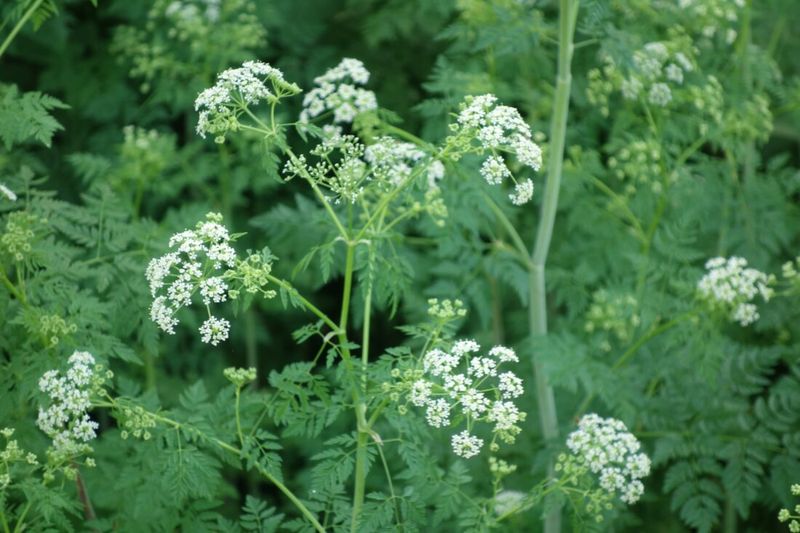
Walk along almost any Ohio roadside, ditch, or field edge and you might pass right by one of the most toxic plants in the state without even knowing it.
Poison hemlock (Conium maculatum) blends in easily because it looks a lot like wild carrot, parsley, or other plants in the carrot family.
That resemblance is exactly what makes it so risky for foragers or curious gardeners.
Look for tall, hollow stems that can reach six to eight feet, covered with distinctive purple or reddish-purple blotches or spots. The leaves are finely divided and fern-like, similar to parsley, and the plant produces flat-topped clusters of tiny white flowers.
When crushed, the leaves give off an unpleasant musty odor that many describe as mouse-like.
According to Ohio State University Extension, poison hemlock has spread widely across Ohio and is commonly found in disturbed soils, waste areas, and along roadsides. Every part of the plant contains toxic alkaloids, especially coniine.
Never handle it without gloves, and wash thoroughly afterward. If you suspect it is growing in your yard or garden, contact your local OSU Extension office for proper removal guidance.
2. Water Hemlock Thrives Near Wet Areas
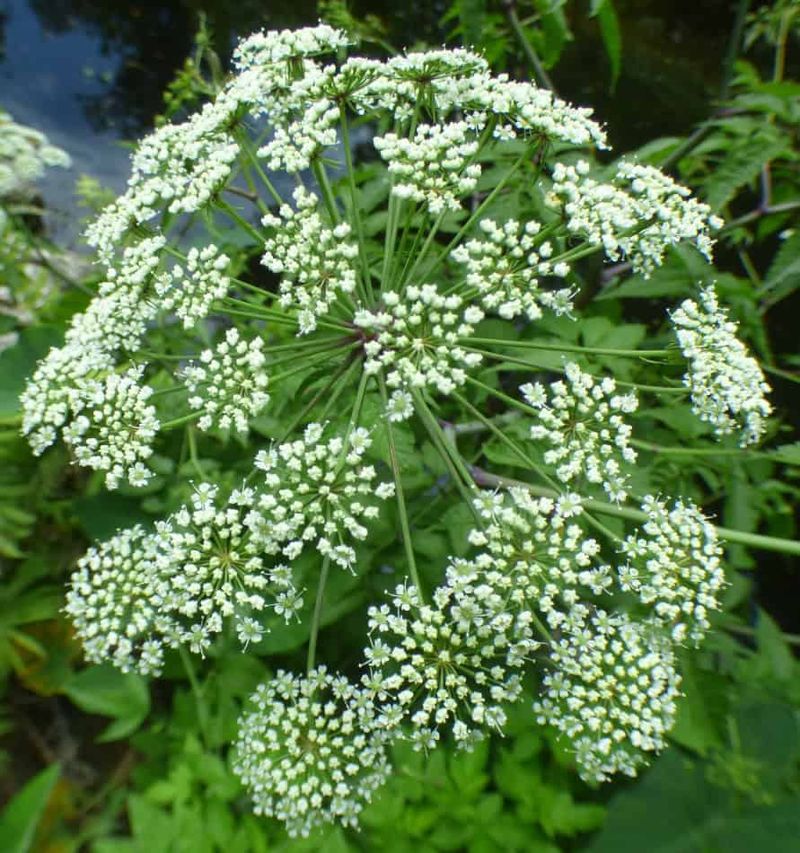
If your property borders a stream, pond, ditch, or low-lying marshy area, water hemlock is a plant you genuinely need to know.
Cicuta maculata is widely considered one of the most violently toxic plants native to North America, and it grows comfortably in wet Ohio habitats where people and animals often wander.
Water hemlock can look similar to wild carrot, poison hemlock, or other members of the carrot family at a glance, which adds to the confusion. Its stems are hollow and jointed, and the compound leaves have sharply toothed leaflets arranged in pairs.
Small white flowers appear in umbrella-shaped clusters much like poison hemlock, but the two plants prefer different environments. Water hemlock favors soggy ground near water, while poison hemlock tolerates drier disturbed soils.
The roots deserve special attention. When cut, the yellowish root chambers release a strong carrot-like smell and contain cicutoxin, a substance that can cause violent convulsions.
Ohio State University Extension and Ohioline resources note that livestock grazing near wet areas are particularly vulnerable in early spring when roots are exposed.
Your Ohio Garden Changes Every Week. Your Plan Should Too.
Gardening in Ohio changes quickly throughout the season. Every Friday you’ll receive a simple weekly plan showing exactly what to plant, prune, fertilize, harvest, and protect so you never miss the right timing.
Gardeners clearing ditches or low-lying beds should wear gloves, avoid contact with cut roots, and never attempt to taste or smell any unfamiliar plant growing near water.
3. Pokeweed Looks Tempting But Is Toxic
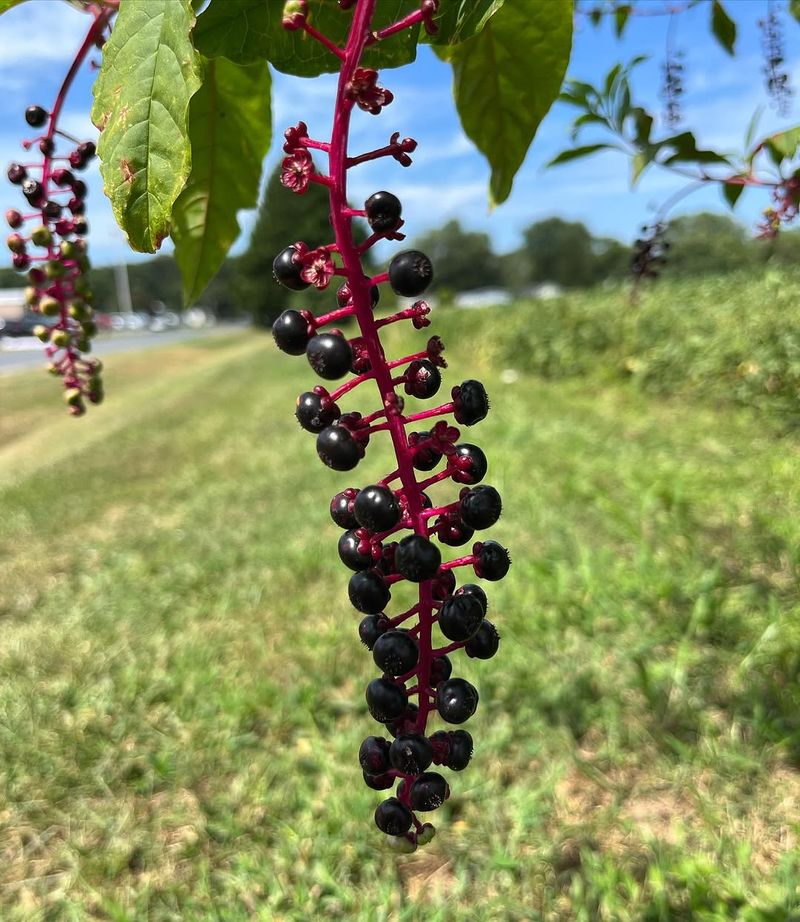
Few plants in Ohio manage to look as inviting and as hazardous at the same time as pokeweed.
Phytolacca americana produces clusters of shiny, dark purple-black berries that hang from vivid magenta-pink stalks, and they look almost like wild grapes or blueberries to a young child who does not know better.
Pokeweed is a large, bold plant. Mature specimens can reach eight to ten feet tall with thick, hollow reddish-purple stems and enormous leaves that can grow over a foot long.
It often pops up along fence lines, woodland edges, and disturbed garden areas. Birds eat the berries and spread the seeds widely, so it can show up almost anywhere in Ohio.
All parts of pokeweed carry toxic compounds called phytolaccatoxins and phytolaccigenin.
The roots are considered the most concentrated source of these compounds, but berries and leaves also pose real risks, especially to children who may be drawn to the colorful fruit.
The University of Florida IFAS and Ohio Master Gardener resources both caution that even skin contact with crushed plant material can cause irritation.
Wear gloves when removing it, bag all plant parts carefully, and pull young plants before the roots become deeply established.
4. Jimsonweed Brings Trouble To The Garden
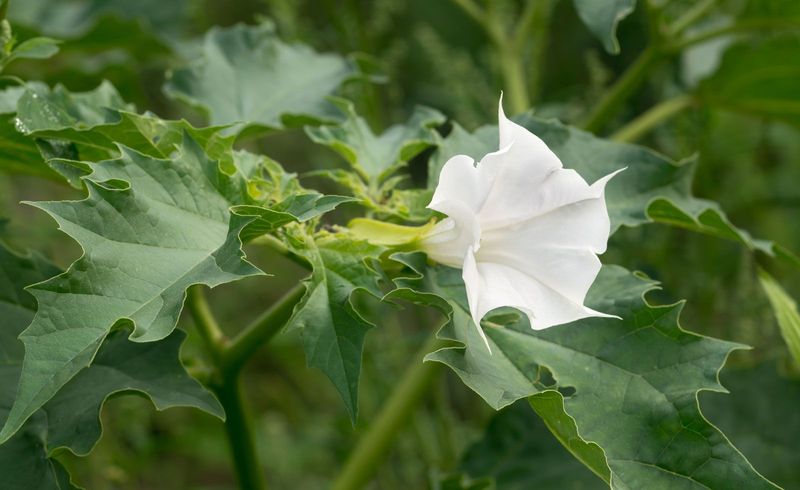
There is something almost theatrical about jimsonweed. Its large, trumpet-shaped white or pale purple flowers open in the evening and look almost elegant against its dark, coarse leaves.
But do not let that dramatic appearance fool you because every single part of this plant is toxic, from the roots to the spiny seed pods.
Jimsonweed (Datura stramonium) tends to show up in places where the soil has been disturbed, like garden edges, compost areas, neglected lots, roadsides, and crop field margins.
It has a distinctly unpleasant, heavy smell that many people find off-putting, which is actually a helpful warning sign.
The leaves are large with irregular, jagged teeth, and the seed pods are round and covered in sharp spines.
The plant contains tropane alkaloids including atropine, scopolamine, and hyoscyamine.
According to Ohio State University Extension and Ohioline, jimsonweed is considered a weed of concern in Ohio agricultural settings and can be toxic to livestock that accidentally consume it.
Children have been harmed after handling or tasting plant parts out of curiosity. Remove it promptly wearing gloves and long sleeves, dispose of it in sealed bags, and never burn jimsonweed because the smoke can also cause harm.
5. Yew Has A Dangerous Hidden Side
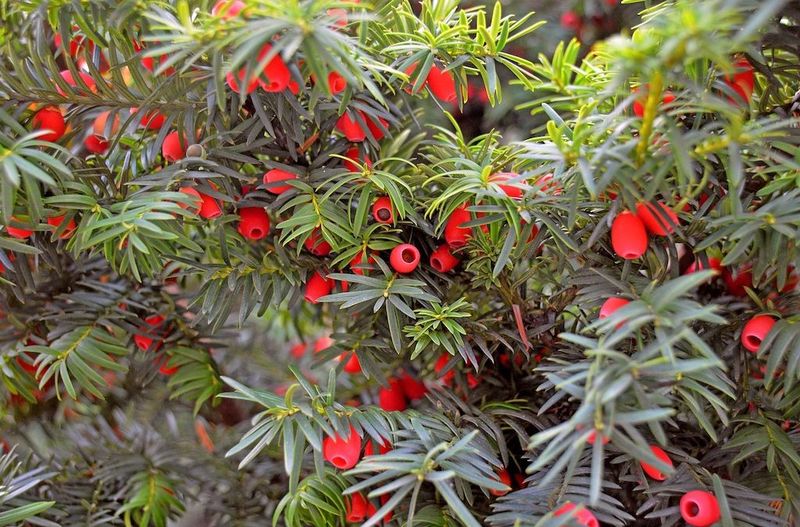
Yew shrubs are one of the most commonly planted foundation plants in Ohio neighborhoods, and that widespread familiarity is part of what makes them worth discussing carefully.
Taxus species are used everywhere in landscaping because they are dense, evergreen, and easy to shape into hedges and borders.
Most homeowners have walked right past them hundreds of times without a second thought.
The bright red, fleshy arils that appear on female yew plants in late summer and fall look like small berries, and they do attract birds. The red flesh of the aril is not toxic, but the dark seed inside absolutely is.
The needles and bark also contain taxine alkaloids, which are the compounds that make yew genuinely hazardous to people and animals.
Pets are especially vulnerable. The ASPCA lists yew as toxic to dogs, cats, and horses, and cases of animal poisoning from yew in residential landscapes are documented regularly.
Children curious about the bright red berries may be tempted to eat them. Ohio Master Gardener resources recommend that households with young children or free-roaming pets consider replacing yew with safer alternatives.
If you keep yew in your landscape, rake up fallen arils promptly and never allow clippings to remain accessible to animals.
6. Foxglove Is Beautiful But Highly Toxic
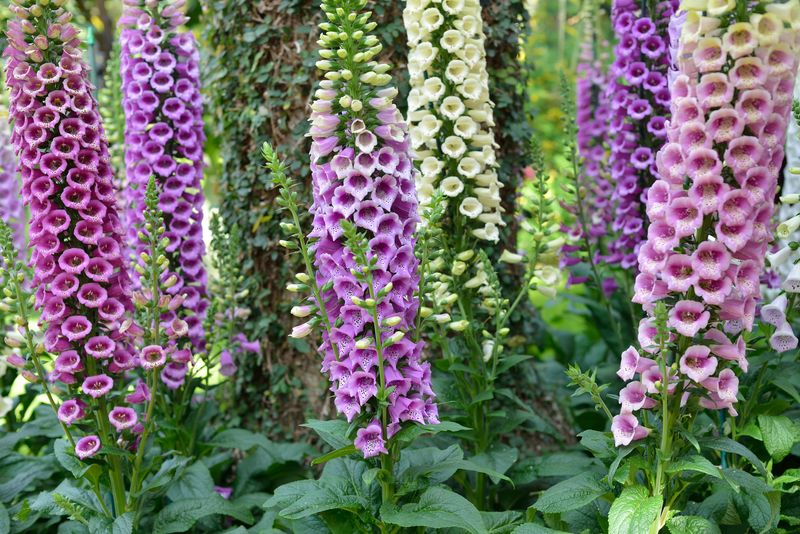
Cottage gardens across Ohio often feature foxglove for a very good reason: the tall spikes of tubular flowers in shades of purple, pink, and white are genuinely stunning.
Digitalis purpurea is one of those plants that looks like it belongs on a greeting card, which is exactly why it is so important to understand that its beauty comes with a serious warning attached.
Foxglove contains cardiac glycosides, most notably digitoxin and digoxin.
These compounds affect heart muscle function and have actually been used in controlled medical treatments for heart conditions, but in uncontrolled amounts from plant ingestion, they are extremely dangerous.
The entire plant is toxic, including leaves, flowers, and seeds, and toxicity does not decrease when the plant is dried.
Foxglove is a biennial, meaning it grows leafy the first year and blooms the second. First-year plants produce a low rosette of large, soft, woolly leaves that can be mistaken for comfrey or mullein.
According to the North Carolina State Extension and other university resources, accidental ingestion of foxglove leaves mistaken for edible herbs has caused serious poisoning incidents.
Wear gloves when handling it, keep it away from areas where children play, and label it clearly in any shared garden space.
7. Lily Of The Valley Comes With Serious Risks
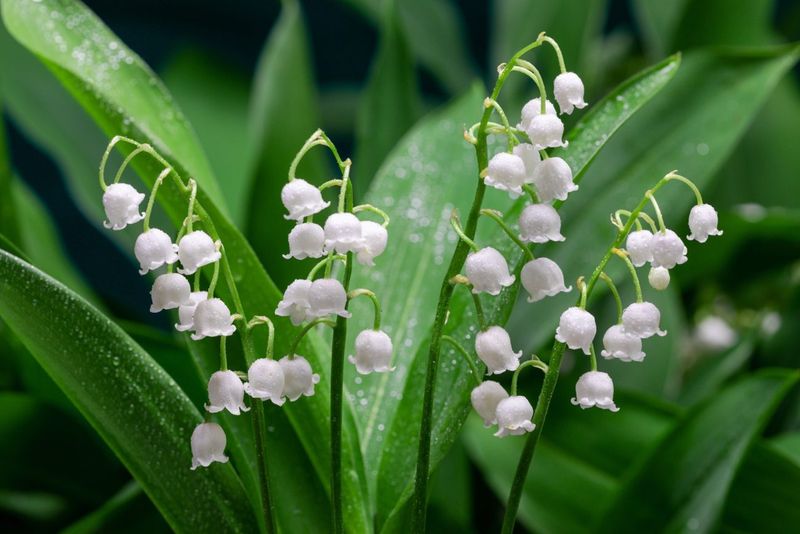
Few plants carry the same sense of quiet charm as lily of the valley.
The tiny white bell-shaped flowers hanging from arching stems have a sweet, clean fragrance that has made this plant a beloved choice for shade gardens, woodland borders, and even wedding bouquets for generations.
It feels soft, gentle, and completely harmless, which is what makes the reality worth knowing.
Convallaria majalis contains over thirty cardiac glycosides, including convallatoxin and convallarin. The whole plant carries these compounds, from the roots and leaves to the flowers and the small red-orange berries that appear in late summer.
Even the water in a vase holding cut lily of the valley flowers can become problematic if consumed.
It spreads by underground rhizomes and can form dense ground cover patches in shaded Ohio gardens. That spreading habit means it can quietly colonize areas where children and pets play without anyone noticing how much has accumulated.
The ASPCA lists it as toxic to dogs and cats. Ohio gardeners who love this plant should absolutely keep it in a spot that is not accessible to young children or free-roaming animals, and anyone handling it should wash their hands thoroughly afterward.
Its appearance is deceptively innocent.
8. Azalea Adds Color But Also Toxicity
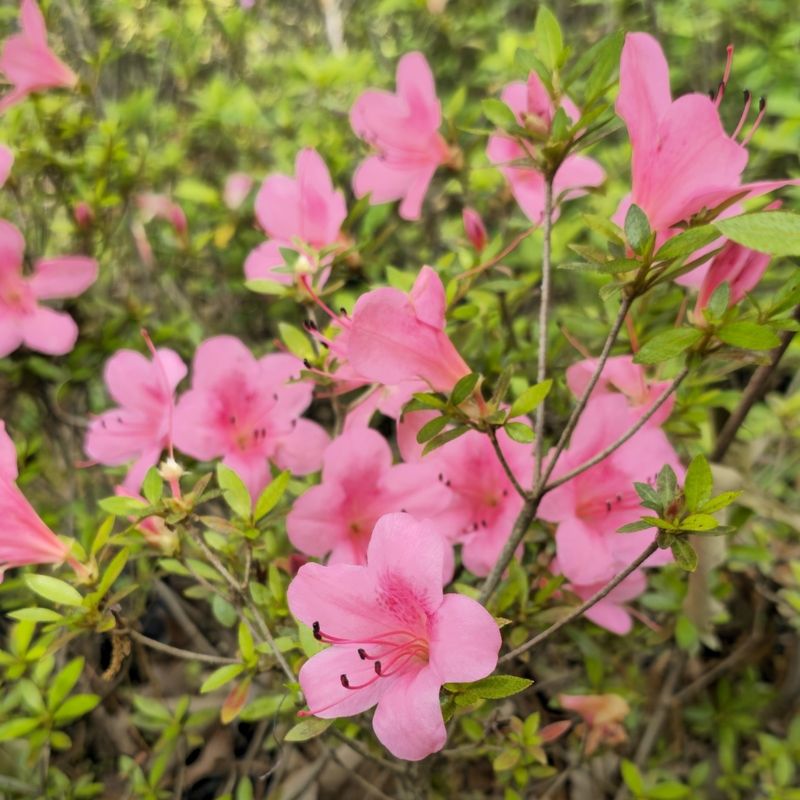
Spring in Ohio would not look the same without azaleas.
These flowering shrubs are planted in front yards, along driveways, and in ornamental beds across the state, and their bold blooms in pink, red, white, and purple are one of the most recognizable signs that warmer weather has arrived.
Because they are so common and so well-loved, it is easy to assume they are completely safe to have around.
Azaleas belong to the Rhododendron genus and contain grayanotoxins, compounds found throughout the plant including in leaves, flowers, and nectar. These toxins interfere with normal cell function and can affect the cardiovascular and nervous systems.
Even honey made from azalea nectar has historically caused poisoning in humans, sometimes called mad honey poisoning.
Grazing animals like horses, goats, and sheep are particularly at risk, and the ASPCA confirms azalea toxicity in dogs and cats as well.
According to university extension resources, even a relatively small amount of plant material can cause significant symptoms in animals.
Ohio gardeners with pets or livestock should take note of where azaleas are planted and consider fencing or alternative shrubs in areas animals can access. Beautiful plants can still carry real risks, and azalea is a perfect reminder of that.
9. Wild Parsnip Causes Painful Burns In Sunlight
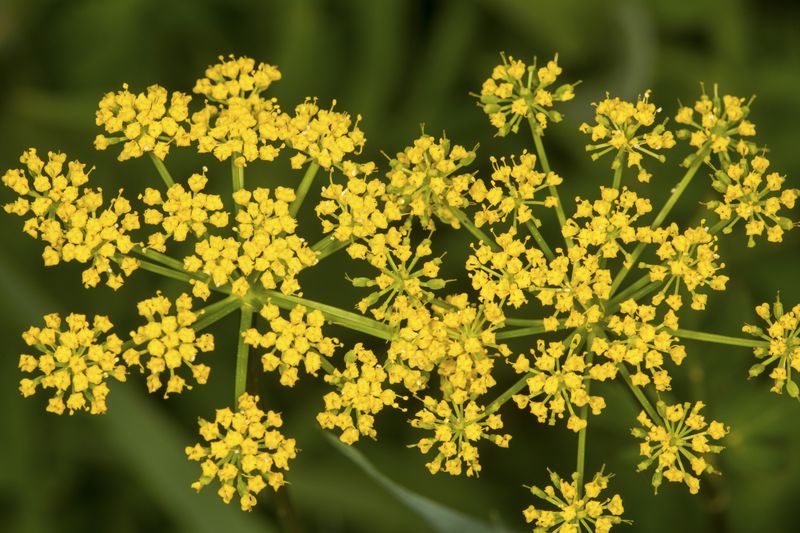
At first glance, wild parsnip might not seem like anything worth worrying about. Its clusters of small yellow flowers look similar to harmless roadside plants, and it often grows quietly along field edges, ditches, fence lines, and even the borders of backyard gardens across Ohio.
That low-profile appearance is exactly what makes it so dangerous.
Wild parsnip (Pastinaca sativa) contains chemicals called furanocoumarins in its sap. When the sap comes into contact with your skin and is then exposed to sunlight, it can trigger a reaction known as phytophotodermatitis.
Instead of an immediate sting, the burn develops over time, often appearing hours later as redness, blisters, and darkened patches that can last for weeks or even months.
The plant can grow three to five feet tall with grooved stems and compound leaves, and it produces flat-topped clusters of yellow flowers that resemble dill or Queen Anne’s lace at a distance.
Ohio State University Extension and other Midwest resources regularly warn about wild parsnip because it spreads aggressively in unmanaged areas and poses a real risk to gardeners, hikers, and anyone doing yard work in sunny conditions.
Never handle wild parsnip with bare skin. Wear gloves, long sleeves, and eye protection when removing it, and avoid mowing or trimming it on bright days when sap can spray onto exposed skin.
If contact does occur, wash the area immediately and keep it out of sunlight.
In Ohio gardens, this is one plant where simple contact can turn into a serious injury if you are not paying attention.
10. Castor Bean Stands Out For All The Wrong Reasons
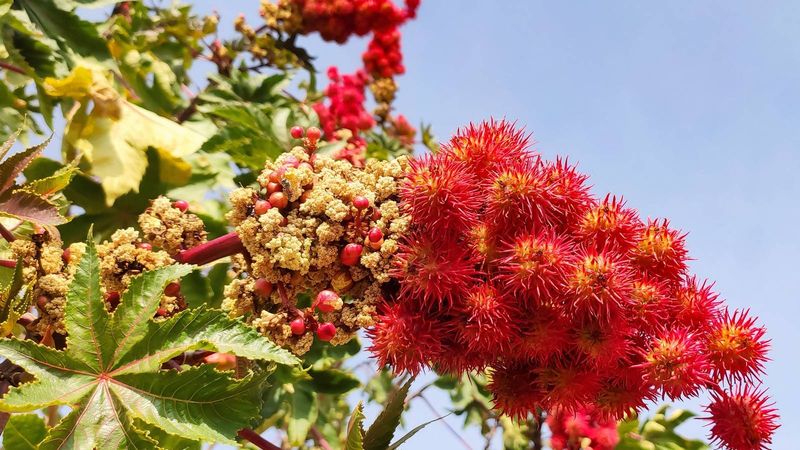
Bold, tropical, and eye-catching, castor bean is the kind of plant that stops people in their tracks at the garden center.
Ricinus communis grows fast and large, sometimes reaching eight to ten feet in a single Ohio growing season, with enormous star-shaped leaves that can be deep green or dark reddish-bronze depending on the variety.
It is used as a dramatic accent plant in summer borders and container gardens across the state.
The seeds are where the most serious concern lies. Castor bean seeds contain ricin, one of the most potent naturally occurring toxins known.
Ricin is present in the hard-coated seeds that form inside the plant’s spiny, bristly seed pods.
While the seeds have a hard coat that reduces absorption if swallowed whole, chewing even a small number of seeds can release enough ricin to cause severe harm.
Ohio State University Extension and other university resources note that castor bean is grown legally as an ornamental but should be handled with great care.
Wear gloves when working around the plant, remove seed pods before they mature and open if children or pets are nearby, and dispose of them securely.
The plant’s spectacular appearance makes it tempting to grow, but that visual drama should never overshadow the real and serious risks that come with it.
11. Poison Ivy Is The Most Common Hidden Hazard
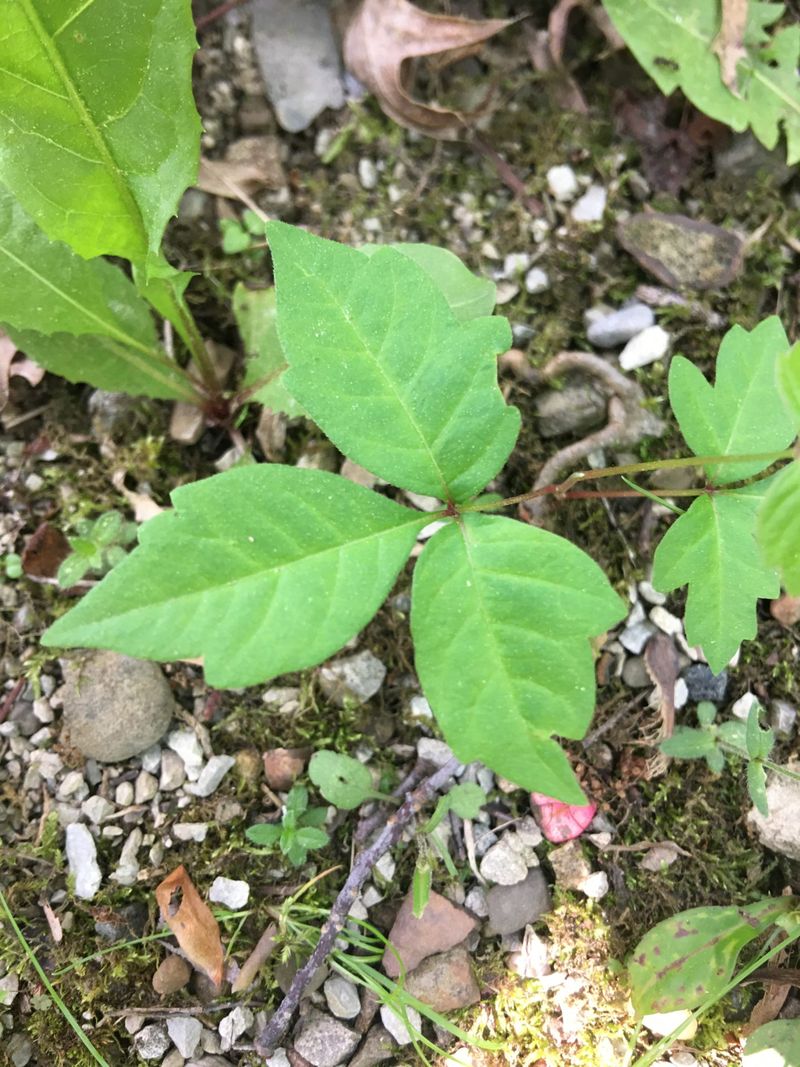
Few plants in Ohio are as widespread and as consistently troublesome as poison ivy. It does not stand out with bright flowers or unusual shapes, which is exactly why so many gardeners come into contact with it without realizing what they are touching.
Poison ivy (Toxicodendron radicans) grows in a wide range of environments, from wooded edges and fence lines to backyard gardens, landscaping beds, and even climbing up trees or walls.
It can appear as a low ground cover, a trailing vine, or a climbing vine with hairy aerial roots, making it easy to miss in different stages of growth.
The classic rule, “leaves of three, let it be,” is a good starting point for identification. Each leaf is made up of three leaflets, with the center leaflet usually having a longer stem.
The edges can be smooth or slightly toothed, and the plant may produce small greenish flowers followed by pale white berries.
The real danger comes from an oily resin called urushiol, which is found in every part of the plant.
Even light contact with the leaves, stems, or roots can transfer this oil to your skin, leading to an intensely itchy rash with redness, swelling, and blisters that may take weeks to fully heal.
According to Ohio State University Extension and Ohio Poison Centers, poison ivy is one of the most common causes of plant-related skin reactions in the state.
The oil can also linger on clothing, tools, pet fur, and garden gloves, meaning you can be exposed long after leaving the plant behind.
Never pull poison ivy with bare hands. Wear gloves, long sleeves, and wash all clothing and tools after contact.
Avoid burning it, as inhaling the smoke can cause severe internal irritation.
In Ohio gardens, this is not a rare danger or an occasional problem. It is one of the most common ways people get hurt working outdoors without even realizing it.
12. Daffodil Has More Than Spring Charm
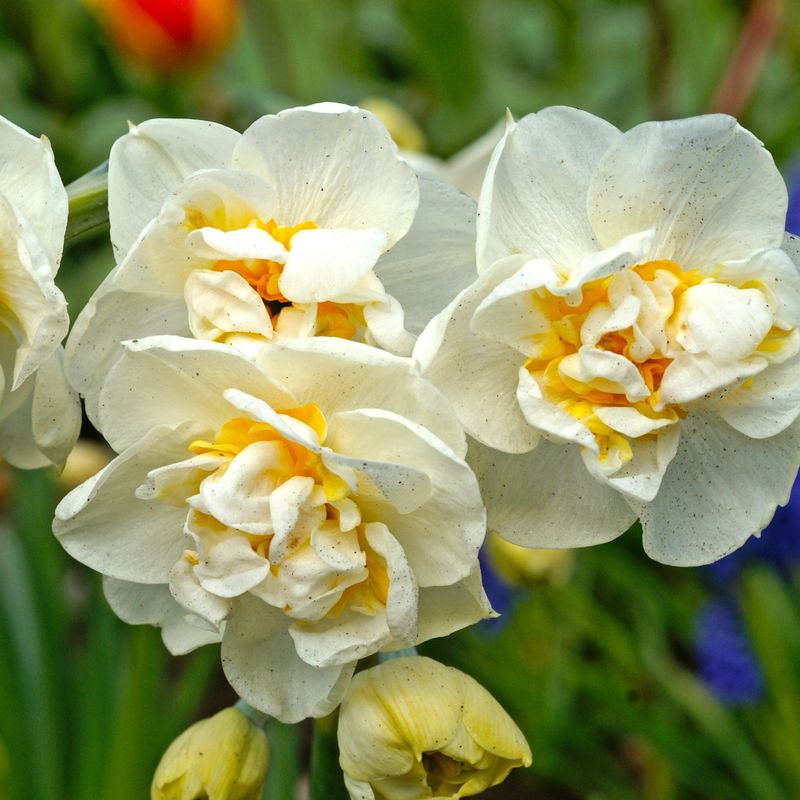
Daffodils are practically a symbol of Ohio spring. Bright yellow blooms popping up along driveways and in garden beds signal the end of winter, and nearly every Ohio gardener has planted a bag of Narcissus bulbs at some point.
They are cheerful, reliable, and resistant to most pests, which makes them seem like one of the safest plants in the garden.
The bulbs are where the greatest concern lives. Daffodil bulbs contain lycorine and other alkaloids that can cause nausea, vomiting, and other unpleasant symptoms if eaten.
The bulbs have been mistaken for onions by people unfamiliar with them, and the leaves have occasionally been confused with wild garlic or chives. All parts of the plant carry some level of toxicity, though the bulbs are the most concentrated.
Children and pets are the most common concern with daffodils in home gardens. Dogs sometimes dig up bulbs out of curiosity, and young children may handle flowers or leaves without washing their hands.
The sap from cut stems can also cause skin irritation in sensitive individuals, a condition sometimes called daffodil itch among florists and gardeners. Ohio State University Extension and the ASPCA both confirm daffodil toxicity for companion animals.
Store unused bulbs securely, plant them in areas pets cannot dig, and always wash hands after handling any part of the plant.
13. Monkshood Makes A Bold But Risky Statement
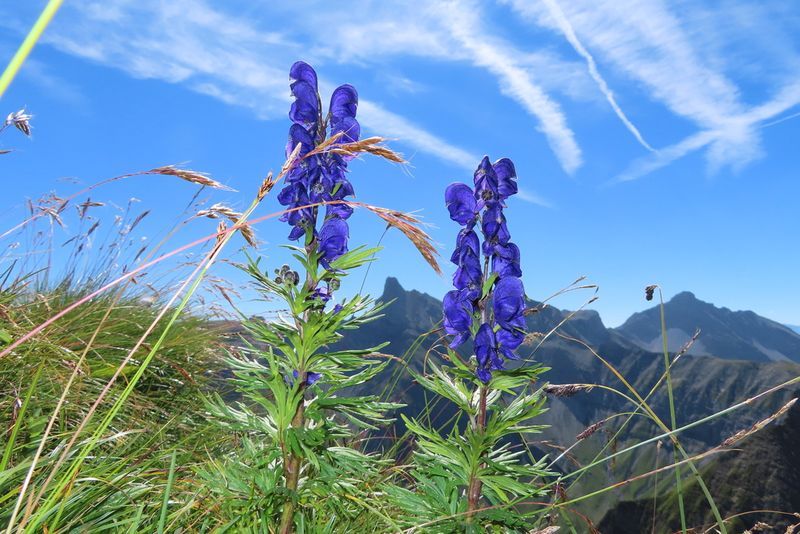
Few perennials command attention in a late-summer garden the way monkshood does.
The tall spikes of deep violet-blue hooded flowers have an almost regal quality, and the plant blooms when much of the garden is winding down, making it especially prized by Ohio gardeners who want late-season color in shaded or partly shaded borders.
Its dramatic look has kept it popular in perennial gardens for centuries.
Aconitum napellus, also called wolfsbane, contains aconitine and related alkaloids throughout every part of the plant. These compounds are among the most toxic found in any ornamental garden plant.
Skin contact with the sap, especially from the roots, can cause tingling and numbness even without ingestion. Gardeners have reported numbness in their fingers after handling monkshood without gloves.
The roots look somewhat like small parsnips or horseradish roots, which has led to dangerous mix-ups historically.
According to university extension resources including those from Cornell and other land-grant institutions, monkshood should always be handled with gloves and long sleeves, and hands must be washed thoroughly afterward.
Keep it away from vegetable gardens where root confusion could occur. Ohio gardeners who grow it for its undeniable ornamental value should treat it with consistent respect, because its beauty is completely real and so is its toxicity.
A little awareness goes a long way in the garden. The more familiar these plants become, the easier it is to avoid them and keep your space safe for everyone who spends time in it.