Why Your Florida Crown Of Thorns Won’t Bloom No Matter What You Do
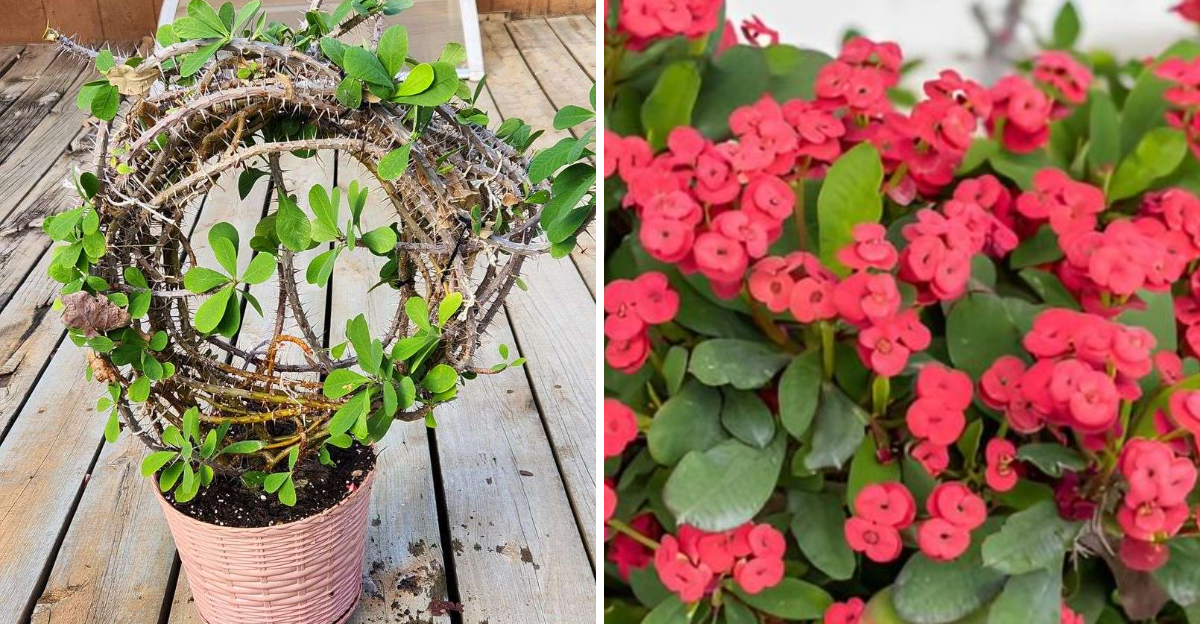
Crown of thorns in Florida looks like it should bloom constantly. Succulent stems, tropical origins, and a heat tolerance that most plants would envy.
The blooms it produces when conditions are right are exactly what earned it a spot in yards across the state. When those blooms stop coming, no amount of patience brings them back on its own.
A crown of thorns that refuses to bloom is not a defective plant. It is a plant waiting on something specific that the current situation is not providing.
The cause is almost always identifiable and almost always fixable once the right variable gets examined. Florida gardeners cycle through the obvious suspects.
Not enough sun, wrong soil, too much water. Those matter.
But the reason crown of thorns stops blooming is often more specific than any of those general categories cover. The answer is closer than most people expect.
1. Too Much Shade Is Quietly Stealing The Flower Show
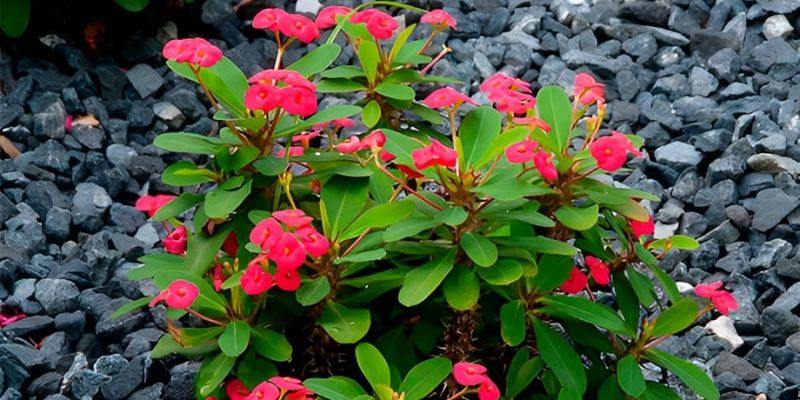
Full sun is not optional for a heavy-blooming crown of thorns. This plant evolved in open, sun-baked environments, and it needs that intensity to trigger flowering.
A spot that feels bright to you may still fall short of what Euphorbia milii truly needs.
Florida balconies with overhead screens, patios shaded by mature trees, and spots near roof overhangs are common culprits. Even a structure that blocks only a few hours of morning or afternoon light can reduce bloom output significantly.
Seasonal shade shifts can make a formerly sunny spot much darker by midsummer.
Healthy green growth is misleading. A plant can push out new leaves in moderate light while putting out very few flowers.
Lush foliage does not confirm that the plant is getting enough sun for serious flowering.
Container plants have an advantage here. You can move them gradually into stronger light over one to two weeks to avoid sudden stress.
Avoid moving a plant from deep shade directly into blazing afternoon sun. Landscape plants are harder to relocate, so observe the site at different times of day before assuming shade is not the issue.
2. Extra Fertilizer Can Build Stems Instead Of Blooms
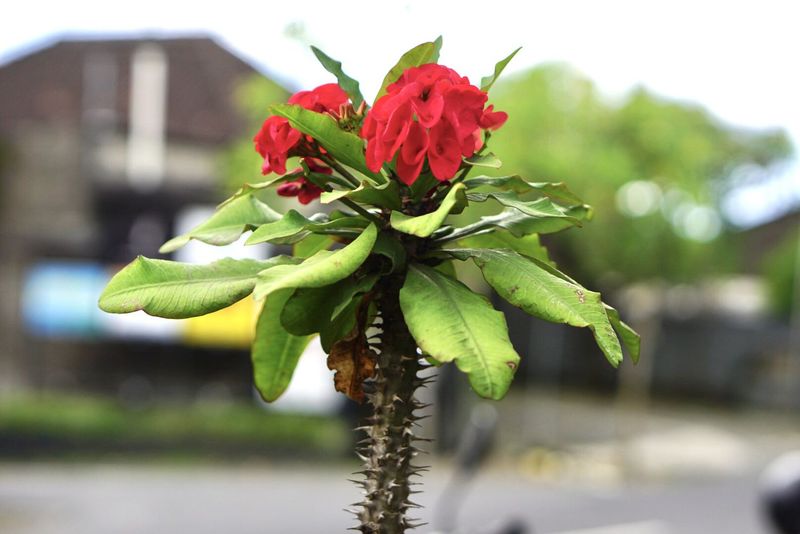
Reaching for the fertilizer bag when a plant stops blooming is a natural reaction. With crown of thorns, it can sometimes make the problem worse rather than better.
Excess nitrogen encourages fast, leafy vegetative growth, and that energy can come at the expense of flower production.
Before feeding, check the plant’s recent history. Has it been fed frequently?
Is the potting mix brand new and already nutrient-rich? New mixes often contain enough nutrition to carry a plant for several months without additional feeding.
Look at what the plant is actually doing. If stems are growing quickly and leaves look dark green and oversized, extra feeding is probably not the answer.
Steady, moderate growth with decent color usually means nutrition is not the limiting factor.
No fertilizer formula or specific feeding schedule is universally correct for every plant and setting. A light application of a balanced product applied during the active growing season is a reasonable starting point.
Your Florida Garden Changes Every Week. Your Plan Should Too.
Gardening in Florida changes quickly throughout the season. Every Friday you’ll receive a simple weekly plan showing exactly what to plant, prune, fertilize, harvest, and protect so you never miss the right timing.
Chasing blooms with constant high-phosphorus boosters is not a proven fix and can create nutrient imbalances over time. Diagnose before you feed, and resist the urge to treat fertilizer as an automatic solution.
3. Summer Rain May Be Keeping The Roots Too Wet
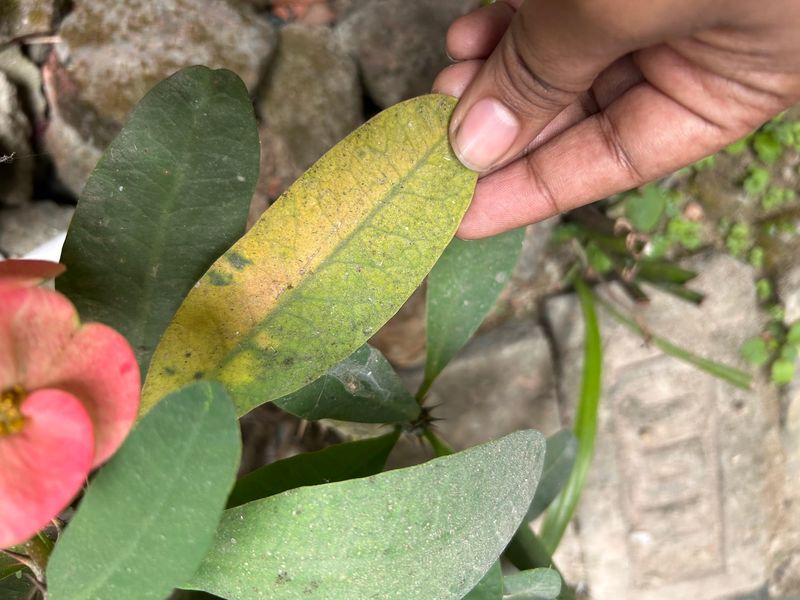
Euphorbia milii is a succulent, and its roots need air as much as they need water. Prolonged moisture in the root zone creates conditions that interfere with normal plant function, including flowering.
Florida summer rainy seasons can deliver far more water than this plant is built to handle.
Drainage is the first thing to check. A pot without holes, a saucer that holds standing water, or a compacted potting mix that stays soggy for days can all keep roots in an unhealthy state.
A pot sitting directly in a puddle after a heavy storm is a warning sign worth acting on.
During periods of frequent rain, natural rainfall may completely replace any supplemental watering you planned. Many growers forget to adjust their routine when the wet season begins.
Continuing to water on a fixed schedule during heavy rain periods adds unnecessary moisture.
One symptom alone is not enough to confirm a root problem. Yellowing leaves, soft stems near the base, and a sour soil smell together suggest moisture is excessive.
Moving a container plant to a covered area during extended rainy stretches can help. Always confirm drainage is genuinely working before assuming the plant simply dislikes rain.
4. Going Bone-Dry For Too Long Can Backfire Too
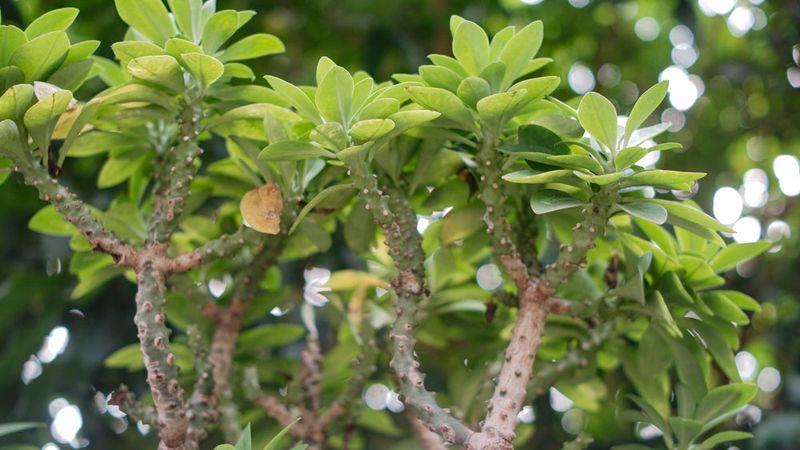
Drought tolerance is one of crown of thorns’ genuine strengths, but tolerance is not the same thing as a preference for constant dryness.
Established plants can handle dry spells reasonably well, yet extended periods without any water can interrupt normal growth cycles and reduce flowering.
Small containers are especially tricky. A four-inch or six-inch pot sitting in direct sun can go from moist to completely dry within a day or two during hot weather.
Landscape soil holds moisture much longer, so container owners need to check more frequently than they might expect.
Severe wilting and significant leaf drop are signs that a plant has been pushed past comfortable dryness. Recovery is possible, but growth may take time to resume its normal rhythm after a serious dry stress episode.
Flowering may be delayed while the plant redirects energy toward rebuilding.
Withholding water deliberately to force blooms is not a verified or reliable technique for this species. The goal is finding a consistent middle ground: allowing the soil to dry out between waterings without letting the plant sit in bone-dry conditions for weeks.
Balance matters more than leaning hard toward either extreme on the moisture scale.
5. Constant Pruning Keeps Interrupting The Next Display
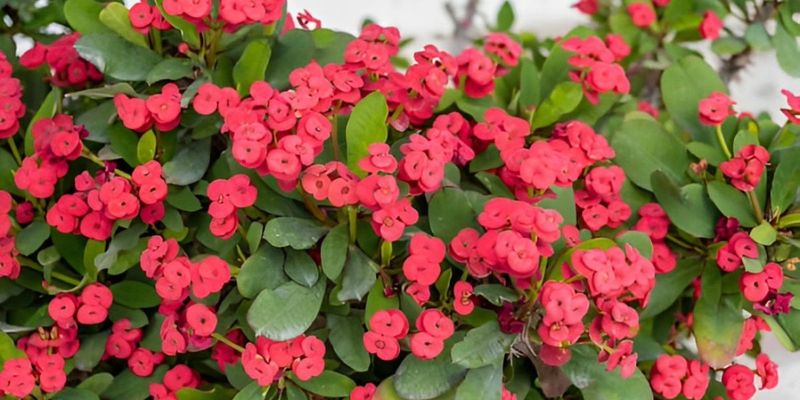
Flowers on crown of thorns appear at the tips of actively growing stems. Every time those stem tips are cut away, the potential flowering point goes with them.
Repeated trimming can keep resetting the plant before it ever has a chance to build toward a bloom cycle.
Treating this plant like a tightly clipped hedge is a common mistake. Some Florida growers shape it frequently to keep it compact, not realizing they are removing the very growth that would eventually carry flowers.
The plant may look tidy but rarely blooms as a result.
Pruning has its place. Removing stems that are clearly damaged, crossing awkwardly, or growing in a direction that creates problems is reasonable maintenance.
Selective, occasional trimming is very different from routine shearing on a fixed schedule.
Handle this plant carefully regardless of how much you prune. The thorns are sharp and the milky sap, known as latex, can irritate skin and eyes on contact.
Wear gloves and avoid touching your face during or after working with it. Wash hands thoroughly afterward.
Stopping heavy pruning will not guarantee instant blooms, but giving stem tips time to develop is a necessary condition for flowering to happen at all.
6. A Tight Pot Probably Is Not The Problem You Think
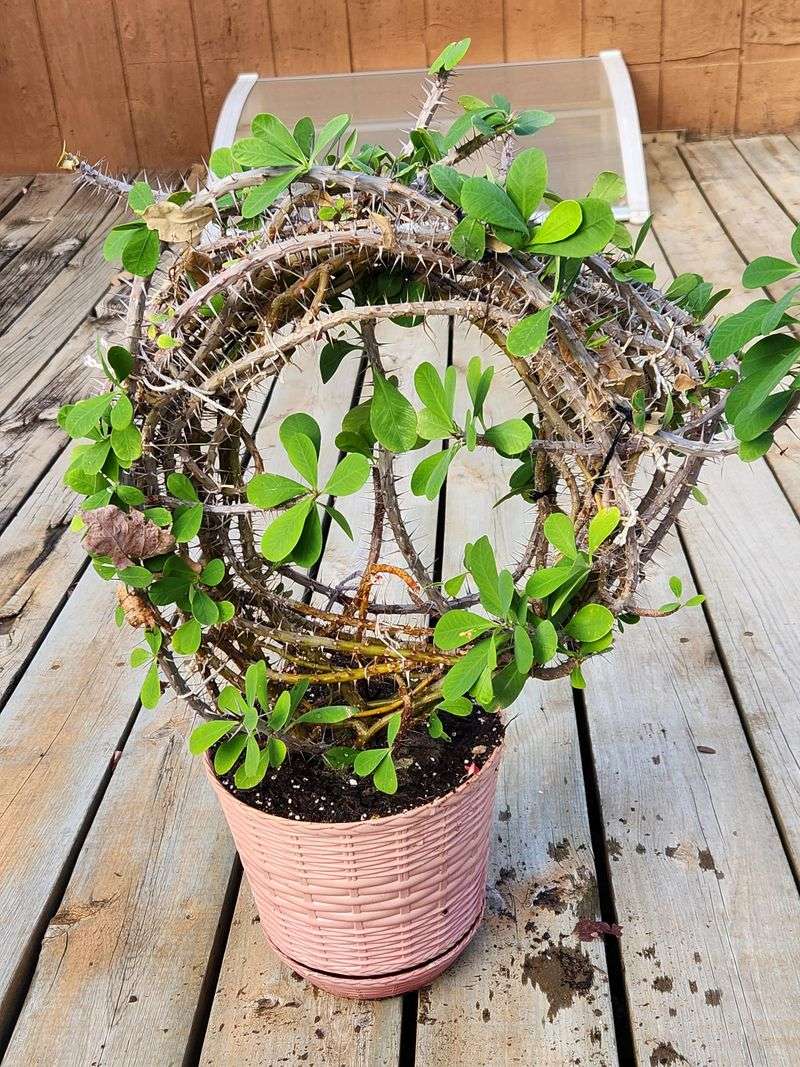
Repotting is often the first fix people reach for when a plant underperforms. With crown of thorns, the connection between pot size and bloom output is not as straightforward as it is with some other plants.
Some evidence suggests that being somewhat root-bound does not automatically suppress flowering in this species.
Before moving a plant to a larger container, look for signs that repotting is genuinely needed. Several signs can justify repotting.
These include roots growing densely out of the drainage hole, a pot that dries within hours of watering, or a plant that has structurally outgrown its container. Repotting simply because the plant is not blooming is a weaker reason.
Moving into an oversized container creates its own risks. A large pot holds more soil volume, and more soil holds more moisture for longer.
For a succulent-type plant that prefers to dry between waterings, that extra moisture retention can work against healthy root function.
If repotting is genuinely necessary, choose a container only slightly larger than the current one and use a well-draining mix suited to succulents or cacti. Good drainage remains more important than simply giving the roots more room.
Check the drainage setup carefully before and after any repotting decision.
7. Your Hybrid May Play By Different Watering Rules
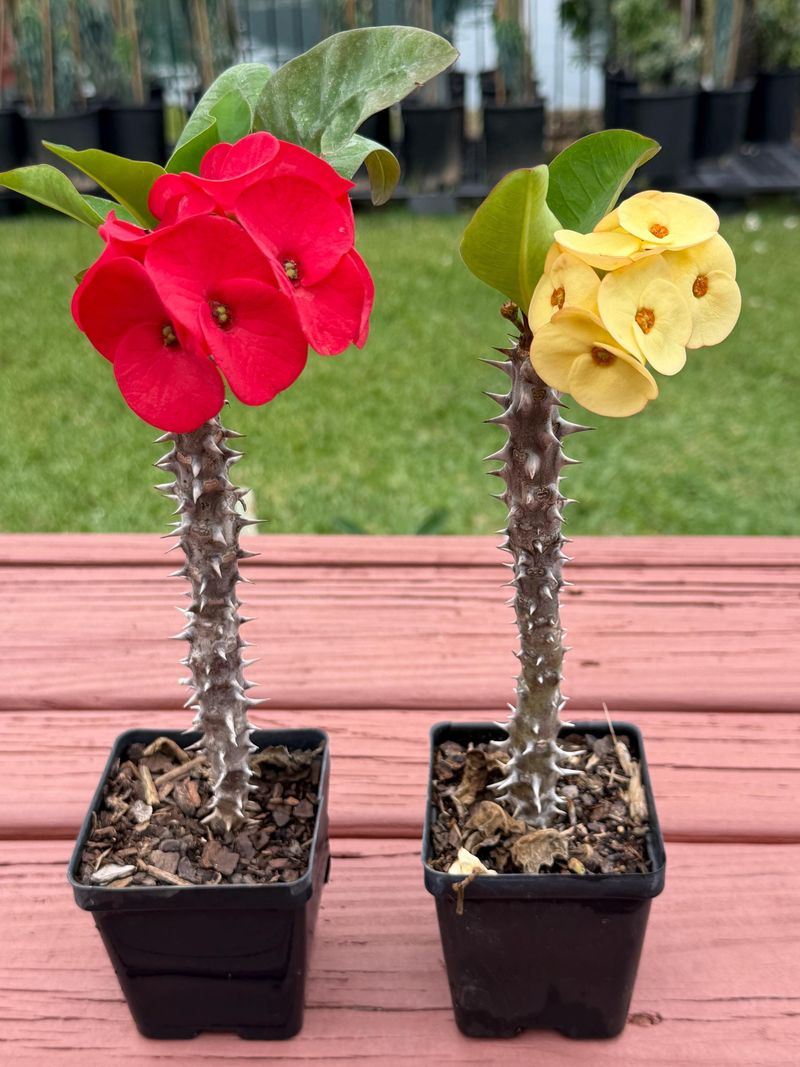
Not all crown of thorns plants are alike. The species includes traditional forms along with a wide range of hybrids.
Many were developed in Thailand and produce significantly larger flowers and different growth habits. Assuming every plant in this group behaves identically can lead to mismatched care decisions.
Thai hybrids, for example, tend to be larger in overall size and may have somewhat different moisture and light preferences compared to the compact traditional forms.
Flower color, size, and frequency can all vary depending on which type you are growing.
A care routine that works perfectly for one form may not suit another.
Identifying your specific plant can genuinely improve the quality of care you provide. Check the label if you still have it, or compare your plant to reference photos from reliable sources.
Knowing whether you have a compact traditional type or a large-flowered hybrid gives you a better starting point for adjusting light, water, and feeding.
Cultivar differences are not an excuse to invent watering schedules or make unsupported claims about specific varieties. The core principles of good drainage, adequate sun, and moderate feeding still apply across the group.
But recognizing that variation exists helps you ask better questions when standard advice is not producing results.
8. Cold Stress Can Knock A Good Bloomer Off Schedule
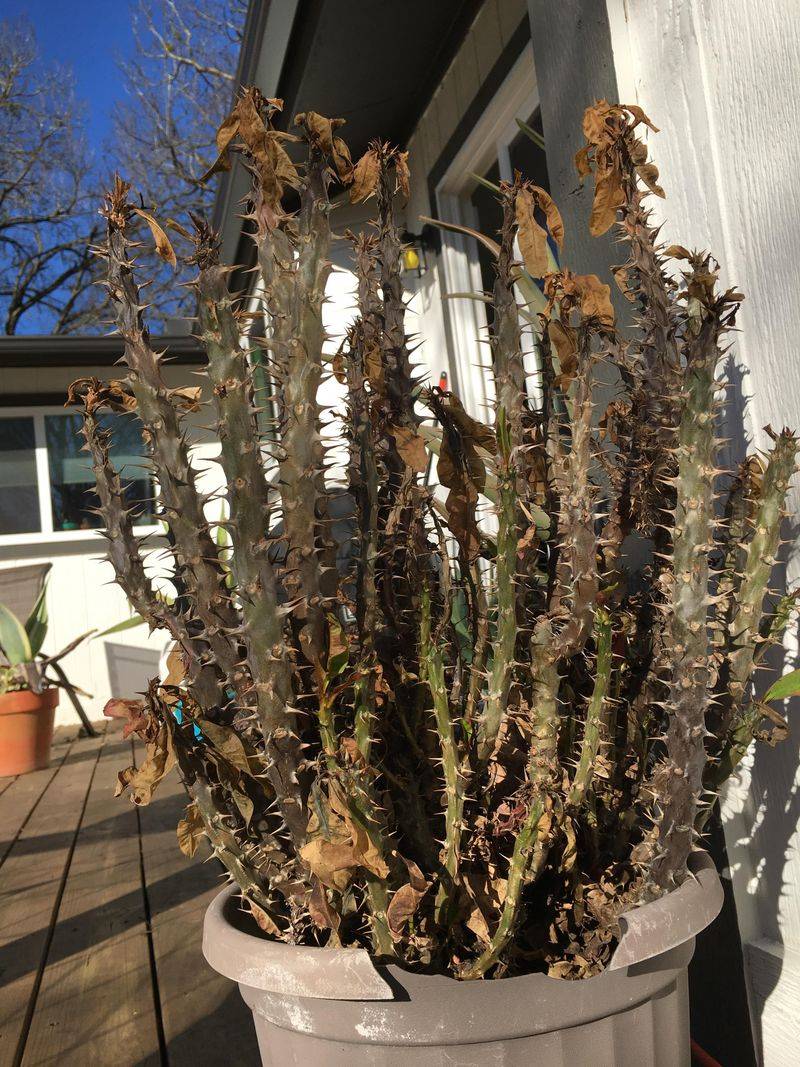
Euphorbia milii is a tropical plant and has genuine sensitivity to cold. Frost and freezing temperatures can cause visible damage, and even a prolonged stretch of unusually cool nights can disrupt the plant’s normal growth rhythm.
Bloom production may slow or pause following a cold stress episode.
Previous cold exposure matters even after the plant appears to have recovered. Growth that was damaged or interrupted by a cold event may take several weeks to resume normal patterns.
Flowering could be delayed while the plant redirects resources toward producing new healthy growth.
Outdoor landscape use is most reliable in the warmest parts of Florida, where frost risk is minimal. In areas with occasional freezes, container growing makes more practical sense because pots can be moved to a protected location when cold weather is forecast.
A garage, covered porch, or indoor spot near a bright window can provide enough protection during a brief cold snap.
Cold is rarely the only explanation for a plant that has not bloomed in months. Before focusing on temperature history, check light exposure and drainage first.
Those two factors are more frequently the actual cause of poor flowering. Address the basics, then consider cold stress as a contributing factor if problems continue.