The Fire-Resistant Oregon Flowers To Plant Instead Of Highly Flammable Shrubs
A beautiful Oregon border can become part of a smarter fire plan without turning the yard into bare gravel.
That matters once summer dries the landscape and every dead stem, dense shrub, and forgotten pile of leaves starts carrying more risk.
The plant choice is only half the story.
Some flowers hold more moisture, grow with an open shape, and avoid the heavy resins found in more combustible shrubs.
Yet even a good choice can become a problem after old stems, dry leaves, and crowded growth pile up around it.
So which flowers make sense near a fire-conscious home?
The best options stay manageable, tolerate Oregon’s dry season, and give you color without creating a dense wall of woody fuel. Pollinators get something from the deal too.
The goal is not a fireproof garden. No living landscape can promise that.
It is a cleaner, better-spaced planting that gives flames fewer easy steps forward while still looking like a garden people actually want to live beside through the long dry summer.
1. Plant Yarrow For Low Water Color
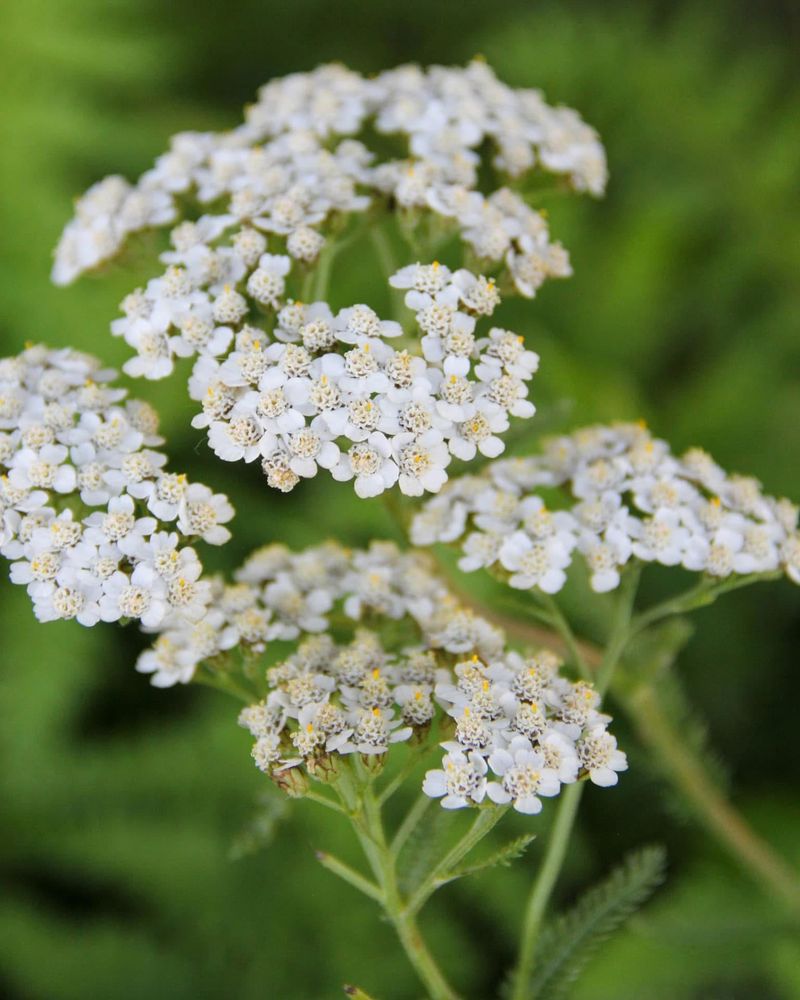
A sunny border near the house does not need a bulky shrub to hold color.
Yarrow can fill that role with flat flower clusters in white, cream, gold, or soft pink. Its foliage stays fine and airy rather than building a dense woody mass, which makes the plant easier to manage in a lower-fuel landscape.
Once established, yarrow handles Oregon’s dry summers with modest irrigation.
That does not mean you should let it turn brittle. Deep water during extended dry spells can help living foliage retain moisture and keep the plant in better condition through peak fire season.
Give each clump some breathing room.
About 18 inches between plants keeps the border open and makes cleanup easier. Crowded clumps can trap old stems and leaf litter, which works against the whole point of a fire-conscious planting.
Deadhead after the first bloom flush to encourage more flowers.
Every few years, divide oversized clumps before they become a tangled mass. Then remove dry stalks and fallen debris as the season winds down.
Bees, butterflies, and beneficial insects will happily use the broad flower heads while you get a plant that asks for relatively little water.
Yarrow brings plenty of personality without building a woody fortress. Keep it spaced, keep the old material cleared, and this low-water perennial can earn a bright spot close to the front of the border.
2. Use Hummingbird Mint In Sunny Beds
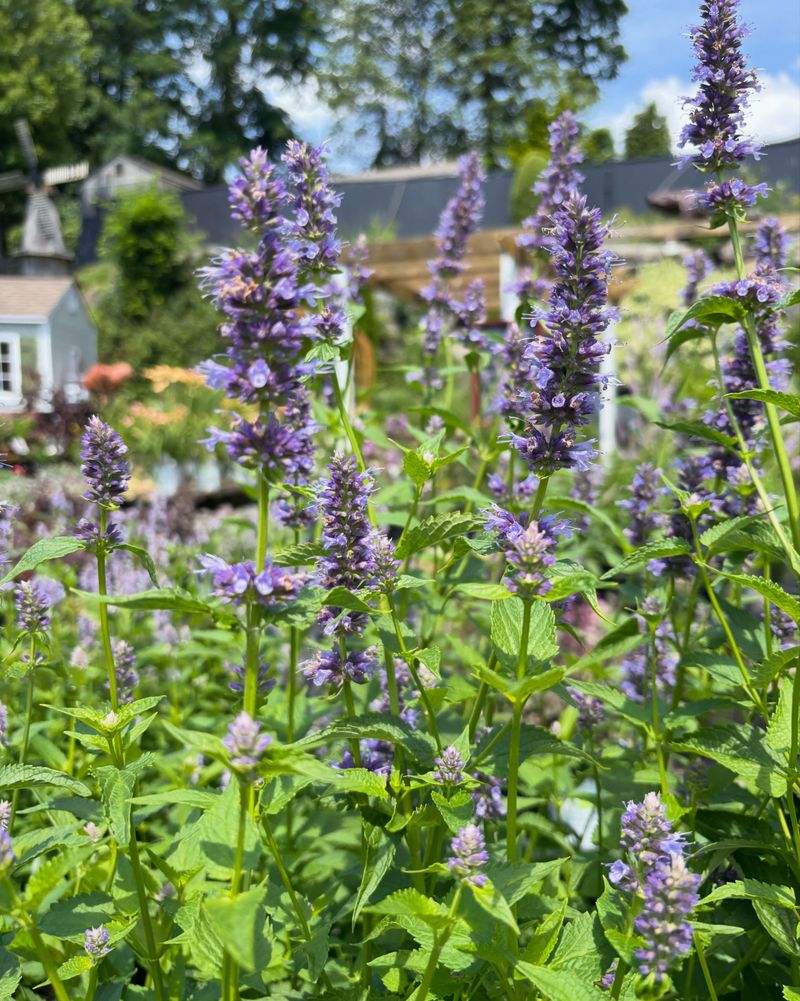
Vertical flowers can add height without creating a solid wall of vegetation.
Hummingbird mint, or Agastache, sends up upright flower spikes that attract hummingbirds, bees, and other pollinators through summer.
The growth stays relatively open, which makes it easier to keep dry material from collecting inside the plant.
Full sun brings the strongest performance.
Use soil that drains quickly, especially in western Oregon areas where winter moisture can linger. Once the root system settles in, the plant can handle the dry part of summer with occasional deep water rather than constant irrigation.
Your Oregon Garden Changes Every Week. Your Plan Should Too.
Gardening in Oregon changes quickly throughout the season. Every Friday you’ll receive a simple weekly plan showing exactly what to plant, prune, fertilize, harvest, and protect so you never miss the right timing.
Spacing matters here too.
Leave roughly 18 to 24 inches between plants so air can move through the bed and you can reach every clump for seasonal cleanup.
The fragrant foliage may smell like mint or anise when brushed, but the bigger landscape advantage comes from form and maintenance.
Do not let spent stems stand indefinitely.
After flowering wraps up, cut the plant back and remove the dry stalks from the bed. Fallen leaves and brittle stems can add fuel even when the living plant itself has useful fire-resistant traits.
This is also a good replacement for a dense shrub in a hot, sunny pocket where you still want height.
Hummingbird mint gives the border a little architecture without turning it into a hedge. The hummingbirds may treat it like a restaurant, but your maintenance list stays pleasantly short.
3. Add Nodding Onion To Dry Borders
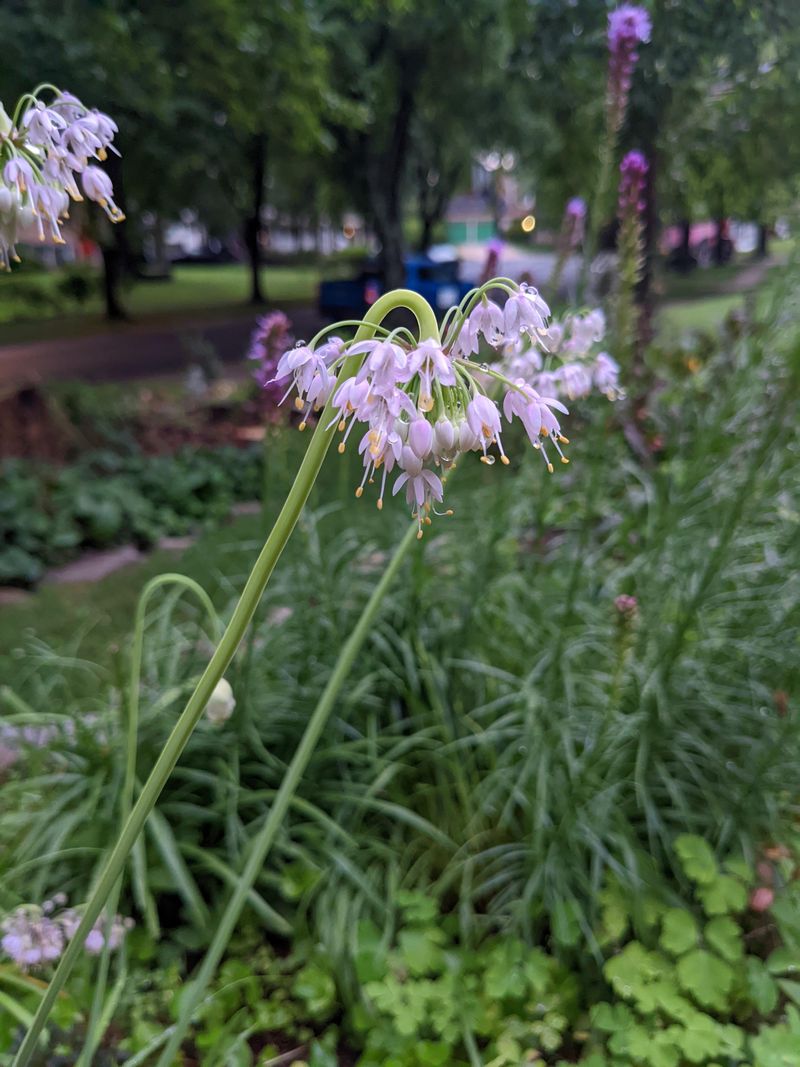
Small plants can do useful work in the spaces larger shrubs usually ignore.
Nodding onion fits naturally along gravel paths, dry borders, rock gardens, and sunny slopes. Its slender stems rise above narrow foliage and finish with rosy flower clusters that bend downward in a gentle nod.
That modest size helps in a fire-conscious planting.
The plant usually stays around 12 to 18 inches tall and does not build a thick woody framework. With sensible spacing, it leaves plenty of open ground between neighboring plants.
Give it sun and fast drainage.
Lean soil suits it well, and established plants need little extra water through much of Oregon’s dry season. Avoid a low spot where irrigation or winter rain keeps the crown wet for long periods.
Pollinators appreciate the flowers, especially native bees.
After bloom, seed heads can remain long enough to drop some seed into open gaps. Once the foliage dries, remove the old material rather than let it collect around the crown.
Nodding onion pairs easily with other lower-growing perennials such as yarrow or coreopsis.
Just resist the urge to pack every open inch. Fire-conscious landscaping works better when plants have separation and maintenance access.
This native does not need to dominate the border to be useful. It slips color into the dry spaces, asks for very little water, and keeps the planting light on its feet instead of building one continuous blanket of growth.
4. Fill Open Gaps With Coreopsis
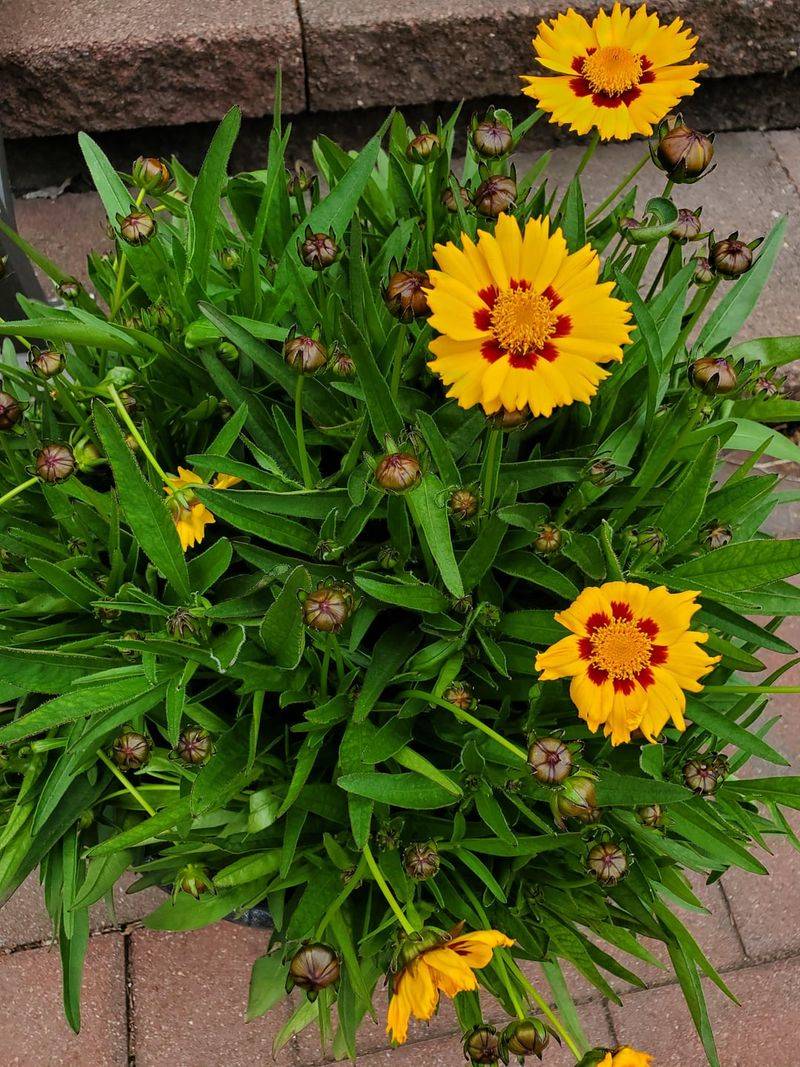
A gap in the border can be a feature rather than a problem.
Coreopsis brings bright yellow or golden flowers into those open areas without asking for the bulk of a traditional shrub. Its stems and foliage stay relatively fine, and the plant responds well to routine trimming.
Full sun keeps growth sturdier.
Fast-drained soil matters just as much. A soggy crown can shorten the plant’s life, while leaner ground often keeps the clump more compact and easier to manage.
Leave about 12 to 18 inches between plants.
That spacing gives the stems room to move, improves access for cleanup, and prevents the border from becoming one dense mat.
A giant uninterrupted sweep may look impressive in bloom, but it also creates more material to maintain once flowers fade.
Deadheading can extend the show.
Remove spent blooms before too much dry material builds on the plant. Later in the season, cut old stems back and carry the debris away from the bed.
Established coreopsis can handle dry summer stretches with modest water, though newly planted clumps need more consistent moisture while roots develop.
The real advantage is flexibility.
Coreopsis can fill sunny pockets between larger plants, soften a gravel edge, or add color where a resinous shrub once stood.
It brings cheerful flowers without asking for a lot of woody real estate. Keep the clumps open and tidy, and the border gets gold without collecting a summer haystack.
5. Bring In Coneflower For Summer Color
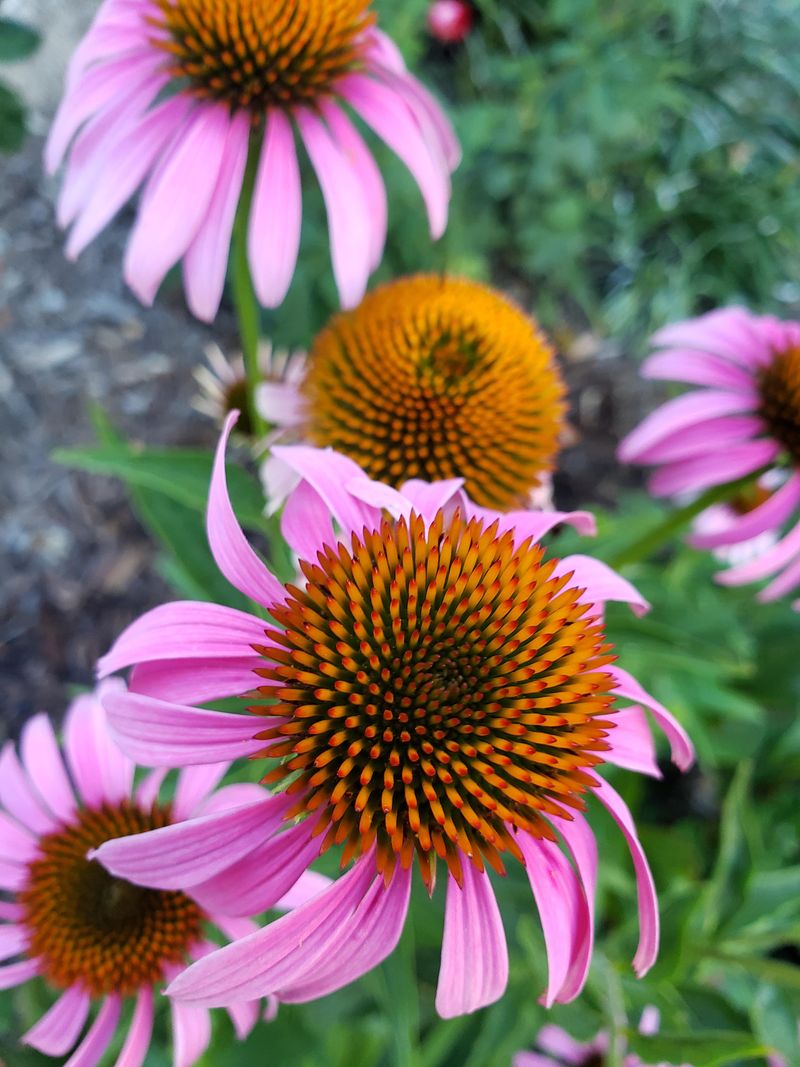
A fire-conscious garden can still look busy with pollinators.
Coneflower gives bees and butterflies a dependable midsummer stop, while sturdy upright stems keep the plant from turning into a dense shrub-like mass. Purple-petaled forms are the familiar choice, though cultivated varieties offer other colors too.
Give the plant full sun and well-drained soil.
Average to lean ground usually works better than a heavily amended bed. Too much fertility can push tall, floppy growth that needs extra support and creates more material to manage.
Once established, coneflower tolerates dry stretches reasonably well.
Occasional deep water during prolonged summer drought can help keep the living tissue in better condition. New plants need more regular moisture until roots spread.
Leave enough space between clumps for airflow and cleanup.
The seed heads create an interesting maintenance choice. Birds, including goldfinches, can feed on them through colder weather.
In areas where fire season remains a concern, dry stems near structures deserve earlier removal rather than a long winter stay.
Site context gets the final say.
Farther from buildings, some seed heads can stay for wildlife. Closer to the house, cleaner seasonal removal may make more sense.
That balance is what fire-conscious gardening is really about.
Coneflower does not need to be treated as either decoration or hazard. Give it room, remove dry buildup at the right time, and it can provide months of color without acting like a woody thicket in disguise.
6. Try California Fuchsia In Hot Sites
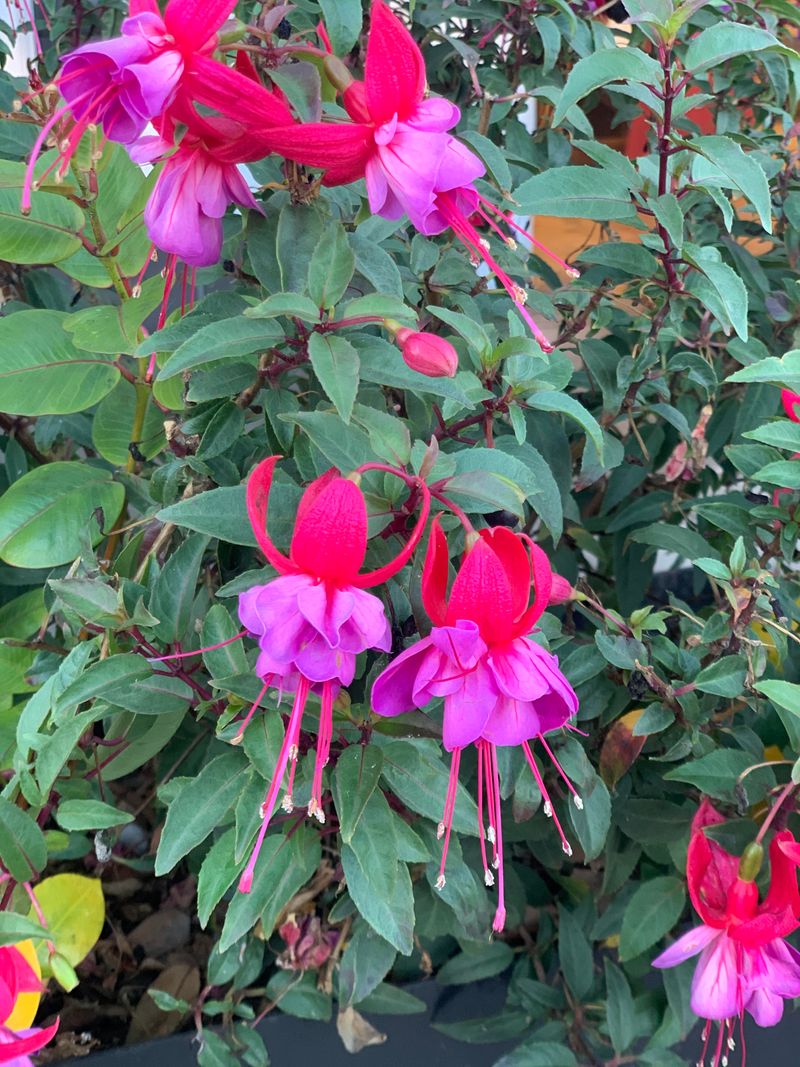
Some parts of an Oregon yard seem designed to roast ordinary flowers.
A sunny bank, gravelly strip, or south-facing slope can suit California fuchsia surprisingly well. Its red-orange tubular flowers arrive late in the season, right when many other perennials start losing momentum.
Hummingbirds tend to notice quickly.
The plant handles heat and drought once established, especially in warmer and drier parts of western and southern Oregon. Rocky soil and sharp drainage fit its natural habits better than rich, constantly moist ground.
Its spreading nature needs attention.
California fuchsia can move outward through underground growth and slowly claim more space than expected. That makes it useful on larger slopes but worth monitoring near paths, walls, or smaller beds.
Give each patch room rather than let several plants merge into one thick layer.
A little separation makes seasonal cleanup much easier and keeps dry stems from accumulating into a continuous fuel bed.
After flowering finishes, cut back old growth and remove it from the site.
Do not leave brittle stems scattered across a dry slope simply because the living plant handles heat well.
This perennial shines where a traditional shrub may become too dense or thirsty.
The late flowers also give the garden a fresh burst of color after summer has worn down almost everything else.
California fuchsia knows how to handle a hot assignment. Just keep its wandering habit supervised so the whole slope does not become its personal property.
7. Finish The Border With Blanket Flower
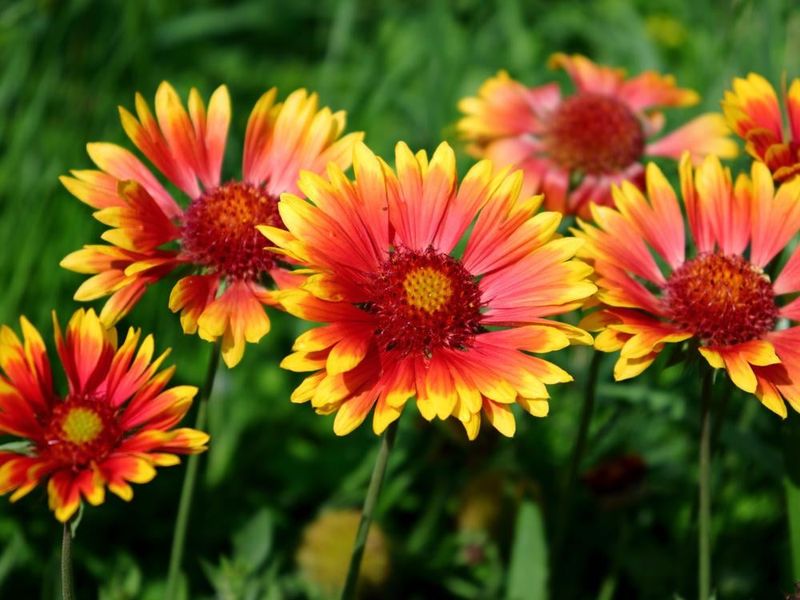
A flower named after a blanket can still help keep a planting more open.
Blanket flower, or Gaillardia, stays compact enough to fit along sunny borders while producing red, orange, and yellow blooms through summer.
Lean soil brings out its better habits.
Rich ground can produce floppy stems and extra growth, while sandy or gravelly soil with quick drainage often keeps the plant tighter. Full sun supports the strongest flower display.
Established plants handle dry weather well.
They still benefit from occasional deep water through prolonged drought, especially when the goal is to keep living foliage from drying excessively during fire season.
Space plants about 12 to 18 inches apart.
That small gap improves airflow and gives you enough room to remove spent flowers and old stems without crawling through a tangled border.
Regular deadheading can keep new flowers coming.
When a clump starts to flop in midsummer, a moderate trim can restore a neater shape. Later, remove dry stems and leaf litter instead of letting the material settle beneath the plant.
Blanket flower works especially well near the front or middle of a sunny bed.
Its long bloom period gives you color without requiring the height or woody bulk of a conventional privacy shrub.
The petals may look like tiny flames, but the maintenance plan should do the opposite. Keep the clump lean, spaced, and cleaned up, and the border can stay bright without building unnecessary fuel.