Rake fewer times this fall by mulch-mowing your leaves straight into the Wisconsin lawn
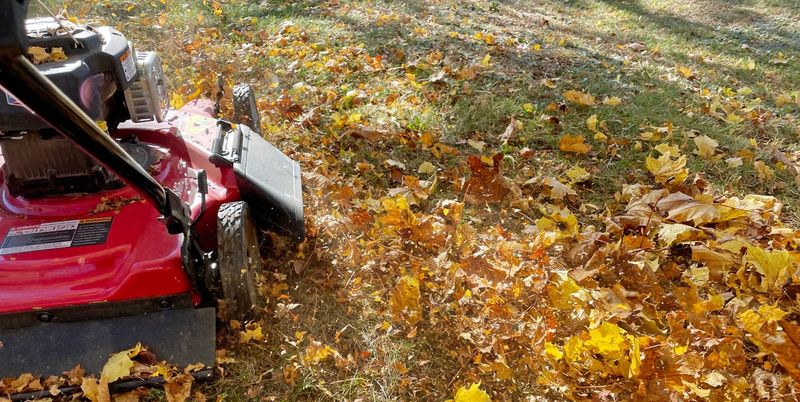
Fall in Wisconsin means one thing for most homeowners: a yard buried in leaves and a weekend disappearing into raking and bagging. Mulch-mowing, which means running a mower over fallen leaves to chop them into small pieces, can cut down on that work by letting the shredded material settle between grass blades and break down on its own.
The catch is that not every leaf layer belongs directly on the lawn, and understanding that limit is what separates a healthier yard from a smothered one. Read on for the Wisconsin-specific guidance that tells you exactly when to mow, when to remove, and where the rest of those leaves should actually go.
Wisconsin Leaves Can Become Lawn Mulch Instead of Weekend Waste
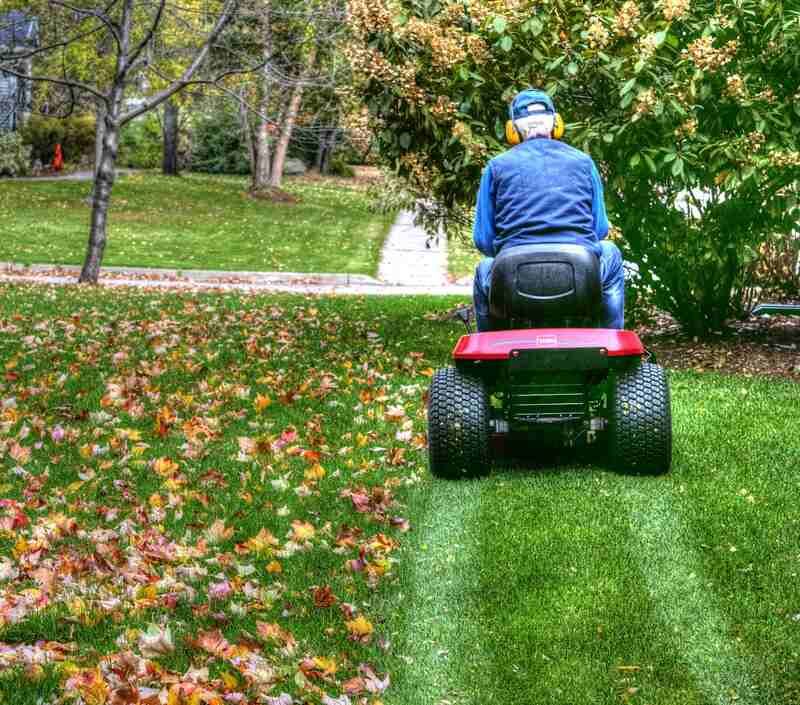
Piles of maple and oak leaves blanketing a Wisconsin yard every October can feel like a second job, but there is a practical middle path between bagging every last leaf and leaving them all in place. The Wisconsin Department of Natural Resources also supports mowing leaves with the grass and leaving the finely chopped pieces on the lawn as a recycling strategy.
The key word in that advice is “manageable.” Mulch-mowing works well when leaves form a light-to-moderate layer over Wisconsin turf, not when they pile up in thick, wet, matted heaps.
Think of the benefit as reducing cleanup work, not eliminating it entirely. Wisconsin homeowners who mow leaves regularly as they fall will make fewer trips to the curb with bags, but they will still need to remove leaves when coverage gets too thick, when grass disappears underneath, or when the leaves come from a diseased tree.
What Wisconsin Mulch-Mowing Actually Returns to the Turf
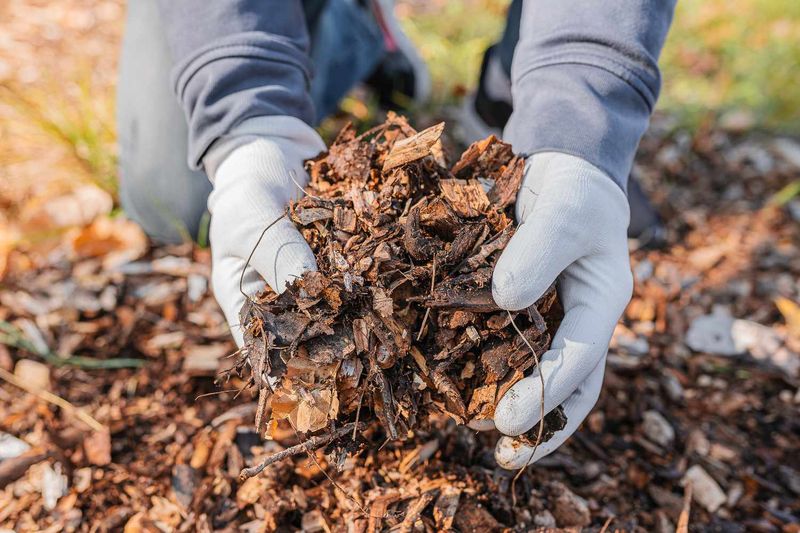
When a mower chops fallen leaves into small pieces over a Wisconsin lawn, those fragments do not just sit on top of the turf. They filter down between grass blades, come into contact with soil microbes, and gradually break down into organic matter that improves soil structure over time.
Wisconsin Extension’s leaf management guidance notes that leaves contain nutrients that return to the soil as they decompose, which is a real benefit for Wisconsin turf over the course of a season.
“Feeds the lawn” is worth unpacking carefully, though. The nutrients released by decomposing leaf mulch are modest and variable, and the process takes time.
Chopped leaves are not a substitute for a proper fall fertilizer application, particularly for Wisconsin cool-season grasses that benefit from nitrogen in autumn. University of Minnesota Extension research on fall leaf mulching specifically points out that mulched leaves return less nitrogen than grass clippings, which means the nitrogen contribution to Wisconsin turf is relatively small compared with what a scheduled fertilizer program provides.
The organic matter benefit is more consistent. As shredded leaf material breaks down in a Wisconsin lawn, it can gradually improve soil water retention and microbial activity, both of which support healthy grass roots.
That is a meaningful long-term payoff for a practice that also reduces bagging labor. The practical takeaway for Wisconsin homeowners is to keep mulch-mowing as a supplement to good lawn care, not a replacement for it.
Your Wisconsin Garden Changes Every Week. Your Plan Should Too.
Gardening in Wisconsin changes quickly throughout the season. Every Friday you’ll receive a simple weekly plan showing exactly what to plant, prune, fertilize, harvest, and protect so you never miss the right timing.
Continue fertilizing according to Wisconsin Extension recommendations and treat the recycled leaf material as a welcome bonus rather than the whole nutrient strategy.
A Wisconsin Mower Setup Keeps the Grass Visible
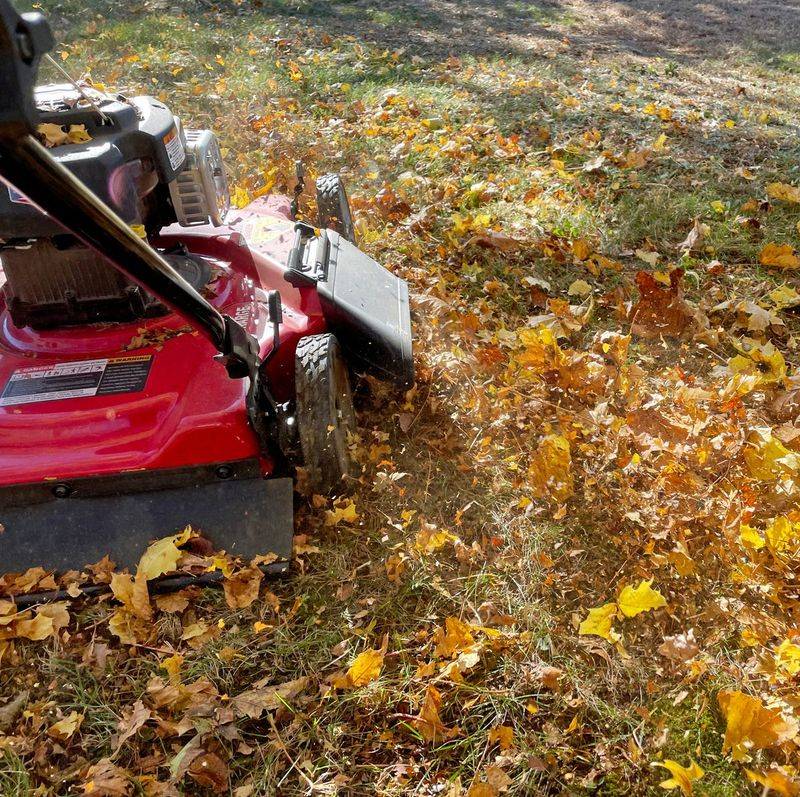
Getting the mower ready before the leaves pile up is one of the most useful steps a Wisconsin homeowner can take. UW Extension lawn maintenance guidance recommends maintaining Wisconsin home lawns at roughly 2.5 to 3.5 inches, with 3 inches being a common target for many cool-season grasses.
At that height, grass blades have enough length to remain visibly above the chopped leaf pieces after a mowing pass, which is the central test for whether mulch-mowing is working correctly.
Sharp blades matter more than most Wisconsin homeowners realize. UW Extension explains that dull blades tear rather than cut grass, leaving ragged tips that brown quickly and make turf more vulnerable to environmental stress and disease.
Before the fall leaf season begins in Wisconsin, inspect the mower blade and sharpen or replace it if the edge is nicked or worn. A clean cut on both grass and leaves produces finer, more uniform pieces that settle between blades rather than sitting on top of them.
Most mowers available to Wisconsin homeowners can handle a manageable leaf layer. Dedicated mulching mowers recirculate material under the deck for additional chopping and may produce finer pieces, but a standard mower set at the right height and fitted with a sharp blade can do the job effectively.
The one-third rule applies here as well: never remove more than one-third of the grass blade in a single mowing. Wisconsin homeowners who let grass grow too long before mowing leaves will stress the turf and leave larger leaf pieces that are harder to settle.
Keeping up with mowing height through the fall, even as leaves accumulate, is simpler than trying to recover from one very heavy pass.
How Wisconsin Homeowners Should Make the Mowing Passes
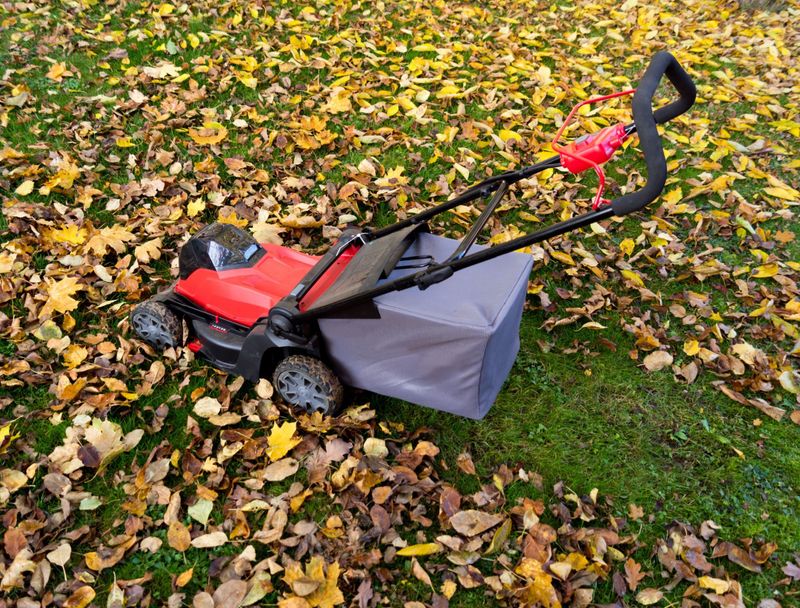
Timing each mowing pass correctly makes the difference between a tidy Wisconsin lawn and a mat of clumped leaves sitting on stressed turf. The single most important rule is to mow when leaves are relatively dry.
Wet leaves clump under the mower deck, discharge in uneven piles, and can clog the chute, leaving thick patches that block light from reaching Wisconsin grass below.
UW Extension guidance on lawn care warns that mowing wet turf creates clumps and can be particularly hazardous on slopes, where traction becomes unpredictable. Wisconsin homeowners should also wear appropriate eye protection when mowing leaves, since the mower can throw debris at speed.
Wait for a dry afternoon after morning dew has cleared before starting the mower.
Rather than waiting for every tree in the Wisconsin yard to drop its leaves before mowing, go out regularly as leaves accumulate. University of Minnesota Extension fall leaf research and Penn State Extension leaf guidance both recommend mowing on a regular schedule rather than allowing leaves to accumulate into a deep layer.
Mowing light-to-moderate coverage more often is easier on the mower, easier on Wisconsin turf, and produces finer pieces that break down faster.
After the first pass, walk the Wisconsin lawn and check whether grass blades are clearly visible above the chopped material. If large pieces remain or if the coverage still looks dense, make a second pass at a slightly different angle.
When Wisconsin Leaf Cover Has Gone Too Far
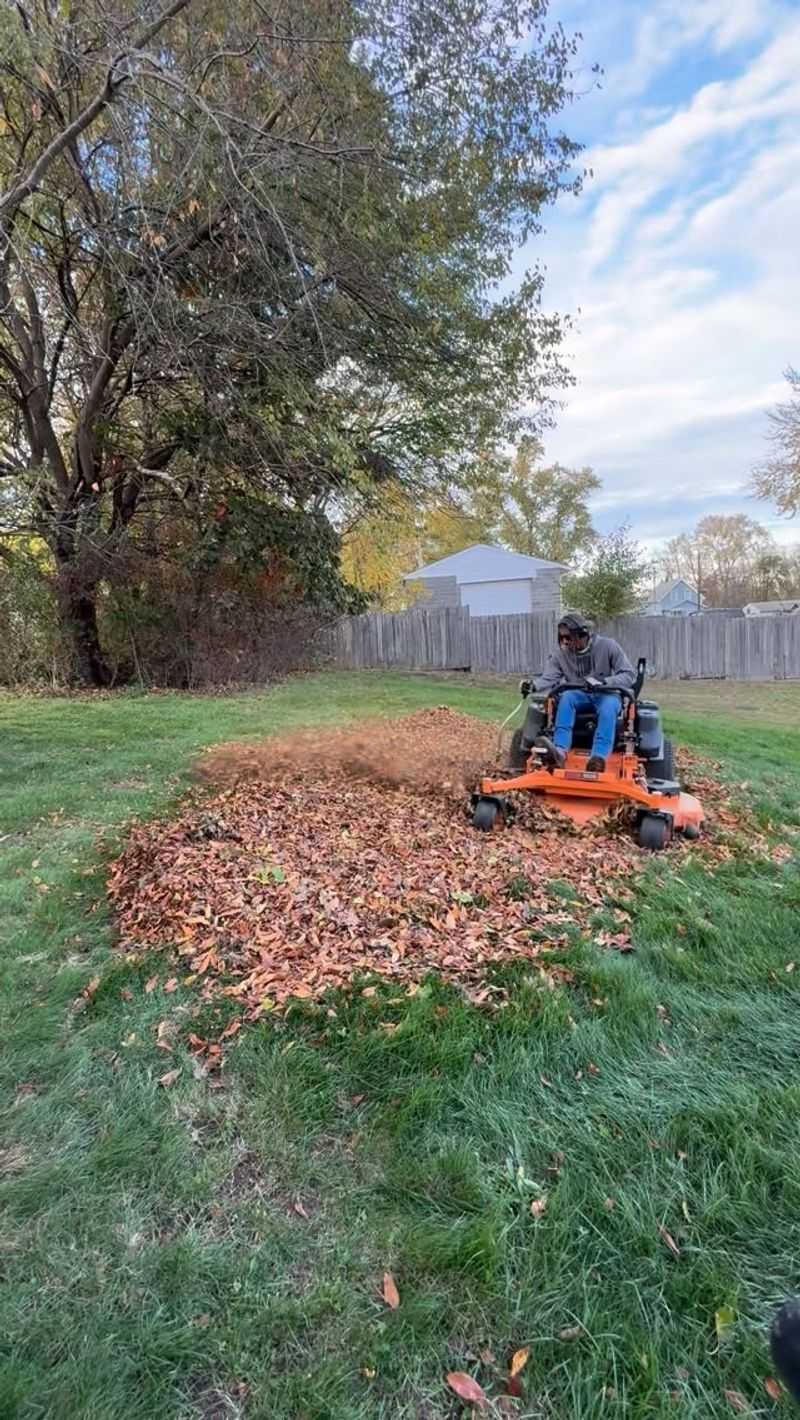
Knowing when to stop mowing and start removing is just as important as knowing how to mulch. A light leaf layer, roughly covering about 20 percent of a Wisconsin lawn’s surface, can generally be left alone or mowed at the next regular session.
A moderate layer covering around 50 percent of the turf is a reasonable candidate for mulch-mowing, provided the mower can reduce the pieces enough that grass blades remain visible afterward.
Wisconsin Extension’s raking guidance draws a clear line: when the grass is barely visible beneath the leaf layer, Wisconsin homeowners should remove some of that material rather than trying to mow it all in. Chopped pieces that settle between grass blades are very different from an intact blanket of leaves that blocks light, traps moisture, and can begin to mat down as temperatures drop across Wisconsin.
The difference between those two situations comes down to what happens at the soil surface. Small, shredded pieces filter through the turf canopy and sit loosely on the soil, allowing air and light to reach the grass.
A thick, wet layer, whether chopped or intact, sits on top of the Wisconsin turf like a lid, reducing photosynthesis and keeping the crown of the grass plant damp. That prolonged wetness is the condition to avoid heading into a Wisconsin winter.
UW Extension lawn maintenance advice ties the visible-grass standard to adequate light and reduced winter stress, without overpromising about outcomes. Wisconsin homeowners who keep the chopped layer thin enough that turf remains 1 to 2 inches above the mulched material give their grass the best chance of staying healthy through fall and into the cold months ahead.
When that standard cannot be met, the right move is to rake or blow the excess away.
Wisconsin Lawns Need a Different Plan in Shade, Disease and Snow-Mold Risk
Shaded areas of a Wisconsin yard require faster action than sunny sections when leaves start to fall. Grass growing under a tree canopy already receives limited light through the season, and a leaf layer on top of that turf adds another obstacle.
UW Extension lawn maintenance guidance advises Wisconsin homeowners to remove or mulch leaves promptly in shaded areas so the turf stays exposed to whatever light is available. Letting leaves accumulate under a dense canopy in Wisconsin can weaken already stressed grass before winter arrives.
Sparse or thin turf presents a related problem. When Wisconsin grass is patchy, weak, or barely covering the soil, there is not enough of a turf canopy to hold small leaf pieces upright and allow air to circulate.
In those areas, mulch-mowing may not be the right choice. UW Extension turfgrass management resources suggest that areas with poor grass density are better candidates for leaf removal and composting rather than in-place mulching.
Diseased leaves call for a firm policy. Wisconsin Extension leaf guidance states that leaves showing significant foliar fungal disease can harbor spores that survive and infect new foliage the following year.
Mowing those leaves into Wisconsin turf spreads the material rather than removing it. Rake them up, bag them, and dispose of them through appropriate collection rather than composting or mulching them back into the yard.
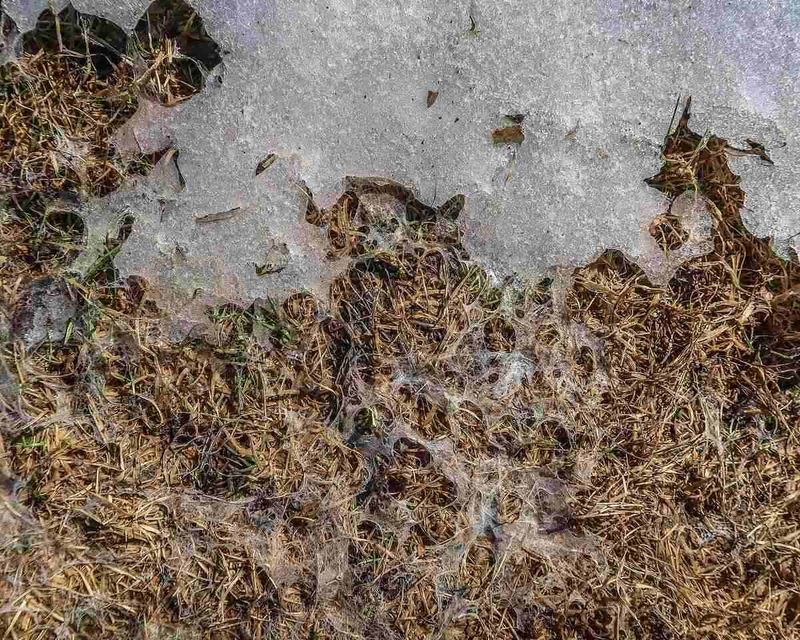
Snow mold is a genuine Wisconsin concern that deserves a realistic treatment. UW Extension disease management resources identify snow mold as a possibility associated with prolonged wetness, matted or excessively long turf, and related conditions heading into winter.
Mulch-mowing a manageable leaf layer does not cause snow mold on its own, but a thick, matted residue left on Wisconsin turf through late fall can create the kind of prolonged damp conditions that favor it. The answer is the same as the general rule: keep the chopped layer thin, keep grass visible, and remove what cannot be reduced to a manageable depth.
Where Wisconsin Leaves Should Not Go
Mulch-mowing handles a manageable layer of leaves on Wisconsin turf, but it does not solve the problem of excess leaves, and it certainly does not apply to leaves that end up on hard surfaces. Keeping leaves off Wisconsin streets, sidewalks, gutters, and storm drains is a stormwater responsibility, not just a tidiness preference.
Wisconsin DNR stormwater runoff guidance explains that leaves and grass clippings left in streets can wash into storm drains, carrying nutrients into Wisconsin waterways and contributing to algae growth and reduced water quality.
Wisconsin DNR’s management fact sheet on leaves and grass clippings reinforces that message, noting that leaf debris in streets and gutters is a significant nonpoint source of phosphorus in Wisconsin. Blowing or raking leaves into the street to deal with them later is not a neutral act.
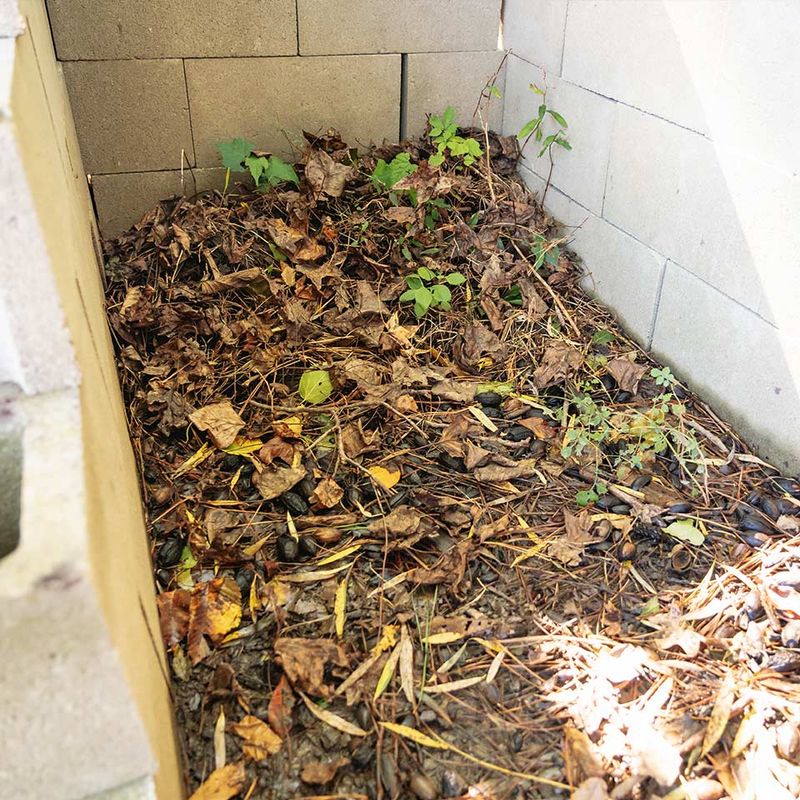
Wisconsin homeowners should direct excess leaves to a backyard compost pile, a municipal leaf collection program, or another approved disposal method.
Wisconsin DNR recycling tips point to composting as an ideal destination for excess leaves, since finished compost can later improve garden beds and reduce the need for purchased soil amendments. Many Wisconsin municipalities offer curbside leaf collection in the fall, which is another straightforward option for leaves that cannot be mulched into the lawn.
There is also a wildlife dimension worth considering. Mowing leaves recycles organic matter into Wisconsin turf, but it destroys the intact leaf litter that many insects use for overwintering habitat.
UW-Madison Extension Dane County guidance on leaving the leaves suggests a practical balance: keep lawn leaf coverage thin enough for healthy Wisconsin grass, while leaving intact leaves in suitable garden beds or naturalized areas where overwintering insects can complete their cycle undisturbed. Not every leaf needs to go on the lawn, and not every leaf needs to be destroyed.
The Wisconsin Takeaway: Mow the Manageable Layer, Remove the Rest
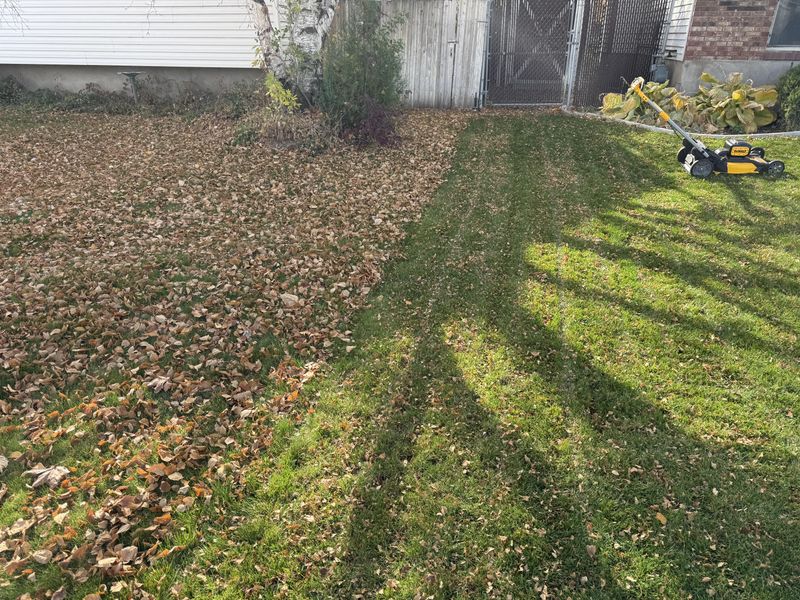
Wisconsin fall lawn care does not have to mean every Saturday buried in raking. Mulch-mowing a relatively dry, manageable leaf layer into a lawn where grass remains clearly visible is a sound practice backed by Wisconsin Extension leaf management guidance and UW Extension lawn maintenance recommendations.
The chopped material returns some organic matter and modest nutrients to Wisconsin turf as it decomposes, which is a real benefit without being a complete fertilizer program.
The limit matters as much as the practice. Thick, wet, matted, diseased, or poorly placed leaves do not belong on Wisconsin turf, and no mower setting changes that.
Shaded areas need faster attention, weak or sparse Wisconsin lawns may need full removal, and leaves showing significant disease should go to collection rather than back into the yard. Keep leaves off Wisconsin streets and storm drains, and consider leaving intact leaf litter in garden beds for overwintering insects rather than moving every leaf onto the lawn.
Run a sharp blade, mow when leaves are dry, check that Wisconsin grass blades remain 1 to 2 inches above the chopped material, and make a second pass when the first one is not enough. Remove what cannot meet that standard, and direct it toward composting or Wisconsin DNR-approved disposal options.
The title’s promise of raking less is real, but the fine print is the part that actually protects a Wisconsin lawn: mow what is manageable, and move the rest somewhere it can do good without doing harm.