7 Reasons Your Clematis Won’t Bloom, And What To Do About Each One
Your clematis has been climbing the fence all spring and hasn’t produced a single flower.
That gap between a healthy-looking vine and no blooms is one of the most confusing things a gardener can run into, especially when you’ve done everything by the book.
Clematis are notorious for this. They’ll put on a show of lush foliage all season long while holding back every single bud.
The maddening part is that the plant isn’t struggling. It’s just stuck, usually because of one small thing that’s quietly working against it.
Too much of the wrong fertilizer, a pruning cut made at the wrong time, roots that are baking in the afternoon sun, any one of these can shut down flowering completely.
The fix is almost always simpler than you’d expect. But first, you need to know exactly which problem you’re dealing with.
1. Too Much Nitrogen In The Soil
Your clematis looks amazing on paper. Dark green, thick, climbing fast, and absolutely refusing to flower.
Nitrogen is the likely reason. Too much of it tells your plant to grow leaves instead of blooms.
Think of nitrogen as the plant’s version of a gym membership. It pumps everything into building muscle, meaning stems and leaves, and skips the beauty routine entirely.
The result is a vine that looks impressive but never delivers. All that vigorous growth is actually a red flag, not a sign of a thriving plant.
Most gardeners make this mistake after using a general-purpose fertilizer without checking the numbers. Those three numbers on a fertilizer bag represent nitrogen, phosphorus, and potassium. When the first number is the biggest, you are feeding your clematis a leaf-growing diet.
Switching to a fertilizer with a higher middle or last number helps shift the plant’s energy toward flowering. Look for something labeled for blooming plants, with a ratio like 5-10-10 or similar. Bone meal and superphosphate are both solid natural options that encourage flower production without overloading the soil.
Stop feeding high-nitrogen fertilizers immediately if you suspect this is your problem. Let the soil settle for a few weeks before introducing a bloom-focused product.
A soil test from your local garden center can also confirm whether nitrogen levels are out of balance. One thing worth knowing is that clematis actually prefers lean soil over rich, heavily amended ground.
It does not need nearly as much fertilizer as most gardeners assume. Pulling back on feeding is sometimes all it takes to finally trigger those long-awaited blooms on your clematis vine.
2. Wrong Pruning Time Or Technique
Pruning clematis at the wrong time is probably the single fastest way to guarantee no flowers. You can do everything else perfectly and still end up with nothing if your timing is off.
Clematis plants fall into three pruning groups, and each group blooms on different wood. Group one blooms on old wood from last year. Group two blooms on both old and new wood. Group three blooms only on new growth from the current season.
Cutting a Group one clematis hard in early spring is basically removing every flower bud before it gets a chance to open. That is a heartbreaking mistake that takes a full year to recover from.
The worst part is that the vine will keep growing happily after a bad prune. It gives you no warning that something went wrong until bloom season arrives and there is nothing there.
Finding out which group your clematis belongs to is the first step. Check the plant tag, look it up by name online, or ask your local nursery. Once you know the group, timing your pruning becomes straightforward.
Group one varieties like Clematis montana or Clematis armandii should only be lightly tidied after flowering in late spring. Group two types get a light trim in early spring and again after the first bloom wave.
Group three varieties, including Jackmanii, can be cut nearly to the ground in late winter without any worry.
Using clean, sharp pruning shears also matters more than most people think. Ragged cuts invite disease and slow down the plant’s recovery time.
A little research into your specific clematis variety before picking up those shears can save you an entire season of frustration and waiting.
3. Not Enough Sunlight
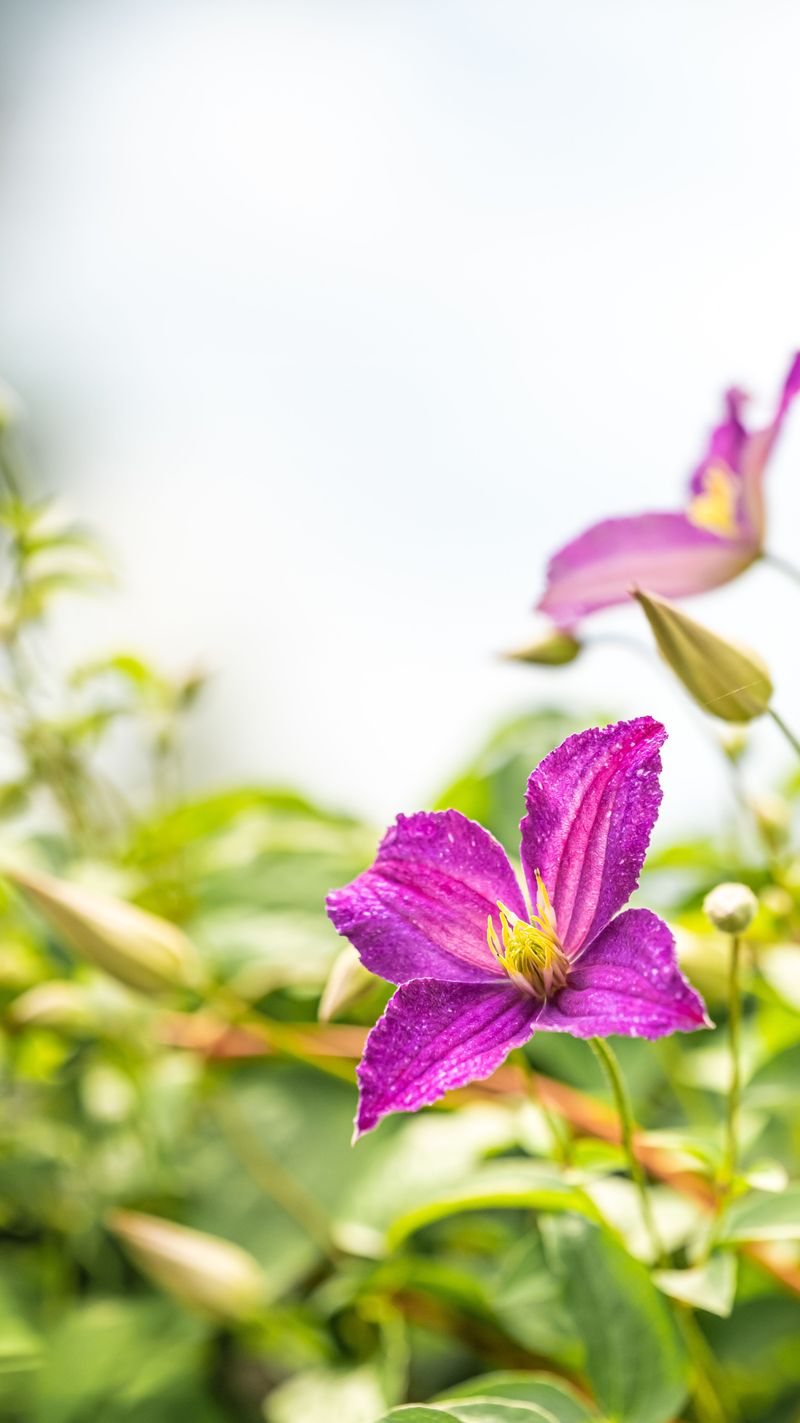
Clematis has a reputation for being a shade-tolerant plant, and that reputation causes a lot of blooming problems. While its roots prefer to stay cool and shaded, the top of the plant is a full sun lover.
Most clematis varieties need at least six hours of direct sunlight each day to produce flowers. Anything less and the plant simply does not have enough energy to move past the leafy growth stage.
Gardens change over time. A spot that got plenty of sun three years ago might now be shaded by a maturing tree or a neighbor’s new fence. Walk around your yard on a sunny day and actually count the hours of light your clematis receives. You might be surprised by what you find.
Moving a clematis is not always easy, but it is possible in early fall or early spring when the plant is not actively growing. Dig wide around the root zone and replant it in a sunnier location with good soil preparation. Water it well for the first few weeks after transplanting.
If moving the plant is not an option, consider pruning back nearby shrubs or trees that are casting too much shade. Even opening up the canopy slightly can make a meaningful difference in light levels over the course of a day.
Choosing a spot that gets morning sun with some afternoon shade works beautifully in hotter climates. That balance keeps the roots comfortable while giving the vine enough light to bloom reliably.
Sunlight is one of the most important factors behind consistent clematis blooming.
4. Roots Are Too Hot Or Dry
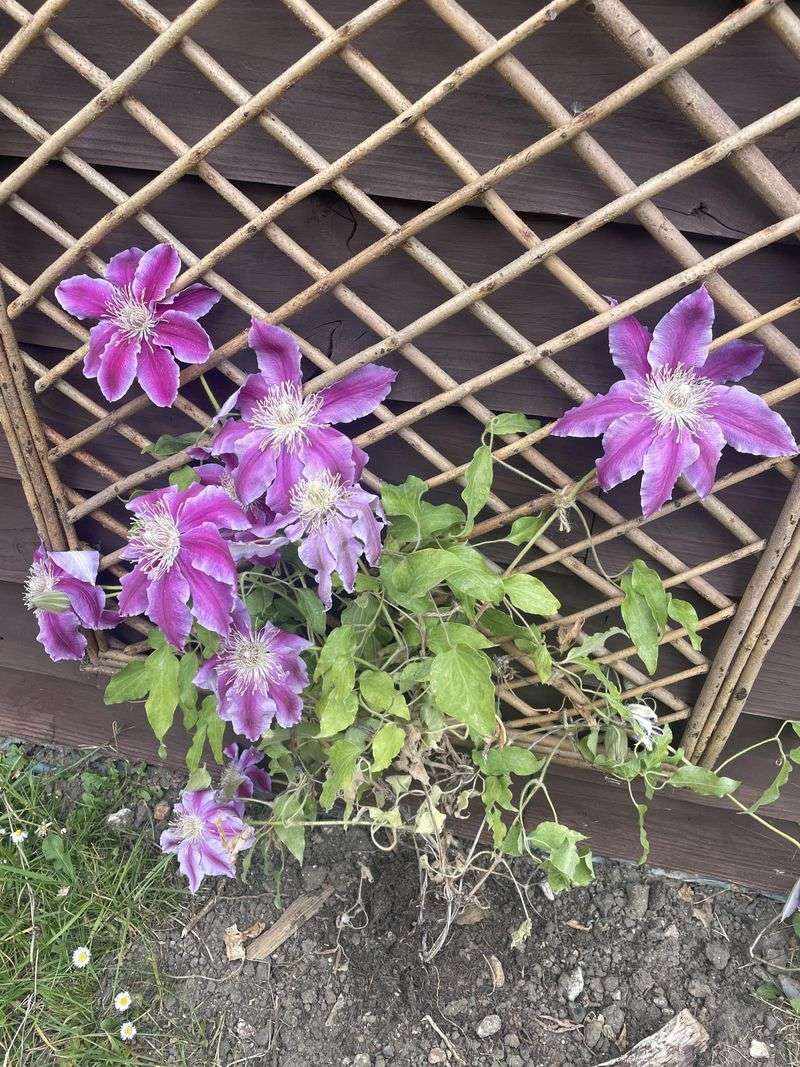
Clematis has a quirky preference that catches a lot of gardeners off guard. It wants its head in the sun and its feet in the shade. Getting that balance right is the key to consistent blooming.
When the root zone overheats or dries out, the plant goes into a kind of quiet survival mode. It stops putting energy into flowers and focuses entirely on staying alive through the stress.
Bare soil around the base of your clematis is a warning sign. Exposed soil heats up fast in summer, and that heat travels straight down to the root zone where it causes real damage to the plant’s performance.
Mulch is the most practical solution here. Apply a three-inch layer of wood chips, shredded bark, or straw around the base of the plant, keeping it a few inches away from the main stem. Mulch insulates the soil, holds moisture, and keeps root temperatures stable even on the hottest days.
Flat stones placed around the base also work well as a traditional solution. Many old-time gardeners swear by this trick, and it genuinely helps keep roots cool while adding a tidy, finished look to the planting area.
Watering deeply and consistently matters just as much as mulching. Shallow, frequent watering encourages roots to stay near the surface where they are most vulnerable to heat.
Instead, water deeply once or twice a week to push roots downward into cooler, more stable soil. Keeping your clematis roots comfortable is one of the simplest ways to unlock better blooming all season long.
5. Plant Is Too Young
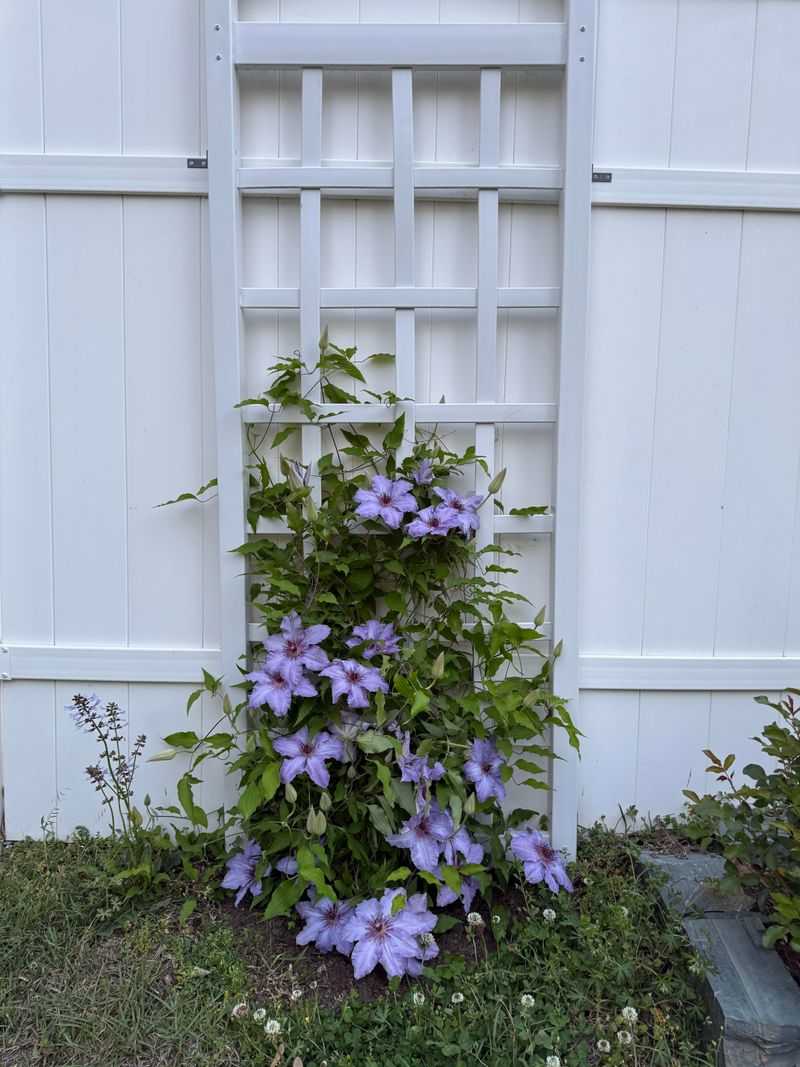
Patience is not exactly a gardening virtue that comes naturally, especially when you spent good money on a plant. But with clematis, patience is less of a virtue and more of a requirement.
Young clematis plants spend their first one to three years building a strong root system underground. During that time, flowering is simply not a priority for the plant.
There is an old gardening saying that goes: first year it sleeps, second year it creeps, third year it leaps. Clematis follows this pattern almost perfectly. You might see a handful of flowers in year two, but the real show does not start until year three or later.
Trying to rush the process with extra fertilizer or aggressive watering often backfires. The plant responds to that kind of pressure by putting even more energy into root development, not flowers. Letting it grow at its own pace produces far better long-term results.
What you can do during the waiting period is make sure the plant is set up for future success. Good soil, consistent moisture, proper support for climbing, and correct pruning habits all matter enormously. Think of these early years as an investment in a spectacular future display.
Some gardeners get lucky and see decent flowering in year two, especially with Group three varieties that bloom on new wood. But managing expectations is smart.
A three-year-old clematis that has been given proper care will almost always outperform a rushed, overfed younger plant. Trust the timeline and let the roots do their work first.
6. Poor Soil Quality
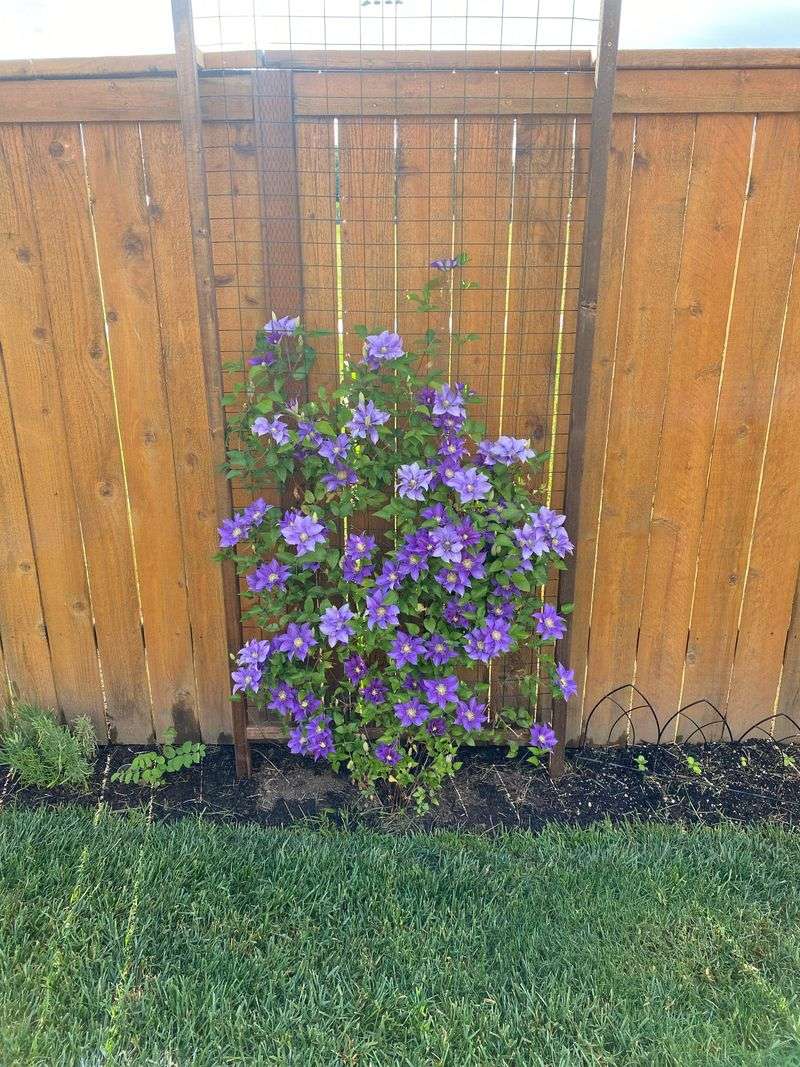
Soil quality is one of those things that experienced gardeners obsess over, and new gardeners tend to underestimate. Your clematis is only as good as the ground it grows in.
Clematis prefers rich, well-draining soil with a neutral to slightly alkaline pH, somewhere between 6.5 and 7.0. Compacted, acidic, or waterlogged soil creates a stressful environment where flowering becomes almost impossible.
Heavy clay soil is a common problem in many American yards. It holds water too long, which suffocates roots and creates conditions where nutrients become locked up and unavailable to the plant. Sandy soil causes the opposite issue, draining too fast and leaving roots dry and underfed.
Amending your soil before planting is the most effective approach. Mix in generous amounts of compost, aged manure, or a good-quality planting mix when preparing the hole. This improves drainage in clay soils and helps sandy soils hold moisture and nutrients more effectively.
If your clematis is already in the ground and struggling, you can still improve things. Top-dress the soil around the base with compost each spring and gently work it in without disturbing the roots. Adding a handful of garden lime once a year can also help raise pH in overly acidic soil.
Getting a basic soil test is genuinely worth the small cost. Most garden centers and cooperative extension offices offer them for just a few dollars.
Knowing your soil’s actual pH and nutrient levels takes the guesswork out of the equation and gives your clematis exactly the foundation it needs to bloom beautifully and consistently.
7. Drought Stress
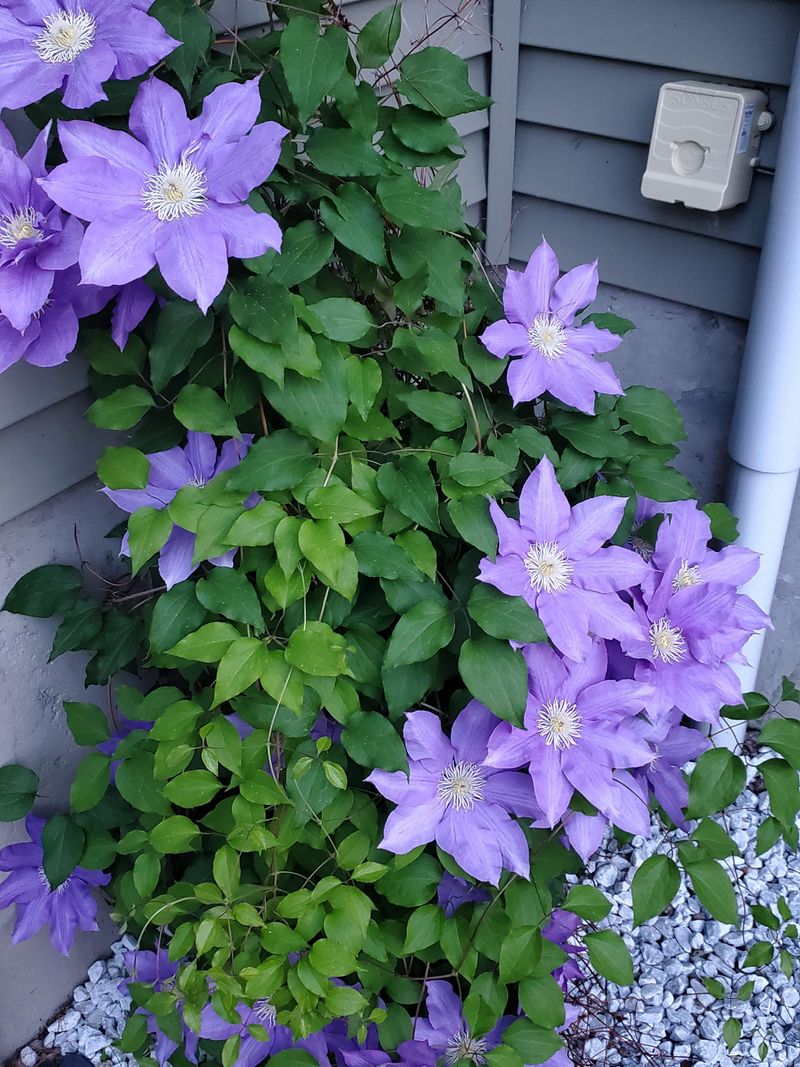
A dry summer can shut down a clematis bloom cycle faster than almost anything else. The vine might look like it is surviving, but looks can be misleading when drought stress is involved.
Clematis needs consistent moisture throughout the growing season. When rainfall drops off and watering becomes irregular, the plant shifts its resources away from flowering and toward basic hydration and survival.
The tricky part is that drought stress does not always look dramatic right away. Leaves might curl slightly at the edges or feel a little limp in the afternoon heat. By the time the plant looks obviously stressed, it has already been struggling for a while.
Checking soil moisture regularly is a smarter approach than watering on a fixed schedule. Push your finger two inches into the soil near the base of the plant. If it feels dry at that depth, it is time to water. If it still feels slightly damp, you can wait another day or two.
Drip irrigation or a soaker hose set at the base of the plant is an efficient way to deliver steady moisture without wetting the foliage. Wet leaves on a clematis can invite fungal problems, so keeping water at root level is always the better choice.
Mulch slows evaporation and keeps soil temperatures steady. Pair that with regular deep watering and your clematis has a solid defense against drought stress.
Consistent watering is one of the most reliable things you can do to support blooming season after season.